

Malachite price guide · Gem and copper-ore value
Malachite Worth: Price per Carat, Gram and Copper Value
Finished malachite stones listed on 15 October 2026 cost US$0.26 to US$0.67 per carat; guides say about US$1 to US$5. A gram holds under one US cent of copper. See dated prices, a gem-versus-copper calculator and where it is mined.
Key takeaways
- Three finished malachite pieces on one seller’s page cost US$0.26 to US$0.67 per carat on 15 October 2026; a price guide quotes about US$1 to US$5 per carat for good stones (Rock Chasing, January 2026).
- Rough malachite was listed at US$70 and US$350 per kilogram by two sellers on 15 October 2026.
- Malachite is about 57.5% copper by weight; at US$14,850 per tonne (LME cash, 17 August 2026, via Cochilco) the copper in one gram is worth under one US cent.
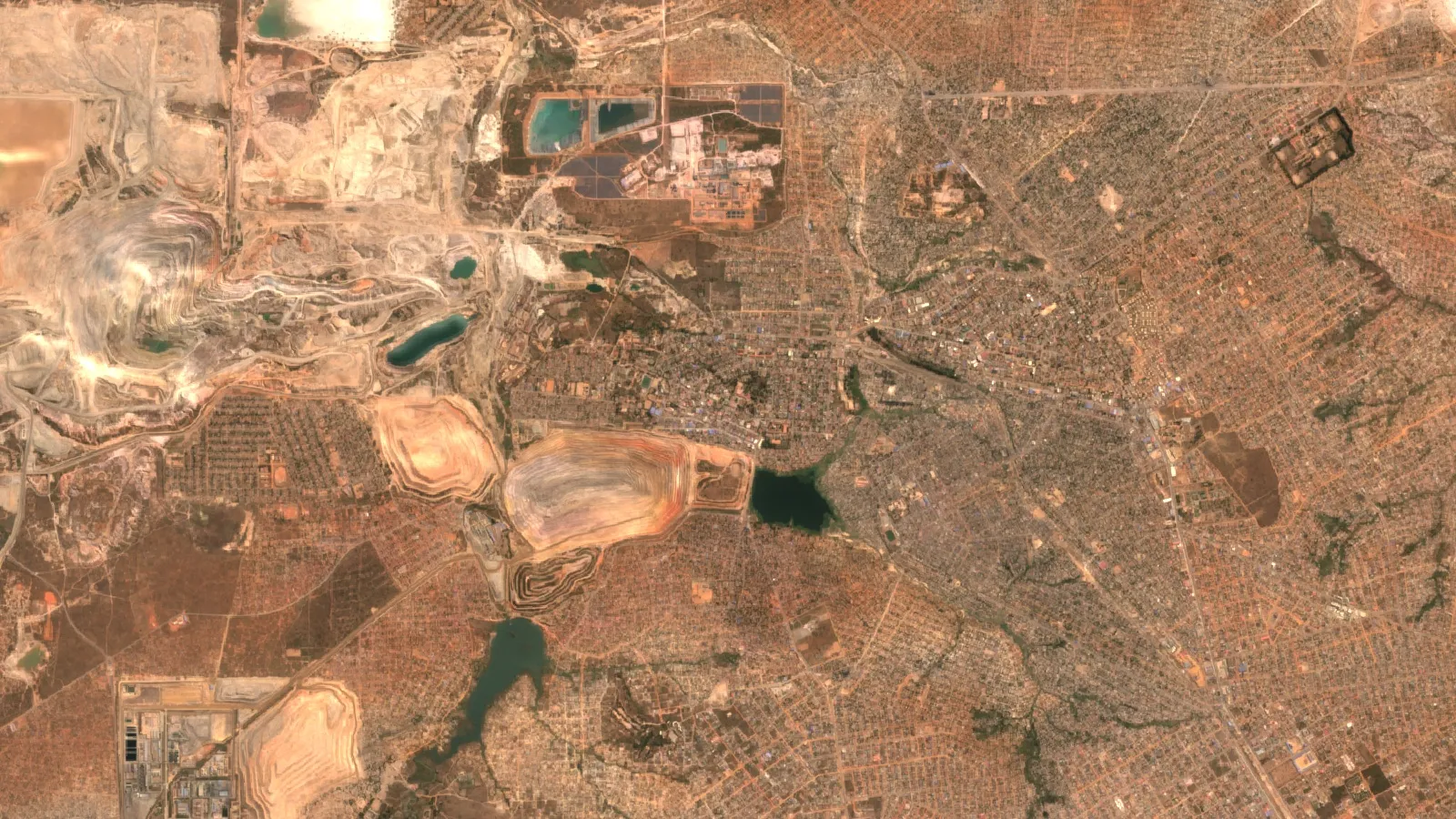
- The DRC mined an estimated 3.2 million tonnes of copper in 2025, about 14% of the world total (USGS, 2026), and much of the malachite sold to lapidaries comes from Congolese deposits (Geology.com).
- Stabilized and reconstituted malachite exists and sells for far less than untreated stone; sources differ on whether lab-made malachite is sold (Gem Society, Geology.com).
In this article
- How much is malachite worth per carat, gram and kilogram?
- What makes one piece of malachite worth more than another
- Malachite value as a copper ore
- Is malachite rare, and where does it come from?
- How malachite is mined and turned into copper
- How to tell real malachite from fake
- Malachite meaning, history and healing beliefs
- Malachite green dye is not the gemstone
- Is malachite safe to wear and handle?
- How to check what your piece of malachite is worth
- Frequently asked questions
Malachite is cheap gem material. On 15 October 2026 three finished malachite pieces on one online seller’s page (a 57 ct cabochon, a 39 ct cabochon and a 27 ct carving; a cabochon is a polished, dome-shaped stone) cost US$15 to US$18 each, which is US$0.26 to US$0.67 per carat. Price guides quote about US$1 to US$5 per carat for good polished stones (Rock Chasing, updated 18 January 2026). A carat is a gem weight of 200 milligrams, so five carats make one gram (GIA).
The mineral is a copper ore as well as a gem, but the copper inside a gram of it is worth less than one US cent at the record copper price of mid-August 2026. This page gives dated price evidence for polished stones and rough, explains what moves the price of a piece, compares gem value with ore value, shows where the stone is mined, and lists ways to check a stone before you pay. It is written for investors and collectors who want a number they can check, not a sales pitch.
How much is malachite worth per carat, gram and kilogram?
There is no exchange price for malachite and we found no published price index. What exists are seller listings and price guides, and they disagree. The table below shows what we read on 15 October 2026 and what the guides say. Treat every figure as an asking price, not a sale price.
Chart
What a gram of malachite sells for, against the copper inside it
US cents per gram; listings on 15 October 2026; pure malachite’s copper valued at US$14,850 per tonne with 100% recovery
| What was priced | Price seen | Per gram | Source and date |
|---|---|---|---|
| Congo cabochon, 57 ct (36 x 21 x 6 mm) | US$15 | US$1.32 | Seller listing, 15 Oct 2026 |
| Bisbee cabochon, 39 ct (32 x 14 x 6 mm) | US$15 | US$1.92 | Same page, 15 Oct 2026 |
| Congo carving, 27 ct (28 x 16 x 6 mm) | US$18 | US$3.33 | Same page, 15 Oct 2026 |
| Rough malachite, 1 kg unit (listed, shown as unavailable) | US$70 | US$0.07 | Crystals Wholesale USA, 15 Oct 2026 |
| Rough malachite for lapidary work (gem cutting and polishing), 1 kg lot | US$350 | US$0.35 | Folk Market Gems, 15 Oct 2026 |
| Good polished stones (price guide) | US$1 to US$5 per carat | US$5 to US$25 | Rock Chasing, 18 Jan 2026 |
The per-gram column is our arithmetic: price divided by the stone’s weight in grams (carats times 0.2). The three finished pieces are large, flat cabochons with no stated grade, so they say little about the best banded stones. They do show that ordinary finished malachite can cost less per carat than most price guides suggest.
Another guide, a wholesaler’s price page dated 20 June 2026, splits malachite into five bands by quality and treatment. Its table gives the ranges below, and the same page’s text quotes slightly different bands for some grades, so read them as a rough ladder rather than a rate card.
| Grade in the guide | Treatment | US$ per carat |
|---|---|---|
| Reconstituted or block | Resin plus crushed powder | 0.02 to 0.10 |
| Commercial | Stabilized with resin | 0.50 to 1.50 |
| Mid-grade natural | Untreated or light wax | 2.00 to 5.00 |
| Premium natural | Untreated, crisp wavy banding | 6.00 to 18.00 |
| Top-tier collector | Untreated, bullseye or silky patterns | 20.00 to 50.00 and up |
Source: gemstonesforsale.com malachite price guide, published 20 June 2026. The seller who publishes this guide also sells the stones, so its numbers are a seller’s view.
Do not multiply a per-carat price by 5,000 to get a price per kilogram. Per-carat prices describe finished stones. Rough costs far less per gram because it still has to be sawn, shaped and polished, and some of it ends up as waste. The two rough listings above, US$70 and US$350 per kilogram, are the better guide to what a bulk buyer pays for unprocessed material.
What makes one piece of malachite worth more than another
Six things move the price. The first three matter most.
- Banding and eyes. The swirls come from the way malachite forms: copper-bearing water deposits it in layers, and the layers reflect changes in the water over time (Gem Society, updated 10 July 2025). Sharp contrast between light and dark bands, and circular patterns called eyes, cost more than plain green. Sawn surfaces of stalactite and botryoidal (grape-like) malachite often show agate-like bands and eyes (Geology.com).
- Natural, stabilized or reconstituted. Wax, resin or polymer is used to hide surface cracks, and some epoxies also harden the soft stone (Gem Society treatments sheet). The Gem Society also describes reconstructed material, which is compressed, plastic-impregnated powder of azurite and malachite. Untreated pieces that are dense enough to polish without filler sit at the top of the price ladder above.
- Color. Price guides favor deep, saturated green over pale shades. Geology.com notes that the color does not fade with time or light.
- Size and soundness. Large, unbroken faces of good rough are scarce, so big slabs, bowls or spheres with continuous banding can be priced high (the wholesaler guide above). Buyers’ guides advise staying away from stones with surface cracks or pitting (Rockhounding Maps, 2023).
- Finish. The same guide says a high, even polish across the top and sides marks good work. Malachite is soft (3.5 to 4 on the Mohs scale, and some references give up to 4.5), so poor polish and scratches show quickly.
- Origin and history. Material from old Russian or Arizona localities can carry a collector premium, according to the same wholesaler guide. Much of the gem rough on sale today comes from the Democratic Republic of the Congo (see the sourcing section below).
If you are comparing green gem materials, our page on how much jadeite is worth covers another green stone and how it is priced.
Malachite value as a copper ore
Malachite is a green copper carbonate hydroxide with the formula Cu2CO3(OH)2. The copper makes up about 57.5% of its weight (our calculation from the formula; the Gem Society rounds it to 58%). A kilogram of pure malachite therefore holds about 575 grams of copper. If you want the chemistry of the compound, see our page on copper carbonate.
Chart
Annual average LME cash copper price
US cents per pound; 2025 is a USGS estimate; 2026 is the average to 17 August
Copper metal was valued at US$14,850 per tonne on 17 August 2026, when LME cash copper set an all-time high of 673.6 US cents per pound, according to the Chilean Copper Commission’s daily bulletin as reported by Miningreporters. At that price the copper in one kilogram of pure malachite is worth about US$8.50 if all of it were recovered, and the copper in one gram is worth about 0.85 US cents. The first chart on this page sets that against the listing prices.
The gap is large. The US$70 rough lot sells for roughly eight times the value of its copper, the US$350 lot for roughly 40 times, and the finished stones for roughly 150 to 390 times. That is why gem-quality malachite is not melted down. Geology.com calls malachite a minor copper ore today, because it usually occurs in small quantities and can be sold for higher prices as a gem or ornament.
The copper price still matters to the people who mine malachite as part of a copper deposit. The chart below shows the annual average LME cash price. The 2021 to 2025 bars come from the US Geological Survey (the 2025 figure is an estimate), and the 2026 bar is the year-to-date average to 17 August from the Cochilco bulletin.
Use the calculator below with your own weight, your own stone price and today’s copper price. Pure malachite is 57.5% copper, but real ore carries far less, so lower the copper content to match the material you have.
Calculator
Is your malachite worth more as a stone or as copper?
Enter your own weight, stone price and copper price. Results update as you type.
- Copper recovered (grams): 489
- Value of that copper (US$): 7.26
- Stone value as a multiple of copper value: 48.2
Example values only, not a benchmark or forecast. The default copper price is the 17 August 2026 record cash price. The stone price and copper price are examples, use today’s price. Pure malachite is 57.5% copper by weight (calculated from the formula Cu2CO3(OH)2; the Gem Society rounds it to 58%); real ore carries far less, so lower the copper content to match your material. Recovery of 85% is an example; real recovery depends on the ore and process.
Is malachite rare, and where does it come from?
The mineral itself is not rare. It forms at shallow depth in the oxidized zone above copper deposits, where descending water leaves carbonate minerals in fractures and cavities (Geology.com). The Gem Society points to its ready availability as one reason lapidary artists use it. What is scarcer is large, sound, well-banded rough that can be cut into slabs, spheres or carvings.
Chart
Copper mine output, eight largest producers
Thousand tonnes of contained copper, all ore types; the eight largest producers in 2025 (estimate)
Gem rough comes from a few main places:
- Democratic Republic of the Congo. Geology.com says much of the malachite entering the lapidary market today comes from Congolese deposits. The Katanga copper belt, and Kolwezi in particular, is known for banded, stalactitic and sparkling specimens (Minerals.net). The Gem Society lists the DRC, Namibia, Russia and the American Southwest as the main sources of gem rough.
- Russia. The Ural Mountains supplied abundant gem and sculpture material in the 1800s, and very little is produced there today (Geology.com). The Gem Society records masses of up to 50 tons at Mednorudyansk.
- Namibia, Australia and the United States. Tsumeb in Namibia is famed for malachite pseudomorphs after azurite. Geology.com says Australia, France and Arizona supply smaller amounts, and Minerals.net says Bisbee in Arizona is known to collectors for the variety and quality of its malachite.
The DRC is also a major copper producer. USGS estimates its 2025 mine output at 3.2 million tonnes of copper, about 14% of the world’s 23 million tonnes and second only to Chile (USGS Mineral Commodity Summaries 2026). The chart compares the eight largest producers in 2025 (USGS estimate); in 2024 Indonesia, at 1,010 thousand tonnes, ranked above Zambia and Australia. It measures copper in all ore types, not malachite, which is only a small part of that output.

▶ An overview of copper in the Democratic Republic of the Congo, where much of the malachite sold to lapidaries is mined. · 13:34
How malachite is mined and turned into copper
Malachite is an oxide ore, which means it formed near the surface by weathering. A research paper on malachite leaching notes that malachite ores are generally low in grade, so hydrometallurgical (wet chemical) methods are often used. Sulfuric acid is the usual leaching reagent, and iron, zinc, aluminum, lead, silica and clays dissolve along with the copper and must be removed before the copper is plated out. Gangue minerals (the worthless rock around the ore) can also use up a lot of acid, which is why weakly acidic or ammonia-based solutions are sometimes studied instead (Braz. J. Chem. Eng., 2015).
The common route is heap leaching followed by solvent extraction and electrowinning (SX-EW). Diluted sulfuric acid is dripped over heaps of crushed ore. The copper-bearing solution drains to a plant where solvent extraction purifies it, and electrolysis then plates it out as cathode copper that can be sold (KGHM). In the United States, USGS counted 14 electrowon refineries in 2025 (USGS Mineral Commodity Summaries 2026).
Three things we can source shape what it costs to turn malachite-bearing ore into copper: the copper grade of the ore, how much acid the surrounding rock consumes, and how much unwanted metal dissolves and has to be removed. Distance to power, water and roads and the cost of managing tailings also matter on any mine. We found no neutral, comparable cost figures by country, so this page gives none. For a plain-language overview of the economics, see our beginner’s guide to copper ore extraction.
Malachite is also a clue for explorers. Green weathering rinds of malachite and azurite often coat copper at the surface (Wisconsin Geological and Natural History Survey), and the Gem Society says malachite is invariably associated with copper deposits. A green stain is a reason to sample, not proof of a mine. Satellites can screen for the alteration and iron-oxide patterns around such deposits, which we cover in our page on remote sensing for copper prospecting. Farmonaut screens an area of interest from satellite images for copper and many other minerals (20+ mineral types in all) before field crews go in, and the output is an exploration target, not a resource estimate. To learn about the deposit types that host malachite, read our copper deposits guide and the page on porphyry copper deposits.
▶ A short explanation of remote sensing for mining and the six instrument families behind it. · 2:01
How to tell real malachite from fake
Most doubt about malachite concerns reconstituted material, not lab-grown stone. Sources differ on lab-made malachite: the Gem Society says it exists for research but is not sold commercially because it costs more than the natural mineral, while Geology.com says synthetic malachite has been used to make jewelry and small sculptures. When a listing says “synthetic”, it usually means imitation (Gem Society, azurite article).
- Look at the bands. Natural bands and eyes are uneven. Geology.com says better imitations can be spotted because their banding and eyes do not follow a natural geometry. A pattern that repeats or looks too even is a warning sign.
- Check the weight. Malachite is heavy for a green stone, with a specific gravity of 3.6 to 4.0 (Geology.com). Plastic and glass imitations feel lighter in the hand.
- Ask about treatment. Ask in writing whether the stone is natural, stabilized with resin or wax, or reconstituted. Price depends on the answer.
- Avoid destructive tests. Malachite fizzes in cold, dilute hydrochloric acid and leaves a pale green streak, but the Gem Society says streak and acid tests destroy part of the stone and should be a last resort on finished pieces.
- Compare with a seller you can check. If a cabochon is offered at a price far below the reconstituted band in the guide above, ask why.
Malachite meaning, history and healing beliefs
People have valued malachite for thousands of years. The Gem Society says it may have been mined in Egypt as early as 4,000 BCE, and was used in protective amulets and ground into pigment. Russian royalty in the 1800s had dining sets, sculptures, vases and even paneling made from it. The Hermitage Museum describes the Malachite Room of the Winter Palace in Saint Petersburg, decorated after the fire of 1837 with several tonnes of Ural malachite from the Demidov mines near Nizhny Tagil. Because single blocks of that size do not exist, craftsmen glued thin plates together so the veining appears unbroken, a method the museum calls Russian mosaic (Hermitage Museum).
Today malachite is also sold for its supposed healing properties, including protection and emotional balance. These beliefs add to demand but not to a measurable value. The best controlled test we found used rose quartz, not malachite: a 2025 randomized trial of 138 adults gave half of each belief group a polished crystal and half a similar glass pebble. Anxiety fell only among believers, whichever object they held, and the authors concluded that healing crystals did not work beyond placebo (CNS Spectrums, 2025). We did not find a controlled trial on malachite itself.
Malachite green dye is not the gemstone
Malachite green is a synthetic dye that has been used to treat fungal infections in farmed fish. It shares a name and a color with the mineral and nothing else. The US Food and Drug Administration says malachite green is not permitted as an aquaculture veterinary drug in many countries, including the United States, Canada and the European Union, because of suspected mutagenic effects (FDA Laboratory Information Bulletin 4363, November 2005, page current as of September 2018).
Is malachite safe to wear and handle?
Finished malachite jewelry and carvings should be safe to wear or display. Cutting and grinding is different: the dust contains copper and is toxic to breathe. The Gem Society advises respiratory protection for workers who mine or cut the stone, and says keeping rough wet while cutting keeps dust down. Do not use an ultrasonic or steam cleaner on malachite jewelry, as the Gem Society advises, and keep acids away from it: the stone reacts with weak acids and is sensitive to heat (Geology.com).
Prospecting for malachite on public or private land needs the landowner’s or the regulator’s permission. Wear a dust mask and eye protection when breaking rock.
How to check what your piece of malachite is worth
- Weigh it in grams. A kitchen scale accurate to one gram is enough for large pieces. Divide grams by 0.2 to get carats.
- Decide what it is. Is it rough, a finished stone, a carving or jewelry? The price ladder is different for each, and a finished stone is worth many times its rough weight.
- Identify the treatment. Natural, stabilized and reconstituted pieces sit in different bands. If you are unsure, ask a gemologist.
- Compare like with like. Find three listings of the same type and size and use the middle one. A listing is an asking price, and resale usually brings less than retail.
- Use the calculator above to see the copper value. It will not change the price, but it shows that the stone’s worth is in its look, not in its metal.
- Get a written appraisal for anything valuable. Antique malachite objects, large carvings and signed jewelry should be seen by a qualified appraiser.
If this topic matters to you, read Malachite Specific Gravity vs Gold, Pyrite and Quartz next.
Related reading on this site: Placer Gold Price per Gram: Purity, Payouts, Calculator.
Frequently asked questions
How much is malachite worth per carat?
Three finished pieces on one seller’s page on 15 October 2026 cost US$0.26 to US$0.67 per carat. Price guides quote about US$1 to US$5 per carat for good polished stones, and up to US$20 to US$50 or more for top banded material, and these are asking prices.
How much is malachite worth per gram?
At five carats to the gram, the listings above work out to US$1.32 to US$3.33 per gram for finished pieces and US$0.07 to US$0.35 per gram for rough. A guide quotes US$5 to US$25 per gram for good polished stones.
How much does malachite cost per kilogram?
Two sellers listed rough malachite at US$70 and US$350 per kilogram on 15 October 2026. Finished stones cost far more per kilogram than rough because cutting and polishing add labor and waste.
Is malachite worth anything?
Yes, but usually a small amount. The finished cabochons and carvings we found cost US$15 to US$18 each. Large, well-banded slabs, carvings and antique objects can be worth much more, and a written appraisal is the way to find out.
Is malachite expensive?
Not by gemstone standards. The finished stones in the listings above cost US$15 to US$18 each, and the mineral is easy to find. Only top-tier banded pieces, large carvings and antique objects reach high prices.
Is malachite rare?
The mineral is common in the oxidized zone of copper deposits. Large, sound, well-banded rough is scarcer, and the Ural source that supplied 19th-century palaces now yields very little.
Is malachite a gemstone?
It is an ornamental gem material rather than a hard gem. It is opaque and soft, so it is cut into cabochons, beads, inlay and carvings, and suits earrings and pendants better than rings.
Is malachite a copper ore?
Yes, a minor one. It is about 57.5% copper by weight, and it is mined as part of copper deposits, usually in small amounts. Oxide ores are often treated by acid leaching and SX-EW.
How much is a malachite necklace worth?
The stone is usually a small part of the price. A necklace of polished beads is priced by bead size, quality and finish, and a piece set in precious metal is priced mostly by the metal and the maker. Ask a jeweler or appraiser for a written value on a specific piece.
How can I tell if malachite is real?
Look for uneven natural bands, check that the stone feels heavy, and ask the seller whether it is natural, stabilized or reconstituted. Avoid acid and scratch tests on pieces you want to keep.
Is malachite toxic?
Dust from grinding or cutting it is toxic to breathe because of its copper content. Finished, polished jewelry should be safe to wear.
Is malachite green the same as the mineral malachite?
No. Malachite green is a synthetic dye that shares only a name and a color with the mineral. It is not permitted as a fish-farming drug in the United States, Canada or the European Union.
This page is for information only. It is not investment advice or a valuation. Prices are seller listings and price guides on the dates shown, not a market index. Get a written appraisal from a gemologist for a specific piece. Cutting or grinding malachite needs dust protection, and prospecting needs the landowner’s or regulator’s permission.
Farmonaut mining
See where satellite data points to copper
Farmonaut screens an area of interest from satellite images for copper and many other minerals (20+ mineral types in all) before field crews go in, and takes KML, KMZ or polygon input.
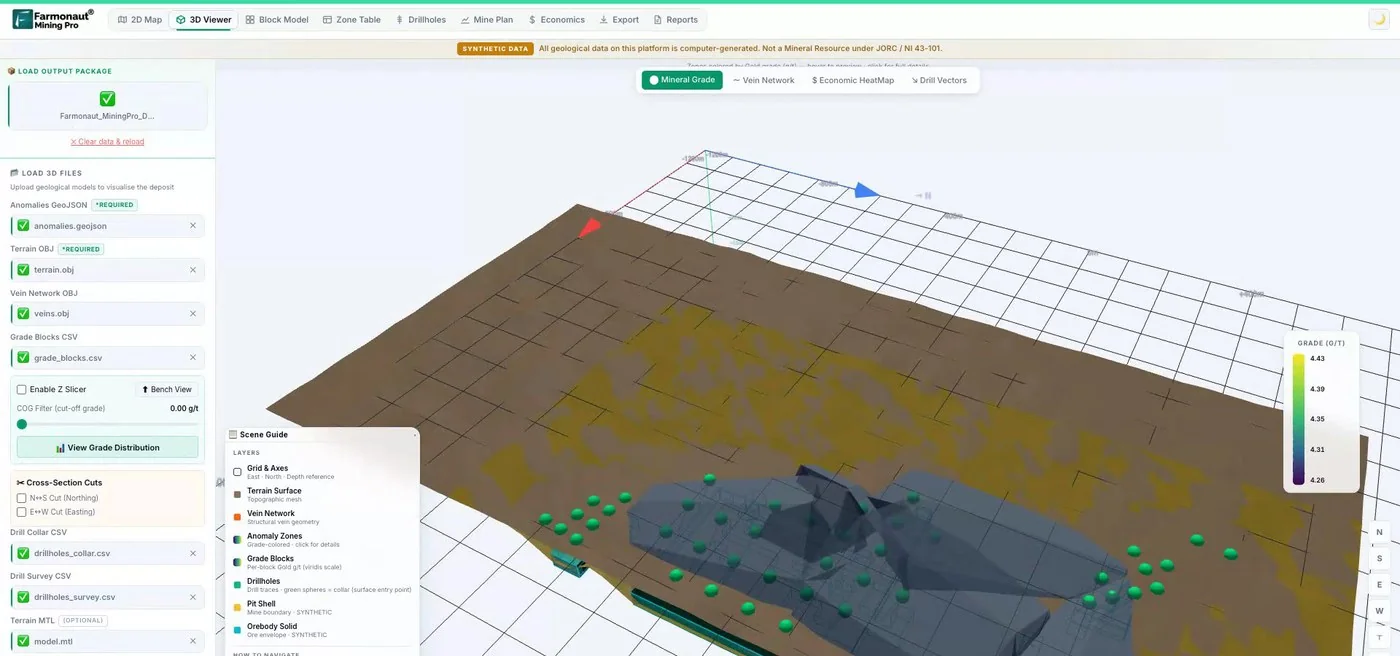
Mining Pro sample view, synthetic data
Keep reading
Sources
- USGS, Mineral Commodity Summaries 2026: Copper: pubs.usgs.gov
- Geology.com, Malachite: uses and properties (Hobart M. King): geology.com
- International Gem Society, Malachite value, price and jewelry information (updated 10 July 2025): gemsociety.org
- International Gem Society, Azurite value, price and jewelry information (reconstructed azurmalachite): gemsociety.org
- International Gem Society, Common gemstone treatments cheat sheet: gemsociety.org
- Minerals.net, Malachite: minerals.net
- gemstonesforsale.com, Malachite collection listings (15 October 2026): gemstonesforsale.com
- gemstonesforsale.com, Malachite price guide (20 June 2026): gemstonesforsale.com
- Rock Chasing, The price and value of malachite (updated 18 January 2026): rockchasing.com
- Rockhounding Maps, Malachite values and pricing (31 July 2023): rockhoundingmaps.com
- Crystals Wholesale USA, Rough malachite listing (15 October 2026): crystalswholesaleusa.com
- Folk Market Gems, 1 kg natural rough malachite listing (15 October 2026): folkmarketgems.com
- Miningreporters, Copper hits new all-time record of 673.58 cents per pound (Cochilco bulletin, 17 August 2026): miningreporters.com
- GIA, Understanding carat weight: 4cs.gia.edu
- KGHM, SX-EW (solvent extraction and electrowinning): kghm.com
- Braz. J. Chem. Eng. 32(1), Leaching of malachite ore in ammonium sulfate solutions (2015): scielo.br
- Wisconsin Geological and Natural History Survey, Copper: home.wgnhs.wisc.edu
- Hermitage Museum, The Malachite Room: ermitazh.org
- FDA, Laboratory Information Bulletin 4363: Malachite green and leucomalachite green in fish and shrimp: fda.gov
- CNS Spectrums (Cambridge), Placebo effects in alternative medical treatments for anxiety (2025): cambridge.org
Discussion
Questions, corrections or field experience? Share them below. First-time comments are reviewed before they appear, and your email is never published.
No comments yet. Be the first to add a question or your experience.

 Sean Mining Limited
 NTS Group (Pty) Ltd
 Mine4Africa
 Lithspo Minerals Limited
 Tintina Mining Group
 Dalgety Minerals Pty Ltd
 Vortex Minerals Pty Ltd
 Faith At Work (Pty) Ltd
 Geotech Mining Solutions plc
 Vulcan International Limited
 Kidepo Associates
 GKY Mining
 Alkimy SARL
 Double A Trading
 GemSprout Metals Limited
 Qader Group
 Ileys General Trading
 SG Gold Mining LLC
 VRV Global Pte Ltd
 Omsri International FZE
 G.I.T.T.
 Jaunita Erss Ltd
 Almosi SARL
 SRK Consulting
 Berks Gold Limited










