

Neodymium Processing & Rare Earth Mineral Processing 2026: Advances in Sustainability, Extraction Methods, & Industry Innovation
Table of Contents
- Trivia: Rare Earth Processing Efficiency 2026
- Summary: Advancements and Challenges in 2026
- The Importance of Neodymium in Agriculture, Forestry & Defense
- Rare Earth Mineral Processing Overview
- Key Steps in Neodymium Processing
- Comparative Process Efficiency Table 2025–2026
- Sustainability & Environmental Considerations
- Farmonaut’s Role: Satellite Technology, Intelligence & Resource Management
- 2026 & Beyond: Innovation, Challenges & Future Outlook
- Frequently Asked Questions (FAQ) on Neodymium & Rare Earth Mineral Processing
“By 2026, rare earth mineral processing efficiency could increase by up to 30% with advanced neodymium extraction techniques.”
Summary: Advancements and Challenges in Neodymium and Rare Earth Mineral Processing in 2026
As we progress towards 2026, neodymium processing and rare earth mineral processing remain at the very heart of technological progress in agriculture, forestry, mining, and defense. With the global demand for high-performance electric motors, wind turbines, and advanced defense applications rising, the processing of these critical elements is under intense focus. 2025 and 2026 stand out as pivotal years, driving innovation and sustainability within the rare earth sector.
Neodymium—known for its unique magnetic properties—has become indispensable, not only for precision agricultural machinery and forestry tools, but also for developing strategic defense equipment. However, the challenges facing neodymium processing and entire rare earth mineral processing chains are considerable: from responsible extraction and separation to minimizing waste, toxic outputs, and improving sustainability.
This comprehensive guide explores state-of-the-art methods, sustainability initiatives, and emerging trends expected to define the industry through 2026 and beyond.

The Importance of Neodymium in Agriculture, Forestry, and Defense
Neodymium is now recognized as a critical element in modern industry. Its magnetic properties have ushered in a new era of efficiency and precision in sectors such as agriculture, forestry, and defense.
Precision Agriculture: Magnetic Innovation in the Fields
- High-strength neodymium magnets are at the core of GPS-guided drones, autonomous tractors, and variable-rate sprayers, enabling optimized planting, fertilization, and harvesting.
- These innovations contribute to increased yield and minimized environmental impact by delivering resources precisely where needed.
Forestry: Real-Time Monitoring and Sustainable Practice
- Neodymium-powered sensors are revolutionizing automated tree harvester control systems, offering real-time forest health data for informed interventions.
- Portable sensors enhance the ability to monitor vast forestry areas for disease, water stress, and pest outbreaks, contributing to ecosystem sustainability.
Defense: Strategic Significance & National Resilience
- Magnetic materials based on neodymium are essential for guidance systems, sonar equipment, and stealth technologies.
- In a climate of growing geopolitical complexities, securing rare earth supply chains—with neodymium at the forefront—has become a top national priority.
Neodymium processing is no longer simply an industrial task; it is deeply woven into the fabric of modern technology, enabling progress and minimizing our footprint.

Rare Earth Mineral Processing Overview: 2025–2026
Rare earth processing involves a complex interplay of mining, separation, and refining methods to extract valuable REEs from mostly low-concentration ores. Key minerals such as bastnäsite, monazite, and xenotime rarely present themselves in pure form, necessitating multi-stage extraction and processing.
As of 2025 and 2026, the focus has shifted not only toward maximizing efficiency and yield but also toward sustainability and socially responsible practices.
Rare Earth Elements & Their Role
- Neodymium (Nd) – Used in high-efficiency magnets for motors (electric vehicles, wind turbines), sensors, and defense.
- Praseodymium, dysprosium, terbium – Other vital REEs often co-extracted and processed with neodymium for similar industrial applications.

Key Steps in Neodymium Processing & Rare Earth Mineral Processing 2026
Neodymium processing comprises a series of technologically advanced stages to transform ore into usable REE materials. Let’s break down the steps that constitute effective rare earth mineral processing in 2026.
1. Mining & Ore Preparation
- Extraction of neodymium-bearing ores occurs via both open-pit and underground mining.
- Advances in GIS (Geographic Information Systems) and remote sensing technology, such as those available in modern satellite-based monitoring (visit our agro-admin platform for large-scale resource analytics), enable grade assessment and reduce unnecessary rock displacement, minimizing environmental impact.
2. Crushing & Grinding
- The mined ore is crushed and ground to liberate neodymium-rich minerals from waste rock, enhancing granularity for chemical processing.
3. Separation Techniques: Magnetic, Gravity, and Froth Flotation
- Initial separation employs magnetic and gravity-based techniques since rare earths, including neodymium, exhibit distinct magnetic properties.
- Froth flotation, using advances in chemical surfactants, allows selective separation of REEs. The process in 2025–2026 has seen improved selectivity and reduced chemical consumption, leading to lower waste and environmental risk.
4. Hydrometallurgical Processing
- Concentrates then undergo acid or alkali leaching, dissolving REEs into a chemical solution.
- Solvometallurgical innovations feature greener, less hazardous solvents and more efficient reagent recycling.
5. Solvent Extraction & Ion Exchange
- Solvent extraction and ion exchange are critical to purifying neodymium, separating it from other rare earths.
- Modern processes use bio-derived solvents, improving neodymium recovery while lowering toxic waste.
6. Refining & Alloying
- Once separated, neodymium oxides are further refined, then converted into metal or alloy forms for use in magnets and advanced machinery.

“Over 80% of neodymium supplies depend on sustainable extraction technologies developed between 2025 and 2026.”
Comparative Process Efficiency Table: Neodymium & Rare Earth Processing (2025–2026)
| Processing Method | Estimated Extraction Efficiency (%) | Estimated Energy Consumption (kWh/ton) | Estimated CO2 Emissions (kg/ton) | Estimated Cost (USD/ton) |
|---|---|---|---|---|
| Conventional Processing (Pre-2020) | 60–70 | 6,500–8,500 | 2,500–3,400 | 3,000–3,700 |
| Modern Chemical Separation (2025) | 75–82 | 5,000–6,200 | 1,800–2,700 | 2,400–3,100 |
| Hydrometallurgy with Green Solvents (2026) | 85–92 | 4,000–5,500 | 1,200–1,900 | 1,900–2,700 |
| Closed-loop Recycling (2026) | 80–90 | 2,800–4,200 | 800–1,300 | 1,200–1,800 |
| Bioleaching / Metagenomic Extraction (Projected 2026+) | 88–94 | 2,100–3,700 | 500–1,100 | 1,100–1,700 |
This table showcases advances in neodymium processing efficiency, rare earth sustainability metrics, and diminishing environmental impact across processing techniques leading into 2026.

Sustainability & Environmental Considerations in Rare Earth Processing
Rare earth processing has historically imposed significant environmental costs, notably through radioactive waste, toxic effluents, and high energy consumption. However, 2025–2026 marks a shift toward sustainable methods and advanced waste management.
Recent Developments Driving Sustainability
- Radioactive Waste Reduction: Processes now recover and safely store thorium and other byproducts from monazite ores.
- Circular Economy Initiatives: Closed-loop recycling of neodymium from end-of-life electronics, defense equipment, and agricultural machinery is scaling up.
- Water and Energy Efficiency: Innovative separation techniques have resulted in reduced consumption of water and lower greenhouse gas emissions.
- Community Engagement & Social Responsibility: Indigenous and local communities participate in decision-making around new mining projects, ensuring socially responsible exploitation of resources.
Farmonaut Environmental Solutions
- Our carbon footprinting platform allows operators to monitor the carbon emissions of mining operations in real time, enabling compliance and guiding sustainable choices.
- Access blockchain-based traceability for supply chain transparency. This tool helps document every stage of ore movement, assuring responsible extraction and logistical security in the critical minerals chain.

Farmonaut’s Role: Satellite Technology, Intelligence & Resource Management
Satellite-Driven Insights for Mining and Agriculture
At Farmonaut, our mission is to make satellite-based monitoring affordable, accurate, and universally accessible for agriculture, mining, infrastructure, and defense. Leveraging multispectral satellite imagery, AI-driven systems, and blockchain technology, we deliver actionable insights into vegetation health, soil mineralization, and resource consumption.
- Fleet and Resource Management: Monitor mining machinery, ore transport, and large-scale farm equipment. Utilize fleet management dashboard to reduce fuel and resource consumption and ensure safe, optimal deployment across vast operations.
- Environmental Tracking: Our carbon footprint monitoring tool supports environmental compliance and drives sustainability efforts for both mining and farming.
- Real-Time Advisory: Through our Jeevn AI, dynamic weather alerts and operational guidance help minimize risk and enhance resource extraction strategies.
- Loan and Insurance: Satellite-verified data streamlines crop loan and insurance applications—critical for farmers and mine operators seeking risk-reduced financing.
- Large-scale Management: Effectively manage vast croplands with large scale farm management tools, scaling operations sustainably and profitably.




Developers: Integrate our satellite-powered insights into your operations with the Farmonaut API.
Read our API developer docs for full capabilities and quickstart guides.
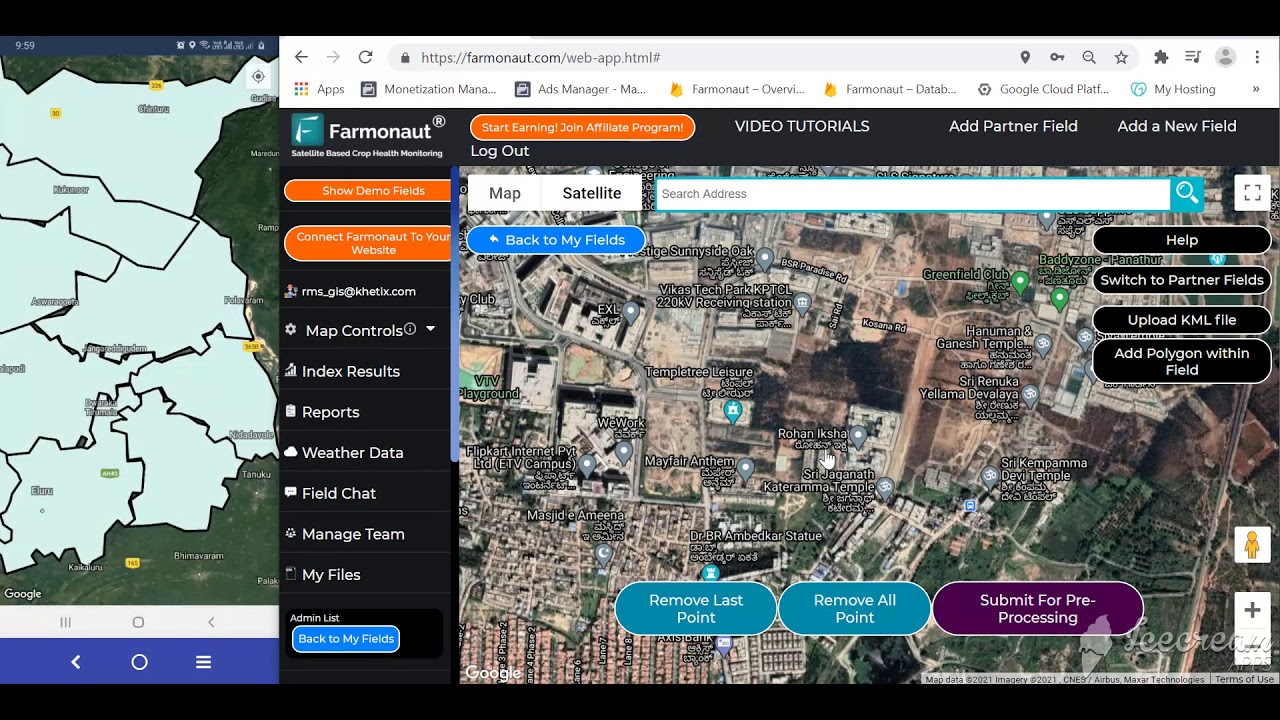
Farmonaut Subscriptions
2026 & Beyond: Innovation, Challenges & Future Outlook in Neodymium & Rare Earth Processing
Neodymium processing and rare earth mineral processing are advancing faster now than at any point in the past five decades. Here’s what’s defining the future across agriculture, defense, and industry:
Emerging Techniques and Technologies
- Bioleaching & Metagenomic Extraction: Harnessing tailored microbial communities to separate rare earth elements without harsh chemicals. Expected by industry experts to boost efficiency, lower costs, and radically reduce environmental impact in 2026 and beyond.
- AI-Driven Ore Assessment: Machine learning (ML) models, including satellite-informed tools like those offered by Farmonaut, are transforming how deposits are located and evaluated, minimizing unnecessary extraction and energy use.
- Recycling Boom: With demand for neodymium magnets in electric motors and wind turbines surging, advanced techniques in electronic waste recycling are projected to supply as much as 40% of new REEs in the next decade.
Challenges for 2026 and the Road Ahead
- Supply Chain Security: Tensions across major producing regions and shifting trade policies require both governmental and corporate actors to secure supply chains for these critical minerals.
- Regulatory Pressures: Policy frameworks are increasingly strict regarding waste management, emissions, and social responsibility.
- Workforce & Community Inclusion: Involving local and indigenous voices remains fundamental to achieving “social license” and minimizing conflicts around new extraction projects.
Industry Outlook: From 2026 Onward
- Collaborative Innovation: The rare earth industry’s transformation is driven by a fusion of advanced extraction techniques, AI-guided efficiency, and a focus on sustainability—all mitigating prior drawbacks of toxic outputs and high resource consumption.
- Farmonaut’s Continued Support: We at Farmonaut remain committed to empowering mining operators and farmers with the latest in satellite intelligence, resource management, and blockchain traceability tools—so our clients can adapt to industry advances, regulatory demands, and sustainability targets with confidence.
- Long-term Sustainability: The adoption of cutting-edge chemistry, AI-driven analytics, and environmentally responsible recycling will define the pace and character of the rare earth sector well into the next decade.
Frequently Asked Questions (FAQ) on Neodymium & Rare Earth Mineral Processing
1. What is neodymium and why is it critical for industry?
Neodymium is a rare earth element indispensable for its strong magnetic properties. It’s widely used in the production of high-performance magnets for electric vehicles, wind turbines, electronics, defense, and advanced agricultural machinery.
2. How is neodymium extracted and processed?
Neodymium is extracted from minerals like bastnäsite, monazite, and xenotime using a series of steps including mining, grinding, magnetic separation, chemical leaching, solvent extraction, and refining. Each phase is increasingly optimized for sustainability and efficiency in 2026.
3. What are the environmental impacts of rare earth mineral processing?
Traditional processes can produce radioactive and toxic waste, use substantial energy, and consume large amounts of water. Modern innovations focus on greener solvents, recycling, reduced emissions, and community involvement to minimize negative impact.
4. What new technologies are emerging in neodymium processing?
The leading trends include bioleaching (microbial extraction), AI-driven grade assessment, solvent recycling, closed-loop recycling from waste electronics, and blockchain-based traceability to guarantee responsible sourcing.
5. How does Farmonaut help operators in rare earth extraction and sustainability?
Farmonaut offers satellite-based monitoring, AI resource management, carbon footprinting, fleet management, financial verification for loans/insurance, and blockchain traceability to empower responsible, transparent, and sustainable operations across agriculture and mining.
Conclusion: Shaping the Future of Critical Minerals
To sum up, neodymium processing and overall rare earth mineral processing will be defined in the next decade by breakthroughs in sustainability, efficiency, and responsible technological integration. With effective recycling, green chemistry, and AI-powered monitoring, industries can meet the rising demand in agriculture, forestry, and defense while ensuring a positive environmental and social legacy.
Advanced solutions offered by platforms like Farmonaut will further lower barriers to sustainable mining and resource management, empowering both individuals and enterprises on their journey toward a resilient, informed, and responsible future.
For the latest in real-time monitoring, AI-based advisory, and blockchain-backed traceability in agriculture, mining, and defense, explore our web and mobile solutions today.
Discussion
Questions, corrections or field experience? Share them below. First-time comments are reviewed before they appear, and your email is never published.
No comments yet. Be the first to add a question or your experience.

 NTS Group (Pty) Ltd
 Mine4Africa
 Lithspo Minerals Limited
 Tintina Mining Group
 Dalgety Minerals Pty Ltd
 Vortex Minerals Pty Ltd
 Faith At Work (Pty) Ltd
 Geotech Mining Solutions plc
 Vulcan International Limited
 Kidepo Associates
 GKY Mining
 Alkimy SARL
 Double A Trading
 GemSprout Metals Limited
 Qader Group
 Ileys General Trading
 SG Gold Mining LLC
 VRV Global Pte Ltd
 Omsri International FZE
 G.I.T.T.
 Jaunita Erss Ltd
 Almosi SARL
 SRK Consulting
 Berks Gold Limited
 Mwerezi Minerals Company Limited










