

Mineral rights · Investor guide
Mineral Rights Investing: 7 Steps, Costs & Returns
How to purchase mineral rights, how to obtain them without buying, and what investing in them pays. Includes a title checklist, federal royalty and claim fees, and a royalty income estimator. Not legal or tax advice.
Key takeaways
- Know what you buy: a mineral interest, a royalty interest or a working interest carry different rights and risks (NARO).
- Run a title search and get a title opinion before you pay. A records search does not guarantee ownership (NARO).
- The BLM manages about 58 million acres of federal minerals under privately owned surface (BLM, split estate brochure).
- Federal onshore leases issued after 4 July 2025 carry a royalty of at least 12.5%; the 2022 to 2025 rate was 16.67% (Federal Register, 2026).
- Royalties follow prices: EIA’s October 2026 outlook has WTI at $88.21 in 2026 after $65.40 in 2025.
In this article
- What Is Mineral Rights Investing?
- How Big Is the Mineral Rights Market — and What Does It Pay?
- Key Concepts: Royalties, Leases, and Split Estates
- Pros and Cons of Investing in Mineral Rights
- Risks and Considerations in Mineral Rights Investing
- 7 Steps to Invest in Mineral Rights
- Step-by-Step Mineral Rights Investment Overview
- Royalty Income Estimator
- Satellite-Powered Mineral Intelligence for Investors
- Best Practices and a Strategy Checklist
- FAQs: Mineral Rights Investing
- Conclusion: A Long-Duration Position, Not a Quick Trade
Try it: Run your own numbers →
Mineral rights investing means buying, leasing, or retaining the legal right to whatever lies beneath a parcel of land — oil, gas, potash, limestone, aggregate, or metals — separately from the right to farm or build on its surface. In the United States, oil and gas royalty owners collect the royalty set in the lease, from 12.5% on recent federal onshore leases upward. This guide covers how to invest in mineral rights, what pros and cons actually look like once you account for illiquidity and commodity risk, and a 7-step process built for farmers, foresters, and land investors weighing this as a strategy rather than a one-off deal.
What Is Mineral Rights Investing?
Mineral rights investing is the acquisition of legal ownership or a leasehold interest in the minerals beneath a plot of land — the right to extract, sell, or lease out extraction of oil, gas, gold, copper, limestone, potash, aggregate, gypsum, or rare earth elements. It sits apart from surface ownership: you can own the crop or timber on top of a parcel while someone else — or a prior generation of your own family — owns what’s underneath.
- ✔ Mineral Rights: the legal entitlement to extract and profit from minerals below the surface.
- ✔ Surface Rights: separate from mineral rights; surface rights control use of the land for farming, forestry, or construction.
- ✔ Ownership vs. Leasing: you can purchase mineral rights outright, or lease them to (or from) another party for a fixed term and compensation.
- ✔ Royalties: payments to mineral rights holders as a percentage of production revenue, set in the lease; the federal onshore minimum is 12.5% on leases issued after 4 July 2025.
- ✔ Direct vs. Indirect Investing: hold rights directly, or invest through royalty syndicates and mineral funds that spread exposure across regions and commodities.
Mineral interest, royalty interest and working interest
Three terms sound alike but pay differently. A mineral interest is ownership of the minerals themselves. It includes the right to sign a lease and to collect lease bonuses. A royalty interest is a share of production revenue, free of production costs, but it carries no right to sign leases or drill. A working interest pays a share of the costs and takes a share of the output, so it carries the most risk. The National Association of Royalty Owners explains the split in its guide to mineral rights and royalty interests. It adds that mineral ownership is usually perpetual and is treated as the dominant estate, so the owner may use as much of the surface as is reasonably necessary, normally while paying the surface owner for damage.
How Big Is the Mineral Rights Market — and What Does It Pay?
No government agency publishes a single national price for mineral rights. Prices vary enormously by commodity and by how active drilling or mining is in the basin. The National Association of Royalty Owners lists location, geology, lease terms, commodity prices and production timing among the main drivers of value.
Chart
Federal energy revenue paid to the top five states
Fiscal year 2025 disbursements from federal onshore and offshore energy production, $ million
For working landowners rather than pure investors, the more relevant figure is income, not asset price: royalties can add to the land income of agricultural landowners who already have producing rights leased. They are a supplement on top of crop or timber revenue, not a replacement for it — most of these landowners are not full-time mineral investors, they’re farmers and foresters who happen to sit on productive rock.
Bonus payments are the upfront, one-time payment for signing a lease, separate from ongoing royalties. Ask any broker quoting you a bonus figure to show comparable recent lease bonuses in your township or county — that comparison is the real test of whether an offer is fair.
Key Concepts: Royalties, Leases, and Split Estates
Surface Rights vs. Subsurface Rights (The Split Estate)
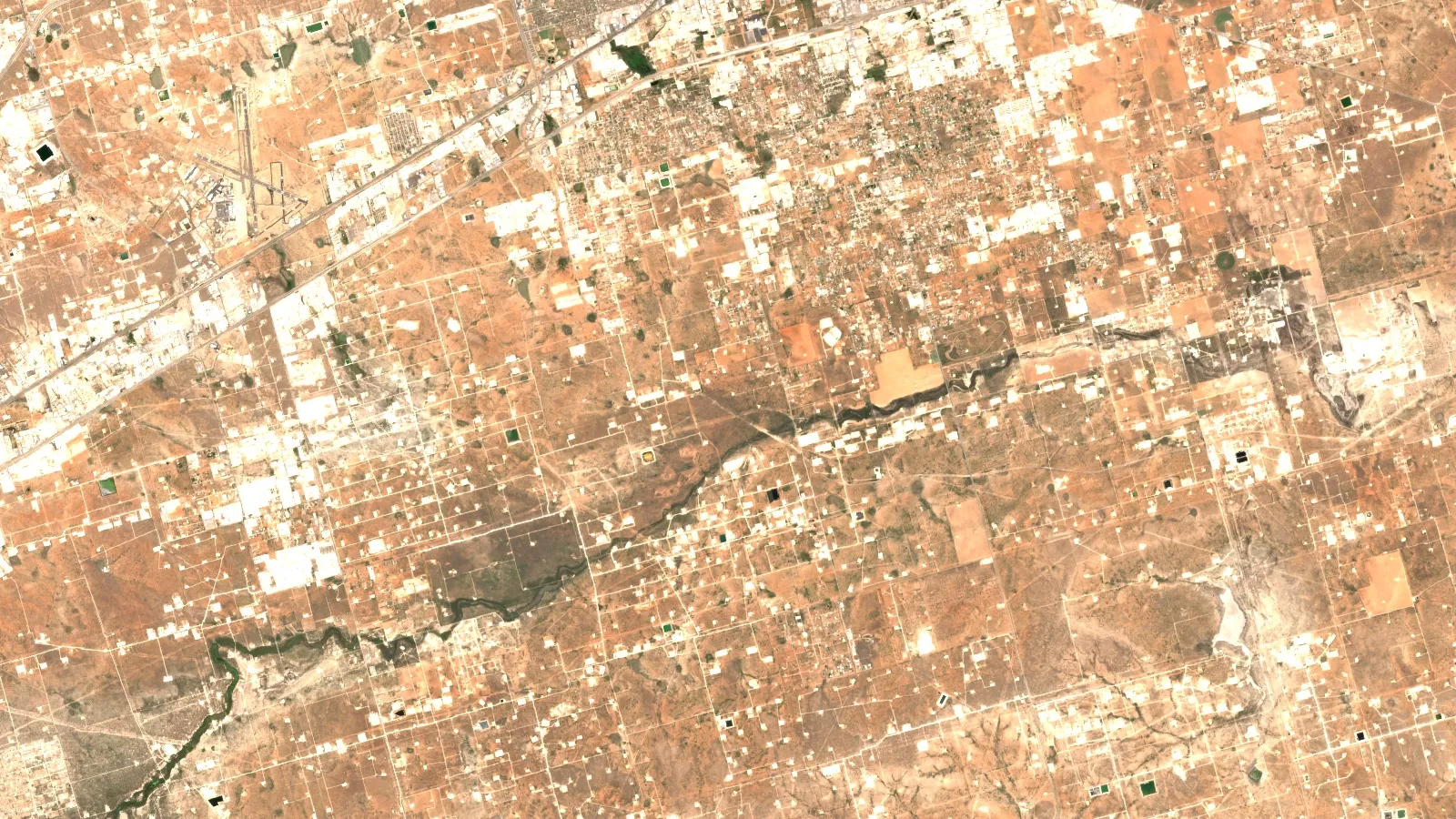
In much of the U.S., mineral and surface rights can be — and often are — severed. This is formally called a “split estate,” and it’s more common than most landowners realize: the Bureau of Land Management manages about 58 million acres of federal mineral estate under privately owned surface. That’s federal-only; state and private severances add millions more acres on top of that figure. If you bought your land and assumed you own everything under it, a title search — not an assumption — is the only way to confirm that.
Chart
Federal onshore minimum royalty by lease issue date
Minimum royalty rate, % of production value
- ✔ Mineral rights can be sold or retained separately from the surface — you can farm the surface while someone else holds the drilling rights, or the reverse.
- ✔ Whoever holds the mineral rights typically controls who can authorize drilling or mining and, within limits set by state law, how much surface disruption that party is entitled to.
- ✔ A split estate does not mean the surface owner has no say — most states require “reasonable accommodation” of existing surface use, but the specifics vary by state and are worth a title attorney’s review before you sign anything.
Royalty Rates: What They Actually Are, State by State
Private royalty rates are set by negotiation and vary by state and lease. At the low end, federal onshore leases carry a statutory minimum royalty rate of 12.5%, a floor set by the Mineral Leasing Act. It was 16.67% for leases issued under the 2022 Inflation Reduction Act and returned to 12.5% for leases issued after 4 July 2025. It functions as the baseline every private negotiation is measured against.
If you’re offered anything at or near the 12.5% federal floor on a private lease, treat that as an opening position, not a market rate — you have room to negotiate upward, particularly if neighboring tracts have producing wells you can point to as comparables.
Royalty Interests, Leases, and How You Can Hold Them
- ✔ Royalty interest: the right to a percentage of production revenue without bearing drilling or operating costs.
- ✔ Lease: an operator gets exploration and extraction rights for a term, in exchange for a bonus payment and ongoing royalties.
- ✔ Direct holding: you own the mineral rights outright and negotiate leases or collect royalties yourself.
- ✔ Indirect holding: you invest through a fund or syndicate that pools capital across many tracts, commodities, and operators.
- Scrutinize royalty rates, production caps, and payment schedules in every lease before signing. A clause on post-production cost deductions — which many operators subtract from your royalty before paying it — is one of the most common sources of disputes.
Mineral Reserves Under Agricultural and Forestry Land
- ✔ Key minerals: aggregate, limestone, potash, gypsum, and other industrial minerals frequently lie beneath farmland and forests, alongside oil and gas in producing basins.
- ✔ These rights can create a secondary revenue stream without materially altering farming or timber operations, provided surface-use agreements and environmental provisions are well drafted.
- ✔ Market value depends on local commodity demand, transport infrastructure, and — for oil and gas specifically — the prevailing commodity price cycle.
Pros and Cons of Investing in Mineral Rights
Before committing capital or signing away rights on land you already own, weigh both sides plainly. The advantages are real and the drawbacks are structural — neither cancels the other out.
| Pros | Cons |
|---|---|
| Passive income once leased — royalty checks require no ongoing labor | Highly illiquid: no public exchange, resale can take months and depends on finding a specialized buyer |
| Diversifies against crop, timber, and weather-driven income swings | Royalty income is directly exposed to commodity price cycles — EIA’s October 2026 outlook has WTI averaging $88.21 a barrel in 2026, against $65.40 in 2025 and $76.60 in 2024, which shows how fast that can move |
| Can supplement annual agricultural land income once producing | Well output usually falls over time, so early royalty checks can overstate later income |
| No operating costs or extraction risk borne by the royalty holder | Regulatory, title, and environmental complexity requires professional review before every transaction |
| Land with proven reserves can appreciate, although no public index tracks mineral values | Royalty income depends on commodity prices outside the landowner’s control |
On the strategic question of whether this fits a given landowner: mineral rights investing works best as a supplemental, long-duration position layered on top of an existing land base — not as a standalone portfolio for someone seeking liquidity or short-term returns. Returns depend on the price, the well and the lease, so model several scenarios before you buy.
Mineral rights are illiquid compared to stocks, bonds, or even most real estate. Commit only capital you can afford to have tied up for years, not months.
Examples of Agricultural and Forestry Land With Mineral Potential
- ✔ Nebraska: farmland above potash, limestone, and sand aggregate deposits used in fertilizer and construction.
- ✔ Alberta, Canada: forestry and pastureland above gypsum veins used in agricultural and building supply chains.
- ✔ Texas: pastureland hosting oil, gas, and brine minerals, where split-estate leasing is a long-running income source for many ranching families.
Visual Risk Checklist
- ⚠ Unclear title or existing liens
- ⚠ Surface-use or environmental disputes
- ⚠ Operator default or weak financial standing
- ⚠ Commodity price volatility
- ⚠ Changing regulatory or tax treatment
Mineral Rights Investing: Returns, Tax and Ways to Invest
There are three common routes: buy mineral or royalty interests directly, join a fund or syndicate that pools them, or hold rights you already own. The National Association of Royalty Owners says value depends on location and geology, that oil and gas prices are volatile, and that conservative price forecasts are the safer basis for any valuation (NARO, investing in mineral rights and royalties). It also lists discounted cash flow, which is the present value of expected future royalties, as a standard way to price an interest.
Federal revenue shows the price effect. The Office of Natural Resources Revenue disbursed $14.61 billion from energy production on federal and tribal onshore lands and federal offshore areas in fiscal year 2025, the fifth-largest total since 1982, and Interior said the fall from the year before was largely due to lower commodity prices (U.S. Department of the Interior, November 2025).
Tax matters as much as the headline rate. NARO notes a 15% percentage depletion deduction on oil and gas royalty income, calculated on gross royalties and not on the net check. Ohio State University Extension adds that the deduction has limits tied to taxable income, and that lease bonuses and royalties are taxable and often carry no withholding, so quarterly estimated payments may be due (Ohio State University Extension, income tax on lease payments). Ask a tax adviser before you buy.
Risks and Considerations in Mineral Rights Investing
Like any alternative asset class, mineral rights investing carries risks that require active management rather than passive assumption.
Chart
Annual average crude oil prices
US dollars per barrel; 2026 and 2027 are projections
Regulatory and Title Complexity
- ✔ Regulatory environment: permitting, extraction, and reclamation are regulated at federal, state, or provincial levels; policy or royalty-tax changes can shift returns materially and with little notice.
- ✔ Title due diligence: failing to establish clear chain of title, identify existing liens, or discover overlapping claims can erode asset value and trigger prolonged legal disputes. This is doubly important given how common split estates are — remember, the BLM manages about 58 million acres of federal minerals under privately owned surface.
Environmental and Surface Impact
- ✔ Extraction impact: drilling or mining disrupts land and may require water management, noise abatement, and habitat protection commitments written into the lease.
- ✔ Operator reliability: the financial health and technical track record of the operator directly affects payment reliability and reclamation quality.
- Include environmental safeguards and force majeure clauses in every mineral contract to protect against unforeseen events and to require land restoration.
Commodity Price Exposure: Why It Matters Right Now
Oil and gas royalties move with the commodity price, not with a fixed contract value. WTI crude averaged $65.40 a barrel in 2025, and EIA’s October 2026 outlook puts the 2026 average at $88.21, a rise of about one-third in a year. Prices can fall as fast as they rise, so a royalty check can move by a third between years. For an individual royalty owner, the national price means little if your specific well’s output is flat or declining — your income is a function of your well’s production times the price on the day it sells, not the national average.
Because these figures move often, don’t anchor your own projections to the numbers above once they age. The U.S. Energy Information Administration publishes a Weekly Petroleum Status Report at eia.gov/petroleum each week, usually on Wednesday with prior-week production and price data — check it directly before modeling a lease decision rather than relying on a static figure from any article, including this one.
Critical Challenges Landowners Often Overlook
- ✔ Not validating pre-existing claims or liens before contracting.
- ✔ Underestimating the need for operator financial guarantees and reputational checks.
- ✔ Ignoring local environmental permitting or community consultation requirements.
- ✔ Overlooking post-extraction reclamation plans, which are mandatory in many jurisdictions.
- ✔ Assuming mineral rights can be resold quickly — this market is thin, and buyers are specialized.
⚠ Top Risks to Weigh Before You Invest
- Regulatory shifts: environmental standards or royalty taxation can change and directly affect net income.
- Operational delays: permitting or litigation delays can affect payment schedules and income predictability.
- Commodity price swings: a decline in oil, gas, or metals prices reduces royalty value below initial projections — see the oil price chart above.
- Poor operator practices: inadequate land restoration can impair future farming capacity or resale value.
- Unclear contracts: vague or underspecified agreements lead to payment disputes or surface-access conflicts.
Federal royalty rule: check the lease date
The federal onshore minimum royalty has changed twice in four years. The Mineral Leasing Act set it at 12.5%. The 2022 Inflation Reduction Act raised it to 16.67%. The One Big Beautiful Bill Act, enacted on 4 July 2025, restored 12.5% for leases issued after that date. BLM’s April 2026 rule states that existing leases with higher rates are not changed (Federal Register, 29 April 2026). So the rate depends on the date the lease was issued. Read the lease itself.
7 Steps to Invest in Mineral Rights
Below is a stepwise process for farmers, foresters, and landowners to invest in mineral rights with real due diligence at each stage, whether you’re evaluating rights you already hold or considering a new mineral rights investment strategy.
-
Step 1: Inventory and Map the Land’s Mineral Potential
- – Engage a qualified geologist or mineral intelligence provider to survey the land using geophysical data, legacy records, or satellite-based mineral detection.
- – Compile available geological maps, soil samples, and satellite data to identify likely mineralized zones before spending on drilling or physical surveys.
- – Digital mapping gives a first-pass read on which areas merit closer, costlier exploration.
-
Step 2: Check Local Records for Existing Rights, Encumbrances, and Liens
- – Visit county or parish registry offices, or use digital land records platforms, to confirm clean title to both surface and subsurface rights.
- – Establish whether prior leases, royalty interests, or encumbrances already affect the land — remember split estates are common enough that federal minerals sit under about 58 million acres of privately owned surface.
- – Look for historical production or prior claims, which can strengthen or weaken your negotiating position.
-
Step 3: Define Your Investment Objectives
- – Decide whether your priority is passive royalty income, long-term appreciation toward a future sale, or strategic diversification alongside farming or forestry income.
- – Factor in risk appetite, time horizon, estate-planning goals, and how much illiquidity you can tolerate — this is a multi-year commitment, not a short trade.
-
Step 4: Get Professional Advice Before Signing a Lease or Royalty Agreement
- – Retain a land broker with mineral rights experience, a title attorney, and, where the stakes justify it, a resource economist.
- – Have every contract reviewed for royalty rate, payment terms, production minimums, audit rights, and environmental obligations — a rate near the 12.5% federal floor is a starting offer, not a ceiling, when neighboring leases pay more.
-
Step 5: Negotiate Environmental and Surface-Use Provisions
- – Specify allowed areas, timing, and methods for surface access, water use, and restoration.
- – Require binding reclamation plans, surface-use limits, and compensation terms for any disruption or damage.
- – Protect existing agricultural or forestry operations explicitly in the contract language, not by assumption.
-
Step 6: Start Small, Monitor, and Expand Gradually
- – Begin with a modest position — a lease on a secondary parcel, for example — to build practical experience before committing more land or capital.
- – Monitor payments, operator compliance, and commodity price movement against the oil price chart above; a move in the WTI average from $65.40 in 2025 to $88.21 in 2026 (EIA) changes what a fair royalty rate looks like.
- – Consider syndicate or fund exposure as comfort and expertise grow.
-
Step 7: Periodically Reassess Your Holdings
- – Benchmark royalty rates, lease terms, and market value regularly; revalue your position as commodity prices, tax regimes, or land-use priorities shift. Check USDA’s annual Land Values survey, released each August at usda.nass.usda.gov, for updated per-acre land price benchmarks by state.
- – Evaluate exit strategies — sale, lease expiration, or reclamation claims — as personal circumstances or market conditions evolve.
🌎 Ready to Map Your Mining Site? Map Your Mining Site Here with Farmonaut
Use satellite-driven mineral intelligence for a faster, lower-cost, environmentally non-invasive first assessment of your land’s mineral potential before you commit to drilling or ground surveys.
Step-by-Step Mineral Rights Investment Overview
| Step # | Step Description | Estimated Time | Potential Cost Range | Major Risks/Considerations | Expected ROI Impact |
|---|---|---|---|---|---|
| 1 | Inventory & map mineral potential (via geologist or satellite analysis) | 1–3 weeks | No single figure | Incomplete mapping; missed zones | High (identifies asset upside) |
| 2 | Check records for title, liens, prior leases | 1–2 weeks | No single figure | Title disputes, unknown claims, split-estate surprises | High (prevents loss/disputes) |
| 3 | Define investment objectives (income vs. appreciation) | 1 week | $0 (advisory optional) | Misaligned expectations | Moderate–High |
| 4 | Obtain professional advice, draft/review contracts | 2–4 weeks | No single figure | Below-market royalty terms, payment risk | High (protects interests) |
| 5 | Negotiate environmental/surface-use terms | 1–2 weeks | No single figure | Environmental exposure, surface disputes | Moderate–High |
| 6 | Start with modest exposure and monitor | 3–12 months | Variable (lease bonus) | Commodity price swings, operator underperformance | Moderate |
| 7 | Periodic reassessment and optimization | Ongoing | Variable | Inertia, missed renegotiation windows | High (maximizes returns) |
Each step balances time, upfront cost, and risk tolerance. Leaning on advanced analytics and professional advisory — particularly for the initial mapping and contract-formation steps — has the highest payoff relative to cost.
How to Purchase Mineral Rights: A Buyer’s Checklist
Buying minerals is not the same as buying land. Ownership is often split into fractions, so what you buy is only as good as the title behind it. Work through these steps in order.
- Decide what you are buying. A full mineral interest, a royalty interest or a working interest (see above). Ask whether the sale covers all minerals or only oil and gas, and how many net mineral acres it includes.
- Run a title search. Collect the current deed and earlier deeds, and find the deed that separated the minerals from the surface. NARO warns that a records search does not by itself guarantee ownership or fix a defect (NARO title search guide).
- Look for leases, pooling agreements and assignments. These can limit what you are buying. Check that expired leases were released of record.
- Get a title opinion. An attorney licensed in the state usually writes one, and a landman can help gather the records. Operators often obtain their own title opinions before drilling, so ask them what they hold.
- Value the interest. NARO lists location, geology, lease terms, commodity prices, production timing and reserve reports as the main factors (NARO, valuing your mineral rights). Compare more than one offer.
- Close and record. File the deed at the county recording office where the land sits. An unrecorded deed can leave an operator unable to find you.
- Know when the minerals are federal. The BLM manages about 58 million acres of federal minerals under privately owned surface (BLM split estate brochure). Where the federal government owns the minerals, there is no private seller, and the BLM handles leasing.
How to Obtain Mineral Rights Without Buying Them
Purchase is only one route. These are the others.
- Inheritance. Many owners find rights in probate papers. NARO suggests gathering deeds, probate records and leases, and checking MissingMoney.com for unclaimed royalties (NARO).
- Federal oil and gas leases. The BLM issues leases at sales, and leases issued after 4 July 2025 carry a royalty of at least 12.5% (Federal Register).
- Federal mining claims. On open federal land you can locate a claim for minerals such as gold or copper. BLM’s Alaska guide of August 2026 lists a $49 location fee, a $200 maintenance fee per lode claim and a $25 service charge (BLM, Alaska mining claim guide). A small-miner waiver exists. The waiver form must reach the BLM by 1 September before the assessment year. It also requires at least $100 of labor on each claim that year, an affidavit of assessment work filed by 30 December and a $15 fee per claim (BLM mining claims packet, March 2026). A claim is not ownership of the land, and it works only where the land is open to mineral entry.
Royalty Income Estimator
Estimate potential annual royalty income from a producing lease using your own acreage, royalty rate, and price assumptions.
Calculator
What could a producing lease pay you each year?
Enter your own acres, royalty rate and production value. The page starts with example numbers.
- Year 5 income: $8,201
- Year 1 income per acre: $125
Example values only, not a forecast. The 12.5% default is the federal onshore minimum on leases issued after 4 July 2025 (Federal Register, 2026); use the rate in your own lease. Production value per acre and the decline rate are your inputs. Excludes post-production deductions, taxes and bonus payments.
Satellite-Powered Mineral Intelligence for Investors
New technology is changing how agricultural and forestry landowners evaluate mineral rights before committing capital or signing a lease. At Farmonaut, we use Earth observation, remote sensing, and AI-driven analytics to support smarter mineral exploration decisions before ground disturbance begins.
- 🛰️ Satellite-Based Mineral Detection: Identify high-potential mineralized zones using multi- and hyperspectral satellite imagery — no drilling required for the initial assessment.
- 📍 Rapid Turnaround: Actionable prospectivity maps, depth estimates, and georeferenced reports delivered in 5–20 business days.
- 🌱 Non-Invasive Exploration: Satellite analysis protects soil, water, crops, and timber during early-stage mapping, ahead of any physical survey.
- 🌎 Global Application: Applicable across farmland, forestry, and aggregate-rich terrain in varied climates and geological settings.
- 💡 3D Prospectivity Mapping: Visualize likely subsurface mineral distribution before committing to physical exploration. Learn more: Satellite-Driven 3D Mineral Prospectivity Mapping.
- Satellite mapping helps investors decide which tracts to lease, hold, or develop before spending on drilling — reducing speculative risk ahead of the title and contract stages above.
- Request a custom mineral intelligence quote in minutes.
💼 Investor Note
- Pair satellite mapping with on-the-ground due diligence and legal title review — neither substitutes for the other.
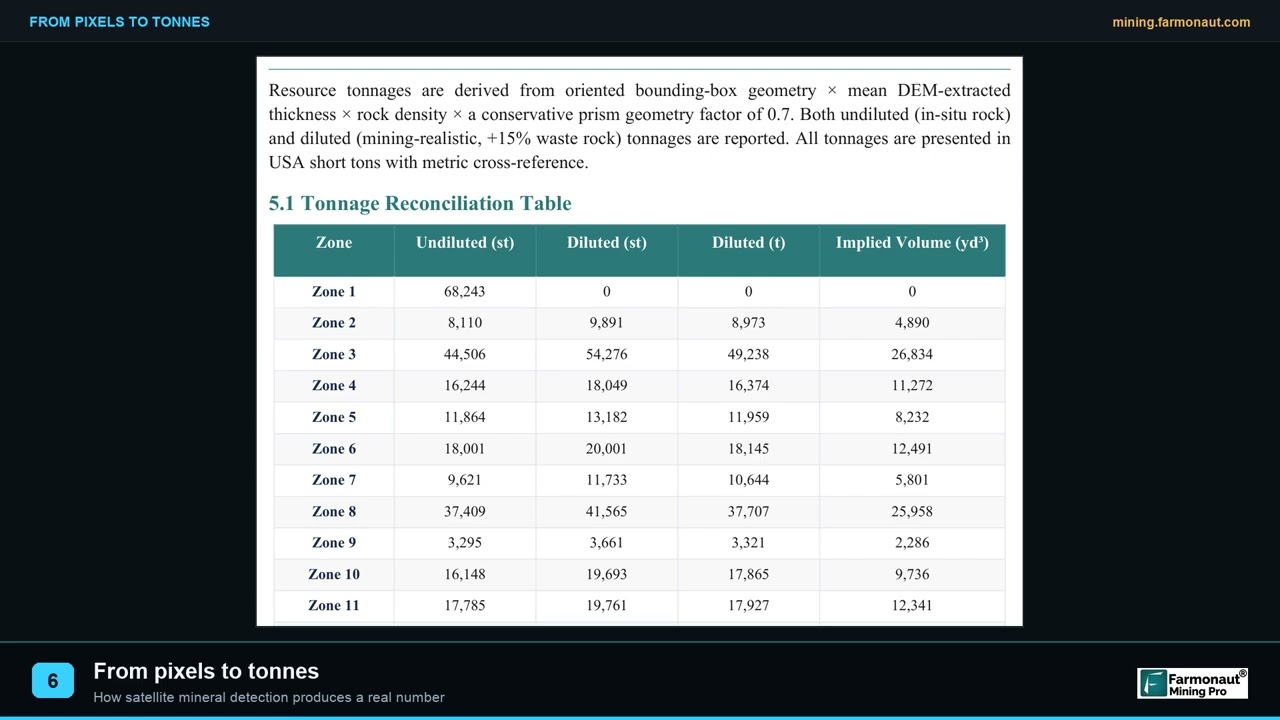
▶ Explains how a picture from orbit becomes a tonnage and a grade, and which inputs are measured versus assumed. · 2:54
Best Practices and a Strategy Checklist
A sound mineral rights investment strategy isn’t about chasing the next lease offer — it’s contract clarity, diversification, and disciplined reassessment applied consistently.
Engage Cross-Disciplinary Specialists
- ✔ Pair title attorneys and land agents with geologists and resource economists for multi-perspective valuation and stronger negotiating use.
- ✔ Work with mineral exploration technology providers suited to your region and target minerals, such as Farmonaut’s satellite mineral intelligence.
Craft Detailed, Future-Proof Contracts
- ✔ Specify royalty rates, payment schedules, and minimum royalty floors explicitly — don’t leave any at “standard” or “market rate.”
- ✔ Add surface-use restrictions and operator requirements covering noise, water management, and traffic.
- ✔ Make environmental commitments and reclamation plans legally binding wherever your jurisdiction allows.
Diversify Across Commodities, Regions, and Operators
- ✔ Spread exposure across mineral types — aggregates, industrial minerals, or oil and gas — rather than concentrating in one commodity cycle.
- ✔ Consider syndicates or professionally managed mineral funds for diversified exposure with less hands-on management.
Monitor Market and Regulatory Dynamics
- ✔ Benchmark royalty rates against published state comparisons — the federal 12.5% floor on recent leases is a useful reference point, not a universal default.
- ✔ Track state energy or mineral commission websites (for example, the Texas Railroad Commission or Louisiana Department of Natural Resources), which update rate and bonus data monthly to quarterly.
🔍 Mineral Rights Investing Strategy Checklist
- 📈 Combine satellite imagery, geological data, and historic production records before valuing a tract.
- 🛡 Insist on contracts with audit rights and a clear dispute-resolution process.
- 🌱 Require environmental stewardship and reclamation commitments in writing.
- 📉 Plan for commodity price cycles — EIA’s WTI averages of $76.60 in 2024, $65.40 in 2025 and $88.21 projected for 2026 are a reminder these swings are real, not theoretical.
- 🎯 Reassess your holdings on a fixed schedule rather than waiting for a problem to force the review.
Have questions before you start? Contact Us for support in mapping, valuation, and mineral rights investing for agricultural or forestry land.
Ready to get a quote or submit your site? Get a Custom Mineral Detection Quote Here.
- Track USDA’s Land Values survey (released each August) and your state’s mineral or energy commission bulletins to stay current on mineral rights value and lease terms rather than relying on a fixed figure from any single article.

▶ Shows how a mineral management system puts maps, samples and targets in one place. · 3:21
FAQs: Mineral Rights Investing
Q1: Do I need to own the surface land to invest in mineral rights?
No. In many U.S. states, mineral rights are sold or held separately from surface rights under a split estate — the BLM manages about 58 million acres of federal minerals under privately owned surface. Non-landowners can purchase mineral rights or royalty interests directly, but a clear title investigation is essential first.
Q2: How are mineral royalties calculated and paid?
Royalties are a percentage of production revenue — 12.5% at the federal onshore minimum on leases issued after 4 July 2025, and set by negotiation in private leases. Payments are typically made monthly or quarterly based on actual production and the sale price on the day production is sold, so they move with commodity prices rather than staying fixed.
Q3: What happens if oil, gas, or metals prices decline after I invest?
Royalty income falls directly with the commodity price — WTI averaged $65.40 a barrel in 2025 and EIA projects $88.21 for 2026, which shows the scale of swing possible in a single year. Diversifying across mineral types and regions, and negotiating a minimum royalty floor into your lease, are the standard mitigations.
Q4: Can I invest in mineral rights without buying a specific tract?
Yes. Professionally managed mineral rights funds and syndicates pool investor capital across many tracts and commodities, spreading risk and removing the need for hands-on lease negotiation — at the cost of management fees and less control over individual contract terms.
Q5: What are the most important contract clauses to check before signing?
Royalty rate and any post-production cost deductions, payment schedule, audit rights, minimum royalty floors, environmental and surface-use terms, and a defined dispute-resolution process. A rate quoted near the 12.5% federal floor is worth negotiating upward if comparable regional leases run higher.
Q6: How do I find the current mineral rights price per acre for my state?
No agency publishes a national average, and prices vary widely by state, county and play. USDA’s Land Values survey, published each August at usda.nass.usda.gov, is the most current public benchmark by state and land type — check it directly rather than relying on a national average for a specific negotiation.
Further reading:
Q7: How do I purchase mineral rights?
Confirm who owns the minerals, run a title search, check for leases, get a title opinion, value the interest, then close and record the deed in the county where the land sits. The checklist above sets out each step.
Q8: What are the ways to invest in mineral rights?
Buy mineral or royalty interests directly, invest through a fund or syndicate, or hold rights you already own. Each route carries commodity price risk, and direct holdings are hard to resell.
Conclusion: A Long-Duration Position, Not a Quick Trade
Mineral rights investing is a genuine path for agricultural, forestry, and rural landowners to diversify income and gain value from land that already sits idle beneath their crops or timber. The core numbers are concrete: the federal onshore royalty floor is 12.5% on leases issued after 4 July 2025, per-acre values vary widely by basin, and royalties can supplement land income once a lease is producing. None of that changes the fact that it’s illiquid, exposed to commodity swings like the move in the WTI average from $65 to $88 a barrel between 2025 and 2026 (EIA), and dependent on getting the title, contract, and operator vetting right before signing anything.
The durable process — map the mineral potential, verify title and existing encumbrances, define your objective, get professional contract review, negotiate surface protections, start small, and reassess on a fixed schedule — doesn’t expire when this year’s prices do. Re-run it against USDA’s next Land Values release, the EIA’s next Weekly Petroleum Status Report, and your state’s current mineral commission bulletins, and the same seven steps still apply.
At Farmonaut, we offer satellite-based mineral intelligence designed to support that first step — sustainable, non-invasive, and data-driven exploration ahead of any physical survey.
Map Your Mining Site Here or get a quote for Farmonaut’s mineral detection services.
Ready to evaluate the mineral potential of your land with real numbers instead of guesswork? Start with the mapping step above, then bring in the professional review your state and commodity require.
This page is for information only. It is not legal, tax or investment advice. Confirm the rules with the regulator and an attorney licensed in the state.
Farmonaut mining
Map your own project area from space
Send a KML, KMZ or polygon and Farmonaut screens the area from satellite data as a first look before ground work. Request a quote.

Mining Pro sample view, synthetic data
Keep reading
Sources
- BLM, Leasing and development of split estate: blm.gov
- BLM, Split estate brochure: blm.gov
- Federal Register, Revisions to regulations regarding oil and gas leasing; fees, rentals and royalties (2026): federalregister.gov
- EIA, Short-Term Energy Outlook, October 2026: eia.gov
- EIA, Weekly Petroleum Status Report: eia.gov
- EIA, Analysis and projections, STEO price table: eia.gov
- U.S. Department of the Interior, Fiscal year 2025 energy revenue (2025): doi.gov
- NARO, Mineral title search guide: naro-us.org
- NARO, Mineral rights vs. royalties: naro-us.org
- NARO, Investing in mineral rights and royalties: naro-us.org
- NARO, Valuing your mineral rights: naro-us.org
- Ohio State University Extension, Income tax management of oil and gas lease payments (2020): ohioline.osu.edu
- BLM, Alaska federal mining claim guide (August 2026): blm.gov
- BLM, Mining claims packet (March 2026): blm.gov
Discussion
Questions, corrections or field experience? Share them below. First-time comments are reviewed before they appear, and your email is never published.
No comments yet. Be the first to add a question or your experience.

 Sahara Mining
 Sean Mining Limited
 NTS Group (Pty) Ltd
 Mine4Africa
 Lithspo Minerals Limited
 Tintina Mining Group
 Dalgety Minerals Pty Ltd
 Vortex Minerals Pty Ltd
 Faith At Work (Pty) Ltd
 Geotech Mining Solutions plc
 Vulcan International Limited
 Kidepo Associates
 GKY Mining
 Alkimy SARL
 Double A Trading
 GemSprout Metals Limited
 Qader Group
 Ileys General Trading
 SG Gold Mining LLC
 VRV Global Pte Ltd
 Omsri International FZE
 G.I.T.T.
 Jaunita Erss Ltd
 SRK Consulting
 Berks Gold Limited











