

Reviewed September 2026 against Rock Chasing, Ruby Glint, and The Natural Gemstone Company gemstone pricing guides; no US government price index for jade exists, so this page relies on retailer-reported ranges.
Try it: Run your own numbers →
Jadeite runs from about $20 to $30,000+ per carat, and top-grade “Imperial” green Type A jadeite can run $3,000 to $30,000+ per carat. Nephrite, the more common jade mineral, runs far lower at roughly $10 to $1,000 per carat, or $50 to $500 per kilogram for mid-to-high-quality rough from Canadian deposits. The gap between those two numbers is the single most important fact on this page: “jade price” is not one number, it is two different minerals with non-overlapping price bands, and almost every search for “jade price per carat” is really a search for one of them without realizing it.
This page breaks the pricing apart by mineral, by grade, and by unit (gram, carat, kilogram), sources every figure to a named retailer guide, and gives you a calculator to convert a quoted price into what a specific stone would actually cost. No official US commodity index tracks jade the way USDA tracks corn or USGS tracks gold — so this article also tells you exactly where to check for a fresher number than the one printed here.
Table of Contents
- Jade Price Per Carat and Per Gram, By Grade
- Jadeite vs. Nephrite: Why the Prices Don’t Overlap
- Imperial Jadeite: What Drives the Top of the Market
- Nephrite by the Kilogram: Canadian and Chinese Benchmarks
- Jade Value Calculator
- What Actually Moves the Price You’ll Be Quoted
- How to Check Today’s Price Yourself
- Where Jade Comes From, and the Environmental Cost of Getting It Out
- Video Resources: Mining, Satellite, and Sustainability
- Traceability, Testing, and Why Documentation Changes the Price
- Infrastructure, Conflict, and Supply Disruption
- How Farmonaut Fits Into the Jade Supply Chain
- Farmonaut Subscription Information
- FAQ
- Try it: Run your own numbers
Jade Price Per Carat and Per Gram, By Grade
The single biggest mistake in shopping for jade is comparing a jadeite quote to a nephrite quote as if they were the same material. They aren’t — different mineral, different rarity, different market. The table below lays out both, by grade, using the ranges reported by gemstone retailer pricing guides current as of 2026.
| Jade Type | Grade | Price Per Carat (USD) | Source |
|---|---|---|---|
| Nephrite | Full quality range (commercial to fine) | $10–$1,000 | Rock Chasing |
| Jadeite | Commercial-grade / ordinary | $5–$50 | The Natural Gemstone Company |
| Jadeite | Fine Type A (good translucency, good color) | $100–$3,000 | Healing Sounds gemstone guide |
| Jadeite | Imperial green (top-quality Type A) | $3,000–$30,000+ | BM Jade price guide |
| Jadeite | Full quality range (all grades) | $20–$30,000+ | Ruby Glint |
To convert to price per gram: 1 carat equals 0.2 grams, so multiply any per-carat figure by 5 to get price per gram. Fine Type A jadeite at $100–$3,000/carat becomes $500–$15,000/gram. Commercial nephrite at $10–$1,000/carat becomes $50–$5,000/gram. That conversion factor is fixed by definition — it doesn’t expire — so you can apply it to any updated per-carat quote you find later without needing this page to be refreshed.
Jadeite vs. Nephrite: Why the Prices Don’t Overlap
Jade is not one mineral — it’s a market term covering two chemically distinct stones, and the price gap between them is structural, not a matter of current sentiment.
- Nephrite is a calcium magnesium iron silicate. It’s the more abundant of the two, found in deposits across British Columbia and the Yukon in Canada, in Siberia, and in New Zealand. Because supply is comparatively large, nephrite trades in the $10–$1,000 per carat range across quality grades, per Rock Chasing’s 2026 guide.
- Jadeite is a sodium aluminum silicate — a different mineral entirely, not just a different grade of the same stone. Gem-quality jadeite deposits are far rarer geologically, historically concentrated in Myanmar’s Kachin State. Scarcity plus the market’s preference for its more saturated, glassier green pushes jadeite’s range to $20–$30,000+ per carat, per Ruby Glint’s 2026 pricing chart.
Practically: if a listing says “jade” with no qualifier and the price is under $50/carat, assume nephrite or low-grade jadeite. If it’s quoted in the thousands per carat, it’s almost certainly being sold as jadeite, and you should ask the seller to confirm which mineral and grade before paying an imperial-tier price for a nephrite-tier stone.

Imperial Jadeite: What Drives the Top of the Market
“Imperial jade” isn’t a marketing label — it refers to a specific quality tier of Type A jadeite: untreated stone with an intense, evenly saturated green and high translucency. Gemstone industry sources place this tier at $3,000 to $30,000+ per carat, per BM Jade’s 2026 price guide, with the top of that range reserved for stones that are simultaneously large, flawlessly even in color, and certified untreated.
Three variables determine where a given stone lands inside that $3,000–$30,000+ band:
- Color saturation and evenness — a stone with patchy or muted green sits at the bottom of the range regardless of size.
- Translucency — light should pass into the stone, not just reflect off the surface; opaque material is priced as a lower grade even if the color is right.
- Treatment status (Type A vs. B vs. C) — Type A jadeite is untreated aside from a wax coating. Type B has been bleached and polymer-impregnated; Type C is dyed. Only Type A commands imperial pricing — B and C material trades at a fraction of the price even with comparable color, because the treatment is not permanent and buyers discount for it.
Below imperial grade, jadeite drops sharply: fine Type A stone with good but not exceptional color and translucency trades at $100–$3,000/carat, and commercial-grade jadeite — visible inclusions, muted color, or minor treatment — trades at $5–$50/carat, per the Natural Gemstone Company’s 2026 chart. That’s a roughly 600-fold spread between the bottom and top of the jadeite market alone, which is why a single “jadeite price” headline number is close to meaningless without a grade attached.

Nephrite by the Kilogram: Canadian and Chinese Benchmarks
Nephrite is more often priced by the kilogram than by the carat, because it’s typically sold as larger rough or carved pieces rather than faceted gems. Two benchmarks from 2026 gemstone sourcing guides frame the range:
- Canadian nephrite (mid-to-high quality, sourced mainly from British Columbia): $50–$500 per kilogram, per Rock Chasing’s 2026 guide.
- Hetian mutton-fat white nephrite — a premium Chinese collector category prized for its warm, opaque white tone: $10,000+ per kilogram, also per Rock Chasing.
That’s a 20-to-200x premium for the rarest nephrite color category over ordinary Canadian material of comparable mineral purity — a reminder that within nephrite, as within jadeite, color and rarity of tone matter more than the base mineral identity. If you’re evaluating a nephrite piece priced by weight rather than by carat, converting to per-carat terms (1 kg = 5,000 carats) puts ordinary Canadian nephrite at roughly $0.01–$0.10/carat equivalent for raw material — far below the finished, cut-and-polished carat prices in the table above, because rough material hasn’t yet had cutting, polishing, and grading value added to it.
Jade Value Calculator
Enter a stone’s weight and select its type and grade to estimate where it falls in the ranges reported above — the calculator applies the exact per-carat bounds from the pricing table, not a single made-up number.
Run your own numbers
Assumes cut-and-polished stone priced within the ranges reported by Rock Chasing, Ruby Glint, and the Natural Gemstone Company’s 2026 guides. It does not account for setting, carving work, certification premiums, or individual stone quality within a grade — two stones in the same grade can still differ several-fold based on cut and clarity. Use it to sanity-check a quote, not to appraise a specific piece.
What Actually Moves the Price You’ll Be Quoted
Beyond the type/grade split above, several factors shift where a specific stone lands within its band:
- Color intensity and evenness. This is the single largest swing factor within jadeite, moving a stone from the $5–$50 commercial band to the $3,000–$30,000+ imperial band with no change in size.
- Size and carat weight. Larger stones fit for statement jewelry or fine carving carry a per-carat premium over small stones of identical grade, because gem-quality material large enough to cut cleanly is rarer.
- Treatment status. Type A (untreated) commands the full range above; Type B (bleached, polymer-filled) and Type C (dyed) material trades at a steep discount to Type A even with similar visible color, since the color or clarity isn’t permanent.
- Source and documentation. Stones with verifiable origin and legal chain-of-custody records trade at a premium over undocumented material carrying the same visual grade, because buyers can’t independently verify an undocumented stone’s treatment history or mine of origin.
- Cutting and craftsmanship. A well-proportioned cabochon or bead that maximizes color and minimizes visible flaws sells above a poorly cut stone of the same rough material.

How to Check Today’s Price Yourself
There is no official US government or Federal Reserve price index for jade — nothing comparable to USDA’s daily commodity quotes or the spot-price tickers that exist for gold and silver. Every figure on this page comes from private gemstone retailer pricing guides, and those guides update on their own schedule, typically quarterly to semi-annually as market conditions shift. Here’s how to get a number newer than the one printed above:
- Check the three retailer guides cited in this article directly — Rock Chasing, Ruby Glint, and The Natural Gemstone Company — for their current posted ranges.
- For US-side trade context, watch for the USGS Mineral Commodity Summaries annual release; the 2026 edition (covering 2025 calendar-year data) is out now, and the 2027 edition covering 2026 data is expected around February 2027. Note that jade is typically not broken out as its own line item in US trade statistics — it’s usually grouped under a broader gemstones or imported finished-goods category, so don’t expect a clean jade-specific production or import figure there.
- Ask any seller quoting a specific price to state the mineral (jadeite or nephrite), the treatment type (A, B, or C), and the grading basis — without those three, a quoted number can’t be checked against any of the ranges in this article.
No peer-reviewed academic study of jade market pricing or US market size currently exists in the public record, and no dataset tracks jade extraction volume or trade flow by country the way USGS tracks metals. That’s a real gap in the public data, not an oversight of this article — treat any single-number “jade market size” claim you see elsewhere with the same skepticism.
Where Jade Comes From, and the Environmental Cost of Getting It Out
Nephrite is mined mainly in British Columbia and the Yukon in Canada, in Siberia (Russia), and in New Zealand’s South Island. Jadeite’s primary source has historically been Myanmar’s Kachin State, with smaller deposits in Guatemala. These are mountainous, often forested, often environmentally sensitive regions, and extraction — especially large-scale or artisanal jadeite mining — carries real ecological cost:
- Deforestation and soil erosion from clearing access routes and overburden removal in forested mining zones.
- Sediment loading in rivers from washing and processing rough material, which affects downstream water quality and aquatic habitat.
- Landscape disturbance that can persist for years without active rehabilitation.
Buyers increasingly weight documented, legally sourced material — with traceable chain of custody — above undocumented stone of comparable visual grade, which is part of why source legality shows up as a price factor above, not just an ethical one. Monitoring extraction sites over time is where satellite observation is useful: it can flag new clearing, water turbidity changes, and encroachment into forested buffer zones without requiring a site visit.
Farmonaut’s Carbon Footprinting service quantifies emissions tied to extraction and processing operations for operators who need to document environmental performance for buyers or regulators.

Video Resources: Mining, Satellite, and Sustainability
These videos cover satellite-based mineral exploration and mining monitoring relevant to gemstone and metal extraction regions:


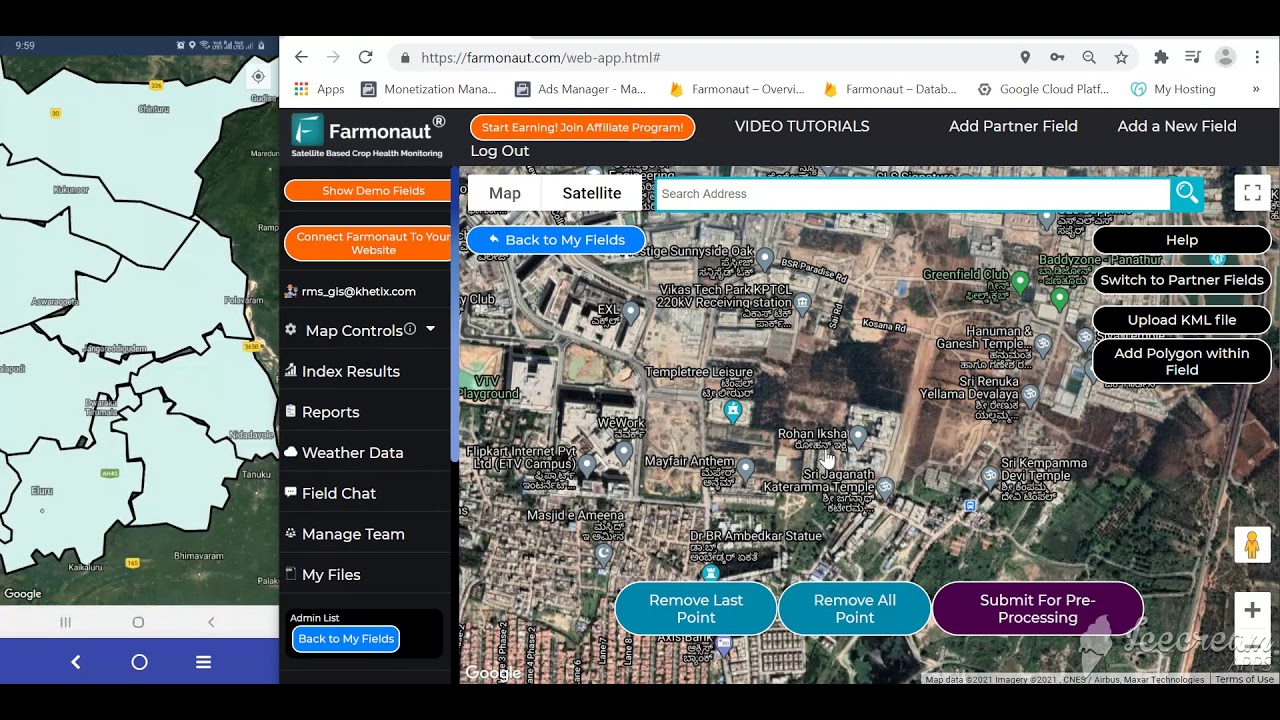
For a bird’s-eye view of a mining region’s activity over time, see Farmonaut’s satellite API, which provides the underlying imagery and vegetation-index data operators and regulators use for this kind of monitoring.
Traceability, Testing, and Why Documentation Changes the Price
Two technologies matter most for what a jade buyer or appraiser can actually verify:
- Gemological testing — FTIR spectroscopy, Raman spectroscopy, and refractive-index measurement distinguish Type A from Type B/C treatment and separate jadeite from nephrite and from imitation materials (dyed quartzite or serpentine, most commonly). A treatment-status certificate from an independent gem lab is what allows a stone to be sold at the top of its grade’s range with confidence.
- Supply-chain documentation — records establishing legal mine-of-origin and chain of custody. Farmonaut’s Traceability solutions and the underlying developer API documentation support this kind of record-keeping for mining and agricultural supply chains generally.
Practically, ask for both before paying a premium price: a treatment-status report from a recognized gem lab, and origin documentation. A stone with neither should be priced at the bottom of its visual-grade band, not the top, regardless of how it looks.

Infrastructure, Conflict, and Supply Disruption
Jade supply is geographically concentrated enough that local disruption shows up in price. Roads and rail access into mining regions in Canada and Russia affect how efficiently rough material reaches processing and export centers, and logistics costs feed directly into landed price. In Myanmar specifically, mining-region conflict and security conditions have historically constrained output and export flow — when access to a mining district tightens, the effect shows up as tighter supply of jadeite specifically, since Myanmar’s jadeite deposits have no comparable substitute elsewhere.
Operators managing logistics across mining and land-based supply chains can use Farmonaut’s Fleet Management tools for real-time vehicle and shipment tracking between extraction and processing sites.
How Farmonaut Fits Into the Jade Supply Chain
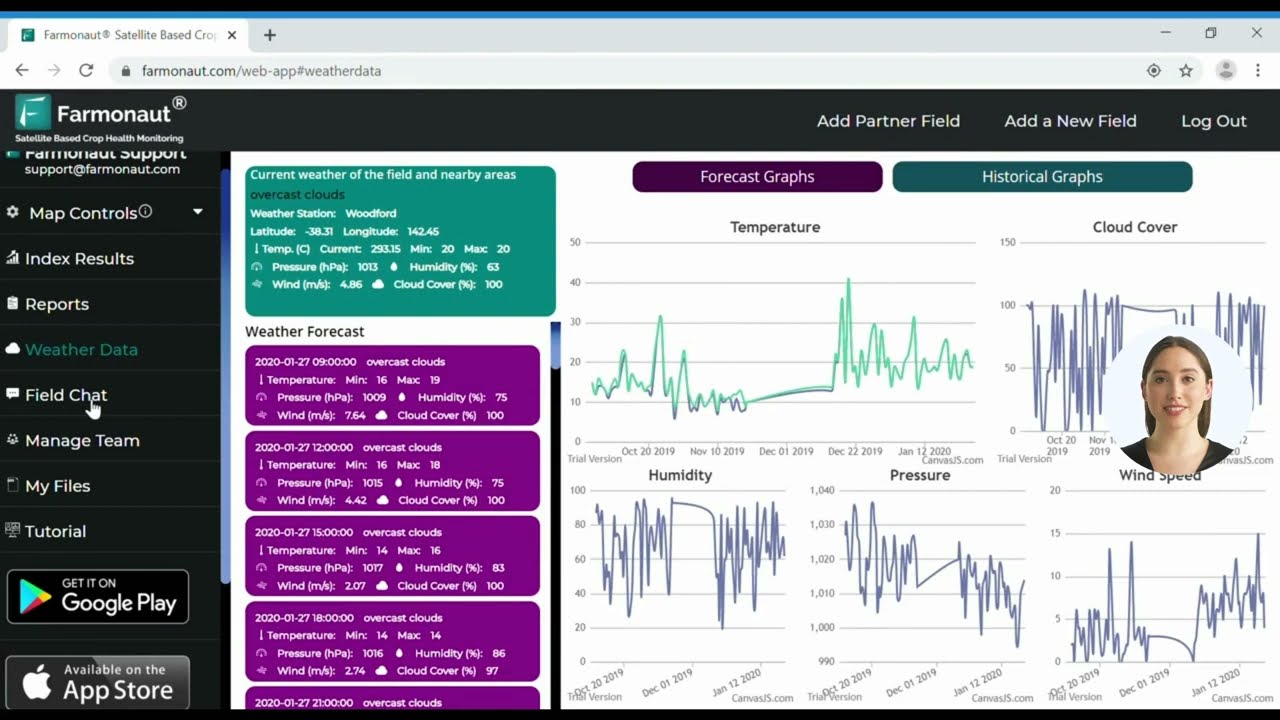
Farmonaut’s core business is satellite-based monitoring for agriculture and mining, not gemstone appraisal — but the same tools that track crop health and mine-site boundaries apply directly to jade-producing regions:
- Satellite monitoring for deforestation, water turbidity, and land disturbance around known mining districts.
- Blockchain-integrated traceability for recording chain-of-custody data that supports origin claims.
- Carbon footprint monitoring for operators documenting environmental performance.
- Fleet management for logistics between extraction and processing sites.
- Large-scale land and mining administration tools for multi-site operators.
- Loan and insurance verification via satellite data for eligible operations.
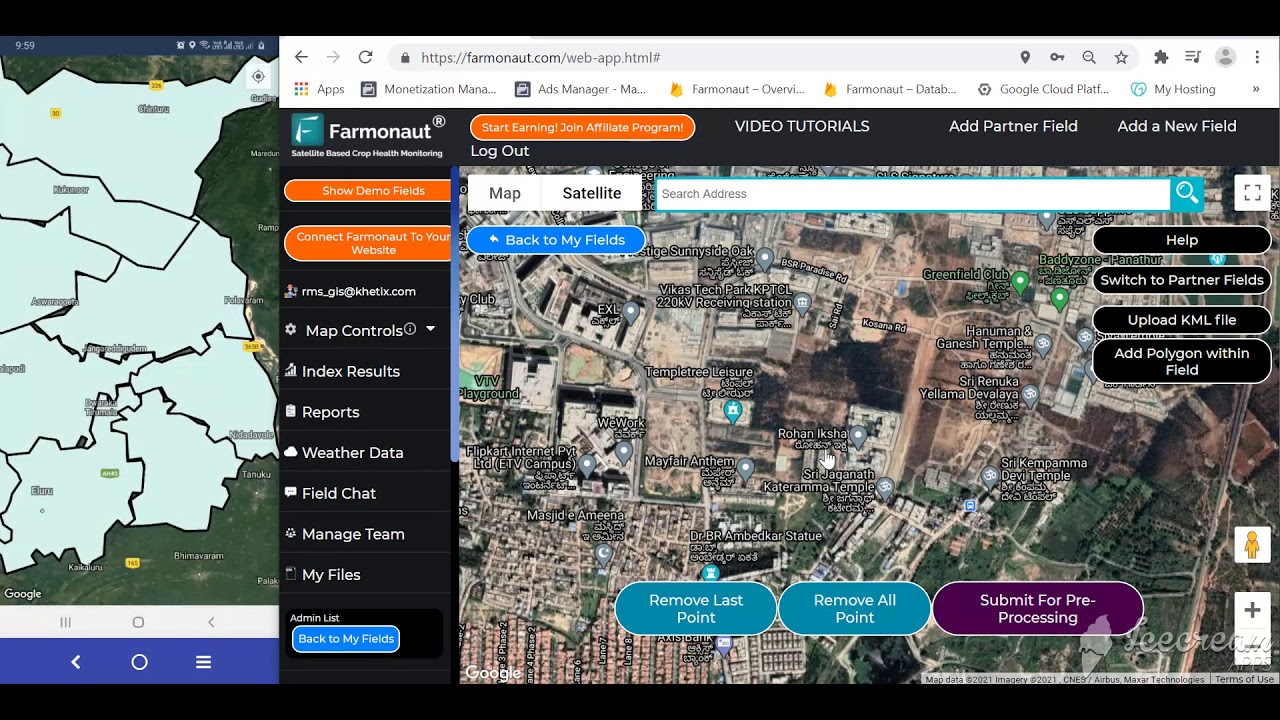
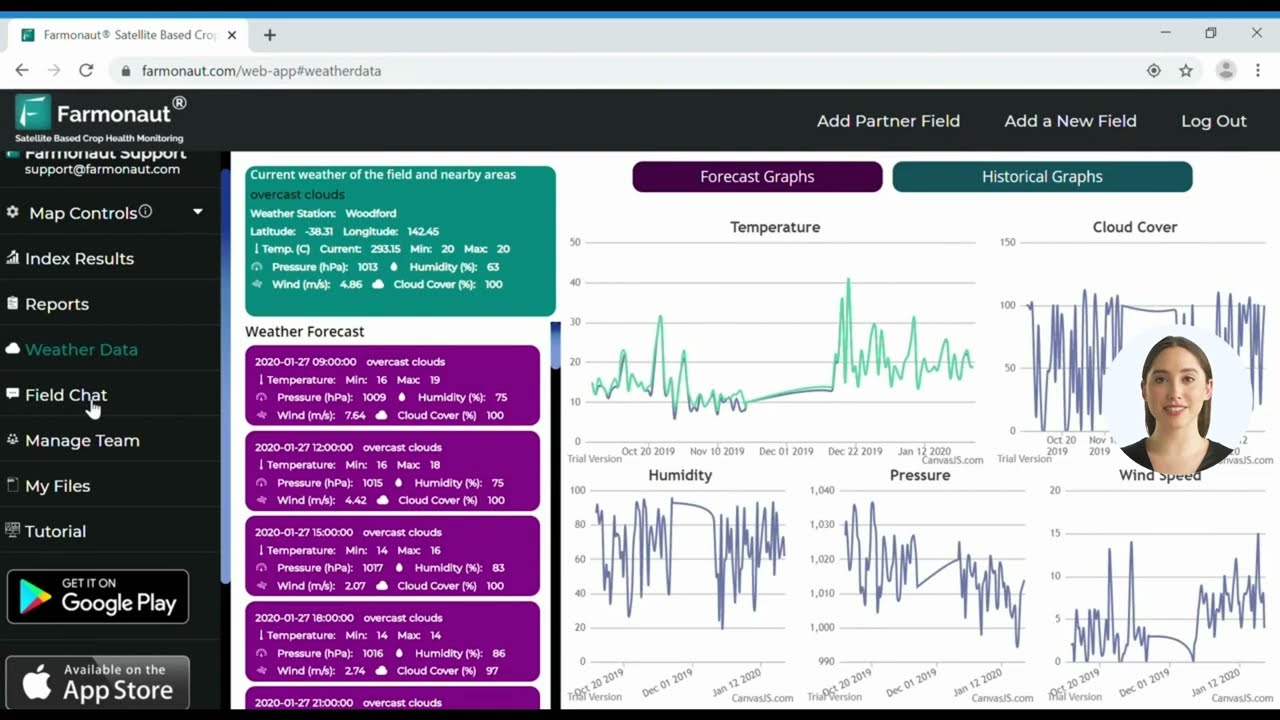
Access is available through the API and developer documentation, or through the mobile and web apps:


Farmonaut Subscription Information
Farmonaut’s subscription plans cover satellite monitoring, traceability, and fleet management for mining and agricultural operators:
FAQ
1. What is jade price per gram in 2026?
Converting carat prices to grams (1 carat = 0.2 g, so multiply per-carat price by 5): nephrite runs about $50–$5,000/gram, commercial jadeite $25–$250/gram, fine Type A jadeite $500–$15,000/gram, and Imperial green jadeite $15,000–$150,000+/gram. These derive directly from the per-carat ranges reported by Rock Chasing, the Natural Gemstone Company, and Healing Sounds’ 2026 guides.
2. What is nephrite price per gram in 2026?
Nephrite’s full quality range is $10–$1,000 per carat per Rock Chasing’s 2026 guide, which converts to roughly $50–$5,000 per gram. Canadian rough nephrite priced by the kilogram (mid-to-high quality) runs $50–$500/kg — a much lower figure because it’s unfinished material, not cut and graded stone.
3. What is imperial jadeite price per carat in 2026?
Top-quality Type A Imperial green jadeite runs $3,000 to $30,000+ per carat, per BM Jade’s 2026 price guide. The exact price within that range depends on color saturation, translucency, and confirmed Type A (untreated) status — a certified stone at the low end of translucency can sell for a fraction of a comparably colored, highly translucent piece.
4. What is jadeite price per carat in 2026, across all grades?
Jadeite spans $20 to $30,000+ per carat across all grades combined, per Ruby Glint’s 2026 chart — from commercial-grade material at $5–$50/carat up through fine Type A ($100–$3,000/carat) to Imperial green ($3,000–$30,000+/carat). There is no single “jadeite price” without a grade attached.
5. What is the difference between nephrite and jadeite in terms of price and value?
They’re different minerals, not different grades of the same stone. Jadeite (sodium aluminum silicate) is rarer and commands $20–$30,000+/carat; nephrite (calcium magnesium iron silicate) is more common and commands $10–$1,000/carat. Within each, color, translucency, and treatment status (Type A vs. B/C) drive most of the spread.
6. Is there an official jade price index like there is for gold or silver?
No. There is no US government, Federal Reserve, or industry-standard price index for jade. Every figure in circulation, including on this page, comes from private gemstone retailer pricing guides that update quarterly to semi-annually. Treat any single “the jade market price is X” claim without a named source as unverifiable.
7. How can I verify the authenticity and treatment status of a jade stone?
Request an independent gem lab report confirming Type A (untreated), B (bleached/polymer-filled), or C (dyed) status, plus documentation of mine of origin. Farmonaut’s Traceability solutions support chain-of-custody record-keeping for supply chains generally, though gem-specific lab certification (FTIR/Raman testing) should come from a recognized gemological lab.
8. Where does jade sold in the US typically come from?
Nephrite sold in North America is most often sourced from British Columbia and the Yukon in Canada, with additional supply from Russia and New Zealand. Jadeite is historically sourced from Myanmar’s Kachin State, with smaller volumes from Guatemala. US-specific import and production statistics for jade are not separately broken out in USGS trade data — jade is typically grouped under a broader gemstones category.






The Bottom Line on Jade Pricing
Any jade price quote is only meaningful once you know three things: which mineral (jadeite or nephrite), which treatment class (Type A, B, or C), and which visual grade within that class. Skip any one of those and a “$500/carat” quote could mean either a very good nephrite stone or a badly overpriced commercial jadeite one. Use the table and calculator above to place a specific quote inside the right band, and check the three sourced retailer guides directly if you need a number newer than this page’s September 2026 review date — because in a market with no official index, the retailer guides themselves are the most current public benchmark available.
For satellite-based monitoring, traceability, and environmental compliance tools relevant to gemstone and mineral extraction operations, explore Farmonaut’s web and mobile app.
Explore Further:
- Carbon Footprinting
- Traceability
- Crop Loan & Insurance
- Fleet Management
- Large Scale Farm & Mining Management

 Lithspo Minerals Limited
 Tintina Mining Group
 Dalgety Minerals Pty Ltd
 Vortex Minerals Pty Ltd
 Faith At Work (Pty) Ltd
 Geotech Mining Solutions plc
 Vulcan International Limited
 Kidepo Associates
 GKY Mining
 Alkimy SARL
 Double A Trading
 GemSprout Metals Limited
 Qader Group
 Ileys General Trading
 SG Gold Mining LLC
 VRV Global Pte Ltd
 Omsri International FZE
 G.I.T.T.
 Jaunita Erss Ltd
 Almosi SARL
 SRK Consulting
 Berks Gold Limited
 Mwerezi Minerals Company Limited
