

Mining careers · Apprenticeship guide
Palabora Mining Company Apprenticeship: How to Apply
PMC’s apprenticeship gives trade learners the on-the-job phase in electrical, fitting, instrumentation, boilermaking, diesel and auto-electrical work at its Phalaborwa copper complex. Below: every programme type, the documents asked for, past closing dates, the trade test route and an employer cost calculator.
Key takeaways
- PMC trades WIL places cover electrical, mechanical, instrumentation, plater/boilermaker, diesel and auto electrical (PMC notice, closing 24 December 2021).
- Past notices required an accredited off-the-job logbook and N2/N3, NCV or a technical matric with maths and physical science; Maths Literacy was not accepted.
- Recent calls closed on 8 November 2024 (artisan intern) and 21 February 2025 (3-month Artisan Aide programme for Ba-Phalaborwa residents aged 18 to 35).
- Since 1 June 2025 CBMT learners must sit NAMB’s national interim trade tests before QCTO certification (NAMB Circular 1 of 2025).
- Employers can deduct R40,000 a year plus R40,000 on completion per NQF 1-6 apprentice under section 12H, for agreements signed before 1 April 2027 (SARS IN20).
In this article
- Palabora Mining Company apprenticeship: the short answer
- What Palabora Mining Company is, and why it trains artisans
- Who owns Palabora: the JSE listing and the 2013 sale
- Palabora apprenticeship and training programmes compared
- Palabora apprenticeship requirements and documents
- How to apply for the Palabora Mining Company apprenticeship
- When applications open: past closing dates
- From apprentice to qualified artisan: the trade test
- Mining apprenticeships beyond Palabora
- Lift II and the long-term demand for artisans at Palabora
- For mining business owners: hosting your own apprentices
- Apprentice cost calculator
- Copper, Phalaborwa and the wider industry
- What to check before you accept a place
Palabora Mining Company apprenticeship: the short answer
The Palabora Mining Company (PMC) apprenticeship is a work-integrated learning place at the copper mine, smelter and refinery in Phalaborwa, Limpopo, where trainees in electrical, mechanical (fitting), instrumentation, plater/boilermaker, diesel and auto-electrical trades complete the on-the-job part of their trade. Past notices asked for an accredited off-the-job logbook, N2/N3 or NCV results or a technical matric with mathematics and physical science, and a certified ID, and gave preference to applicants from the Ba-Phalaborwa area (PMC apprenticeship notice, closing 24 December 2021).
Palabora Copper’s training department is an accredited training provider with the Mining Qualifications Authority (MQA) and the Quality Council for Trades and Occupations (QCTO), and it posts its programmes each year on its own recruitment portal (Palabora Copper Training and Development portal, viewed 30 October 2026). There is no fixed calendar: past intakes have closed in November, December and February.
This guide sets out every type of training place PMC has advertised, the documents each one asked for, a step-by-step way to apply, how an apprenticeship turns into a trade certificate, and a short section for mining business owners who want to host apprentices themselves, with a calculator for the cost after the tax allowance.
A few terms first. An apprenticeship is a structured trade training contract that ends in a trade test. A learnership is a broader work-based programme that leads to a registered qualification. Work-integrated learning (WIL) is the practical workplace part of a college course or trade. An artisan is a qualified tradesperson who has passed a trade test.
What Palabora Mining Company is, and why it trains artisans
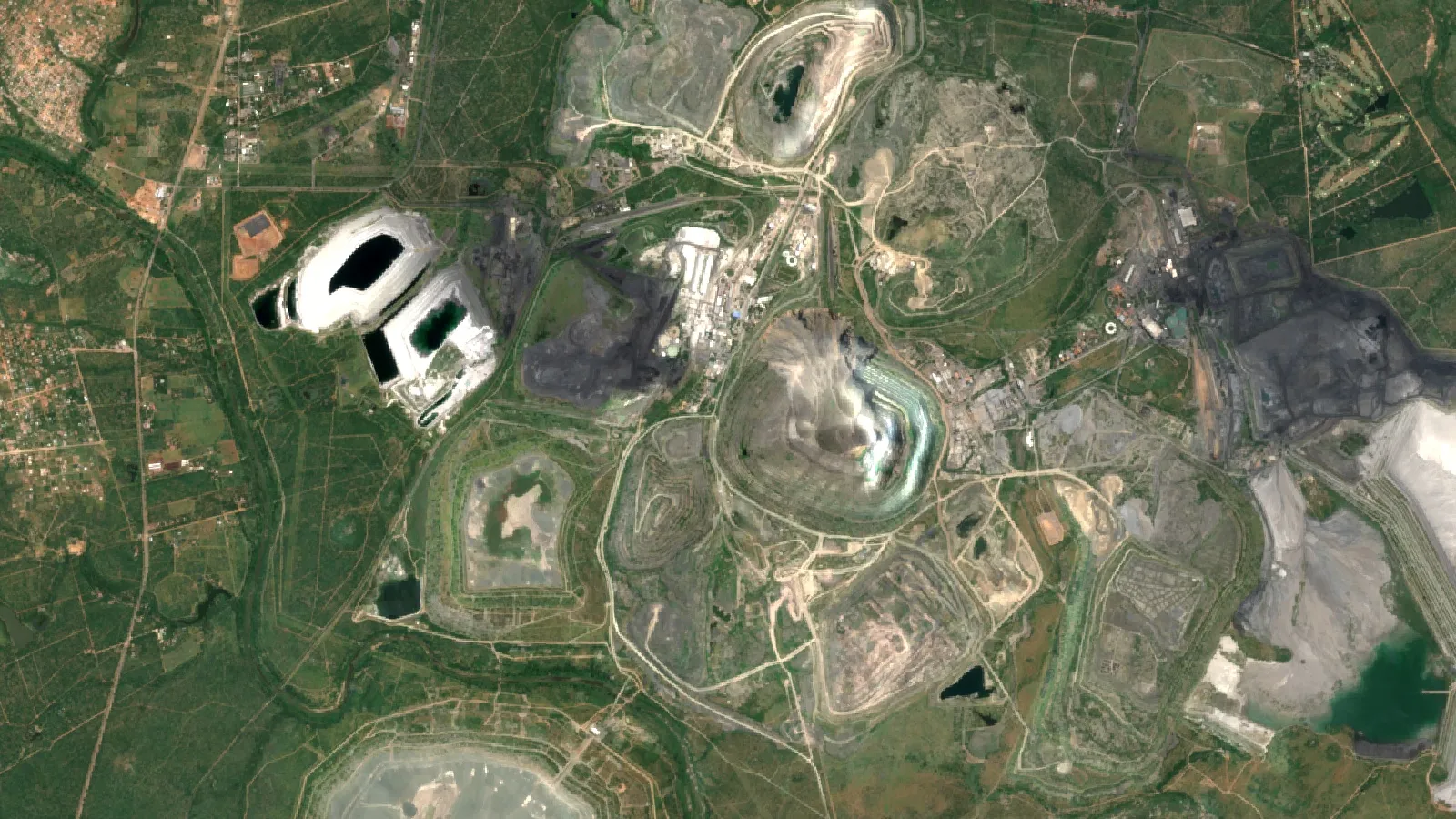
Palabora Copper (Pty) Limited, a subsidiary of Palabora Mining Company Ltd, runs a copper mine plus a smelter and refinery complex in the town of Phalaborwa, next to the Kruger National Park (Palabora Mining Company). The company was incorporated in 1956 and describes itself as South Africa’s only producer of refined copper, with about 60,000 tonnes of refined copper a year and about 2,722 employees (Palabora, About Us).
The ore body sits in the Palabora Igneous Complex, a carbonatite pipe at a hill called Loolekop. A carbonatite is an unusual igneous rock made mostly of carbonate minerals; the company notes that copper is not known to occur in carbonatites anywhere else. The same complex also holds phosphate, magnetite, vermiculite, zirconium, nickel and small amounts of gold, silver, platinum and palladium.
Mining began in 1965 as an open pit. The pit reached its final economic depth in 2002 and production moved underground to a block cave mine. Block caving is a bulk method in which a large block of ore is undercut so that it breaks and falls under its own weight into draw points, where loaders collect it. The underground mine was completed in October 2004 and was producing about 30,000 tonnes of ore a day by May 2005 (Palabora, UG Mining Lift I).
That plant is why the apprenticeship exists. A block cave, a concentrator, a smelter, an acid plant and a rod mill all need electricians, fitters, instrument technicians, boilermakers and diesel mechanics around the clock. The Lift I mine works 24 hours a day, 365 days a year, on three 8-hour shifts, and its fleet of load-haul-dump (LHD) machines tips about 3,000 buckets of ore a day into three jaw crushers. Each of those machines, crushers and conveyors is maintained by artisans. For a look at how operators track machine use and downtime in fleets like this, see our page on fleet management.
Products the trainees work around
- Copper rod and cathode: the refinery casts continuous rod for the domestic market and cathode for export.
- Sulphuric acid: made from smelter off-gas in the acid plant.
- Anode slimes: the residue from refining, which carries small amounts of gold, silver and platinum.
- Magnetite: recovered from old tailings dumps with magnetic separators.
- Vermiculite: an industrial mineral mined from shallow open pits nearby and sold worldwide.
- Nickel sulphate: a by-product of refining.
An apprentice placed in the smelter, the refinery or the vermiculite plant will see very different equipment from one placed underground, so it is worth reading the trade list in each notice carefully before choosing.
Who owns Palabora: the JSE listing and the 2013 sale
Until 2013, Rio Tinto owned 57.7% of Palabora and Anglo American owned 16.8%, with the remaining shares held by other investors on the Johannesburg Stock Exchange (JSE) (Palabora, Wikipedia).
Chart
Members of the buying consortium
% share of the consortium that bought 74.5% of Palabora
Chart
Palabora shareholding before the 2013 sale
% of shares held
On 11 December 2012 the two companies agreed to sell their combined 74.5% to a consortium of Chinese and South African investors for about US$611 million, or US$12.70 a share: US$373 million for Rio Tinto’s stake and about US$103 million for Anglo American’s (MINING.COM, 11 December 2012; Anglo American, 11 December 2012).
The consortium was led by the state-owned Hebei Iron and Steel Group with 35%. General Nice Development, a privately owned Chinese trading company, held 25%; Tewoo Group, a Chinese state firm, 20%; and South Africa’s Industrial Development Corporation (IDC) 20% (Miningmx). The IDC’s interest was partly practical: it wanted to secure phosphate supply from Palabora for Foskor, another state-owned company.
For an applicant, ownership matters in two ways. First, the company’s B-BBEE (South Africa’s black ownership and skills scorecard) commitments and its Social and Labour Plan drive much of its training spending and its preference for host-community applicants. Second, the investment in Lift II, the next level of the mine, is what keeps artisan jobs going into the 2030s.
This page gives company facts only. It does not recommend buying or selling any security. For a wider view of the companies that produce copper, see our ranking of the largest copper mining companies by output.
Palabora apprenticeship and training programmes compared
PMC does not run one single apprenticeship. Over the past few years its notices have covered at least five types of place. The table summarises what each notice said; the details change from year to year, so always read the current advert.
| Programme | Who it suits | Trades or fields | Key entry rules in past notices | Length |
|---|---|---|---|---|
| Trades WIL (apprenticeship, on-the-job practical) | Learners who finished the off-the-job phase at a trade college | Electrical, mechanical, instrumentation, plater/boilermaker, diesel, auto electrical | Completed off-the-job logbook from an accredited institution; N2/N3, NCV Level 4 or technical matric with maths and physical science; certified ID | Until the trade test (set by the trade) |
| N-Diploma WIL | N6 graduates who need workplace months for the National N Diploma | N6 mechanical, N6 electrical | N6 certificate and academic record | Set by the diploma’s practical requirement |
| Artisan Aide Skills Programme | Unemployed school leavers from Ba-Phalaborwa, aged 18 to 35 | Electrical, mechanical (fitting, fitting and turning), instrumentation, plater/boilermaker | Grade 12; no previous similar training; medically fit; proof of local address | 3 months |
| Engineering Artisan Intern | Ba-Phalaborwa residents with trade training | Engineering trades | Set in each notice | Set in each notice |
| Learnerships, internships and bursaries | School leavers, graduates and students | Mining, processing, engineering and support fields | Set in each notice | Usually 12 months for learnerships and internships |
Sources for the table: the 2022 apprenticeship notice (closing 24 December 2021) for the trades and N-Diploma rows, and the 2025 Artisan Aide notice (closing 21 February 2025) for the aide row (StudentRoom, PMC Artisan Aide Skills Programme). The Engineering Artisan Intern call for Ba-Phalaborwa communities closed on 8 November 2024.
PMC adverts do not publish intake sizes or stipend rates; both are set for each intake and stated in the offer letter.
Trades offered and what the work looks like
- Electrician: motors, switchgear, cabling and lighting in the plant and underground; a high-demand trade because the smelter and conveyors run on large electric drives.
- Fitter or fitter and turner: pumps, gearboxes, crushers and conveyor drives; turners also machine replacement parts on a lathe.
- Instrument mechanician: sensors, flow meters, control valves and the control systems that run the concentrator and acid plant.
- Plater/boilermaker: cutting, rolling and welding steel for chutes, tanks, ducts and structures.
- Diesel mechanic: underground mobile machines such as LHDs, drill rigs and utility vehicles.
- Auto electrician: wiring, starters and electronic controls on vehicles and mobile machines.
Palabora apprenticeship requirements and documents
Each notice sets its own rules, but the same items have appeared again and again in PMC adverts. Prepare these before the call opens, because PMC states that late applications are not considered.
Typical entry requirements
- South African citizen with no criminal record.
- For the trades WIL: a completed off-the-job logbook from an accredited trades training institution.
- Academic results: a full NATED course (four subjects at N2/N3), an NCV certificate with all seven subjects, or a technical matric with mathematics (E symbol or better), physical science (E symbol) and a trade-related theory subject. Mathematical Literacy was not accepted.
- For the Artisan Aide programme: Grade 12, age 18 to 35, unemployed, no previous similar training, and medically fit for all areas.
- Pre-screening assessments and interviews for shortlisted candidates.
Documents to have certified
- Cover letter naming the exact position and reference number (for example SP-ELEC for electrical in the 2025 aide notice).
- Full CV with contact numbers that work.
- Certified copy of your ID.
- Certified copies of your matric certificate and full academic record.
- Trade logbook (trades WIL only).
- Proof of residence for host-community preference: a municipal letter or tribal authority letter certified by a commissioner of oaths. The 2025 notice named Maseke, Lulekani, Makhushane, Namakgale, Benfarm, Selwane, Mashishimale and Phalaborwa town.
The 2022 trades notice also said that the immediate family of current or former Palabora Copper employees would be considered, with proof such as a medical aid card or birth certificate, and it encouraged women and people with disabilities to apply. It stated clearly that a WIL place is not a contract of employment and does not guarantee a job afterwards.
How to apply for the Palabora Mining Company apprenticeship
- Check your stage. Decide whether you need the on-the-job phase of a trade (trades WIL), workplace months for an N Diploma, or an entry-level programme such as Artisan Aide. Apply only for the one that matches your papers.
- Watch the official channels. PMC lists training places under Careers, then Training Opportunities, on palabora.com, and on its Training and Development portal at simplify.hr. Local notice boards and community offices in Ba-Phalaborwa have also carried the adverts.
- Read the trade reference numbers. Each trade has its own reference. Name the one you want in the cover letter and in the email subject if the notice asks for email.
- Certify documents early. Certification at a police station or by a commissioner of oaths can take a day. Scan each document clearly as a PDF.
- Submit before the closing date. Past notices took applications online or by email (the 2022 trades call used [email protected]). Use only the address printed in the current notice.
- Prepare for assessments. Shortlisted applicants sit pre-screening tests and interviews, followed by a medical fitness check.
- Keep your phone on. Candidates who are not contacted after the selection window should assume they were not shortlisted for that round, and can reapply when the next call opens.
Never pay anyone to apply, to be shortlisted or to “secure” a place. PMC notices have not asked for any fee. Treat any message asking for money, or for documents to be sent to a personal email or WhatsApp number not printed in the official advert, as a scam.
When applications open: past closing dates
Many applicants look for a fixed intake date for the PMC learnership online application. PMC does not publish a fixed annual calendar, and recent calls have opened at different times of year:
| Notice | Closing date | Open to |
|---|---|---|
| Apprenticeship (trades WIL and N-Diploma WIL) | 24 December 2021 | South African citizens; family of employees considered |
| Engineering Artisan Intern | 8 November 2024 | Ba-Phalaborwa communities |
| Artisan Aide Skills Programme | 21 February 2025 | Unemployed Ba-Phalaborwa residents aged 18 to 35 |
The practical lesson is to check the portal every few weeks rather than wait for one season.
From apprentice to qualified artisan: the trade test
An apprenticeship at PMC is one stage of the national artisan route. To become a qualified artisan in South Africa, a learner must pass a trade test, which is run by an assessor registered with the National Artisan Moderation Body (NAMB) at a trade test centre accredited by the QCTO. The QCTO then certifies the trade.
Infographic
The artisan route in 5 steps
- 1TheoryN1-N3, NCV or a technical matric.
- 2Off-the-job trainingPractical modules at an accredited centre, logged.
- 3On-the-job trainingWorkplace phase, such as PMC’s trades WIL.
- 4Trade testAt a QCTO-accredited centre with a NAMB assessor.
- 5Certify and registerQCTO certificate, then the National Register of Artisans.
The route changed recently for older “legacy” trades taught through curriculum-based modular training (CBMT). From 1 June 2025, all CBMT learners must sit the national interim trade tests issued by NAMB; level test results are no longer accepted for certification (NAMB Circular 1 of 2025 and merSETA memo, February 2025). The same circular notes, for example, that the electrical trade test has six tasks.
The usual stages
- Theory: N1 to N3 or NCV at a TVET college, or a technical matric.
- Off-the-job (institutional) training: practical modules at an accredited training centre, recorded in a logbook.
- On-the-job training: the workplace phase, which is what PMC’s trades WIL provides.
- Trade test: at an accredited trade test centre, under a NAMB-registered assessor.
- Certification and registration: the QCTO trade certificate, then entry on the National Register of Artisans.
Registration on the National Register of Artisans is now required for all qualified artisans who work or look for work in South Africa (Overstrand Municipality notice on the National Register of Artisans). Keep your trade certificate, ID and logbook together, because employers and the register both ask for them.
Safety training runs through the whole route. Mine work in South Africa falls under the Mine Health and Safety Act, and new trainees go through induction before working near moving plant. Our guide to mining safety systems ranked by hazard explains the controls apprentices will meet on site.
Mining apprenticeships beyond Palabora
A PMC place is competitive because the company is the largest employer in Ba-Phalaborwa and is South Africa’s only producer of refined copper (Palabora, Wikipedia). Applicants who are not selected should keep other routes open:
- Other mining houses: large South African producers of platinum group metals, coal, iron ore, chrome and manganese run their own artisan programmes, often with preference for their own host communities. Read each company’s careers page directly.
- MQA-funded places: the Mining Qualifications Authority is the sector education and training authority (SETA) for mining and minerals and funds learnerships, apprenticeships and bursaries through employers and accredited providers (MQA).
- TVET colleges: colleges place learners with employers for their workplace phase and can point you to open WIL places.
- Contractors and suppliers: engineering contractors that service mines also take apprentices and often hire artisans after the trade test.
The sector is large. South Africa’s mining industry employed about 477,000 people in 2023, up by 7,500 from the year before, according to the Minerals Council’s Facts and Figures booklet (Daily Maverick, 5 February 2024). In 2018 the same series stood at 456,438 people (Modern Mining, Facts and Figures 2018).
▶ How mining supports jobs and local economies · 5:03
Lift II and the long-term demand for artisans at Palabora
Lift I sits about 500 m below the floor of the old open pit. In 2011 PMC planned a second block cave, Lift II, about 450 m below Lift I, to extend the life of the underground mine to about 2033. The Lift II feasibility study was completed in May 2014 and final project approval came in December 2014 (Palabora, UG Mining Growth Project).
The project includes twin declines (a conveyor decline and a service decline), raise-bored ventilation rises, and a single 8.5 m diameter ventilation shaft about 1,200 m deep, which replaced an earlier plan for two 6.1 m raise-bored shafts after poor ground was met. Work of this kind needs shaft, conveyor, ventilation and electrical artisans for years.
On the surface, PMC’s smelter retrofit replaces the old reverberatory furnace with a double-sided blown electric furnace, converts the acid plant to double contact, double absorption to capture more sulphur dioxide, and adds an oxygen plant of 8,066 Nm³ per hour and a converter slag cooling plant (Palabora, Smelter Retrofit). Electrical and instrumentation apprentices placed in the smelter will work on this newer equipment. Emission tracking around projects like this is part of what companies report under carbon footprinting.
For mining business owners: hosting your own apprentices
Many readers of this page run contracting, engineering or small mining businesses and want to build their own pipeline of artisans. South African tax law gives employers an extra deduction for registered learnership agreements, and the South African Revenue Service (SARS) confirms that apprenticeships registered with a SETA are included (SARS Interpretation Note 20, Issue 9).
Chart
Section 12H annual allowance per learner
Rand per year, standard learner vs learner with a disability
How the section 12H allowance works
- Annual allowance: R40,000 a year for a learner who holds an NQF qualification at levels 1 to 6 when the agreement starts, or R20,000 for levels 7 to 10.
- Completion allowance: a further R40,000 (NQF 1 to 6) or R20,000 (NQF 7 to 10) for each 12 months of the agreement when the learner completes it.
- Learners with a disability: the annual allowance rises to R60,000 (NQF 1 to 6) or R50,000 (NQF 7 to 10).
- Time limit: the incentive applies to agreements entered into before 1 April 2027, after the extension in the Taxation Laws Amendment Act 42 of 2024.
- Registration: the agreement must be registered with the relevant SETA, and the allowance is reduced pro rata if it runs for only part of a year.
The allowance is a deduction from taxable income, not a cash grant, so its value to a company equals the allowance multiplied by the company’s tax rate. SETA discretionary grants, where awarded, are separate and vary by SETA and funding window. The calculator below combines these so you can test the net cost of a cohort.
Firms that supply mines also use apprentices to support quality systems and records, for example in metal supply chains where buyers ask for product traceability. Our analysis of mining margins by metal shows why labour planning matters to small operators.
Apprentice cost calculator
Enter your own cohort size, stipend and grant. The calculator estimates the gross stipend bill over the agreement, the tax value of the section 12H annual and completion allowances, and the net cost after any grant. It is an estimate for planning, not tax advice; confirm the treatment with your tax adviser.
Calculator
What does a cohort of apprentices cost after section 12H?
Enter your own cohort size, stipend, agreement length, grant and tax rate.
- Gross stipend bill, R: 1,080,000
- 12H allowances claimed, R: 1,200,000
- Tax value of 12H, R: 324,000
- Net cost per apprentice per year, R: 50,400
Example values only, not a benchmark. Stipend and grant are your own inputs. Section 12H amounts (R40,000 annual and R40,000 completion per year of agreement for NQF 1-6 learners) are from SARS Interpretation Note 20 (Issue 9); the 27% default is the South African corporate income tax rate. Tax value assumes the company has enough taxable income to use the deduction. Not tax advice.
Copper, Phalaborwa and the wider industry
Palabora’s copper comes from a rare geological setting. Most of the world’s copper is mined from porphyry and sediment-hosted deposits in countries such as Chile, Peru, the Democratic Republic of the Congo and Zambia. For background on where copper occurs, see where copper is found, and for Africa’s largest producing district, our ranking of copper mines in the DRC.
Copper is not the only metal the region’s workers handle. Bauxite, gold and iron ore companies elsewhere run similar artisan schemes; our list of gold and bauxite mines in the world covers some of the larger operators. Hot, dry weather in the Lowveld also affects outdoor work, dust control and water use at sites like Phalaborwa; operators that track it use weather feeds such as the satellite weather API.
Farmonaut, a US-based satellite monitoring company, maps mineral exploration targets from satellite data for licence holders and consultants; more about the company is on the Farmonaut home page.
What to check before you accept a place
- Is it registered? Ask whether the apprenticeship or learnership agreement will be registered with the MQA or another SETA. Registration protects your trade route and lets the employer claim the tax allowance.
- Which trade test centre? Confirm where and when you will sit the trade test, and who pays the test fee.
- Stipend and transport: read the monthly stipend, any transport or meal allowance, and the shift pattern in the offer letter.
- Medical and PPE: the employer should provide a medical examination and personal protective equipment before you go on site.
- What happens after: PMC notices say a WIL place does not guarantee a job. Plan your next step (the trade test, then applications to other employers) before the contract ends.
Frequently asked questions
Is the Palabora Mining Company apprenticeship open now?
PMC opens calls at different times of year. Check Careers, then Training Opportunities, on palabora.com and the Palabora Copper Training and Development portal; recent calls closed in November 2024 and February 2025.
How do I apply online for a PMC learnership?
Apply through the portal link or email address in the current notice, attach certified copies of your ID, matric and results, a CV and a cover letter naming the reference number, and submit before the closing date.
Which trades does Palabora offer for apprentices?
Past notices listed electrical, mechanical (fitting and fitting and turning), instrumentation, plater/boilermaker, diesel and auto electrical, plus N6 mechanical and electrical workplace places.
What are the minimum requirements for the PMC apprenticeship?
Past trades notices asked for an accredited off-the-job logbook, N2/N3 or NCV results or a technical matric with mathematics and physical science at E symbol or better, a certified ID, South African citizenship and no criminal record.
Is Mathematical Literacy accepted?
No. PMC’s trades and artisan aide notices stated that Mathematical Literacy is not acceptable; pure mathematics is required.
Do I have to live in Ba-Phalaborwa?
Some programmes, such as the Artisan Aide Skills Programme and the Engineering Artisan Intern call, were open only to Ba-Phalaborwa communities. The trades notice was open to South African citizens more widely, with preference rules set out in the advert.
How much does a Palabora apprentice earn?
PMC does not publish stipend rates in its adverts. The amount is given in the offer letter for each intake, so treat any figure you see online without an official source with caution.
Does the apprenticeship lead to a permanent job?
Not automatically. PMC states that its WIL places are not employment contracts and do not guarantee a job, although a trade certificate makes you employable across the mining sector.
How long does it take to become a qualified artisan?
It depends on the trade and your starting point. The route runs through theory, off-the-job training, on-the-job training and a trade test, and since 1 June 2025 CBMT learners must sit NAMB’s national interim trade tests.
Is Palabora Mining Company still listed on the JSE?
Palabora was JSE-listed when Rio Tinto and Anglo American sold their combined 74.5% stake to a Hebei Iron and Steel-led consortium in a deal agreed in December 2012. This page gives facts only and is not investment advice.
Can an employer claim tax relief for apprentices?
Yes, if the agreement is registered with a SETA. Section 12H gives an annual and a completion allowance of R40,000 each for NQF 1 to 6 learners, for agreements entered into before 1 April 2027 (SARS Interpretation Note 20).
Should I ever pay to apply?
No. Official PMC notices do not charge any fee. Any request for payment is a scam and should be reported.
This page is for information only. It is not investment, tax or legal advice. Confirm programme rules in the current PMC notice and tax treatment with SARS or a tax adviser.
Farmonaut mining
Get a quote to map your mining area from space
Mining business owners can request a quote for satellite screening of a licence area before committing crews and drilling budgets.

Mining Pro sample view, synthetic data
Keep reading

Sources
- Palabora Mining Company, home page: palabora.com
- Palabora, About Us: palabora.com
- Palabora, Careers: palabora.com
- Palabora, UG Mining Lift I: palabora.com
- Palabora, UG Mining Growth Project (Lift II): palabora.com
- Palabora, Smelter Retrofit: palabora.com
- Palabora Copper Training and Development portal: traininganddevelopment.simplify.hr
- StudentRoom, PMC Apprenticeships 2022 notice: studentroom.co.za
- StudentRoom, PMC Artisan Aide Skills Programme 2025: studentroom.co.za
- Wikipedia, Palabora: en.wikipedia.org
- MINING.COM, Rio Tinto and Anglo sell Palabora (2012): mining.com
- Anglo American, sale of Palabora shareholding (2012): angloamerican.com
- Miningmx, Palamin consortium bid: miningmx.com
- NAMB Circular 1 of 2025 and merSETA memo: merseta.org.za
- Overstrand Municipality, National Register of Artisans: overstrand.gov.za
- SARS Interpretation Note 20 (Issue 9), learnership allowance: sars.gov.za
- Mining Qualifications Authority: mqa.org.za
- Daily Maverick, SA mining employment 2023 (2024): dailymaverick.co.za
- Modern Mining, Facts and Figures 2018: crown.co.za
Discussion
Questions, corrections or field experience? Share them below. First-time comments are reviewed before they appear, and your email is never published.
No comments yet. Be the first to add a question or your experience.

 Mining SARL
 SenGold Invest SAS
 Sania Corporation
 Sean Mining Limited
 NTS Group (Pty) Ltd
 Mine4Africa
 Lithspo Minerals Limited
 Tintina Mining Group
 Dalgety Minerals Pty Ltd
 Vortex Minerals Pty Ltd
 Faith At Work (Pty) Ltd
 Geotech Mining Solutions plc
 Vulcan International Limited
 Kidepo Associates
 GKY Mining
 Alkimy SARL
 Double A Trading
 GemSprout Metals Limited
 Qader Group
 Ileys General Trading
 SG Gold Mining LLC
 VRV Global Pte Ltd
 Omsri International FZE
 G.I.T.T.











