

Gold Rush miner · Facts guide
Is Parker Schnabel Still Alive? Company and Mine Facts
Yes. Parker Schnabel, born 22 July 1994 in Haines, Alaska, is 32 and back on screen in Gold Rush season 17, which premiered on 2 October 2026. His company is Little Flake Mining; the family mine is Big Nugget Mine in Alaska, and his main Gold Rush ground is in the Klondike near Dawson City, Yukon.
Key takeaways
- Parker Schnabel was born on 22 July 1994 in Haines, Alaska, and is in the cast of Gold Rush season 17, which premiered on 2 October 2026 (Canadian Mining & Energy; Wikipedia).
- His company is Little Flake Mining, owned and operated by him; Big Nugget Mine is the family placer mine on Porcupine Creek, Alaska (Metallic Minerals, 2023; Canadian Mining & Energy).
- The show’s totals table gives 10,596 ounces for season 16, the largest of his career and about 0.2% of 2025 US mine output by weight (Wikipedia; USGS, 2026).
- TV Insider reports US$42 million for Schnabel and US$45 million for Tony Beets in season 16, and a US$65 million goal for season 17.
- Yukon placer miners reported more than C$449 million of gold revenue in 2025 under a royalty of 37.5 cents an ounce (CBC News, February 2026).
In this article
- Is Parker Schnabel still alive? What the record shows
- What is Parker Schnabel's company name?
- Where does Parker Schnabel mine? Every site on the record
- How much gold does Parker Schnabel mine each season?
- Parker Schnabel's accident: what actually happened
- Is there an official Parker Schnabel website?
- How much does a Gold Rush season cost to run?
- How many acres does Parker Schnabel own? Claims are not land
- Tony Beets and the other Gold Rush names people search
- Why the Klondike pays more now: Yukon placer figures
- How to check any claim about a TV miner
- Screening placer ground from space
- Frequently asked questions
Yes, Parker Schnabel is alive. He was born on 22 July 1994 in Haines, Alaska, so he is 32 (Canadian Mining & Energy profile), and season 17 of Gold Rush, titled “The Most Gold Wins”, premiered on Discovery Channel on 2 October 2026 with his crew in the cast (Wikipedia, Gold Rush). His company is Little Flake Mining, “a company owned and operated by” him, according to a January 2023 release from Metallic Minerals. The Big Nugget Mine is the family placer mine in Alaska; most of what viewers see him mine now is Klondike ground near Dawson City, Yukon.
This page answers the questions people type about him: whether he is still mining, what his company is called, where each mine sits, what the “accident” searches refer to, and whether a company website exists. It also shows how much gold his crew has reported on screen in every season, what a season costs to run, and a break-even calculator you can change. It uses public sources only (the show, press releases, Canadian and US government data and news reports) and says nothing about his private life or personal finances. Placer gold is gold that has washed out of rock and settled in stream gravel; placer mining digs that gravel and washes it.
Is Parker Schnabel still alive? What the record shows
Three public facts settle it; the most recent dated item is the 2 October 2026 premiere. First, the show’s own season list: season 17 began on 2 October 2026 and “focused on the mining crews of Parker Schnabel, Tony Beets, Rick Ness, Kevin Beets and new player Greg Gibson” (Wikipedia, Gold Rush). Second, press coverage of that premiere describes his plans for the season: TV Insider, republished by Yahoo, says he is aiming for a US$65 million haul after a career-best US$42 million in season 16, faces a dispute over water access, and is unsure about his mine plans beyond this season. Third, the season 16 numbers are in the show’s totals table: 10,596 ounces, the largest of his career (see the chart below).
“Alive” in these searches usually means “still mining”. The answer there is also yes: the season 17 preview frames the new season around his race with Tony Beets, who reported US$45 million in season 16. Death hoaxes about TV personalities often start as unsourced social posts in several languages. If a rumour appears, check a news agency or the show’s own channels before sharing it.
What is Parker Schnabel’s company name?
The company is Little Flake Mining. Metallic Minerals, a TSX Venture-listed company, describes it as “founded and owned by Parker Schnabel”, specialising in placer gold, and operating “in the Klondike region of Canada and in Alaska” (Metallic Minerals, 24 January 2023). The trade profile in Canadian Mining & Energy dates the company to about 2014 and says it runs five named wash plants (Big Red, Sluicifer, Roxanne, Bob and Golden Goose). A wash plant is the machine that screens and washes gravel so that heavy gold drops out.
Two names are often mixed up. Big Nugget Mine is a mine, not a company. It is the family placer operation that his grandfather John Schnabel developed from a claim on Porcupine Creek bought in 1984 (Canadian Mining & Energy); Parker was given charge of it in season 2 (Wikipedia, Gold Rush). Little Flake is the company that holds and works his Klondike ground and signs the commercial deals.
Because the company is owned by him, it files nothing with a stock exchange, so there are no quarterly production reports. Its public record is the show, the royalty agreement with Metallic Minerals and press coverage. In December 2022 the Yukon Government gave him its Robert E. Leckie Award for Excellence in Environmental Stewardship for reclamation work in the Klondike goldfields (Metallic Minerals). Reclamation means putting mined ground back into a stable, vegetated state.
Where does Parker Schnabel mine? Every site on the record
The table lists the places tied to him in public sources. Distances and acreage are not given, because the sources do not give them for individual sites.
| Site | Where | What the sources say | Source |
|---|---|---|---|
| Big Nugget Mine | Porcupine Creek, near Haines, Alaska | Family mine from a claim bought in 1984; Parker ran it from season 2 of the show | Canadian Mining & Energy; Wikipedia |
| Scribner Creek | Klondike goldfield, south-east of Dawson City, Yukon | Leased from Tony Beets, who owns the claim; Parker’s first independent Yukon ground from season 4 | Wikipedia, Gold Rush |
| Dominion Creek | Klondike goldfield, Yukon | Claim bought for about US$15 million in 2023; three wash plants worked it in season 16 | Looper (citing People); Yahoo |
| Sulphur Creek | Klondike goldfield, Yukon | Named by one trade profile as the site of a fourth plant in season 16; TV Insider places the fourth plant on a different creek | Canadian Mining & Energy; Yahoo |
| Australia Creek | South of Dawson City, Yukon | 5.5 miles of alluvial claims leased from Metallic Minerals in 2023; over 1,300 ounces in 21 days; a new operator took over production in 2024 | Metallic Minerals |
Big Nugget Mine, Alaska
The Porcupine district near Haines is old gold country. Gold was found along Porcupine Creek in 1898, and the district was added to the US National Register of Historic Places in 1976 (Wikipedia, Porcupine, Alaska). Alaska is also a real producer today: about 22% of US mined gold in 2025 came from the state, behind Nevada at about 64% (USGS Mineral Commodity Summaries 2026, gold). The USGS notes that several large placer mines in Alaska, plus many small ones, add to that total.
Klondike ground near Dawson City
From season 4 onward his main efforts moved to the Yukon, first on Scribner Creek leased from Tony Beets (Wikipedia, Gold Rush). Metallic Minerals cites an estimate that the Klondike district has produced more than 20 million ounces since 1898 (Metallic Minerals). Dominion Creek is his largest reported land purchase. Looper, quoting People, reports a US$15 million purchase, a possible payout above US$160 million, and Parker’s own words that it will take a few years to know whether it was worth it. The Canadian Mining & Energy profile adds an estimate of about 80,000 ounces of recoverable gold there; that is a projection, not a reserve under any reporting code. At Australia Creek, Metallic Minerals’ project page says production and royalties continued with a new operator in 2024 (Metallic Minerals, Australia Creek royalty).
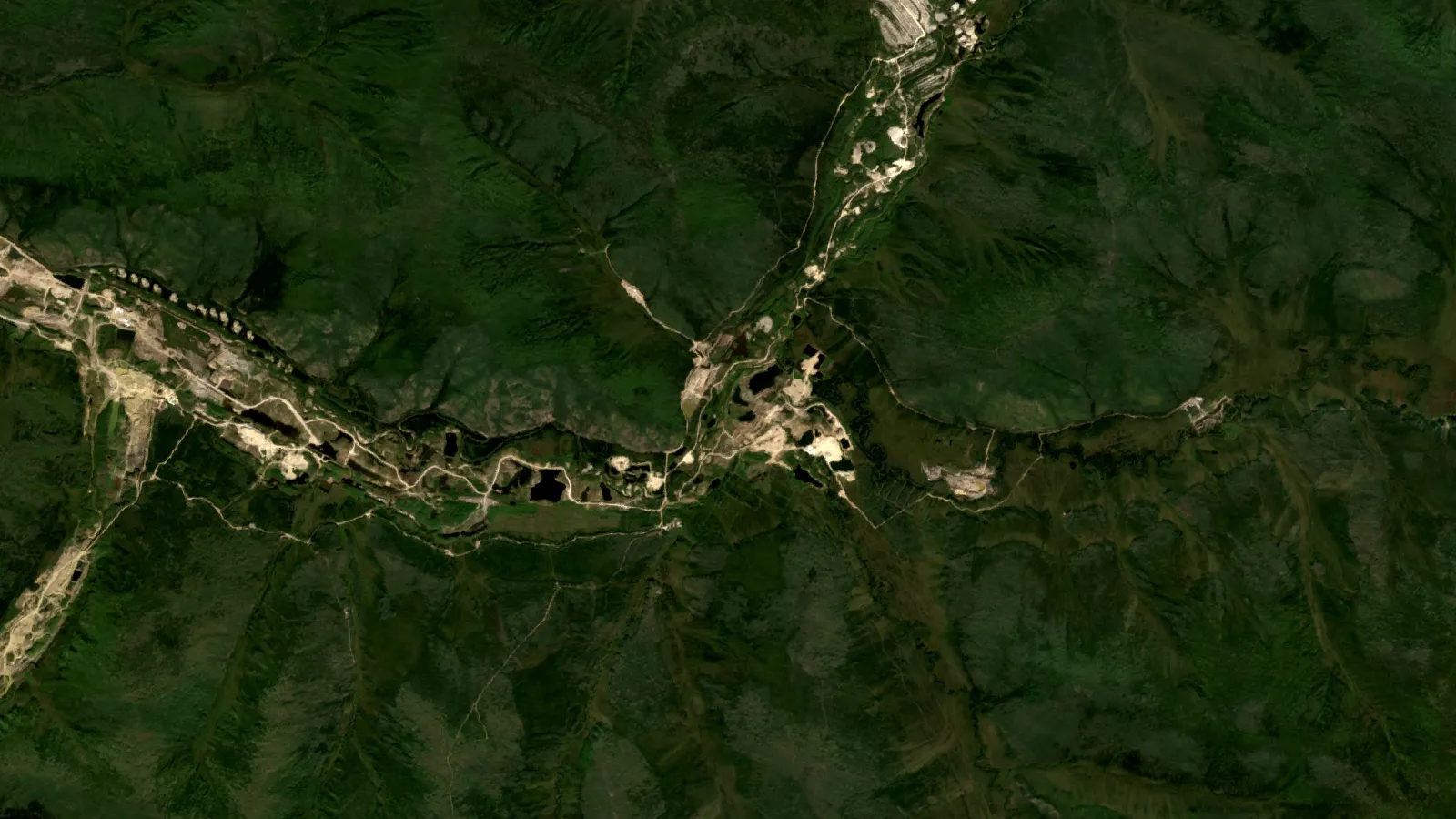
The hero image at the top of this page is a Sentinel-2 satellite view of the point south-east of Dawson City where Australia, Dominion and Scribner creeks meet (63.619 N, 138.704 W, the source point of the river that forms there, per Wikipedia).
How much gold does Parker Schnabel mine each season?
The show’s totals table gives the ounces his crew reported on screen each season. It starts at 34 ounces in season 2, passes 1,000 ounces in season 4, passes 7,000 in season 9 and reaches 10,596 ounces in season 16 (Wikipedia, Gold Rush, totals table). These are television totals, not audited production, and the table is edited by fans, so treat each figure as a reported number.
Chart
Ounces reported by the Schnabel crew, by season
Troy ounces per season of Gold Rush (television totals, not audited production)
To judge scale, 10,596 ounces equals about 0.33 tonnes. The USGS puts US mine production at 160 tonnes for 2025, worth about US$17 billion, so his best season is roughly 0.2% of national output (USGS, 2026). Against the territory he works in, it is a bigger share: the Yukon reported nearly 99,000 crude ounces of placer gold for 2024 (CBC News, 9 September 2025), and his season 15 total of 6,837 ounces is about 7% of that. The two numbers are counted differently (crude versus refined ounces, and a fiscal year versus a mining season), so use the share as a rough guide only.
Ounces and dollars tell different stories because the gold price moves between seasons. TV Insider reports season 16 dollar totals of US$42 million for Schnabel, a career best, and US$45 million for Beets (Yahoo/TV Insider), so on that measure Beets finished ahead even though the two crews reported nearly the same ounces.
How gold is recovered after the wash plant
What the crew weighs each week is concentrate: heavy material caught on riffles and in cleanup boxes. It is then dried, cleaned and melted into doré, a mixed gold-silver bar, before a refinery turns it into pure gold. The video below follows a nugget through every step from rock to ring.
▶ How gold is mined and refined, from rock to ring. · 5:27
Parker Schnabel’s accident: what actually happened
“Ongeluk” is the Afrikaans and Dutch word for accident, and the searches for “Parker Schnabel ongeluk” and “Parker Schnabel accident” point to two kinds of event. The first is a road crash that aired on the show: the episode “Parker’s Accident”, broadcast on 2 January 2015, is summarised as Parker totalling his truck in a head-on collision (Wikipedia, List of Gold Rush episodes). The second is equipment failure at the mine. In the 23 January 2026 episode of season 16, the shaker deck on the Roxanne wash plant broke, and the crew had a 15 to 20 second window to fit frozen bearings into a heated housing; the repair worked, and the plant avoided weeks of downtime (Yahoo/TV Insider).
Coverage of the season 17 premiere mentions a water-access dispute and equipment pressure, not an injury. Placer mining uses heavy machinery, high-pressure water and long shifts, and Parker himself has said that four months of intense work makes the season risky from a safety standpoint (Canadian Mining & Energy). Placer sites in the Yukon fall under the territory’s safety board, the Workers’ Safety and Compensation Board, which runs inspections and investigations. Alaska sites sit under US federal and state rules instead.
Is there an official Parker Schnabel website?
Little Flake Mining is owned by Schnabel, so it has no investor-relations page to check. The show’s official pages belong to Discovery. A store using his name, buyparkersgold.com, sells gold flakes and merchandise and describes its gold as “Real Dominion Creek gold” on its home page; its FAQ says the current batch averages 83% purity (about 20 karat), ships with a certificate of authenticity, and has a 30-day fulfilment window (shop FAQ). The shop’s home page does not spell out the legal seller. Before you pay, check who the seller is, what the certificate covers, the return terms and the customs rules for your country. Farmonaut has no link to this shop.
For anyone who wants to invest alongside a TV miner, the nearest public document is not a website at all but the royalty agreement: Metallic Minerals (TSX Venture: MMG; OTCQB: MMNGF) is listed, so it is the party whose public filings you can read. That says nothing about whether any shares are suitable for you.
How much does a Gold Rush season cost to run?
Costs explain why the crews chase ounces. Canadian Mining & Energy reports daily operating costs of about US$100,000 with four plants running, and Parker’s own estimate that the crew has “four months to make a year’s worth of money”. The profile also puts a single wash plant, Sluicifer, at about US$1 million. Those costs exclude the land purchase, any royalty to a claim owner, tax and the cost of gold shipped.
The calculator below turns those inputs into a break-even number. Change the daily cost, the number of mining days and the gold price, and it shows how many ounces the season must produce before it pays its running costs. The defaults are examples, not forecasts, and the gold price is an input.
For a live reference on the day this page was reviewed, spot gold was trading near US$4,014 an ounce on Monday 26 October 2026, after falling to US$3,975 on the previous Friday, its lowest since 20 July (Kitco AM Report, 26 October 2026). Prices move daily, so look up today’s quote before using it.
Calculator
How many ounces must a season produce to pay its running costs?
Enter your own daily cost, number of mining days, gold price and ounce goal.
- Running cost for the season, US$: $12,000,000
- Gross value of the goal, US$: $40,000,000
- Margin before royalty, land and tax, US$: $28,000,000
- Break-even as % of the goal: 30.0
Example values only, not a forecast or a benchmark. The daily cost of US$100,000 for four wash plants and the four-month season come from the Canadian Mining & Energy profile of Parker Schnabel; the 120 days and the 10,000-ounce goal are round examples. Gold price is an input: example, use today’s price. The result excludes land purchases, royalties, tax and refining.
How many acres does Parker Schnabel own? Claims are not land
Public sources do not give a verified acreage for Little Flake Mining. The Canadian Mining & Energy profile reports claims of about 10,000 acres spread across several Klondike creeks; that figure comes from one trade profile and should be read as an upper estimate. A mining claim is not land ownership. In the Yukon, a placer claim is a rectangular plot “located or granted for placer mining” and includes the rights needed to work it (Government of Yukon placer claims dataset). The video below explains the same idea for US claims: the right to the minerals is not title to the land.
Metallic Minerals, by contrast, holds mining rights over 36.4 square kilometres along Australia Creek (Metallic Minerals), and Little Flake’s 2023 deal covered 5.5 miles of it. The Yukon government publishes placer claim boundaries as a map dataset, so you can check any claim location yourself.
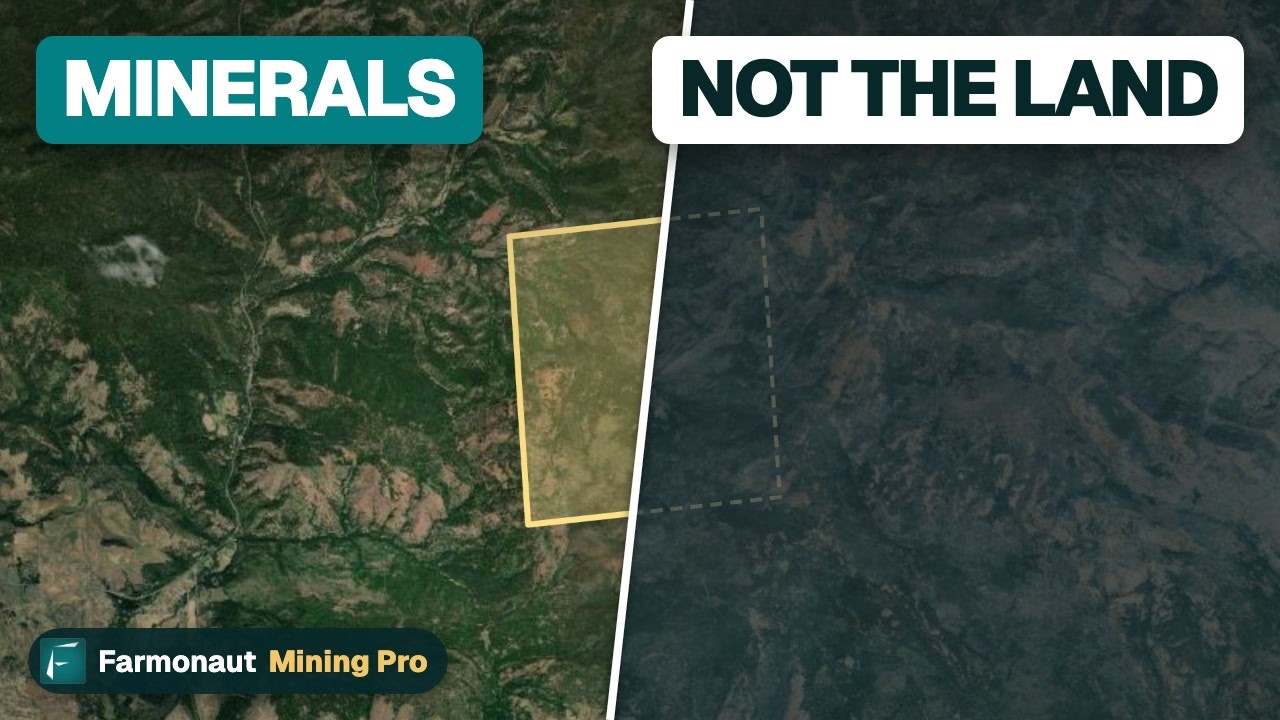
▶ Why a gold claim is a right to minerals, not ownership of the land. · 3:19
Tony Beets and the other Gold Rush names people search
His closest rival in recent seasons is Tony Beets, who leased Scribner Creek to him in the early Yukon seasons. Tony works Paradise Hill and other ground near Dawson City; our separate guide maps his sites in Tony Beets Mine Location Map: Paradise Hill and More. For rescue and safety work around Gold Rush mines, see Who Is Freddy Dodge? Gold Rush Mine Rescue Facts.
Chart
Ounces reported on screen, season 15 to season 16
Troy ounces per crew (television totals, not audited production)
The chart below compares the four crews that appeared in both of the last two seasons in the table. Schnabel and Beets nearly matched each other in season 16, while Rick Ness and Kevin Beets reported about a sixth of their ounces (Wikipedia, Gold Rush, totals table).
Why the Klondike pays more now: Yukon placer figures
The Dawson City area generated its highest gold revenue ever recorded in the fiscal year April 2024 to March 2025, with reported production up 34%, which the Yukon Geological Survey ties to high gold prices, good weather and larger operations (CBC News, 9 September 2025). Placer miners reported more than C$449 million in revenue in 2025, while the territory collected just over C$33,300 in royalties because the royalty is fixed at 37.5 cents an ounce, a rate set in 1906 (CBC News, 10 February 2026).
Chart
Yukon placer gold: reported value
C$ million; 2024 value is the reported placer value, 2025 is reported revenue
Grade is what changes the economics. Years ago, miners needed about one ounce per 100 yards of sluice ground, a common placer measure, to break even; Sydney van Loon of the Yukon Geological Survey told CBC that miners now say half an ounce per 100 loose cubic yards can pay. Higher prices make poorer ground worth washing, which is why small side creeks are being staked. For a larger-scale comparison of national output, our guide to Top Gold Producing Countries: Output in Tonnes ranks the producers.
How to check any claim about a TV miner
The method works for any celebrity-linked mining story.
- Find the legal entity. A company that sells shares must file production figures with a regulator (SEC EDGAR in the US, SEDAR+ in Canada). A privately owned company files none.
- Look for a partner that is listed. Metallic Minerals publishes the Little Flake agreement because it is a listed company.
- Compare with government data. The USGS Mineral Commodity Summaries cover US output by state each year, and the Yukon Geological Survey covers placer output for the territory.
- Check the claim record. The Yukon government publishes placer claims as a dataset; Alaska keeps its own mining claim records.
- Treat show totals as reported, not audited, and ask what a figure measures (ounces or dollars, crude or fine, one crew or several).
Equipment tracking and traceability are the other half of this. Operators that need machine-hour logs can use fleet management software, and buyers who want a documented chain of custody for gold can look at product traceability tools. Operators that report emissions can use carbon footprinting tools, and remote crews planning a field season can pull weather data through the satellite weather API.
Screening placer ground from space
Satellites cannot see placer gold, but they can map the terrain around it: old channels, terraces, disturbed ground and vegetation recovery. Farmonaut offers satellite screening of a claim block from a KML, KMZ or polygon, delivered in 5 to 20 business days; it is an exploration screen that comes before drilling and sampling, not a resource estimate.
Frequently asked questions
Is Parker Schnabel still alive?
Yes. He turned 32 on 22 July 2026 and is in the cast of Gold Rush season 17, which premiered on 2 October 2026 (Wikipedia; Canadian Mining & Energy).
How old is Parker Schnabel?
He was born on 22 July 1994 in Haines, Alaska, so he is 32 as of 26 October 2026.
What is Parker Schnabel’s company name?
Little Flake Mining, which Metallic Minerals describes as founded and owned by him. Big Nugget Mine is the name of the family mine, not a company.
Is Parker Schnabel still gold mining?
Yes. Season 17 follows his crew again, and TV Insider reports he is aiming for a US$65 million haul after US$42 million in season 16.
Where does Parker Schnabel mine?
Mainly in the Klondike goldfield near Dawson City, Yukon, on Dominion Creek and other creeks, and at the family Big Nugget Mine on Porcupine Creek near Haines, Alaska. See the table above for each site and its source.
Where is Parker Schnabel’s mine located?
The Big Nugget Mine is on Porcupine Creek in the Porcupine district near Haines, Alaska, in the Porcupine district, whose old townsite lies about one mile south-west of Mile 35 of the Haines Highway (Wikipedia, Porcupine, Alaska). His largest operation on the show, Dominion Creek, is in the Yukon.
Does Parker Schnabel have an official website?
Little Flake Mining is privately owned and has no investor site. A store using his name, buyparkersgold.com, sells gold flakes and merchandise; verify the seller, certificate and return terms before ordering.
What happened in Parker Schnabel’s accident?
The best-documented one is the truck crash in the episode “Parker’s Accident”, aired on 2 January 2015. More recent “accident” stories usually refer to equipment breakdowns such as the Roxanne shaker deck failure in season 16.
How many acres does Parker Schnabel own?
No verified figure is public. One trade profile reports claims of about 10,000 acres, but mining claims are rights to minerals, not land ownership.
How much gold did Parker Schnabel mine in season 16?
The show’s totals table lists 10,596 ounces, his largest season, up from 6,837 in season 15. TV Insider reports a haul of US$42 million.
How many employees does Parker Schnabel have?
Little Flake Mining does not publish a headcount. The Canadian Mining & Energy profile describes a season 16 crew of a dozen or more people running four plants.
This page is for information only. It is not investment advice, and it says nothing about the private life or finances of any person named.
This page is for information only. It is not investment advice or legal advice. Confirm claim and safety rules with the regulator. Do not enter a working claim or a prospecting site without permission, and do not use mercury.
Farmonaut mining
Screen a claim block from space
Send a polygon or KML of your licence area and ask for a quote on satellite screening before you plan fieldwork.

Mining Pro sample view, synthetic data
Keep reading
Sources
- Canadian Mining & Energy, Parker Schnabel: Gold Rush’s Youngest Mining Boss: miningandenergy.ca
- Wikipedia, Gold Rush (TV series): seasons, cast and totals table: en.wikipedia.org
- Wikipedia, List of Gold Rush episodes: en.wikipedia.org
- Metallic Minerals, production royalty agreement with Little Flake Mining (24 January 2023): metallic-minerals.com
- Metallic Minerals, Australia Creek royalty project page: metallic-minerals.com
- TV Insider via Yahoo, Gold Rush season 17 sneak peek: yahoo.com
- TV Insider via Yahoo, Gold Rush season 16 breakdown recap (23 January 2026 episode): yahoo.com
- Looper, Parker Schnabel and the Dominion Creek claim (22 October 2023): looper.com
- CBC News, Gold prices drive Yukon placer mining production to new heights (9 September 2025): cbc.ca
- CBC News, Yukon placer royalty and 2025 revenue (10 February 2026): cbc.ca
- USGS, Mineral Commodity Summaries 2026: Gold: pubs.usgs.gov
- Kitco, Gold rebounds above $4,000 (AM Report, 26 October 2026): kitco.com
- Wikipedia, Porcupine, Alaska (historic district): en.wikipedia.org
- Wikipedia, river source coordinates (Australia, Dominion and Scribner creeks): en.wikipedia.org
- Government of Yukon, Placer claims 50k dataset (Open Government Portal): open.canada.ca
- IAIABC, Yukon Workers’ Safety and Compensation Board: iaiabc.org
- Parker’s Gold shop, FAQ (gold purity, certificate, shipping): buyparkersgold.com
Discussion
Questions, corrections or field experience? Share them below. First-time comments are reviewed before they appear, and your email is never published.
No comments yet. Be the first to add a question or your experience.

 Sania Corporation
 Sean Mining Limited
 NTS Group (Pty) Ltd
 Mine4Africa
 Lithspo Minerals Limited
 Tintina Mining Group
 Dalgety Minerals Pty Ltd
 Vortex Minerals Pty Ltd
 Faith At Work (Pty) Ltd
 Geotech Mining Solutions plc
 Vulcan International Limited
 Kidepo Associates
 GKY Mining
 Alkimy SARL
 Double A Trading
 GemSprout Metals Limited
 Qader Group
 Ileys General Trading
 SG Gold Mining LLC
 VRV Global Pte Ltd
 Omsri International FZE
 G.I.T.T.
 Jaunita Erss Ltd
 SRK Consulting











