

Remote Sensing in Mineral Exploration: 2025 Innovations
“By 2025, over 70% of new mineral exploration projects will utilize AI-driven hyperspectral remote sensing technologies.”
The global economy is fundamentally underpinned by mineral exploration, an activity essential for sourcing the raw materials required by core industries ranging from electronics to construction. In recent years—and especially into 2025—Remote Sensing in Mineral Exploration has advanced at an unprecedented pace. Powered by AI, hyperspectral data, and drones, modern exploration methods have become significantly more efficient, accurate, and—crucially—sustainable. This revolution is not only improving detection capabilities of mineral deposits but is fundamentally reducing the environmental impact of traditional approaches.
In this in-depth look at Remote Sensing in Mineral Exploration for 2025, we’ll explore the technical innovations, latest technologies, practical applications, and sustainable practices that are transforming resource discovery as we know it.



Looking for API solutions?
Check out Farmonaut’s API or consult our
API Developer Docs for custom infrastructure, mining, and remote resource monitoring integration.
What is Remote Sensing in Mineral Exploration?
Remote sensing refers to the broad acquisition and analysis of data about an object or area without direct physical contact. In mineral exploration, this means leveraging technology—from satellites and drones to ground-based sensors—to gather detailed information efficiently, often over vast and otherwise inaccessible terrains.
- Core principle: Detecting and analyzing electromagnetic radiation (such as visible, shortwave and thermal infrared) reflected or emitted from the Earth’s surface and subsurface.
- Primary outputs: Detailed mappings of surface features, rock formations, soil types, vegetation anomalies, and crucial alteration zones—all of which are indicative of mineralization.
- Technological platforms: Satellites, UAVs (drones), aircraft, ground sensors—each contributing to both spatial and temporal datasets.
The advantages offered by these technologies in 2025 are nothing short of revolutionizing when it comes to resource discovery.

2025 Innovations Redefining Remote Sensing in Mineral Exploration
The transition from conventional mineral exploration to data-driven remote sensing approaches has accelerated due to three technological breakthroughs:
- Hyperspectral imaging: Distinguishes hundreds of unique mineral signatures in a single survey. (See trivia below!)
- AI-powered analytics: Enables rapid processing of massive datasets using sophisticated algorithms, minimizing false positives and improving detection accuracy.
- Drones (UAVs): Allow flexible, high-resolution and even subsurface data acquisition, opening exploration to new and challenging expeditions.
“Hyperspectral imaging can distinguish up to 200 unique mineral signatures in a single remote sensing survey.”
As these advancements are combined and deployed globally, companies benefit from higher efficiency, greater precision, and enhanced environmental sustainability in their exploration activities. Let’s explore how these work in practice.

Hyperspectral Imaging: How 200+ Mineral Signatures Change Exploration
Hyperspectral imaging is at the core of breakthrough Remote Sensing in Mineral Exploration technologies in 2025. Unlike traditional multispectral sensors, which acquire data in a few broad bands, hyperspectral sensors capture reflectance information from hundreds of narrow spectral bands across electromagnetic wavelengths—including visible light, near infrared, shortwave infrared, and sometimes thermal.
- Data acquired: Each mineral, rock, or soil type reflects light in a unique spectral signature.
- Application: Allows detailed discrimination among mineral assemblages and alteration indicators (e.g., hematite, kaolinite, chlorite) directly on the surface.
- Outcome: Prioritizes ore bodies and zones of interest more precisely than ever before, minimizing wasted field investment.
- Impact on scale: Hyperspectral techniques excel in both large-scale mapping and identification of subtle anomalies across vast and inaccessible terrains.
Example: When surveying arid regions for rare earth elements, hyperspectral images can pinpoint serpentine and chlorite (significant alteration minerals), allowing companies to target high-potential deposits much earlier in the project lifecycle.

AI-Driven Analytics: From Data Deluge to Actionable Insights
The sheer volume of spectral, spatial, and temporal data now acquired via remote sensing requires advanced AI-driven analysis to be truly useful. Through machine learning algorithms and deep neural networks, powerful insights can be extracted from massive, multi-source datasets:
- Pattern recognition: AI rapidly identifies spectral patterns that correspond to mineralization and alteration zones, often missed by conventional analysis.
- Temporal monitoring: By comparing changes over time (temporal datasets), anomalies such as new surface disruptions or alteration halos can be spotted as they emerge—rather than years later.
- Reduction in false positives: Advanced processing improves detection accuracy, reducing costly misdirection.
- Optimized targeting: AI models prioritize drill targets with greater statistical confidence, making operations more efficient and environmentally responsible.
These capabilities are revolutionizing how resource companies interpret complex geological information—cutting months from field timelines and reducing project risk.

Drones and UAVs: Dynamic Data Acquisition for Any Terrain
Unmanned Aerial Vehicles (UAVs)—commonly referred to as drones—play a rapidly expanding role in Remote Sensing in Mineral Exploration across the globe in 2025.
- Surface and subsurface reach: Drones can fly at low altitudes, acquiring high-resolution hyperspectral, multispectral, magnetic and even ground-penetrating radar (GPR) data.
- Overcoming access limitations: UAVs are indispensable for data acquisition in remote areas with harsh climates or challenging topographies.
- Flexible deployment: Allows targeted, site-specific surveys, even when satellite passes are infrequent or cloud cover is an issue.
- Efficient operations: Enables rapid mobilization, reducing cost and footprint in areas where sensitive ecosystems or rugged terrain make conventional access difficult.
The integration of drone data with satellite imagery and ground measurements creates rich, multi-layered exploration models—dramatically improving the detection and interpretation of surface and subsurface anomalies and mineral features.

Thermal Infrared Remote Sensing in 2025
Thermal infrared remote sensing is a powerful, niche tool for modern exploration companies. By analyzing subtle temperature anomalies on the Earth’s surface, it can reveal hidden clues:
- Hydrothermal alteration: Many ore deposits are formed via hydrothermal activity (heat-driven chemical changes in rocks). This leaves specific thermal signatures detectable by satellite or airborne sensors.
- Integration with spectral data: Thermal datasets, combined with hyperspectral and geophysical datasets, create a robust 3D understanding of both surface and subsurface zones.
Such approaches are especially effective in arid or volcanic regions where temperature differences between altered and unaltered rocks can be pronounced.

Multisource Datasets and 3D Modelling
In 2025, Remote Sensing in Mineral Exploration involves the strategic synthesis of multiple data sources:
- Satellite Imagery: Captures large areas for broad mapping and preliminary detection of anomalies.
- Drone Surveys: Zeroes in on targets with higher spatial accuracy and collects surface/subsurface data not accessible by satellite.
- Ground Geophysics: Validates zone interpretations and provides physical sampling for ground truthing.
- AI-Based Fusion: Algorithms combine disparate datasets (hyperspectral, thermal, magnetic, GPR), thereby improving detection and reducing false positives.
- 3D Modelling: Stacks spatial, spectral, and temporal data in comprehensive 3D models, enabling companies to visualize and prioritize targets with greater confidence.
The capacity to quickly acquire, analyze, and prioritize results gives firms a substantial competitive advantage in resource discovery.
Sustainability and Environmental Benefits
One of the most profound impacts of Remote Sensing in Mineral Exploration is the reduction of environmental footprint:
- Less surface disturbance: Sensors and data analytics allow companies to limit physical fieldwork to high-potential zones, reducing damage to sensitive ecosystems.
- Precision drilling: With more accurate detection, fewer exploratory holes are required, preserving landscapes.
- Regulatory compliance: Comprehensive datasets support detailed Environmental Impact Assessments (EIA) and best practices for sustainable resource development.
- Global climate goals: Efficient, responsible sourcing of raw materials aligns with climate commitments in mining and resource-based industries.
For mining businesses and policymakers looking to further sustainable practices, technologies like carbon footprinting are vital.
Explore Farmonaut’s Carbon Footprinting Tools—these satellite-powered monitoring services help track, assess, and manage your project’s climate impact.
Comparative Feature Table: Technology Innovations in 2025
| Technology | Key Application | Data Type Used | Estimated Efficiency Improvement (%) | Cost Reduction Potential (%) | Environmental Impact |
|---|---|---|---|---|---|
| AI-driven analytics | Automated data processing, anomaly detection, drill target prioritization | Spectral, spatial, temporal from satellite/drone surveys | 45–60% | 30–45% | Low |
| Drones with multispectral/hyperspectral sensors | Flexible, high-res data acquisition; subsurface surveys | Visible, shortwave & thermal bands, GPR, mag surveys | 35–50% | 25–40% | Low |
| Hyperspectral imaging platforms | Unique mineral mapping, alteration zone identification | Hundreds of spectral bands (visible/NIR/SWIR) | 50–70% | 35–50% | Low |
| Thermal infrared sensing | Identification of hydrothermal alteration, heat anomaly mapping | Thermal IR bands | 25–35% | 20–30% | Low |
Farmonaut: Integrated Satellite Solutions for Mineral Exploration
As a satellite technology company, Farmonaut is committed to democratizing access to affordable, AI-driven satellite insights for mining, agriculture, infrastructure, and defence industries.
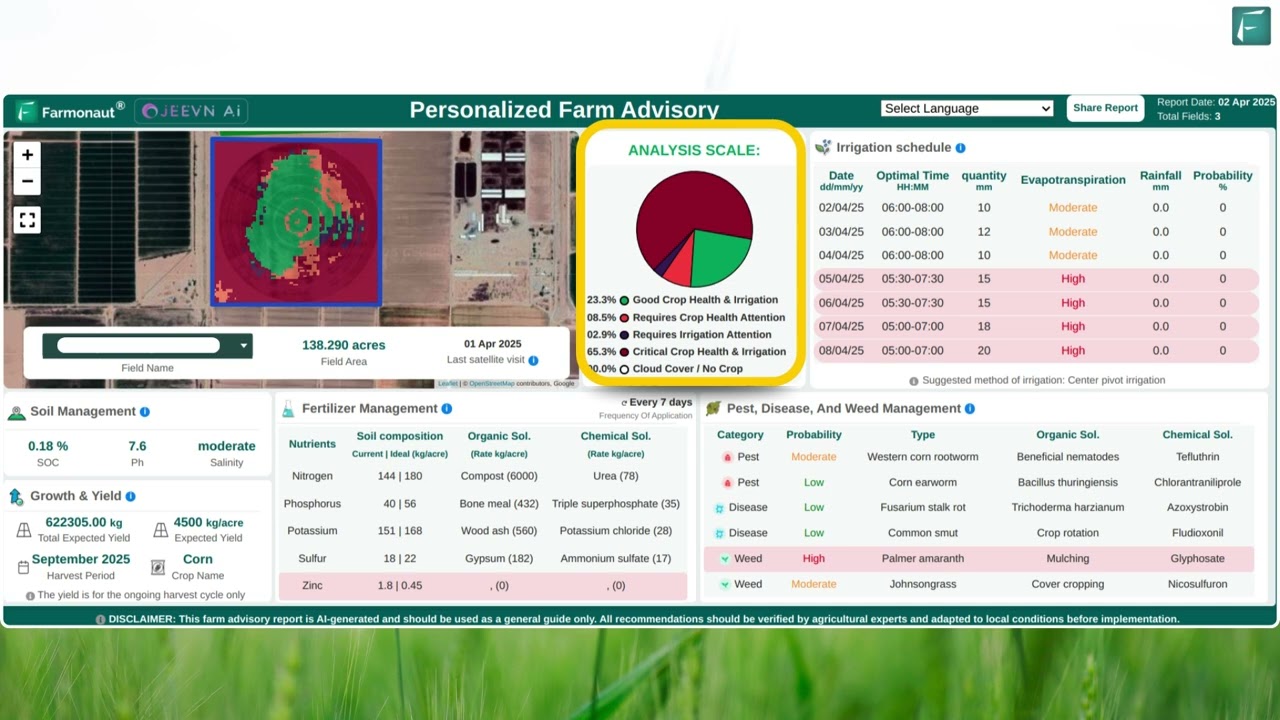
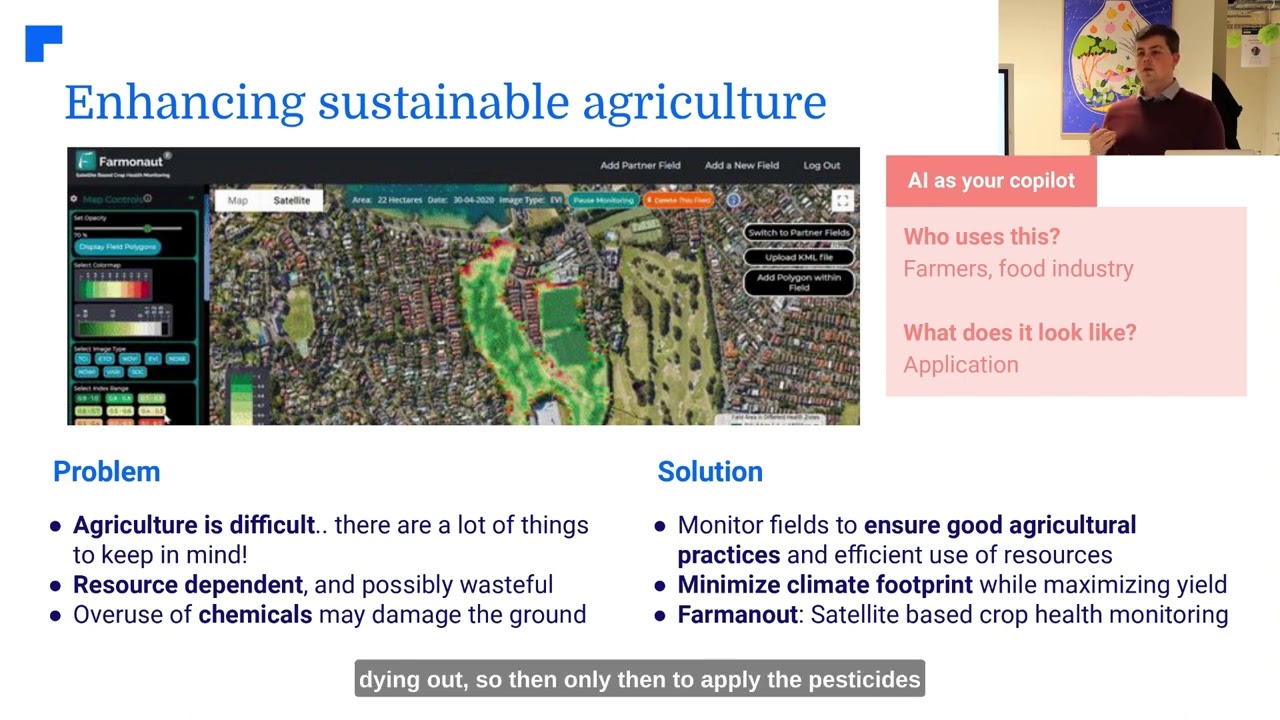
- Advanced Satellite-Based Monitoring: Our platform leverages multispectral and hyperspectral satellite images for comprehensive mining site monitoring. These datasets enable users to track vegetation health for secondary exploration, evaluate soil properties, and assess overall environmental impact.
- JEEVN AI Advisory System: Powered by real-time satellite data and custom models, Jeevn AI delivers timely, precise, actionable recommendations for strategic planning in both mining and resource management.
- Blockchain-Based Traceability: Our integrated blockchain enables full traceability for minerals and mining supply chains, fostering transparency and regulatory compliance.
Learn more about Farmonaut’s Traceability Products. - Environmental Impact Monitoring: We provide industry-leading carbon footprint and environmental monitoring services.
Explore our Carbon Footprinting Solutions. - Resource and Fleet Management Tools: For companies operating large mining fleets or infrastructure projects, Farmonaut’s
Fleet Management Tools ensure optimal equipment use, safety, and logistics. - Access & Scalability: Businesses, governments, and individuals can access these tools via our easy-to-use Android, iOS, web/browser apps, and robust APIs for full operational flexibility.
- Affordable Subscription Model: We offer flexible subscription packages and API plans.
Our solution suite is designed to empower efficient, sustainable, and accurate exploration and operational decision-making for users at all scales.
Discover how large-scale managers benefit from Farmonaut’s Admin Tools.
For financing, risk management, and insurance in mining and agriculture, Farmonaut’s
satellite-based verification for loans and crop insurance
helps banks and financial institutions streamline access and reduce fraud.
Challenges, Opportunities & the Future of Remote Sensing in Mineral Exploration
Remote Sensing in Mineral Exploration brings major benefits, but there are still challenges to address:
- Continuous sensor calibration: Regular calibration is essential to ensure accuracy of spectral data over time and across changing conditions.
- Data noise & integration: Integrating and harmonizing massive multisource datasets can present computational hurdles.
- Cloud cover issues: Persistent cloud or atmospheric disturbances may limit optical data, making radar or drone-based surveys indispensable in certain regions.
- Subsurface limitation: While surface sensing is rapidly advancing, non-invasive subsurface detection (deep exploration) still faces technical barriers.
- Cost and accessibility in remote areas: Despite immense gains, deployment costs can be higher in extremely isolated locations, encouraging innovation in deployment logistics and mobile data processing.
Nevertheless, ongoing research in sensor technology, ubiquitous cloud computing, machine learning, and blockchain enablement is rapidly improving these aspects—offering a glimpse of even smarter, safer, and more sustainable exploration in the near future.
As regulations tighten and climate commitments deepen, companies worldwide are incorporating remote sensing insights directly into Geographic Information Systems (GIS) for project transparency, stakeholder engagement, and compliance tracking.
Ultimately, Remote Sensing in Mineral Exploration in 2025 is less about new tools, and more about smarter, more responsible resource discovery on a global scale.
FAQs on Remote Sensing in Mineral Exploration 2025
Q1: What is the key benefit of using remote sensing for mineral exploration in 2025?
A: The main advantage is efficient, large-scale, and accurate detection of mineral deposits while reducing physical disturbance to the environment. Technologies such as hyperspectral imaging, AI, and UAVs allow precise mapping and targeting, lowering costs and improving sustainability.
Q2: How does hyperspectral imaging improve mineral discovery?
A: Hyperspectral imaging captures hundreds of narrow spectral bands, enabling it to identify up to 200 unique minerals in a single survey, including key alteration minerals. This allows exploration companies to pinpoint ore bodies and prioritize further investigation with high precision.
Q3: What role do drones play in modern mineral exploration?
A: Drones (UAVs) provide high-resolution, flexible data acquisition, especially over inaccessible or challenging terrains. They supplement satellite data by offering closer, more detailed views, including subsurface information with GPR sensors, and can swiftly respond to evolving exploration needs.
Q4: Are there environmental advantages to remote sensing in mineral exploration?
A: Yes—remote sensing minimizes on-ground disturbance, supports responsible development through accurate targeting, and enables comprehensive environmental monitoring and compliance, helping reduce the exploration carbon footprint.
Q5: How can businesses integrate remote sensing data into their workflow?
A: Businesses can leverage cloud-based platforms and APIs, like those offered by Farmonaut, to integrate real-time insights, GIS mapping, and monitoring directly into operational and strategic decision processes.
Conclusion: The Future is Here
Remote Sensing in Mineral Exploration is no longer a frontier technology—by 2025, it is the central tool revolutionizing resource discovery and allocation. Backed by AI-powered analytics, hyperspectral imaging, drones, and robust APIs, the industry is now moving toward faster, more accurate, and exceptionally sustainable exploration practices. With seamless access to surface and subsurface data, companies can identify, prioritize, and manage mineral resources more responsibly than ever before—benefiting stakeholders and the planet alike. Digital platforms like those of Farmonaut play a pivotal role in making these data-driven solutions accessible for businesses, governments, and users worldwide.
As we continue toward an intelligent, transparent, and lower-impact era of mineral sourcing, Remote Sensing in Mineral Exploration stands out as the essential foundation for the future of the global mining economy.
Discussion
Questions, corrections or field experience? Share them below. First-time comments are reviewed before they appear, and your email is never published.
No comments yet. Be the first to add a question or your experience.

 Critica Metals Limited
 Congo Mining Solutions
 Mining SARL
 SenGold Invest SAS
 Sania Corporation
 Sean Mining Limited
 NTS Group (Pty) Ltd
 Mine4Africa
 Lithspo Minerals Limited
 Tintina Mining Group
 Dalgety Minerals Pty Ltd
 Vortex Minerals Pty Ltd
 Faith At Work (Pty) Ltd
 Geotech Mining Solutions plc
 Vulcan International Limited
 Kidepo Associates
 GKY Mining
 Alkimy SARL
 Double A Trading
 GemSprout Metals Limited
 Qader Group
 Ileys General Trading










