

Land reclamation · Step-by-step guide
How Is Mined Land Typically Restored? 7 Strip Mining Steps
Mined land is typically restored by backfilling and grading the pit, replacing saved soil, rebuilding drainage, then planting and monitoring. US coal operators stay liable for plant growth for five to ten years.
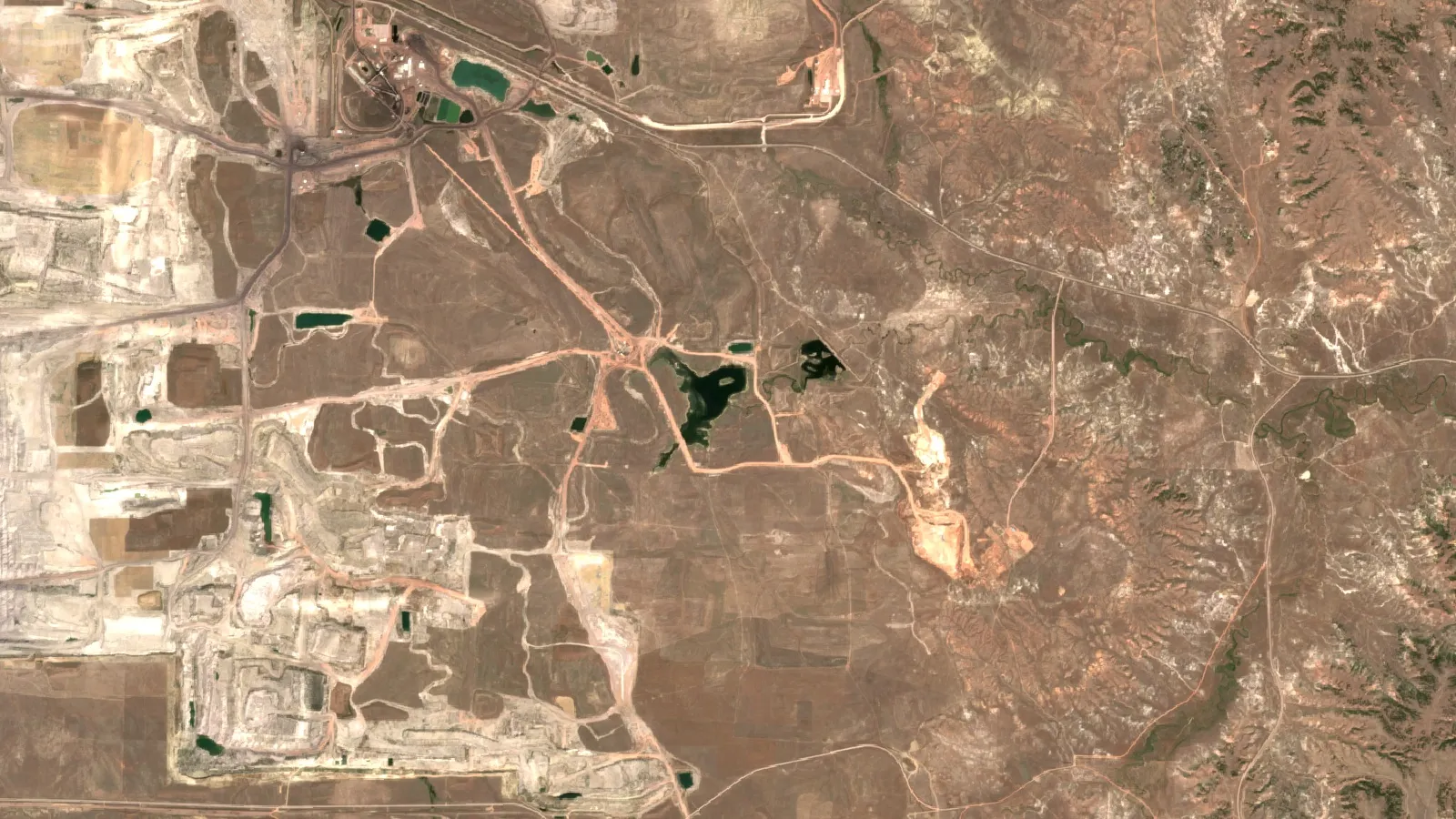
Key takeaways
- Restoration runs in order: shape the land, cover problem rock, replace soil, rebuild drainage, then grow and prove the new land use (30 U.S.C. 1265).
- US coal topsoil must come off as a separate layer before drilling, blasting or mining (30 CFR 816.22).
- Vegetation counts as successful at 90 percent or more of the approved standard (30 CFR 816.116).
- Up to 60 percent of a coal bond can return after regrading; the rest waits for plant growth and the liability period (30 CFR 800.40).
- Liability for plant growth runs five years, or ten where annual precipitation is 26 inches or less (SMCRA).
In this article
- How is mined land typically restored after mining ends?
- Where this method is used and why it matters
- Strip mining process: 7 steps from permit to restored land
- What each step leaves for restoration
- How long mined land restoration takes
- How the bond comes back in three phases
- Estimate your soil and bond numbers
- Restoring land to farming, forest or habitat
- Rules outside US coal
- When nobody restores the land
- What to check before you buy or fund a strip mine
- Frequently asked questions
Mined land is typically restored in a fixed order: the pit is backfilled and shaped close to its original contour, saved subsoil and topsoil go back on, drainage is rebuilt, and the site is planted and monitored until it meets a set standard. On US coal mines, federal law requires most of this, and the operator stays liable for plant growth for five to ten years after the last seeding.
This guide follows the strip mining process from permit to final bond release, because restoration starts before the first shovel. It is written for licence owners, consultants and investors who need to know what the work involves, what it depends on and when the financial security comes back. Strip mining means removing the soil and rock above a shallow, flat-lying deposit in long cuts, taking the deposit out, and moving on to the next cut.
How is mined land typically restored after mining ends?
Five jobs make up nearly every restoration plan, whichever the mineral or country. The rules and the proof required differ, but the order is similar.
Infographic
Restoring mined land in 5 jobs
- 1ShapeBackfill the pit and grade the land.
- 2CoverBury acid-forming or toxic rock.
- 3SoilReplace saved subsoil and topsoil.
- 4WaterRebuild channels and sediment control.
- 5ProvePlant, measure and seek bond release.
- Rebuild the shape of the land. Spoil, the broken rock taken from above the deposit, goes back into the pit. Highwalls, the steep rock faces left by mining, are removed or reduced.
- Bury problem material. Rock that can form acid or carry toxic elements is placed and covered so that water and roots do not reach it.
- Rebuild the soil. Saved subsoil and topsoil, or an approved substitute, are spread over the graded surface.
- Rebuild the water paths. Channels, diversions and sediment ponds take runoff off the site in a controlled way.
- Grow the new land use and prove it. Crops, pasture, trees or habitat are established, measured against a standard and handed back only after the regulator agrees.
In US coal law, this work is called reclamation. Australian and many other regulators call it rehabilitation. The US statute does not always demand a return to the old use. It asks for land capable of supporting its pre-mining uses or a higher or better use, so a pasture may become forest or an approved industrial site if the plan and the regulator allow it.
Where this method is used and why it matters
Strip mining is most common for coal and lignite, and related surface methods are used for other shallow deposits. The US Energy Information Administration (EIA) says surface mining is often used where coal lies less than 200 feet down, and its Annual Coal Report shows surface mines produced about 306 million short tons in 2024, or about 60 percent of US output. The scale of the job is therefore concentrated in a few places. Wyoming alone reported about 190.7 million short tons in 2024, out of a US total of 512.5 million short tons, according to the EIA Annual Coal Report published in November 2025.
Chart
Surface coal output, 2023 and 2024
Million short tons; selected states
Chart
Surface coal output by state, 2024
Million short tons; selected large producers
Output also moves from year to year, which matters for restoration planning. A mine that slows down still owes the reclamation work on the ground it has already opened, and fewer tons may be left to carry that cost. If you want the wider comparison of the method, see our page on the pros and cons of strip mining and our short guide to how strip mining is done.
▶ Strip mining explained: pros, cons and the fix · 4:37
Strip mining process: 7 steps from permit to restored land
Each step below shows the mining task and the restoration task tied to it. The US coal rules are used as the worked example because they are detailed and public. Other minerals and countries follow their own rules, covered further down.
1. Site selection and permitting
The operator studies geology, overburden thickness (the soil and rock above the deposit), water and existing land use. The permit application then carries a reclamation plan, and the planned land use after mining is set here. Under SMCRA, the Surface Mining Control and Reclamation Act of 1977, a performance bond must be filed before the permit is issued, with a minimum of $10,000 for the whole permit area. A bond is a financial promise that pays for the work if the operator fails to finish it.
2. Access and topsoil salvage
Roads and working areas are built, and vegetation that would interfere with soil salvage is cleared. The federal rule says topsoil must be removed as a separate layer before any drilling, blasting or mining on that ground. Where topsoil is under 6 inches thick, the operator may take it with the loose material below and treat the mix as topsoil. Stockpiles must sit on a stable site and be protected from contaminants and unnecessary compaction.
3. Overburden removal
Draglines, shovels and trucks remove the overburden. In a strip operation, spoil from a new cut usually fills the cut just mined, so backfilling and mining run side by side. This reduces the open area and the distance rock is hauled. The law asks for reclamation to proceed as close in time to mining as practicable, so a plan that leaves long open cuts will face questions.
4. Mineral extraction
Shovels, loaders and trucks or conveyors take out the exposed coal, lignite or other deposit. Restoration work at this stage is mostly about limits: keeping the disturbed area no larger than the plan, keeping saved soil away from haul roads, and noting where any acid-forming or toxic rock has been found so that it can be placed correctly.
5. Water and dust control
Runoff from disturbed ground passes through sediment control before it leaves the site. The federal rules cover diversions and sediment control measures, and the statute requires operators to limit disturbance to the local water balance. Dust is usually controlled by watering roads and working faces. Water monitoring continues through the later stages, and the regulator will look at the results before releasing the final bond.
6. Backfilling, grading and soil replacement
The pit is filled, compacted where stability or leaching demands it, and graded to the approximate original contour, with highwalls, spoil piles and depressions eliminated. The law has exceptions. Thin overburden over a thick seam can leave too little rock to refill the pit, and very thick overburden can leave a surplus. Each case has its own grading limits. Soil then goes back in the right order. On prime farmland, a protected class of high-quality farmland defined in federal rules, the minimum reconstructed soil depth is 48 inches, unless the natural soil has a shallower layer that blocks roots.
7. Revegetation, monitoring and handover
The site is seeded or planted to suit the approved land use. Vegetation is then measured against a standard taken from comparable unmined land. Under the federal rule, ground cover, production or stocking counts as meeting the standard when it reaches at least 90 percent of it, tested at 90 percent statistical confidence. Only after the liability period ends can the last of the bond be returned.
What each step leaves for restoration
This table sums up what to check at each step. It describes tasks and rules and does not give percentages for soil loss or recovery, because those depend on the site and should come from the site’s own monitoring.
| Step | Mining task | Restoration task | Evidence to ask for |
|---|---|---|---|
| 1. Permit | Assess geology and overburden | Set land use; file bond and plan | Permit, bond and baseline data |
| 2. Access | Clear ground, build roads | Salvage topsoil separately | Stockpile locations and volumes |
| 3. Overburden | Remove rock above deposit | Plan spoil placement | Spoil plan, slope checks |
| 4. Extraction | Take out deposit | Limit open area; note problem rock | Mine sequence, rock tests |
| 5. Water and dust | Manage runoff and roads | Keep sediment on site | Water sampling records |
| 6. Backfill | Fill mined cuts | Restore contour; replace soil | Surveys, soil depth checks |
| 7. Handover | Remove remaining structures | Grow vegetation; meet standard | Vegetation data, bond release |
How long mined land restoration takes
No single official average exists, because each permit differs in climate, soil and land use. The law does set a floor. On US coal land, the operator remains responsible for revegetation for five full years after the last seeding, fertilizing or irrigation, or ten full years where average annual precipitation is 26 inches or less. Further augmented seeding or irrigation restarts that clock, though normal husbandry approved by the regulator does not.
Chart
Minimum plant-growth liability on US coal land
Full years after the last seeding, fertilizing or irrigation
So the real timeline equals the mining period, plus the earthwork, plus the planting, plus the liability period. For a dry-climate site, the last stage alone takes a decade. Reduced periods of two or five years can apply to some previously mined land that is being remined under a specific finding.
How the bond comes back in three phases
For a business owner, the bond schedule is the clearest measure of progress. The federal bond release rule uses three phases.
| Phase | Work completed | Bond released |
|---|---|---|
| Phase I | Backfilling, regrading and drainage control | 60 percent for the area |
| Phase II | Revegetation established | A further amount; enough stays held to redo the planting |
| Phase III | All mining and reclamation work complete | The remainder, not before the liability period ends |
A regulator can refuse a release if the work falls short, and people with a valid legal interest, as well as certain government agencies, can object during the process, as set out in SMCRA section 1269. For costs and bond sizing, our separate guide to mine reclamation cost per acre goes further, with its own calculator.
Estimate your soil and bond numbers
The calculator below answers two early planning questions: how much soil you need to replace, and how much bond remains held after Phase I. Enter your own acreage, depth, unit cost and bond amount.
Calculator
How much soil to replace, and how much bond stays held?
Enter your own numbers.
- Soil handling cost (US$): $806,667
- Bond held after Phase I (US$): $200,000
Example values only, not a benchmark or quote. One acre is 43,560 square feet and one cubic yard is 27 cubic feet. The 60 percent Phase I release is the federal coal rule (30 CFR 800.40), fixed in the formula. The unit cost is an input: use a current contractor rate.
Restoring land to farming, forest or habitat
The chosen land use decides what the regulator measures, so it affects the whole job.
- Cropland and pasture. Federal rules compare production and cover with a reference area or an approved standard. In wetter areas the standard must be met in any two years of the liability period, excluding the first. In dry areas it must be met in any two years after year six.
- Forest. The Forestry Reclamation Approach, promoted by a federal and state initiative in the Appalachian coal states, has five steps: build a rooting layer at least 4 feet deep, grade it loosely to avoid compaction, use ground covers that are compatible with trees, plant both early-succession and commercially valuable trees, and use proper planting technique.
- Habitat and recreation. Success is judged on tree and shrub stocking and on ground cover. Counted plants must be healthy and in place for at least two growing seasons.
- Industrial, commercial or residential use. Where development follows within two years of regrading, ground cover must at least control erosion.
Compaction is the practical trap for forestry. A smooth, heavily tracked surface may look tidy, but the federal initiative names excessive surface compaction as a barrier to tree growth. Discuss this with your regulator and contractor before grading starts, since the look of a good forestry site may differ from what crews expect.
Rules outside US coal
SMCRA applies to coal. Other minerals and countries work differently, so check the instrument that applies to your licence.
- US hardrock on federal land. The financial guarantee under 43 CFR 3809.552 must cover the estimated cost as if the Bureau of Land Management hired a third party to do the work. State rules also apply.
- Queensland, Australia. A progressive rehabilitation and closure plan has applied since 1 November 2019. Its schedule includes a final site design map showing post-mining land uses and a table of milestones, and breaching a schedule condition is an offence.
- Western Australia. Tenement holders report ground disturbance to the state and pay a levy to the Mining Rehabilitation Fund. The levy is based on disturbance type and per-hectare rates, and progressive rehabilitation can reduce it.
▶ The environmental impacts of mining, explained in clay · 2:31
When nobody restores the land
Older sites show why bonds exist. US coal land left unreclaimed before 1977 falls to the Abandoned Mine Land program, paid for by a fee on each ton mined. The fee stands at 22.4 cents per ton for surface coal, with collection authorized through 30 September 2034. The federal mining office reports lifetime fund collections of $14.233 billion as of 30 September 2025, with $2.931 billion unappropriated. Hardrock has no equal fee, and the Bureau of Land Management says as many as half a million abandoned mines are believed to exist. Federal and state programs track these sites in the e-AMLIS inventory, which records them as unfunded, funded or completed.
What to check before you buy or fund a strip mine
- Ask for the permit, approved reclamation plan and post-mining land use in writing.
- Get the current bond amount, its form and any phases already released, and confirm these with the regulator.
- Compare the open disturbed area with what the mine plan allows.
- Find out whether soil stockpiles match the volume the plan says will be replaced.
- Read water monitoring records and any outstanding violations.
- Ask when the last seeding or irrigation took place, because that date sets the liability clock.
- Compare dated satellite images of the permit area to see how open ground and vegetation have changed. Images show cover and change, but they do not prove soil quality or water compliance.
Farmonaut works ahead of this stage: it screens a licence boundary sent as a KML, KMZ or polygon file for mineral targets before ground is disturbed. Results are exploration targets, not a resource estimate or an environmental clearance. You can read about satellite-based mineral detection, or ask for a quote or contact the team.
▶ Remote sensing for mining in plain language · 2:01
Frequently asked questions
How is mined land typically restored?
The pit is backfilled and graded, problem rock is covered, soil is replaced, drainage is rebuilt, and the land is planted and monitored until it meets a regulator’s standard.
What is the strip mining process?
It removes the soil and rock above a shallow, flat-lying deposit in long cuts, extracts the deposit, then fills each mined cut with spoil from the next one.
What is the difference between reclamation and rehabilitation?
They describe much the same work. US coal law says reclamation, while Australian regulators such as Queensland use rehabilitation. The legal tests depend on each jurisdiction.
Does mined land have to return to its original use?
Not always under US coal law. It must be able to support the prior uses or a higher or better use, as approved in the permit.
How long does it take to restore a strip mine?
There is no single figure. On US coal land, the plant-growth liability period alone is five years, or ten where annual precipitation is 26 inches or less, after any earthwork and planting.
How deep must soil be replaced?
It depends on the land use and permit. For US prime farmland the minimum is 48 inches unless a natural layer limits roots. The Forestry Reclamation Approach calls for a rooting layer of at least 4 feet.
What happens to topsoil during mining?
US coal rules require it to be removed separately before mining and either replaced promptly or stockpiled on a stable site, protected from contamination, unnecessary compaction and erosion.
When does an operator get the bond back?
In stages. A US coal operator can get up to 60 percent after backfilling, regrading and drainage control, a further amount after revegetation, and the rest after the liability period.
Who pays if an operator walks away?
The bond is meant to pay for the work. For US coal sites abandoned before 1977, the Abandoned Mine Land fund may pay. Other cases depend on the state and the mineral.
Do these rules apply to gold or copper mines?
No. SMCRA covers coal. Hardrock mines on US federal land fall under 43 CFR 3809 and state rules, and other countries have their own laws.
More from Farmonaut: strip mining process 7 key steps for safe land reclamation.
This page is for information only. It is not legal or investment advice. Confirm the rules and bond amounts with your regulator.
Farmonaut mining
Get a quote for your project area
Send your licence boundary as KML, KMZ or a polygon and ask for a quote on a satellite screen of the ground.

Mining Pro sample view, synthetic data
Keep reading
Sources
- EIA, Coal explained: mining and transportation: eia.gov
- EIA, Annual Coal Report 2024 (November 2025): eia.gov
- 30 U.S.C. 1265, Environmental protection performance standards: law.cornell.edu
- 30 U.S.C. 1259, Bonds: law.cornell.edu
- 30 U.S.C. 1269, Release of bonds: law.cornell.edu
- 30 U.S.C. 1232, Reclamation fee: law.cornell.edu
- eCFR, 30 CFR Part 816, Surface mining performance standards: ecfr.gov
- eCFR, 30 CFR Part 823, Prime farmland: ecfr.gov
- 30 CFR 800.40, Release of performance bonds: law.cornell.edu
- 43 CFR 3809.552, Individual financial guarantee: law.cornell.edu
- OSMRE, Appalachian Regional Reforestation Initiative: osmre.gov
- OSMRE, Reclaiming Abandoned Mine Lands: osmre.gov
- OSMRE, e-AMLIS: osmre.gov
- BLM, Abandoned Mine Lands: blm.gov
- Business Queensland, Progressive rehabilitation and closure plans: business.qld.gov.au
- Government of Western Australia, Mining Rehabilitation Fund: wa.gov.au
Discussion
Questions, corrections or field experience? Share them below. First-time comments are reviewed before they appear, and your email is never published.
No comments yet. Be the first to add a question or your experience.

 CIMISCO SARL
 Mining SARL
 SenGold Invest SAS
 Sania Corporation
 Sean Mining Limited
 NTS Group (Pty) Ltd
 Mine4Africa
 Lithspo Minerals Limited
 Tintina Mining Group
 Dalgety Minerals Pty Ltd
 Vortex Minerals Pty Ltd
 Faith At Work (Pty) Ltd
 Geotech Mining Solutions plc
 Vulcan International Limited
 Kidepo Associates
 GKY Mining
 Alkimy SARL
 Double A Trading
 GemSprout Metals Limited
 Qader Group
 Ileys General Trading
 SG Gold Mining LLC
 VRV Global Pte Ltd
 Omsri International FZE

 Client · Tanzania · Gold










