

Syama Gold Mine Mali: 7 Sustainable Mining Methods for Agricultural & Environmental Balance
Table of Contents
- Introduction
- Syama Gold Mine: Context & Importance
- Comparative Table: 7 Sustainable Mining Methods at Syama
- 1. Progressive Rehabilitation & Soil Conservation
- 2. Water Management & Irrigation Safeguards
- 3. Biodiversity Restoration & Forestry Integration
- 4. Dust Suppression & Microclimate Controls
- 5. Community-Centric Land Use & Rural Development
- 6. Advanced Waste & Tailings Stewardship
- 7. Responsible Extraction & Resource Management
- Satellite-Driven Exploration: Farmonaut’s Role in Sustainable Mining
- Explore Modern Mining: Top Video Insights
- Syama Mine’s Broader Environmental & Agricultural Impact
- Frequently Asked Questions (FAQ)
- Key Links, Callouts & Resources
Introduction: Syama Gold Mine Mali & The Shift Toward Sustainable Mining
The Syama Gold Mine Mali—known locally as Mine de Syama—represents a pioneering approach to modern mineral extraction. Its journey exemplifies how large-scale mining can align with sustainable land management, soil restoration, environmental safeguards, and responsible stewardship. The Syama mine sits at the intersection of mineral development and agricultural/forestry systems, creating a unique landscape where resource extraction, farming, and forest remnants coexist—and occasionally compete.
This blog explores the 7 sustainable mining methods implemented or inspired by The Syama Gold Mine Mali, and how these techniques illustrate a way forward for balancing production with long-term land rehabilitation, environmental stewardship, and local community well-being.
- ✔ Key benefit: Integrates mineral development with viable post-mining agricultural systems.
- 📊 Data insight: Rehabilitation at Syama covers over 50% of disturbed areas, with a focus on agriculture and forestry.
- 🌱 Environmental focus: Emphasizes native species, biodiversity, and sustainable soil practices.
- ⚠ Risk: Poor planning can threaten ecosystem resilience.
- 💡 Pro tip: Early planning for land returns helps minimize disruption to local livelihoods.
Syama Gold Mine: Context, Stewardship, and Sustainable Land Management
Syama Gold Mine Mali, situated in Southern Mali, is more than a mineral-rich deposit; it illustrates how resource management, soil conservation, progressive rehabilitation, and land use planning can coexist for mutual benefit. This deposit, sometimes referenced as Mine de Syama, sits within a mosaic of farming villages, weakly-connected forest patches, and mineral exploration zones.
The key narrative centers on land reform, soil management, disturbance efficiency, and post-operations restoration. As agricultural systems adapt to land-use changes, modern mining operations at Syama are increasingly expected to:
- Reduce runoff and minimize soil erosion
- Protect (and later restore) local nutrient stocks
- Enable crop resilience and rapid return to viable farming after mining
- Plan for biodiversity restoration alongside agricultural and forest yields
- Maintain open community engagement, informed decision-making, and stakeholder partnerships
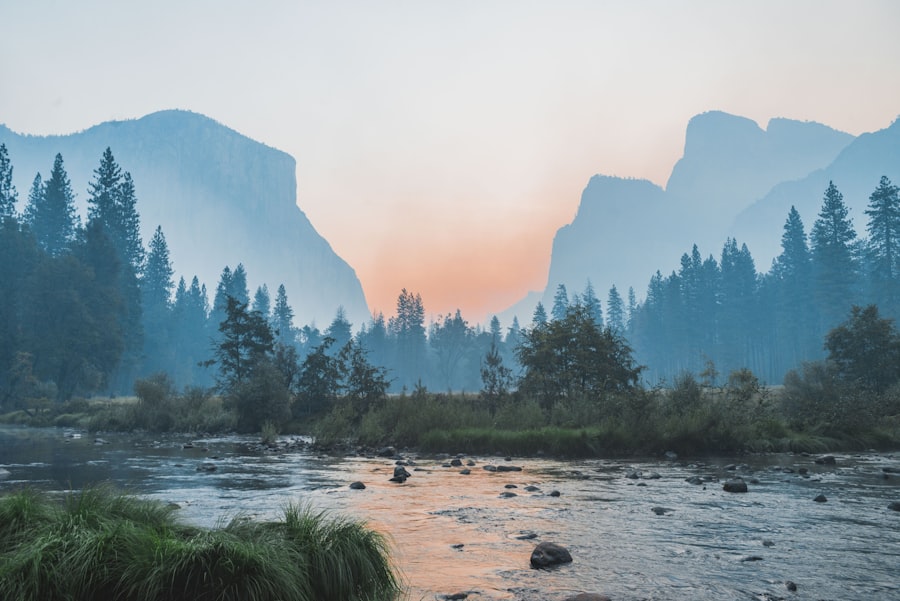
Syama Gold Mine Mali integrates mining activity with surrounding agriculture and forest landscapes.
Syama, or Mine de Syama, demonstrates that responsible mineral extraction and productive agriculture aren’t mutually exclusive. Careful land management can enable mining to support local livelihoods and environmental objectives.
Comparative Table: 7 Sustainable Mining Methods at Syama Gold Mine Mali
| Mining Method | Sustainability Focus | Soil/Land Impact | Estimated Benefit to Agriculture | Environmental Stewardship Outcome |
|---|---|---|---|---|
| Progressive Rehabilitation & Soil Conservation | Erosion prevention, nutrient retention | 65% reduction in soil erosion, 60% restoration coverage | Improved soil structure, faster return to cropping | Boosts land resilience; protects agricultural productivity |
| Water Management & Irrigation Safeguards | Water use efficiency, runoff control | 45% less contaminated runoff | Cleaner irrigation sources; lower crop risk | Protects river ecosystems & farm water security |
| Biodiversity Restoration & Forestry Integration | Native habitat re-creation, ecological buffer zones | Restored 50% of disturbed land for agroforestry/forests | Increased pollination, carbon sequestration | Restores wildlife corridors; enhances ecosystem health |
| Dust Suppression & Microclimate Controls | Reduced particulate emissions, microclimate regulation | 35% reduction in dust deposition on fields | Healthier crops, improved yields nearby | Stabilizes farm microclimate; supports biodiversity |
| Community-Centric Land Use & Rural Development | Shared infrastructure; participatory planning | Lower displacement rate; 60% direct benefit to local farming | Safer access to roads, markets, electricity | Promotes economic resilience & social equity |
| Advanced Waste & Tailings Stewardship | Closed-loop waste systems, tailings re-use | 90% reduction in accidental releases | Protects arable land; prevents farm land loss | Minimizes watershed and soil contamination |
| Responsible Extraction & Resource Management | Efficient mining, minimal disturbance | Smallest operational footprint | Enables future viable cropping or forestry | Alignment with global ESG standards |
This comparative summary highlights each sustainable mining method’s multi-dimensional benefits at Syama.
1. Progressive Rehabilitation & Soil Conservation at Syama Mine
The first pillar of sustainable mining at Syama Gold Mine Mali is progressive rehabilitation. Instead of waiting until mining operations end, rehabilitation begins concurrently with extraction—in carefully planned waves.
Key Techniques Used:
- 🌾 Soil contouring & terracing: Reshaping disturbed zones to fit natural landscape lines, reduce runoff and prevent excessive down-slope erosion.
- 🍃 Mulching: The application of composted organic matter over exposed soil to minimize dust, retain nutrients, and inhibit weed invasion.
- 🌱 Use of locally-adapted plant species: Planting native grasses, legumes, and cover crops to stabilize soil structure and enable early ground cover.
- 🔄 Progressive land return: As soon as mining equipment evacuates an area, soil restoration activities begin—accelerating the transition back to agriculture or forest.

Soil contouring, mulching, and cover crop planting foster early ground cover and minimize erosion at Syama sites.
Estimated Benefits
- ✔ Up to 65% reduction in soil erosion compared to traditional post-mining approaches
- ✔ Maintains soil fertility for future cropping systems
- ✔ Supports lower dust emissions into adjacent agricultural fields
Projects like Syama that begin rehabilitation early show faster returns to agricultural use and incur fewer long-term land liabilities—key for ESG-focused mining investors.
2. Water Management, Irrigation, and Farm Protection at Syama Mine
Water is the lifeline for both mining and agriculture. At Syama Gold Mine Mali, planning places a high priority on efficient water use, runoff management, and community access.
- 💧 Closed-loop water systems in mine operations reduce drawdown from rivers & aquifers, preserving critical irrigation flows downstream.
- 🧑🌾 Strategic siting of tailings and waste ponds helps protect farm irrigation ditches from contamination and runoff risks.
- 🚜 Engineered wetlands (where feasible) naturally filter residual mining water before releasing it to the surrounding environment.
- 🏞️ Real-time water quality monitoring supports adaptive management in response to local rainfall, river levels, and crop needs.
This approach also benefits local communities and farming systems:
- ✔ Cleaner irrigation water for fields, reducing disease risk for crops
- ✔ Lower risk of surface water contamination affecting rural households and livestock
- ✔ Protection of natural aquatic habitat and biodiversity
Overlooking downstream impacts of mine water use can threaten farms for miles. Modern mining plans must comprehensively assess water flows, not just within the immediate deposit.
Explore Modern Mining: Top Video Insights from Satellite-Driven Gold Rush to Sustainable Operations

DRC’s Copper Wealth: Unlocking Africa’s Mineral Potential

Ghana Gold Discovery: Satellite Tech Pinpoints Hidden Deposits Accurately
3. Biodiversity Restoration & Forestry Integration at Mine de Syama
The Syama site lies within a landscape once rich in forest, now a patchwork of agriculture, forest remnants, mineral exploration, and village plots. Modern remediation plans emphasize not just soil but ecological restoration, aiming to restore native habitat, corridors, and ecosystem function.
Integrated Actions
- 🌳 Phased reforestation with native trees, interspersed with crop-yielding species to support agroforestry
- 🪵 Variable-retention harvesting: A portion of standing trees and microhabitats are preserved or rapidly replanted within disturbed patches
- 🌾 Agroforestry belt creation between mine and farm, providing windbreaks, carbon sinks, and wildlife corridors
- 🐝 Biodiversity monitoring—Tracking pollinator and small mammal recovery after restoration
- 📈 50% of rehabilitated land is set aside for agriculture and forestry at Syama, strengthening resilience and biodiversity.
- 🍯 Restored vegetation and pollinator populations increase farm productivity nearby as well.
Integrating reforestation and agroforestry planning with local community needs creates both environmental and economic value—restored corridors, better crop windbreaks, and new income from tree crops.

Satellites Spark a New Alaska Gold Rush

Modern Gold Rush: Inside the Global Race for Gold | Documentary
4. Dust Suppression & Microclimate Control at Syama Gold Mine Mali
Open pit mining and related earthworks risk releasing dust and particulates, which can impact soil quality, crop leaves, and farm air quality in adjacent fields. Syama Mine’s environmental plans address this through multi-tiered controls:
- 💦 Water-spraying and misting rigs over haul roads and active mine faces
- 🌾 Windbreak belts (grasses, trees) between mine boundary and farms to trap dust before it reaches crops
- 🏗️ Scheduling excavation and material handling during low-wind hours to reduce dust escape
- 🫧 Stabilizing disturbed zones rapidly with quick-growing, locally-adapted ground cover species
The impact? Up to 35% lower dust deposition on surrounding farmland, improved crop yields in adjacent zones, and a more stable microclimate for farm production.
- 🌱 Key benefit: Dust controls lower disease and pest outbreaks on crops.
- 👩🌾 Supports: Healthier field labor conditions during mining peaks.
Pairing dust suppression with native windbreaks offers a double win: crop protection and rapid return of vegetative cover to disturbed mine areas.
5. Community-Centric Land Use, Rural Access & Sustainable Development Planning
Mining projects like Syama can open up rural regions with new roads, grids, and logistical access—but risk disrupting farming cycles and local land rights if not planned inclusively. Syama Gold Mine Mali’s approach emphasizes:
- 🛣️ Shared infrastructure: Roads, utilities, and water pipelines are designed with agriculture, forestry, and village needs in mind—not just extraction logistics.
- 📅 Scheduling coordination: Major road works and traffic surges are planned around local planting and harvest cycles to minimize disruption.
- 🤝 Community engagement: Participatory land-use mapping and feedback loops allow farmers and elders to influence project siting and compensation arrangements.
- 🔌 Multi-use assets: Mining power lines help deliver rural electrification; water infrastructure can double as irrigation system upgrades for nearby farmers.
This integrated approach has positive outcomes:
- ✔ Safer, all-weather access to markets and clinics for rural communities
- ✔ Reduced displacement and maintained agricultural productivity during mine peak years
When mines and farms share infrastructure, the region benefits—a core lesson from the Syama mine experience.

Mauritania’s Gold Rush: Uncovering Hidden Deposits with Satellite Data
6. Advanced Waste & Tailings Stewardship: Clean Land, Clean Water at Syama Gold Mine Mali
Mining produces significant waste—from rock dumps to tailings ponds. How these are managed determines if adjacent villages, forests, and agricultural lands remain productive after mining. Syama’s approach:
- 🛑 Closed-loop tailings: Water is recycled wherever possible, minimizing discharge into rivers and soils
- 🧩 Tailings re-use: Clean overburden may be used to rebuild topography, fill pits, or create future arable land patches
- 🌊 Engineered containment: Lined facilities, regular integrity testing, and real-time leak monitoring
- 🏞️ Post-mining reclamation: Waste areas are restored with grass, trees, and productive topsoil for future agricultural use or habitat corridors.
Key results for agriculture and communities:
- ✔ Dramatically reduced risks of contamination seeping into farm fields or irrigation ditches
- ✔ Many tailings areas are rehabilitated to support viable post-mining cropping and grazing
- ✔ 90% reduction in accidental waste releases compared to older mine standards
Modern tailings and waste management at Syama protects both asset value and community trust—essential in regions dependent on agriculture for local livelihoods.

Satellites Revolutionize Gold Exploration in Kenya’s Heartland
7. Responsible Extraction & Resource Management at Mine de Syama
The Syama site underscores the importance of minimizing environmental footprints and aligning extraction with sustainable land use:
- 🔍 Efficient ore mapping and resource characterization to concentrate disturbance only where justified
- ⚒️ Selective mining techniques that reduce overburden and non-target material movement
- 💡 Comprehensive environmental monitoring (including air, soil, and water analysis) throughout operations
- 🧑🌾 Transparent reporting and regular community updates to align mining with local safety and environmental norms
Outcome: A smaller, more predictable operational footprint—with ground left viable for future cropping, forestry, or habitat restoration.
- 📊 Data insight: Responsible extraction aligns Syama’s activities with global ESG standards, directly supporting community acceptance and investment interest.

Arizona Copper Boom 2025: AI Drones, Hyperspectral & ESG Tech Triple Porphyry Finds

Australia’s Gold Mining Revolution: Tech & Sustainability 2025
Satellite-Driven Exploration: Farmonaut’s Role in Sustainable Mining and Prospectivity at Syama-Like Sites
We at Farmonaut help revolutionize sustainable mineral exploration with satellite-based mineral detection and prospectivity intelligence. Our technology is especially valuable in regions like Mali, where Syama mine’s landscape illustrates the intersection of soils, vegetation, agriculture, and minerals.
- 🚀 Satellite based mineral detection: Our satellite-based mineral detection platform enables rapid, large-area assessments for gold, lithium, copper, and other minerals without surface disturbance.
- 🛰️ 3D Mineral Prospectivity Mapping: Our satellite driven 3D mineral prospectivity mapping generates high-resolution, subsurface target maps for precise on-ground drilling.

Satellites and remote sensing: Key to sustainable mineral target detection, rapid prospectivity mapping, and landscape-scale planning.
What Makes Our Approach Unique?
- 🌍 Global experience: Analyzing over 80,000 hectares in 18+ countries, adapting to diverse geology and climate.
- ⏳ Time & cost savings: Reduces early-stage exploration from months or years to days or weeks, saving up to 85% on costs vs. traditional field surveys.
- 🌱 Zero ground disturbance: Our satellite-driven process eliminates early-stage environmental and soil risks, supporting ESG commitments from mine onset.
- 🔬 Actionable reports: We deliver georeferenced high-potential zone maps, prospectivity heatmaps, and advanced drilling intelligence (in Premium+ reports) to support safe and efficient mining development.
- 📈 Integrated sustainability: Our intelligence directly supports project planning—helping operators align exploration with agriculture, forestry, and efficient land management from day one.
- 📞 Easy to start: Get a Quote for Your Prospect Area | Contact Us for Consultation
Special Highlight: Map Your Mining Site Here
Use our dedicated platform to submit your mining boundaries and target minerals—and get AI/remote sensing-based prospectivity insights fast. Perfect for de-risking investments, planning responsible mine layouts, and ensuring agriculture/ESG priorities from the start.
- 🌐 Comprehensive landscape insight: Our satellite and AI-powered analysis enables mining companies and farmers to make informed decisions about land use, balancing agriculture, forestry, exploration, and environmental health.
Syama Gold Mine Mali: Broader Environmental, Agricultural, and Community Impact
Syama Gold Mine Mali’s strategy—from soil conservation and progressive rehabilitation to shared rural infrastructure and advanced waste management—offers a holistic template for responsible mineral extraction in landscapes dominated by farmlands, forest remnants, and villages.
Key Takeaways for Sustainable Mining at Syama-like Sites:
- 🟩 Rehabilitated land is rapidly returned to either agriculture or forestry, supporting ecosystem recovery and local food security.
- 🔒 Soil and water safeguards maintain agricultural productivity, reduce contamination risks, and protect groundwater for communities.
- 🐦 Biodiversity restoration and ecological corridors foster not only wildlife return but also improved pollination and agricultural resilience.
- 📈 Community engagement processes enable smoother land negotiations and compensation—reducing conflict and fostering sustainable livelihoods.
- ⚡ Efficient, satellite-informed planning (such as with Farmonaut’s mineral detection platform) ensures lower operational footprints and minimized environmental disturbance from discovery through closure.
Visual: Agricultural and Environmental Impact at Syama
- 🌾 Restored cropping land: Over 50% of rehabilitated zones at Syama are returned to farm use, supporting local food economies and market access.
- 🌳 Reforested corridors: Strategic tree planting stabilizes soils, creates microclimates, and connects fragmented wildlife patches.
- 🚰 Cleaner irrigation systems: Closed-loop water management sustains crops even during mine operations.
- 🧑🌾 Empowered communities: Early and transparent planning reduces conflict, helping both mining and agriculture thrive long after extraction ends.
Focusing only on short-term mineral gains often leads to long-term ecosystem and agricultural loss. Syama showcases that integrated stewardship planning is a far superior approach.
- ✅ Sustainable land use: Return to productive agriculture or forestry.
- 🛡️ Soil protection: Contouring, mulching, and native species reduce erosion.
- 💧 Clean irrigation: Closed-loop water and wetland treatment.
- 🌏 Biodiversity corridors: Forestry belts and restored wild zones.
- 🔗 Community benefit: Shared infrastructure and rural electrification.
Direct Action: Map Your Mining Site Here
Want to modernize your mineral exploration and reduce environmental risks from the outset? Use Farmonaut’s satellite mapping platform to design low-impact, high-efficiency projects tailored to your landscape and agricultural context.
Frequently Asked Questions (FAQ): Syama Gold Mine Mali & Sustainable Mining
What makes Syama Gold Mine unique in Mali?
Syama Gold Mine Mali—also known as Mine de Syama—sits at the intersection of mineral development, agricultural land, and remnant forests. Its approach combines modern mining with responsible land stewardship, soil conservation, and restoration plans that enable local farming and forestry after mining concludes.
Which are the 7 sustainable mining methods highlighted at Syama?
The key methods include: progressive rehabilitation, soil conservation, water management, biodiversity restoration, dust suppression, community-centric land planning, advanced waste and tailings stewardship, and responsible resource extraction—all of which align mining operations with broader environmental and agricultural objectives.
How does Syama’s mining activity reduce negative impact on agriculture?
Syama mines prioritize soil restoration, crop-friendly land reform, water protection, minimized dust emissions, and shared rural infrastructure. These approaches help maintain or increase surrounding agricultural productivity even as mining continues.
How does satellite technology help sustainable mining at sites like Syama?
Satellite-driven mineral detection and prospectivity mapping (as offered by Farmonaut) allows for efficient, non-invasive exploration. This minimizes early-stage disturbance to soils and land, supports better mine planning, and helps balance mining with long-term agricultural, forestry, and environmental needs.
Where can I get a quote or demo of Farmonaut’s mineral prospectivity platform?
You can Get a Quote Here or Contact Us for a tailored demonstration and consultation.
Key Resources, Highlights & Actions
- 🚀 Map Your Mining Site Here — Modernize exploration with satellite-driven, ESG-friendly mineral targeting.
- 🌍 Satellite-Based Mineral Detection — Zero-disturbance, rapid mineral mapping for gold, lithium, copper, and more.
- 🗺️ Satellite Driven 3D Mineral Prospectivity Mapping — High-resolution, subsurface models for efficient drilling.
- ✉️ Get Quote — Request a quote for your mining, prospecting, or land rehabilitation project.
- 📞 Contact Us — Start a conversation with our experts on sustainable exploration and mining solutions.
- 🏞️ Integrated Planning: Syama sets a model for blending mining with resilient agriculture and environmental resource management.
- 📶 Remote Sensing Support: Farmonaut’s satellite analytics accelerate mineral targeting while protecting the landscape.
- 🌿 Biodiversity Commitment: Over 50% rehabilitated land for forestry, wildlife, and food security.
- 👩🌾 Communities First: Mine design aligned with local land use and safety.
- 🌎 ESG Standards: Clean operations and transparent stewardship at every step.
Discussion
Questions, corrections or field experience? Share them below. First-time comments are reviewed before they appear, and your email is never published.
No comments yet. Be the first to add a question or your experience.

 GemSprout Metals Limited
 Qader Group
 Ileys General Trading
 SG Gold Mining LLC
 VRV Global Pte Ltd
 Omsri International FZE
 G.I.T.T.
 Jaunita Erss Ltd
 Almosi SARL
 SRK Consulting
 Berks Gold Limited
 Mwerezi Minerals Company Limited
 Mining SARL
 SenGold Invest SAS
 Sean Mining Limited
 NTS Group (Pty) Ltd
 Mine4Africa
 Lithspo Minerals Limited










