

Mining safety · Vendor guide
Mining Safety Solution Companies: 10 Compared by Hazard
Mining safety solution companies are best compared by the hazard they address. This guide sets 10 real vendors and consultants against US accident data, and gives a calculator for comparing their quotes.
Key takeaways
- MSHA counts 28 US mining deaths and an all-injury rate of 1.77 per 200,000 hours in fiscal 2025.
- An early-2025 MSHA alert put powered haulage first among causes: four of ten deaths from 3 January to 5 March.
- Vendors cover collisions, tracking, gas, dust and air; consultants cover ground risk, culture and rescue.
- Brazil’s NR-22 was updated in early 2026 on heat, dams and mineral dust, so ask suppliers how they fit it.
- US Parts 46 and 48 require hazard training for contractors and visitors, whatever software a site buys.
In this article
- Mining safety solution companies, matched to the hazard
- What the US record says to buy for first
- 10 mining safety companies and consultants compared
- Technology vendors for collisions, tracking and communications
- Vendors for gas, dust, air and personal protection
- Mine safety consultants: risk, culture and rescue
- Comparison table: which company fits which hazard
- Rules that decide what you must have
- How to compare mining safety management system providers
- Calculator: cost per worker of a system and a consultant
- Where satellite data helps, and where it does not
- Frequently asked questions
Mining safety solution companies, matched to the hazard
Mining safety solution companies fall into three groups: makers of collision and tracking systems, makers of gas, dust and air equipment, and consultants who handle risk, training and rescue. This page compares 10 real firms by the hazard each one addresses, using each firm’s own published product range. The comparison is a shortlist for your enquiries, not a market ranking, because no public dataset measures how well one vendor’s system performs against another’s.
Start from your accident record, not from a catalogue. In the US, MSHA At a Glance counts 28 deaths across all mines in fiscal 2025, with an all-injury rate of 1.77 per 200,000 hours. MSHA is the Mine Safety and Health Administration, the federal regulator. An early-2025 MSHA safety alert reported ten deaths between 3 January and 5 March: powered haulage caused four, machinery two, and falls of face, rib, side or highwall two. Those are the first hazards to put to a vendor.
What the US record says to buy for first
Deaths move up and down from year to year, so a single good year says little. The MSHA table shows a low of 22 deaths in fiscal 2018 and a high of 41 in fiscal 2023 for 2018 to 2025, with no steady trend. NIOSH, the US workplace safety research institute, publishes its own mining fatality table by year, sector and operator type, including a contractor split, which helps if much of your work is contracted out.
Chart
US mining deaths by fiscal year
All mines, number of deaths, MSHA
The all-injury rate tells a calmer story. It fell from 6.46 in fiscal 1995 to 1.77 in fiscal 2025 on the same MSHA table. For a buyer, the point is that routine injuries and fatal events are different problems. A training or behaviour programme may move your injury rate. A proximity system or a ground control review is aimed at the rarer event that kills.
Coal and metal mines also differ. In fiscal 2025 the coal all-injury rate was 2.73 and the metal and nonmetal rate was 1.52, yet metal and nonmetal mines recorded 23 of the 28 deaths, mainly because they employ far more people across far more sites (their fatal injury rate was also higher, 0.0105 against 0.0085). A vendor reference from a longwall coal mine may tell you little about a surface quarry, so ask for one from your own mine type.
10 mining safety companies and consultants compared
How we chose: each firm had to publish a mining safety product or service on its own site, as read on 5 November 2026, and to cover a hazard in the MSHA record above. Groups are ordered by the hazard, starting with moving equipment. Within each group the order carries no ranking. Other capable firms exist, so use this list to begin a tender, not to end one. Descriptions come from the companies’ own pages, so test each one in a site trial before relying on it.
Chart
All-injury rate by sector, fiscal 2019 and 2025
Reported injuries per 200,000 hours, MSHA
Technology vendors for collisions, tracking and communications
1. Strata Worldwide
Best for: underground operations that want proximity detection, communications and refuge chambers from one supplier.
The mining range lists HazardAvert proximity detection and collision avoidance, gas detection and atmospheric monitoring, communications and tracking, emergency refuge chambers and secondary roof support. That breadth suits a site replacing several systems at once. Strata lists these on its mining page.
Ask first: does the proximity system work with your mixed fleet, and who services it locally?
2. Becker Mining Systems
Best for: mines that want proximity detection linked to video analysis.
Becker promotes PDS4.0, its proximity detection product, and MineView AI, which reads video streams for drill monitoring, conveyor belts and detection of personal protective equipment. Its Smartflow software brings operating data together. Details are on the Becker home page.
Ask first: how many false alarms per shift did reference sites log? Operators who are alarmed too often learn to ignore the alarm.
3. MST Global
Best for: mining and tunnelling sites that need a network first.
MST describes more than 30 years in mining and tunnelling technology, with wearable tags for tracking people and assets, voice communication, sensors and the network underneath them. Buyers of underground signalling and tracking should compare it with Strata. MST sets this out on its About page.
Ask first: what happens to tracking and voice when a section of network fails?
4. Sandvik
Best for: hard rock mines ready to remove people from the danger zone altogether.
AutoMine covers tele-remote and automated loaders, trucks and drills run from a control room, with traffic management and safety gates at the higher levels. This is a production system as much as a safety one, so the buying case runs through operations too. Sandvik lists the levels on its automation page.
Ask first: does it work only with Sandvik machines, and what happens to access control during maintenance?
▶ What an AI mining app does, and who builds one. · 3:52
Vendors for gas, dust, air and personal protection
5. Trolex
Best for: sites where dust and silica exposure is the main concern.
This privately owned firm, based in Manchester in the UK, offers real-time dust monitors and fixed gas detection. Real-time readings show which task causes a peak, which a lab sample taken days later cannot. Its About page gives the company background.
Ask first: how does the monitor compare with the reference sampling method your regulator accepts?
6. MSA Safety
Best for: buyers who want a large general safety supplier.
MSA describes itself as a global developer and maker of safety products that protect people and facilities. That global page is not specific to mining, so ask its regional office for the mining range that applies to you. That description is on the MSA global page.
Ask first: which products are approved for use in your mine type and country?
7. Minetek
Best for: underground mines with ventilation and noise problems.
Minetek sells underground ventilation fans, along with water evaporation and sound reduction for mobile and fixed equipment. It cites over 2,800 projects in more than 60 countries. Air delivery is an engineering control that sits ahead of any personal gas alarm. These figures are the company’s own.
Ask first: what airflow will the fan deliver at your actual duct length, measured on site?
Mine safety consultants: risk, culture and rescue
A mine safety consultant reviews how work is really done, finds the gaps and helps fix them. Good consultants tell you when you do not need a new system. The three below do quite different jobs, so pick by the question you need answered.
8. SRK Consulting
Best for: ground stability, mine design and risk reviews by engineers.
SRK reports more than 1,900 people and 45+ offices, working since 1974. Its service list includes mining geotechnics, mining risk assessment and exploration operation health and safety. Its timeline also records a Brazilian practice set up in Belo Horizonte. Those numbers are on its About page.
Ask first: who on the team will actually visit your site, and how long have they worked on your mining method?
9. Sentis
Best for: safety culture and behaviour programmes across large workforces.
Sentis uses a psychology-based approach and says it has worked with 500+ organisations in 35+ countries. This is the group to consider if your equipment is sound but people still bypass controls. Its website features a worker with 20 years in mining. The numbers come from its website.
Ask first: which measure will change, over what period, and how will you check it independently?
10. Coal Services Mines Rescue
Best for: coal operators in New South Wales, Australia, and those seeking rescue and competence training.
Mines Rescue is responsible for making rescue services and equipment available for emergencies at NSW coal mines, and it also runs training. It suits readers searching for mining safety consultants in Australia, though other states have their own providers and rules. The state’s rule-maker is the NSW Resources Regulator. Coal Services describes the role here.
Ask first: which courses meet your state’s competence requirements?
Comparison table: which company fits which hazard
| Company | Type | Main hazard covered | Mine setting |
|---|---|---|---|
| Strata Worldwide | Vendor | Collisions, gas, entrapment | Underground, surface |
| Becker Mining Systems | Vendor | Collisions, PPE compliance | Mining |
| MST Global | Vendor | Lost contact, tracking | Underground, tunnels, surface |
| Sandvik | Vendor | Exposure of people to machines | Underground, surface drills |
| Trolex | Vendor | Dust and gas | Mining and other heavy industry |
| MSA Safety | Vendor | General protection | Multi-industry |
| Minetek | Vendor | Air supply, noise | Underground and other sites |
| SRK Consulting | Consultant | Ground failure, risk review | Open pit, underground |
| Sentis | Consultant | Behaviour and culture | Multi-industry |
| Coal Services Mines Rescue | Rescue and training | Emergencies | NSW coal mines |
Rules that decide what you must have
Regulation sets the floor, and it is the first thing to give a vendor or consultant. In the US, 30 CFR 75.1732 requires proximity detection on continuous mining machines in underground coal mines, except full-face machines, with a wearable component for each miner on the section where the system uses one. Do not assume the same rule applies to your surface or metal mine, and check the current text.
Chart
Citations and orders issued at US mines
Thousands, fiscal years, MSHA
US citations and penalties show that enforcement is active. MSHA’s At a Glance data lists 87,372 citations and orders in fiscal 2025, down from 94,352 in fiscal 2024, and US$62.4 million assessed, down from US$71.1 million. Of those citations, 18% in fiscal 2025 were classed as significant and substantial, the more serious category.
Mining safety solutions in Brazil
Brazil’s main rule is NR-22, the labour ministry’s mining safety and health standard. It covers underground and open-pit mines, garimpos (small-scale workings), mineral processing and mineral research. A new text was approved by Portaria MTE 225 of 26 February 2024. Portaria MTE 105 of 29 January 2026 then updated requirements on heat, mining dams and mineral dust and added Annex V, and Portaria MTE 261 of 12 February 2026 adjusted that annex’s silica and cristobalite limits. Ask any supplier in Brazil to show how its dust monitoring fits those February 2026 limits, and take legal advice on the text in force.
Contractors on site
New contractors are a common question, and the answer starts with training rather than software. For underground work in the US, Part 48 treats an independent contractor identified as an operator, doing services or construction at the mine, as an operator. For surface work, section 48.31 requires hazard training before short-term and similar workers start, covering hazard recognition, emergency and evacuation procedures, safety rules and self-rescue, repeated at least every 12 months. Sand, gravel and similar sites follow Part 46, where section 46.11 requires site-specific hazard awareness training before a person is exposed to mine hazards, including delivery drivers and office staff.
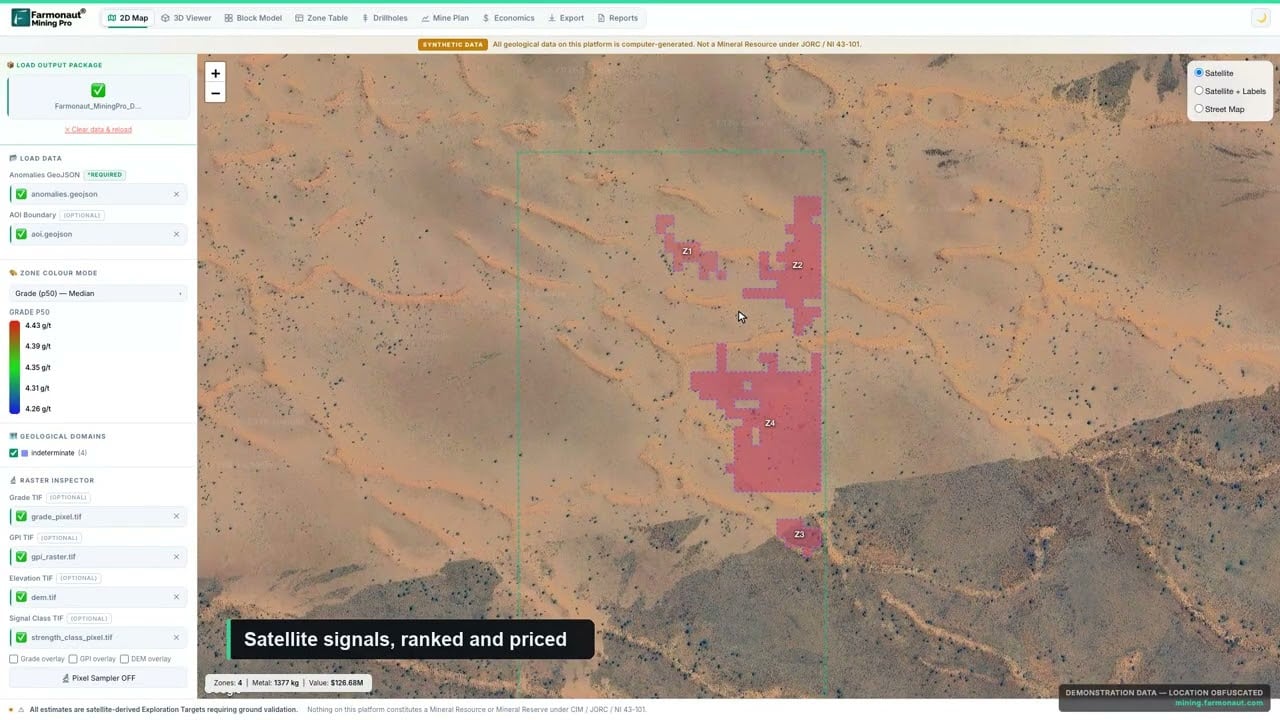
▶ What Farmonaut Mining Pro is and how it maps a mining area. · 4:56
How to compare mining safety management system providers
- List your top three hazards. Use your own incident and near-miss records, then compare them with the MSHA classes above.
- Check which rules apply. Write down what is legally required, because that part is not optional and should not be counted as an upgrade.
- Apply the hierarchy of controls. Removing the hazard or separating people from machines beats an alarm, and an alarm beats a procedure alone.
- Ask three vendors the same questions. Use written questions on false alarm rates, approvals for your mine type, local service and data ownership.
- Run a trial on one crew or section. Agree the measure beforehand, such as alarms per shift or tagged people found during a drill.
- Cost the whole life of the system. Include training, spares and service, then use the calculator below.
- Review after six months. Check whether crews still use the system as designed, and whether anyone has found ways to bypass it.
A crisis or emergency platform deserves the same test. Run an unannounced drill, time how long it takes to account for everyone, and ask what still works when mains power and the main network fail. MSHA’s alert names workplace examinations, hazard recognition and training as central to a safety programme, so no platform replaces them.
Calculator: cost per worker of a system and a consultant
Vendors rarely publish prices, so quotes are the only sound basis. Enter what you are quoted to compare options on the same footing: cost per worker per year, and cost per hour worked. The result does not tell you whether a system will prevent an accident. It only makes unequal quotes comparable.
Calculator
What does a safety system and consultant cost per worker?
Enter your own quotes. The defaults are round examples, not market prices.
- Total cost per year (US$): $40,000
- Cost per hour worked (US$): 0.20
- Whole-life cost (US$): $200,000
Example values only, not benchmarks or vendor prices. Enter each quote in US$. The calculator spreads purchase cost evenly over the years you enter and ignores interest and tax. It does not estimate any safety benefit.
Where satellite data helps, and where it does not
Satellites do not replace gas monitors, proximity systems or rescue teams, and they cannot see underground conditions. They can show surface change across a large site or remote licence, which helps consultants and owners plan ground checks of waste dumps, tailings areas and access roads. Farmonaut offers this kind of satellite view from a KML, KMZ or polygon boundary as one input to a site review. It is not a safety clearance. For the wider picture of mining’s effects on land and water, see our guide to environmental issues in mining.
Farmonaut’s general product pages cover fleet management, carbon footprinting, product traceability, large-area administration, satellite verification for loans and insurance and API documentation. These are separate tools and not mine safety systems.
Nearby reading: our guide to mining safety solutions by accident type looks at systems and not suppliers, geological consulting firms covers technical advisers more broadly, and mine development companies explains who builds a project.
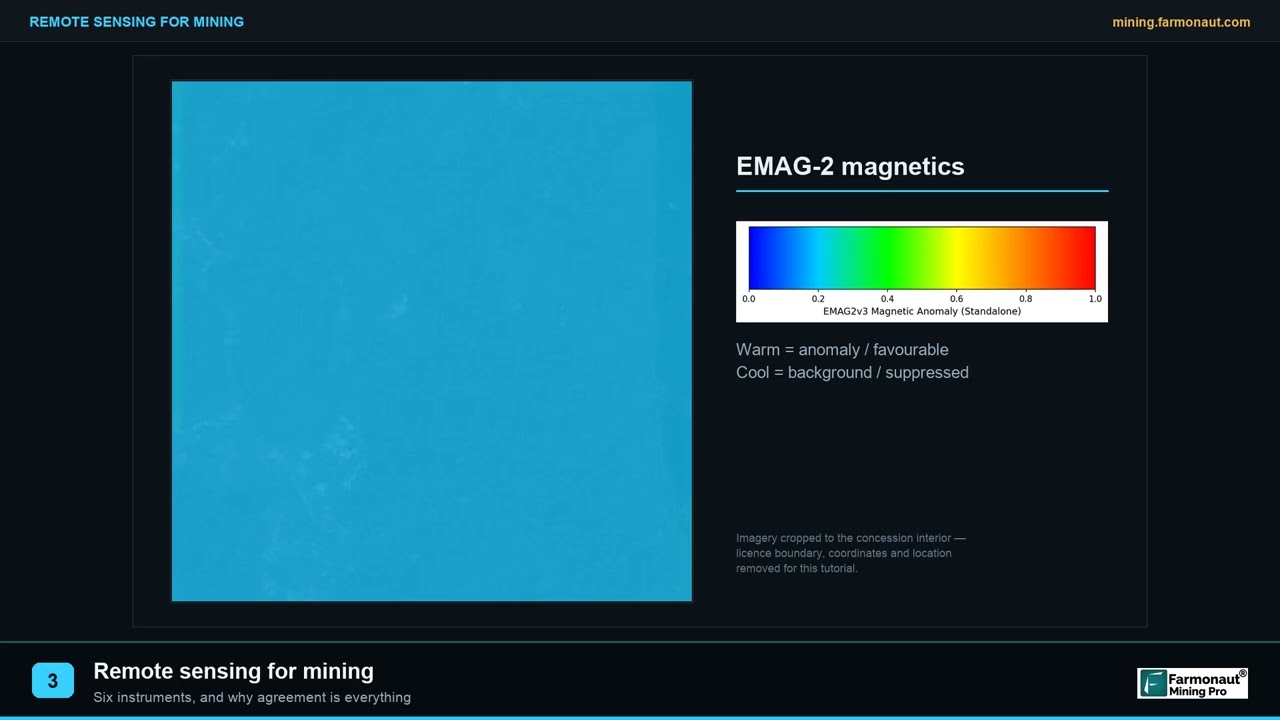
▶ A short plain-language explainer of remote sensing for mining. · 2:01
Frequently asked questions
What do mining safety solution companies do?
They supply equipment, software or advice that reduces harm at mines. Typical products include proximity detection, tracking, communications, gas and dust monitors, refuge chambers and ventilation. Typical services include risk reviews, training and rescue.
Which company is the best for mine safety?
No single firm is best for every mine, and no public dataset ranks them on results. Choose by your main hazard, mine type and local service, then test the shortlist with a site trial.
Who makes underground mining safety signaling and tracking systems?
Strata Worldwide and MST Global both publish underground communications and tracking ranges, and Becker Mining Systems publishes proximity detection. Compare them on network resilience and local support.
What does a mine safety consultant do?
A consultant assesses site risks, reviews plans and procedures, trains crews and advises on compliance. The work ranges from geotechnical review, as at SRK, to safety culture programmes, as at Sentis.
Where can I find mining safety consultants in Australia?
Start with your state regulator’s guidance, such as the NSW Resources Regulator. Coal Services Mines Rescue serves NSW coal mines, and Sentis runs an Australian website. Check that any course meets your state’s requirements.
What is the main mining safety rule in Brazil?
It is NR-22, the labour ministry’s mining safety and health standard. It was rewritten by a 2024 portaria and updated again in early 2026 on heat, dams and mineral dust.
Which services help with safety when new contractors arrive?
Start with hazard training before work begins, a site induction, and a clear supervisor for each contractor crew. US rules in Parts 46 and 48 set training duties, and tracking systems can support headcounts.
How do I compare mining safety management system providers?
Send each one the same written questions on hazards covered, approvals, false alarms, local service, data ownership and total cost. Then trial the best two on one section with a measure agreed in advance.
What is the best crisis management platform for a mining site?
The best one is whichever keeps working in your drill. Test accounting for all personnel, alerting and communications with power and the main network down, and keep a manual backup.
Do mining safety sirens still matter?
Yes, as one layer of an emergency plan. An alarm only helps if everyone can hear or feel it, knows the route out and has practised. Test alarms during drills and fix any zone where crews could not detect them.
Are mining safety rules getting stricter?
They change by country. Brazil updated NR-22 in 2024 and 2026. In the US, check the current Code of Federal Regulations and MSHA notices, since some rules are revised or delayed after they are published.
Can satellite imagery improve mine safety?
It can help plan inspections by showing surface change across dumps, tailings areas and roads. It cannot detect underground gas or roof conditions, so it supports field checks and does not replace them.
This page is for information only. It is not legal or investment advice, and no listing is an endorsement. Confirm the rules with your regulator and safety professional.
Farmonaut mining
Map your mining site from space
Site teams and consultants can send a boundary as KML, KMZ or polygon and get a satellite view of terrain and surface change to plan ground checks.

Mining Pro sample view, synthetic data
Keep reading
Sources
- MSHA, At a Glance FY1978-2025: msha.gov
- MSHA, 2025 Fatalities – Focus safety alert: msha.gov
- NIOSH Mining Program, Number and rate of occupational mining fatalities, 1983-2024: wwwn.cdc.gov
- eCFR, 30 CFR 75.1732 Proximity detection systems: ecfr.gov
- eCFR, 30 CFR 48.31 Hazard training: ecfr.gov
- eCFR, 30 CFR Part 48: ecfr.gov
- eCFR, 30 CFR Part 46: ecfr.gov
- Brazil Ministry of Labour and Employment, NR-22: gov.br
- NSW Resources Regulator: resourcesregulator.nsw.gov.au
- Coal Services, Mines Rescue & Training: coalservices.com.au
- Strata Worldwide, Mining: strataworldwide.com
- Becker Mining Systems: becker-mining.com
- MST Global, About: mstglobal.com
- Sandvik, Automation products: rocktechnology.sandvik
- Trolex: trolex.com
- Trolex, About: trolex.com
- MSA Safety: msasafety.com
- Minetek: minetek.com
- SRK Consulting, About: srk.com
- SRK Consulting, Services: srk.com
- Sentis: sentis.com.au
Discussion
Questions, corrections or field experience? Share them below. First-time comments are reviewed before they appear, and your email is never published.
No comments yet. Be the first to add a question or your experience.

 Tipareth Mines
 GemSprout Metals Limited
 Qader Group
 Ileys General Trading
 SG Gold Mining LLC
 VRV Global Pte Ltd
 Omsri International FZE
 G.I.T.T.
 Jaunita Erss Ltd
 Almosi SARL
 SRK Consulting
 Berks Gold Limited
 Mwerezi Minerals Company Limited
 Mining SARL
 SenGold Invest SAS
 Sean Mining Limited
 NTS Group (Pty) Ltd
 Mine4Africa











