

Are Wheat Prices Expected to Rise in 2025? An Agricultural and Economic Outlook
Meta description: Are wheat prices expected to rise in 2025? Explore wheat price forecasts, global production trends, and the key agricultural, climatic, and economic factors shaping the 2025 wheat market outlook.
Introduction: Are Wheat Prices Expected to Rise? Setting the 2025 Wheat Outlook
“In 2025, global wheat demand is projected to surpass 790 million tons, pressuring supply and possibly driving prices up.”
Wheat is one of the most critical staple crops globally, forming the backbone of food security in many regions. As 2025 approaches, the wheat value chain—from farmers to policymakers, traders, supply chain managers, and commodity analysts—is sharply focused on one essential question: Are wheat prices expected to rise?
By exploring global production, climate variability, supply and demand dynamics, geopolitical shifts, costs, and other key factors, this comprehensive analysis will help stakeholders across the agricultural sector understand wheat price risks and trends for 2025.
In this timely, data-driven industry trends & news blog, we’ll analyze the prospects for wheat markets in light of weather, geopolitics, policy, input costs, yield fluctuations, technological adoption, and evolving consumption patterns. We’ll also showcase how technological solutions, such as those offered by Farmonaut, are empowering the agricultural sector to navigate uncertainties and enhance productivity.
If you’re a farmer, policymaker, analyst, buyer, consumer, or involved in any link of the wheat supply chain, read on to gain actionable insights—and bookmark this page to stay prepared for the evolving landscape of 2025 and beyond.



Launch Farmonaut Web App for satellite-powered crop and soil insights here.
API Access – Integrate satellite data with your systems for agriculture and supply chain monitoring.
View Developer Docs
Current Wheat Supply & Demand Dynamics
A Look Back: Wheat Production & Demand up to 2024
Wheat production and demand in recent years have faced numerous challenges rooted in agricultural, economic, and climate factors. Major wheat-producing regions—including the U.S. Midwest, Canada, Russia, and parts of Europe—have experienced weather extremes such as droughts, late frosts, and unpredictable rainfall. In 2024 especially, these areas struggled with inconsistent rainfall and soil moisture deficits, leading to worries over reduced output.
Analyzing Recent Agricultural Production Patterns
- North America: The U.S. Midwest and Canada are major players in the global wheat market. However, wheat yields have been impacted by climate extremes, including severe droughts in the Midwest.
- Europe: Multiple countries within Europe—especially the Eastern European region—have struggled with variable rainfall, impacting output.
- Russia and Central Asia: While Russia continues as a powerhouse, persistent weather risks and geopolitical uncertainties keep output projections uncertain.
- Asia & Africa: Wheat demand is rising rapidly, with many countries in these regions becoming more dependent on imports.
Demand Factors Driving Wheat Prices
Simultaneously, global wheat demand is steadily increasing thanks to:
- Population growth and increasing urbanization, especially in developing nations in Asia and Africa.
- Higher consumption of wheat-based products.
- An expanding bioeconomy, including uses for biofuels and bioplastics.
- Dependence on import-reliant countries, particularly where domestic production cannot meet needs.
These supply and demand dynamics put upward pressure on international prices, amplifying the need to analyze whether wheat prices are expected to rise further in 2025.
“Extreme weather linked to climate change could disrupt 10% of global wheat output, significantly impacting prices in 2025.”
Year-over-Year Wheat Price and Key Factors Comparison Table
| Year | Estimated Global Wheat Price (USD/ton) | Global Production Estimate (Million Tons) | Major Influencing Factor | Global Demand Estimate (Million Tons) | Notable Risks |
|---|---|---|---|---|---|
| 2024 | $290–$320 | 782 | Weather extremes, Geopolitical tensions (e.g., conflict in Black Sea region), Input cost spikes | 780 | Drought in major areas (Midwest, Canada, Europe), price volatility, trade restrictions |
| 2025 (Projected) | $305–$368 (Est. 5–15% rise) | 790–800 | Climatic variability, Policy uncertainty, Rising global demand, Technological adoption | 790+ | Unpredictable weather, input cost increases, export chain disruptions, policy changes |
Climatic Factors and Yield Risks Impacting 2025
Climate Variability Remains a Persistent Risk
Are wheat prices expected to rise in 2025? Much of the answer lies in the evolving climate variability threatening wheat’s growth cycle, yields, and global supply. Climate change is increasingly recognized as one of the most critical influencing factors for agricultural production around the world.
- Unpredictable Weather Patterns: Excessive heat, late frosts, and atypical rainfall can disrupt key crop stages. In 2024, we saw heatwaves and droughts in Russia, the U.S. Midwest, and parts of Europe, threatening yields and quality. Projections into 2025 suggest even greater variability.
- Soil Moisture Deficits: Inconsistent rainfall leads to soil moisture concerns, which reduce output. Farmers often face higher irrigation costs or even crop losses if droughts persist, especially in areas like the U.S. Midwest and Central Asia.
- Increased Pest and Disease Risks: Warmer temperatures and shifting climate zones attract new pests and fungal pathogens, compounding risks to yields.

Adapting to these climatic factors is essential, and widespread adoption of resilient crop varieties and precision farming tools will determine how well farmers can maintain yields.
Farmers’ Response: Adaptation Strategies
- Drought-resistant Wheat: Enhanced varieties offer partial relief, but mass adoption depends on seed availability and local adaptation.
- Precision Agriculture: Integrated technologies help optimize water, fertilizer, and pesticide usage, thus minimizing risk and input costs.
- Regenerative Farming: Focus on soil health can improve resilience—but more widespread adoption is needed to drive significant impact by 2025.

Geopolitical & Trade Considerations: The Global Market Impact
Geopolitical and trade factors consistently emerge as key drivers for wheat prices and market volatility. Are wheat prices expected to rise in 2025? Risks remain, particularly given how influential export policies and supply-chain uncertainties can be.
- Russia and Ukraine: Together, they account for around 30% of global wheat exports. While 2024 saw some stabilization compared to earlier years, ongoing political uncertainties, potential sanctions, and logistical disruptions could tighten supply and drive prices higher in 2025.
- Export Policies: Major exporters like Russia periodically impose export taxes or bans to regulate domestic markets. India’s stockpiling strategy further limits wheat’s global availability whenever domestic scarcity looms, supporting higher international prices.
- Trade Tariffs and Subsidies: Importing countries often shield local agriculture with tariffs and subsidies, distorting market flows.
- Supply Chain Risks: From Black Sea blockades to post-pandemic port bottlenecks, supply chains remain vulnerable, translating into price risk.

Case Example: Russia’s Export Impact
Russia often sets ambitious sowing goals (84 million hectares in 2025), but a single policy shift—like adjusting leasing rates or AI-driven precision farming—can swing global prices significantly.

Input Costs & Farming Economics: A Closer Look at Rising Vulnerabilities
The Influence of Input Costs on Wheat Prices
Input costs represent a critical factor in the agricultural outlook for wheat. Key components include fertilizers (especially nitrogen-based), fuel, labor, machinery, and logistics. Global price volatility for these resources is tightly linked to energy markets, geopolitical tensions, and demand growth in emerging nations.
- Fertilizer Prices: Costs shot up in recent years due to high natural gas prices, a key input. Many countries have implemented fertilizer subsidies, but access and affordability remain uneven.
- Labor and Fuel: Shortages and wage increases inflate per-acre costs, directly influencing the sale price of wheat.
- Post-Harvest Infrastructure: Improved storage and logistics can reduce post-harvest losses, but investments are geographically uneven, leaving some regions more vulnerable to price shocks.

Are wheat prices expected to rise? If input costs remain high or increase further due to energy price spikes or trade issues, expect additional upward pressure on wheat prices in 2025.
Technological Advancements: Shaping the Future of Wheat Production and Prices
Technology has a crucial part to play in mitigating risks and controlling costs upstream in the wheat value chain. By 2025, adopters of next-generation agri-tools are better positioned to thrive amidst supply chain disruptions or climate-related yield drops.

Precision Farming and Digital Solutions
- Satellite Monitoring (Farmonaut): Advanced tools enable real-time crop health, soil condition, and weather monitoring, giving producers actionable data to counteract climate and pest risks.
- Blockchain Traceability (Farmonaut Traceability Solutions): Blockchain represents the future for agriculture supply chains, increasing transparency and trust for exports and supporting food security in trading countries.
- AI-based Advisory: Artificial intelligence models guide optimal planting, irrigation, and harvesting for improved productivity and efficiency.
- Automated Fleet Management (Farmonaut Fleet Management): Manage operational logistics more effectively to reduce unnecessary resource use and input costs.
- Carbon Footprinting (Farmonaut Carbon Footprint Monitoring): Helps growers and businesses adopt sustainable, climate-smart ag practices while complying with new regulations.
We, at Farmonaut, are committed to making these cutting-edge monitoring and management technologies affordable and accessible for businesses, farmers, and governments globally.
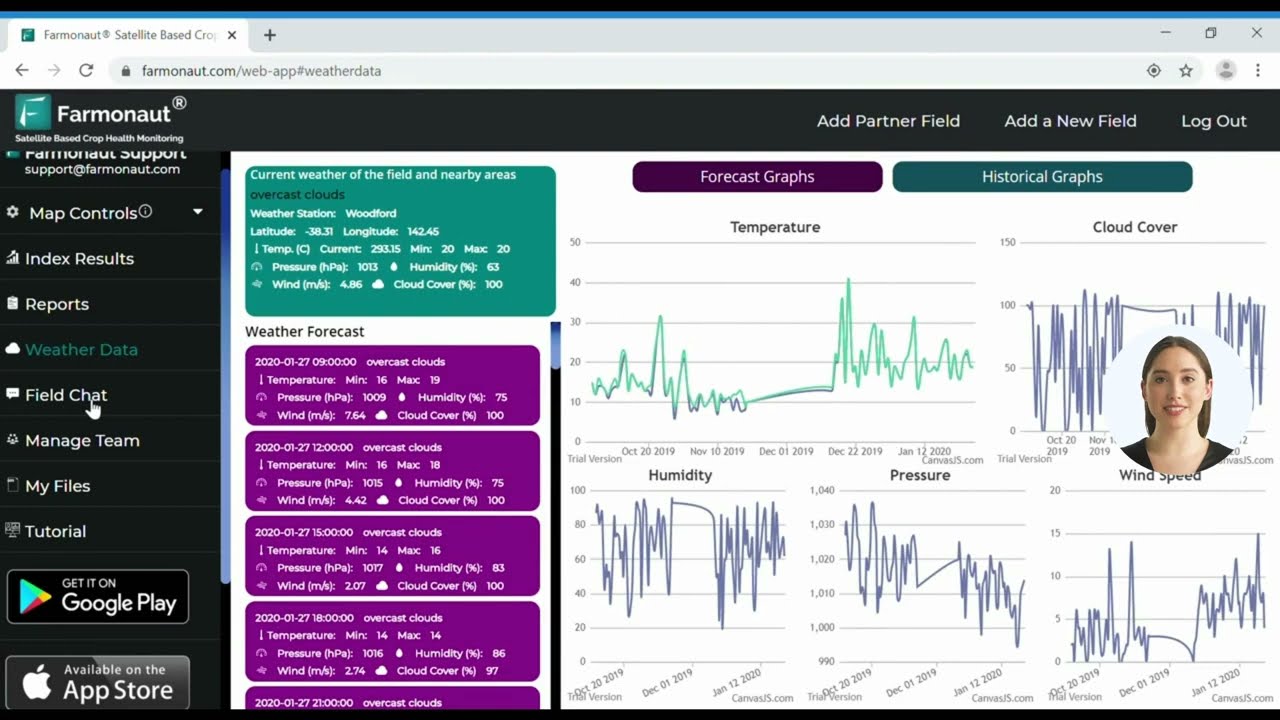
Farmonaut’s Satellite Solutions & Insights for Wheat Production, Risk, and Price Forecasting
The integration of leading-edge platforms such as Farmonaut brings critical advantages, especially as price volatility, climate risks, and input costs rise.
- Satellite-Based Monitoring: Provides reliable data on crop stage, health, and real-time weather, enhancing planning and input management to optimize wheat yields despite unpredictable weather.
- Jeevn AI Advisory: Offers customized, satellite-driven advice for planting, irrigation, and disease management.
- Blockchain Traceability: Secures trade by verifying source authenticity, especially valuable in high-risk markets or where export bans may be imposed.
- Carbon and Environmental Tracking: Helps producers meet increasingly strict international and domestic environmental standards.
- API & Integration: Developers can embed Farmonaut data into customized apps for large agribusinesses or supply chains.
Farmonaut’s modular and scalable platform ensures users of all scales—whether individual farmers or global agribusiness managers—are equipped to mitigate price risks, manage input volatility, and boost crop resilience for 2025 and beyond.
2025 Wheat Price Forecast: Expected Increases & Volatility
What Do Analysts and Models Predict?
After combining agricultural outlooks, economic trends, supply-demand modeling, and expert commentary, the industry consensus is a modest to moderate rise in global wheat prices by 2025.
- Price Range: Expected increase is 5%–15% over 2024, likely putting average prices in a band of $305–$368 per metric ton, depending on region and quality.
- Regional Volatility: Major wheat exporters like the U.S., Russia, Canada, and the Black Sea region may see higher volatility due to climate disruptions and political risks.
- Supply Surpluses Limited: Production increases in one area can be quickly offset by climate shocks in another, preventing large surpluses that could depress prices.
- Rising Input Costs: Ongoing increases in fertilizer, fuel, and labor costs may drive minimum support and market prices upward.
- Sustained Global Demand: The continued growth in consumption, especially in Asia and Africa, supports a robust pricing outlook.
Short-term price volatility will likely remain high, driven by unexpected climate events, policy shifts, or supply chain interruptions.
How Farmers and Stakeholders Can Prepare for Rising Wheat Prices
Strategic Recommendations for 2025 and Beyond
- Adopt Precision & Satellite Monitoring: Maximize yields, reduce input waste, and respond proactively to climate signals.
- Diversify Crop Portfolios: Reduce reliance on wheat alone to mitigate risk.
- Invest in Storage: Improved on-farm storage capacity allows for more strategic market timing.
- Leverage Policy Tools: Stay informed on support/subsidy programs and advocated for farmer-friendly trade and stockpiling policies.
- Use Blockchain Traceability: Secure premium prices in export markets demanding higher transparency.
Stakeholders from across the wheat supply chain must focus on climate adaptation, robust infrastructure investment, and market intelligence—supported by tools like Farmonaut.
Farmonaut Subscription Plans
For those ready to digitally empower their farming or agribusiness in 2025, our affordable subscription tiers provide accessible solutions. Monitor wheat and other staple crops, manage supply/security, streamline resource allocation, and track environmental goals—all from your desktop or mobile device.
Frequently Asked Questions (FAQ)
Are wheat prices expected to rise in 2025?
Yes, given current trends in climate variability, rising input costs, strong demand growth, and ongoing geopolitical uncertainties, most analyses indicate a modest to moderate global wheat price increase of 5–15% in 2025.
What are the major risks to wheat supply in 2025?
Key risks include unpredictable weather/climate events, input and logistic cost volatility, geopolitical tensions affecting exports (especially in the Black Sea, Russia/Ukraine), and policy shifts (export bans, tariffs, or subsidies that disrupt normal trade flows).
How can technology help mitigate wheat price risks?
Satellite and AI-powered platforms (like Farmonaut) enable real-time field monitoring, yield forecasting, input optimization, and supply chain traceability—allowing more precise and timely management of climatic and economic risks.
Which countries will be most affected by price increases?
Africa, Asia, and import-dependent regions are particularly vulnerable because they heavily rely on international wheat markets. These countries must plan for food security through strategic reserves and expanded agricultural productivity.
How can I access Farmonaut’s tools for wheat monitoring?
Download our Android and iOS apps, use the web app, or integrate the Farmonaut API. Data-driven solutions for crop health, soil monitoring, and supply chain management are available at multiple price points.
Conclusion: Preparing for a New Era in Wheat Markets
Wheat remains one of the world’s most critical staple crops. In 2025, prices are expected to rise modestly to moderately, shaped by the complex interplay of agricultural production conditions, climate variability, rising input costs, robust demand growth, geopolitical factors, and trade risks.
For stakeholders—whether farmers, policymakers, traders, or value chain managers—the need to stay agile and informed has never been greater. Ongoing investment in smart technologies, improved infrastructure, and the adoption of sustainable, climate-resilient farming practices will be essential in protecting margins and ensuring food security across many regions worldwide.
As the wheat market evolves, remaining vigilant about these key dynamics and leveraging advanced tools like those offered by Farmonaut can drive productivity, sustainability, and stability, positioning all players in the wheat value chain for success—whatever the market brings.
Useful Resources:
-
Learn how Farmonaut’s Traceability solutions can manage food authenticity and supply chain transparency in the face of rising wheat prices.
-
Check out Farmonaut Carbon Footprint Monitoring for climate-smart farming and international compliance.
-
Optimize transport, input delivery, and machinery with Farmonaut’s Fleet Management.
For more about the future of agriculture, ag-tech, and trends shaping the 2025 food security landscape, keep following our blog and use Farmonaut for data-driven success!

 Byju’s
 Kubota
 FFBS
FFBS Jontra
 Kalustyan
 Tucor
Tucor Geno
Geno Hayleys Agriculture
 Linx Agritech
 Adinet
 Save Your Soils
 Grandstream Algérie
 XOS Realty
 Geospatial Lab Africa
