

AI Agriculture Bots: 7 Top Robots Transforming Farming 2025
- Introduction: AI Robots Redefining Farming in 2025
- Trivia: Fast Facts about AI Agriculture Bots
- The Future of Farming: Why AI Agriculture Bots Matter
- How AI Agriculture Bots Work: Core Technologies
- Comparison Table: Top 7 AI Agriculture Robots 2025
- In-Depth: 7 AI Robots Revolutionizing Agriculture
- Agriculture Robots Market: Growth, Trends, and Opportunities
- Farmonaut: Satellite, AI, and Blockchain for Smart Farming
- Key Challenges and Solutions in Adopting AI Agriculture Robots
- FAQ: AI Robots in Agriculture 2025
- Conclusion: The Road Ahead for AI Agriculture Bots
Introduction: AI Robots Redefining Farming in 2025
The rapid advancement of artificial intelligence (AI) in agriculture is transforming the way farming operations are conducted, marking a significant leap towards more efficient, sustainable, and precise agricultural practices. By 2025, AI-powered agriculture robots—or agri-robots—are poised to become an indispensable part of modern farms worldwide, reshaping the agricultural landscape through automation, data-driven insights, and enhanced productivity.
AI agriculture bots refer to autonomous or semi-autonomous robots equipped with AI technologies such as computer vision, machine learning, and advanced sensors. These robots perform various tasks ranging from soil analysis and precision planting to pest control, weeding, and harvesting. Unlike traditional machinery, agriculture robots possess the ability to adapt to real-time field conditions, optimize resource usage, and minimize human intervention, which collectively improves farm efficiency and crop yields.

The Future of Farming: Why AI Agriculture Bots Matter
The integration of AI robots in agriculture is no longer a futuristic concept—it’s the new normal. These advanced robots for agriculture enable farms to be:
- Efficient: Performing repetitive or labor-intensive tasks with unmatched speed and consistency.
- Precise: Making data-driven decisions that minimize wastage and maximize yields.
- Sustainable: Reducing reliance on chemicals, lowering water use, and minimizing the environmental footprint.
- Resilient: Adapting to changing climate, pest outbreaks, and labor shortages.
In 2025, we expect to see even greater synergy between AI robots and other farm management technologies, including satellites, IoT devices, and open APIs. The result? Smarter farms and a brighter future for global food security.
How AI Agriculture Bots Work: Core Technologies
AI agriculture bots are the embodiment of technological convergence. Their performance depends on a seamless integration of:
- Computer Vision: High-resolution cameras and sensors allow bots to “see” and interpret the environment, identify crops, weeds, pests, and more.
- Machine Learning Algorithms: Bots learn to recognize patterns—such as signs of disease, weed species, or growth stages—through massive datasets.
- Advanced Sensors: These measure soil moisture, health, nutrient levels, and detect environmental conditions in real-time.
- Autonomous Mobility: From ground robots to flying drones, advanced navigation enables safe movement across fields, avoiding obstacles and minimizing crop damage.
- Cloud and IoT Connectivity: AI agriculture robots send data to centralized management systems, which analyze, store, and provide actionable insights for optimized interventions.
By using these technologies, AI robots can collect and process vast amounts of data on the go, ensuring precision farming that targets specific needs of crops and soil, instead of blanket approaches.

Comparison Table: Top 7 AI Agriculture Robots 2025

Agricultural robots on sale now, and what they cost
Three machine types have clear, published numbers behind them. Prices move with dealers and options, so treat these as dated snapshots.
| Machine | What it does | Published figure |
|---|---|---|
| John Deere See & Spray | Cameras on the sprayer boom tell weeds from crop and switch on single nozzles only over weeds | Introduced in 2021. In 2024 it covered more than 1 million acres of corn, soybean and cotton with average herbicide savings of 59%, per Deere (Farms.com, 19 Sept 2024) |
| Carbon Robotics LaserWeeder | Kills weeds with lasers instead of herbicide | 20-foot units carry 30 lasers; price reported at over $1 million (Irish Examiner) |
| Robotic milking unit (box) | Cows walk in when they choose; a robot arm attaches the cups | $150,000 to $230,000 per robot, each milking 50 to 70 cows (CCF Bank) |
The pattern is the same across all three. The machine is expensive, and it pays back only where it replaces a big recurring cost: herbicide on large row-crop acreage, hand weeding in vegetables, or milking labour in a dairy.
In-Depth: 7 AI Robots Revolutionizing Agriculture
1. Precision Planting and Weeding Robots
Precision planting and weeding robots combine seeding and weed control. Utilizing deep learning-driven computer vision, it can differentiate between crops and weeds at the seedling stage. By mechanically or chemically removing weeds while planting, it ensures optimal plant population and drastically reduces herbicide use. In regions facing labor shortages or high costs, such robots can run long shifts with limited human oversight.
- Benefits: Lower input costs, increased yields, improved soil health
- Role in Sustainability: Reduces chemical usage, minimizes environmental impact, maintains biodiversity
2. Fruit and Vegetable Harvesting Robots
Harvesting robots target one of the biggest bottlenecks in modern agriculture: labor-intensive harvesting. Equipped with robotic arms and soft grippers and guided by machine vision, these robots aim to pick ripe produce without bruising it. Machines of this type are usually designed for specific crops.
- Benefits: Reduces post-harvest losses, assures higher consistency, operates non-stop
- Role in Sustainability: Lowers food waste, enables traceability for premium produce (Traceability Platform)
3. Soil Sampling and Analysis Robots
Ensuring optimal soil conditions is foundational for healthy crop growth. Soil robots use onboard probes and sensors to sample or measure moisture, pH, nutrient levels and organic matter. This robot gathers and transmits precision data in real-time, allowing tailored irrigation and fertilization.
- Benefits: Informed fertilizer management, improved crop health, less run-off pollution
- Role in Sustainability: Enhances resource use efficiency, supports regenerative agriculture

4. Scouting Drones for Pest Detection
Scouting drones with AI-driven imaging survey farmland from above. Its high-resolution cameras capture field-wide data on crop health, pest outbreaks, irrigation issues, and more. AI algorithms alert farmers to early-stage infestations or disease, enabling targeted interventions that prevent costly yield losses and minimize chemical spraying. For large operations, drone data can be fed into central farm management systems.
- Benefits: Early threat detection, reduced chemical usage, optimized surveillance coverage
- Role in Sustainability: Precision pest control, less environmental impact, higher yields
5. Automated, Sensor-Driven Irrigation
Water management is a defining challenge for sustainable agriculture. Automated irrigation systems use soil-moisture sensors and weather data to decide when and how much to water. This targeted approach can use less water than fixed schedules, and it adjusts to current weather and soil readings.
- Benefits: Reduces water bills, prevents over- or under-watering, supports drought resilience
- Role in Sustainability: Safeguards water resources, lowers operational costs, maintains optimal crop conditions



6. Selective Weeding Robots
Weeding is one of the most repetitive and labor-intensive farming tasks. Selective weeding robots use AI-powered visual recognition to spot and remove weeds. By using mechanical removal, lasers or targeted micro-doses of herbicide, they cut chemical use. John Deere reported 59% average herbicide savings across more than 1 million acres treated with its See & Spray system in 2024 (Farms.com).
- Benefits: Lowers labor needs, increases weed control precision, reduces input costs
- Role in Sustainability: Reduces herbicide dependency, preserves soil health, supports organic farming practices
7. Autonomous Field Scouting Rovers
Field-scouting rovers drive between crop rows with cameras and sensors, and their data can be combined with drone and satellite imagery. The robot identifies issues such as disease, anomalies in crop growth, and signs of nutrient deficiency.
- Benefits: Accurate disease detection, timely advisories, multi-layered data integration
- Role in Sustainability: Promotes prophylactic treatments, reduces needless chemical spraying, maximizes overall field efficiency
Agriculture Robots Market: Growth, Trends, and Opportunities in 2025
The agriculture robots market is experiencing robust expansion, fueled by:
- Labor shortages in rural and developed regions alike
- Increasing demand for sustainable, high-yielding farms
- Cost reductions in AI and sensor hardware
- Connectivity via IoT and cloud systems for integrated ecosystem management
- Government initiatives and smart farming grants
There is no reliable count of farms using AI robots. FAO counts more than 570 million farms worldwide, 84% of them smaller than 2 hectares (FAO), so robot adoption is concentrated on large arable farms, vegetable growers and dairies. These robots for agriculture will be at the heart of a new “smart agriculture” era—one defined by precision, efficiency, and resilience in the face of climate and economic volatility.
How big is the agricultural robot market?
MarketsandMarkets puts the global agricultural robot market at $17.73 billion in 2025 and forecasts $56.26 billion by 2030, growth of about 26% a year (MarketsandMarkets). That is a market-research forecast of spending, not a count of farms using robots.
Farm numbers explain why spending is so concentrated. FAO counts more than 570 million farms worldwide, and 84% of them are smaller than 2 hectares (FAO). A $1 million weeder or a $200,000 milking box does not fit those farms. The published price points fit large arable farms, vegetable growers and dairies with enough acres or cows to spread the cost.
Farmonaut: Satellite, AI, and Blockchain for Smart Farming
While AI agriculture bots revolutionize field-level operations, Farmonaut is leading the next wave by empowering farms with satellite-based monitoring, AI advisory, and blockchain traceability. These tools integrate seamlessly with on-ground robotics, creating a unified framework for data-driven, actionable, and sustainable decision-making in agriculture.
How Farmonaut Boosts AI Agriculture Bots’ Impact
- Satellite-Based Monitoring: Farmonaut provides near real-time data on vegetation health, soil conditions, and crop development using multi-spectral satellite imagery. This data allows AI robots to better understand field conditions before they even begin their tasks.
-
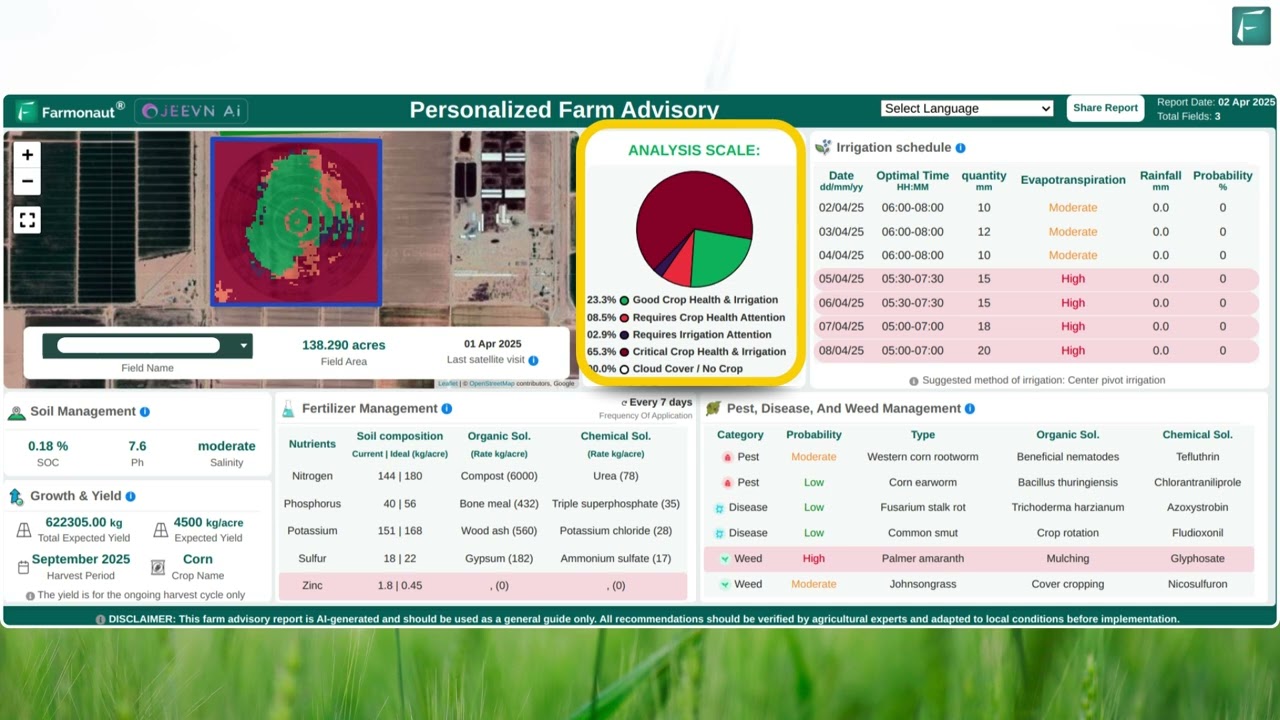
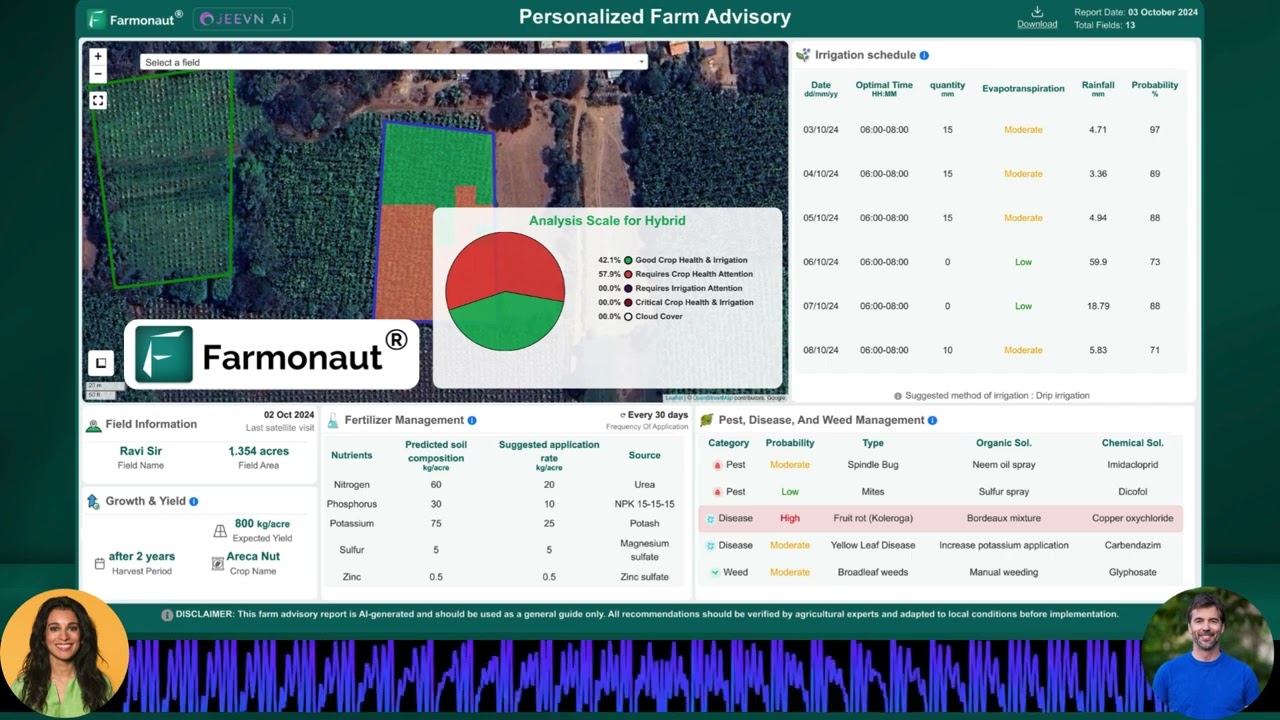
Jeevn AI Advisory System: With machine learning and AI analysis, Jeevn delivers personalized, hyper-local insights—directly supporting robotics by recommending irrigation, fertilization, and pest control interventions in sync with real-time conditions.
Try Jeevn AI Advisory for Adaptive Farming Now -
Blockchain-Based Traceability: Monitoring produce from field to fork, Farmonaut’s traceability platform verifies provenance, quality, and regulatory compliance for crops harvested with AI-powered robots.
See how produce traceability enhances food safety -
Fleet and Resource Management: By optimizing logistics, Farmonaut’s tools ensure robots and equipment are efficiently deployed, reducing operational costs and carbon emissions.
Streamline Agri-Robot Operations with Fleet Management -
Environmental Impact Monitoring: Farmonaut tracks carbon footprints, water usage, and resource flows induced by the use of AI robots, ensuring that technology adoption always aligns with sustainable practices.
Monitor & Minimize Environmental Impact
Farmonaut offers these services through a user-friendly web and mobile app (see below to download), and also via open APIs for seamless integration with robot management systems and enterprise platforms.
Farmers, businesses, and governments enjoy affordable, scalable, and actionable agri-tech intelligence that supports precision, profitable, and resilient farming.

Farmonaut Pricing Table
Developers and agri-businesses looking to power their own systems with satellite-AI data and real-time analytics can explore Farmonaut’s API Developer Docs for technical integration.
Key Challenges and Solutions in Adopting AI Agriculture Robots
While the promise of AI agriculture bots is tremendous, several practical hurdles remain in 2025. Understanding and addressing these is crucial for successful adoption and impact.
Challenges
- High Initial Investment: Advanced AI robotics can entail significant upfront costs, making access difficult for smaller farms.
- Limited Technical Skills: Effective operation and maintenance of robots require a higher technological literacy among farm operators.
- Field Compatibility: Not all robots are universally suitable for every crop or landscape; terrain and cropping system differences can limit robot performance.
- Data Integration: Aligning field robot data with remote sensing, satellite imagery, and farm management platforms can be challenging.
- Smallholder Inclusion: Small farms may be left behind without tailored, affordable robotic solutions.
Solutions
- Scalable, Subscription-Based Services: Companies like Farmonaut offer modular, cost-effective subscriptions so even smallholders can access cutting-edge technologies without prohibitive capital costs.
- User-Friendly Platforms: Mobile and web apps designed for intuitive use (such as Farmonaut) lower the barrier for non-technical users.
- Open APIs and Interoperability: Open development tools and APIs (e.g., Farmonaut API) enable smooth integration of robots with various digital agriculture platforms.
- Governmental and Financing Support: Subsidies, grants, and satellite-driven verification (crop loan and insurance) are accelerating access to technology even in emerging markets.
- Customizable Robot Designs: Manufacturers and technologists continue to tailor AI robots to suit local crops, climates, and cultivation methods worldwide.

FAQ: AI Robots in Agriculture 2025
What are AI agriculture bots?
AI agriculture bots are autonomous or semi-autonomous robots equipped with artificial intelligence (AI), computer vision, and advanced sensors to perform various farming tasks, including soil analysis, planting, pest control, weeding, and harvesting.
How do AI robots improve farming efficiency?
By using AI algorithms and continuous data analysis, robots for agriculture can optimize irrigation, fertilization, and pesticide application, perform repetitive or labor-intensive tasks without fatigue, and provide real-time insights that help farmers make smarter decisions.
Are AI robots suitable for all types of farms?
Adoption depends on several factors, including farm size, crop type, terrain, and resource availability. However, with modular, scalable robotics platforms and affordable subscription-based services, AI technologies are increasingly accessible to both smallholders and large-scale operators.
What is the sustainability impact of AI agriculture bots?
AI robots reduce waste, lower chemical use, conserve water, and enable practices like precision farming and regenerative agriculture, all of which support environmental sustainability and long-term soil health.
How do Farmonaut’s solutions enhance the use of AI robots?
Farmonaut provides satellite-based data, AI-powered advisories, fleet/resource management, carbon footprint tracking, and blockchain traceability. These tools help farmers and businesses plan and monitor robot interventions, assess sustainability, eliminate fraud, and streamline operations for maximum impact.
Can I integrate AI agriculture robots with other digital platforms?
Yes, most modern AI bots support integration with farm management systems and third-party tools via API documentation, ensuring all field, satellite, and operational data can be accessed from a single dashboard.
Conclusion: The Road Ahead for AI Agriculture Bots
The AI agriculture bots revolution is creating a new paradigm for farms—one that is more efficient, sustainable, precise, and resilient. From precision planting robots and AI-powered harvesters to autonomous drones and smart weeding bots, the landscape of farming in 2025 and beyond is being reshaped by innovation and intelligence.
We are entering an era where field robotics, satellites, and AI platforms work hand in hand. With platforms like Farmonaut—offering affordable, modular, and data-driven satellite solutions—every farm, regardless of scale or location, stands to benefit from actionable insights, seamless automation, and sustainable growth. These key technologies are vital not only for improving yields and reducing costs but also for ensuring the security and sustainability of our global food systems.
Explore, adapt, and thrive with the latest in AI robotics for agriculture—the future of farming is automated, intelligent, and sustainable.

 UCAL Fuel Systems
 Kubota
 FFBS
FFBS Jontra
 Kalustyan
 Tucor
Tucor Geno
Geno Hayleys Agriculture
 Linx Agritech
 Adinet
 Save Your Soils
 Grandstream Algérie
 XOS Realty
 Geospatial Lab Africa
 Agro La Gándara
