

AGCO Cuts 2024 Production 10% for Precision Ag Advances: A Strategic Shift Shaping the Future of Agriculture
“AGCO reduced its 2024 production by 10%, reflecting a major investment in precision agriculture technologies.”
Introduction: AGCO Cuts 2024 Production 10%—The Big Picture
AGCO to Cut Production by 10% in 2024: A Strategic Shift Toward Precision Agriculture and Advanced Agricultural Production Systems
In a significant move impacting the global agricultural machinery sector, AGCO Corporation has announced plans to cut its production volume by 10% in 2024. This decision is far more than a response to market dynamics—it signals a transformative shift toward smarter, more sustainable agriculture, driven by precision technology, digital solutions, and advanced agricultural production systems.
As precision ag rises to prominence, AGCO’s strategic shift moves the focus from sheer output and quantity to quality, innovation, and environmental efficiency. With 2025 and 2026 on the horizon, this adjustment is shaping the very future of farming—emphasizing smarter systems, sustainability, and advanced tools to empower farmers worldwide.
So, what’s driving this change, what does it mean for farmers and the industry, and how does it pave the way for a new era in agricultural management and production?



AGCO’s 10% production cut in 2024 signals a deliberate pivot toward precision agriculture and advanced agricultural production systems, setting a new global standard for environmentally responsible, tech-driven farming.
Context Behind the Production Cut: Precision Ag’s Growing Role
The context behind AGCO’s 2024 production adjustment emerges from multiple converging factors that are influencing the agricultural machinery sector globally. Here’s how the landscape is shifting:
- Market dynamics shaped by fluctuating commodity prices and evolving farm sizes
- Increasing adoption of digital farming technologies and platforms
- Stronger demands from farmers for precision tools that integrate with farm management and minimize waste
- Pressures to enhance environmental efficiency and sustainability
- Broader industry trends toward AI, automation, and connected systems
Traditional expanding production to chase volume targets is no longer enough. Instead, AGCO’s decision reallocates resources—shifting from maximized unit counts to R&D investment in advanced digital solutions, autonomous capabilities, and integrated data-driven platforms that can empower the next generation of farmers.
This corporate move reflects a clear industry trend: farmers are not just demanding more machinery, they’re seeking machines that are smarter, connected, and equipped with precision ag technologies. It’s a paradigm shift—one that is fundamentally altering how the industry will operate into 2025, 2026, and beyond.
This realignment, AGCO to cut production 10% in 2024 focus on precision ag agriculture dive, agricultural production systems, showcases how tech-centric innovation is driving shareholder value—with a focus on smarter, sustainable growth over traditional volume expansion.

- ✔ Quality-first approach—smarter farming, not just more machinery
- 📊 Data-driven decisions enhance yield, reduce waste
- ⚡ AI and software integration: improve management & productivity
- 🌱 Sustainable, reduced environmental impact
- 🔗 Future-proof systems: tailored for evolving ag industry challenges through 2026 and beyond
The Rise of Precision Agriculture: Revolutionizing Modern Farming
Modern agriculture is experiencing a renaissance in precision technologies, platforms, and digital solutions. In a climate where input costs and environmental pressures intensify, precision agriculture—often called “precision ag” or “precision farming”—offers a game-changing approach for 2025, 2026, and beyond.
What is precision ag? At its core, precision ag leverages cutting-edge tools like GPS mapping, IoT sensors, machine learning, and automated control systems to optimize every aspect of crop production—from seed to harvest and beyond.
- Farmers use real-time data to apply water, fertilizers, and pesticides only where needed
- Autonomous equipment and variable-rate applications boost efficiency, reduce waste
- Advanced yield monitors and software provide actionable insights—remotely, and instantly
- AI, drone, and satellite imaging enable unprecedented management and oversight of crop health and field operations
In 2024, as AGCO cuts production volume, its investment focus moves to integrating precision ag across its product lineup, incorporating technologies like:
- Yield monitors
- Variable-rate seeding and application systems
- Sophisticated telematics platforms
- AI-driven analytics and remote equipment management
- Satellite-based farm management tools
This radical shift is enabling farmers worldwide to optimize inputs, cut operating costs, and systematically reduce their environmental impact—all while improving yields. AGCO’s 2024 production decision embodies the global race to smarter, higher-value, tech-enabled agriculture.

Precision Ag Micro-Technologies: Tools Powering the Shift
- 🌐 GPS Mapping: For ultra-accurate planting and field navigation
- 🌡️ IoT Sensors: Monitor soil moisture, weather, and plant conditions
- 🛰️ Satellite Imaging: Provides field-scale health data & yield prediction
- 🤖 AI Telematics: Predicts machine failure, optimizes deployment
- 🚜 Autonomous Tractors/Implements: Increase accuracy, reduce labor costs
Integrating satellite-based yield prediction and blockchain traceability—like the solutions available through Farmonaut—can dramatically boost the value and marketability of farm products. Explore our traceability platform here for added transparency and trust.

- ✔ Optimizing Inputs: Reduce waste with targeted water, fertilizer, and pesticide application
- 📊 Monitor Performance: Remotely track yields, machine health, and soil status
- ⭐ Boost Farm Profitability: Lower operating costs, higher ROI for farmers
- 🔰 Support Environmental Sustainability: Decrease chemical runoff and emissions
- 🌎 Prepare for Global Challenges: Adapt rapidly to climate and market shifts
“Precision agriculture now drives 10% fewer units at AGCO, emphasizing smarter, tech-focused farming innovation.”

Discover how Farmonaut’s carbon footprint monitoring tools can help benchmark your farm’s environmental impact—fitting seamlessly with AGCO’s vision for advancing sustainable agricultural systems.
Innovation in Agricultural Production Systems
The 10% production cut by AGCO does NOT mean less innovation—it means more of the right kind of innovation. This strategic move accelerates the shift from traditional mechanical products to digitally integrated agricultural production systems.
What’s the difference? Instead of just manufacturing more tractors or combines, AGCO is investing in:
- Modular, adaptable machinery that meets unique field and crop needs
- IoT-enabled platforms for real-time communication across entire farms
- Advanced farm management software uniting all machines, sensors, and analytics for a complete view
- Autonomous and semi-autonomous capabilities to enhance farm labor efficiency
- End-to-end solutions that integrate hardware, software, AI, and satellite data
The industry is evolving to see entire systems solutions as the future: complete, interconnected, agile, and scalable. AGCO’s move in 2024 to prioritize precision agriculture platforms positions it—and those who adopt its technologies—as leaders in this evolution.

Key Innovations in Agricultural Production Systems
- 📡 Connected Machinery: Enables remote tracking and diagnostics
- 🧠 AI Decision Support: Actionable recommendations, automated planning
- 📈 Farm Management Software: Holistic integration of data, tasks, and logistics
- 🛰️ Satellite Data Integration: Instant soil, crop, and climate insights
- 🤖 Autonomous Field Operations: Labor-saving, precision actions at scale
Equating production volume with progress is outdated. The future of agriculture favors integration, precision, and intelligence over scale alone.
Comparative Impact Table: Traditional vs. Precision Ag Production at AGCO
| Metric | Traditional Production (2023 Estimate) |
Precision Ag Approach (2024 Estimate) |
% Change |
|---|---|---|---|
| Annual Units Produced | 100,000 | 90,000 | -10% |
| Resource Usage Per Unit (Water, Fertilizer) | 100% | 85% | -15% |
| Average Cost Per Unit | $200,000 | $220,000 | +10% |
| Estimated Yield Efficiency | 110 bushels/acre | 125 bushels/acre | +13% |
| Projected Environmental Impact | High (baseline) | Lower (reduced emissions/inputs) | Improved |
Table Key Learning: The strategic 10% cut in production volume, when paired with precision agricultural technology, allows AGCO to significantly reduce per-unit resource use, improve yield efficiency, and lower environmental impact, even as average unit costs rise—a positive trade-off for long-term industry sustainability and profitability.
Implications for Farmers and the Agriculture Industry
The implications of AGCO’s production cut and shift toward precision ag are broad-reaching, both for farmers and the agricultural sector globally:
- Advanced machinery sophistication—not just supply, but quality and function
- Dependable, tech-enabled equipment for long-term farming sustainability
- Integrated digital systems for seamless farm management
- Reduced waste and inputs lead to improved profitability and sustainability
- Resilience in the face of food security challenges, climate stressors, and resource limitations into 2026 and beyond
For farmers, the priority is increasingly on durable, technologically advanced machinery that supports higher yield, smarter labor deployment, and efficiency per acre. Even if the total number of machines produced is lower, the added value and results delivered by each new piece of equipment are far higher.
Leveraging advanced data management and yield application tools can help you optimize input costs and boost profitability. Explore Farmonaut’s AI-driven crop management advisory systems for real-time field insights and smarter-decisions for your operation.

- ✔ Boosts farm productivity through deeper data analysis
- 🌍 Supports environmental stewardship and traceability needs (learn more)
- 📊 Prepares for tighter global regulations on carbon, water, and input use
- 🚜 Reduces machinery downtime via predictive maintenance systems
- ⚡ Improves access to agri-financing (Farmonaut’s crop loan & insurance verification streamlines claims and credit)
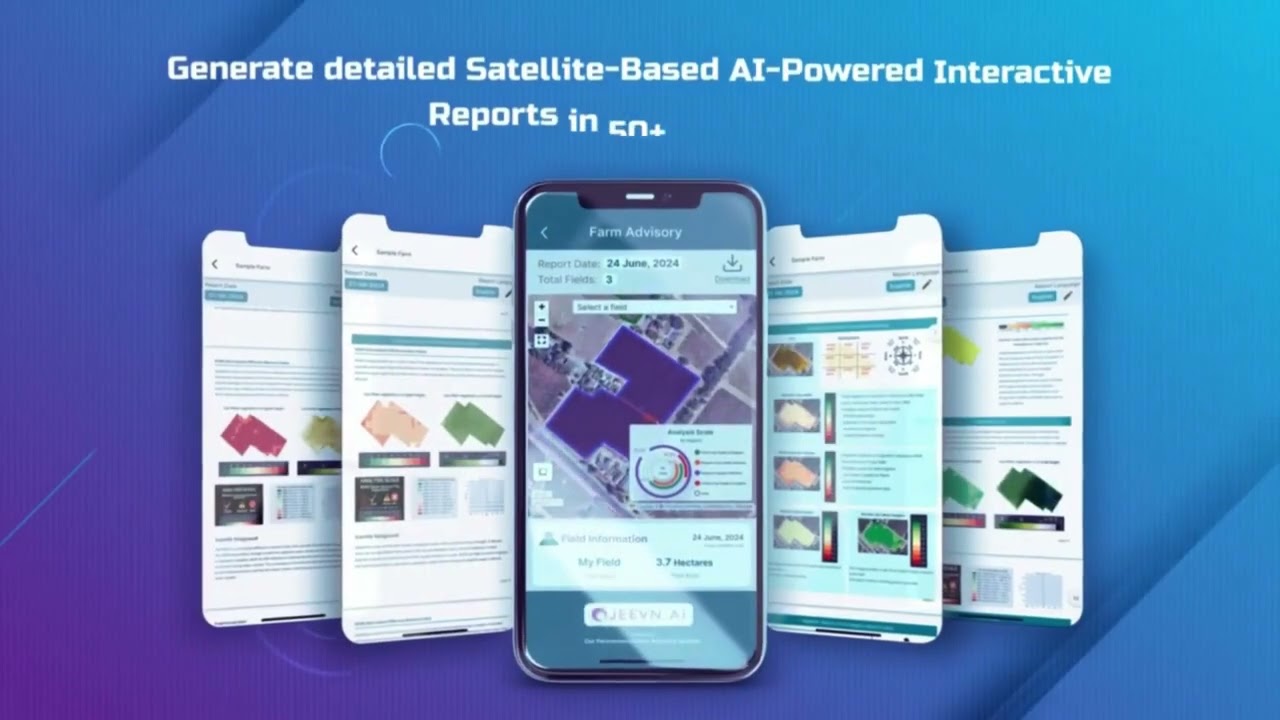
Farmonaut: Satellite Technology Solutions Empowering the Next Generation
At Farmonaut, we recognize the power and necessity of advanced technologies in shaping agriculture’s evolution toward 2026 and beyond. As a satellite technology company, our mission is to make cutting-edge, satellite-driven insights affordable and accessible for farmers, agribusinesses, corporates, governments, and financial institutions. Here’s how our platform aligns with and accelerates global trends embodied by AGCO’s precision ag shift:
- Satellite-Based Imaging: Real-time, multispectral monitoring of crop health, enabling smarter input optimization and improved yield management
- AI-Driven Advisory: Our Jeevn AI delivers instant field analytics, weather forecasts, and actionable advisory for boosting productivity and farm sustainability
- Blockchain Traceability: Full product journey transparency helps farms prove authenticity to buyers and regulators—visit our product traceability page for details
- Environmental Impact & Resource Tools: Advanced tracking of water use, carbon footprint, and operational efficiency lets you benchmark and reduce your farm’s resource consumption—see our carbon footprinting section
- Seamless Fleet and Farm Management: Manage your entire machinery deployment, logistics, and personnel through smart fleet management solutions and our large-scale farm management apps
Our tools are designed to empower agriculture at every scale—whether for individual farmers or government agencies—to leverage AI, satellite data, and digital management for sustainable, efficient, and traceable production.
Curious about how you can integrate Farmonaut satellite solutions and API into your own farm or agri business? Visit our API product page or our developer documentation for easy integration and customization.

Overlooking the power of satellite monitoring and blockchain traceability in resource management and compliance is risky. Our satellite technology supports regulatory, efficiency, and sustainability goals across agriculture, mining, and infrastructure.
Looking for direct, actionable guidance on managing your large-scale farm using real-time satellite data and advanced AI? Check out our easy-to-use large-scale farm management platform—streamline decisions from anywhere!
What Lies Ahead: 2025, 2026 & Beyond
Looking toward 2025 and 2026, AGCO’s 10% production cut stands as a defining moment in the evolution of agriculture. It’s not a mark of contraction or decline; on the contrary, it’s a bold recalibration for a world demanding more from less: more efficiency, more intelligence, better sustainability, and greater resilience.
- Smart, tech-enabled equipment will become the new baseline for both small and large farms
- Precision, data-driven management will drive global agricultural competitiveness
- Environmental footprints—measured, managed, and minimized—will be central to market access and profit
- Systems integration—uniting machinery, software, AI, and remote sensing—will unlock exponential growth
For stakeholders across agriculture—from smallholder farmers to global agribusiness—the opportunity is *now*: embrace precision ag solutions, digitize operations, and stay agile to environmental and market shifts.
We believe that technology, resource data, and tailored management platforms will play the starring role in advancing agriculture’s future. The journey “AGCO to cut production 10% in 2024 focus on precision ag agriculture dive, agricultural production systems” is just the beginning of a smarter, more resilient, and sustainable food system for all.
The evolution to precision ag is forecast to drive sustained growth, efficiency and competitive strength for both equipment providers and farms worldwide through 2026 and beyond.
FAQ: AGCO’s Production Shift toward Precision Agriculture
Q1. Why is AGCO cutting production by 10% in 2024?
A1. The company’s decision is designed to reallocate resources from manufacturing traditional machinery volume toward enhancing R&D, innovation, and integration of precision ag systems. The focus is on empowering farmers with smarter, advanced, and sustainable solutions instead of chasing higher production numbers alone.
Q2. What does precision agriculture mean, and why is it important?
A2. Precision agriculture uses GPS, satellite imaging, IoT, AI, and data-driven platforms to optimize and automate farming practices. It allows farmers to apply inputs like water, fertilizer, and pesticides precisely—boosting efficiency, yields, and sustainability while reducing costs and waste.
Q3. How does this shift benefit farmers?
A3. With advanced, tech-enabled machines and data platforms, farmers achieve better crop management, reduced downtime, and enhanced profitability. These solutions also help farmers meet increasingly strict environmental and traceability requirements.
Q4. Will AGCO machines be less available?
A4. While unit production is down, the focus is on delivering higher-value, more capable equipment. Thus, overall availability of high-quality solutions remains robust, supporting sustainable agricultural practices and global food security.
Q5. What kind of technologies and solutions will define agriculture’s future?
A5. The future will rely on integrated systems—combining hardware, software, AI, satellite data, IoT sensors, telematics, blockchain, and field automation—to maximize efficiency, transparency, and resilience in global food production.
AGCO’s strategic 10% production cut in 2024 heralds a new era of precision, sustainability, and integrated digital platforms for agriculture worldwide. As industry priorities shift from volume to value, innovative solutions—like those we develop at Farmonaut—will drive the transition to data-driven, efficient, and environmentally responsible farming for 2026 and beyond.

 Oath Inc
 Reddane Farming
 Esri North East Africa
 Farmer Amigo
 Cresol
 Atur Kuliner
 MDCV UK
 Zerella Group
 Etech Consulting Madagascar
 Vestlandsforsking
 Agritein
 Delicio
 WB Dev
 Sama Premium
 Prochecker
 Tres Valles
 LACOS Geoinformation
 Magrifly
 LatConnect 60
 Blickwinkel
 Agricultural Credit Policy Council
