

Agribusiness Technology Trends 2026: Sustainable Growth
“By 2025, precision farming is projected to increase global crop yields by up to 30% through data-driven decisions.”
Introduction: The Digital Juncture of Agribusiness
The agribusiness technology landscape in 2026 stands at a pivotal juncture, where digital innovation is no longer novelty—it embodies the core of integrated, data-driven, and responsive agricultural sectors. The transformation sweeps farming, forestry, and every segment within the complex food and agribusiness supply chain. New tools, platforms, and models are translating innovation into tangible gains: higher productivity, improved sustainability, enhanced resilience, and prosperous opportunities for all stakeholders.
As we analyze the unfolding trends shaping agribusiness and technology through 2025 and into 2026, the convergence of powerful software, real-time data streams, and smart hardware—such as sensors, drones, and satellite imagery—paves the way for sustainable, profitable, and risk-resilient agricultural models.
Modern agribusiness technology is less about mere adoption, and more about choosing deeply integrated platforms that unlock scalability, environmental compliance, and longitudinal supply chain traceability.
Smart Farming & Precision Agriculture: The Foundation for Growth
Leading the digital revolution, smart farming and precision agriculture remain the pillars upon which modern agribusiness and technology thrive. By leveraging sensors, drones, and high-resolution satellite imagery, farms, forestry operations, and related agribusinesses gain accurate, real-time monitoring of soil moisture, nutrient status, pest pressure, and overall crop health.
- ✔ Smart sensors: deliver real-time readings on soil moisture, temperature, and nutrient profiles.
- ✔ Satellite imagery: provides broad, scalable, and frequent field-level updates for crop status and vegetation health.
- ✔ Drones with multispectral cameras: detect pest outbreaks, weed growth, and disease patches quickly, which enables targeted response.
- ✔ Data-driven variable rate systems: allow for tailored irrigation and fertilization on a per-zone basis, reducing input use and costs while protecting the environment.
- ✔ AI-powered analytics: synthesize weather forecasts, historical yield data, and market signals to optimize planting schedules, crop rotation plans, and harvest timing.
Implementing precision farming can reduce fertilizer and water usage by 20-40% while delivering up to 25% higher yields—especially when integrated with digital farm management software.

Remote sensing and advanced monitoring enable nursery operations and forestry management to anticipate and respond to pest detection, thinning, replanting cycles, and carbon credit strategies, in line with evolving regulatory standards.
- 🛰️ Satellite-driven insight: Consistently scans vast lands—crucial for plantation, forestry, and large-scale commodity crops.
- 🌱 Soil health monitoring: Directs cover cropping and organic matter renewal, supporting regenerative agriculture business models.

Farm Automation, Robotics & AI: Driving Efficiency and Consistency
The evolution of technology in agribusiness accelerates as farm automation, robotics, and autonomous vehicles transition from pilot projects to mainstream deployments across farming, forestry, and mining-adjacent operations.
Adoption rates for autonomous tractors, robotic weeders/havesters, and AI-powered resource management platforms are forecasted to double by 2026, fueling a surge in both agricultural and mining sector investments.
- 🤖 Autonomous tractors and sprayers: Maximize accuracy, minimize labor dependency, and operate in variable weather windows with GPS, machine vision, and IoT connectivity.
- 🤖 Robotic weeders: Use laser/AI-based plant recognition to target weeds, dramatically reducing chemical herbicide use—vital for environmental compliance.
- 🤖 Automated harvesters & post-harvest sorters: Boost the consistency and quality of collected produce, especially for high-value specialty crops.
- 🤖 Asset tracking and route optimization: Leverages real-time data to deploy fleets efficiently, cut operating costs, and reduce unnecessary emissions in mining and logistics support.

Farm Management Software & Platform Ecosystems
Farm management software and technology platforms unite crop planning, input procurement, labor management, financial oversight, and regulatory compliance on cloud-based, mobile-first interfaces. These comprehensive digital platforms allow farmers and agribusinesses to quickly visualize health across every field, manage risk, and access real-time traceability from the soil to supermarket shelves.
- 📱 Mobile-first tools: Empower farm laborers and crews with at-field dashboards, images, and actionable insights—even in remote locations.
- 💻 Integrated software modules: Unite ERP, procurement, precision ag data, and operational planning, breaking down silos between digital systems.
- 🔗 Traceability technology: Ensures regulatory and market compliance through blockchain-backed, tamper-proof records across the entire supply chain—see how Farmonaut’s blockchain based traceability offers deep insights here.
- 🛒 Digital input marketplaces & advisory services: Provide small enterprises with easy access to agronomic guidance, production models, and rental or pay-as-you-go schemes that lower the threshold for technology adoption.

Neglecting interoperability between digital farm management systems can result in data fragmentation, lost insights, and compliance risks. When considering digital solutions, prioritize platforms that integrate seamlessly with satellites, blockchain, mobile devices, and supply chain tracking.



Big Data, Analytics, & Decision Support Systems
The core of technology in agribusiness lies in the ability to collect, interpret, and act upon vast swathes of data. Big data analytics and machine learning models are transforming routine farm management into a prescriptive, predictive science.
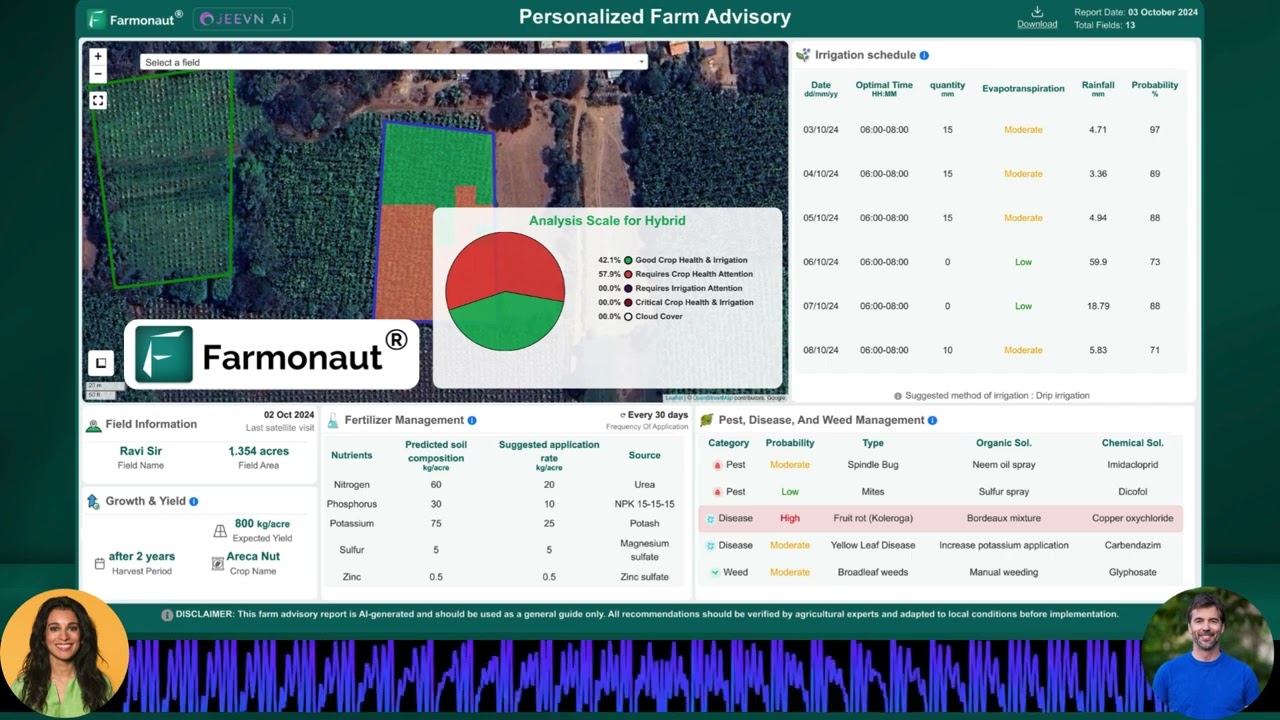
Forecasting climate-adaptive planting windows, projecting yields, anticipating pest and disease outbreaks, and modeling input price volatility now rest on real-time, multi-source data fusion. These tools enable agribusinesses to:
- 📊 Predict yield variability: Optimize input use and contract hedging, increasing profit margins and market stability.
- ⚠ Spot risks early: Identify weather extremes, soil nutrient depletion, or pest outbreaks, allocating resources precisely where needed.
- 📈 Optimize labor and logistics: Use data-backed scheduling for field workers, machines, and resources, reducing downtime and cost.
- 🔍 Support ESG goals: Use analytics to guide resource efficiency, water use, and emissions tracking—driving regulatory compliance and reputation management.

With platforms such as Farmonaut, users can trigger multi-dimensional satellite-based crop health assessments, access API integration, and manage both operational and strategic resources in real time.
By 2026, advanced analytics and decision-support tools will be indispensable for achieving resilience across the entirety of the food and agribusiness chain.
“Over 60% of agribusinesses plan to adopt advanced analytics for supply chain resilience by 2026.”
Climate Resilience, Sustainability & Regulatory Alignment
In an era of climate volatility and globalized regulation, the pressure for sustainable practices and compliance grows. Climate resilience initiatives and sustainability standards now directly shape what gets grown, how it is managed, and where agribusinesses can compete.
- 🌍 Soil health and carbon management: Solutions such as Farmonaut’s carbon footprint monitoring align operations with net-zero targets and environmental reporting.
- 📑 Environmental impact monitoring: Essential for verifying compliance and minimizing risk of regulatory or market penalties.
- 🔗 Regenerative agriculture models: Optimize cover cropping, crop rotation, and reduced tillage, improving moisture retention while reducing emissions.
- ✅ Traceability and certification: Blockchain solutions track every production stage, delivering “farm-to-fork” transparency demanded by modern brands and consumers.
Adopting a fragmented approach to compliance—rather than a unified, data-driven strategy—can lead to costly audits or loss of certification. Harness integrated platforms for efficient, real-time reporting.
AI-Assisted Supply Chain Optimization: Maximizing Responsiveness
Modern agribusiness supply chains are shaped as much by AI-powered forecasting as they are by field operations. Technology creates a dynamic, responsive system that aligns production with real-time market demand—critical for perishable crops, dairy, and meat sectors.
- 🌡️ Temperature-controlled logistics and cold chain tracking help deliver higher quality goods and maintain shelf-life from field to retailer.
- 👨💻 Batch-level traceability: Assures buyers of safety and sustainability, opening up new premium export opportunities.
- 🔗 Blockchain-enabled provenance: Protects against fraud while building consumer trust—see Farmonaut’s blockchain solution for details.
- 🤝 Collaborative digital platforms: Reduce food waste from farm gate to consumer, enable quick response to disruptions, and provide performance data for securing better credit and financing for farmers.
- 💸 Outcome-based pricing and financing models: Reduce capital cycles, streamline supply flows, and democratize access for smallholders.
Skills, Adoption, and Inclusive Access
One of the most positive shifts in agriculture and agribusiness technology is the democratization of advanced data and digital management tools. By 2026, the sector’s growth is propelled by workforce training, digital platforms built for inclusivity, and flexible adoption models:
- 👩🏫 Data literacy and digital skills programs drive the next generation of farm managers, technicians, and machine operators.
- 💡 Mobile accessibility: Ensures small farmers and laborers can use satellite, drone, or app-based monitoring no matter the region.
- 💳 Pay-as-you-go and subscription models: Lower capital barriers, facilitating tech adoption for all farm and agribusiness sizes—explore subscriptions below!
- 🤖 Platform modularity: Allows operations to start small and scale as needed without risking vendor lock-in.
Technology Trends Impact Comparison Table (2025-2026)
Farmonaut Insight: Satellite-Powered Agribusiness Technology
Farmonaut stands at the intersection of satellite technology and agribusiness software and technology, providing both individual farmers and major enterprises with scalable, integrated monitoring, advisory, and management tools.
- 🛰️ Satellite Monitoring (NDVI): Enables users to make data-backed decisions for field health, detect early stress, and schedule precision irrigation, fertilization, or pest control actions, all accessible via web or mobile app.
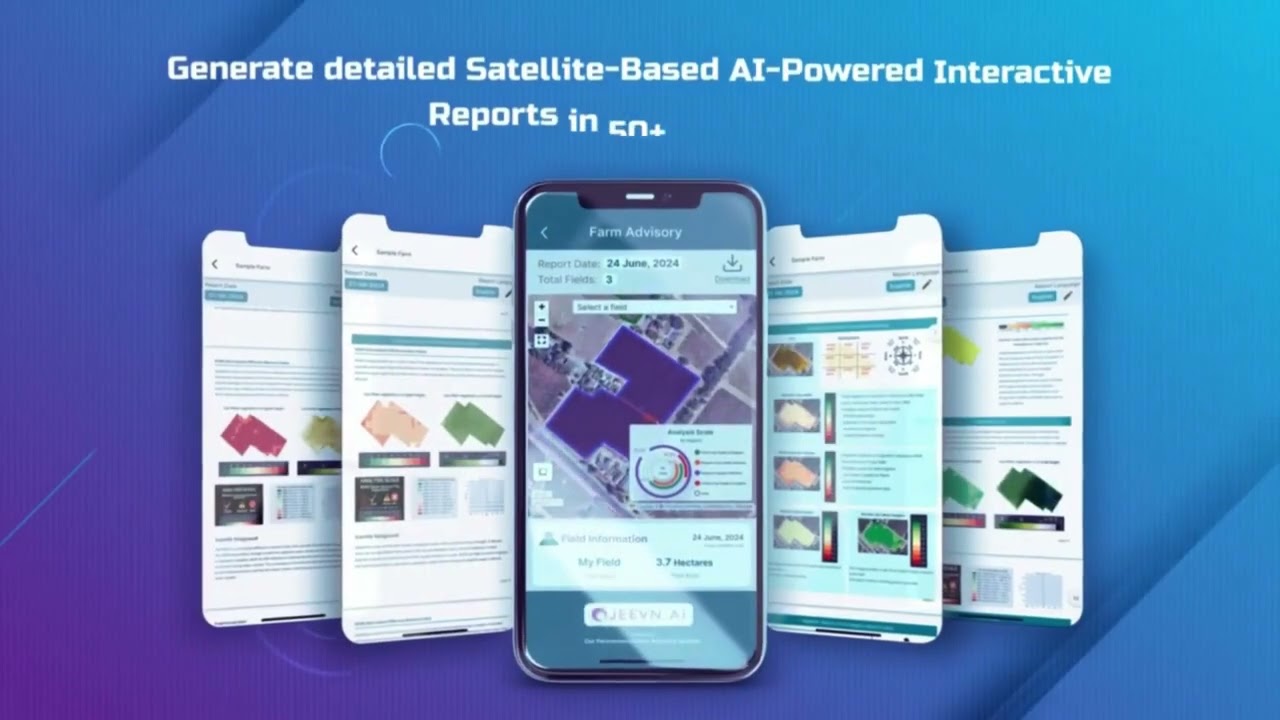
- ⚡ AI Advisory & Jeevn AI System: Translates satellite and weather data into actionable, personalized recommendations for both agriculture and mining, maximizing operational efficiency and yield potential.
- 🔗 Blockchain Traceability: Provides tamper-proof supply chain transparency for food crops, mining resources, and environmental compliance, supporting regulatory reporting and premium market access.
- 🚗 Fleet Management Tools: Optimize asset deployment and tracking—ideal for agriculture, mining, and infrastructure—resulting in reduced downtime and improved safety. Learn more about fleet management here.
- 🌱 Environmental Impact Monitoring: Facilitates real-time compliance and sustainability benchmarking, with carbon footprinting tools for agriculture and mining (Explore carbon assessment).
- 🚀 API Integration: For agritech developers, Farmonaut’s open API supports the layering of satellite and analytics data directly into custom software solutions or ERPs.
- 💶 Insurance & Loan Verification: Satellite-supported claims verification and crop loan eligibility assessment for financial institutions—visit crop loan and insurance.
- 📈 Enterprise & Large-Scale Management: Manage group farms, plantations, or government projects—the Agro Admin App delivers advanced multi-user, multi-region oversight.
Satellite-based technology is disrupting traditional agribusiness and technology models by delivering scalable, affordable access to data and insights—transforming farming, mining, and infrastructure management globally.
Try Farmonaut’s Subscription Plans
Farmonaut makes satellite insights, blockchain-backed traceability, and AI advisory affordable and accessible via flexible cloud subscriptions. Choose a plan to fit your farm, project, or enterprise:
Early adoption of integrated analytics and automation platforms can generate rapid ROI by optimizing fertilizer, irrigation, labor, and minimizing crop loss from climate or pest risk.
Overlooking staff training on new platforms or failure to cross-train teams in digital tools often leads to sub-optimal adoption or even costly operational disruption.
Top 5 Benefits of Advanced Agribusiness Technology
- 🌾 Enhanced Yields: Real-time monitoring & AI-driven recommendations boost productivity per hectare and reduce waste.
- 🌎 Sustainability: Targeted input use & emissions tracking lower the environmental impact, helping regulatory compliance.
- 📉 Lower Costs: Automation, satellite assessments, and efficient logistics cut total resource outlay on fuel, labor, and chemicals.
- 🔗 Transparent Supply Chain: Blockchain and traceability systems foster trust, open new markets, and protect brand value.
- ⚡ Resilience: Predictive analytics and scenario modeling support rapid response to extreme weather, pest outbreaks, or price shocks.
5 Data-Driven Decision Advantages
- 📊 Faster Action: Respond to field or supply chain threats in real time
- 🧑🌾 Empowered Farmers: Personalized advisory keeps growers in control, enhancing expertise rather than replacing it.
- 🕒 Predictable Harvests: Model yields for stable supply commitments and improved price negotiation.
- 🔗 Reliable Compliance: Automate documentation and impact reporting, reducing audit risk.
- 💼 Access to Finance: Use certified data to secure credit, crop loans, and insurance faster and at better rates.
The 2026 landscape will reward agribusinesses that invest in scalable, interoperable, and user-friendly digital tools, building resilience and market agility in an unpredictable world.
🚀 Top 5 Smart Practices for Agribusiness in 2026
- ✅ Integrate multi-source data (satellite, drone, on-ground sensors) for a unified view of operations.
- ✅ Automate repetitive tasks (planting, spraying, weeding, monitoring) to channel labor into higher-value activities.
- ✅ Invest in cloud-based, mobile-accessible software for anytime/anywhere decision-making.
- ✅ Choose blockchain traceability for premium markets and regulatory transparency.
- ✅ Upskill your teams—from management to field hands—in digital literacy and data use.
Frequently Asked Questions
What is agribusiness technology and why is it so important in 2026?
Agribusiness technology refers to the digital tools, platforms, software, and analytics that drive smart decision-making across farming, forestry, and supply chains. In 2026, it is crucial for boosting crop yields, increasing supply chain resilience, achieving sustainability, and meeting evolving regulatory demands.
How does precision agriculture differ from traditional agriculture?
Precision farming relies on detailed, real-time data (from sensors, drones, and satellites) to apply tailored inputs only where needed, minimizing waste and maximizing results, whereas traditional approaches treat fields uniformly and often use more resources than necessary.
What role does traceability play in the food and agribusiness supply chain?
Traceability (often leveraging blockchain) enables tracking every stage of a product’s journey, ensuring safety, quality, and sustainability. This is key for regulatory alignment and for building consumer trust—see traceability product page.
How can smallholders access advanced technology affordably?
By 2026, solutions like Farmonaut’s subscription models and mobile-ready platforms offer affordable access, enabling adoption regardless of farm size or technical background.
Are there tools to support large farm or forestry operations?
Yes! Platforms offer support for multi-region and group operations—explore the Agro Admin App for comprehensive management and oversight.
Where can I find developer resources for satellite data integration?
Farmonaut offers a full API suite with developer documentation for building custom apps—discover more at Farmonaut API Docs.
Conclusion: Growing Resilience and Profits in Agribusiness Technology
The agribusiness sector’s journey into 2026 is defined by a strategic shift: from disconnected pilots and one-off tech innovations to fully integrated, data-driven platforms. Smart farming, satellite-powered monitoring, blockchain traceability, and AI advisory are not just buzzwords—they’re tools that will define who leads in yield, sustainability, and market adaptability.
Agribusiness and technology will become inseparable. Those who embrace scalable, interoperable, and inclusive access to digital farm management, remote sensing, and supply chain analytics will harvest the greatest gains—resilient profits and a sustainable future.
Are you ready to move your agribusiness into the data-powered future? Start today with Farmonaut’s accessible, satellite-based solutions and unlock the full potential of your fields, forests, and supply chains.

 Krishi GK
 Geno
Geno Hayleys Agriculture
 Linx Agritech
 Adinet
 Save Your Soils
 Grandstream Algérie
 XOS Realty
 Geospatial Lab Africa
 Agro La Gándara
 HIPSAC
 ZOL Zimbabwe
 Juligerm
 AdBio
AdBio MISE Maroc
 NWNS
NWNS
