

Agricultural Intensification: Interactive 9 Fold Land Map
“In 2025, interactive 9-fold land maps classify farmland into 9 distinct grades for sustainable intensification.”
Introduction: The Importance of Agricultural Intensification in 2025
Agricultural intensification remains not just a buzzword, but a critical strategy for meeting growing food demand as our global population surpasses 8 billion in 2025. With arable land shrinking due to urbanization, climate change, and relentless environmental pressures, the world faces an urgent need to optimize every hectare of farmland. Agricultural land classification interactive maps, combined with the refined 9 fold classification of land, provide the foundation for sustainable agricultural systems that are resilient, data-driven, and productive.
Environmental degradation and soil health challenges threaten food security. However, innovative agricultural land classification systems, especially those centered around grade 3 lands, are unlocking new potential, balancing intensification and conservation. Leveraging interactive maps in agricultural extensions has become a game changer—enabling efficient, informed, and location-specific decisions for farmers, stakeholders, and policymakers.

In this ultimate guide, we examine the tools, technologies, and strategies that are shaping the future of agricultural land classification and intensification for 2025—covering interactive mapping platforms, grade-based assessments, extension programs, and how satellite-driven insights from platforms like ours at Farmonaut are revolutionizing the way we farm.
Understanding Agricultural Land Classification: The Cornerstone of Sustainable Intensification
Before delving into the power of the agricultural land classification interactive map, let’s establish why agricultural land classification remains so crucial. Every farmland parcel varies dramatically in its capacity to support crops, respond to management, and withstand environmental pressures. A systematic approach to classification allows us to:
- Match crop selection with site potential, optimizing yield and quality
- Direct investment where returns are highest
- Plan conservation for fragile ecologies and marginal lands
- Implement sustainable intensification strategies to balance productivity with environmental health
Globally, the Agricultural Land Classification (ALC) framework is widely used to divide farmland based on physical and chemical properties—soil texture, structure, drainage, fertility, slope, and climatic data. The classification ranges from Grade 1 (excellent quality) to Grade 5 (very poor), but advanced systems now take this further.
The 9 fold classification of land and its sub-grades capture subtle variations in land capability—enabling precision management, risk reduction, and tailored advisory.

The 9 Fold Classification of Land: A Nuanced Assessment
“Grade 3 land classification supports up to 30% higher crop yield with sustainable practices, according to recent studies.”
The 9 fold classification of land breaks farmland down into nine discrete grades, each defined by their unique combinations of:
- Soil texture and chemistry (physical & chemical properties)
- Drainage and water availability
- Topography and slope
- Biological activity and organic matter
- Climate (rainfall, temperature ranges)
This method allows more nuanced and accurate assessment compared to broader grading, supporting site-specific agricultural intensification. Farmers and agricultural extension services can now:
- Identify precise land management practices fit for each grade
- Reduce risks like soil erosion, salinization, or overexploitation
- Deploy sustainable and conservation strategies where best suited
Especially in 2025 and beyond, this fine-grained approach enables the direct targeting of interventions, investment, and policy decisions, ensuring that intensification does not come at the cost of soil health and long-term viability.
Interactive Maps: Game Changers for Agricultural Extensions
Agricultural extensions in 2025 look nothing like they did a decade ago. The integration of interactive maps—compiled from robust datasets, real-time satellite imagery, and digital platforms—has revolutionized agricultural support systems. Here’s how:
- Multi-layered data integration (soil, topography, history, climate)
- Spatial advisories delivered via mobile and computers
- Dynamic, zoomable interfaces for parcel-level insights
- Tailored recommendations based on current land grade and conditions
- Efficient dissemination of information to wide-reaching communities
For example: A farmer or advisor can view a plot in a Grade 3 area, instantly assess its constraints and advantages, and access a set of crop, irrigation, and fertilizer recommendations specific to that grade, soil, and climate profile.
Such precision is only possible through interactive agricultural land classification maps—effectively democratizing access to data and empowering informed decision-making at every step of the food chain.
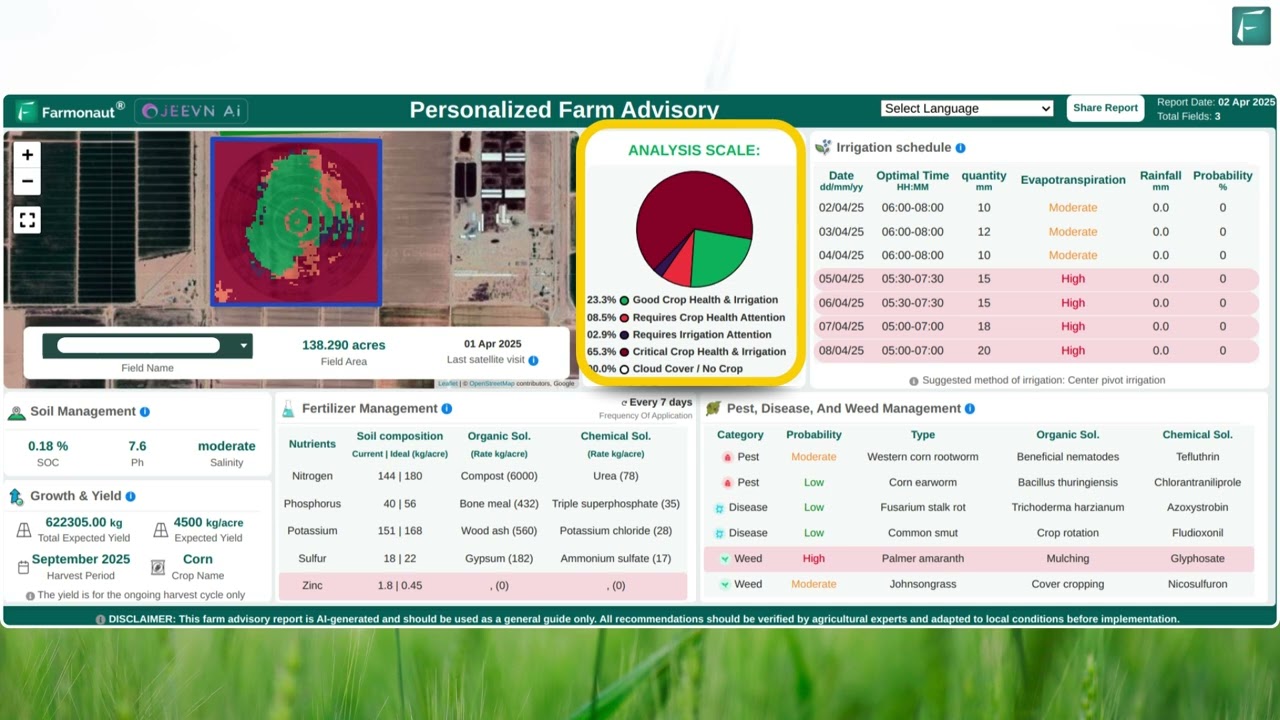
Extension services deliver targeted training through these platforms, enabling farmers and local leaders to boot productivity, reduce environmental degradation, and foster sustainable community development.



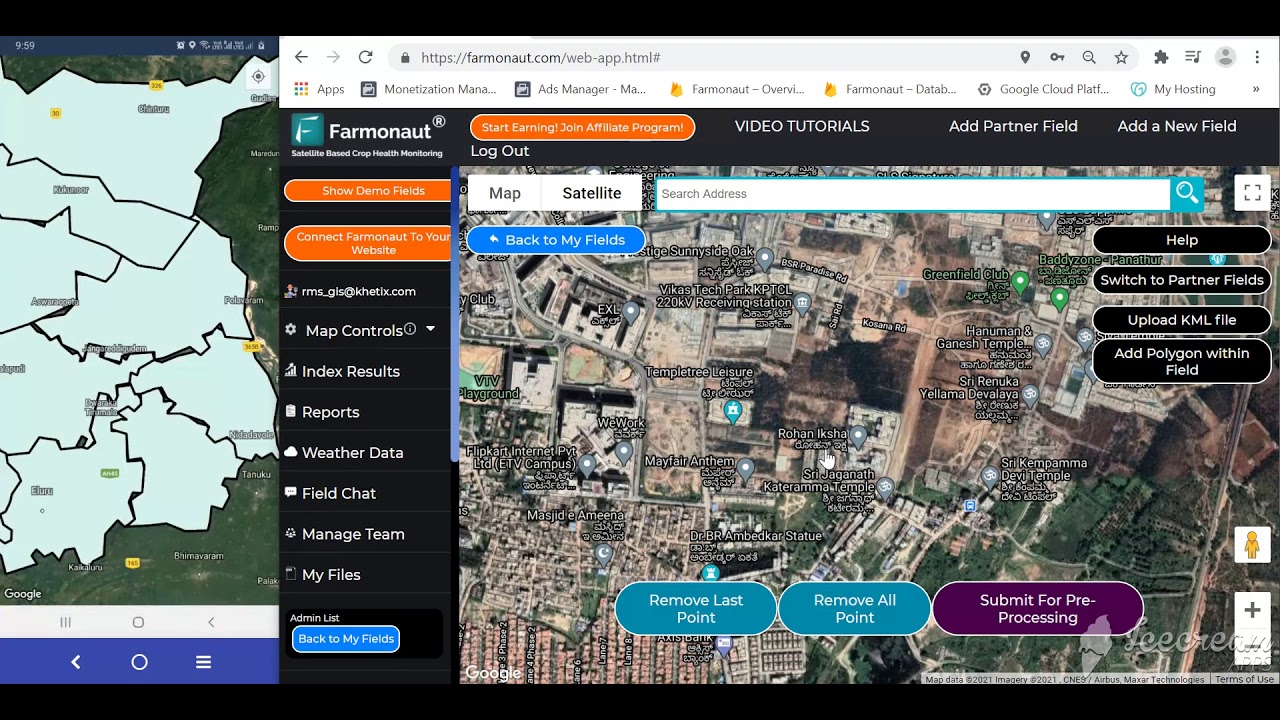
Access superior agricultural land classification interactive maps, real-time soil health data, and environmental insights via Farmonaut Web, Android, and iOS apps. These powerful and accessible platforms make precision farming a reality for everyone—from smallholders to national policymakers.
Agricultural Land Classification Grade 3: Unlocking the Potential via Interactive Maps
Grade 3, often referred to as moderate quality agricultural land, represents the world’s largest share of productive farmlands. Inherently balancing productive potential and environmental concerns, grade 3 land is where sustainable intensification strategies yield the greatest impact.
-
Challenges: Moderate limitations in drainage, texture, slope, or fertility can restrict ideal crop selection.
Risks of overexploitation and soil degradation are significant if mismanaged. - Opportunities: With precise intervention—guided by interactive agricultural land classification maps—these lands can deliver sustainable high yields, improved soil health, and environmental restoration.
Real-world applications in 2025 show that a farm management approach tailored to grade 3 lands supports resilient, profitable, and inclusive food systems. By combining real-time mapping data with site-specific recommendations, even moderate grade soils become engines for agricultural growth.

Key upgrades for Grade 3 via interactive mapping:
- Precision fertilizer and water management recommendations
- Selection of drought- or resilience-focused crops
- Integrated pest and disease advisories
- Visual flagging of environmental risks and degraded patches
- Ongoing updates for adaptive management and rapid response to climate variability
Interactive maps empower both extension agents and farmers to monitor change, adapt quickly, and reduce external resource dependency—boosting farm sustainability and long-term profitability.
Integrating Technology: Advanced Platforms, AI & Satellite Insights
Today’s agricultural intensification is inseparable from advances in data, mapping technologies, and AI-driven analytics. The combination of interactive mapping, remote sensing, and decision-support tools facilitates:
- Dynamic overlays: viewing soil chemistry, crop health, and rainfall patterns side-by-side
- Automatic land grade recalculation after major events (e.g., floods, droughts)
- Real-time crop growth tracking and environmental impact analysis
- Satellite-driven precision: NDVI, soil health, carbon footprinting
- API-based integration for custom agro-systems and extension service providers
Farmers and stakeholders can now use APIs, such as the Farmonaut Satellite API and its Developer Docs to ingest geospatial and weather data directly into their software, enabling bespoke decision support and resource optimization across operations.

How Farmonaut Enables Precision and Sustainability
As a pioneering satellite technology company, we at Farmonaut lead the way in making satellite imagery, AI, and blockchain-driven solutions accessible to all. Our mission is to break down barriers—cost, complexity, and digital divides—so that all stakeholders in agricultural, mining, infrastructure, and policy fields can harness data-driven decision making.
- Real-time Monitoring: Using multispectral satellite imagery, we provide maps of land grades, crop health (NDVI), water stress, and environmental risks—enabling early interventions and optimized management.
- AI-based Advisory (Jeevn): Our advanced AI system delivers hyperlocal, grade-specific recommendations—weather forecasting, soil amendments, and pest control—directly to farmer and extension agent devices.
- Blockchain Traceability: We add trust and transparency to supply chains by chronicling the origin, grade, and journey of every batch of produce. Explore Product Traceability here.
- Carbon Footprinting: Our Carbon Footprinting technology allows users to monitor and mitigate environmental impact—ensuring sustainability remains at the heart of intensification initiatives.
- Resource & Fleet Management: Our fleet and resources management tools streamline logistics and in-field deployment for both smallholders and commercial farms. See Fleet Management Solutions.
All these solutions are available on a subscription basis, enabling scalability and cost-effectiveness for everyone—individual users, agribusinesses, and government agencies.
Applications and Benefits: From Farmers to Policymakers
The synergy between agricultural intensification, the agricultural land classification interactive map, and extension services transforms the agricultural ecosystem in 2025 and beyond. Key use-cases include:
- Farmers: Receive actionable, location-specific advisories for crop selection, nutrient management, and conservation efforts, increasing yield and profitability even on moderate (grade 3) lands.
- Extension Agents: Deliver precise training and advisories based on up-to-date, detailed mapping and land classification data.
- Policymakers: Utilize land grade overlays for subsidy targeting, land use policy, and disaster response strategies.
- Financial Institutions: Deploy satellite-verified grading and resource data for loan and insurance decisions—see more on Crop Loan & Insurance Solutions.
- Supply Chains & Corporate Clients: Leverage traceability and sustainability metrics for transparent food systems, securing consumer trust.
These advances benefit not just the supply side of farming but the entire food system, ensuring food security, ecological resilience, and economic stability.
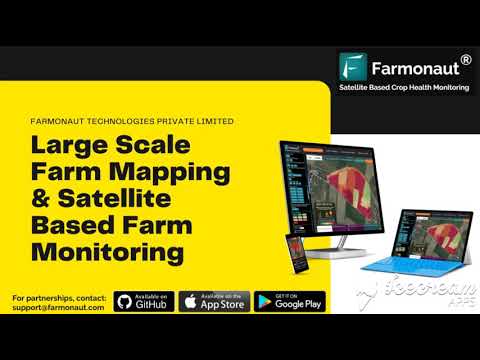
Are you managing operations at scale? Discover Farmonaut Large Scale Farm Management — advanced digital tools for administrators, cooperatives, and organizations to monitor, analyze, and optimize thousands of hectares of farmland with one interactive dashboard.
Interested in agroforestry and conservation? Try our Crop Plantation & Forest Advisory to receive land-grade recommendations for afforestation, soil restoration, and nature-based solutions, directly on your device.
9-Fold Land Classification Comparison Table
The following table compares each of the nine land grades, showing their physical and chemical characteristics, recommended crops, prospective yields for 2025, sustainability impacts, and best practices. This structured overview helps quickly compare how intensification affects productivity and ecological footprint.
| Land Grade | Soil Characteristics | Suitable Crops | Estimated Productivity (2025 tons/ha) | Sustainability Impact (Score/10) | Recommended Practices |
|---|---|---|---|---|---|
| 1 (Excellent) | Deep loam, optimal chemistry, flat, well-drained, high fertility | Wheat, Maize, Soybean, Fruits | 7–9 | 9.5 | Intensive rotation, precision irrigation, digital monitoring |
| 2 (Very Good) | Fine loams, minor slope, high organic matter, adequate drainage | Rice, Canola, Pulses, Vegetable crops | 6–8 | 9.0 | Multi-cropping, moderate inputs, integrated pest management |
| 3 (Good/Moderate) | Loam/clay loam, some limitations in drainage, moderate slope | Barley, Millet, Maize, Sorghum | 5–7 | 8.4 | Improved drainage, organic amendments, crop-livestock integration |
| 4 (Average) | Clay/loam, occasional waterlogging, slight acidity/alkalinity | Oats, Fodder, Oilseeds | 4–6 | 7.7 | Drainage correction, liming, reduced tillage |
| 5 (Below Average) | Sandy loam, low fertility, moderate erosion risk, uneven terrain | Pulses, Groundnut, Drought-tolerant crops | 3–5 | 7.2 | Mulching, rainwater harvesting, legume rotation |
| 6 (Low) | Shallow soils, high slope, low organic content | Fodder, Minor millets, Castor | 2–4 | 6.5 | Contour farming, afforestation, grass strips |
| 7 (Marginal) | Coarse sand, high erosion, arid, high slope | Grasses, Indigenous drought-resistant varieties | 1–2 | 5.8 | Agroforestry, water conservation, minimal tillage |
| 8 (Very Marginal) | Rocky, very low fertility, shallow profile, steep slopes | Pasture, Forestry, Non-agricultural | ≤1 | 5.2 | Revegetation, conservation, ecosystem restoration |
| 9 (Unfit/Affected) | Saline/alkali, water-logged, heavy metal/toxic residues | Salt-tolerant species, bioenergy crops (if at all) | <0.5 | 3.1 | Remediation, restricted use, phytoremediation |
Note: Scores and productivity estimates are indicative for 2025 under recommended sustainable practices as supported by interactive maps and extension advisories.
Future Outlook: Research, Policy, and Sustainable Intensification
As we look to 2025 and beyond, the integration of agricultural land classification interactive maps into national and global food policy is accelerating.
Emerging Trends and Key Research Themes
- AI/ML-based land classification refinement using crowd-sourced and remote sensing data for even higher accuracy
- Expansion of digital mapping platforms to include climate risk overlays, biodiversity indices, and pollution tracking
- Integrated APIs that connect farmland data with supply chain management and food traceability systems
- Multi-sector use: better alignment between agriculture, forestry, mining, and infrastructure to minimize land-use conflicts
- Focus on carbon sequestration and greenhouse gas mitigation at the parcel level using tools like Carbon Footprinting by Farmonaut
Policymakers and research institutions are increasingly advocating for interactive ALC and 9-fold maps in land use planning, subsidy distribution, and climate adaptation programs—maximizing sustainable productivity while preserving the planet’s ecological balance.
Furthermore, extension programs are being tailored through these digital interfaces for diverse users—ensuring that farmers, administrators, and supply chains can all access knowledge and recommendations relevant to the inherent capabilities and concerns of their land class.
FAQs: Interactive Land Maps and Agricultural Intensification
Q1. What is the main benefit of using an agricultural land classification interactive map?
A: An agricultural land classification interactive map enables farmers and stakeholders to access real-time information on soil, crop potential, climate, and management strategies—tailored to their exact plot. This supports precision input use, yield optimization, risk reduction, and sustainable farming practices.
Q2. Why focus on Agricultural Land Classification Grade 3 in sustainable intensification?
A: Grade 3 land represents moderate quality—widely available, but with balanced potential and limitations. Effective, targeted management can transform these lands into major contributors to food security and environmental sustainability without the risks associated with overexploiting fragile or marginal soils.
Q3. How can interactive maps reduce environmental degradation?
A: Interactive maps overlay multiple data layers, detecting risks like erosion, fertility loss, or pest outbreaks early. This allows for timely, localized interventions—reducing unsustainable expansion and overuse, and guiding conservation and restoration on vulnerable land grades.
Q4. Who benefits from these interactive mapping platforms?
A: Farmers, extension agents, policymakers, agribusinesses, environmental groups, supply chains, and financial institutions all benefit. The platforms enable each user to optimize their role in the agricultural system, fostering holistic productivity and sustainability.
Q5. How accessible are these technologies to small and medium farmers?
A: Today, companies like us at Farmonaut offer affordable, subscription-based access via web and mobile apps. This democratizes satellite and AI insights, bridging the digital divide and empowering even the smallest operators with cutting-edge solutions.
Q6. How does grade-based intensification contribute to climate change mitigation?
A: Matching farming practices to land capability minimizes waste, optimizes inputs, prevents degradation, and can enhance carbon sequestration in the soil—supporting both productivity and climate goals.
Q7. How is land classification data updated in 2025?
A: Through continuous satellite monitoring, AI recalculations, extension feedback, and API integration—ensuring that classification reflects real-time changes in land, weather, and crop dynamics.
Conclusion: Mapping the Path to Sustainable Agriculture in 2025
The journey toward sustainable agricultural intensification in 2025 and beyond is intricately tied to our ability to leverage agricultural land classification interactive maps, refine our understanding of land grades, and empower extension services through digital platforms. The 9 fold classification of land provides the nuanced foundation needed for detailed, informed decision-making that balances productivity, environmental health, and global food security.
By harnessing innovative tools, including those we provide at Farmonaut, every stakeholder—from individual farmers to policymakers—can unlock the potential of every hectare. Precision management of grade 3 lands for optimal crop production, resource use, and resilience is not just achievable but essential for meeting the demands of a changing globe.
The era of digital, interactive, and sustainable land management is here—enabling us all to make smarter, greener, more profitable agricultural choices. Let’s optimize land, empower stakeholders, and promote food and environmental security for generations to come.
Discussion
Questions, corrections or field experience? Share them below. First-time comments are reviewed before they appear, and your email is never published.
No comments yet. Be the first to add a question or your experience.

 Kubota
 Grow Indigo
 FFBS
FFBS Jontra
 Kalustyan
 Tucor
Tucor Geno
Geno Hayleys Agriculture
 Linx Agritech
 Adinet
 Save Your Soils
 Grandstream Algérie
 XOS Realty
 Geospatial Lab Africa
 Agro La Gándara
 HIPSAC
 ZOL Zimbabwe
 Juligerm
