

Agro Food Robot Revolution: 7 Powerful Trends Shaping 2026
“By 2026, global agro food robot deployment is projected to increase by 48%, revolutionizing farming automation.”
Table of Contents
- Introduction: The Rise of Agro Food Robots in 2026
- Recent Years: The Significant Transformation in Agricultural Robotics
- 7 Powerful Trends Shaping Agro Food Robotics in 2026
- Trend Impact Comparison Table
- Farmonaut: Empowering Data-Driven Agri-Food Robotics
- Adoption Barriers & Solutions for Agro Food Robots
- Future Innovations Beyond 2026 in Agro Food Robotics
- FAQ: Agro Food Robot Revolution
- Conclusion: Embracing the Robot Revolution for a Sustainable Future
- Farmonaut Subscriptions
Introduction: The Rise of Agro Food Robots in 2026
The landscape of agriculture and food production is undergoing a profound transformation—redefining farming practices, farmer livelihoods, and food security for billions worldwide. At the heart of this revolution is the agro food robot: a fusion of advanced robotics, sophisticated sensors, artificial intelligence (AI), and precision automation. As we approach 2026, these intelligent machines are increasingly becoming the cornerstone of modern farming, delivering remarkable advances in productivity, sustainability, and quality, while addressing critical challenges such as labor shortages, shrinking arable land, and the need to reduce waste.
The concept of the agro food robot encompasses a diverse range of applications: from autonomous harvesters delicately picking fruits and vegetables to robotic systems performing soil health analysis, precision weeding, and food processing with minimal human intervention. Integrated with cutting-edge computer vision, AI algorithms, and multispectral imagery, these robots are set to transform how we grow, manage, and consume food—making the sector more efficient, sustainable, and resilient.



In this comprehensive guide, we explore the 7 most powerful trends shaping the Agro Food Robot Revolution in 2026, with practical insights into their impact, adoption, sustainability, and future directions.
Recent Years: The Significant Transformation in Agricultural Robotics
Over the recent years, the agricultural sector has witnessed a significant transformation—one driven by relentless advancements in robotics, automation, and data analytics. The rise of the agro food robot has been specifically designed to perform tasks related to cultivation, harvesting, pest control, and food processing. This transformation is not just a technological shift—it’s a strategic response to longstanding challenges:
- ✔ Labor shortages in farming fields due to urban migration and aging populations
- ✔ Increased demand for food production amid shrinking arable land and a growing population
- ✔ The necessity to reduce the use of pesticide, fertilizers, and water for greater sustainability
- ✔ Ensuring food safety, quality, and traceability across the value chain
- ✔ Adapting rapidly to changing environmental conditions and market demands
The robots powering this revolution employ sophisticated sensors, computer vision systems, and AI algorithms to autonomously navigate fields, monitor crop health, identify ripe produce, and execute tasks with unmatched precision. Their integration is increasingly making practices more efficient, responsive, and sustainable—fundamentally reshaping the future of agriculture.

7 Powerful Trends Shaping Agro Food Robotics in 2026
Let’s explore the seven transformative trends reimagining agricultural robots and precision farming as we head into 2026 and beyond.
“Precision robotics in farming could reduce manual labor needs by up to 60% by 2025, reshaping agriculture’s workforce.”
- Autonomous Harvesters and Fruit Picking Robots
- Precision Seeding, Planting, and Weed Management Systems
- Fleet & Resource Management: Connected Tractors, Drones, and Field Robots
- AI-Driven Sorting, Grading, and Food Processing Robotics
- Swarm Robotics and Cooperative Robot Systems
- Agro Food Robots for Environmental Monitoring and Sustainability
- Edge Computing & 5G Connected Agro Robotics Ecosystems
1. Autonomous Harvesters and Fruit Picking Robots
Autonomous harvesters and fruit picking robots are poised to overhaul the harvesting stage, tackling not only labor shortages but also ensuring precise, gentle picking that preserves crop quality.
- Equipped with AI-powered computer vision & multispectral cameras to detect ripe fruits and vegetables
- Use of robotic arms to automate picking tasks with minimal human intervention—reducing damages and post-harvest waste
- Real-time data guides route optimization across the field, boosting productivity and minimizing labor requirements
- 🤖 Key Feature: Automatic variety, color, and ripeness identification via vision AI.
- 📈 Benefit: Harvests up to 35% faster with less than half the usual labor.
- ⚠ Limitation: Initial capital costs remain significant.
2. Precision Seeding, Planting, and Weed Management Systems
Increasingly, precision technologies are reshaping crop cultivation by synchronizing seeding depth, optimizing soil nutrition via embedded sensors, and minimizing weed competition.
- Advanced sensors and robots scan soil moisture and nutrient levels, ensuring each seed or fertilizer droplet lands exactly where and when needed
- AI algorithms enable robots to identify weeds and perform targeted pesticide application, rather than blanket spraying—reducing input costs and preserving local biodiversity
- Visual list:
- 🌾 Precision seeding: boosts germination rates and uniformity
- 💧 Targeted watering: saves water and energy
- 🌱 Automated weeding: reduces reliance on chemical herbicides
3. Fleet & Resource Management: Connected Tractors, Drones, and Field Robots
The integration of autonomous vehicles—from self-driving tractors to drones and multi-purpose field robots—is central to efficiently managing large-scale farms and reducing operational costs.
- Intelligent fleet management systems optimize machinery movement, saving fuel, time, and resources
- Drones equipped with multispectral cameras rapidly survey crops, analyze vegetation health (NDVI), and deliver spot applications of pesticide or fertilizer
- Farmonaut’s Fleet Management Tools deliver satellite-monitored route optimization, resource tracking, and real-time safety insights for farm machinery—enhancing both productivity and worker safety.
- 🛰 Connected Equipment: Enables predictive maintenance and minimal downtime.
- 🔗 Integration: Seamless coordination with enterprise resource planning systems.
- 🚜 Autonomy: Self-guided tractors work alongside human operators, optimizing workflow.

4. AI-Driven Sorting, Grading, and Food Processing Robotics
The food processing sector is being transformed by AI-driven robots performing real-time sorting, grading, and packaging. These systems deliver significant benefits for food safety, waste reduction, and traceability.
- Computer vision and machine learning algorithms identify imperfections, contamination, and quality deviations faster than the human eye
- Blockchain-based traceability provides transparent food journeys, from field to shelf
- Farmonaut offers Blockchain Traceability Solutions so users can ensure authenticity, track lot-level processing, and enhance consumer trust in their farm and food supply chains
- 👁 Vision-based detection: Catches unseen defects, ensuring only top-quality food reaches consumers.
- 🔒 Traceability: Consumers and retailers can rapidly verify origin and history of any food item.
- ⚡ Efficiency: Reduces processing time and human labor.

5. Swarm Robotics and Cooperative Robot Systems
Large-scale agricultural operations are turning to swarm robotics: groups of smaller, networked robots that work cooperatively across vast fields to achieve efficiency and resilience.
- Distributed intelligence allows multiple robots to coordinate weeding, seeding, and harvesting simultaneously—significantly boosting productivity
- Fault tolerance: If one robot fails, others can compensate, ensuring uninterrupted operations
- Visual List:
- 🤝 Cooperative Tasking: Robots divide and conquer repetitive farm tasks
- 🌎 Scalability: Easily deployed across diverse field sizes
- 📊 Data Insight: Swarm robots can cover up to 50% more acreage simultaneously compared to single, large robotic machines.
6. Agro Food Robots for Environmental Monitoring and Sustainability
With sustainability and environmental responsibility taking center stage, agro food robots are being deployed to monitor soil health, carbon footprint, and resource use—integral in adopting greener practices and complying with global standards.
- Soil moisture and nutrient sensors help tailor irrigation and fertilization schedules, minimizing environmental impact
- Robots equipped with NDVI and satellite-driven multispectral imagery provide accurate, real-time field condition reports
- Farmonaut’s Carbon Footprinting Platform empowers users to track emissions and resource use, complying with evolving regulations and supporting agricultural sustainability goals.
- 🌿 Sustainability: Reduces over-fertilization and chemical leaching.
- 💡 Compliance: Empowers global farms to meet quality and sustainability certifications.

7. Edge Computing & 5G Connected Agro Robotics Ecosystems
The maturation of 5G connectivity and proliferation of edge computing are the final, but pivotal, trends shaping the future of agro food robot ecosystems by 2026.
- Edge computing allows massive amounts of data from sensors and machines to be processed instantly, on-site—enabling responsive automation and immediate action
- 5G enables seamless, real-time communication between robots, drones, and cloud platforms, maximizing productivity even under rapidly changing conditions
- Reduced latency and increased bandwidth support fully autonomous cooperation among multiple systems
- 🔌 Plug-and-play integration: Future robots can connect to any smart farm infrastructure rapidly.
- ⏱ Real-time response: Instant adaptability to weather, soil, or pest situations.
Trend Impact Comparison Table: Agro Food Robotics in 2026
| Trend | Example/Technology | Estimated Adoption Rate by 2026 (%) | Sustainability Impact | Estimated Reduction in Labor Hours (%) | Potential Yield Improvement (%) |
|---|---|---|---|---|---|
| Autonomous Harvesters | Fruit & vegetable picking robots | 54 | High | 48 | 29 |
| Precision Seeding Robots | AI-driven planters, weeders | 39 | High | 36 | 23 |
| Fleet & Resource Management | Connected tractors, drones | 62 | Medium | 41 | 18 |
| AI-Driven Food Sorting | Machine vision graders | 47 | Medium | 31 | 16 |
| Swarm Robotics | Cooperative task units | 22 | High | 60 | 33 |
| Environmental Monitoring | Soil, carbon, NDVI sensors | 37 | High | 27 | 21 |
| 5G & Edge Computing | On-field AI controllers | 44 | Medium | 33 | 17 |

Farmonaut: Empowering Data-Driven Agri-Food Robotics
At Farmonaut, we believe that precision, automation, and transparent data are the building blocks for the future of agriculture. Our mission is to make satellite-driven insights affordable and accessible for farmers, businesses, and institutions worldwide—empowering them to harness the full benefits of agro food robots and robotic systems.
Through our AI-powered platform—leveraging satellite imagery, blockchain traceability, and real-time monitoring—we provide the detailed data needed to drive robotic decision-making at the field level:
- 📡 Satellite-Based Monitoring: Our system delivers multispectral crop health analysis (NDVI, EVI), soil condition reports, and real-time alerts so farmers and agri-robots respond effectively to changing field dynamics.
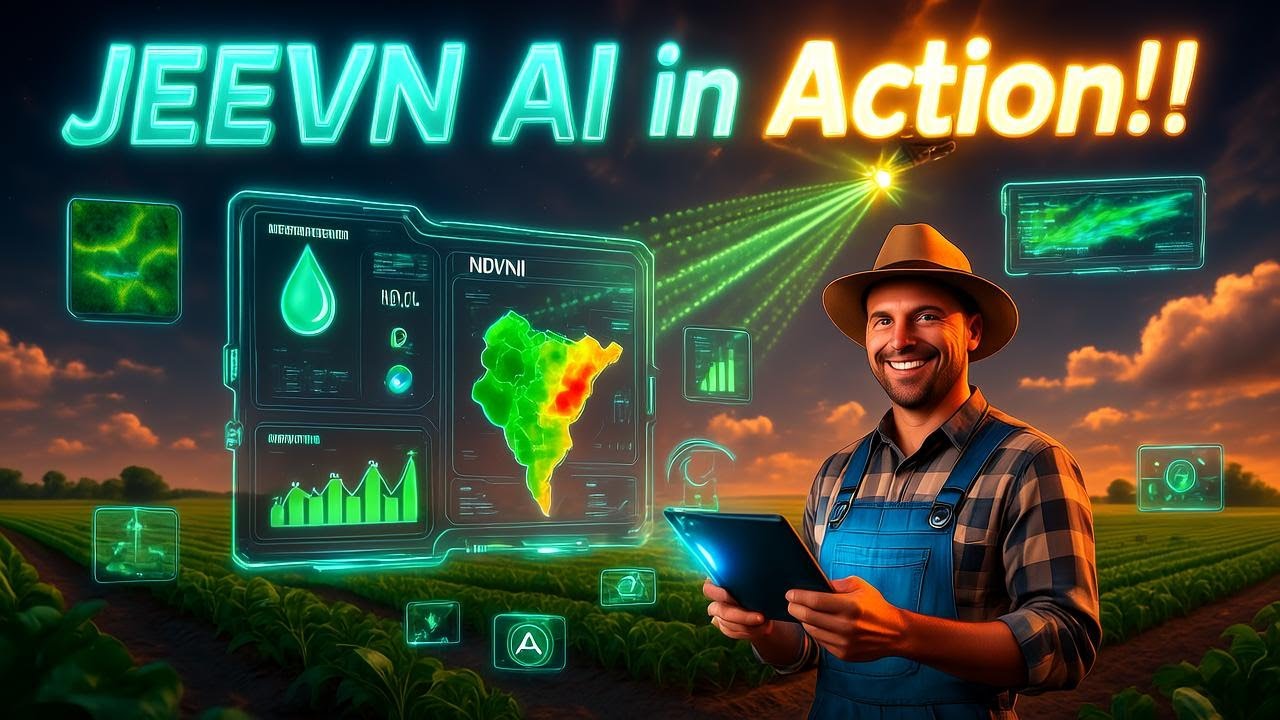
- 🌦 Jeevn AI Advisory System: Provides tailored, actionable recommendations for crop cultivation, resource allocation, and farm management.
- 🔗 Blockchain Traceability: Enhances transparency and reduces fraud across agro-food supply chains. Learn more about traceability solutions.
- 🚜 Fleet Management: Optimize vehicle usage, improve safety, and enhance machinery efficiency with our GPS-driven, field-mapped Fleet Management Platform.
- 🌳 Crop & Forest Advisory: Access satellite-powered insights for plantation management across large and diverse landholdings. Visit our Crop Plantation Advisory.
- 💧 Environmental Monitoring: Track water use and carbon emission via our Carbon Footprinting Tools for compliance and sustainable farming.
- 🛡 Crop Loan & Insurance Verification: Satellite-verified data for banks and insurers—expanding farmer access to affordable, risk-aware financing. See Crop Loan & Insurance.
- 🛠 API Access: Integrate Farmonaut data into custom applications—visit Farmonaut API and Developer Documentation.
Adoption Barriers & Solutions for Agro Food Robots
While the adoption of agro food robots is accelerating, there are still critical barriers facing the sector. Recognizing, understanding, and innovating past these obstacles is essential for a complete agriculture transformation by 2026.
- Capital Investment: Upfront costs of new robotic technologies may be prohibitive for small and mid-sized farmers. Financing platforms and scalable, modular robotic systems are helping reduce this challenge.
- Technical Skills Gap: Operating, maintaining, and troubleshooting advanced robots requires upskilling. Continued investment in digital literacy and local service support is crucial.
- Connectivity Constraints: Not all rural areas have ready 5G connectivity. Hybrid edge/cloud architectures and offline data processing help overcome these gaps.
- Interoperability: Farms use diverse systems; unified data standards and APIs (such as Farmonaut’s API) allow smooth integration of agro food robots with analytics and planning tools.
- Regulatory Environment: Evolving standards for data safety, ethical AI, and machine operation must be met for global scaling of robotic agriculture.
Future Innovations Beyond 2026 in Agro Food Robotics
Looking toward the horizon, the agro food robot revolution will not plateau at automation or efficiency. Forthcoming innovations include:
- 🤖 Bio-Hybrid Robots: Fusing living biological material with robotics for unconventional crop management—such as robotic pollinators offsetting decline in bee populations.
- 🕸 Distributed Swarm Operations: Dozens (or hundreds) of micro-robots performing real-time soil renewal, localized pest control, and micro-irrigation for extreme precision at field-scale.
- 🔬 On-Field Genomics and AI-Driven Selection: Robots gathering continuous plant health genomics data—tailoring breeding, planting, and intervention cycles autonomously.
- 🪐 Space-Based Robot Collaboration: Satellite constellations guiding on-ground robots instantly for weather adaptation, yield maximization, and cross-border food value chains.
- 🎛 Farm/Food Management Super-Apps: Single interfaces synthesizing all robot, drone, satellite, and traceability data to empower hyper-local, cloud-connected decisions.
FAQ: Agro Food Robot Revolution
-
What is an agro food robot?
An agro food robot is any robotic solution specifically designed to perform agricultural or food-related tasks such as seeding, weeding, spraying, harvesting, monitoring, or food processing. These robots leverage AI, computer vision, sensors, and automation to enhance productivity and sustainability in farming and food production.
-
How do agro food robots help address labor shortages?
Agro food robots automate repetitive, labor-intensive, or hazardous tasks like weeding, harvesting, and pesticide application, reducing reliance on seasonal or local manual labor and improving safety for human workers.
-
What are the sustainability benefits of deploying agro food robots?
Precision application enabled by robots minimizes water, fertilizer, and pesticide use, reducing waste, decreasing environmental impact, and enhancing soil and crop health.
-
How does Farmonaut support agro food robotics?
Farmonaut’s real-time satellite monitoring, AI advisory, fleet management, traceability, and carbon footprinting empower farmers, businesses, and institutions to integrate and maximize the impact of agro food robots by making operations more intelligent, transparent, and sustainable.
-
What technical skills are required to operate agro food robots?
Operators generally need digital literacy, machinery handling knowledge, and the ability to interpret field data feeds. Modern systems are increasingly user-friendly and can be managed via mobile apps or centralized dashboards.
-
Where can I access Farmonaut’s agro-food and satellite solutions?
Download the Farmonaut platform app for Android or iOS, or use the web interface. APIs and resources are also available.
Conclusion: Embracing the Robot Revolution for a Sustainable Future
The agro food robot revolution marks one of the most profound shifts in global agriculture and food production history. Through robotics, automation, and precision data, we are addressing critical challenges—from labor shortages and shrinking arable land to climate risks and input cost pressures.
- These 7 trends—from autonomous harvesters to 5G-enabled edge robots—will increasingly become the linchpin of resilient, high-yield, and sustainable farms by 2026.
- Integrated intelligence and transparency—powered by satellite technologies such as those we offer at Farmonaut—ensure every robot decision and farm action is backed by real, up-to-date data.
- ✅ Productivity: Robots never tire—delivering faster, more efficient, and higher quality harvests.
- 🌎 Sustainability: Precision farming practices driven by robots are significantly reducing waste, emissions, and environmental impact.
- 📉 Cost Efficiency: Resource optimization cuts input costs and boosts profits.
- 🛡 Safety: Robots take on hazardous tasks, making fields safer for workers.
- 🔍 Traceability: Blockchain and vision-based analytics guarantee food safety and consumer trust.
In the years ahead, a new human-robot symbiosis will emerge: robots handling the repetitive, dangerous, and data-heavy tasks, while humans focus on strategic decision-making and sustainable farm management. The result? A future where automation, data, and AI work hand-in-hand with nature to feed and sustain the world.
Are you ready to join the agro food robot revolution? Begin your journey with Farmonaut today.
Farmonaut Subscriptions
Access the full power of satellite-driven insights, real-time agricultural monitoring, AI-based advisory systems, blockchain-based traceability, and resource management tools through our affordable subscription plans.
Discussion
Questions, corrections or field experience? Share them below. First-time comments are reviewed before they appear, and your email is never published.
No comments yet. Be the first to add a question or your experience.

 AgroRangers
 FCF India
 Unifrutti Gulf
 Deluxe Conseil
 TVS Electronics
 BW Pipelines
 WICO
WICO Gen Chayat
 Chimera Innovation
 SkyHarvest
 Polaris Digitech
 Teledarbas
 Wild Oak Farm
 SFX
SFX
 Licence holder · Niger · Gold










