

AI in Agriculture Statistics 2025: Key Data Trends
Introduction: The AI in Agriculture Revolution in 2025
The agricultural sector stands at a turning point as we approach 2025. With the global population past 8 billion since November 2022 (UN), the demand for food production intensifies—pushing farming to innovate and adapt faster than ever before. Artificial intelligence (AI) is no longer just a futuristic concept in agriculture; it’s a tangible reality that’s transforming productivity, yields, resource management, and sustainability worldwide. The shift is supported extensively by agricultural statistics and data-driven insights, which highlight AI’s growing impact on food systems, farm management, and market evolution.
In this comprehensive analysis of AI in Agriculture Statistics 2025, we dive deep into the latest statistics, explore key data trends, and offer actionable insights for farmers, agribusinesses, and policymakers. From precision farming techniques and predictive analytics to drone-based crop monitoring and AI-powered sustainability solutions, this blog unpacks how artificial intelligence is shaping the evolution of global agriculture.
Global AI in Agriculture Statistics 2025: Market Overview & Trends
Artificial intelligence in agriculture has entered a rapid growth phase. Recent agricultural statistics consistently indicate that the sector is embracing AI at an unprecedented pace:
- Mordor Intelligence values the global AI in agriculture market at USD 2.43 billion in 2025, growing to USD 8.39 billion by 2031 (Mordor Intelligence).
- In the US, 70% of large-scale crop farms used autosteer guidance in 2023, and 68% used yield monitors, yield maps or soil maps (USDA ERS).
- In developing regions, AI adoption is steadily growing, driven by affordable AI-based mobile applications designed to assist smallholder farmers and resource-limited communities.
- AI-driven analytics are projected to reduce agricultural input costs by 25% for major global producers in 2025.
The adoption of AI in agriculture is supported by several interlinked trends:
- Accelerated advancements in machine learning, computer vision, and satellite-based data analytics.
- Improved availability of big data: weather patterns, soil metrics, satellite and drone imagery, pest infestation records, and more.
- Growing emphasis on sustainability, food security, and efficient resource management.
AI in Agriculture Statistics at a Glance
These are the key numbers with their sources, checked in September 2026. Market estimates differ by firm because each defines “AI in agriculture” differently.
| Statistic | Figure | Source |
|---|---|---|
| Global AI in agriculture market, 2025 | USD 2.43 billion | Mordor Intelligence |
| Forecast, 2031 | USD 8.39 billion, 21.96% a year | Mordor Intelligence |
| North America share of 2025 sales | 38.91% | Mordor Intelligence |
| Precision farming share of 2025 revenue | 43.29% | Mordor Intelligence |
| Alternative estimate | USD 1.7 billion (2023) to USD 4.7 billion (2028), 23.1% a year | MarketsandMarkets |
| US large-scale crop farms using autosteer, 2023 | 70% (52% of midsize farms) | USDA ERS |
| US large-scale crop farms using yield monitors, yield maps or soil maps, 2023 | 68% | USDA ERS |
| US corn acres farmed with variable rate technology, 2016 | 37.4% | USDA ERS |
USDA notes that adoption rises sharply with farm size, and small family farms have the lowest rates. Many of these tools, such as yield maps, are the data sources that AI models are trained on.
Key Drivers of AI Adoption in Agriculture
The integration of AI in agriculture is fueled by crucial factors that influence growth, adoption, and impact:
1. Rising Demand & Population Pressures
With the global population continuing to rise, the estimated demand for food production intensifies. AI becomes essential in helping farmers meet these challenges sustainably, by optimizing resource allocation, reducing waste, and enhancing productive capacity across diverse climates and regions.
2. Evolving Technology & Data Availability
- Modern farms are now equipped with connected sensors, IoT devices, and affordable drones for precision management.
- AI systems process vast amounts of agricultural data—from soil moisture and crop nutrient levels to microclimatic weather patterns and satellite imagery.
- Analytics-driven farming converts big data into actionable insights, enabling more precise farming methods.
3. Sustainability and Climate Adaptation
- Environmental stressors and climate volatility are increasing, making sustainable agriculture practices and efficient resource use more crucial.
- AI helps monitor environmental impacts, track carbon footprint, and optimize fertilizer, water, and pesticide application, reducing the ecological burden.
4. Policy Push & Market Competitiveness
- Governments and industry stakeholders are incentizing the adoption of AI-powered technologies to boost national food security and global trade competitiveness.
- Funding, technical support, and accessible technologies create conditions for AI-driven transformation, both in developed and rapidly developing agricultural economies.
How AI is Transforming Precision Farming: 2025 Insights
At the core of the AI revolution in agriculture are precision farming techniques that harness machine learning, computer vision, and predictive analytics. Let’s examine what the latest agricultural statistics in 2025 reveal about their role and measurable impact:
AI-Driven Precision Agriculture: Technologies & Benefits
- AI models analyze soil quality metrics, weather patterns, and crop health imagery to tailor precise irrigation, fertilization, and pesticide application.
- Autonomous machinery handles repetitive tasks—planting, spraying, harvesting—with greater accuracy, maximizing efficiency, and minimizing labor.
- AI-powered robotics and drones conduct detailed monitoring of crop health, pest infestations, and disease outbreaks.
- Predictive analytics enable real-time detection of potential issues—nutrient deficiencies, water stress, pest threats—allowing for timely intervention.
Farms using AI-powered precision agriculture technologies commonly report:
- 15–20% increase in crop yields (compared to conventional methods).
- Up to 30% reduction in water usage via optimized irrigation models.
- 25% reduction in overall resource input costs (fertilizers, pesticides, water, labor).
- Noticeable improvements in crop quality, consistency, and resilience to climatic shocks.

Discover AI satellite crop monitoring in action—optimize crop health, reduce costs, and scale sustainability!
Key Components of AI-Driven Precision Agriculture
- Predictive Crop Yield Modeling: Accurately forecasts harvest outputs using weather, soil, and historical farm data; helps in proactive market planning and resource allocation.
- Precision Irrigation and Nutrient Application: AI analyzes field-level microclimatic conditions to dispense water/fertilizer exactly where and when needed.
- Autonomous Drone-Based Monitoring: Drones scan crops using camera/sensor-based imagery, feeding AI systems that identify disease stress, pest infestations, or nutrient deficiencies instantly.
For enhanced resource management and cost efficiency in agriculture, autonomous fleets, such as those supported by Farmonaut’s fleet management solutions, play a crucial role. These enable farmers and agribusinesses to optimize vehicle and equipment usage, lower operational expenditures, and streamline large-scale farm operations.
Farmonaut APIs: Seamless Integration of AI & Satellite Insights
For developers, agri-tech companies, and data-driven businesses, the Farmonaut API (https://sat.farmonaut.com/api) offers direct access to high-resolution satellite imagery, farm monitoring, and AI analytics—all in real time. Get started with the API Developer Docs here to build custom solutions or integrate advanced monitoring into your platform.



How Much Does AI Increase Crop Yields?
There is no reliable single percentage. Claims of 15–20% yield gains usually come from vendors or trials on selected farms, not from large independent surveys.
The independent evidence is more modest. A USDA Economic Research Service study of precision agriculture found that variable rate technology raised corn profits by about 1% on average in 2010. That is a real gain, but far below the figures in marketing material.
Gains depend on three things:
- Field variability. AI-driven zoning and variable-rate application pay most where soils and yields differ a lot within a field.
- The decision it supports. Tools that catch a pest or disease early can prevent a large loss in a bad year and do little in a good one.
- Data quality. Models need several seasons of clean yield, soil and weather data from the farm itself.
When judging a yield claim, ask for the number of farms, the years covered, the crop and whether a control area was left untreated.
Data-Driven Sustainability: Environmental Impact of AI in Agriculture
AI-driven transformations are revolutionizing agricultural sustainability by allowing for smarter resource use, less waste, and more eco-friendly practices. The latest agricultural statistics in 2025 emphasize this major shift:
Key Sustainability Trends in AI Agriculture (2025)
- Environmental Sensors: Farms are increasingly embedded with IoT sensors collecting real-time data on soil moisture, nutrient levels, and climate variables. AI systems continually analyze these data streams, delivering instant feedback for actionable environmental stewardship.
- Reduction in Chemical Footprint: Precision pesticide and fertilizer application, guided by AI, has led to measurable reductions in chemical input—lower pesticide use on treated fields, protecting pollinators and reducing soil toxicity.
- Water Conservation: AI-powered irrigation scheduling can save water compared with fixed schedules, crucial for drought-prone and water-scarce regions.
- Biodiversity Support: Targeted, timely interventions and minimized chemical use create healthier farmscapes, aiding beneficial insects and preserving local biodiversity.
For businesses and growers invested in carbon neutrality and regulatory compliance, Farmonaut’s carbon footprinting solutions offer actionable metrics for measuring and tracking greenhouse gas emissions from agriculture. These tools help optimize practices, augment sustainability certifications, and future-proof farm operations.
Blockchain Traceability & Transparency
Food safety, traceability, and transparency are increasingly non-negotiable in modern agriculture. Farmonaut’s blockchain-based product traceability system provides an incorruptible record of crop origin, journey, and compliance. This is pivotal for producers and exporters seeking to access premium global markets and establish consumer trust.
By leveraging blockchain for traceability, farms and supply chains minimize fraud risk, prove sustainable sourcing, and seamlessly manage compliance with evolving national and international food regulations.
AI Forecasting & Market Analytics in Agriculture
AI’s analytical superiority shines brightest in forecasting and market analytics. As we progress through 2025, agricultural statistics underscore a sharp improvement in data-driven forecasting capabilities over traditional methods.
How AI Gives Farms, Markets, and Policymakers the Edge:
- Yield Forecasting: AI models—trained on soil, weather, crop growth, and historical yield data—deliver field-specific and regional yield predictions with heightened accuracy. This empowers better on-farm decision-making and optimized financial planning.
- Market Trend Analytics: AI analyzes external factors (geopolitical events, trade flows, consumer demand, and climate disruptions) to predict agricultural commodity price trends, supply fluctuations, and logistics requirements.
- Food Security Planning: Enhanced agricultural statistics and forecasting mitigate risks from unpredictable weather, market volatility, and disruptions—foundational for food sovereignty and supply reliability in 2025 and beyond.
- Real-time Crop Health Alerts: AI computer vision-aided platforms detect and signal early pest or disease outbreaks, vastly reducing systemic crop losses before they escalate.

Farmers, businesses, and governments are increasingly turning to AI-powered digital platforms for large-scale farm management (see Farmonaut’s Agro Admin app here), enabling cross-region oversight, policy formulation, and market-responsive actions.
How Farmonaut Empowers Data-Driven, Sustainable Agriculture
At Farmonaut, our mission is to democratize access to satellite-driven insights for agriculture and related industries worldwide. By integrating advanced AI, machine learning, blockchain, and satellite imagery, we ensure users—from individual farmers to large businesses and government agencies—get affordable, actionable solutions for real-time monitoring, resource management, and environmental sustainability.
- Satellite-Based Monitoring: Our platform delivers crop health (NDVI), soil conditions, and environmental impact analytics, empowering informed agricultural decisions and precision resource management.
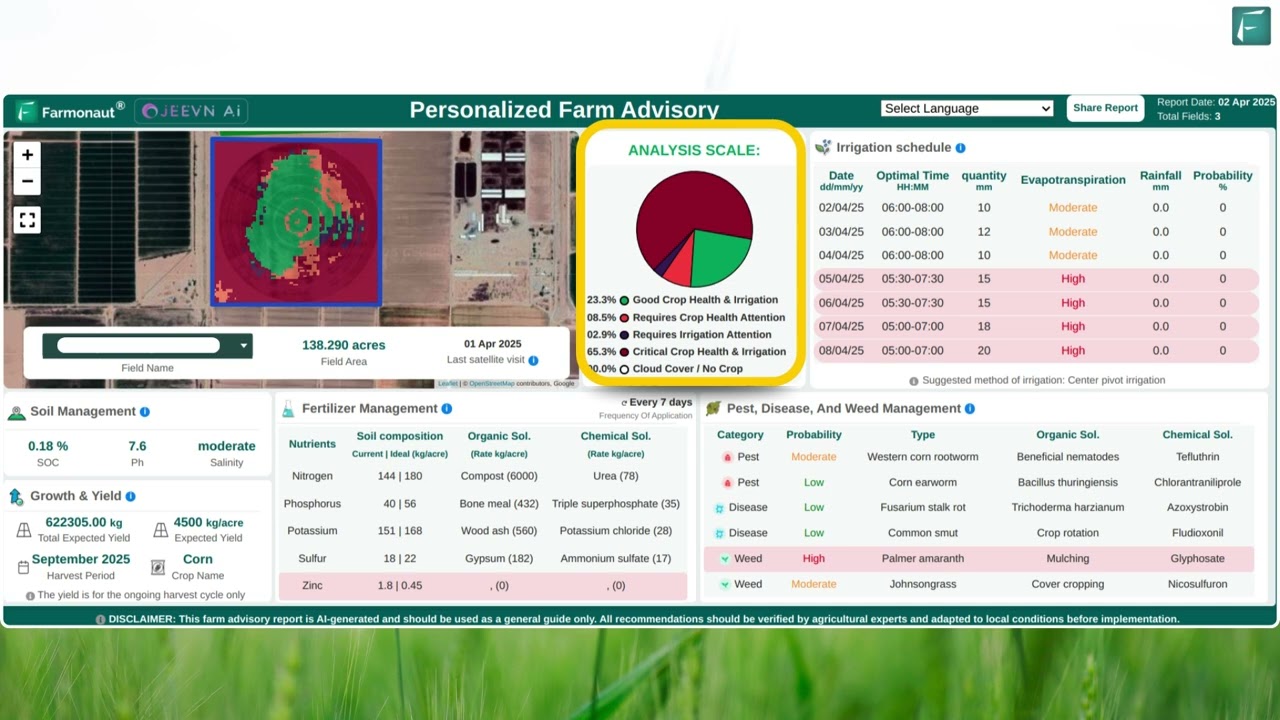
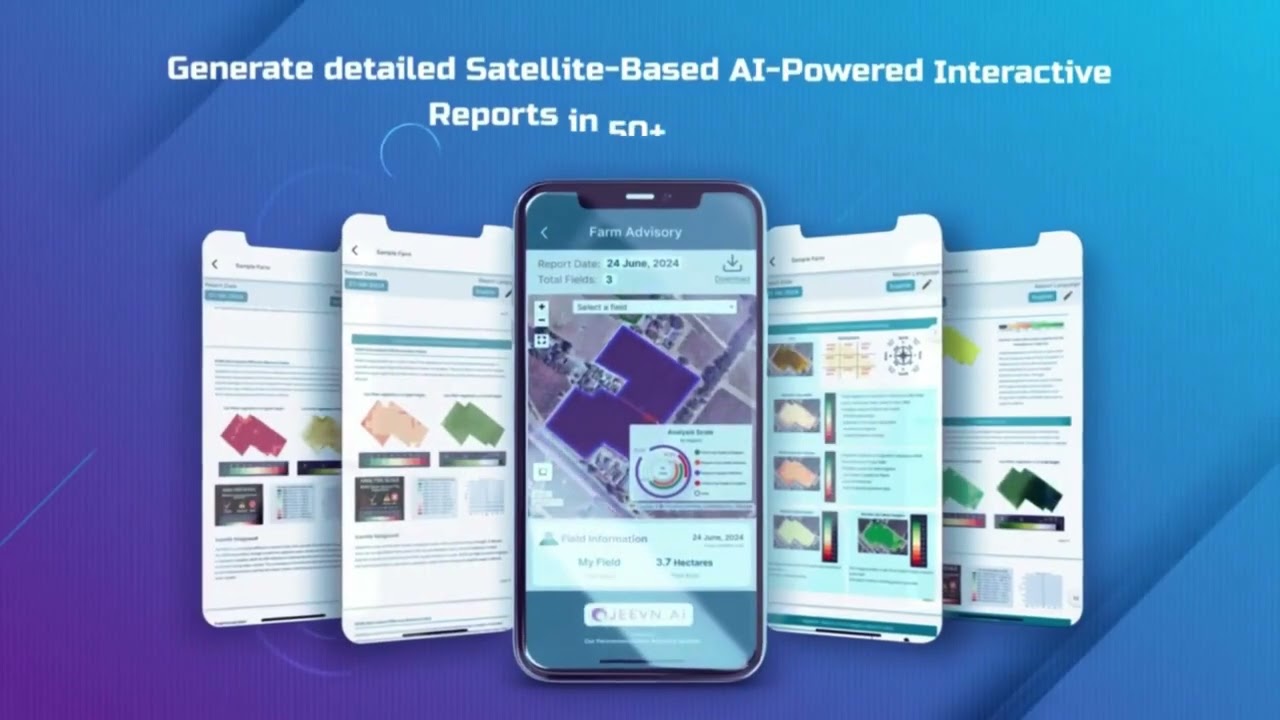
- Jeevn AI Advisory System: Delivers precise, real-time weather forecasts and field-specific recommendations for maximizing productivity and minimizing risks, using satellite data and advanced AI.
- Blockchain Traceability: Ensures end-to-end supply chain transparency for agricultural products, encouraging trust and efficient compliance with market requirements.
- Fleet & Resource Management: Helps businesses optimize logistics, vehicle utilization, and machinery management for reduced costs and enhanced operational safety across large-scale farm units.
- Carbon Footprinting: Supports regulatory compliance and environmental responsibility by tracking on-farm GHG emissions, helping clients achieve sustainability benchmarks.
- APIs & Developer Tools: Allow integration of sophisticated farm monitoring and AI insights directly into partner systems and digital solutions (APIs here).
Our platform is accessible via web, Android, and iOS—ensuring every stakeholder, regardless of farm size or technical expertise, can unlock the power of artificial intelligence in agriculture.

Want to experience real-time monitoring and AI-based agricultural advisory firsthand? Download Farmonaut’s Android or iOS apps:
Comparative Table: Estimated Impact of AI in Agriculture – 2025 Statistics
Learn more about crop loan and insurance verification services powered by satellite data: Crop Loan and Insurance Solutions help banks and financial institutions minimize fraud, validate crop health, and provide tailored coverage for farmers.
Emerging Trends, Challenges, and the Road Ahead
AI in Agriculture Statistics 2025: Notable Trends
- Multi-Layered Artificial Intelligence: Farms leverage stacks of AI systems—integrating machine learning, computer vision, weather models, and economic insights to drive smarter, interconnected decision-making.
- Autonomous Vehicles & Drones: Swift rise of autonomous machinery for sowing, irrigating, spraying, and harvesting. AI drones extend coverage and accuracy of crop monitoring and health assessment.
- Mobile-First & Accessible AI Apps: Affordable, Android/iOS/web apps like those delivered by Farmonaut bring AI insights to even the smallest and most remote farmers, narrowing the digital divide.
- Focus on Sustainability & Traceability: Stakeholders demand transparency on input use, farm practices, and carbon footprint, with blockchain and environmental data at the center.
- AI-Enabled Food Security Strategies: Governments and private sector use enhanced agricultural statistics and AI forecasting for climate adaptation, disaster response, and resilient food systems.
Persistent Challenges to Universal AI Adoption in Agriculture
- Data Privacy & Security: Growing amounts of farm and supply chain data call for strict protocols to safeguard privacy and ensure secure, compliant data use.
- Rural Infrastructure: Power and internet connectivity in developing regions remain a significant barrier to scaling AI-powered solutions.
- Skills Gap: Adoption is limited by lack of technical know-how among smallholder farmers—emphasizing the need for training, easy-to-use platforms, and support.
- Cost of Initial Investment: Although costs are dropping, upfront expenses for new AI technologies can still be prohibitive for small operations without institutional support.
AI in agriculture is on a remarkable trajectory, but bridging infrastructure and knowledge gaps is crucial to ensure equitable benefits for all, regardless of farm size or location.
Farmonaut Subscription Plans
Get started with advanced AI-powered, satellite-driven agricultural monitoring, tailored for farms and businesses of all sizes.
FAQs: AI in Agriculture Statistics & Future Outlook
What is the projected size of the AI in agriculture market for 2025?
Mordor Intelligence puts it at USD 2.43 billion in 2025, rising to USD 8.39 billion by 2031 (Mordor Intelligence). MarketsandMarkets forecasts USD 4.7 billion by 2028 (MarketsandMarkets).
Which AI applications will have the highest adoption in agriculture by 2025?
Precision irrigation, satellite-based crop monitoring, AI-powered advisory systems, and autonomous machinery lead in adoption rates, especially among large farms and advanced agricultural regions.
How much can AI-driven precision farming increase crop yields?
There is no reliable single figure. USDA research found variable rate technology raised corn profits by about 1% on average, with gains depending on field variability (USDA ERS).
Does AI in agriculture support sustainability and regulatory compliance?
Yes. AI analytics and environmental monitoring systems optimize chemical use, water management, and reduce greenhouse gas emissions, supporting farms in meeting sustainability and food safety regulations.
How do Farmonaut’s services differ from traditional farm input vendors?
We at Farmonaut do not sell inputs, farm machinery, or regulate agricultural practices. Instead, we provide advanced satellite and AI-powered monitoring, traceability, fleet, and environmental management tools to help stakeholders drive efficiency, sustainability, and transparency across their agricultural operations.
Can smallholder farms benefit from AI-driven agriculture?
Absolutely. As AI-based mobile applications become more affordable, smallholder and resource-limited farms gain access to actionable AI insights, lifting yields and resilience across diverse geographies.
Conclusion
As we embrace 2026 and beyond, the agricultural sector continues to undergo a profound technological transformation powered by AI. The agricultural statistics of 2025 present compelling evidence of increased productivity, efficiency, and sustainability across farms worldwide. The journey isn’t without challenges—notably, infrastructure, training, and digital access—but the momentum is set for a future where artificial intelligence fundamentally strengthens global food systems, secures supply chains, and supports environmental stewardship.
To thrive in this new landscape, it’s critical for every stakeholder—farmer, agribusiness, policymaker—to leverage accurate data, innovative AI technologies, and up-to-the-minute agricultural statistics. Ready to lead the next wave of sustainable, data-driven farming? Explore Farmonaut’s suite of affordable, AI-powered, satellite-driven solutions today and be a part of the transformation that’s reshaping the future of agriculture.
Start optimizing your farms with real-time, data-backed insights:
Want to build or integrate custom AI-driven monitoring and analytics? Explore our API offerings and developer documentation for seamless integration with your digital platforms.
Artificial Intelligence in Agriculture: Transforming Farming with Data-Driven Insights in 2025—join the revolution for a more productive and sustainable world.
Discussion
Questions, corrections or field experience? Share them below. First-time comments are reviewed before they appear, and your email is never published.
No comments yet. Be the first to add a question or your experience.

 AgriSevak
 CU Foods
 BeyondTech Global
 Rouge VC
 Yutz Automation
 AgroGreen Dynamics
 AgroRisk
 Oath Inc
 Reddane Farming
 Esri North East Africa
 Cresol
 Atur Kuliner
 MDCV UK
 Zerella Group
 Etech Consulting Madagascar
 Vestlandsforsking
 Delicio
 WB Dev
 Sama Premium
 Prochecker
 Tres Valles
 LACOS Geoinformation
 Magrifly
 LatConnect 60
 Exploration consultancy · South Africa · Gold
 Licence holder · Niger · Gold










