

Best AI Agent for Agriculture: Top 7 AI Apps & Uses 2025
“By 2025, over 60% of large farms are projected to use AI agents for precision agriculture worldwide.”
Table of Contents
- Introduction: AI Agent for Agriculture & The 2025 Revolution
- How AI Agents Are Transforming Farming in 2025
- Key Applications: AI Apps for Agriculture From Soil to Supply Chain
- Deep Dive: Top 7 AI Apps for Agriculture in 2025 + Comparative Table
- The AI Agriculture Market: Growth, Trends, & 2025 Outlook
- Challenges & Future Roadmap for AI Agents in Agriculture
- FAQ: AI Agent for Agriculture 2025
- Conclusion: Revolutionizing Agriculture with AI in 2025
Introduction: AI Agent for Agriculture & The 2025 Revolution
The agricultural sector is undergoing a dramatic transformation, driven by powerful new technologies that fundamentally redefine traditional farming operations. As we approach 2025, AI agent for agriculture is not just an industry buzzword; it is the cornerstone of a global shift toward smarter, more productive, and sustainable farming.
Artificial Intelligence (AI) agents are revolutionizing how farmers monitor crops, manage resources, and optimize yields. Leveraging machine learning models, satellite imagery, IoT sensors, and advanced analytics, these intelligent systems are delivering actionable data that improves operational efficiency and reduces costs. Guided by real-time insights and predictive analytics, farmers can now make decisions that minimize risks and maximize profitability while preserving natural resources.
In this article, we explore the best AI for agriculture, unveil the most impactful AI apps for agriculture in 2025, highlight emerging applications shaping the sector, and provide a comprehensive feature comparison for decision makers.



How AI Agents Are Transforming Farming in 2025
The role of AI agents in agriculture has rapidly evolved. By seamlessly blending artificial intelligence, computer vision, robotics, and remote sensing, these agents act as the smart assistants of the modern farm. Let’s delve into what defines an “AI agent for agriculture” and its game-changing effect in this sector.
What Is an AI Agent for Agriculture?
- Definition: AI agents in agriculture are autonomous software systems (and sometimes robots) that perform tasks such as monitoring crop health, predicting weather and disease outbreaks, optimizing irrigation and fertilization, and managing supply chains.
- Key Technologies: They utilize data from IoT sensors, machine learning models, drone imaging, and satellite analytics to make timely and accurate decisions — minimizing the need for human intervention.
- Real-World Example: An AI-powered drone, equipped with multispectral cameras, autonomously flies over fields, scans for pest infestations or nutrient deficiencies, triggers early alerts, and recommends targeted actions for specific field zones.
AI systems are revolutionizing traditional farming, fundamentally shifting operations from labor-intensive routines to smart, data-driven practices. Autonomous tractors and robotic harvesters are increasingly common, reducing labor costs while amplifying operational efficiency.
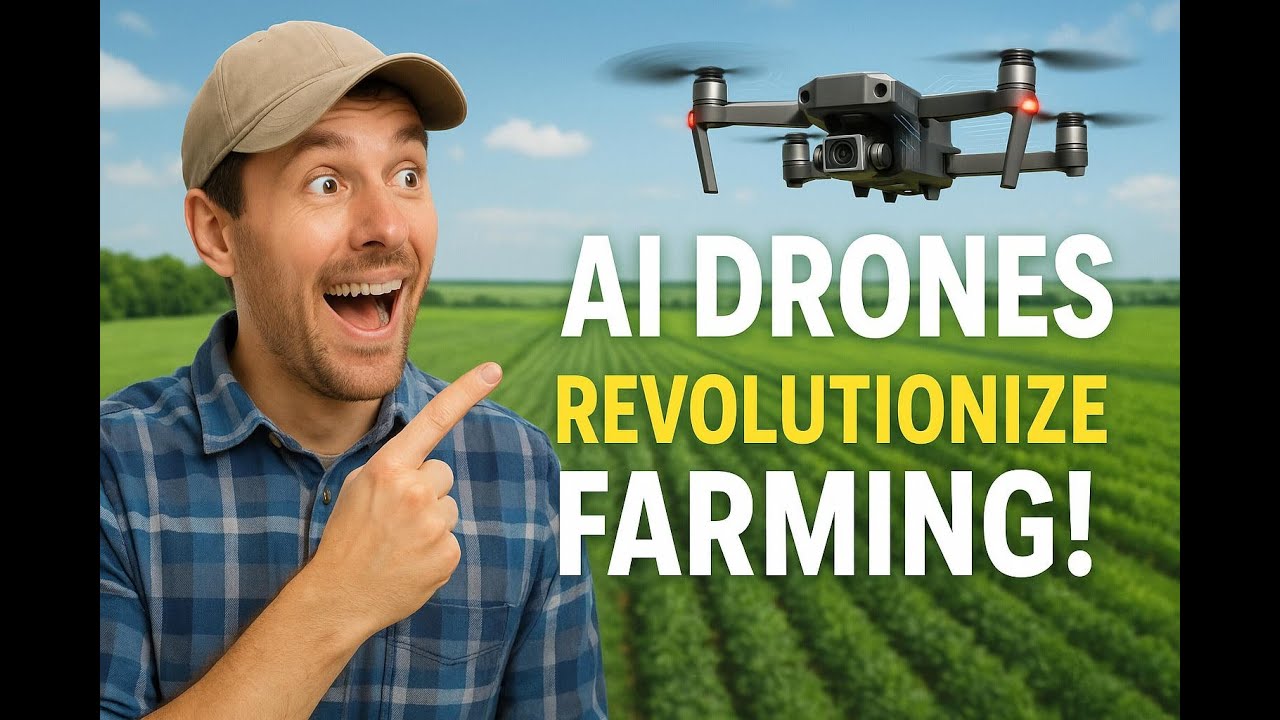
Key Advantages of AI Agents for Smart Agriculture
- Scalability: Large areas (even 100,000+ hectares) can be monitored in real time using AI-powered platforms — an impossible feat with manual labor alone.
- Precision: Data-driven insights enable targeted interventions for pest, weed, and disease management, optimizing input use and crop health.
- Resource Optimization: Automated irrigation and fertilization reduce water and chemical costs, ensuring sustainability and compliance with environmental standards.
- Yield Improvement: Machine learning algorithms predict yield and risk factors, supporting better decision-making for market planning and resource allocation.
- Sustainability: Minimizing environmental impact through data-driven practices promotes responsible land use and supports long-term agricultural growth.

Key Applications: AI Apps for Agriculture From Soil to Supply Chain
“AI-powered apps can analyze satellite data to monitor crop health across 100,000+ hectares in real time.”
The best AI for agriculture isn’t just about one tool — it’s the combination of precision technologies, scalable systems, and real-time analytics that span the entire agricultural lifecycle. Let’s examine the main AI uses in agriculture and how these applications are transforming farms worldwide in 2025.
Top AI Uses in Agriculture: 2025 and Beyond
- Crop Monitoring and Disease Detection: Advanced AI apps for agriculture use satellite, drone, and sensor data to monitor crop health, identify signs of stress, pest infestations, or nutrient deficiencies at an early stage.
- Precision Irrigation: AI-powered platforms analyze soil moisture, weather forecasts, and plant water needs to automate irrigation, reducing waste and promoting sustainability.
- Yield Prediction: Machine learning models forecast crop yield using real-time conditions and historical data — aiding harvest planning and helping farmers capitalize on market trends.
- Pest and Weed Management: Computer vision and deep learning identify pest outbreaks or weed proliferation, enabling targeted chemical applications rather than blanket spraying, which reduces costs and environmental impact.
- Supply Chain Optimization: AI agents forecast supply and demand, optimize storage, reduce post-harvest losses, and streamline logistics, ensuring high food quality and rapid market access.
- Sustainability & Environmental Impact Monitoring: Real-time tracking of carbon footprint, water usage, and resource optimization supports sustainable agricultural practices and regulatory compliance.
- Product Traceability and Transparency: Blockchain-integrated AI solutions enable transparent tracking of crops from farm to fork, ensuring secure traceability in agricultural supply chains.

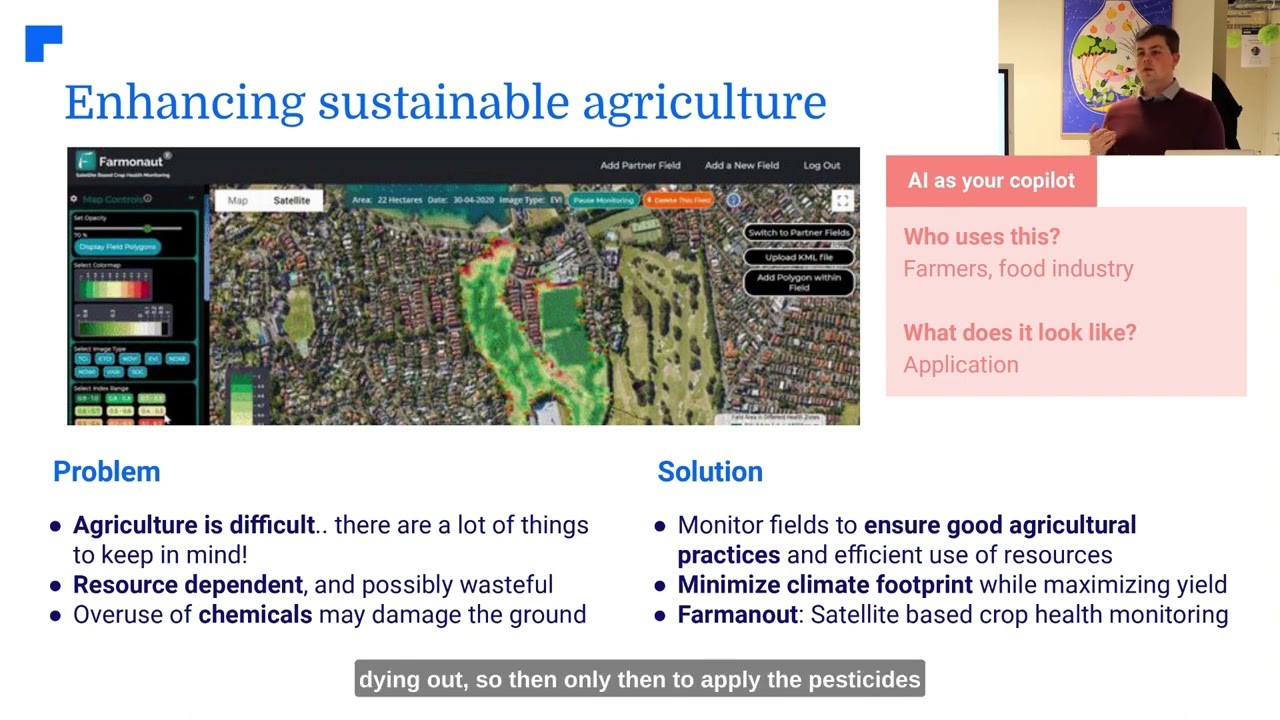
Farmonaut: Satellite-Powered AI for Agriculture (2025 & Beyond)
At Farmonaut, we leverage the synergistic power of satellite imagery, AI, blockchain, and machine learning to deliver affordable, scalable solutions for agriculture, mining, infrastructure, and environmental impact tracking. Our platform offers:
- Real-Time Farm Monitoring: Multispectral satellite images provide continuous updates on crop health indicators (NDVI, soil moisture, nutrient deficiencies) for large-scale farm management.
- AI Advisory (Jeevn AI): Satellites and IoT sensors deliver weather forecasts, pest/disease warnings, and custom action plans via our Android, iOS, web apps, and API integrations.
- Blockchain Traceability: End-to-end transparency for crop and resource supply chains, fostering trust and efficiency.
- Carbon Footprinting: Industry-leading tools to help farms measure and minimize their carbon footprint, driving sustainable practices.
Our modular and scalable platform supports users ranging from individual farmers to global agribusinesses and government agencies.
Learn more about how our fleet and resource management empowers agricultural efficiency.

Deep Dive: Top 7 AI Apps for Agriculture in 2025 + Comparative Table
Selecting the best AI for agriculture depends on the farm’s scale, crop type, and required operations. In 2025, these seven apps represent the cutting edge — combining satellite analytics, machine learning, and IoT integration for outstanding productivity and sustainability.

| AI App Name | Core Functionality | Estimated Impact on Yield (%) | Target Crops/Use Cases | Technology/Algorithms Used | Integration Ease | Sustainability Features |
|---|---|---|---|---|---|---|
| Farmonaut | Satellite crop monitoring, real-time AI advisory, resource & environmental impact management | 20–30% | Broadacre, rice, wheat, corn, cotton, sugarcane, forestry, plantations | Machine learning, multispectral remote sensing, blockchain, IoT | Low (<20 mins) | Water & fertilizer optimization, carbon tracking, blockchain traceability |
| Taranis | Aerial crop intelligence, disease & pest scouting, phenotyping | 15–25% | Row crops (corn, soy), specialty crops | Deep learning, computer vision, aerial imagery | Medium (1–2 hours) | Targeted pesticide, input reduction |
| CropX | Soil sensing, irrigation optimization, fertigation advisory | 15–20% | Row & tree crops, turf, greenhouse | Soil IoT sensors, AI-driven analytics | Medium (2-3 hours) | Water-saving, nutrient-use efficiency |
| IBM Watson Decision Platform for Agriculture | Supply chain decision support, IoT & weather integration | 10–20% | Commodity row crops, large-scale commercial farms | AI, weather simulation, predictive analytics | Medium (2-3 hours) | Logistics & wastage reduction |
| Prospera | Greenhouse & open-field monitoring, yield forecasting | 15–30% | Greenhouse, orchards, vegetables | Computer vision, machine learning | Low (under 1 hour) | Precision irrigation & fertilization |
| Granular | Farm business management, financial and operational analytics | 10–15% | Row crops, commercial farming | Data analytics, optimization algorithms | Medium (2 hours) | Input & cost efficiency |
| PrecisionHawk | Drone-based surveillance, field analytics, variable rate mapping | 10–20% | Grains, fruits, specialty crops | Drone imagery, AI analytics | Medium (2-3 hours) | Reduced chemical usage |
Each of these AI agents offers unique benefits for different types of agricultural operations. Platforms such as Farmonaut distinguish themselves through their modular design (scaling from a single farm to national governments), use of blockchain for traceability, real-time AI advisory, and API integration for seamless workflows.


The AI Agriculture Market: Growth, Trends, & 2025 Outlook
The AI agriculture market is experiencing unprecedented growth. By 2025, it is projected to exceed USD 25 billion, fueled by widespread adoption of AI apps for agriculture, enhanced connectivity in rural regions, and strong government support for smart, sustainable farming practices.
-
Key Growth Factors:
- Affordable IoT devices and cloud-based software
- Access to satellite and drone analytics in both developed and emerging markets
- Startups and established technology providers driving rapid innovation
- Expansion of blockchain-based traceability solutions securing agricultural supply chains
- Inclusiveness: Mobile AI-driven apps are democratizing access to agronomic advice for smallholders, closing knowledge gaps, and promoting equitable food system growth globally.
-
Market Trends:
- Integration of AI with robotics, biotechnology, and advanced weather/climate models
- Growth of API-based platforms for customizing solutions in agricultural management
- AI-powered environmental compliance tools for sustainable certification
As AI agent for agriculture solutions become more accessible, comprehensive crop plantation and forest advisory tools and product traceability features will benefit both commercial operations and sustainability-conscious enterprises.
Challenges & Future Roadmap for AI Agents in Agriculture
While the benefits of AI agents in agriculture are clear, several challenges could affect adoption rates and overall impact.
Barriers to Adoption
- Upfront Costs: Advanced sensors, drones, and premium data subscriptions require initial investment, posing a barrier for some small-scale farmers.
- Data Privacy and Security: As farms generate massive volumes of sensitive data, robust cybersecurity and compliance with privacy regulations are imperative.
- Farmer Training & Digital Literacy: Ensuring effective use of new platforms requires ongoing training and extension services.
- Infrastructure Gaps: Rural regions may still lack the internet bandwidth needed for real-time analytics and cloud-based operations.
The Road Ahead: AI & the Future of Agriculture
- Integration with Robotics: Expect greater deployment of fully autonomous robots — from weeding bots to robotic harvesters — coupled with AI data systems for precision tasks.
- Synergy with Climate & Weather Models: Machine learning models trained on historical weather patterns will play a crucial role in risk mitigation and adaptive farm planning.
- Artificial Intelligence for Sustainable Certification: AI-driven environmental monitoring, including carbon footprint tools, will support sustainability certifications and climate-smart food production.
- API-Driven Ecosystems: Seamless API integration will allow businesses, developers, and governments to embed real-time agricultural insights within larger operational systems.
Solutions like Farmonaut’s satellite and AI ecosystem are paving the way for resilient, sustainable food systems in both developed and emerging markets. For further developer integration, check out our API developer docs for satellite and weather intelligence.
FAQ: AI Agent for Agriculture 2025
-
What is the main benefit of using an AI agent for agriculture?
AI agents enable precision farming by automating tasks such as crop monitoring, disease detection, irrigation scheduling, and resource optimization. This leads to higher yields, reduced costs, improved sustainability, and timely data-driven decisions.
-
How do AI apps for agriculture handle big data?
They aggregate vast datasets from IoT sensors, drones, and satellites, then use advanced analytics and machine learning to provide actionable insights quickly and at scale — monitoring vast regions in real time.
-
Can these technologies be used by smallholder farmers?
Yes. Many AI apps for agriculture are accessible via mobile platforms and designed for ease of use, democratizing access to cutting-edge insights even for those with limited resources or technical skills.
-
What sustainability features are offered by leading AI agriculture solutions?
Leading AI apps integrate carbon footprint tracking, water and fertilizer optimization, targeted pest management, and blockchain traceability to help farmers meet environmental and regulatory goals.
-
Which types of crops benefit most from AI agent for agriculture systems?
Broadacre crops (corn, wheat, rice), specialty crops (fruits, vegetables), plantations (coffee, tea, sugarcane), and forestry all benefit from AI-enabled remote sensing and analytics.
Conclusion: Revolutionizing Agriculture with AI in 2025
As we move through 2025 and beyond, AI agent for agriculture technologies are revolutionizing and transforming the way food is grown, managed, and delivered. From high-precision crop monitoring and early-detection systems to end-to-end supply chain optimization and blockchain-fueled transparency, the future of farming is data-driven and sustainable.
With a growing population and intensifying environmental challenges, artificial intelligence represents an indispensable asset for farmers, agri-businesses, and governments. The top AI apps for agriculture highlighted here — led by solutions like Farmonaut — deliver scalable, actionable insights via mobile, web, and API platforms, facilitating smarter decisions, boosting productivity, and securing food systems for the next generation.
The key to lasting impact? Seamless integration of AI agents into daily operations, commitment to open data-driven practices, and ongoing support for innovation and training. By embracing these technologies now, agriculture worldwide can thrive in a new era of profitability, resilience, and environmental harmony.
Discussion
Questions, corrections or field experience? Share them below. First-time comments are reviewed before they appear, and your email is never published.
No comments yet. Be the first to add a question or your experience.

 Adgrid
 eKGIS
eKGIS Mostas Tech
 Native Seeds
 Andex
Andex FCF India
 Unifrutti Gulf
 Deluxe Conseil
 TVS Electronics
 BW Pipelines
 WICO
WICO Chimera Innovation
 SkyHarvest
 Polaris Digitech
 Teledarbas
