

Table of Contents
- Introduction
- Trivia: Did You Know?
- The Reality of Artificial Intelligence in Agriculture
- Comparative Benefits Table: 7 Real Examples
- 1. Crop Optimization & Precision Farming
- 2. AI for Resource & Water Management
- 3. Pest & Disease Surveillance Using AI
- 4. AI & Biotechnology in Crop Development
- 5. Geospatial Information Systems (GIS) in Agriculture & Forestry
- 6. Supply Chain & Infrastructure Optimization with AI
- 7. AI in Mining & Land Reclamation Contexts
- How Farmonaut Supports AI, GIS, and Sustainability in Agriculture, Mining, and Beyond
- Key Insights, Pro Tips & Highlights
- Visual Summaries & Key Benefits
- Best Practices & Ethical Considerations
- Frequently Asked Questions (FAQ)
- Conclusion
- Farmonaut App & Subscription Plans
Application of AI in Agriculture PPT: 7 Real Examples
Artificial intelligence (AI), geospatial information systems (GIS), and modern biotechnology are revolutionizing the way we approach agriculture, forestry, and resource management. These technologies are not only enhancing crop yield and sustainability but are also transforming practice across interconnected sectors such as mining and land reclamation.
At the core, AI enables rapid analysis of diverse data streams from soil sensors, weather patterns, drone and satellite imagery, crop phenotypes, and even equipment telemetry. This application of artificial intelligence in agriculture allows for precise decision-making in real time, resulting in significant improvements in yield, resilience, and environmental stewardship.
In this comprehensive blog post, we provide a focused look at the real-world applications of AI in agriculture with examples from farming, forestry, and mining contexts. Our aim is to demystify these innovations and showcase their tangible benefits across diverse landscapes and resource extraction activities.
“Over 70% of global agricultural companies are investing in AI for crop yield prediction and resource management.”
The Reality of Artificial Intelligence in Agriculture
The application of AI in agriculture PPT presentations often begin with numbers, but the reality on the ground is even more dynamic. AI-enabled systems are now a core part of modern farming and forestry operations. From soil to satellite, and from planting to processing, AI is central to data-driven resource management, adaptive irrigation schedules, and supply chain optimization.
Let’s explore how AI, GIS, and biotech are transforming these industries through the lens of seven authentic examples.
Comparative Benefits Table: 7 Real AI Applications in Agriculture, Forestry & Mining
| AI Application/Technology | Area of Use | Estimated Impact/Improvement (%) | Associated Industry | Sustainability Benefit |
|---|---|---|---|---|
| AI-driven crop optimization | Yield, precision planting, fertilization | Up to 20% yield increase | Agriculture | Reduces chemical use & conserves water |
| Satellite-based irrigation optimization | Water management, field moisture | Up to 30% water use efficiency | Agriculture, Forestry | Protects downstream ecosystems |
| AI-powered pest & disease surveillance | Pest/disease prediction, targeted control | Reduces crop losses by up to 15% | Agriculture, Forestry | Minimizes chemical footprint |
| Genomics AI in crop development | Trait selection, resilience breeding | Accelerates variety release by 30% | Agriculture | Develops stress-tolerant crops |
| GIS-informed land management | Soil & vegetation mapping, planning | Enables up to 25% higher productivity | Agriculture, Forestry, Mining | Guides reclamation, supports biodiversity |
| AI-powered supply chain analytics | Storage, transport, logistics | Reduces waste and spoilage by 10–15% | Agriculture, Forestry | Improves resource efficiency |
| AI-led land reclamation planning | Mining, post-extraction restoration | Speeds up ecosystem recovery by 40% | Mining, Agriculture | Reduces erosion, enhances carbon sequestration |

7 Real Examples: Applications of AI in Agriculture, Forestry & Mining
1. Crop Optimization & Precision Farming
Precision agriculture typifies the application of AI in agriculture ppt case studies. AI-driven models can process immense volumes of field data to predict optimal planting densities, irrigation schedules, and fertilization plans that are tailored to field variability. This allows for the most advantageous placement of seeds and chemicals across both large- and small-scale farming operations.
- ✔ Computer vision—deployed by drones and ground-based robots—identify nutrient deficiencies and water stress in real time.
- ✔ AI detects pests or diseases early, allowing targeted interventions that reduce chemical use and rapidly improve crop resilience.
- ✔ Yield monitoring ensures that inputs are directed only where needed, which minimizes environmental impact and produces higher net yields.
- ✔ In reforestation projects, AI analyzes imagery to guide thinning decisions and monitor tree regeneration.
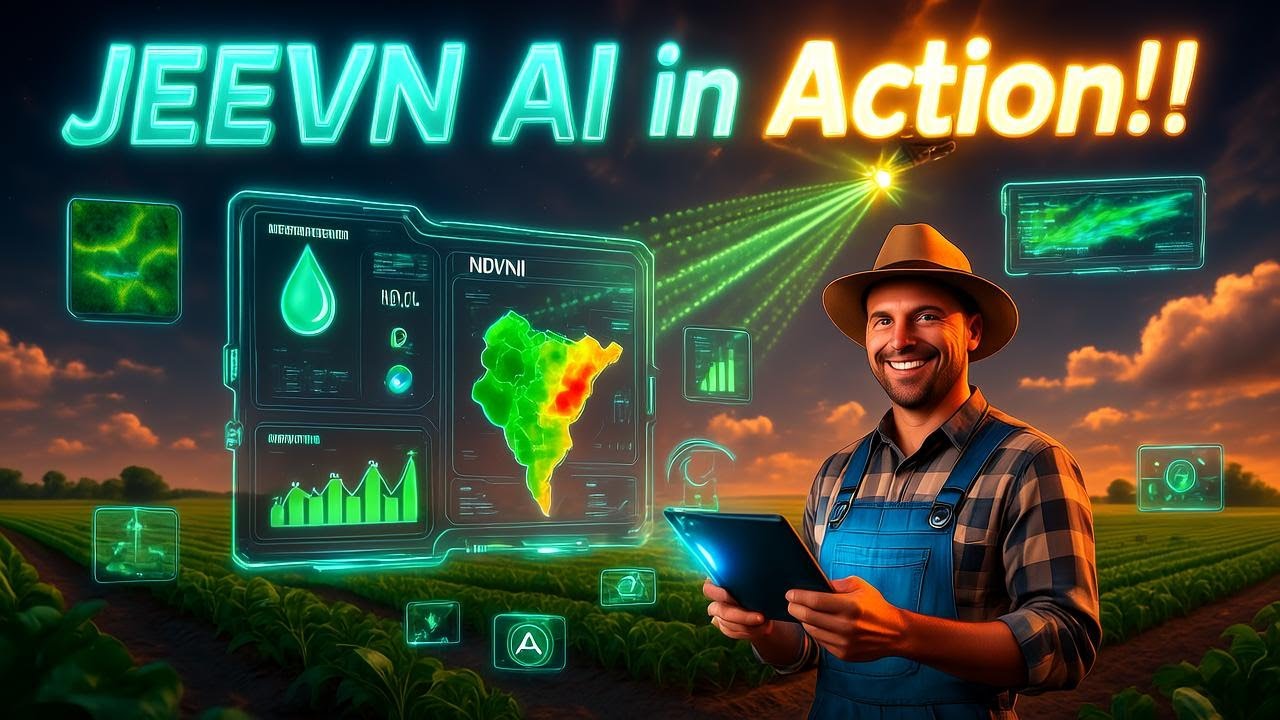
- ✔ Farmonaut’s AI-driven crop health monitoring helps us offer valuable, actionable insights from NDVI, NDRE, and soil data for efficient field management (learn about our crop and farm management solutions for large-scale operations).
Integrate Farmonaut’s Satellite API for live crop data into your own apps – perfect for agritech developers and corporate users seeking precise, scalable field monitoring.
2. AI for Resource & Water Management
Effective water management remains an essential concern across agricultural and mining regions, especially in water-stressed environments. Satellite imagery and AI-driven evapotranspiration forecasting allow us to issue precise irrigation events and optimize water usage for different soil and crop types.
- ✔ AI models analyze soil moisture along with weather trends to determine the right timing and quantity for irrigation.
- ✔ Linked with climate forecasts, AI can reduce runoff and leaching, protecting downstream ecosystems naturally at risk from over-irrigation in agriculture and mining-reclaimed sites.
- ✔ Farmonaut’s real-time satellite soil moisture monitoring ensures precise detection of dry/wet spots, enabling site-specific water management for both crops and plantations (see our carbon footprinting solutions to track resource use and sustainability).

3. Pest & Disease Surveillance Using AI
The application of AI in agriculture ppt frequently draws attention to AI-powered pest and disease forecasting as a game changer. By integrating multi-source data—from leaf imagery, pheromone traps, and weather cues to historical outbreak patterns—these tools forecast pest incursions and disease outbreaks with impressive accuracy.
- ✔ Early warning systems trigger targeted interventions, minimizing chemical use and crop losses.
- ✔ AI supports integrated pest management programs, balancing pest reduction with the conservation of beneficial organisms and pollinators.
- ✔ In forestry, AI-based disease surveillance prevents large-scale loss by mapping outbreaks and predicting tree health trends.

4. AI & Biotechnology in Crop Development
The application of biotech in agriculture is accelerated by AI models capable of analyzing massive genomic and phenotypic datasets to uncover trait correlations. This results in:
- ✔ Faster plant breeding cycles and release of elite, climate-resilient varieties.
- ✔ Identification of target genes for drought, heat, pest, and salinity tolerance, helping us guide optimal tree or crop selection for both agriculture and forestry plantation projects.
- ✔ Enhancements to root systems for soil health, linking crop biotech with sustainable resource management.
AI’s role is pivotal in increasing resilience not only for staple crops but also for reforestation species selected for carbon sequestration and restoration of marginal lands.


5. Geospatial Information Systems (GIS) in Agriculture & Forestry
The application of GIS in agriculture ppt is synonymous with data-driven land management. GIS platforms are crucial for mapping and visualizing:
- ✔ Soil type and fertility variability across regions
- ✔ Moisture zones, terrain features, and field performance
- ✔ Plantations, nurseries, and health of existing vegetation in forestry
- ✔ Site selection for new plantations and restoration of mining-adjacent landscapes
GIS-enabled planning supports:
- ✔ Sustainable harvest scheduling to balance productivity and environmental goals
- ✔ Restoration of post-extraction sites via precise mapping and vegetation monitoring
- ✔ Creation of habitat corridors within reforestation and farming operations

“AI-driven GIS systems can increase water use efficiency in farming by up to 30% compared to traditional methods.”
6. Supply Chain & Infrastructure Optimization with AI
Supply chain logistics often determines the final profitability of agriculture, forestry, and even mining-adjacent resource activities. AI-driven analytics combine harvest window prediction, storage scheduling, and transport route optimization to:
- ✔ Minimize spoilage and food loss between field and market
- ✔ Enhance traceability for both fresh produce and forestry resources using blockchain-integrated AI systems
- ✔ Synchronize extraction activities and seasonal farming to optimize land use around mining sites
- ✔ Fleet management tools, like those provided by Farmonaut, improve safety and reduce costs for agricultural and infrastructure teams (fleet management solution details here).

7. AI in Mining & Land Reclamation Contexts
The role of AI is expanding in resource extraction activities, particularly mining. AI and GIS coordinate vegetation restoration and soil stabilization on post-mining landscapes:
- ✔ Satellite and drone imagery combined with AI detect anomalies in vegetation recovery and monitor nurseries
- ✔ Algorithms identify areas with erosion or hydro-geomorphic risks, guiding targeted reclamation
- ✔ Real-time monitoring enables adaptive management to maintain progress toward full restoration of healthy ecosystems
- ✔ In-mine and post-mine environmental impact tracking supports sustainability goals and compliance (see Farmonaut’s carbon footprinting tech for mining).
How Farmonaut Supports AI, GIS, and Sustainability in Agriculture, Mining, and Beyond
At Farmonaut, our mission is to democratize satellite-based monitoring by fusing cutting-edge AI, GIS, and blockchain into accessible, affordable, and scalable solutions. Our platform delivers a unique blend of real-time monitoring, environmental tracking, advisory systems, and traceability to empower both farmers and resource managers across industries.
- ✔ Multispectral satellite imagery for crop health, soil, and water status monitoring
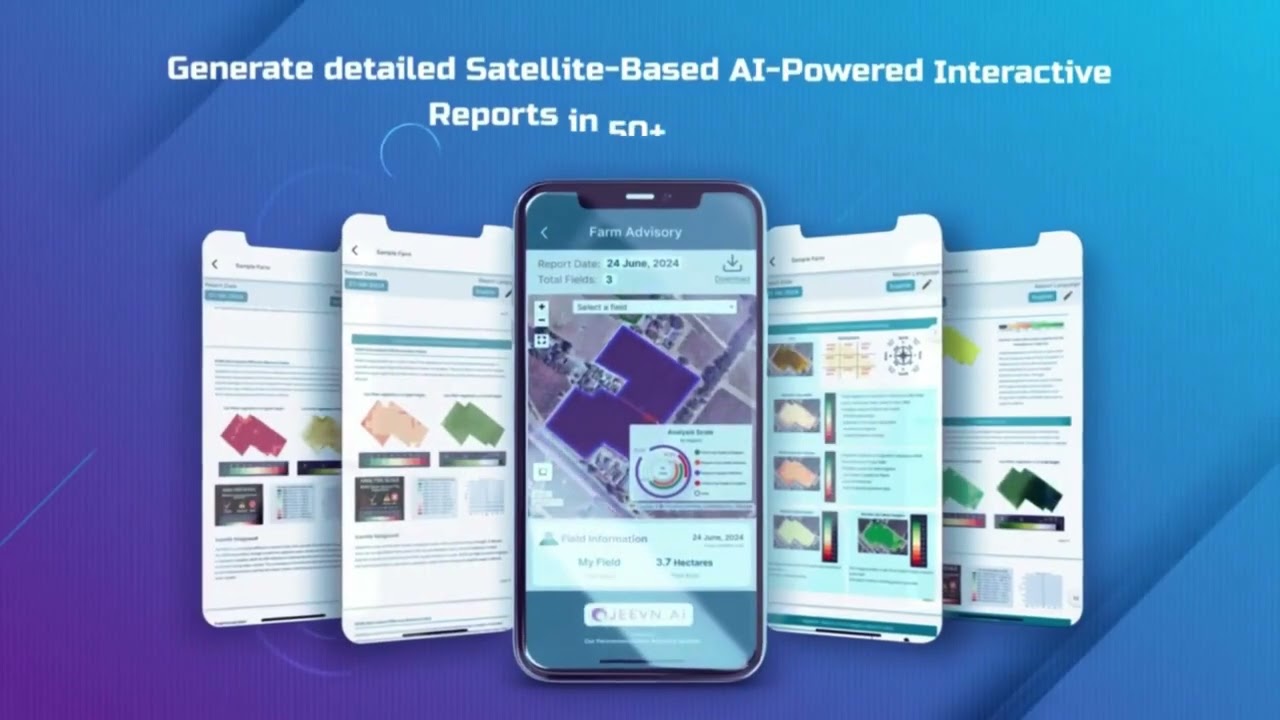
- ✔ JEEVN AI Advisory for field-specific decision making and weather-adaptive strategies
- ✔ Blockchain-based tools for supply chain verification in agriculture, forestry, and mining
- ✔ Fleet management modules to reduce costs and improve equipment safety
- ✔ Environmental impact tracking to help users measure, report, and optimize their sustainability
Our RESTful API and developer docs open new doors for enterprise and integration into any systems requiring precise field, climate, and resource data.
Visual List: 5 Key Benefits of Applying AI in Agriculture & Forestry
- ✔ Boosted Yields: AI-guided models precisely recommend planting, fertilization, and irrigation for highest returns.
- 📊 Reliable Decision Support: Real-time analytics from soil, weather, and satellite data cut risks and delays.
- 🌎 Carbon Footprint Reduction: Minimize unnecessary chemical and water use, favor sustainability.
- 🕒 Time & Labor Savings: Automation of scouting, pest detection, and reporting increases efficiency.
- 📈 Financial Resilience: Lower input costs, higher predictability, and better access to insurance or loans.
Visual List: Focused Look — 5 Advanced AI Applications in Agriculture & Mining Contexts
- 🌿 Drone-Based Canopy Analysis: Real-time nutrient, moisture, and stress mapping on fields and plantations
- 🧬 AI-Enabled Genomic Selection: Chooses the best crop and tree varieties for stress resilience and yield
- 🪴 Precision Weed Detection Robots: Site-specific chemical application, lowering total chemical footprint
- 💧 Evapotranspiration Forecasting: Optimized irrigation scheduling and water usage
- 🌲 Post-Mining Reclamation Tools: Satellites and AI coordinate restoration, erosion control, and biodiversity enhancement
Best Practices & Ethical Considerations for AI Applications in Agriculture, Forestry, & Mining
- ✔ Prioritize safety of all fieldworkers and operators of drones or robots through training and supervision.
- 🔒 Uphold privacy by managing agricultural data responsibly and ensuring equitable access for smallholders.
- 🌱 Guide deployments with sustainability metrics: water savings, reduced chemical use, biodiversity outcomes, and improved soil health.
- 💡 Transparency in AI model recommendations fosters trust and long-term adoption in agricultural communities.
- 📈 Monitor for social or economic inequities—AI should close, not widen, the digital divide in global agriculture, forestry, and resource management contexts.
Frequently Asked Questions (FAQ)
Q1: What are the most common applications of AI in agriculture?
The most widespread uses are for crop monitoring, precision irrigation, pest and disease surveillance, and supply chain optimization. AI enables timely interventions, minimizes chemical inputs, and supports decision making through rapid analysis of data from sensors, drones, and satellites.
Q2: How do AI and GIS work together in the agriculture and forestry sectors?
AI augments Geospatial Information Systems (GIS) by automating image analysis, extracting actionable insights from vast spatial data, and identifying trends in soil, vegetation, and resource dynamics across landscapes. This accelerates restoration, reclamation, and precision resource management planning.
Q3: Is data privacy a concern with AI and remote sensing technologies?
Yes. Safe data governance, anonymization, and transparency are crucial. Ethical AI deployment must respect privacy, particularly for farmers and land managers, and strive for equitable access—ensuring smallholders are not left behind.
Q4: How does Farmonaut’s solution differ from traditional agri-tech tools?
We specialize in satellite-based, accessible platforms blending AI, GIS, and blockchain to deliver real-time environmental impact monitoring, advisory, and supply chain transparency. Our services are subscription-based and scalable, providing user-friendly solutions without the need for costly on-field hardware.
Q5: Can AI help with regulatory and sustainability reporting?
Absolutely. AI enables accurate carbon footprinting, water and chemical tracking, and sustainability metric generation—for both agriculture and mining operations—easing compliance with environmental standards.
Get Started with Farmonaut
Ready to access satellite-based AI insights for your farming, forestry, or mining business? Download our app or use our powerful web platform for real-time monitoring, advisory, and traceability tools adapted to your sustainability objectives – especially for large-scale farm and plantation management.
Conclusion: AI Is Redefining Agriculture, Forestry, and Mining
The application of AI in agriculture PPT narrative is now backed by proven examples and measurable results across farming, forestry, and mining. AI, GIS, and biotech—integrated judiciously and ethically—are making systems more resilient, adaptive, efficient, and sustainable than ever before. Whether you are a farmer, plantation manager, environmental scientist, or engaged in reclamation and extraction activities, leveraging these technologies is no longer a choice, but a competitive necessity.
At Farmonaut, we remain committed to advancing digital, data-driven, and transparent land management, ensuring benefits reach across the value chain—from soil to satellite, field to fork, and forest to future generations. Connect with us today to begin your journey toward smarter, more sustainable agriculture and resource management.
Discussion
Questions, corrections or field experience? Share them below. First-time comments are reviewed before they appear, and your email is never published.
No comments yet. Be the first to add a question or your experience.

 MapMyCrop
 Cresol
 Atur Kuliner
 MDCV UK
 Zerella Group
 Etech Consulting Madagascar
 Vestlandsforsking
 Agritein
 Delicio
 WB Dev
 Sama Premium
 Prochecker
 Tres Valles
 LACOS Geoinformation
 Magrifly
 LatConnect 60
 Blickwinkel
 Agricultural Credit Policy Council
 Marei Nursery
 eKGIS
eKGIS Mostas Tech
 Exploration consultancy · South Africa · Gold
 Licence holder · Niger · Gold
 Licence holder · Nigeria · Gold + lithium










