

Autonomous Selective Harvesting Robot AI: Revolutionizing Agri Robot Data for 2025 & Beyond
Introduction: Ushering in a New Era of Agri Robotics
In recent years, the convergence of advanced robotics, artificial intelligence (AI), and soft robotics has fundamentally revolutionized agricultural practices, ushering in a new era of farming that is both precise and sustainable. By 2025, the rise of autonomous selective harvesting robot AI soft robotics data-driven agricultural robotics and automation is poised to transform crop management, maximize yields, and improve sustainability within the global agriculture sector.
This shift is anchored by a new generation of agr robot solutions, equipped with AI-powered vision and soft robotic end-effectors that can approach and harvest ripe fruits and vegetables with unprecedented precision—minimizing waste, reducing labor requirements, and promoting environmental sustainability.
Readers weighing specific machines can compare seven harvesting robots in use, including how each one grips and picks.



The Convergence of AI, Robotics, and Data in Agriculture
The agriculture sector has always relied on timely, efficient harvesting and crop management. However, the traditional process of picking is challenging—it requires skilled workers to differentiate between mature and immature produce, often under tough labor conditions. As we head into 2025 and beyond, the introduction of autonomous selective harvesting robot AI soft robotics data-driven agricultural robotics and automation is revolutionizing these practices.
Today’s agri robots are embedded with deep learning algorithms and machine vision cameras that can identify subtle variations in color, texture, size, and even chemical markers—all critical signals used to determine ripeness and detect disease. The data they capture is processed onboard or delivered to cloud platforms, where sophisticated AI systems enable instantaneous decisions about which fruits or vegetables are ready for harvest.

What Is Autonomous Selective Harvesting? Understanding the Critical Process
Selective harvesting refers to the targeted picking of only ripe fruits and vegetables, leaving those that are unripe or immature to continue developing. This process is critical in minimizing waste and maximizing yields, ensuring that only the highest-quality produce reaches the market. However, traditional methods using rigid robotic arms often result in bruising and damage, both to the fruit and the plants themselves.
The Challenge of Manual Harvesting
- Requires a large number of skilled workers
- Subject to labor shortages worldwide
- Human error leads to waste and losses
- Physically demanding and potentially unsafe
The advent of autonomous selective harvesting robot AI soft robotics data-driven tools addresses these challenges by replicating the gentle, adaptive grasping motions of the human hand, minimizing the risk of bruising and waste, and enabling harvesting operations no longer bound by daylight or weather.

How AI-Powered Agribots Select and Harvest with Precision
AI Vision Systems & Soft Robotics: The Perfect Harvesting Pair
Autonomous agri robots don’t just replace human eyes—they enhance them. AI-powered vision systems combine machine learning, hyperspectral sensors, and high-resolution cameras to identify ripe produce down to the most precise markers:
- Color gradients that signal ripeness
- Texture and size variations between mature and immature crops
- Chemical markers invisible to the naked eye but visible in unique bands of light
- Early disease detection to prevent spread and quality loss
This data is rapidly processed, often in real time, so that agribots can selectively pick only market-ready crops, minimizing the need for human curation as well as post-harvest losses.
Deep Learning at the Farm’s Edge
With AI and deep learning algorithms trained on vast datasets, agribots can recognize highly nuanced signals—such as tiny shifts in hue or firmness that would escape even expert harvesters. These autonomous AI systems ensure that only the best fruits enter the supply chain.
The Role of Soft Robotics: Gentle, Data-Driven Crop Handling
Unlike traditional rigid arms, soft robotics relies on materials like silicone and flexible polymers to create grippers that adapt to the shape and firmness of each fruit or vegetable. This development is pivotal for handling delicate crops—from strawberries to apples—while avoiding bruising or surface damage.
- Adaptive grip strength minimizes pressure on the produce
- Materials mimic human hand motions and dexterity
- Soft robotic grippers are especially useful for highly sensitive fruits and vegetables
The focus on soft, selective harvesting enables robots to tolerate and “feel” a range of crops, improving harvest efficiency and reducing waste due to damage during handling—a long-standing problem in the agriculture sector.

Comparison Table: Conventional vs. Autonomous Selective Harvesting Robots
To better understand the transformative benefits of autonomous selective harvesting robot AI soft robotics data-driven solutions, explore the detailed comparison below:
| Technology Type | Harvesting Accuracy (Estimated %) |
Speed (Acres/hour) |
Labor Requirement (Persons Needed) |
Energy Efficiency (kWh/acre) |
Crop Damage Rate (Estimated %) |
Sustainability Impact |
|---|---|---|---|---|---|---|
| Conventional Harvesting Equipment | 80–85% | 0.5–1.2 | 8–16 | 5–8 | 8–15% | Moderate—significant waste, higher water & chemical use, limited real-time monitoring |
| Autonomous AI Robot | 95–99% | 2–4 | 1–2 (mainly monitoring) | 2–4 | 0.5–3% | High—minimal crop loss, precision input use, continuous data-driven optimization, better resource management |
The stark difference underlines just how much autonomous, AI-driven agr robots can maximize efficiency, improve sustainability, and reduce human labor requirements in 2025 and the future.
Data-Driven Decisions: Real-Time Monitoring & Farm Management Integration
The data collected by autonomous selective harvesting robot AI soft robotics data-driven platforms isn’t used just for harvesting decisions. Instead, it is seamlessly integrated into broader farm management systems for holistic precision agriculture strategies. This is a truly new era for agricultural data management.
- Yield Quantities & Quality Metrics: Know exactly what was harvested, where, and at what quality grade.
- Spatial Distribution: Understand field-by-field performance for targeted improvements.
- Feedback into Analytics Platforms: Tools like those provided by Farmonaut deliver AI-driven analytics to optimize irrigation, fertilization, and pest control for higher long-term yields and sustainability.
This enables farmers and businesses to make data-driven decisions that reduce resource waste, minimize crop damage, and improve profitability.

Farmonaut’s Jeevn AI Advisory System plays a critical role by analyzing real-time satellite data and delivering tailored strategies for farmers. The Farmonaut Crop Plantation & Forest Advisory feature, for example, makes it easier for users to receive location-specific guidance on resource management and planting best practices—all accessible via app on any device.
If you want to bring precision technology to your field instantly, our web platform is available right now:
Access the Farmonaut Web Platform for Satellite-Powered Farm Insights
Labor, Economics, and the Future of Work in Agriculture
A significant driver of autonomous selective harvesting robot AI soft robotics data-driven agricultural robotics and automation is the worldwide labor shortage. The physically demanding nature of harvesting, coupled with shifting demographics and urban migration, has made it difficult for farmers in many regions to maintain a consistent workforce.
- Robots alleviate workforce constraints—especially during seasonal peaks
- Can operate around the clock and in variable weather conditions
- Shorten harvest windows and reduce spoilage
- Reduce reliance on skilled workers, letting humans focus on high-value, management, or technical roles
This is a vital step for the agriculture sector, enabling farms of all sizes to remain competitive while improving operational resilience and profitability.
Small and medium-scale farms worldwide are rapidly adopting modular, cost-effective solutions. For those seeking to modernize their farm operations, Farmonaut’s Large Scale Farm Management System offers tracking, analytics, and automation—from crop monitoring to logistics—on a scalable, affordable platform.
Those in need of financing or insurance may benefit from Farmonaut’s Crop Loan and Insurance Solutions, integrating satellite verification to streamline processes and cut down on fraud.
Environmental Impact and Sustainability in Agri Robotics
Sustainability is at the heart of autonomous selective harvesting robot AI soft robotics data-driven agricultural robotics and automation innovation. By precisely targeting ripe crops and minimizing damage, these technologies have a profound positive impact on the planet:
- Reduced waste: Only mature, market-ready produce is picked—reducing landfill loads and greenhouse gas emissions.
- Precise management: Integrated data enables accurate input of water, fertilizers, and pesticides—lowering chemical runoff and conserving resources.
- Lower emissions: More efficient machinery and improved scheduling mean less energy used per acre harvested.
- Healthier soil and crops: Accurate disease detection and yield monitoring enable sustainable resource allocation and rotation management.
Farmonaut’s Carbon Footprinting and Environmental Impact Monitoring let farmers and agricultural businesses measure, manage, and reduce their overall impact, complying with modern sustainability goals and increasing market value for eco-conscious consumers.
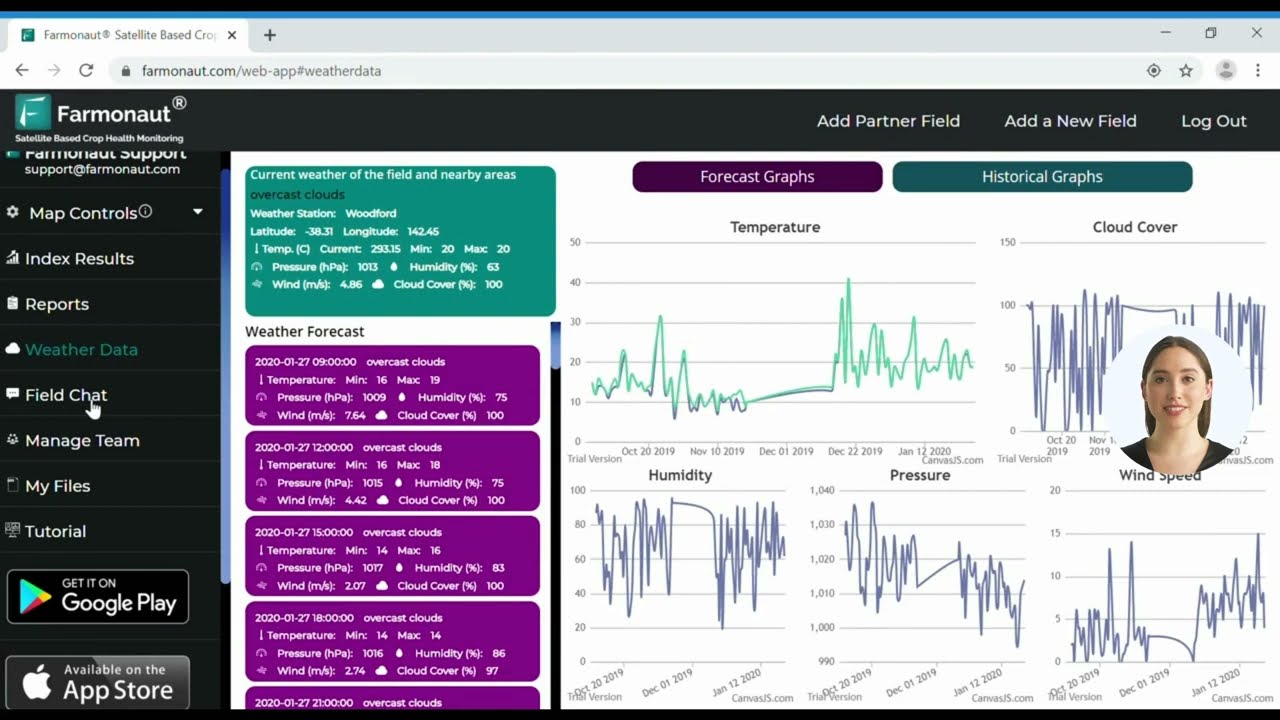
Farmonaut: Enabling Smart Farming with Satellite, AI, and Automation
As an innovator in satellite technology, Farmonaut is making real-time, data-driven agricultural insights affordable and accessible worldwide. Our platform brings the power of AI, blockchain traceability, and advanced monitoring to the hands of farmers, businesses, and governments through a robust suite of apps and APIs.
- Satellite-Based Crop Monitoring: Multispectral images track vegetation health, detect anomalies, and optimize harvest timing. Try our web platform: Farmonaut Large Scale Farm Management
- AI-Powered Advisory: Jeevn AI provides tailored, instant recommendations based on real-time weather, satellite imagery, and crop data.
- Blockchain Traceability: Enhance food security and transparency with Farmonaut Product Traceability—track produce from field to market.
- Fleet & Resource Management: Optimize harvesting equipment and reduce operational costs: Fleet Management Tools
- Environmental Metrics: Track carbon footprint and resource usage for sustainability compliance: Carbon Footprinting Platform.
Our apps are available on Android, iOS, and the web, and for developers seeking to build custom integrations, access is available via API (API Docs). This modular approach means that Farmonaut can help farms scale from smallholdings to massive estates, integrating seamlessly with automated harvesters, drones, and robotics.

The Future Roadmap: 2025 and Beyond in Autonomous Agricultural Robotics
Looking ahead, the evolution of autonomous selective harvesting robot AI soft robotics data-driven agricultural robotics and automation will only accelerate. Here’s what we anticipate for 2025 and beyond:
-
Integration with Other Farm Vehicles:
Expect seamless links between autonomous harvesters, drones, and autonomous tractors—all coordinated by AI for entire farm block automation. -
Modular, Affordable Designs:
Flexible, easy-to-adapt robotics for small and medium farms, aiding widespread adoption worldwide. -
Enhanced Sensor Fusion:
Next-gen sensors will combine vision, chemical, and tactile data to further improve accuracy and reduce undetected disease or ripeness errors. -
Accessibility via Platforms:
Open APIs, like those offered by Farmonaut, will democratize data and automation tools, promoting equitable agricultural advancement for all stakeholders. -
Stronger Farm-to-Fork Traceability:
Blockchain will make every step of a crop’s journey transparent—key to building consumer trust and meeting global regulatory standards.
The fusion of soft materials, deep learning, and advanced machine vision will continue to push the boundaries of what’s possible in agriculture.
Farmonaut embraces this future—empowering every stakeholder in agriculture with affordable, scalable, and innovative tools. To get started with real-time satellite and AI-powered farm management and connect your harvester’s data, explore our platform or integrate with our API.
FAQs: Autonomous Selective Harvesting Robot AI Soft Robotics Data-Driven Tech
1. What is an autonomous selective harvesting robot?
It’s an AI-powered robot, embedded with machine vision and soft robotic grippers, designed to selectively identify and harvest only ripe fruits and vegetables. It combines deep learning algorithms, sensor data, and gentle handling to minimize damage and maximize market-quality produce.
2. How do soft robotics improve crop harvesting?
Soft robotics uses flexible materials (like silicone and polymers) to gently grasp fruits and vegetables, mimicking the human hand and reducing bruising and waste in sensitive crops.
3. How does Farmonaut support the adoption of these technologies?
Farmonaut provides platforms and APIs for satellite-powered real-time monitoring, resource management, AI-based analysis, traceability, and sustainability tracking—tools that enhance the value and decisions possible with autonomous harvesting robots.
4. How do autonomous harvesting solutions impact farm labor?
They significantly reduce labor requirements, allowing farms to operate with fewer skilled workers, reallocate staff to higher-value tasks, and maintain productivity during labor shortages.
5. Are these robots affordable for small farmers?
With the growth of modular robotics and accessible management platforms like Farmonaut, the barriers to adoption are rapidly declining—even small and medium farms can now leverage advanced automation.
6. Can I integrate my robot or management system with Farmonaut?
Yes. Through the Farmonaut API and API documentation, your robots or apps can send and receive satellite-linked insights.
Final Thoughts: Embracing the Future of Precision Agriculture
By 2025, the autonomous selective harvesting robot AI soft robotics data-driven agricultural robotics and automation revolution will reshape global food systems—making precision, sustainability, and profitability accessible at scale. Through gentle, efficient, and intelligent robots, agriculture will be more resilient, reducing waste and resource footprints, while improving yields and livelihoods worldwide.
Farmonaut stands ready—with satellite-driven insights and advanced digital tools—to help every farm embrace this transformative future.

 Godrej Agrovet
 Hayleys Agriculture
 Linx Agritech
 Adinet
 Save Your Soils
 GalaxEye Space
 Grandstream Algérie
 XOS Realty
 Geospatial Lab Africa
 Agro La Gándara
 HIPSAC
 ZOL Zimbabwe
 Juligerm
 AdBio
AdBio MISE Maroc
 NWNS
NWNS Red August Group
 Farm Inc
 WeMe Global
 Agrotoken
 Blue BearX
 Insignito
 DnCubed
 Indosistim Teknologi
 Liquify Digital
 CU Foods
 BeyondTech Global
 Rouge VC
 AgroRisk
 Oath Inc
 Esri North East Africa
 MDCV UK
 Etech Consulting Madagascar
 Vestlandsforsking
 WB Dev
 Sama Premium
 Tres Valles
 Blickwinkel
 Agricultural Credit Policy Council
 eKGIS
eKGIS Mostas Tech
 Andex
Andex Deluxe Conseil
 WICO
WICO Chimera Innovation
 SkyHarvest
 Teledarbas
 Exurbia Geospatial
 FieldZero
