

Chicken Plucking, Feed & Picking Machines for 2026: The Rise of Automated Harvesting and Processing
“Over 70% of modern poultry farms plan to use automated chicken plucking machines by 2026.”
Advancements in Agricultural Harvesting: An Overview
In the rapidly evolving landscape of agriculture, mechanization continues to play a pivotal role in enhancing productivity, reducing labor dependency, and ensuring sustainable farming practices. As we progress into 2025 and look ahead toward 2026 and beyond, the integration of specialized machines like the chicken plucking machine, chicken feed making machine, apple picking machine, tomato picking machine, olive picking machine, and carrot picking machine are revolutionizing not only the techniques but also the economics and sustainability of food production worldwide.
The adoption of these advanced machines is transforming how farmers and agribusinesses meet rising food demands, combat labor shortages, and maintain increasingly stringent quality and sustainability standards across global markets. These innovations are more than just tools; they’re central to modern operations, reducing waste, enhancing efficiency, and supporting economic viability in a competitive, resource-constrained era.

Chicken Plucking Machines in 2026: Revolutionizing Poultry Processing
The Critical Role of Chicken Plucking Machine Innovation
Poultry continues to be a vital source of protein globally, and chicken plucking machines are now at the forefront of transforming poultry farming operations. In markets where export standards and health-conscious consumers drive demand for consistently hygienic, high-quality meat, the transition from manual plucking methods to automated feather removal is both revolutionary and essential.
Modern innovations in chicken plucking machine design now feature:
- Adjustable rubber fingers – These advanced components adapt to different bird sizes and ensure efficient, hygienic feather removal without compromising skin integrity.
- High-speed rotation systems – Facilitate quicker, consistent processing across larger batches, drastically reducing labor dependency and processing time (often improving throughput by 65-80% over manual methods).
- Moisture-efficient settings – Reduce water consumption during plucking, supporting sustainable farming practices and lower operational costs.
- Hygiene-centric design – Easy-to-clean, corrosion-resistant equipment ensures compliance with stringent food safety standards, critical for export markets.
Chicken plucking machines have evolved significantly by incorporating AI and IoT features that support predictive maintenance and real-time performance monitoring, helping farmers enable large-scale operations with minimal organizational hassle. This disruption has made them indispensable to poultry farms striving to efficiently meet rising food demands while maintaining meat quality and regulatory compliance.
These technological advancements enable a significant efficiency boost across the industry:
- Reduced labor dependency and shorter processing time, freeing up vital human resources for higher-value tasks.
- Consistent hygiene and meat standards, critical for both local markets and international export.
- Lower feather waste and water usage, contributing to environmental sustainability.
Are you a poultry farmer seeking to modernize operations or access financial services based on actual farm performance? Explore Crop Loan and Insurance powered by satellite data analysis. This tool enables smarter loan appraisal and insurance claims for agriculture, including poultry farming, by leveraging remote monitoring and verification.

Chicken Feed Making Machine: Nutrition and Efficiency for Future Poultry Farms
From Raw Grains to Optimized Pellets: The Modern Chicken Feed Making Machine
As feed costs constitute up to 70% of poultry farming expenses, the chicken feed making machine has evolved into a cornerstone of economically sustainable poultry operations. In 2026, these machines are highly sophisticated, capable of producing nutritionally optimized pellets tailored for different chicken breeds and growth stages.
Key technological features include:
- Automated ingredient weighing and mixing systems – Ensuring precise, repeatable feed formulation for superior bird health.
- Integrated IoT and AI-based real-time monitoring – Optimizing feed efficiency and minimizing waste through accurate, adaptive formulations.
- Quality control sensors – Continuing the trend toward consistent, export-grade feed quality, with the ability to trace ingredient sources and detect contaminants.
- Custom pellet sizing – Adjustable settings for varying poultry growth stages, breeds, and nutritional requirements.
These innovations not only reduce feed waste and maximize feed-to-meat conversion ratios but also allow modern, sustainable farming operations to stay competitive and responsive to rising food demands. The chicken feed making machine is thus a key driver for improvements in economic viability, bird health, and environmental sustainability.
Interested in tracking your farm’s environmental impact while optimizing inputs? The Carbon Footprinting solution by Farmonaut allows you to monitor and reduce emissions across feed production and farm operations, aligning with global sustainability goals.

Automated Fruit & Vegetable Picking Machines: Meeting Food Demands Efficiently
“Automated fruit picking machines can harvest crops up to 5 times faster than manual labor in 2025 farms.”
Labor shortages remain a persistent challenge, especially for labor-intensive crops like apples, tomatoes, olives, and carrots. The new generation of automated fruit and vegetable picking machines—including the apple picking machine, tomato picking machine, olive picking machine, and carrot picking machine—are transforming harvest operations and the economic sustainability of vegetable and fruit farming worldwide.
Apple Picking Machine: Selectivity and Gentle Harvest
The modern apple picking machine leverages robotics, vision systems, and soft-touch grippers to carefully select and harvest ripe fruit without damage. Adaptive learning algorithms are now standard, distinguishing ripeness based on color, size, and texture. This reduces post-harvest losses and improves supply chain efficiency by ensuring apples meet market standards from orchard to shelf.
Tomato Picking Machine: Preserving Quality and Reducing Waste
Tomato picking machines are engineered for gentle harvesting of delicate tomatoes. By employing AI-driven imaging technology alongside cushioned mechanical arms, these machines reduce bruising and damage, preserving quality from field to market. Integration with mobile harvest platforms makes them adaptable to various field layouts and crop row orientations.
Olive Picking Machine: Maximizing Olive Oil Quality
Oleiculture has moved from dependence on labor-intensive, seasonal work to using advanced olive picking machines, such as trunk-shaking and canopy-shaking harvesters. Combined with ground collection systems and integrated sorting, olive harvesting is now faster, with improved fruit collection rates and less physical damage—crucial for producing premium-quality olive oil.
Carrot Picking Machine: Precision Underground Harvests
With the advent of the carrot picking machine, root crop harvesting relies on precision sensors and adjustable soil-loosening mechanisms for extracting carrots with minimal soil disturbance. Enhanced cleaning systems embedded within the machine further reduce post-harvest washing, saving water and reducing operational overhead.
The integration of AI, robotics, and advanced sensor systems is driving sustainable farming practices and enabling growers to deliver better quality crops while dramatically improving labor and resource efficiency.
Managing thousands of hectares or multiple harvest teams? Farmonaut’s Large Scale Farm Management App is designed for agribusinesses to monitor crop health, plan field activities, and coordinate operations efficiently through satellite technology and real-time analytics.




Comparative Feature-Performance Table: Chicken Plucking, Feed Making & Picking Machines
| Machine Type | Core Function | Estimated Capacity | Automation Level (Manual/Semi/Full) | Estimated Cost (USD) | Efficiency Boost (% vs. Manual) |
|---|---|---|---|---|---|
| Chicken Plucking Machine | Automated feather removal from processed birds | 200–500 birds/hour | Full | $2,500–$10,000 | 65–80% |
| Chicken Feed Making Machine | Nutritionally optimized pellet feed production | 2–8 tons/day | Full | $8,000–$45,000 | 55–70% |
| Apple Picking Machine | Robotic selective fruit picking | 1,200–2,000 fruits/hour | Full | $30,000–$130,000 | 300–400% |
| Tomato Picking Machine | Gentle tomato harvesting & sorting | 3,000–7,000 tomatoes/hour | Full | $25,000–$90,000 | 250–320% |
| Olive Picking Machine | Trunk/canopy shaking fruit drop & collection | 800–1,800 kg/hour | Full | $27,000–$110,000 | 200–350% |
| Carrot Picking Machine | Precision underground root harvesting | 4–10 tons/hour | Full | $20,000–$75,000 | 200–275% |
This table demonstrates how each machine drives transformative improvements in efficiency, automation, and output capacity in 2025-2026 farming. The integration of AI, robotics, and sensor systems ensures these machines reduce labor dependency and boost economic sustainability across agricultural sectors.
How Farmonaut Empowers Modern Agriculture with Automation
As the need for smarter, data-driven farming intensifies, we at Farmonaut provide robust satellite-driven insights, real-time monitoring, and AI-powered advisory systems for farmers, agribusinesses, and governments worldwide. While we do not manufacture or distribute chicken plucking machines, chicken feed making machines, apple picking machines, tomato picking machines, olive picking machines, or carrot picking machines, our platform is designed to enable smarter decisions and maximize returns from such investments in farm automation.
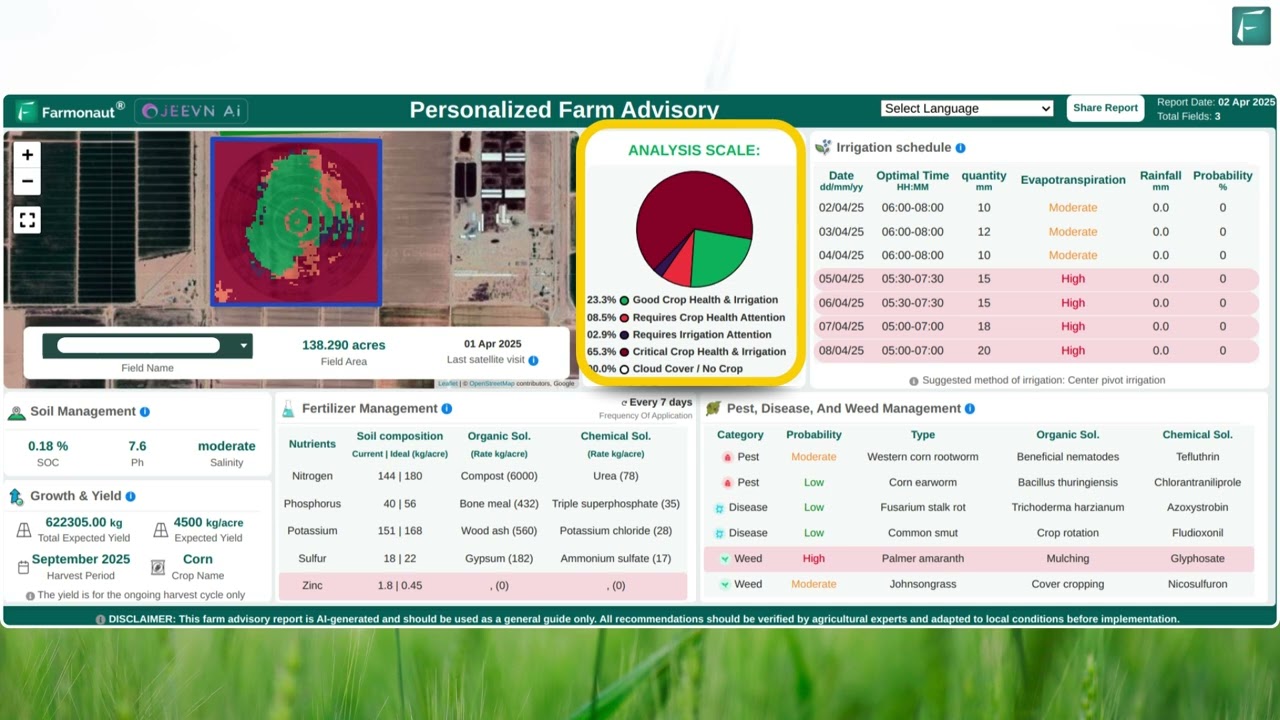
- Satellite-Based Crop & Soil Monitoring: Our unique blend of multispectral imagery and AI allows users to assess vegetation health, moisture levels, and detect anomalies in real time—maximizing efficiency in synchronized harvests and machine deployment.
- AI-Advisory (Jeevn): Real-time insights, weather forecasts, and customized strategies—all powered by machine learning—help increase productivity and sustainability across agricultural operations.
- Resource & Fleet Management: Manage your machines (Fleet Management) for harvesting and processing more efficiently by leveraging satellite-tracked movement, predictive maintenance, and optimized resource allocation.
- Product Traceability: Our traceability solutions on a blockchain backbone ensure safe, authentic, and transparent sourcing for all products, including those produced with advanced harvesting machines.
- API Access & Custom Integrations: Need to embed satellite data, weather analytics, or resource tracking into your own farm management software? Get started with our API: Farmonaut Satellite API. Developers are welcome to consult our API Documentation for seamless integration and platform extension.


Future Trends: AI, Robotics & Next-Gen Mechanization for 2026 and Beyond
The future of agriculture lies at the intersection of advanced hardware and intelligent software. Looking toward 2026 and beyond, we anticipate:
- Increased Use of AI and Robotics: Picking, harvesting, and processing machines will continue to benefit from machine learning and AI, adapting to crop variability and real-time environmental cues.
- Deeper Integration with Satellite & IoT Data: Harvest schedules, machine deployment, and resource allocation will become increasingly data-driven, minimizing downtime and maximizing yield quality.
- Real-Time Blockchain Traceability: Every step from fruit plucking to final packaging will be traceable, ensuring food authenticity and supply chain security.
- Custom Automation Units for Crop Specificity: As crops and farming practices diversify, picking and feed machines will become even more specialized, with quick-swap modular designs to suit various farm operations.
- Environmental and Resource Monitoring: Tools like Farmonaut’s carbon footprinting, resource and fleet management, and real-time environment tracking will be essential to meet regulatory requirements and sustainability targets.

FAQ – Chicken Plucking, Feed & Picking Machines for 2026
Q: What is the main benefit of using a chicken plucking machine?
Chicken plucking machines offer a dramatic increase in speed and hygiene over manual methods, reducing labor needs and enabling consistent, export-grade processing standards—essential for scaling poultry operations in 2026.
Q: How do chicken feed making machines improve poultry sustainability?
Advanced chicken feed making machines integrate AI and IoT for real-time feed formulation and quality monitoring, maximizing feed-to-meat conversion, minimizing waste, and supporting healthier, more sustainable poultry flocks.
Q: Are automated picking machines only suitable for large farms?
While early harvesting machines targeted large agribusinesses, modern modular designs enable scalability—even medium and smallholders can adopt picking machines for apples, tomatoes, olives, and carrots as costs decrease and financing tools mature.
Q: What crops can benefit most from automated fruit and vegetable picking machines?
The apple picking machine, tomato picking machine, olive picking machine, and carrot picking machine are tailored for their respective crops, but innovations are emerging for other crops to further reduce labor shortages and maximize harvest efficiency and quality.
Q: How does Farmonaut help farmers using advanced mechanization?
We at Farmonaut provide satellite, AI-powered insights supporting all stages of mechanized harvesting and farming. From real-time health monitoring to weather forecasting and blockchained product traceability, our tools enhance the ROI of any investment in agricultural automation.
Conclusion: Embracing Mechanization for a Sustainable, Profitable Future
The leap in chicken plucking machines, chicken feed making machines, apple picking machines, tomato picking machines, olive picking machines, and carrot picking machines marks a new era in agricultural mechanization. These innovations are revolutionizing how farmers worldwide meet food demands, reduce labor shortages, and uphold quality standards. By integrating these tools with smart data management, as enabled by platforms like Farmonaut, the global farming community is empowered to enhance productivity, ensure sustainability, and remain economically viable in the face of rising food needs.
Businesses, farmers, and governments must invest in a comprehensive approach—merging cutting-edge machinery with data-driven decision-making platforms—to future-proof agricultural operations worldwide as we transition into 2026 and beyond.
Experience the next generation of farming decision support with Farmonaut Apps — available on web, Android, and iOS. Transform your farm insight, sustainability, and operational efficiency today.

 Bharat Krushi Seva
 Geno
Geno Hayleys Agriculture
 Linx Agritech
 Adinet
 Save Your Soils
 Grandstream Algérie
 XOS Realty
 Geospatial Lab Africa
 Agro La Gándara
 HIPSAC
 ZOL Zimbabwe
 Juligerm
 AdBio
AdBio MISE Maroc
 NWNS
NWNS
