

Climate Smart Agriculture: 7 Smart Agro Innovations 2026
Meta Description: Advancing climate smart agriculture through integrated water management, smart agro technologies, and precision irrigation for sustainable, resilient, and productive farms in 2026 and beyond.
Climate smart agriculture integrates smart agro technologies, grow tent climate control, and advanced agriculture water sprinkler systems to optimize resource management and combat climate change by 2026.
Foundations of Climate Smart Agriculture in 2026: Optimizing Water, Crops, and Resilience
Climate smart agriculture (CSA) marks a holistic approach that the sector is rapidly embracing to enhance productivity while safeguarding natural resources in the face of unpredictable climate change. As farming practices are increasingly challenged by extreme weather events, rising water scarcity, and growing food demand, innovative technologies drive the adoption of more sustainable and resilient systems.
At its foundation, CSA combines conservation agriculture, resource optimization, integration of efficient irrigation, and smart tools to increase productivity sustainably, reduce greenhouse gas emissions, and build farm resilience.
- ✔ Water optimization is central; particularly in arid and semi-arid regions where scarcity is acute.
- 📊 Precision irrigation accounts for up to 50% water input reduction over traditional methods.
- ⚠ CSA methods must adapt to rapidly shifting climate variability.
- ✔ Integration of digital sensors and data analytics enhances crop management.
- 🔄 Departments of agriculture worldwide are increasingly funding smart irrigation and resilient cropping systems.
Pair agriculture water pump upgrades with smart agro data platforms to further reduce water consumption and optimize field-level irrigation scheduling in 2026.
Smart Agro & Water Management: The Core of Agricultural Resilience in 2026
Driven by IoT, automation, and data analytics, smart agro solutions reshape how crops are grown, managed, and harvested. These innovations ensure that each drop of water is strategically used, reducing waste while boosting productivity and climate resilience.
- Smart water pumps: Equipped with solar power and low energy consumption features—ideal for off-grid rural areas.
- Agriculture water sprinklers: Automate and precisely deliver water based on soil moisture & weather data.
- Remote control & monitoring: Use of mobile apps and sensors for real-time oversight and quick responses to climatic conditions.
- Advanced analytics enable yield boosts and resource conservation, even on small-scale farms.

Try Farmonaut’s Real-time Smart Agro Monitoring App!
How Satellites and AI Revolutionize Water Management in Farming | Precision Agriculture with NDWI
By 2026, integrated smart agro irrigation technology is projected to reduce water waste by up to 40% and increase yields—especially crucial for climate-vulnerable regions.
7 Smart Agro Innovations Reshaping 2026 Agriculture
1. AI-Powered Precision Irrigation Systems
- 💧 AI-driven analytics analyze data from soil moisture sensors, weather stations, and satellite images to create real-time, adaptive irrigation schedules.
- 🔗 Connectivity through mobile apps enables farmers to monitor and control watering remotely.
- ⚡ Power-efficient, often solar-powered pumps, ideal for rural regions.
- ➗ Estimated water savings: up to 40% compared to traditional flood irrigation.
Visual List: Benefits of AI-Powered Precision Irrigation
- ✔ Reduces irrigation costs: Less labor, energy, and water wasted.
- ✔ Prevents crop stress: Sensors adjust water delivery to avoid drought or overwatering.
- ✔ Boosts yield potential: Healthier, consistently nourished crops.
Malawi Irrigation Tech 2025 | 3 Solar-Pump Secrets That Triple Yields in Mzimba!
2. Advanced Agriculture Water Pumps & Automated Sprinklers
- 🚜 Smart pumps automatically adjust flow and pressure based on field requirements and weather conditions.
- 💡 Smart agriculture water sprinkler systems ensure precise application, minimizing evaporation losses.
- 🌍 Suitable for arid and semi-arid regions facing acute water scarcity.
- 📱 Mobile integration allows instant system adjustment and monitoring via app.
Many farmers overlook regular system calibration. Always synchronize sprinklers and pumps with current field data for maximum efficiency.

France Water Crisis 2025 💧 7 Smart Fixes—Satellite Leak Alerts & AI Irrigation Saving Farms
3. Grow Tent Climate Control & Controlled Environment Farming
- 🌱 Grow tent climate control offers precise temperature, humidity, and CO2 regulation.
- 🏙️ Enables urban agriculture and ensures year-round crop production, independent of external weather.
- ⚗️ Reduces water usage by minimizing evaporation and disease risk via environmental control.
- 📡 Smart sensors and IoT deliver real-time feedback and rapid response to climatic variability.
Visual List: Key Uses of Grow Tent Climate Control
- 🌿 Urban and rooftop farming in water-stressed cities
- 🌾 Propagation of improved crop varieties with strict environmental needs
- 🍅 Extension of harvest windows and crop cycles
Regenerative Agriculture 2025 🌱 Carbon Farming, Soil Health & Climate-Smart Solutions | Farmonaut
Innovations in grow tent climate control are rapidly expanding market segments for both commercial and localized urban farming ventures. Tech-forward solutions command premium investment valuations through 2026.
4. Satellite-Based Farm Monitoring and Advisory
- 🛰️ Satellite imagery and NDVI/NDWI indices provide macro and micro-level field data.
- 🗺️ Detects soil moisture deficiencies, crop stress, and irrigation leaks with unmatched accuracy.
- 🤖 Enables AI-driven farm advisory for targeted feeding, disease management, and water application.
- 🔄 Facilitates sustainable inputs and helps meet regulatory compliance for resource use and emissions.
Explore Farmonaut’s Large Scale Farm Management Platform. This advanced web and mobile solution integrates satellite data for multi-field monitoring, field health diagnostics, and informed irrigation decisions. Scalable for enterprises, it elevates operational efficiency and disaster preparedness.
The Vital Connection: How Soil & Water Shape Agricultural Success | Farmonaut’s AgTech Revolution
Satellite and remote-sensing-powered irrigation solutions can detect underground leaks and prevent 30% annual water loss on large-scale farms worldwide.
5. Blockchain-Based Product Traceability & Carbon Footprinting
- 🔗 Blockchain ensures supply chain transparency for agricultural, food, and commodity exports.
- 🌬️ Carbon footprinting tools quantify emissions from water use, tillage, and crop practices—facilitating compliance with global climate standards.
- 🎯 Protects brand reputation and enhances market access for sustainably grown products.
See Farmonaut’s Carbon Footprinting Tool. This platform leverages satellite, AI, and verified data to help farms and agribusinesses monitor, report, and minimize their environmental impact—key to future-proofing operations and sustainability branding.
Learn about Farmonaut’s Blockchain Traceability Solution. It offers end-to-end transparency for produce, builds consumer trust, and assists in regulatory reporting.
Peru $24B Irrigation Boom 2025 🌊 22 Megaprojects & AI Precision Farming Turbo-Charge Exports
6. Fleet and Resource Management Technology
- 🚚 Smart fleet management tools monitor agricultural vehicles, pumps, irrigation units, and harvesters in real time.
- 💹 Optimization algorithms reduce downtime, minimize fuel use, and ensure the right assets are allocated efficiently—a crucial step for both water application and crop harvest.
- 🛡️ Reduces carbon footprint and boosts profits by improving input efficiency across the agriculture value chain.
Discover Farmonaut’s Fleet Management Platform. Power up logistics, improve safety, track input machines, and control costs with satellite-driven fleet oversight.
7. Smart Agro AI & Advisory Decision Systems
- 🧠 Use of AI-powered advisory tools like Farmonaut’s Jeevn AI delivers actionable recommendations from a blended analysis of satellite images, weather forecasts, soil & crop data.
- 📲 Integrated via app and API for ease of use on the go, ensuring timely interventions.
- 📈 Improves yield outcomes, mitigates risk from weather extremes, and aligns with regulatory compliance.
Access Farmonaut’s Satellite & Weather API for integrating cutting-edge agro-advisory into your own systems.
API Developer Docs: Learn more here!
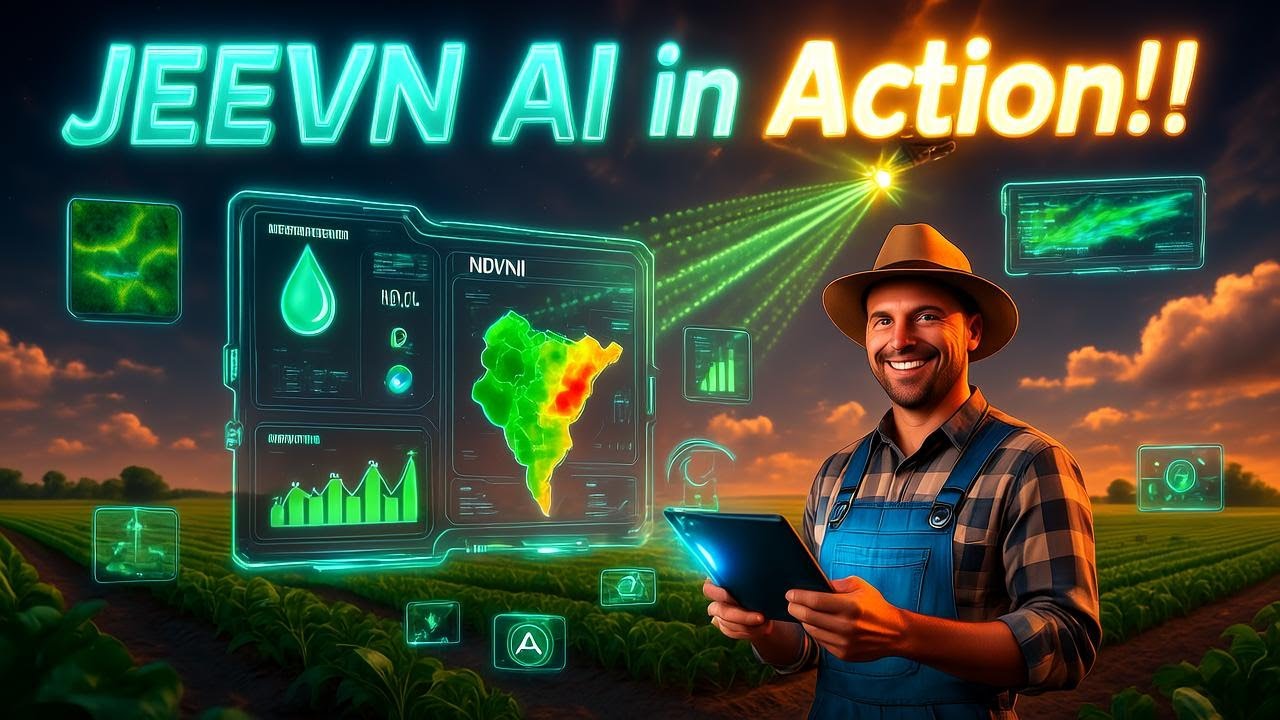
JEEVN AI: Smart Farming with Satellite & AI Insights
Farm-level data platforms that integrate smart irrigation, resource management, grow tent climate control, and traceability become increasingly vital as climate and market volatility escalate.
Comparison Table of Key Agro Innovations for Climate Smart Agriculture
| Innovation Name | Technology Description | Estimated Water Savings (%) | Estimated Productivity Increase (%) | Year of Major Adoption (Estimated) | Climate Resilience Impact |
|---|---|---|---|---|---|
| AI-Powered Precision Irrigation | Adaptive, sensor-based irrigation managed by AI analytics, integrating weather, soil, and crop data. | 35–40% | 18–22% | 2025–2026 | Reduces drought stress, adapts to climate variability, and cuts input waste. |
| Automated Water Pumps & Sprinkler Systems | Intelligent devices controlling water flow and coverage based on real-time field needs, often solar-powered. | 30–50% | 15–20% | 2024–2025 | Ensures precise water delivery; reduces risks of flood or drought loss. |
| Grow Tent Climate Control | Sealed, smart-controlled environments for crop cultivation with managed humidity, temperature, and CO2. | 20–25% | 10–15% | 2025–2027 | Extends growing seasons, minimizes pest/disease risk, suits urban farming. |
| Satellite-Based Monitoring & AI Advisory | Satellite images combined with AI analysis for real-time field and irrigation management, crop zoning. | 20–40% | 22–28% | 2023–2026 | Early risk detection, efficient resource use, area-wide scalability. |
| Blockchain Traceability & Carbon Footprinting | Secures product chains and monitors environmental impact throughout agri-processes. | 10–15% | 8–14% | 2025–2027 | Meets climate policy targets, builds supply chain trust. |
| Fleet & Resource Management Platforms | Satellite/A.I. oversight on all agricultural fleets, irrigation units, trucks, and field machinery. | 12–18% | 10–16% | 2025–2026 | Cuts resource use, CO2 output, maximizes time/machine utility. |
| AI-Powered Smart Agro Advisory | Feedback-loop decision-making tools guiding irrigation, fertilization, and pest actions via data analytics. | 15–22% | 12–19% | 2026 | Responsive strategies, input efficiency, stress resilience. |
- ✔ Focus on Integrated Water Management: Combining precision irrigation and automated field systems for sustainable output.
- 📊 Digital Transformation: Satellite, AI, and IoT platforms drive actionable, timely interventions for farmers globally.
- ⚠ Challenges: Upfront investment, access disparity, and technical training barriers remain significant for widespread adoption.
- ⏩ Policy & Departmental Support: Agricultural departments fund, regulate, and incentivize rapid technology transition in rural, climate-vulnerable regions.
- 💡 Sustainability Meets Profitability: Climate smart technologies maximize yields, minimize waste, and build resilient food systems for 2026 and beyond.
Farmonaut: Advancing Climate Smart Agriculture via Satellite
At Farmonaut, we empower climate smart agriculture with affordable, data-driven, and accessible solutions for farmers, businesses, and governments. Leveraging a blend of satellite imagery, AI, blockchain, and machine learning, we provide:
- ✔ Real-time crop, soil, and water monitoring via Android, iOS, and browser apps
- 📲 Jeevn AI Advisory: Actionable insights, weather forecasts, and operational strategies tailored to local field conditions
- 🔗 Blockchain Traceability: Transparent produce tracking, fraud prevention, and trust-building in agricultural trade
- 🔍 Environmental Impact Monitoring: Track carbon, water, and emissions for farms and supply chains via our carbon footprinting solution
- 💼 Resource Management: Fleet and asset oversight, logistics, and cost control modules (see details)


API integration with Farmonaut’s satellite and weather intelligence transforms farm, mining, and infrastructure systems for 2026 — see details at Farmonaut API.
Smart Farming Future : Precision Tech & AI: Boosting Harvests, Enhancing Sustainability
Farmonaut Subscription Plans: Choose a Plan Tailored for Your Operation
The Role of Departments of Agriculture & Policy Makers in Advancing CSA
In 2026, dept agriculture initiatives are more vital than ever, prioritizing:
- ✔ Incentives and subsidies for agriculture water sprinkler and pump upgrades
- 📊 Farmer training to advance technical literacy and adoption of precision tools
- ⚠ Technical support and warranty schemes for rural, remote climate-vulnerable regions
- ⏩ Pilot programs for integrating grow tent climate control and controlled environment systems in urban/peri-urban food belts
- 💡 Mandates for traceability, carbon reporting, and resilience standards for agri-business, see traceability solutions here
Smart Farming Future : Precision Tech & AI: Boosting Harvests, Enhancing Sustainability
Departmental focus on integrated CSA systems is closing water security gaps, supporting food security, and enabling robust, climate-resilient rural livelihoods.
Challenges, Risks & the Road Ahead for Climate Smart Agriculture
Top Risks & How to Avoid Them
- ⚠ Initial Investment: High costs for sensors, automation, and satellite access can stall adoption in remote or impoverished rural areas. Solution: Adopt low-cost mobile platforms and benefit from government/NGO support programs.
- ⚠ Technical Complexity: Limited digital literacy or lack of trusted advisory services can be a barrier. Solution: Secure extension support and user-friendly mobile apps.
- ⚠ Interoperability: Mixing legacy systems with smart agro tech requires robust integration and training.
- ⚠ Climate Extremes: Even the best CSA practices require adaptation for unusual weather patterns, such as prolonged drought or heatwaves.
- ⚠ Data Security and Privacy: Ensure that data-driven technologies comply with privacy protocols and transparent terms.
Digital agriculture and smart irrigation tech are projected to be among the fastest-growing agritech investment sectors through 2026, driven by climate mandates and market incentives.
How Integrated Solutions Will Lead the Way
- ✔ Integration of climate, crop, and water data platforms (like Farmonaut) enables seamless management across the farming cycle.
- ✔ Blockchain & carbon reporting essential for compliance, exports, and consumer trust in 2026.
- ✔ AI/ML and remote sensing continue to reduce input cost and optimize field-level interventions.
- ✔ Collaboration between tech companies, agriculture departments, and financial providers ensures solutions are accessible and sustainable.
- ✔ Financial tools: Insurance, farm loans, and credit increasingly tied to proven sustainability and smart agro adoption levels (see Farmonaut’s crop loan & insurance validation).
FAQ: Your Climate Smart Agriculture Questions Answered
What is climate smart agriculture and why is it important in 2026?
Climate smart agriculture (CSA) is a holistic approach to sustainable farming that synergizes precision technology, resource optimization, and climate resilience. In 2026, CSA’s importance is driven by unpredictable weather patterns, rising water scarcity, and high food demand—necessitating smarter, more resilient systems.
How can smart pumps and agriculture water sprinklers reduce water use?
Smart pumps and sprinklers utilize sensors, weather data, and automation to deliver the right amount of water when and where it’s needed. This approach drastically reduces wastage, secures more yield per litre, and adapts quickly to changing climatic conditions.
Why is grow tent climate control becoming popular for farmers?
Grow tent climate control allows for the cultivation of high-value crops all year round, regardless of external weather, using precise control over microclimate factors. It minimizes water loss, enables multiple harvests, and extends growing seasons—key advantages as climate events intensify.
How do satellite technology and Farmonaut add value to climate smart agriculture?
Farmonaut provides real-time crop, soil, and water analysis using multispectral satellite imagery. With additional AI-powered advisory and monitoring, users quickly detect stress, optimize inputs, and track sustainability indicators at farm and landscape scales.
What are the biggest challenges for CSA adoption in 2026?
Main challenges are upfront investment, technical complexity, and access in remote regions. Policy incentives, extension support, mobile solutions, and affordable subscription models (such as Farmonaut’s) can help overcome these gaps.
Conclusion: Building Resilient Farms Through Climate Smart Innovation
As climate change continues to challenge traditional practices, the agricultural sector is rapidly evolving—embracing climate smart agriculture, smart agro tools, and integrated irrigation technologies that optimize water use and boost productivity. 2026 marks a transformative era: satellite monitoring, AI-driven advisory systems, and grow tent climate control are reshaping how crops are grown, managed, and harvested.
Integration with blockchain traceability and carbon footprinting aligns agricultural systems with sustainability mandates and emerging market standards. The role of departments of agriculture—via funding, extension, and regulation—further accelerates adoption.
- ✔ Smart pumps, automated sprinklers, and digital management drastically reduce water use—protecting natural resources and fortifying rural livelihoods.
- ✔ Integrated CSA platforms provide actionable insights, empowering farmers to make data-driven, profitable, and sustainable decisions.
- ✔ Embracing innovation is no longer optional—it’s the foundation for food security, resilience, and climate adaptation for this generation and the next.
For more on satellite-driven agrotech, visit Farmonaut’s Application Portal, or start with a demo on Android or iOS above.
Climate Smart Agriculture is the vital bridge between technological innovation, productive farming, and natural resource conservation—setting the stage for a resilient food future by 2026.

 BeyondTech Global
 Consulthink Global
 Rouge VC
 Yutz Automation
 AgroGreen Dynamics
 AgroRisk
 Oath Inc
 Reddane Farming
 Esri North East Africa
 Cresol
 Atur Kuliner
 MDCV UK
 Zerella Group
 Etech Consulting Madagascar
 Vestlandsforsking
 Delicio
 WB Dev
 Sama Premium
 Prochecker
 Tres Valles
 LACOS Geoinformation
 Magrifly
 LatConnect 60
