

Contour Planting: Technique to Prevent Soil Erosion & Build Sustainable Agriculture
Introduction: The Crisis of Soil Erosion in Modern Agriculture
Soil erosion is a major concern in modern agriculture and environmental management, especially as climate change leads to more intense and frequent rainfall events. When soil is washed away, it not only depletes vital topsoil—the most fertile layer, crucial for crop growth—but also contributes to sedimentation in waterways, negatively impacting aquatic ecosystems and water quality. In response to these challenges, sustainable agricultural practices that strengthen soil health and limit erosion become essential for the years 2026 and beyond.
“__________ is a planting technique that helps prevent soil erosion. a. contour planting b. parallel planting c. hydro planting d. a windbreak please select the best answer from the choices provided a b c d.” The correct answer, therefore, is: a. contour planting.
In this guide, we will explore how contour planting and rotational grazing present practical, nature-aligned solutions for soil conservation and regenerative farming. We’ll discover how these methods—supported by satellite-based technology such as that from Farmonaut—help farmers and land managers achieve long-term soil integrity, productivity, and sustainability in the face of environmental pressures.
Trivia: Fast Facts on Erosion Control and Soil Health
- ✔ Contour planting slows down water runoff, allowing more moisture to infiltrate the soil.
- 📊 Contour farming can reduce soil loss by up to 50% compared to traditional, straight-line planting methods on slopes.
- ✔ Rotational grazing not only prevents overgrazing but also increases biodiversity within pastures.
- ⚠ Common mistake: Planting straight up-and-down on slopes accelerates erosion, leading to severe problems in sloped terrains.
- ✔ Integrating satellite monitoring with sustainable practices gives farmers better control over soil and pasture health.
What is Contour Planting? Focus Technique to Prevent Soil Erosion
__________ is a planting technique that helps prevent soil erosion. a. contour planting b. parallel planting c. hydro planting d. a windbreak.
Contour planting (the correct answer to the question above) is an agricultural technique that helps prevent soil erosion by plowing, sowing, and cultivating crops along the natural contour lines—the lines of equal elevation—of the land, rather than in straight lines up and down slopes. This practice is especially effective on hilly or sloped terrains where water runoff can otherwise create deep rills, gulleys, and strip away the precious topsoil.
By following the land’s contours, the technique dramatically slows the velocity of water runoff during intense rainfall events. This allows more water to infiltrate the soil, enhances moisture retention, and reduces the risk of erosion. The barriers formed help retain soil fertility and support sustainable crop growth.
- 🌱 Key practice: Plowing, sowing, and cultivating along the contour lines rather than up and down the slope.
- 💧 Benefit: Reduces the speed of rainwater, preventing it from washing away soil and nutrients.
- 🪴 Result: Improves moisture levels, enhances crop yield, and maintains land productivity.
Common Terms in Contour Planting
- Contour Lines: Imaginary lines joining points of equal elevation on a slope
- Runoff: Water that flows over the soil surface during and after rainfall
- Terraces: Human-made or natural ridges along contours that act as small barriers to slow water flow
- Soil Retention: The soil’s ability to resist being washed away
Key Insight
Contour planting is most effective in sloped farmland, hilly, or undulating terrains where rainfall-induced erosion is a major concern. The practice has been shown to have a significant positive impact on soil health, water retention, and sustainable agricultural productivity.
How Contour Planting Prevents Soil Erosion
Soil erosion leads to the loss of the most fertile, topsoil layer—which directly impacts crop growth and overall environmental quality. When rainwater flows quickly down slopes, it gathers force and carries soil particles away, a process that is especially severe in up-and-down row planting systems.
Contour planting addresses this by creating natural obstacles along the elevation lines:
- 🧱 Ridges & Terraces: As farmers till along the contours, they form ridges or small terraces, which act as barriers that slow down water flow.
- 💧 Reduced Water Velocity: Slower water means less energy to carry away soil particles. More water also infiltrates the soil and replenishes ground moisture.
- 🌱 Better Root Anchorage: Reduced runoff means crops have more stable ground and improved access to nutrients and moisture.
Stepwise process of contour planting:
- Survey the land: Farmers first mark contour lines—the imaginary lines connecting points at equal elevation.
- Till and cultivate along contours: Using machinery or manual implements, tillage is done along the marked lines, forming small ridges and trenches that follow the slope horizontally.
- Plant the crops: Seeds are sown and cultivated along these same lines, enhancing soil retention and crop uniformity.
- Maintain and monitor: Regular checks ensure that buffer strips, ridges, and terraces are intact and working effectively.
Pro Tip
Why Is Contour Planting Essential for Modern, Sustainable Farming?
- 🔎 Modern challenge: Increased frequency of intense rainfall events due to climate change
- ⚡ Soil health risk: Washed away soil leads to depleted topsoil and lower fertility
- 🛡 Ecosystem protection: Reduces sediment in waterways, preventing negative aquatic and environmental impacts
- 🌍 Climate benefit: Healthy, intact soils enhance carbon sequestration—a key goal for sustainable agriculture

Rotational Grazing: Protecting Pasture and Soil Health
While contour planting mitigates soil erosion from row crops, overgrazing by livestock poses another major challenge to soil quality—especially on pastoral lands. When cattle overconsume vegetation in a particular area, they expose soil, making it especially vulnerable to erosion and degradation.
To combat these issues, experts recommend rotational grazing. The question, “a farmer using __________ helps ensure an area is not overgrazed by moving cattle from pasture to pasture,” is correctly answered as: rotational grazing.
How rotational grazing works:
- Divide grazing land into smaller paddocks, using fencing or natural barriers
- Move livestock (cattle, sheep, goats) through each paddock on a planned schedule—never letting one area be overgrazed
- Allow grazed pastures to rest and regrow before livestock return
- Monitor vegetation recovery regularly and adjust the rotation as needed
- 🚜 Strategic movement: Distributes grazing pressure and gives vegetation time to recover
- 🌱 Biodiversity boost: Pastures host a more diverse mix of plant species, which improves ground cover and ecosystem resilience
- 🌤 Soil improvement: Organic matter increases, enhancing soil structure and water retention
Common Mistake
Investor Note

Impact of Contour Planting and Rotational Grazing on Soil Health and Erosion Control
| Technique | Estimated Soil Erosion Reduction (%) | Organic Matter Increase (%) | Water Retention Improvement (%) | Biodiversity Support | Sustainability Rating (1-5) |
|---|---|---|---|---|---|
| Contour Planting | 45-50% | 10-12% | 15-25% | Medium to High | 5 |
| Rotational Grazing | 30-40% | 12-15% | 20-30% | High | 5 |
| Traditional Planting / Grazing | 5-20% | 0-4% | 0-8% | Low | 2 |
Soil Health Data Insight
Top Benefits of Contour Planting & Rotational Grazing (Visual List)
- ✔ Erosion Control: Reduces the pace at which soil is washed away from fields and pastures.
- 📊 Improved Water Retention: Boosts infiltration and reduces water loss in both cropping and grazing systems.
- 🌱 Higher Soil Fertility: Maintains rich topsoil—improving environmental quality and crop yield.
- 🪲 Biodiversity Increase: Diverse plant and root systems support ecosystem function and stability.
- ♻️ Sustainability: Aligns with climate action goals for resilient farming in 2026 and beyond.

Step-by-Step Guide: How to Start Contour Planting (Visual Process)
- Land Survey & Site Assessment: Map out the topography, measure the slope’s angle, and determine natural contour lines using GPS, laser tools, or even satellite data.
- Marking Contour Lines: Use peg lines, stakes, or chalk to mark the points of equal elevation across the field or hillside, following the natural undulations.
- Tilling & Field Preparation: Use machinery or manual implements to create shallow furrows and ridges that run horizontally (not vertically) along the slopes, forming the basis of contour planting.
- Sowing & Planting: Plant seeds and cultivate crops along the established contour lines for uniform erosion protection.
- Monitor & Maintain: Regularly check your terraces (ridges) and crop lines for breakage, maintenance, and address any weaknesses in erosion control.
- ⚠ Planting straight up-and-down on slopes: Increases soil erosion risks
- ⚠ Using heavy equipment without regard for contours: Can flatten terraces and undo erosion controls
- ⚠ Ignoring regular maintenance: Allows water to breach the ridges, rendering the system ineffective
Call to Action
Integrating Contour Planting with Modern Technologies
The success of sustainable agriculture depends on continuous monitoring, adaptive management, and data-driven decisions. Modern agricultural systems now integrate technologies—like satellite imagery, AI-based analytics, traceability, and precision farming—to amplify the effectiveness of solutions such as contour planting and rotational grazing.
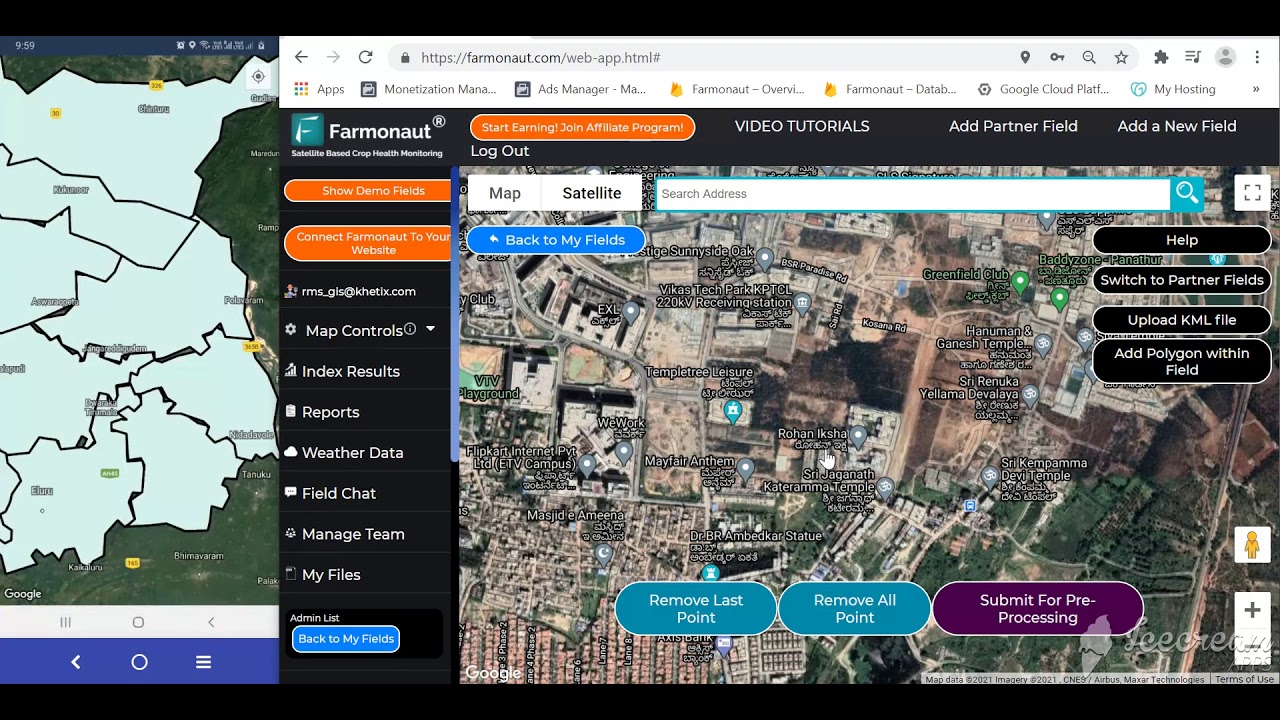
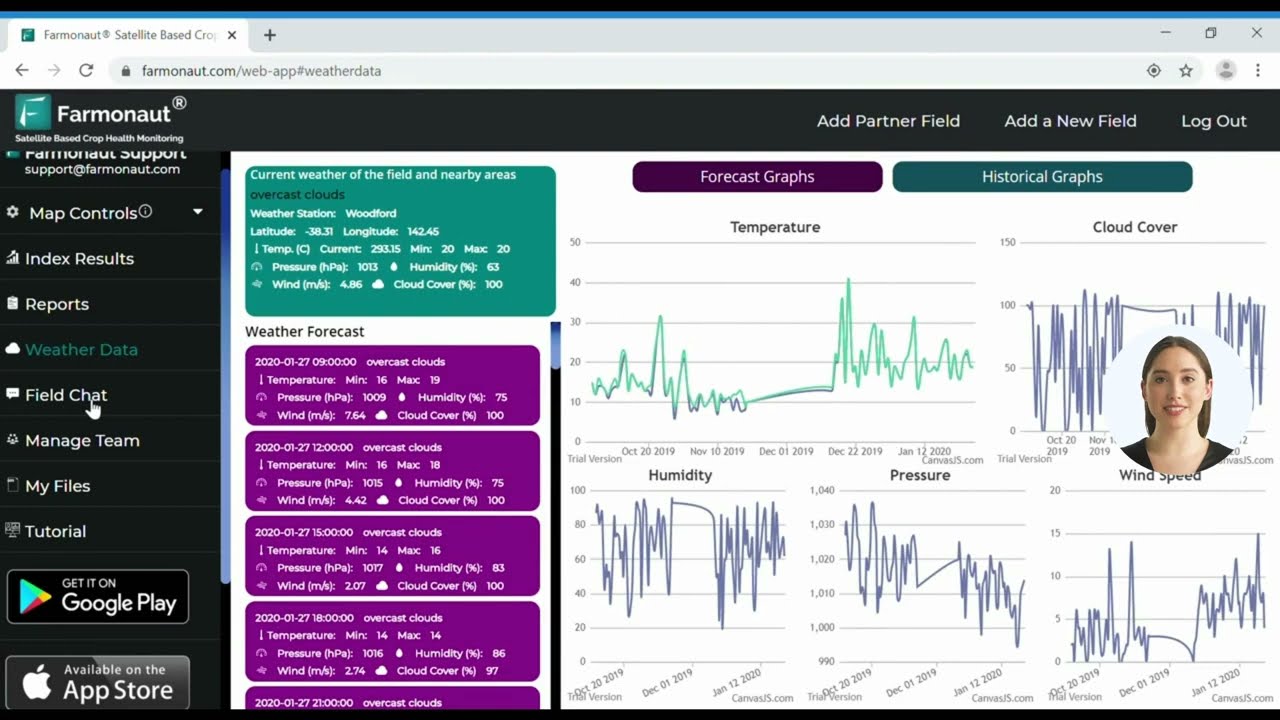
- 🛰 Satellite Monitoring: Provides field-wide, up-to-date data on vegetation health, soil moisture trends, and contour line integrity—delivered for all farm sizes.
- 📱 Mobile & Web Apps: Enable farmers to track/gather field data, receive alerts on erosion risk zones, and adjust practices in real time (e.g. using Farmonaut’s app suite).
- 🔗 Blockchain Traceability: Ensures transparency, supports sustainability claims, and maintains quality throughout the supply chain. See Farmonaut traceability solution.
- 💸 Satellite-Based Verification for Loans & Insurance: Supports farmer access to credit while reducing fraud and risk. Explore crop loan and insurance verification.
- 🌍 Carbon Analytics: Quantifies improvements in soil health and resilience—helping farmers tap into cleaner, climate-smart markets. See carbon footprinting solutions.
Tech Stack Highlight




How Farmonaut Empowers Sustainable Land Management
At Farmonaut, we are committed to helping farmers, land managers, businesses, and governments maximize the benefits of contour planting, rotational grazing, and allied sustainable agricultural practices. Our platform provides:
- 📡 Real-time satellite crop and soil monitoring for optimal field-level insights
- 🧠 AI-based advisory systems (Jeevn AI) for custom recommendations and climate-smart management
- 🔗 Blockchain-based traceability to maintain product authenticity and supply chain transparency
- 🛰 Fleet management tools for operational efficiency (Fleet Management Solution)
- 🍃 Environmental impact monitoring including carbon footprint assessment
We believe democratizing high-resolution data and affordable analytics is crucial for scaling up regenerative and sustainable agricultural systems worldwide. Our flexible app suite and developer APIs make our technology accessible to everyone—from individual farmers to government agencies.

Videos: See Soil Erosion Solutions & Smart Analytics in Action
FAQ: Contour Planting, Soil Erosion & Rotational Grazing
Q1: What is contour planting and which farming areas benefit most?
Answer: Contour planting is an agricultural planting technique that helps prevent soil erosion by following the natural elevation contours of sloped or hilly land. It is especially beneficial on uneven terrains prone to water runoff and erosion.
Q2: What is the main difference between contour planting and traditional planting?
Answer: Traditional planting creates straight rows up and down a slope, increasing the risk of soil loss, whereas contour planting aligns rows along elevation lines, slowing runoff and retaining soil.
Q3: Why is soil erosion such a major concern for modern agriculture?
Answer: Soil erosion depletes fertile topsoil, reduces crop yields, clogs waterways with sediment, and degrades environmental and aquatic system health. It is aggravated by intense rainfall and improper land management.
Q4: How does rotational grazing specifically help with soil conservation?
Answer: Rotational grazing prevents overgrazing by systematically moving livestock, ensuring vegetation recovers and soils remain covered and protected against wind and rain erosion.
Q5: How can satellite technology and digital tools like Farmonaut further support soil health?
Answer: Satellite solutions provide field-scale monitoring, early warning of erosion or overgrazing, and actionable insights to optimize sustainable practices, helping prevent soil degradation and ensure long-term productivity.
Summary Highlight
Correct answer: a. contour planting
Complementarily, when it comes to livestock management: “A farmer using __________ helps ensure an area is not overgrazed by moving cattle from pasture to pasture.” The best answer: rotational grazing.
Conclusion & Get Started
As global agriculture enters 2026 facing climate-driven extremes, loss of fertile topsoil, and pressures on ecosystems, it’s vital to embrace proven methods like contour planting and rotational grazing. These techniques are not only answers to textbook questions—they are the real-world backbone of resilient, sustainable agricultural systems.
- ✔ Contour planting addresses soil erosion by matching farming practice to natural landforms, reducing water speed, and allowing more water to infiltrate for healthy crops.
- ✔ Rotational grazing ensures no pasture area is overgrazed, keeping ground cover strong and boosting organic matter for fertile soils.
- ✔ Supported by precision technologies and real-time data (Farmonaut), these practices deliver quantifiable environmental and economic benefits for the future of food production.
Let’s cultivate soil, water, and pasture health—together, for yields that last generations.

 Esri North East Africa
 Farmer Amigo
 Cresol
 Atur Kuliner
 MDCV UK
 Zerella Group
 Etech Consulting Madagascar
 Vestlandsforsking
 Agritein
 Delicio
 WB Dev
 Sama Premium
 Prochecker
 Tres Valles
 LACOS Geoinformation
 Magrifly
 LatConnect 60
 Blickwinkel
 Agricultural Credit Policy Council
