

- The Role of Technology and Tools in Modern Corn Farming and Agriculture in 2025
- Trivia: Precision & Resource Management in Corn Farming
- Corn Farming Technology: Top 7 Agriculture Tools (2025)
- Feature Comparison Table of Leading Corn Farming Technologies 2025
- Broader Agricultural Technologies in 2025
- Essential Farming Tools in Modern Agriculture
- The Technology of Farming: Towards Smart and Sustainable Agriculture
- Agriculture Technology Tools: The Future Outlook
- Farmonaut: Making Precision Agriculture and Farm Management Accessible
- FAQs: Corn Farming Technology & Tools in 2025
- Conclusion
Corn Farming Technology: Top 7 Agriculture Tools (2025)
The Role of Technology and Tools in Modern Corn Farming and Agriculture in 2025
Agriculture is continually evolving, driven by technological innovations that enhance productivity, sustainability, and efficiency. In 2025, farming—particularly corn cultivation—embraces an array of sophisticated technologies and tools designed to meet global food demands while minimizing environmental impacts. What technology and tools are used in the farming of corn? This comprehensive guide explores the cutting-edge technology and essential farming tools used in corn production and modern agriculture, highlighting how agriculture synergizes tradition with innovation to improve yield and resource management.
“Over 80% of corn farms in 2025 use precision agriculture tools for optimized planting and resource management.”
Corn Farming Technology: Top 7 Agriculture Tools (2025)
What technology is used in agriculture in 2025? In the realm of modern corn farming, the integration of digital and mechanical tools is essential for increasing productivity, ensuring sustainability, and maximizing resource use. Here, we examine the seven most impactful technologies and agriculture technology tools revolutionizing the sector.
-
Precision Agriculture and GPS Technology
The backbone of modern corn farming lies in precision agriculture—the use of GPS-enabled tractors and machinery for pinpoint planting, fertilizer, and pesticide application. Satellite mapping and Geographic Information Systems (GIS) empower farmers to analyze soil variability, crop health, and resource needs across a single field down to the meter.
- Benefits: Maximizes land use by optimizing seed placement—both spacing and depth—enhancing yield uniformity and reducing input waste.
- Environmental Impact: Minimizes fertilizer and pesticide runoff, protecting local waterways.
- Adoption & Cost: In 2025, over 80% of commercial cornfields globally have adopted GPS-guided equipment.

-
Drones and Remote Sensing
Drones equipped with multispectral and thermal cameras conduct real-time monitoring of cornfields. They collect data on crop health, soil moisture, pest/disease outbreaks, and nutrient deficiencies. This information allows targeted action, reducing blanket pesticide application and optimizing resource use.
- Benefits: Early detection and localized treatment improve crop quality while conserving inputs.
- Environmental Impact: Reduces chemical usage, mitigating harmful impact on biodiversity.

-
Soil Sensors and IoT Devices
Integrated sensors and IoT (Internet of Things) devices collect vital data from the soil—including moisture, temperature, pH, and more. They relay information to cloud-based platforms and AI-driven systems, enabling smart irrigation schedules, resource optimization, and prompt management of emerging issues.
- Benefits: Enables water conservation by reducing over-irrigation and targeting fertilizer application.
- Farmonaut Integration: Using satellite-driven soil health and moisture monitoring, our platform enables farms to make timely, cost-effective, and sustainable resource decisions.
- Adoption & Cost: By 2025, over 70% of advanced corn farms utilize IoT-based sensors for real-time data analytics.

Explore Farmonaut’s Carbon Footprinting Tool – Essential for monitoring and reducing your environmental impact with real-time emission tracking in 2025.
-
Autonomous Machinery and Robotics
From self-driving tractors equipped with AI and machine learning algorithms to autonomous planters and combine harvesters, robotics now perform repetitive, labor-intensive tasks across the cultivation life cycle.
- Benefits: Ensures precise, timely operations—planting, seeding, fertilizing, harvesting—with minimum human intervention and reduced errors.
- AI Integration: AI-driven platforms utilize analytics and weather data to adjust operation schedules for optimal yield.
- Cost & Efficiency: Though initial investment is high, long-term gains in efficiency and lower labor costs drive widespread adoption.

Check Farmonaut’s Fleet Management solution – Optimize your machinery and vehicle usage for better logistics and operational efficiency.
-
Seed Technology and Biotechnology Advances
Hybrid seeds and biotechnology have improved resilience in corn crops—with drought tolerance, pest resistance, and climate adaptability now engineered at the genetic level. Seed coating with beneficial microbials or protective compounds enhances early plant vigor and germination.
- Benefits: Increased yields, reduced input dependency, and the ability to cultivate corn in more marginal environments.
- Environmental Impact: Supports sustainable practices by minimizing chemical requirements and supporting organic production systems.
Understand Traceability in Hybrid Seed Distribution – Farmonaut’s blockchain-based solutions safeguard the integrity and journey of your agricultural products.
-
Smart Irrigation Systems
Smart irrigation solutions—from soil moisture-based automatic drip systems to sensor-equipped center-pivot irrigation—integrate weather forecasts, soil conditions, and satellite data to provide precise water schedules per growth stage.
- Benefits: Reduce water use, lower costs, and prevent moisture stress in high-demand crops like corn.
- Environmental Impact: Significant contribution to sustainability by limiting groundwater overdraw.

-
Satellite Imaging and Analytics Platforms
Satellite imaging platforms enable remote sensing of crops, large-scale monitoring of vegetation indices (like NDVI), water stress, soil conditions, and early pest/disease outbreaks. When combined with advanced analytics and AI, these tools enable farmers to make better choices regarding input use, harvesting time, and climate adaptation.
- Benefits: Scalable, actionable insights for smallholders and large corn farms alike; supports long-term farm management and regulatory compliance.
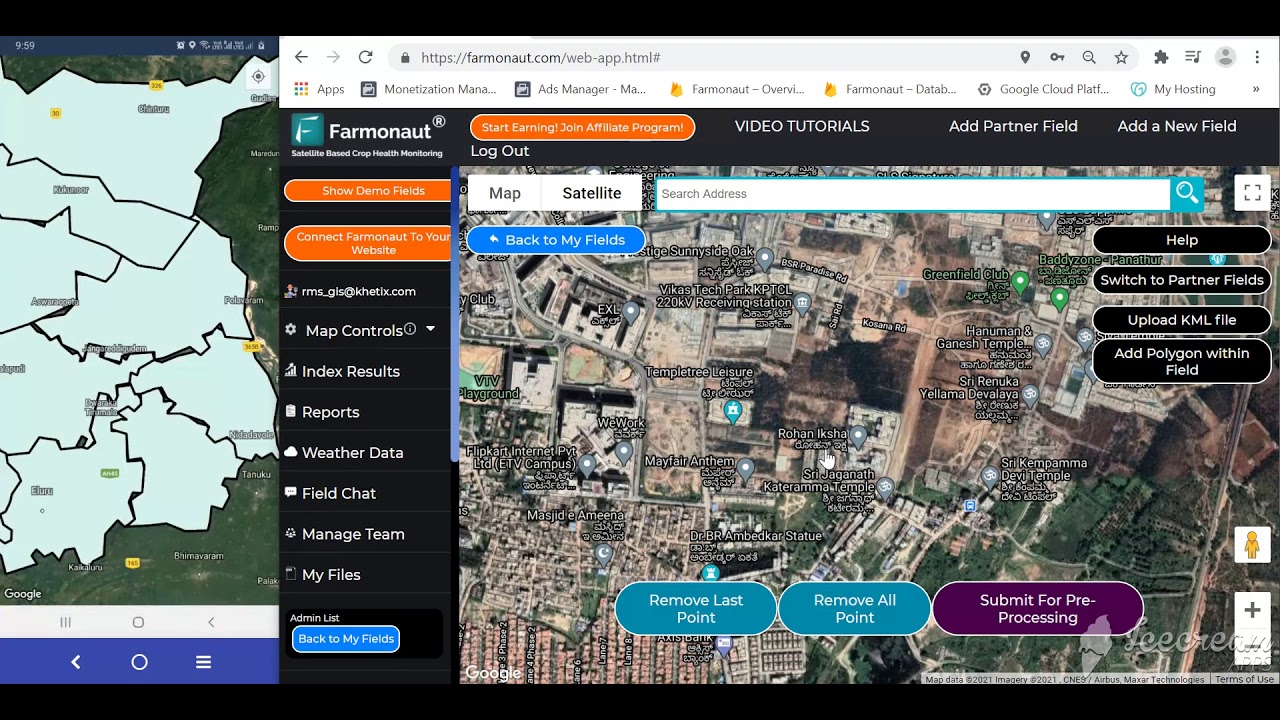
- Farmonaut’s Value: As a leader in making satellite crop health accessible, we provide real-time data and AI-powered recommendations through web, mobile, and API—no specialist hardware required.
See Farmonaut’s Large Scale Farm Management Platform – For satellite-enabled field mapping, crop area monitoring, and strategic decision support.
“Smart irrigation systems reduce water usage in corn farming by up to 30% through real-time soil monitoring in 2025.”
Feature Comparison Table of Leading Corn Farming Technologies 2025
| Technology/Tool Name | Main Function | Estimated Adoption Rate (% of Corn Farms, 2025) | Estimated Cost Range (USD) | Key Benefits | Sustainability Impact |
|---|---|---|---|---|---|
| Precision Seeders & Planters (GPS-guided) | Automated, accurate seeding with customizable spacing & depth | 82% | $18,000–$120,000 | Boosted yield, input savings, labor reduction | Reduces seed and fertilizer waste; optimizes land use |
| IoT Soil Sensors | Real-time monitoring of moisture, nutrient, and pH levels | 71% | $900–$8,500 (field scale) | Enables smart irrigation and targeted fertilization | Prevents over-application, conserves water, reduces runoff |
| Autonomous Drones (Multispectral) | Aerial crop health & pest monitoring | 67% | $2,500–$30,000 | Swift detection, localized action, chemical reduction | Reduces chemical use, supports biodiversity |
| Smart Irrigation Systems (Drip/Pivot) | Automated water delivery based on sensor and weather data | 54% | $4,000–$75,000 | Cuts water costs, boosts plant health | Reduces water consumption, prevents soil depletion |
| Satellite Imaging & Analytics Platforms | Remote monitoring of crop status and resource allocation | 69% | $2–$15/ha/month | Large-scale monitoring, input savings | Targets interventions, reduces waste |
| Genetically Enhanced Seeds (Biotechnology) | Drought-, pest-, and disease-resistant crop varieties | 88% | $210–$360/ha (per season) | Reliable yields, adaptable to climate shifts | Lowers need for chemical inputs; supports resilience |
| Autonomous Tractors & Harvesters | Self-guided field operations, harvesting with analytics | 62% | $115,000–$580,000 | Speeds up harvests, reduces labor demand | Reduces fuel usage, improves timing, lowers resource waste |
Broader Agricultural Technologies in 2025
While corn farming stands at the innovation frontier, many agricultural technology tools impact a diverse array of crops and markets well beyond field maize. Understanding these advances and integrations helps us visualize the future of sustainable agricultural systems globally.
- Artificial Intelligence (AI) in Farm Management
AI combines satellite data, weather forecasts, and IoT sensor inputs to optimize planting schedules, pest management, and harvesting. Advanced platforms ingest vast amounts of data for real-time recommendations—minimizing risk and boosting yield.

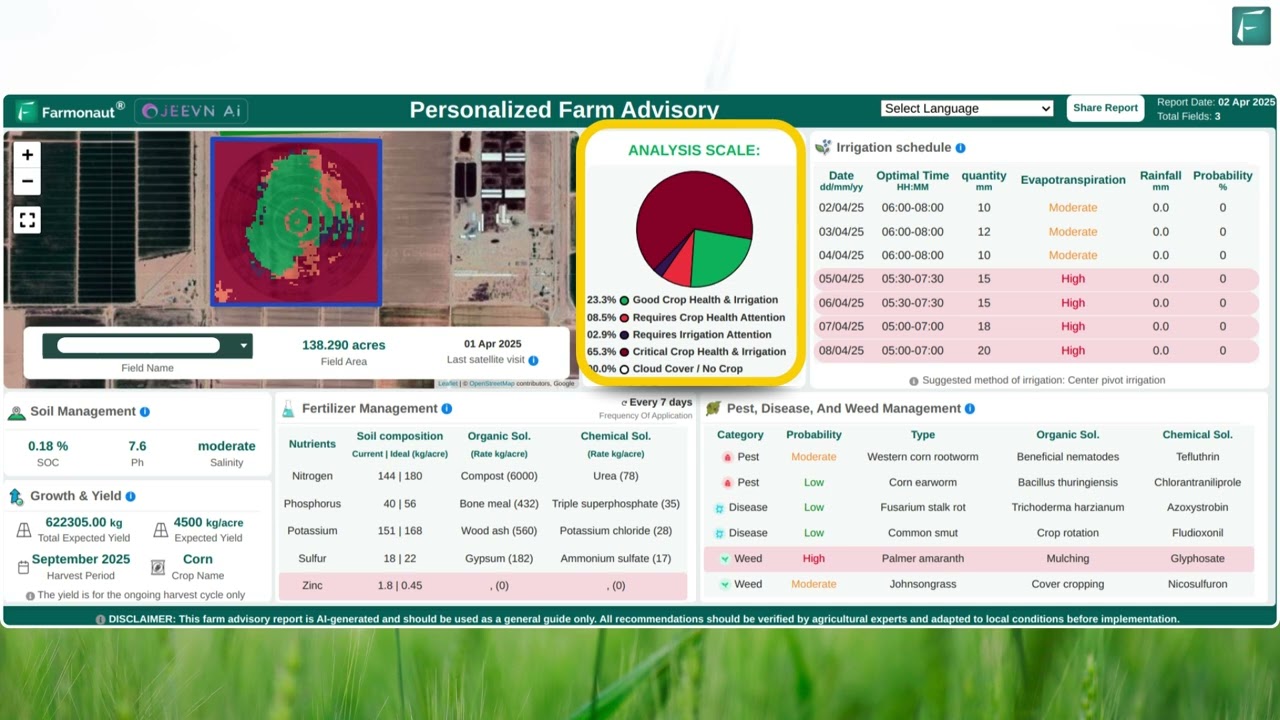
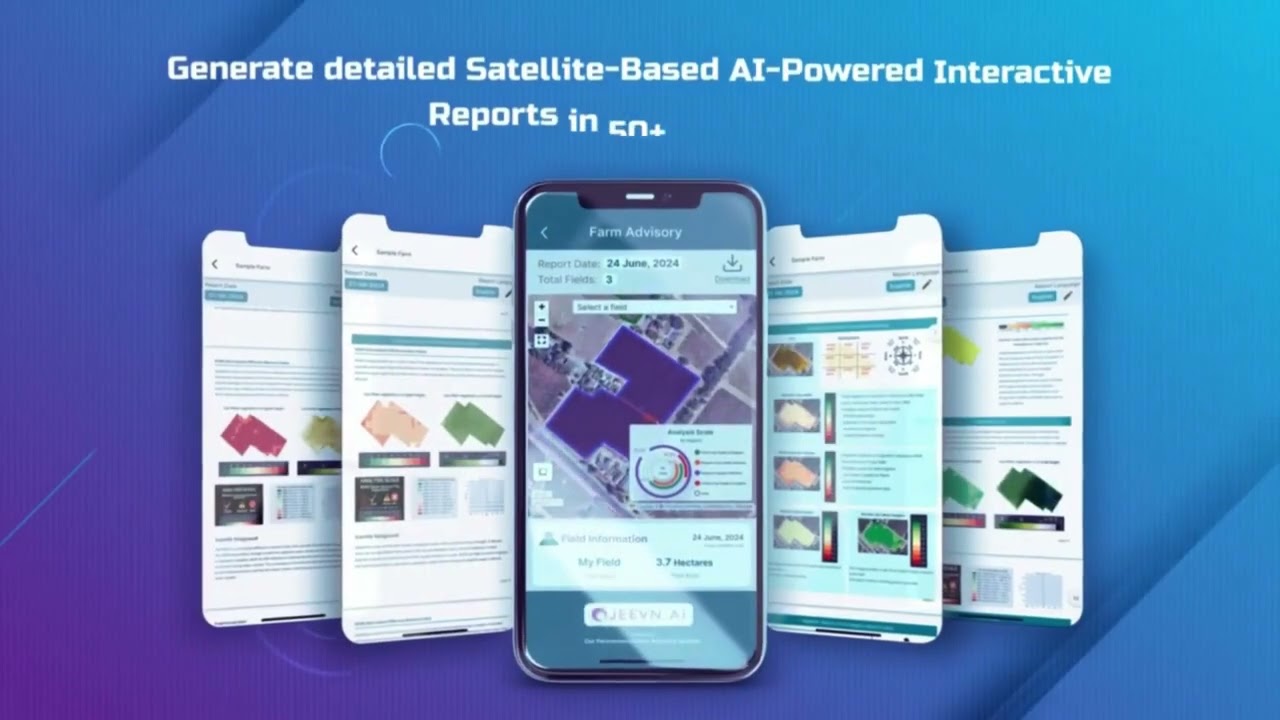
Try Farmonaut’s Jeevn AI Advisory System via the App – Access personalized, AI-powered crop management on your device.
- Vertical Farming and Controlled Environment Agriculture (CEA)
Vertical and controlled-environment agriculture (CEA) maximize output per square meter using hydroponics, LED lighting, and automated climate systems. While primarily for smaller or specialty crops, these technologies demonstrate the potential of smart, resource-efficient cultivation—elements influencing open-field corn farming too.
- Blockchain for Supply Chain Transparency
Blockchain brings end-to-end traceability for agricultural products, ensuring authenticity and fair trade. By integrating this technology, farmers can access premium markets and meet strict organic or sustainability standards.
See how blockchain-based traceability strengthens supply chains
- Renewable Energy Integration
The integration of renewable energy—such as solar pumps for irrigation, wind turbines, and on-site biomass—enables farms to further reduce operational costs and carbon footprints, supporting sustainability.
Essential Farming Tools in Modern Agriculture (2025)
With all the new technology, what are the farming tools that remain essential? Below, we cover the staples of corn farming in 2025, each now commonly integrated with smart devices, AI, and cloud connectivity for advanced capabilities.
-
Tractors and Implements
Tractors are the backbone of cultivation. Modern implements, often equipped with GPS and automation, handle everything from plowing to spraying and harvesting. Efficiency and precision in seeding, fertilizing, and crop care directly translate into higher yields and lower costs.
-
Precision Planters / Seeders
Ensure optimal plant spacing and depth, adjusting automatically for soil variability. By leveraging data from soil maps and remote sensing, these planters can maximize seedling survival and early vigor.
-
Smart Irrigation Tools
Drip and center-pivot irrigation systems adapt water delivery to in-field moisture readings and forecasted precipitation. Many farms integrate soil sensors or connect systems via platforms like Farmonaut for automatic scheduling and monitoring.
-
Combine Harvesters & Advanced Threshers
Modern combine harvesters utilize sensors and analytics modules for real-time yield and quality reports. This allows farmers to adjust settings mid-harvest, minimizing losses while maximizing grain quality.
-
Sprayers & Crop Protection Equipment
Sprayers, both handheld and vehicle-mounted, are now fitted with variable-rate and site-specific application technology, reducing chemical use and environmental footprint. Farmonaut’s Resource Management offerings help guide sustainable application practices.
The Technology of Farming: Towards Smart and Sustainable Agriculture
As what technology and tools are used in the farming of corn? becomes an ever-more pressing question, the goal is to transition toward smart, connected, and efficient systems where environmental footprint and productivity improvements go hand in hand.
-
Data-Driven Decision Making
Cloud-connected platforms (like Farmonaut) aggregate vast data—from monitoring soil, weather, irrigation, and planting—to deliver AI-powered recommendations to farmers. Real-time crop health tracking enables farmers to make informed, precise, and timely decisions.
Download Farmonaut’s App to access satellite-powered diagnostics and advisory on Android and iOS.


-
Sustainable Farming Practices
Tech-enabled no-till and reduced-tillage agriculture help to protect soil health; cover cropping and rotational strategies promote biodiversity. Automated application systems reduce the use of chemical fertilizers and pesticides, mitigating both input costs and environmental impact.
Find out how carbon footprinting tools help you track and reduce your carbon emissions. -
Climate-Smart Agriculture
By harnessing remote sensing data, satellite imagery, and weather forecasts, farmers can adapt planting schedules, select varieties suited to anticipated conditions, and adjust irrigation for resilience against drought or flood risk.
Learn about AI-driven crop and plantation advisory tools to build climate resilience on your farm. -
Robotics and Automation
Field robots and automated machines handle everything from seeding and weeding to crop sampling, easing labor shortages and improving operational efficiency. The future brings even tighter integration between field robots, analytics, and decision support platforms.
Agriculture Technology Tools: The Future Outlook
Looking ahead to the rest of the decade, several technological advancements will further influence what technology and tools are used in the farming of corn and broader agriculture:
- Enhanced AI & Machine Learning: Smarter, self-learning algorithms will improve yield forecasting, pest prediction, and real-time market analytics.
- Genomic Editing: Next-generation CRISPR approaches will power new, climate-resilient corn seeds with enhanced nutrient profiles.
- Big Data & Satellite Integration: Large-scale data platforms enrich decision-making with hyper-local weather, soil, and crop intelligence—and power early warning systems for pest outbreaks or climate extremes.
- Sustainable Inputs: The future includes more biofertilizers, biopesticides, and organic practices to minimize environmental impact and promote soil health long term.
-
Blockchain for Financing & Traceability: Instant, satellite-verified crop status unlocks new financing and insurance models; transparent supply chains reward sustainable, responsible production.
Learn how Farmonaut’s API enables lenders and insurers to verify farm operations efficiently and securely.
Farmonaut: Making Precision Agriculture and Farm Management Accessible
At Farmonaut, we believe in harnessing the full potential of satellite data, AI-powered analytics, blockchain, and automation to democratize access to precision agriculture solutions globally. Our multifaceted mission: to make advanced technology both affordable and impactful for farmers of every size—from individual growers to vast agribusinesses and institutions.
- Satellite-Based Crop Health Monitoring: Our cloud platform delivers vegetation/NDVI, soil moisture, and risk mapping in real time. Farmers receive actionable insights on irrigation, fertilizer, or pest management—reducing waste while maximizing yields.
- Jeevn AI Advisory System: Personalized, AI-driven crop management recommendations with live weather, satellite, and historical farm data.
-
Blockchain-Based Traceability: Supply chain transparency with immutable records—ensuring products are sustainable and authentic, giving access to premium markets and consumer trust.
Explore our Product Traceability platform. -
Fleet & Resource Management: Professional managers and agribusinesses benefit from tools that streamline vehicle and machinery operations, reduce costs, and improve management.
Fleet Management Details Here. - Carbon Footprinting: In our carbon footprint module, agribusinesses and farmers alike monitor, verify, and reduce their environmental impact in line with global regulations and best practices.
Access Farmonaut’s Platform for Web, API, iOS, and Android: Our services are available wherever you need them—on browser, mobile app, and through developer API:
Farmonaut API
(API Documentation).
FAQs: Corn Farming Technology & Tools in 2025
What technology and tools are used in the farming of corn in 2025?
In 2025, corn farming heavily utilizes GPS-guided tractors and planters, autonomous machinery, smart irrigation systems, multispectral drones, soil and climate sensors (IoT), advanced analytics platforms, genetically enhanced seeds, and blockchain-enabled traceability. These collectively enhance yield, sustainability, and resource efficiency.
How do smart irrigation systems work in corn farming?
Smart irrigation systems combine soil moisture sensors, weather forecasts, and cloud-based algorithms to deliver precise water amounts exactly when needed. This saves water—often up to 30%—and prevents both under- and over-irrigation for corn.
Is satellite monitoring affordable and useful for smallholder corn farmers?
Yes, platforms like Farmonaut offer satellite-based crop health and soil moisture monitoring at affordable rates. These systems help smallholders optimize fertilizer and pesticide application, improving yields and lowering costs without expensive equipment. Explore the app here.
How does AI benefit corn farming?
AI enables predictive analytics by integrating weather, soil, and remote sensing data for personalized crop recommendations, early disease/pest alerts, and resource allocation planning. It boosts both sustainability and profitability through smarter management.
What are the main benefits of using blockchain in agriculture?
Blockchain ensures secure, tamper-proof traceability of farm products, supporting food safety, authentic organic labeling, and transparent supply chains from farm to consumer. This transparency can unlock premium market access and safer, more sustainable trade practices.
What is the expected future of robotics in agricultural systems?
Field robotics will become further integrated: autonomous vehicles, precision weeders, and robotic harvesters all will perform more tasks with greater precision, adaptive learning, and reduced need for manual labor. The next decade will see mixed fleets of smart machines and human operators.
Conclusion: From High-Tech Fields to Global Food Security
In 2025 and beyond, corn farming exemplifies how traditional practices and advanced agricultural technology tools synergize for better efficiency, productivity, and sustainability. Tomorrow’s farms are informed by data, driven by innovation, and guided by smart management. The continuous evolution of precision agriculture, IoT, drones, autonomous systems, AI, and blockchain ensures that farmers can produce more food with fewer resources and a lighter environmental footprint.
For growers, agribusinesses, and governments, the question is not whether to use these technologies, but how to integrate them for maximum benefit. As climate impacts intensify and markets demand transparency, embracing smart tools and sustainable practices is vital for feeding a growing, global population.
We at Farmonaut are dedicated to making these advances accessible—so every farmer can thrive, every field can yield its best, and future generations can count on abundant, sustainable food supplies.

 ZOL Zimbabwe
 Innomick
 Juligerm
 AdBio
AdBio MISE Maroc
 Drift-Sense
 NWNS
NWNS Red August Group
 Farm Inc
 WeMe Global
 Agrotoken
 Blue BearX
 Insignito
 Croptimum
 DnCubed
 Field Capacity
 Indosistim Teknologi
 Liquify Digital
