

Latest Trends in Smart Agriculture 2025: Revolutionizing Farming with AI, IoT, and Drones
Table of Contents
- Introduction: The Transformative Smart Agriculture Landscape of 2025
- Industry Trivia: Smart Agriculture by the Numbers
- AI-Driven Precision Farming: The Heart of Smart Agriculture 2025
- IoT Sensors and Real-Time Monitoring: A New Era of Data-Driven Decisions
- Advanced Smart Irrigation Systems: Sustainable Water Management
- Drone Technology in Crop Surveillance & Management
- Data Integration Platforms & Decision Support Systems
- Blockchain Traceability & Transparency in Smart Agriculture
- Technology Trends Comparison Table: AI, IoT, Drones
- Farmonaut: Enabling the Future of Smart Agriculture
- FAQs: Latest Trends in Smart Agriculture 2025
- Conclusion: Future Directions of Smart Agriculture
Introduction: The Transformative Smart Agriculture Landscape of 2025
As global food demand intensifies amid climate change and resource constraints, the agricultural sector is embracing rapidly evolving technology to address pressing sustainability and productivity challenges. The latest trends in smart agriculture 2025 revolve around the integration of Artificial Intelligence (AI), Internet of Things (IoT), and drone technology—a suite of solutions driving data-driven decisions, efficiency, and responsible resource usage. These innovations are revolutionizing every stage of farming, from soil preparation to harvesting, and are reshaping what it means to be a farmer in the modern era.
But what are the latest trends in smart agriculture that are truly redefining modern farming? How do AI agriculture trends 2025 intersect with IoT sensors, drone surveillance, and even blockchain traceability? This comprehensive article explores how these forces combine to optimize crop management, irrigation, sustainability, and food security on a global scale.

AI-Driven Precision Farming: The Heart of Smart Agriculture 2025
The heart of smart agriculture in 2025 undeniably lies in AI-driven decision-making systems. The transformation goes beyond mere automation—AI now enables real-time analysis of vast agricultural datasets, optimizes input applications, predicts yield potentials, and transforms farm operations. As per the ai agriculture trends 2025 and recent studies, AI-powered systems—ranging from predictive analytics to machine learning models—are indispensable in today’s farming landscape.
How AI is Shaping Smart Agriculture
- Data Analysis: AI analyzes satellite imagery, sensor data, and weather patterns to deliver predictive insights on crop health, pest outbreaks, and yield forecasts.
- Precision Treatments: Machine learning models process soil quality, moisture levels, nutrient contents, and historical yield data, recommending literally tailored treatments for every crop field.
- AI Robotics: Autonomous tractors and harvesters equipped with AI navigate fields with centimeter-level precision, adjusting seeding, spraying, and harvesting in real-time based on live sensor inputs.
- Resource Optimization: AI supports efficient usage and minimizes waste of water, fertilizers, and pesticides, supporting sustainable agriculture.
Benefits of AI in Agriculture 2025 Trends
- Maximize productivity—Higher, more stable yields, and minimized risk.
- Reduce costs and labor—Automation of replanting, irrigation, weeding, and harvesting.
- Eco-friendly practices—Targeted treatments, reducing fertilizer and pesticide runoff.
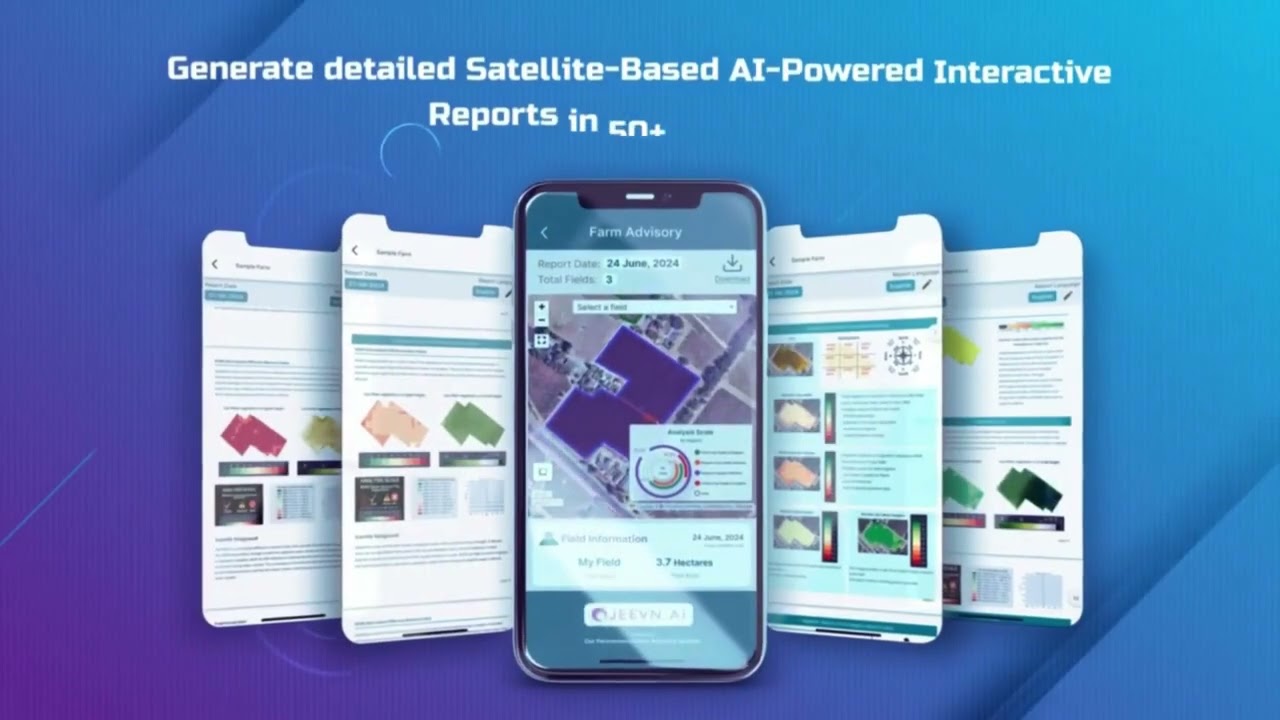
AI’s integration in agriculture extends even further, powering advisory systems, resource allocation, and environmental impact analyses. Agricultural innovations such as the Jeevn AI Advisory System from Farmonaut, for instance, utilize satellite imagery to provide real-time weather forecasts and tailored strategies for crop, mining, and fleet management.

Autonomous Machines in Large-Scale Operations
- Autonomous tractors, harvesters, and planters equipped with AI optimize field navigation and precise resource application, reducing labor costs and enhancing operational efficiency.
- These systems use a suite of embedded sensors—from LiDAR to soil nutrient detectors—to adapt to changing field conditions.
- AI-powered robotics are particularly crucial in large-scale agriculture where manual intervention is cost-prohibitive.

IoT Sensors and Real-Time Monitoring: A New Era of Data-Driven Decisions
Among the latest trends in smart agriculture 2025, the proliferation of IoT sensor networks is perhaps the most defining. By 2025, it’s estimated that over 30 million agricultural sensors will be actively deployed globally, providing granular, real-time monitoring of crop, soil, and environmental parameters.
What Do Modern IoT Devices Monitor?
- Soil moisture, pH, and nutrient content
- Field temperature, humidity, and light levels
- Air quality, leaf wetness, and disease risk factors
- Water flow and usage in irrigation networks
- Crop growth stages and health indices
With wireless connectivity improvements like LPWAN (LoRaWAN and NB-IoT), IoT devices can now continuously relay data across large farm areas, even in remote, rural locations. This connectivity is crucial for ensuring sustainability within agricultural operations—as farmers have direct, actionable insights and can make data-driven decisions on fertilization, irrigation, and crop protection.
- Centralized Platforms: Advanced IoT solutions feed sensor data into centralized cloud platforms, generating comprehensive reports, patterns, and forecasts. This new integration bridges the data-to-decision gap in smart agriculture.
- Reduced Waste: By knowing the exact moisture levels and nutrient needs, farmers save on water and inputs—supporting sustainability and profitability.

Applications of IoT in Modern Agriculture
- Soil Health Mapping: Seasonal and real-time soil quality monitoring, supporting custom fertilization plans.
- Automated Irrigation: Schedules watering only when needed, based on true field moisture—maximizing water use efficiency.
- Pest and Disease Early Warning: Disease risk factors and pest pressure can be detected from microclimate and plant health data.
- Livestock Monitoring: Wearable sensors track animal health, movement, and environmental comfort.
The range and depth of insights provided by IoT sensor networks are foundational to every smart agriculture platform for 2025 and beyond.
Advanced Smart Irrigation Systems: Sustainable Water Management
Water scarcity is an ever-growing concern for global agriculture. In 2025, advanced irrigation systems that use AI and IoT to deliver precise, sustainable water management solutions top the list of critical agricultural innovations.
How Do Smart Irrigation Systems Work?
- IoT soil moisture sensors gauge precise water content and distribution at different soil levels.
- AI algorithms analyze this data alongside real-time and forecasted weather inputs.
- The system triggers irrigation only where and when it is needed, eliminating run-off and water waste.
These solutions integrate with solar-powered pumps and valves, enabling fully automated, energy-efficient irrigation operations—even in off-grid, rural areas.
- Crop-Specific Recommendations: AI models recommend irrigation patterns tailored to the specific growth stage, species, and soil type for maximum yield.
- Sustainability: Conserving water resources is vital for food security in light of climate change.
The integration of satellite-based soil moisture monitoring via providers like Farmonaut’s Carbon Footprinting tool offers even broader perspectives on water usage, environmental impacts, and carbon emissions in farming operations.
Drone Technology in Crop Surveillance & Management
By 2025, drones have matured from experimental gadgets to essential components of modern smart agriculture systems. Drones, or Unmanned Aerial Vehicles (UAVs), are leading the latest trends in smart agriculture 2025 iot ai drones blockchain irrigation by enabling detailed, high-speed surveillance, data acquisition, and even targeted input applications.
Key Applications of Drones in Agriculture
- Crop Health Assessments: Equipped with multispectral and thermal cameras, drones survey fields for early signs of stress, disease, or pest infestation.
- Pest and Disease Detection: Drones enable aerial scouting and can identify problem zones before human scouts can reach them.
- Irrigation Efficacy: UAV imagery can spot uneven watering or blocked irrigation lines.
- Yield Estimation: By analyzing canopy cover and biomass, drones support highly accurate yield forecasting, a cornerstone of precision farming.
- Targeted Application: AI-coordinated drone swarms apply fertilizers and pesticides exactly where needed, saving costs and reducing environmental impact.

Drone integration with AI and IoT systems enables unprecedented levels of precision and insight in modern agriculture. The Farmonaut Crop Plantation & Forest Advisory service, for example, leverages remote sensing and aerial data for decision support in crop plantation projects and forest management.

Data Integration Platforms & Decision Support Systems
The full potential of AI, IoT, and drone systems is unleashed through their collective data integration into advanced farm management platforms. Modern cloud-based farm management systems seamlessly merge data from sensors, satellite imagery, drones, weather models, and even market conditions.
Key Functions and Benefits of Platform Integration
- Holistic Awareness: Unified dashboards combine all farm intelligence—from real-time soil moisture to long-term crop health trends.
- Decision Support: AI-based engines recommend the best planting dates, irrigation patterns, fertilizer regimes, and even marketing strategies.
- Remote Accessibility: Cloud platforms and mobile apps put actionable insights directly in farmers’ hands, no matter their location.
- Resource and Fleet Management: Track and optimize use of vehicles, machinery, and labor for maximum efficiency. Explore Farmonaut’s Fleet Management tools for advanced fleet tracking and optimization.
- Large-Scale Farm Oversight: Administer and coordinate multi-site or enterprise-level agricultural operations via platforms like Farmonaut Large-Scale Farm Management. This enables administrators to operate globally distributed farms with precision.
Smart platforms empower farmers not only to optimize inputs and reduce costs, but also to respond quickly to climate threats, market volatility, and supply-chain disruptions.
You can get started with such next-generation monitoring and decision support solutions by accessing the  or on mobile with
  and
and  .
.
Blockchain Traceability & Transparency in Smart Agriculture
While blockchain is widely known for its cryptocurrency applications, the emerging role of blockchain in smart agriculture is centered around transparency, traceability, and trust across the food supply chain. By 2025, the integration of blockchain with farm management systems is becoming a best practice for producers seeking not only to enhance food safety and quality assurance but also to qualify for sustainability certifications and improve market access.
Blockchain Use Cases in Agriculture, 2025
- End-to-End Traceability: Monitor and record each step of a product’s journey, from seed source and field sprays, to harvest date, transport, and market delivery.
- Sustainability Certifications: Blockchain “provenance” reports substantiate organic, non-GMO, or fair-trade credentials—helping both consumers and regulators verify claims.
- Fraud Reduction: Immutable ledgers reduce fraud and enhance confidence at every stage of the agricultural value chain.
- Supply Chain Optimization: Streamline cross-border transactions, ensure cold-chain compliance, and reduce losses.
Producers and agri-businesses can leverage solutions like the Farmonaut Blockchain Traceability module, which secures every product record in the supply network for maximum transparency.
Technology Trends Comparison Table: AI, IoT, Drones in Smart Agriculture 2025
| Technology | Key Features | Estimated 2025 Adoption Rate (%) | Main Applications in Agriculture | Estimated Impact (Yield/Cost Savings) |
|---|---|---|---|---|
| AI | Predictive analytics, machine learning, decision support, autonomous robotics | 50% | Crop disease/pest forecasting, yield prediction, resource allocation, process automation | Yield Increase: Up to 25% Cost Reduction: Up to 30% |
| IoT | Real-time multi-parameter sensing, automated workflows, LPWAN connectivity | 60% | Soil and environmental monitoring, automated irrigation, livestock health tracking | Water Savings: 30–50% Input Efficiency: Up to 25% |
| Drones | Aerial surveillance, multispectral imaging, targeted spraying, AI-coordinated swarms | 45% | Crop scouting, health mapping, pest detection, yield estimation | Time Savings: 70% over manual checks Input Reduction: Up to 20% |
Farmonaut: Enabling the Future of Smart Agriculture
No discussion on latest trends in smart agriculture 2025 iot ai drones blockchain irrigation would be complete without highlighting the pivotal role of satellite technology and integrated platforms. At Farmonaut, we focus on democratizing access to satellite-driven, AI, and blockchain technologies for everyone involved in agriculture—from smallholder farmers and agribusinesses to government agencies and financial institutions.
- Satellite-Based Monitoring: Our multispectral monitoring helps assess vegetation health (NDVI), soil conditions, and resource management for large-scale agricultural projects. With real-time insights on crop and field health, you can make informed, cost-effective decisions.
- AI Advisory Systems: Our Jeevn AI system integrates satellite and ground data to provide weather forecasts and precision strategies via user-friendly apps and dashboards, dramatically enhancing farm productivity.
- Blockchain-Based Traceability: The product traceability module ensures authenticity, transparency, and security for farms seeking higher market value, compliance, and consumer satisfaction.
- Fleet and Resource Management: Our fleet management platform streamlines the day-to-day monitoring of machinery, vehicles, and equipment, reducing maintenance costs and improving operational efficiency.
- Environmental Impact Monitoring: We offer real-time environmental monitoring, including carbon footprint reports—essential for sustainability certification and regulatory compliance.
- API and Integration: Developers and enterprises can integrate our satellite and data services directly via our robust API and API Developer Docs.
Our solutions are flexible, scalable, and accessible on and on mobile with and .
FAQs: Latest Trends in Smart Agriculture 2025
What are the most important trends in smart agriculture for 2025?
The latest trends in smart agriculture 2025 focus on the integration of AI algorithms for predictive analytics, Internet of Things (IoT) sensor networks for real-time monitoring, deployment of drones for crop surveillance, blockchain-driven traceability, and advanced smart irrigation systems. These technologies are collectively optimizing crop management, resource usage, and sustainability in farming worldwide.
How is AI transforming crop management and decision-making?
AI leverages machine learning models and advanced algorithms to analyze vast datasets—such as satellite imagery, sensor readings, and weather forecasts. It delivers actionable recommendations for planting, irrigation, fertilization, and harvesting, allowing farmers to maximize productivity and minimize waste.
Why is IoT essential for future agriculture?
IoT sensors provide granular, continuous monitoring of parameters like soil moisture, pH, and temperature. This real-time data enables immediate responses to changing field conditions and supports automated systems (like smart irrigation), reducing labor, input costs, and environmental impact.
What role do drones play in the modern farm?
Drones enable rapid, high-resolution crop health assessment, pest detection, irrigation monitoring, and yield estimation. In 2025, AI-coordinated drone swarms are widely used for targeted applications of fertilizers and pesticides, supporting efficient and sustainable farming.
How does blockchain support agricultural traceability?
Blockchain ensures end-to-end transparency of food products—from seed to supermarket—by providing an immutable record of every transaction and handling step. This builds consumer trust, supports sustainability certifications, and helps farmers access premium markets.
How does Farmonaut support smart agriculture trends?
Farmonaut offers a suite of satellite-based, AI-driven, and blockchain-enabled solutions for crop, soil, and fleet monitoring, environmental impact assessment, weather advisory, and traceability. Our goal is to make advanced agricultural technology accessible and affordable for individual farmers, businesses, and governments globally.
Conclusion: Future Directions of Smart Agriculture
The smart agriculture landscape in 2025 is powered by the collective synergy of AI, IoT, and drone technology, all further enhanced by the integration of blockchain and advanced data platforms. These innovations are not only supporting higher yields and improved efficiency but are fundamentally altering how farmers approach sustainability, compliance, and profitability.
As latest trends in smart agriculture 2025 demonstrate, the days of intuition-based, siloed decision-making are replaced by real-time, data-centric, and interconnected systems. Farmers, agribusinesses, and governments that embrace these technologies today are positioning themselves to succeed amid global demand, climate change, and resource limitations for decades to come.
Are you ready to unlock the full power of smart agriculture? Explore modern solutions on the Farmonaut platform or leverage real-time advisories, blockchain traceability, and environmental insights to optimize your operation and drive a more sustainable future in agriculture.

 Farms Easy
 Rouge VC
 Yutz Automation
 AgroGreen Dynamics
 AgroRisk
 Oath Inc
 Reddane Farming
 Esri North East Africa
 Cresol
 Atur Kuliner
 MDCV UK
 Zerella Group
 Etech Consulting Madagascar
 Vestlandsforsking
 Delicio
 WB Dev
 Sama Premium
 Prochecker
 Tres Valles
 LACOS Geoinformation
 Magrifly
 LatConnect 60
 Blickwinkel
