

Does Precision Agriculture Prevent Runoff? Prices & Insights [2025 Outlook]
Table of Contents
- Quick Trivia: Runoff Reduction & Cost Savings
- Understanding Fertilizer Runoff: Implications in Modern Agriculture
- 21st Century Challenges: Why Runoff Agriculture Demands Attention in 2025
- Definition & Technologies: What is Precision Agriculture?
- How Precision Agriculture Helps Prevent Fertilizer Runoff
- Comparative Impact Table: Conventional vs. Precision Agriculture (2025)
- Economic Benefits: Precision Ag Amid Rising Fertilizer Prices
- Environmental Impact, Compliance & Sustainability
- Satellite-driven Solutions: How Farmonaut Empowers Precision Agriculture
- Video Learning: Precision Agriculture & Runoff in Action
- Future Perspectives: AI, Sensors & Evolving Fertilizer Strategies
- FAQs
- Conclusion: The Outlook for Runoff Prevention & Prices (2025+)
- Farmonaut Subscription Options
“In 2025, precision agriculture can cut fertilizer runoff by up to 40%, safeguarding both crops and waterways.”
Understanding Fertilizer Runoff: Implications in Modern Agriculture
Fertilizer management lies at the heart of 21st-century agriculture, but the misuse or excess application of fertilizers leads to “fertilizer runoff”—a persistent problem that has significantly contributed to global water pollution, soil degradation, and ecosystem imbalance. Does precision agriculture prevent fertilizer runoff? This question is both relevant and pressing in 2025, as increasing food demand collides with strict environmental sustainability goals and volatile agriculture fertilizer prices.
Fertilizer runoff occurs when rainfall or irrigation washes excess nutrients—primarily nitrogen and phosphorus—from agricultural fields into nearby water bodies. This process not only reduces crop nutrient use efficiency (directly harming productivity and profits) but also causes eutrophication—a condition that leads to harmful algal blooms, dead zones, and aquatic biodiversity loss.
With rising agriculture fertilizer prices and increasing regulatory oversight, farmers are under immense pressure to reconcile the need for productivity with environmental health. Addressing runoff agriculture is not just about compliance; it’s also about safeguarding future food security and the viability of agricultural systems.
Key Causes and Ramifications of Runoff Agriculture
- Excess Fertilizer Application: Applying more fertilizer than crops need, especially before forecasted rain events, directly leads to nutrient runoff.
- Poor Field Management: Lack of site-specific practices, uniform application, and inadequate timing amplify losses to both water and air (e.g., volatilization).
- Impact on Water Bodies: The nutrients washed away cause massive environmental issues, such as impaired water quality, loss of recreational value, and ecosystem imbalances.
- Financial Losses: With escalating fertilizer prices in 2025, each kilogram of lost fertilizer is a direct economic penalty.
- Global Scale: These issues are not localized, but affect runoff agriculture worldwide, making demanding solutions for effective management indispensable.
“Farmers using precision tech saved an average of 25% on fertilizer costs despite global price hikes in 2025.”
21st Century Challenges: Why Runoff Agriculture Demands Attention in 2025
The global agriculture sector faces numerous challenges—from increasing food demand to climate change, resource scarcity, and mounting environmental regulations. In 2025, addressing fertilizer runoff has risen to the top because:
- Agriculture Runoff Remains a Major Issue: Agricultural runoff significantly contributes to water body contamination on every continent.
- Escalating Fertilizer Prices: Volatile global markets, supply chain disruptions, energy price shocks, and geopolitical factors have pushed agriculture fertilizer prices to historic highs.
- Declining Soil Health: Runoff depletes topsoil nutrients, leading to soil degradation and decreasing agricultural productivity over time.
- Regulatory Pressure: Governments are intensifying controls on fertilizer usage and farm emissions—leading to increased monitoring and compliance costs for farmers.
- Climate and Sustainability Imperative: Environmental resilience has become imperative for farmers to maintain viability in a changing world.
Definition & Technologies: What is Precision Agriculture?
Precision agriculture refers to an advanced, technology-driven approach to farming that aims to optimize the use of inputs—including fertilizers, water, and seeds—on a site-specific basis. Rather than blanket applications, precision methods enable farmers to apply the right amount of inputs at the right place and right time. In 2025, this approach is increasingly important and widely adopted in both developed and emerging markets.
Core Technologies Powering Precision Agriculture
- GPS-Guided Equipment: Tractors and applicators use GPS for centimeter-accurate input application, avoiding overlap and preventing under-application.
- Remote Sensing & Drones: Drones and satellites provide high-resolution images, assessing crop health, nutrient variability, and soil moisture.
- Soil & Moisture Sensors: In-field sensors offer real-time data on soil nutrition, temperature, and moisture, enabling informed, site-specific management.
- Big Data Analytics & AI: Data integration platforms—powered by machine learning—convert raw data into actionable insights for fertilizer application, crop rotation, and irrigation.
- Decision Support Systems: Digital platforms blend satellite and sensor data with weather forecasts to optimize all aspects of field operations.
In 2025, companies like Farmonaut are advancing these technologies further. We provide real-time satellite monitoring, AI-driven advisory, and blockchain-based tools—all available via mobile, web, and API platforms. These innovations democratize access to precision agriculture for farmers, businesses, and governments globally, supporting every step from resource management to environmental compliance.
Variable Rate Technology (VRT)
A centerpiece of precision agriculture in 2025, VRT allows for on-the-go adjustments of fertilizer application rates based on mapped soil conditions and crop requirements—maximizing efficiency and preventing excess application that causes runoff.
Other key elements include yield mapping, blockchain-based traceability for compliance, and AI-powered advisory that factors in weather forecasts, crop stage, and input costs.
How Precision Agriculture Helps Prevent Fertilizer Runoff (2025)
Does precision agriculture prevent fertilizer runoff? In 2025, evidence is clear: precision techniques not only reduce agriculture runoff but also improve economic and environmental outcomes for farmers. Here’s how:
1. Site-Specific Nutrient Management
- Precision ag platforms—powered by satellite monitoring, like that from Farmonaut—enable analyzing soil variability within fields, letting farmers target fertilizer application only where it’s needed.
- This lowers excess nutrient loading and directly minimizes the risk of nutrients being washed away during rain or irrigation.
2. Real-Time Monitoring & Decision Support
- Weather and soil moisture sensors help plan fertilizer application for optimal days (i.e., not before heavy rain), reducing runoff risk.
- By leveraging up-to-date satellite data, we enable farmers to avoid unnecessary losses and schedule operations efficiently.
3. Enhanced Crop Nutrient Uptake & Efficiency
- Precision farming systems can synchronize input application with crop nutrient demand curves, ensuring maximum uptake and minimal leaching.
- This reduces leftover nutrients in the soil—nutrients that could otherwise run off into water bodies.
4. Reducing Overapplication & Costs
- Conventional farming often results in uniform overapplication of inputs. Precision mapping single out high/low nutrient density areas, cutting costs and runoff simultaneously.
- In practice, this means less input use, reduced runoff events, and significant fertilizer cost savings—especially valuable with rising agriculture fertilizer price trends in 2025.
5. Data-Driven Advisory & Regulatory Readiness
- AI-powered advisory—such as the Jeevn System offered by Farmonaut—guides best timing, amount, and type of input, supporting compliance with stricter 2025 environmental regulations.

Comparative Impact Table: Conventional vs. Precision Agriculture (2025)
To fully appreciate the advantages of precision agriculture in minimizing fertilizer runoff, let’s compare key metrics for 2025:
| Farming Method | Estimated Fertilizer Usage (kg/ha) | Runoff Risk (%) | Estimated Fertilizer Cost ($/ha, 2025) | Sustainability Rating |
|---|---|---|---|---|
| Conventional Agriculture | 200–250 | 25–35% | $300–$380 | ★★☆☆☆ |
| Precision Agriculture (2025) | 140–180 | 12–18% | $225–$285 | ★★★★☆ |
Estimated values; actual results depend on crop type, soil characteristics, and region. Precision agriculture dramatically reduces fertilizer usage, runoff risk, and costs while improving overall sustainability—not only in terms of input savings but also through measurable gains in environmental stewardship.
Economic Benefits: Precision Agriculture Amid Rising Fertilizer Prices in 2025
Fertilizer prices have been rising sharply in recent years due to global supply chain disruptions, energy and commodity market volatility, and broader geopolitical factors. This has transformed the economics of farming, turning fertilizer efficiency into a bottom-line imperative.
How does precision agriculture help economically in 2025?
- Reduced Fertilizer Costs: By preventing overapplication and loss, precision systems regularly deliver 20–30% input savings, even with high agriculture fertilizer prices.
- Higher Nutrient Use Efficiency: Targeted application raises the proportion of applied nutrients absorbed by crops rather than lost to runoff, raising return on investment (ROI) per kilogram of fertilizer.
- Increased Yield or Similar Yields with Lower Input: Precision not only preserves but can also boost productivity—so farmers see savings without yield sacrifices.
- Lower Risk of Regulatory Fines: As governments clamp down on agriculture runoff, precision-ag users minimize compliance risks and related financial penalties.
At Farmonaut, our satellite and AI-driven solutions empower all sizes of farms to optimize every hectare—helping to navigate the price spikes of 2025 and beyond.


Looking for better access to agricultural financing and insurance?
Explore how Farmonaut’s Crop Loan and Insurance Solutions
use satellite data for precise verification—reducing risks for banks and making loans & crop insurance more accessible for farmers implementing precision agriculture.
Environmental Impact, Compliance & Sustainability: Precision Agriculture’s Role in Runoff Prevention
Compliance with stricter environmental policies is vital for all farmers in 2025. Many countries—from the US and Canada to the EU—now enforce severe penalties for excessive agriculture runoff or poor fertilizer management.
Precision agriculture aids environmental stewardship by:
- Minimizing Nutrient Losses: Targeted input application keeps nutrients in the field and out of water bodies, actively preventing pollution.
- Reducing the Risk of Eutrophication: With lower runoff of nitrogen and phosphorus, the occurrence of harmful algal blooms, dead zones, and aquatic ecosystem imbalances decreases.
- Lowering the Carbon Footprint: Less input use means lower emissions from fertilizer manufacturing and application (Want to measure and reduce your farm’s carbon footprint? Discover Farmonaut’s Carbon Footprinting Tool).
- Data-Backed Traceability: Digital records and blockchain-based traceability guarantee compliance and transparency—valuable for food brands and regulators alike.
With solutions like real-time environmental impact tracking, Farmonaut helps farms meet evolving standards while demonstrating tangible progress toward sustainability.

Optimizing not just fertilizers, but overall farm logistics?
Discover how Farmonaut’s Fleet Management enables precision management of field machinery—helping reduce waste, save fuel, and cut costs for large and small farms.
Satellite-driven Solutions: How Farmonaut Empowers Precision Agriculture
As an expert in satellite-driven agriculture technology, we at Farmonaut offer leading-edge solutions tailored for 2025 and beyond:
- Satellite-Based Monitoring: Multispectral imagery analyzes crop vigor (NDVI), soil fertility, and problem zones, guiding targeted fertilizer application.
- AI-Powered Decision Support: The Jeevn System delivers smart advisories based on real-time field and weather data.
- Blockchain-Based Traceability: From seed to harvest, our traceability solutions ensure transparency in every step of the agricultural process.
- Fleet & Resource Management: We enable farmers and agri-businesses to monitor, optimize, and deploy their resources efficiently.
- Environmental Impact Monitoring: Detailed analytics on emissions and resource use help drive compliance and push farms toward genuine sustainability.
Our tools are designed for usability—with platforms available on web, Android, and iOS, so farmers, enterprises, and governments can access insights from anywhere.
Flexible, scalable, and accessible: Farmonaut’s subscription-based platform supports everyone from individual users to large-scale businesses, feeding directly into the broader movement to optimize input use, cut costs, and prevent runoff in the ever-evolving agriculture sector.

Managing multiple fields or regions?
Farmonaut Large Scale Farm Management
offers robust monitoring, resource planning, and data analytics for enterprises and governments, helping manage thousands of hectares efficiently—optimizing fertilizer, water, and more.
Video Learning: Precision Agriculture & Runoff in Action
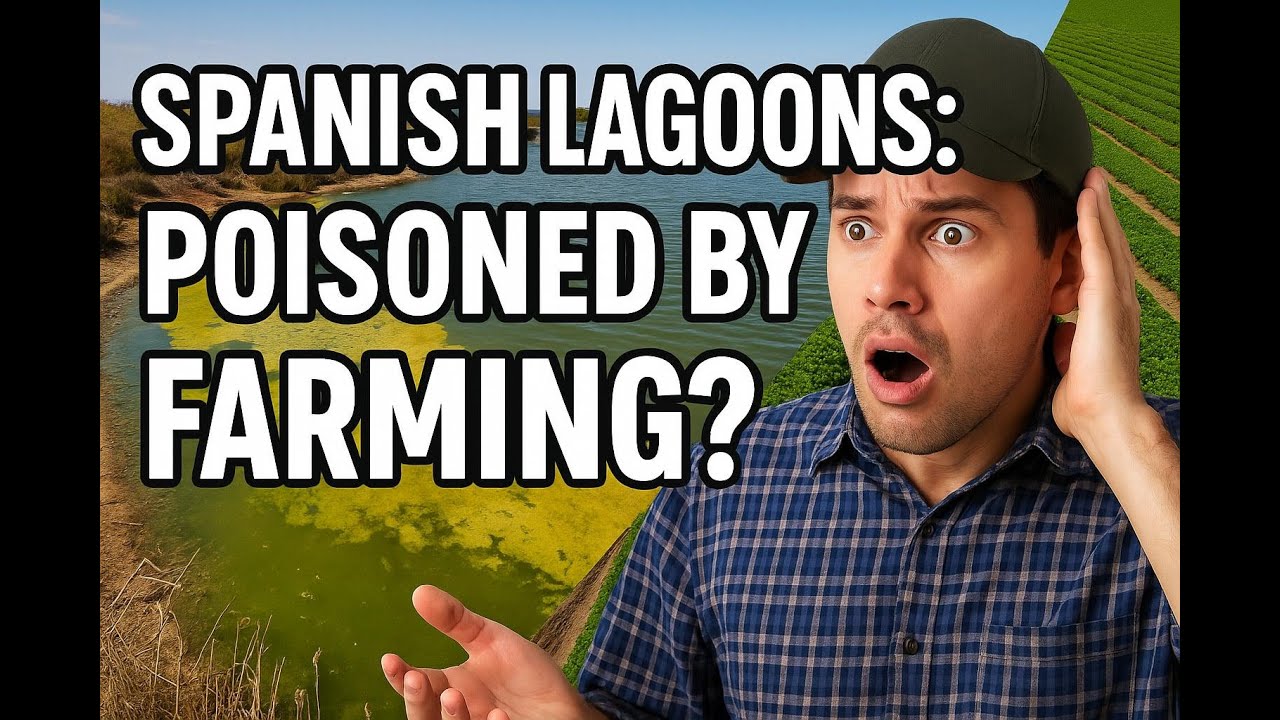
Explore these videos covering breakthrough developments, environmental policies, and regional innovations in precision agriculture, fertilizer runoff prevention, and sustainability in 2025.


Future Perspectives: AI, Sensors & Evolving Fertilizer Strategies (2025+)
From 2025 onward, the precision agriculture landscape continues to evolve rapidly, reinforcing its foundational role in sustainable fertilizer management:
- AI Algorithm Advancements: Automation and more sophisticated interpretation of satellite data allow for hyper-customized input recommendations down to meter-by-meter resolutions.
- IoT Sensors: Growing deployments of low-cost soil, plant, and weather sensors integrate with satellite analytics, creating ultra-responsive management systems.
- Blockchain-based Compliance: Blockchains support transparent reporting for regulatory bodies, buyers, and consumers, boosting accountability from field to fork.
- Integrated Resource Optimization: Combining fertilizer, water, labor, and fleet management tools enables stacked efficiency—amplifying the benefits of any single technology.
Looking ahead, precision agriculture is set to remain essential in balancing productivity, environmental health, and the rising cost of essential inputs.
Interested in environmental advisory for plantations or forestry?
Check out the latest Crop Plantation & Forest Advisory Tools—now integrated with satellite-driven precision analytics for tailored insights across land uses.
FAQs: Precision Agriculture, Runoff & Fertilizer Price Insights for 2025
Q1: Does precision agriculture prevent fertilizer runoff completely?
While it doesn’t eliminate runoff entirely, precision agriculture dramatically reduces fertilizer runoff—by up to 40%. The degree of reduction depends on technology adoption levels, farm management, and local environmental conditions.
Q2: Is precision agriculture cost-effective despite rising agriculture fertilizer prices?
Absolutely. By optimizing input use, precision agriculture frequently saves farmers 20–30% on fertilizer costs, which is critical as fertilizer prices rise. Most farms recoup technology costs in 1–3 seasons via these savings and yield improvements.
Q3: Are precision ag tools complicated for smallholders?
No. Modern platforms—including those provided by Farmonaut—are developed with usability at the forefront. Apps and dashboards present actionable insights in clear, simple visuals for both tech-savvy and first-time users.
Q4: How does precision agriculture contribute to sustainability?
By reducing fertilizer and water waste, lowering emissions, and limiting runoff, precision agriculture improves soil health and protects natural ecosystems, aligning with both farmer and global sustainability goals.
Q5: Can precision agriculture help farmers with regulatory compliance in 2025?
Yes. Digital records, traceability, and supporting analytics from platforms like Farmonaut help farmers easily comply with stricter 2025 regulations on nutrient use and environmental impacts.
Conclusion: The Outlook for Runoff Prevention & Fertilizer Prices (2025+)
Rising agriculture fertilizer prices, mounting environmental regulations, and global food security concerns are pressing challenges for farmers in 2025 and beyond. Precision agriculture has firmly established itself as a powerful, data-driven strategy—optimizing nutrient use, minimizing fertilizer runoff, and improving both environmental and economic outcomes.
By leveraging satellite data, AI-driven advisory, sensor networks, and traceable digital systems, farms of every scale can transform their fertilizer management, boost input efficiency, prevent nutrient losses, and secure a sustainable, resilient future.
At Farmonaut, our mission is to make these technology breakthroughs accessible and affordable for farmers, businesses, and governments worldwide. As the agriculture sector continues evolving, the answer to “does precision agriculture prevent fertilizer runoff?” remains an emphatic yes—backed by solid data, economic results, and a 2025 outlook focused on productivity and sustainability for all.
Farmonaut Subscription Options & Access
Ready to unlock the full benefits of precision agriculture, runoff prevention, and sustainability analytics?
Get affordable access via Farmonaut’s subscription packages for web, mobile, and API-based solutions:



Explore our API for developers and empower your custom solutions with real-time, precision agriculture data—reducing fertilizer runoff, costs, and enhancing sustainability in 2025 and beyond!

 Nivia
Nivia Doodlakine
 Exurbia Geospatial
 FieldZero
 Indico Company
 Kubota
 FFBS
FFBS Jontra
 Kalustyan
 Tucor
Tucor Geno
Geno Hayleys Agriculture
 Linx Agritech
 Adinet
