

Pest control · Organic IPM guide
How to Get Rid of Whiteflies Naturally: 5-Step Plan
Whiteflies breed fast: greenhouse whitefly goes from egg to adult in about 32 days at 70°F (UConn Extension). The fix is a layered plan: keep them out, count them, remove early colonies, protect or release natural enemies, then spray soaps or oils on the leaf undersides.
Key takeaways
- Target the nymphs on leaf undersides; adults alone rarely cause serious damage unless a virus is present (UC IPM).
- Egg to adult takes about 32 days for greenhouse whitefly and 39 days for sweetpotato whitefly at 70°F (UConn Extension).
- Yellow sticky cards are for monitoring, at about one per 1,000 sq ft in greenhouses (UConn); they also trap released wasps.
- Encarsia formosa is an established greenhouse control (RHS); Eretmocerus eremicus works on both main species but slows sharply at 63°F (Kansas State).
- Soaps, oils and neem kill only the whiteflies they touch: spray leaf undersides below 90°F and repeat (UC IPM).
In this article
- How to get rid of whiteflies: the short answer
- How to identify whiteflies
- Whitefly life cycle and why speed matters
- Damage: sap loss, honeydew and viruses
- Step 1: Keep whiteflies out
- Step 2: Monitor with sticky cards and leaf checks
- Step 3: Physical controls
- Step 4: Natural enemies and biological control
- Step 5: Soaps, oils and neem
- Organic sprays: cost and break-even
- Whitefly control in greenhouses vs open fields
- Whiteflies on common crops
- A season plan for natural whitefly control
- Mistakes that make whiteflies worse
To get rid of whiteflies, attack the nymphs on the undersides of leaves, not just the adults that fly up. Hose or wipe off early colonies. Remove leaves crowded with nymphs. Hang yellow sticky cards to track numbers, and protect the lady beetles, lacewings and tiny wasps that eat them. If numbers keep rising, spray insecticidal soap, horticultural oil or neem onto the leaf undersides, and repeat. The University of California’s UC IPM Pest Notes on whiteflies recommend this order, starting with the least harmful steps.
This guide is for growers in the US, Canada, the UK, Europe, Australia and New Zealand, from greenhouse tomato growers to market gardeners and home growers. It covers how to tell which whitefly you have, how fast each species breeds, and which natural controls work where. It includes stage-by-stage charts from extension fact sheets and a calculator that compares the cost of an organic spray programme with the crop value it protects.
How to get rid of whiteflies: the short answer
Whiteflies are hard to clear once numbers are high. The UC IPM guide says management “is difficult once populations are high”. So the best plan starts early and stacks several small steps. No single step works alone.
| Step | What you do | What it achieves | Where it fits |
|---|---|---|---|
| 1. Prevent | Check new plants, quarantine them, remove weeds and old crops | Stops whiteflies arriving on transplants | Greenhouse, garden, field |
| 2. Monitor | Yellow sticky cards and weekly leaf checks | Shows when numbers start to rise | All settings |
| 3. Physical control | Water sprays, removing infested leaves, reflective mulch | Cuts numbers while plants are young | Gardens and vegetable rows |
| 4. Biological control | Protect or release natural enemies such as Encarsia and Eretmocerus wasps | Long-term suppression | Greenhouses for released wasps; outdoors for native enemies |
| 5. Soaps, oils and neem | Spray leaf undersides, repeat as needed | Kills the whiteflies the spray touches | All settings, below 90°F (32°C) |
Each step has its own section below. Read the label of any product before you use it, and follow local rules on what is allowed on your crop. Certified organic growers should check that a product is approved by their certifier before they buy it.
How to identify whiteflies
Whiteflies are not true flies. They are sap-sucking bugs in the order Hemiptera, related to aphids, scales and mealybugs. Adults are tiny, with four white, waxy wings. They rise in a cloud when you shake a plant and then settle again within seconds.
The Royal Horticultural Society describes adult glasshouse whitefly as about 1.5 mm (1/16 inch) long. The RHS advice guide to glasshouse whitefly says there are around eight whitefly species in Britain. Some live on a narrow range of plants. If you searched “tiny white flies UK”, the one on your tomatoes, cucumbers, fuchsias or houseplants is most likely glasshouse whitefly. The whiteflies on brassicas, Viburnum tinus, honeysuckle, azalea and rhododendron are other species tied to those plants.
The species growers meet most often
- Greenhouse (glasshouse) whitefly, Trialeurodes vaporariorum: powdery white adults that hold their wings flat over the body. A pest of greenhouse vegetables, bedding plants and houseplants across North America and Europe.
- Sweetpotato whitefly, Bemisia tabaci, including the silverleaf whitefly (biotype B): slightly smaller and more yellow, with wings held tilted like a roof. A major field pest in warm regions such as California, Arizona, Texas, Florida and parts of Australia, and a virus carrier.
- Cabbage whitefly, Aleyrodes proletella: found on kale, Brussels sprouts and other brassicas, outdoors and through winter in mild climates.
- Citrus whitefly and other tree species: pests of citrus and ornamental trees and shrubs. The UF/IFAS profile of the citrus whitefly notes a key that covers 16 whitefly species that may infest Florida citrus.
Signs to look for
The UC IPM guide lists four signs: tiny nymphs on the underside of leaves; sticky honeydew on leaves, fruit or the ground; black sooty mould; and yellowing, silvering or drying leaves with nymphs on them. Nymphs are flat, oval and legless after their first stage. They look like small scale insects.
Look at white specks closely. White bits on the top surface of leaves are more likely to be aphid skins, the RHS notes. Whitefly nymphs sit underneath. Black, flat nymphs in a greenhouse colony have often been parasitised by an Encarsia wasp and are already dead, which is good news.
Whiteflies are easy to confuse with mealybugs and aphids. For a side-by-side guide to two of them, see our page on organic pest control methods for sap-feeding insects.
Chart
Egg to adult at 70°F: the two main species
Days from egg to adult at 70°F (21°C)
Whitefly life cycle and why speed matters
Whiteflies lay tiny eggs on the undersides of leaves. The eggs hatch into crawlers that move for a few hours, then settle and feed. The nymphs pass through four stages. The last stage, often called the pupa, turns into the winged adult. All stages after the egg feed on sap and drop honeydew.
The speed of this cycle sets how fast a problem grows. The UConn extension table on whitefly development at 70°F gives the egg-to-adult time as 32 days for greenhouse whitefly and 39 days for sweetpotato whitefly. The same fact sheet says development takes from 14 to 40 days, depending on temperature, host plant and species.
Temperature matters a lot. The RHS says the glasshouse whitefly life cycle takes several months at 10°C (50°F) but can be completed in about three weeks at 21°C (70°F). A guide from the University of New Hampshire Extension gives 21 to 36 days for the full life cycle, depending on temperature, and says females lay 150 or more eggs at a rate of about 25 a day.
The RHS adds that each glasshouse whitefly female can lay more than 200 eggs, and that males are rare, so females reproduce without mating. Several generations overlap in a warm greenhouse. By the time adults are easy to see, eggs and nymphs of every age are already on the leaves. That is why one spray rarely ends a problem: it may miss eggs, and new nymphs hatch after it dries.
What the timing means for control
- Check plants weekly in warm weather. A three- to five-week cycle in warm conditions means a small colony can become a large one within two generations.
- Space repeat sprays so they hit nymphs that hatched after the last one. Labels give the interval; follow it.
- Release biological control agents early, while numbers are low. Wasps need time to build up.
- In cool, unheated greenhouses, the cycle slows but does not stop. The RHS says the insect can stay active in winter if host plants are present.
Chart
Greenhouse whitefly: days in each stage at 70°F
Days per development stage, greenhouse whitefly (Trialeurodes vaporariorum)
Damage: sap loss, honeydew and viruses
Whiteflies harm plants in three ways. First, they suck phloem sap. Large numbers can turn leaves yellow, dry them out or make them fall. Second, they excrete honeydew. Leaves become sticky, and black sooty mould grows on the sugar, which blocks light and cuts photosynthesis. Fruit and leafy crops coated in honeydew and mould lose market value. Third, some species carry plant viruses.
The UC IPM guide notes that adults by themselves do not cause significant damage unless they are passing on a plant pathogen. Plant losses usually need a large population of nymphs. So a few adults on a sticky card are a warning, not a crisis, unless a virus is present in your area.
Whiteflies and viruses
The sweetpotato whitefly spreads begomoviruses, including Tomato yellow leaf curl virus (TYLCV). In a University of Hawaii fact sheet on tomato yellow leaf curl, the authors write that whiteflies “can acquire the virus in as little as 5 minutes” by feeding on infected plants and remain infective for life. The virus is not passed to their offspring, and it is not spread by greenhouse whitefly.
Infected tomato plants are stunted, with small new leaves that are yellow between the veins and cupped upward. Similar leaf curl symptoms can come from other causes, so ask a diagnostic lab to confirm. Where a whitefly-borne virus is present, the action level drops sharply: even a small number of adults can matter. In those areas, growers lean on virus-resistant varieties, clean transplants, weed control and crop-free breaks between plantings, alongside whitefly control.
Step 1: Keep whiteflies out
Most whitefly problems in greenhouses and gardens start with infested plants. The University of Maryland Extension whitefly page says whiteflies are often introduced to outdoor plants from infested greenhouse transplants. Its advice is simple: tap transplants, especially tomato, eggplant and cucumber, before you buy them, and watch for whiteflies taking flight.
- Inspect and quarantine. Keep new plants apart for a while so eggs and nymphs have time to show, as the RHS suggests.
- Clear weeds and old crops. Weeds can host whiteflies between crops. The UC IPM guide says to remove and destroy infested vegetable plants after harvest.
- Break the green bridge. The Maryland page warns against back-to-back plantings of favoured crops, because whiteflies move from older plants to younger ones.
- Clean the greenhouse in winter. The RHS says this cuts the number of whiteflies that overwinter.
- Screen vents and doors. Fine insect screening keeps adults out of greenhouses and tunnels. Check that it does not cut airflow too much.
- Keep dust down. UC IPM lists dusty conditions as a factor that favours whiteflies, because dust harms their natural enemies.
Plant choice matters too. UC IPM suggests choosing less susceptible plants. Ask your seed supplier or extension office which varieties do better in your area, and pick virus-resistant tomato varieties where TYLCV is a known problem.
Step 2: Monitor with sticky cards and leaf checks
You cannot manage what you do not count. Yellow sticky cards catch flying adults and show when numbers start to climb. The UConn fact sheet says yellow sticky cards can be placed in the greenhouse at approximately one per 1,000 sq ft, alongside random leaf checks and indicator plants.
For gardens, UC IPM suggests one trap for every medium-size vegetable plant, or as many as one trap for every two large plants. Hang the sticky part level with the infestation, with the sticky side facing the plants and out of direct sun.
Traps are a tool for monitoring, not a cure. UC IPM says they “won’t eliminate damaging populations” but can reduce them a little as part of a wider plan. The RHS adds a caution: sticky traps often catch the parasitic wasps you may have released. Take cards down or move them away from release points while you use biological control.
A simple weekly check
- Count adults on each card and write the number down with the date.
- Turn over five to ten leaves per plant row or bench: young leaves for eggs and adults, older leaves for nymphs.
- Look for black or empty nymph cases. UC IPM says parasitised cases have round or oval exit holes, while a healthy adult leaves a T-shaped slit.
- Note honeydew, sooty mould and yellowing.
- Act when counts rise two weeks in a row, before the next generation hatches.
Field growers use the same idea at scale: leaf counts at set points across a block, with action levels set by crop and region. Your local extension service publishes thresholds for crops such as cotton, melons and tomatoes.
Step 3: Physical controls
Physical methods work best early, while the colony is small. UC IPM says that in gardens, early populations “can be held down” by removing infested leaves or hosing plants down with water sprays.
Water sprays and wiping
A firm spray of water on the undersides of leaves knocks off adults and some nymphs. Do it in the morning so leaves dry before night. On houseplants, wipe leaves with a damp cloth. This does not kill eggs, so repeat every few days.
Removing leaves and plants
Nymphs and pupae cannot move. Picking off the leaves where they are thickest removes hundreds at a time. UC IPM says hand removal of heavily infested leaves or plants may bring numbers down to a level natural enemies can contain. Bag the leaves and put them in the bin, not on the compost heap.
Vacuuming adults
A small hand-held vacuum can pick up adults in the cool of the morning, when they move slowly. It does not touch nymphs, so treat it as a top-up, not a plan.
Reflective mulch
Silver or metallic mulches confuse whiteflies as they land, which protects young plants. UC IPM describes laying shiny metallic-coated paper or reflective plastic on bare soil, burying the edges and planting through 3- to 4-inch holes. Plastic versions need drip irrigation underneath. The guide says these mulches have been shown to deter pests that spread viruses in commercial vegetable crops, and also help control weeds. Remove them when plants are large and summer heat builds, to stop plants overheating.
For more low-impact options that work across many pests, see our guide to sustainable pest management methods.

▶ Organic pest control step by step, shown on lace bugs: identify the pest, then use low-impact controls first. · 12:30
Step 4: Natural enemies and biological control
Natural enemies hold many whitefly species in check, outdoors and under glass. UC IPM names lacewings, bigeyed bugs, minute pirate bugs and several small lady beetles as predators. The UC IPM guide to natural enemies you can buy lists the products sold for release in California. Outdoors, the main job is to protect the enemies you already have: avoid broad-spectrum sprays, control ants that guard honeydew and keep dust down.
Encarsia formosa for greenhouse whitefly
The RHS calls the parasitic wasp Encarsia formosa an established method of control for glasshouse whitefly. The wasp lays eggs in whitefly nymphs, which then turn black. Introduce it before plants are heavily infested, because it cannot give instant control. UC IPM notes that Encarsia is sold for greenhouses but is not generally recommended outdoors, because it is not well adapted to survive in temperate zones.
Eretmocerus eremicus for both main species
The wasp Eretmocerus eremicus attacks both greenhouse and sweetpotato whitefly. A Kansas State University fact sheet on Eretmocerus eremicus gives the wasp’s own life cycle as 17 to 18 days at 74°F and 48 days at 63°F. A female lays between 50 and 200 eggs, and adults also kill nymphs by feeding on them. The fact sheet advises removing yellow sticky cards near release points so the wasps are not trapped.
Those numbers show why heat matters. At 63°F, the wasp’s cycle is far slower than the whitefly’s, so it falls behind. In cool spring greenhouses, start releases early and keep them going, or pair wasps with other tools. Some growers also use predatory mites such as Amblyseius species, which the RHS says feed on whitefly eggs.
Insect-killing fungi
Products based on fungi such as Beauveria bassiana or Isaria fumosorosea infect whiteflies on contact. They need high humidity to work well and can harm some beneficial insects. Check the label for your crop and for compatibility with any wasps you release.
Some of the bio-based products in this section have their own guide on our site: organic pesticides for farming, with what each one targets.
Chart
Life-cycle length: whiteflies vs a parasitic wasp
Days per generation, low and high ends of the range given in each source
Step 5: Soaps, oils and neem
When numbers keep rising, organic-approved sprays are the next step. UC IPM says insecticidal soaps, neem oil and petroleum-based oils control only the whiteflies that are directly sprayed. Cover the whole plant and repeat as needed. The Maryland page adds that oils, neem and soap work on nymphs, while pyrethrins act more on adults.
How to spray so it works
- Hit the undersides. UC IPM stresses covering the undersides of all infested leaves, which are usually the lowest and hardest to reach.
- Watch the heat. Use soaps or oils only when plants are not drought-stressed and temperatures are under 90°F (32°C), to avoid leaf burn.
- Pick your time. Early evening, with enough light to work but no direct sun on plants, is a good time to spray, the UC guide says.
- Repeat. Sprays do not reach eggs well. Follow-up sprays hit the nymphs that hatch later.
- Test first. Spray a few leaves and wait a day or two before treating sensitive plants.
Neem oil
Neem oil comes from the seeds of the neem tree. Some products are registered as pesticides. For example, an EPA-accepted label for a neem oil concentrate (August 2024) lists whiteflies among the pests it controls. Not every neem product sold is registered for crop use, so check the label and your local rules. Neem is a natural insecticide, but that does not make it harmless: avoid spraying open flowers where bees forage.
What to avoid
UC IPM says the systemic insecticide imidacloprid can control nymphs but can harm natural enemies, honey bees and other pollinators, and can cause spider mite outbreaks. It advises avoiding most other pesticides on whiteflies in gardens, because whiteflies quickly build up resistance and most kill natural enemies. Imidacloprid is also restricted or banned for some uses in the UK and EU; check the rules where you farm. If conventional products are part of your programme, our whitefly control insecticide guide covers them separately.
Always read the label, wear the protection it lists, and get professional advice if you are unsure. Labels are the law in the US, and the same applies under national rules in Canada, the UK, the EU and Australia.
▶ Organic control of red spider mites, a pest that can flare when sprays kill natural enemies. · 11:53
Organic sprays: cost and break-even
An organic programme costs money: cards, spray product and labour for repeat passes. Before you start, compare that cost with the value of the crop you expect to save. The calculator below uses the UConn card density of about one card per 1,000 sq ft. Every other number is your own input.
The default values are examples set close to break-even, not benchmarks. Use today’s prices from your own supplier and your own estimate of the loss you would avoid. If the result is negative, a lighter programme, earlier action or biological control may be a better fit.
Labour is not in the default numbers. Add it to the spray cost per pass if a paid worker does the spraying. A small grower working alone can leave it out, but should still count the time.
Try the numbers for your own farm below.
Calculator
Does an organic whitefly programme pay?
Compare card and spray costs with the crop value you expect to protect.
- Sticky cards needed: 10 cards
- Programme cost: 70 US$
- Crop value protected: 75 US$
Example values only, set near break-even; they are not benchmarks. Card density follows UConn Extension (about one card per 1,000 sq ft). Price inputs are examples: use today’s price from your supplier. Add labour to the spray cost if you pay for it. Check product labels and local rules.
Whitefly control in greenhouses vs open fields
Setting changes the plan. Under glass, you control the climate and can release wasps that stay put. In the field, you rely on the natural enemies already there and on crop timing.
| Factor | Greenhouse or tunnel | Open field or garden |
|---|---|---|
| Main species | Greenhouse whitefly; sweetpotato whitefly in warm regions | Sweetpotato/silverleaf whitefly in warm regions; cabbage whitefly on brassicas |
| Breeding season | All year in heated houses | Warm months; several generations each summer (Maryland Extension) |
| Monitoring | About 1 yellow card per 1,000 sq ft (UConn) | Leaf counts at set points; cards for early warning |
| Biological control | Released Encarsia or Eretmocerus wasps | Native predators and parasites; protect them |
| Physical tools | Screens, quarantine, winter clean-out | Reflective mulch, weed control, crop-free breaks |
| Sprays | Soaps and oils, timed with wasp releases | Soaps and oils with thorough coverage; avoid broad-spectrum sprays |
In both settings, keep records. Card counts, release dates and spray dates show what worked, and they help you plan the next season.
Whiteflies on common crops
Tomatoes
Tomatoes host both main species. Greenhouse growers usually rely on Encarsia or Eretmocerus with soaps and oils as a backup. Field growers in warm regions focus on TYLCV: clean transplants, resistant varieties, reflective mulch while plants are young and a tomato-free break. For organic tomatoes, avoid sprays that kill natural enemies and treat the undersides of lower leaves where nymphs gather.
Cucumbers, melons and squash
Cucurbits attract large whitefly numbers. The Maryland page shows melon foliage covered in honeydew. Silverleaf whitefly can cause squash silverleaf, a disorder where leaves turn silver. Reflective mulch suits these crops well while vines are small.
Cotton
In cotton, honeydew causes “sticky cotton”, which can lower lint value and slow ginning. Growers in the US Southwest and Australia use regional action thresholds and protect natural enemies early in the season. Check your state or regional cotton guide for current thresholds.
Brassicas
Cabbage whitefly is common on kale and Brussels sprouts in the UK and Europe. It survives outdoors in winter. Remove old brassica stems after harvest, net young plants and wash heavy honeydew off leafy crops before sale.
Citrus and other trees
Several whitefly species live on citrus and ornamental trees. UC IPM says most are uncommon because natural enemies control them. Ash whitefly, it notes, is now under good biological control in California. Sprays on trees can upset that balance, so check first whether parasites are already at work.
Houseplants
Indoors, there are no natural enemies, so whiteflies can build up all year. Isolate the plant, wipe or rinse the leaves, use a yellow card, and spray insecticidal soap labelled for indoor plants if needed. Throw away a badly infested plant rather than risk the rest of your collection.
A season plan for natural whitefly control
The table brings the steps into one season. Adjust the timing to your climate.
| When | Greenhouse | Field or garden |
|---|---|---|
| Before planting | Clean out, screen vents, inspect transplants | Remove weeds and old crops; lay reflective mulch |
| Planting to early growth | Hang cards; start wasp releases at first sign | Weekly leaf checks; water sprays on early colonies |
| Main growth | Weekly card counts; repeat releases; spot-spray soaps or oils away from release points | Protect natural enemies; spray soaps or oils on hot spots below 90°F |
| Late season | Remove infested plants; keep records | Remove crop residue promptly after harvest |
| Winter | Deep clean; check heated houses for overwintering colonies | Keep a crop-free break where possible |
This layered approach is integrated pest management (IPM). It puts prevention and monitoring first, natural enemies second and sprays third. It is also the basis of most organic pest control methods for sap-feeding pests.
Mistakes that make whiteflies worse
- Spraying broad-spectrum insecticides. UC IPM says outbreaks often occur when natural biological control is disrupted. Killing predators and wasps can leave whiteflies with no check.
- Spraying only the tops of leaves. Contact sprays must touch the insects. Most nymphs sit underneath the lower leaves.
- One spray and done. Eggs survive and hatch. Plan follow-up sprays as the label allows.
- Releasing wasps too late. Biological control needs time. Start while numbers are low.
- Leaving sticky cards beside wasp release points. The cards catch the wasps.
- Bringing in unchecked plants. One infested tray can seed a whole greenhouse.
- Too much nitrogen. Soft, lush growth suits sap feeders. Feed to the crop’s need, based on a soil or tissue test.
- Spraying oils in heat or on stressed plants. This can burn leaves. UC IPM sets the limit at 90°F.
Where satellite monitoring fits
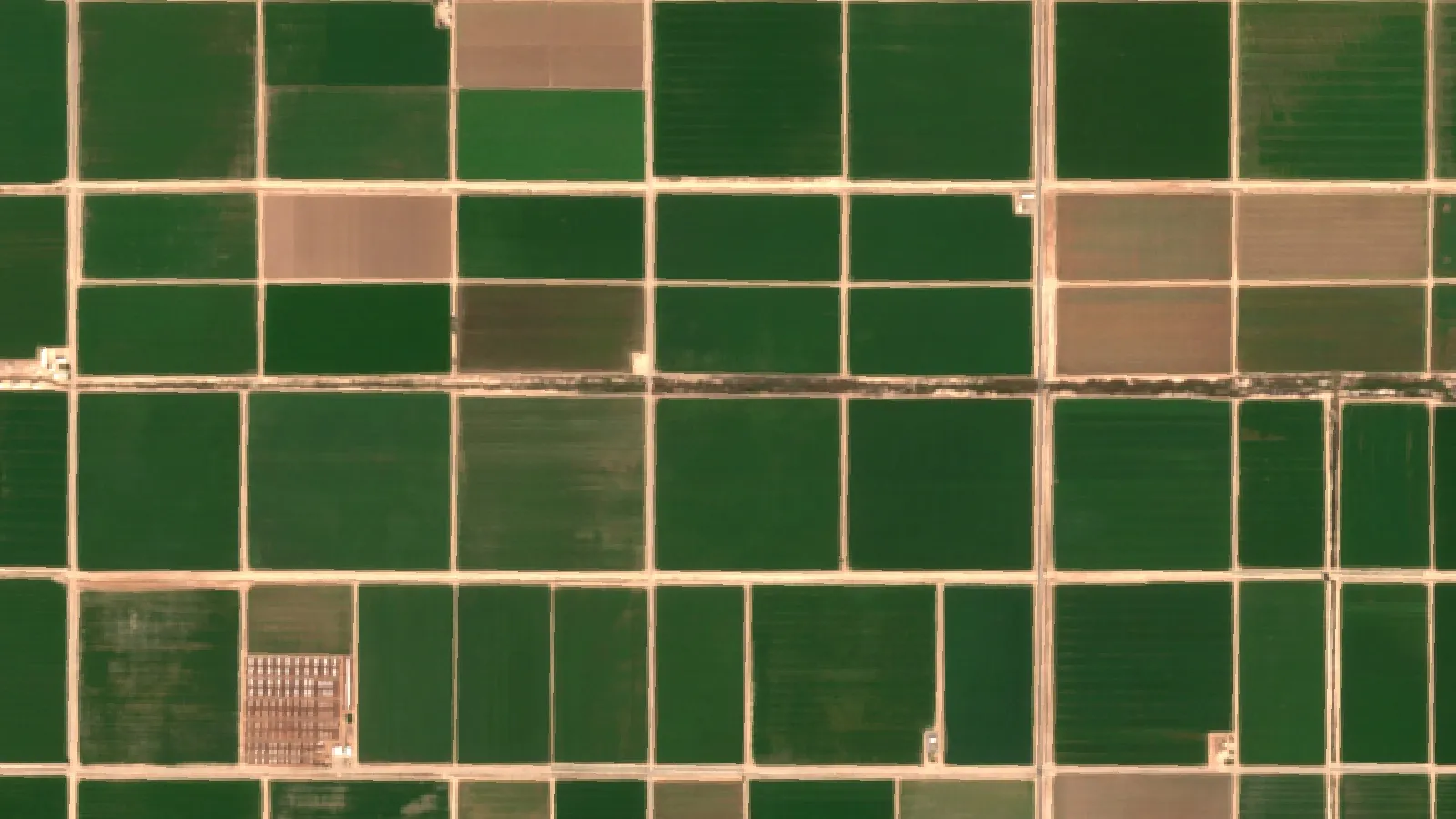
Satellites cannot see a whitefly. They can show where crop vigour drops across a field, and that helps you decide where to walk first. Heavy honeydew, sooty mould and sap loss reduce how green and active a canopy looks over time. A vegetation map that shows a patch falling behind the rest of the block is a reason to go and turn leaves over in that spot.
The Farmonaut Satellite + AI Farm Monitoring System gives growers vegetation index maps of their own fields through the season. It does not replace leaf checks or sticky cards. It helps you target them on large farms where walking every row each week is not practical. You can find the apps on our app page, and developers can read the developer documentation for the data API.
For greenhouses and gardens, the tools that matter remain the ones above: clean plants, regular checks, natural enemies and well-timed sprays.
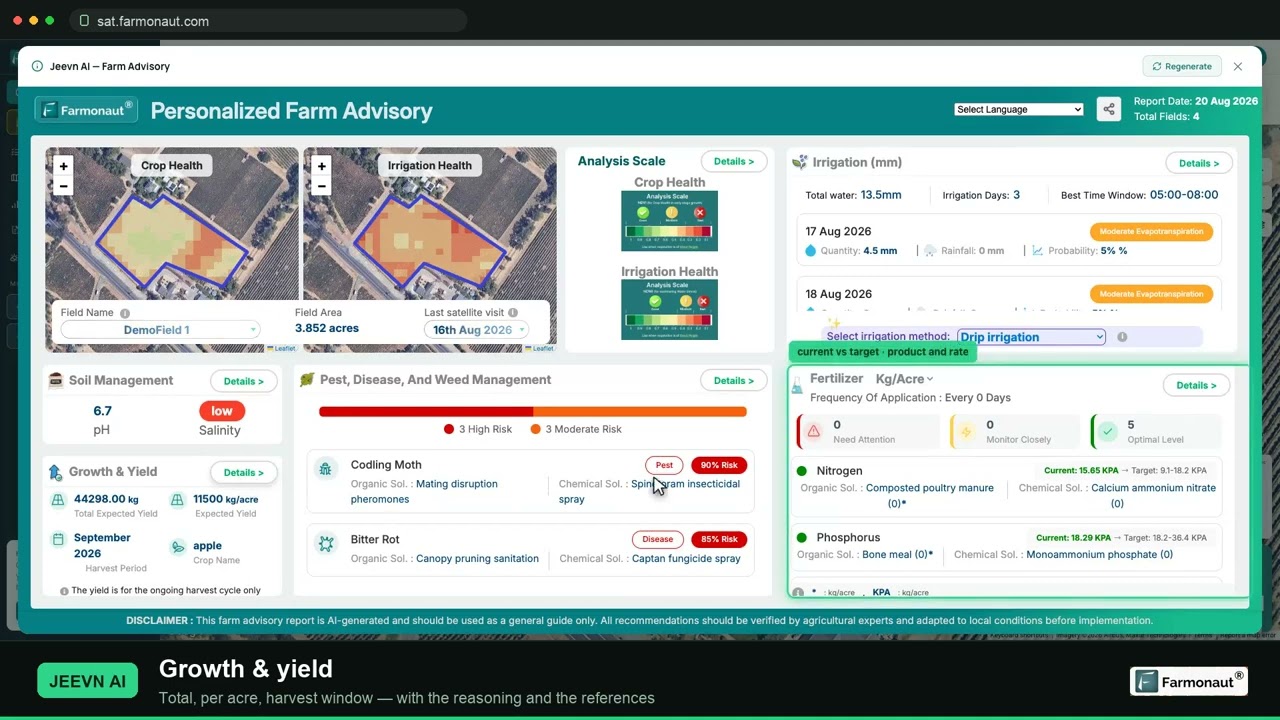
▶ How to read NDVI maps to spot crop stress early and decide where to scout. · 19:36
How we checked the facts
We used extension and government sources from the US and UK. Life-cycle figures come from the UConn and University of New Hampshire extension fact sheets and the RHS advice guide; we give the temperature each figure applies to. Parasitoid figures come from Kansas State University and refer to the wasp, not the whitefly. Control advice comes from UC IPM Pest Notes, the University of Maryland Extension and the RHS. The virus facts come from a University of Hawaii fact sheet. The neem example is from a label accepted by the US EPA in August 2024. The calculator uses the UConn card density; all other values are inputs. Each source is listed at the end of the article.
FAQ
What kills whiteflies naturally?
Predators such as lacewings, lady beetles, bigeyed bugs and minute pirate bugs eat whiteflies, and tiny wasps such as Encarsia and Eretmocerus parasitise the nymphs. Insecticidal soap, horticultural oil and neem kill the whiteflies they touch. Water sprays and removing infested leaves cut numbers early.
How do I get rid of whiteflies permanently?
You rarely remove them for good, but you can keep them below damaging levels. Check new plants, clear weeds and old crops, monitor with yellow cards, protect or release natural enemies and spray leaf undersides with soap or oil when numbers rise. Repeat checks every week in warm weather.
Do yellow sticky traps get rid of whiteflies?
Not on their own. UC IPM and the RHS describe them as tools for monitoring, with a small effect on numbers. In greenhouses, UConn suggests about one card per 1,000 sq ft. Move cards away from places where you release parasitic wasps.
What are the tiny white flies on my plants in the UK?
On greenhouse plants, tomatoes, cucumbers and houseplants, they are most likely glasshouse whitefly. On kale, cabbages and Brussels sprouts, they are probably cabbage whitefly. The RHS says around eight whitefly species occur in Britain.
Is neem oil safe for whitefly control on vegetables?
Neem products registered for food crops can be used on vegetables when you follow the label, including the days to wait before harvest. Spray in the evening, avoid open flowers where bees feed, and keep temperatures below 90°F. Check that the product is approved where you farm.
Related pages on our site: organic pesticides · sustainable pest management · natural insecticide research
Farmonaut crop monitoring
See where your crop is falling behind
Draw your fields once and Farmonaut shows satellite vegetation maps through the season, so you know where to scout first. On web, Android or iOS.




Sources
- UC Statewide IPM Program, Pest Notes: Whiteflies (pn7401): ipm.ucanr.edu
- Royal Horticultural Society, Glasshouse whitefly advice guide: rhs.org.uk
- UConn Extension, Whiteflies in the Greenhouse fact sheet (2023): ipm-cahnr.media.uconn.edu
- University of New Hampshire Extension, Greenhouse whitefly fact sheet: extension.unh.edu
- Kansas State University Research and Extension, MF3617: Eretmocerus eremicus: bookstore.ksre.ksu.edu
- University of Maryland Extension, Whiteflies – Vegetables (updated February 2023): extension.umd.edu
- UC Statewide IPM Program, Pest Notes: Natural enemies you can buy (pn74140): ipm.ucanr.edu
- University of Hawaii CTAHR, PD-70: Tomato Yellow Leaf Curl (2009): ctahr.hawaii.edu
- UF/IFAS, EENY-084: Citrus Whitefly, Dialeurodes citri: ask.ifas.ufl.edu
- US EPA, Notice of pesticide registration 88760-15, Neem Oil Concentrate 70 (August 2024): www3.epa.gov
- UC Statewide IPM Program, Pest Notes: Scales (pn7408): ipm.ucanr.edu
Discussion
Questions, corrections or field experience? Share them below. First-time comments are reviewed before they appear, and your email is never published.
No comments yet. Be the first to add a question or your experience.

 Cresol
 Atur Kuliner
 GlobalQuant
 MDCV UK
 Zerella Group
 Etech Consulting Madagascar
 Vestlandsforsking
 Agritein
 Delicio
 WB Dev
 Sama Premium
 Prochecker
 Tres Valles
 LACOS Geoinformation
 Magrifly
 LatConnect 60
 Blickwinkel
 Agricultural Credit Policy Council
 Marei Nursery
 eKGIS
 Mostas Tech

 Exploration consultancy · South Africa · Gold
 Licence holder · Niger · Gold
 Licence holder · Nigeria · Gold + lithium
 Client · Tanzania · Gold
 Client · Somalia · Gold
 Client & affiliate partner · Ghana · Gold










