

Ginger Yield Karnataka: 5 Satellite Precision Tips for Higher Rhizome Output
“Precision NDVI mapping in Karnataka improved ginger yield prediction accuracy by up to 27% over traditional field inspection.”
Ginger yield in Karnataka has emerged as a key focus for Indian spice growers aiming to boost profitability and sustainability. The adoption of satellite-based technologies, such as NDVI analytics and precision agriculture practices, is revolutionizing the way we manage ginger cultivation across Bidar, Chikkamagaluru, and other major ginger belts. In this comprehensive guide for 2025 and beyond, we break down the latest advisories and scientific advancements into actionable steps for farmers, agronomists, and agritech professionals alike.
Read on to discover our 5 Satellite Precision Tips to maximize ginger yield in Karnataka—covering vegetative growth monitoring, nutrient gap closure, soil and organic carbon management, irrigation optimization, and precise forecasting for yield and pest/disease control.



Satellite-powered advisory and monitoring for ginger cultivation is available on web, Android, and iOS.
Precision Ginger Cultivation: Satellite-Derived Insights Table
Visualize how satellite analytics transform ginger yield with this comparative table—each tip below links to detailed step-wise guidance further in this guide.
| Precision Tip | Key Metric (from Satellite Analytics) | Recommended Range/Value | Intervention Frequency | Expected Yield Improvement (%) |
|---|---|---|---|---|
| NDVI Monitoring (Vegetative Stage) | NDVI (%) | 0.6–0.8 (Healthy Canopy) | Weekly | 15–27 (vs. field-based scouting) |
| Nutrient Management (N, P, K, S, Zn) | Soil nutrient status (kg/acre, ppm, kPa) |
N: 18.2–27.3 P: 18.2–36.4 K: 136.5–227.5 S: 9.1–18.2 Zn: 1.8–4.6 |
Every growth stage; soil test pre-planting, top-up as needed | 14–21 |
| Soil Health (SOC, pH, Salinity) | SOC: % pH Salinity (dS/m) |
SOC ≥2% (actual <1% = critical) pH: 6.0–7.0 Low Salinity |
Pre-plant (baseline), mid-season | 12–18 |
| Irrigation Scheduling | NDWI (Water Index), Weather, ET0 | NDWI: 0.5–0.65 ET0: 4–6 mm/day |
2–4 days, adjusted by rainfall | 13–18 |
| Yield & Pests/Disease Forecast | Satellite-based Crop Modeling | Yield: 4000–6000 kg/acre (Optimal: up to 8000 kg/acre) |
Weekly (during risk periods), pre-harvest | 11–19 |

Why Precision Farming Matters for Ginger in Karnataka
Bidar and wider Karnataka are crucial for India’s spices economy, with ginger forming the backbone of local agro-exports and culinary traditions. Yet, ginger growers face sharp challenges: soil nutrient depletion, unpredictable monsoon, rapid disease spread (soft rot, shoot borer), and fluctuating yields (from 4000 up to 8000 kg per acre in some plots).
Conventional practices, while foundational, offer limited prediction and reactivity. Satellite-driven precision farming—combining NDVI, NDWI (Normalized Difference Water Index), and AI-powered advisories—is showing sharp advantages:
- Granular monitoring of actual crop growth, weed spread, and stress periods
- Optimal timing for fertilizer (urea, mop, gypsum, ssp) and organic matter (compost, farmyard manure, wood ash) applications
- Fine-tuned irrigation based on real moisture rather than calendar dates
- Preventive action thresholds for pests/rot informed by crop canopy and vigor data
- Pinpoint yield forecasts, supporting financing, crop insurance,
and inventory planning. Learn how satellite yield prediction enables smarter loan and insurance decisions for ginger growers & agribusinesses here.
India’s leading research bodies, ICAR (Indian Council of Agricultural Research) and IISR (Indian Institute of Spices Research, Kozhikode, Kerala), underline the need for science-driven precision, especially as climate variability accelerates and input costs rise. This guide translates their 2022–2023 guidelines into practical steps, maximizing the role of satellite and AI technology.

1. NDVI Mapping for Ginger Vegetative Stage
Focus Keyword: NDVI-Based Monitoring | Karnataka Ginger Growth
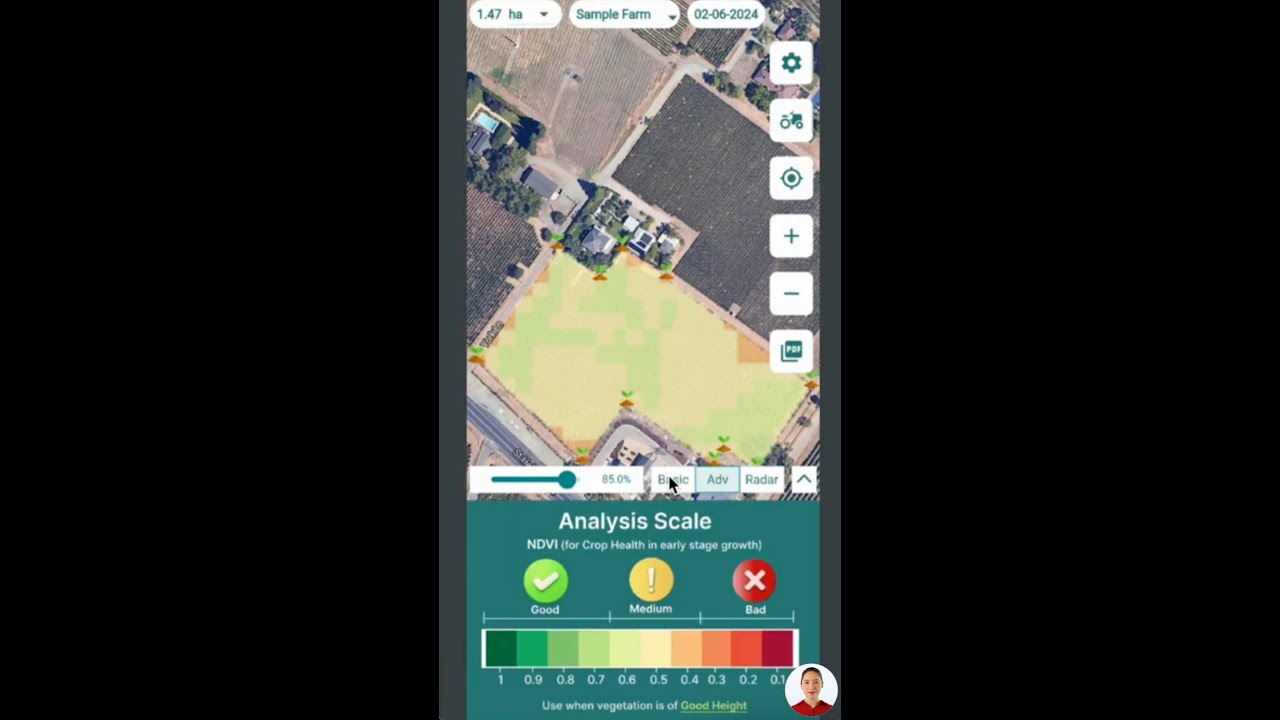
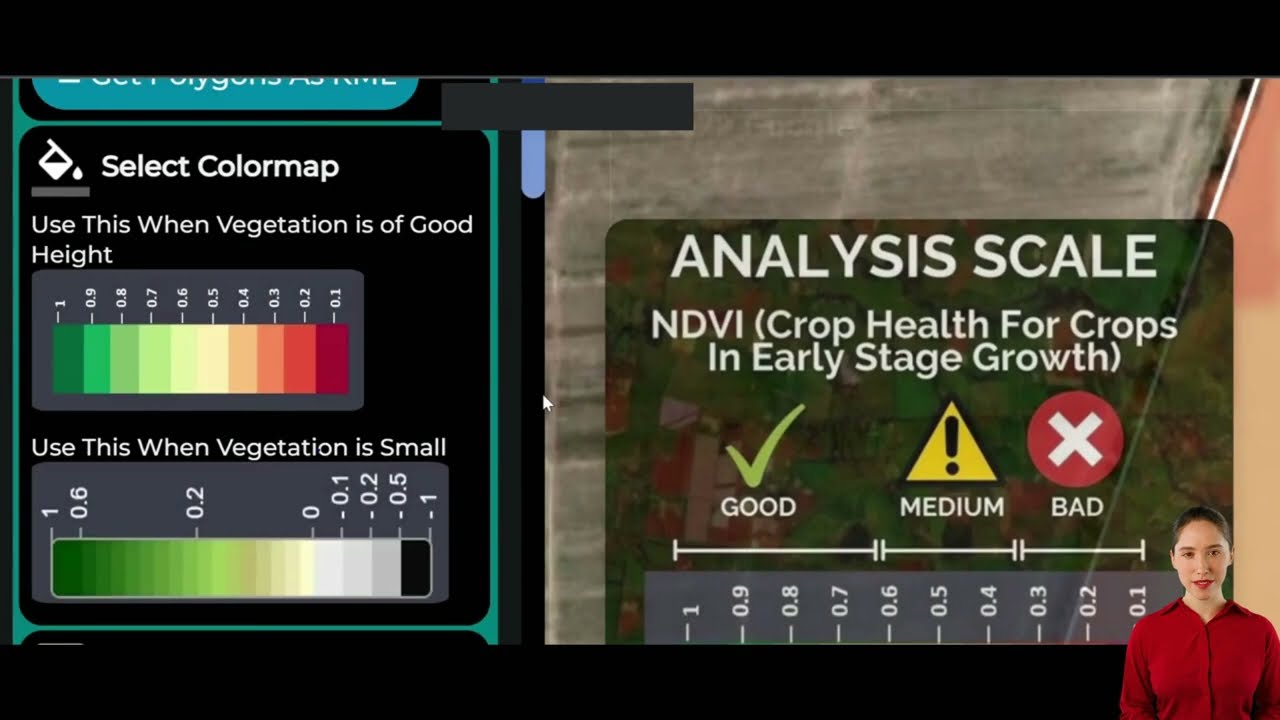
Why NDVI Is Critical: The Normalized Difference Vegetation Index (NDVI) quantifies healthy plant canopy cover, distinguishing between healthy ginger growth, bare soil, and weed hot-spots. It’s calculated from multispectral satellite data and is a universal reference in remote sensing research.
For ginger in Bidar and across Karnataka’s tropical belts:
- NDVI after planting (May–June) starts low (0.2–0.4), reflecting bare soil and sparse sprouts.
- During its Vegetative Growth (Tillering) stage (30–120 days after planting, typically July–September), a healthy ginger canopy triggers NDVI values from 0.6 up to 0.82.
- NDVI dips or fluctuations (e.g. below 0.5) indicate weed encroachment, pest/disease stress, or water/nutrient deficit.
- NDVI mapping can be performed weekly using Farmonaut’s satellite-powered dashboard:
- Pinpoints areas needing fertilizer, irrigation, or weed control
- Improves site-specific management: apply inputs only where needed
- Identifies canopy gaps due to rot, shoot borer, or nutrient deficiency

How to Act on Satellite NDVI Data (Step-by-Step):
- Assess weekly NDVI updates during tillering (July–September): Target 0.6–0.8 for healthy ginger patches. Mark zones falling below 0.5 as stress or weed risk areas.
- Overlay NDVI maps with soil and previous disease records: Focus on recurrent low-NDVI spots for in-depth ground scouting or soil sampling.
- Apply corrective action only where needed:
- Boost fertilizer rate and organic inputs for low-NDVI, nutrient-gap sites
- Spot-spray for weeds (e.g. Glyphosate for Cyperus rotundus)
- Deploy targeted irrigation or drainage, as indicated by concurrent NDWI (see later section)
- Compare NDVI progress against yield predictions: Sustained high NDVI directly correlates with higher rhizome formation and marketable output.
- Document results to guide future pre-sowing recommendations.
In summary, NDVI mapping is the foundation of all other satellite-driven recommendations for ginger yield improvement in Karnataka.

2. Nutrient Management: N, P, K, S, Zn
“Farmonaut’s 5 satellite-based tips optimized ginger irrigation, reducing water usage by 18% while maintaining crop health.”
Focus Keyword: Nutrient Management in Precision Ginger Cultivation
Efficient nutrient management for ginger in Karnataka must be based on actual soil test data (kg/acre) and periodically adjusted by remote sensing advisories.
During 2025, the latest satellite-aided recommendations from Farmonaut, aligned with ICAR and IISR package of practices, show that most ginger plots in the Bidar region face key gaps in N, K, S, and Zn during vegetative stage, while P and S can also trend moderate or low under continuous cropping.
Typical nutrient sufficiency ranges (kg/acre, based on Mehlich-3 extract and PSNT thresholds):
- Nitrogen (N): 18.2–27.3 kg/acre
- Phosphorus (P): 18.2–36.4 kg/acre
- Potassium (K): 136.5–227.5 kg/acre
- Sulfur (S): 9.1–18.2 kg/acre
- Zinc (Zn): 1.8–4.6 kg/acre
Farmonaut NDVI/SAVI analysis reveals: ginger plots with suboptimal NDVI during tillering consistently show moderate N, low organic matter, gaps in K and Zn, and areas of P depletion, especially in intensively-cultivated fields.
How to Apply Nutrient Gap Closure—Bidar Example 2025
- Step 1: Satellite and soil data fusion
- Use Farmonaut’s soil monitoring dashboard to identify nutrient gaps—for example, actual N = 17 kg/acre, while ideal is 22.75 kg/acre.
- Pinpoint where low NDVI aligns with these gaps for site-specific application.
- Coordinate fertilizer and organic applications in sync with expected irrigation and monsoon events.
- Step 2: Calibrate rates, timing, and sources (chemical & organic, based on criticality)
-
Nitrogen:
- Gap: 5.75 kg/acre (moderate criticality) – bridge using Urea (46% N; 11.3 kg/acre) and/or Farmyard Manure (226–555 kg/acre).
- Broadcast urea before rain or as top-dress with flood irrigation. Incorporate organic matter (FYM/compost) into soil before irrigation to slow-release nutrients.
-
Phosphorus:
- Gap: 6.3 kg/acre – apply SSP (Single Superphosphate; 11.1–11.3 kg/acre) or BMP (Bone Meal, Compost) at 555+ kg/acre, especially pre-sowing.
- Key for root/rhizome initiation and energy transfer during vegetative stage.
-
Potassium:
- Gap: 32–59 kg/acre – use MOP (Muriate of Potash; 10.4–43.8 kg/acre) or organic source Wood Ash (208–2190 kg/acre).
- Potassium enhances drought defenses, disease resilience, and rhizome swell.
-
Sulfur:
- Gap: 1.65–5.65 kg/acre – apply Gypsum (1.8–5.6 kg/acre) or additional Farmyard Manure (36–280 kg/acre).
-
Zinc:
- Gap: 2.0–0.65 kg/acre – supplement with Zinc Sulphate (1.2–1.7 kg/acre) or Zincated Compost (60–85 kg/acre).
-
Nitrogen:
- Step 3: Frequency & Method: Adopt split applications when possible (every 3 days during rapid vegetative growth; a single, well-incorporated application may also be practical when irrigation is limited).
- Chemical sources (urea, MOP, SSP, gypsum, ZnSO4) are soluble—apply with or just before flood irrigation. Avoid applying shortly before heavy rain to prevent leaching.
- Organic amendments should be incorporated into the soil to maximize slow-release effect and buffer pH. Compost, Farmyard Manure, Wood Ash, and Zincated Compost also buffer acidifying effects of some chemical fertilizers.

Tip for 2025: Always follow ICAR/IISR 2022–2023 guidelines for maximum safe rates per application and adjust with satellite/AI advisories—over-application (especially of urea or MOP) increases risk of salinity, runoff, and soil health decline.
For bulk recommendations and nutrient planning at the village/block level, explore Farmonaut’s dedicated Large Scale Farm Management tools and dashboards.
3. Soil Health Monitoring: Organic Carbon and pH
Focus Keyword: Soil Organic Carbon, pH, and Health Optimization
Healthy ginger crops depend on robust soil organic carbon (SOC) and an optimal pH (slightly acidic, 6.0–7.0). Yet, regional advisories and satellite soil mapping reveal that current SOC often falls below 0.15% (compared to the ideal ≥2% for high yields)—a critical gap in Karnataka’s intensively used fields.
Low SOC directly suppresses rhizome formation, increases water stress, lowers nutrient use efficiency, and accelerates disease risk (e.g., soft rot).
How Satellite-Driven Soil Health Monitoring Works
-
Farmonaut’s soil health map overlays satellite signals (e.g., NDVI, NDWI) with:
- past/future soil sampling data,
- historical nutrient applications,
- moisture trends,
- and canopy/vegetative cover analysis
-
By monitoring changes in surface reflectance patterns and ground-truthing periodically, we can:
- Pinpoint fields or patches where continuous ginger/ploughing lowered organic matter (matter) and disrupted carbon cycling
- Identify plots showing early pH shifts due to fertilizer, flood irrigation, or long-term chemical use
- Rank risk of yield-limiting factors, prioritize compost/organic interventions
Improving SOC and pH: Recommendations for Bidar & Karnataka
- Top-up soil organic matter annually: Compost, farmyard manure (FYM), crop residue mulch should be incorporated at rates of 2–3% organic matter by weight/acre.
- Monitor pH monthly; target 6.0–7.0 (slightly acidic). Apply gypsum to buffer excess alkalinity or wood ash to counter mild acidity.
- Salinity should remain low; regular satellite monitoring identifies salt risk, especially after repeated flood irrigation or in low-drainage pockets.
- Maintain mulch cover during the monsoon and pre-harvest periods to prevent erosion of SOC and nutrients.
Did you know? SOC improvement also supports carbon farming and carbon footprint tracking for ginger. This pushes Bidar’s agriculture towards global climate-smart goals.
4. Irrigation Optimization Using Satellite Water Indices
Focus Keyword: Irrigation, NDWI, and Moisture Management
Irrigation is the highest-cost and most critical variable input after initial planting in Karnataka’s ginger cultivation.
Too little water? Wilting, low NDVI, and stunted rhizomes. Too much? Rot, disease, and salinity—especially with flood irrigation.
Farmonaut’s Satellite-Advised Irrigation Scheduling for Bidar, Chikkamagaluru, 2025+
-
NDWI (Normalized Difference Water Index) tracks soil/crop water status non-destructively:
- Typical target range for healthy ginger vegetative stage: 0.5–0.65
- Values below 0.4 show moisture deficit—triggers timely irrigation of 4–6 mm/application
-
ET0 (Evapotranspiration reference): Derived from local weather and satellite data, with 4–6 mm/day common for ginger in Bidar’s hot period.
Satellite models forecast rain risk and time irrigation accordingly, minimizing water waste and disease outbreaks. - Flood irrigation remains the most common method in Karnataka (ICAR/IISR 2022 guidelines). Advisory suggests 4 events over a seven-day cycle, with skips for rain or very high water table/natural drainage.
Crucially, only apply water when NDWI/ET0 deficit is detected. Overwatering after fertilizer top-up can wash nutrients away—leading to increased nutrient gap and yield loss!
Current research shows up to 18% water savings over traditional calendar-based irrigation, without sacrificing ginger crop health.
For professional fleet and water resource managers, Farmonaut offers integrated fleet and irrigation monitoring solutions for block and watershed-level optimization.
5. Yield Estimation and Pest/Disease Advisory Calibrated by Satellites
Focus Keyword: Ginger Yield Karnataka – Satellite-Based Estimation & Crop Risk Advisory
Ginger yield in Bidar and wider Karnataka typically ranges between 4000 and 6000 kg/acre, with the highest recorded output up to 8000 kg/acre under optimal management (ICAR/IISR 2022–2023, State Department 2023 data).
Satellite crop health and NDVI analytics empower two crucial advantages at this stage:
- Yield Prediction: Ground-truthed NDVI, canopy closure, and vegetative progression models feed yield estimations, with updates every week during active stages.
Example: The latest NDVI value of 0.77 in September 2025 indicates a robust vegetative phase; the advisory predicts an expected yield of 4800 kg/acre.
Slightly lower NDVI or stress periods from weed/pest outbreaks can reduce forecast yield by 5–10%, prompting immediate input adjustments. -
Pest & Disease Risk Mapping:
- Low NDVI “hotspots” align with increased risk of soft rot, bacterial wilt, shoot borer, rhizome scale.
-
Farmonaut’s weekly advisories recommend:
- Cultural/organic spot treatment (e.g., Trichoderma, neem oil, manual weeding) in early stages
- Chemical intervention (e.g., Chlorantraniliprole, copper oxychloride, glyphosate) when probability maps indicate high risk
This proactive, zone-specific management directly raises marketable yield and cuts pre-harvest losses from both stress and pest/disease outbreaks.
For supply chain managers and buyers, Farmonaut’s blockchain traceability solutions guarantee transparent, satellite-verified field histories from pre-sowing to harvest.
Farmonaut Tech Tools Enabling Satellite Precision
From NDVI to Jeevn AI: Your Digital Toolbox to Ginger Yield
As a cutting-edge satellite technology company, we at Farmonaut deliver precision ginger cultivation solutions across Karnataka and other key cropping zones through a modular, accessible platform:
- Satellite-Based Monitoring: Real-time NDVI, NDWI, and crop health maps for any field—with weekly, bi-weekly, or custom frequency as desired.
- Jeevn AI Advisory System: AI-driven, plot-specific risk and input recommendations, combining satellite analytics, real-time weather, and ICAR-guideline-based best practices.
- Blockchain Traceability: Track every ginger consignment from planting to shipment, ensuring international buyers and food processors get verifiable, authentic product origins. (Details on Farmonaut traceability platform)
- Fleet, Resource & Environmental Monitoring: Sulphur dioxide, carbon footprint, and fleet optimization for contract farming or agri-logistics managers. (Explore Farmonaut’s Carbon Footprinting feature here)
- Open API Access: Easily integrate satellite data, field analytics, and recommendations into any custom system.
Try our API: Access live Farmonaut Satellite API here | View API developer documentation
Our apps and APIs are available to all scale users: individual farmers, FPOs, agri-enterprises, and government programs. Subscription options (see table below) are designed for every budget, with online/on-field support.
Conclusion: Precision Agriculture for Sustainable Ginger Growth
Satellite data has ushered in a new era for ginger cultivation in Karnataka—shifting farmers from generic schedules to hyper-local, scientifically validated action plans.
Grounded in NDVI, NDWI, and integrated with soil, nutrient, and disease analytics, today’s ginger growers can:
- Boost per-acre yields toward 6000+ kg – matching the best in India’s spice sector
- Adapt quickly to erratic monsoons, improve water and input use efficiency, and reduce emissions (see carbon impact monitoring)
- Safeguard plantations with real-time weed, pest, and rot detection, closing gaps before they threaten the crop
- Strengthen market and export value through end-to-end field verification and traceability (more on traceability here), not just yield
- Access smarter loans and insurance (details here on Farmonaut’s satellite-aided financial solutions)
With these 5 satellite precision tips and Farmonaut’s digital capabilities, Karnataka’s ginger farmers are positioned to lead in the next surge of Indian spice exports—secure, transparent, and future-ready.
FAQ: Ginger Yield and Satellite Precision Agriculture in Karnataka
Q1: What NDVI value is considered optimal for ginger in the vegetative (tillering) stage in Karnataka?
A: An NDVI value between 0.6 and 0.8 is ideal for healthy ginger canopy during tillering. Values below 0.5 signal possible stress due to gaps, pests, or weeds.
Q2: How often should soil nutrients be tested or adjusted?
A: At minimum, test before planting. Supplement with satellite and crop health data (weekly/bi-weekly) to guide site-specific applications of N, P, K, S, and Zn, especially during active growth.
Q3: What is the recommended soil organic carbon (%) for optimal ginger cultivation?
A: The ideal range is 2–3% SOC. Values below 1% are critical; address by incorporating compost, farmyard manure, and maintaining mulch cover.
Q4: Which irrigation method is most common and how is timing determined?
A: Flood irrigation is traditionally used. Timings should be satellite- and NDWI-driven: only irrigate when soil moisture index drops below 0.5, or ET0 exceeds 4–6 mm/day, to reduce rot risk and conserve water.
Q5: How does satellite-based yield estimation outperform traditional methods?
A: Precision NDVI monitoring updates yield predictions weekly, giving actionable, up-to-27% more accurate advisories, especially in diverse/canopy-varying fields. It also correlates with risk maps for pest/disease outbreaks, maximizing effective intervention.
Q6: Where can I get precision satellite data for my farm?
A: Farmonaut’s platform offers satellite-driven crop, soil, and advisory solutions via web, Android, and iOS: Click here to access Farmonaut App or their Satellite API endpoints here for integration.
Q7: What are the safe, single application rates for ginger fertilizers?
A: General safe upper limits (kg/acre, per application): Urea 50, SSP 100, MOP 50, Gypsum 50, Zinc Sulphate 10. Organic sources can be applied at higher rates but should be incorporated to maximize effect and avoid volatilization or runoff. Always use satellite recommendations to fine-tune need and avoid overapplication.
For full support, access all Farmonaut tools and dashboards for precision ginger cultivation in Karnataka through our web and mobile apps or open API. Future-proof your spice farming with satellite intelligence, actionable advisories, and a digital-first approach.

 Gator Blueberries
 Liquify Digital
 Ascentya
 CU Foods
 BeyondTech Global
 Rouge VC
 AgroGreen Dynamics
 AgroRisk
 Oath Inc
 Reddane Farming
 Esri North East Africa
 Cresol
 Atur Kuliner
 MDCV UK
 Zerella Group
 Etech Consulting Madagascar
 Vestlandsforsking
 Delicio
 WB Dev
 Sama Premium
 Prochecker
 Tres Valles
 LACOS Geoinformation
