

Nanoencapsulation & Nanotech in Agriculture: 2026 Advances
Discover how nanoencapsulation in agriculture boosts crop growth, delivery efficiency, and sustainability with innovative nanotech for precision farming. Read more!
- Introduction: The Evolution of Agriculture with Nanotech
- What is Nanoencapsulation in Agriculture?
- Key Concepts & Benefits of Nanoencapsulation in Agriculture
- Major Applications Across Agriculture, Forestry & Allied Sectors
- Comparative Benefits Table: Nanotech vs. Traditional Methods
- Adoption, Safety & Regulation: Getting Ready for 2026 and Beyond
- Future Outlook: 2025, 2026 and Beyond
- Farmonaut’s Role: Data, Monitoring & Decision Intelligence
- FAQs: Nanoencapsulation & Nanotech in Agriculture (2026 Edition)
Nanoencapsulation in agriculture enables site-specific delivery of essential nutrients, reducing waste and maximizing plant uptake. This targeted approach brings sustainable intensification to modern farming.
Introduction: The Evolution of Agriculture with Nanotech
Agriculture is on the brink of a revolutionary transformation, guided by technological breakthroughs that redefine how we cultivate, nourish, and protect crops. Among these innovations, nanoencapsulation in agriculture and nanotech in agriculture stand out as critical drivers for sustainable growth, operational efficiency, and environmental stewardship as we approach 2026 and beyond.
The agriculture sector is under mounting pressure to produce more food with fewer resources, all while maintaining soil health, ecosystem resilience, and economic viability for farmers. Traditional approaches have, for decades, relied on bulk application of fertilizers, pesticides, and plant growth regulators—often with low efficiency, high input waste, and significant environmental impact. Nanotechnology in agriculture, specifically nanoencapsulation, addresses these challenges by opening new pathways for precision farming, targeted delivery, and optimized resource use.
- ✔ Key benefit: Enhanced bioavailability of nutrients and pesticides via nanoscale carriers
- 📊 Data insight: Up to 40% higher delivery efficiency demonstrated in nanoencapsulated agrochemicals
- ⚠ Risk or limitation: Requires robust risk assessments for environmental and food safety
- ✔ Key benefit: Controlled, sustained release matches plant demand and reduces application frequency
- ✔ Key benefit: Lower input doses translate to cost savings and reduced contamination risks
In this comprehensive guide, we’ll explore the scientific foundations of nanoencapsulation in agriculture, break down its real-world applications, compare traditional and nanotech-driven practices, and provide actionable insights for stakeholders ready to embrace this technological leap. Whether you’re a grower, agronomist, policy-maker, or agribusiness investor, this blog will equip you with a clear understanding of how nanotechnology will shape sustainable farming for 2026 and beyond.

What is Nanoencapsulation in Agriculture?
Nanoencapsulation in agriculture involves enclosing bioactive agents—such as pesticides, nutrients, plant growth regulators, and beneficial biocontrol microbes—within nanoscale carriers or capsules. These carriers typically measure 1–1000 nanometers in size and can be composed of organic or inorganic materials, polymers, liposomes, nanoemulsions, dendrimers, and more.
- Nanoscale carriers enhance the solubility and stability of encapsulated agents, reducing degradation by sunlight (UV), oxidants, and soil microbes.
- They enable targeted, controlled, or triggerable release of payloads, responding to field conditions such as pH, moisture, enzymes, or temperature.
- This results in higher input efficiency, reduced environmental footprint, and improved consistency in crop protection and nutrition—key for precision agriculture.
By 2026, nanoencapsulation in agriculture is redefining how crops are protected and nourished—with strong relevance to crop farming, forestry, and even mineral-based soil amendments. The use of nanotech enables agriculture to move beyond blunt, blanket applications to a new era of data-guided, responsive, and efficient ecosystem management.
Relying solely on high input doses of traditional agrochemicals can lead to soil contamination and diminished pollinator health. Nanoencapsulated formulations allow for lower, smarter input use, minimizing these hazards.

Key Concepts & Benefits of Nanoencapsulation in Agriculture
1. Targeted Delivery & Triggered Release
Targeted delivery means that encapsulated agrochemicals are engineered to release their payloads in response to specific triggers—such as changes in soil pH, moisture levels, enzymatic activity, temperature, or even time. This precision :
- ✔ Minimizes off-target effects: Reduces exposure to beneficial organisms and non-target areas
- ✔ Reduces volatilization: Minimizes loss to the atmosphere, improving input retention
- ✔ Lowers leaching: Diminishes contaminant runoff into water bodies
- ✔ Reduces frequency of applications: Less labor, less waste, superior environmental outcomes
2. Improved Solubility & Stability Under Field Conditions
Many protective agents, micronutrients, and pesticides are poorly soluble or unstable when exposed to sunlight, oxygen, and fluctuating field conditions. Nanoencapsulation in agriculture:
- ✔ Enhances solubility of otherwise water-insoluble active ingredients
- ✔ Protects against degradation from UV light and oxidants
- ✔ Extends shelf life and improves storability
- ✔ Supports more reliable performance in diverse field scenarios
3. Controlled Release and Dose Optimization
- Liposomes, dendrimers, nanoemulsions, polymeric & inorganic nanoparticles facilitate sustained or site-specific release of agrochemicals.
- This aligns input use with actual plant demand, boosting uptake efficiency while reducing overall chemical load and frequency of applications.
- Site-specific delivery significantly improves crop resilience and quality by ensuring nutrients and protection are available where—and when—they are needed most.
4. Reduced Environmental Footprint & Enhanced Sustainability
- ✔ Intensifies efficiency—estimates show up to 40% higher delivery efficiency versus traditional formulations
- ✔ Lowers required input doses—nanoencapsulated formulations release only what’s needed when it’s needed
- ✔ Diminishes runoff, soil contamination, and non-target impacts—critical for preserving pollinator health and soil microbiota
- ✔ Supports sustainable practices across diverse agro-ecosystems, including forestry and revegetation programs
📈 Benefits Check: Nanoencapsulation in Agriculture
- 🔬 Precision Input Use: Only the right dose, at the right place and time
- 🌱 Enhanced Plant Uptake: Boosts growth and quality
- 💧 Reduced Water Contamination: Minimizes runoff and leaching
- 🛡 Longer Protection: Extended efficacy of crop-protective agents
- 🌏 Eco-Friendly: Supports a sustainable, lower-input future for agriculture and forestry
For farmers seeking actionable, field-level insights on crop health, soil conditions, and input performance, Farmonaut’s platform provides AI-driven, satellite-based recommendations and carbon footprint tracking—essential tools for sustainable intensification.

🧪 Types of Nanoscale Carriers in Agriculture
- 🟣 Liposomes: Phospholipid vesicles ideal for encapsulating both hydrophilic and hydrophobic agrochemicals
- 🔵 Polymeric Nanoparticles: Biodegradable or synthetic carriers for pesticides, micronutrients, and plant growth regulators
- ⚪ Dendrimers: Tree-like nanostructures offering high payload capacity and controlled release
- 🌑 Inorganic Nanoparticles: Metal oxides or clays for slow-release of mineral inputs
- 🔬 Nanoemulsions: Oil-in-water nano-sized droplets for enhanced foliar penetration
Major Applications Across Agriculture, Forestry & Allied Sectors
A. Pesticide & Fungicide Delivery
- ✔ Encapsulated fungicides/insecticides deliver prolonged efficacy with lower phytotoxicity, often using less total agrochemical input
- ✔ Examples include nanoencapsulated neem-derived pesticides or copper-based nanoformulations for resilient foliar protection
- ✔ Nano-formulations can enable sustained, low-dose release, optimizing efficacy while reducing impact on pollinators and non-target species
B. Nutrient Management: Micronutrients & Slow-Release Fertilizers
- ✔ Nanoencapsulated micronutrients (Zn, Fe, Mn, Cu) address soil and foliar deficiencies with higher uptake efficiency
- ✔ Slow-release NPK fertilizers reduce frequency of application and minimize leaching/runoff
- ✔ Foliar nano-sprays can quickly correct acute deficiencies, reducing input waste
C. Plant Growth Regulation & Seed Treatment
- ✔ Hormones and plant growth regulators loaded in nanoparticles deliver uniform, site-specific boost to emergence, rooting, and resilience
- ✔ Seed coatings with nanoencapsulated bioactive agents enhance germination rates and early crop vigor
D. Biocontrol Agents & Beneficial Microbes
- ✔ Encapsulation protects plant-probiotic bacteria/fungi from UV, desiccation, and chemical antagonism, leading to better persistence in crop environments
- ✔ Essential for biocontrol approaches that reduce reliance on synthetic inputs

E. Forestry, Revegetation & Soil Rehabilitation
- ✔ Nanoencapsulated mineral amendments and slow-release nutrient carriers aid in forestry plantation establishment, roadside greening, and remediation of degraded or mining-affected soils
By 2026, agriculture technologies based on nanoencapsulation are expected to capture a significant share of the high-value crop protection and micronutrient market, with mainstream adoption driven by strong sustainability mandates.

Comparative Benefits Table: Nanoencapsulation/Nanotech vs. Traditional Methods
| Aspect | Traditional Method (Estimated Value) |
Nanoencapsulation/Nanotech (Estimated Value 2026) |
|---|---|---|
| Crop Yield Improvement (%) | Baseline (0–5%) |
+15–25% |
| Nutrient Delivery Efficiency (%) | 50–65% | 85–90% |
| Input Usage Reduction (%) | 0–10% | 25–40% |
| Environmental Impact (1=High, 5=Low) | 2 | 4–5 |
| Projected Adoption Rate by 2026 (%) | 8–12% | 30–35% |
| Application Frequency (per season) | 3–5 | 1–2 |
Adoption, Safety, and Regulation: Getting Ready for 2026 and Beyond
Comprehensive risk assessments are needed for nanoencapsulated agents—evaluating persistence, uptake by non-target organisms, and long-term effects on soils and ecosystems.
A. Safety & Environmental Fate
- ✔ Safety is paramount; regulatory authorities require long-term studies on nanoencapsulated agrochemical fate, bioaccumulation, and food chain impact.
- ✔ Persistence of both organic and inorganic nanoparticles must be evaluated within local soil, water, and crop systems to avoid unexpected accumulation.
- ✔ Non-target effects (pollinators, soil microbiota) need rigorous, publicly available risk assessments.
B. Production Scalability & Cost
- ✔ Cost-effective, scalable manufacturing: Essential for widescale farmer adoption by 2026–2028.
- ✔ Use of biodegradable, agricultural-grade materials increases eco-compatibility and commercial viability.
- ✔ Extension services and clarity on return on investment will drive field-level adoption.
C. Regulatory Landscape (2026)
- ✔ Nanoencapsulated agrochemicals must adhere to clear labeling, residue limits, traceability, and pre-existing pesticide and fertilizer regulations.
- ✔ Transparent data on efficacy and safety (see traceability solutions here)
accelerates regulatory approval and consumer trust.
D. Farmer Accessibility, Training & Field Equipment
- ✔ User-friendly nano-formulations compatible with existing sprayers, seed treaters, and farm routines are essential.
- ✔ Farmer education: Extension agencies and digital platforms (e.g., Farmonaut’s advisory system) are key for knowledge transfer.



For large operations, Farmonaut’s fleet management tools enable efficient equipment tracking—optimizing input delivery, vehicle use, and environmental oversight.
Future Outlook: Nanoencapsulation in Agriculture for 2026 and Beyond
As agriculture transitions from broad, imprecise applications to data-driven, targeted management, nanoencapsulation in agriculture will serve as a linchpin for both yield growth and environmental stewardship by 2026:
- ✔ Nanoformulations are being integrated into sensor-driven precision agriculture, linking input release to real-time soil and crop sensing
- ✔ Forestry and revegetation programs benefit from slow-release mineral and micronutrient carriers supporting deep-rooted species
- ✔ Degraded soils and mining sites are being rehabilitated with nanoencapsulated amendments, precisely restoring fertility and structure
- ✔ Global regulatory clarity is expected to expand the market, accelerating adoption across diverse agro-ecosystems
The strong relevance of nanotech in agriculture, forestry, and sustainable mineral inputs continues to grow annually. With ongoing R&D, education, and farmer training, nanoencapsulation will underpin the next generation of sustainable and intelligent input management.

Farmonaut’s Role: Data, Monitoring & Decision Intelligence for Precision Nanotech-Enabled Agriculture
For stakeholders adopting nanoencapsulation, robust data and field monitoring are indispensable. At Farmonaut, we deliver affordable, cutting-edge satellite technology solutions—empowering agriculture, forestry, and allied sectors to maximize the utility and benefits of new input technologies:
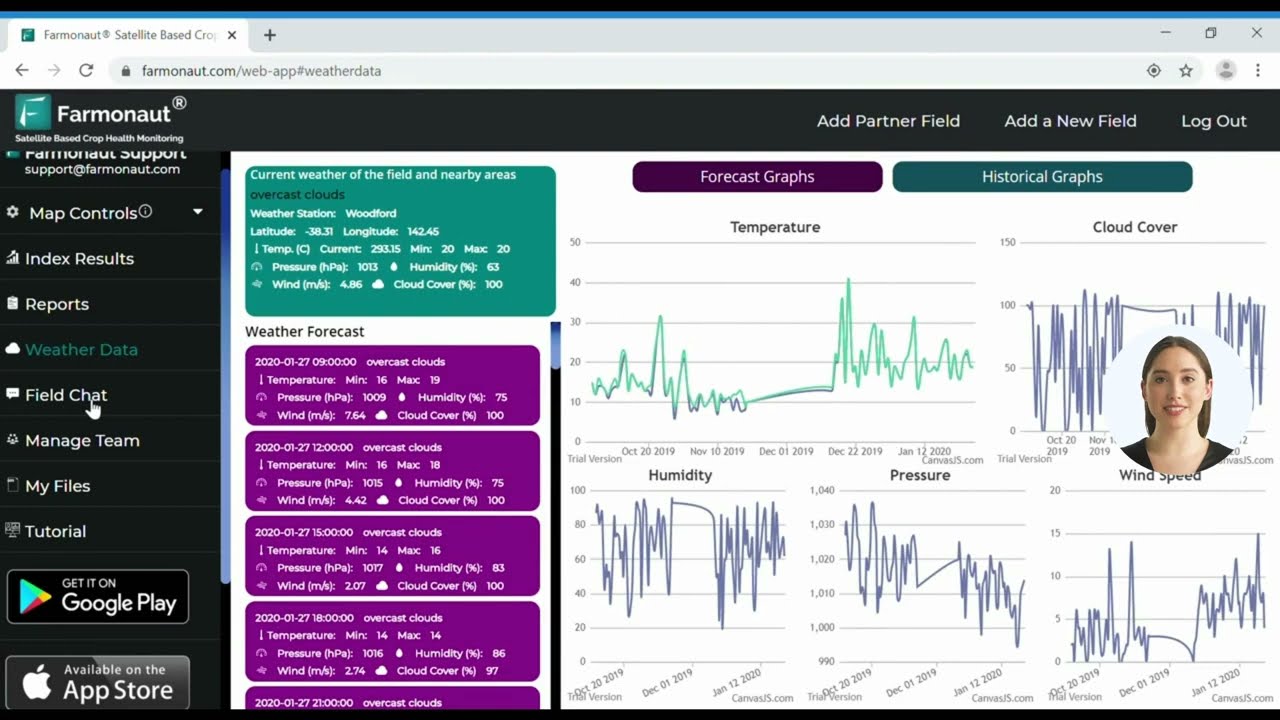
- ✔ Satellite Monitoring: Track vegetation health, crop stress, and in-season changes via multispectral imagery and NDVI analytics—identifying where nanoencapsulated inputs are most needed and effective.
- ✔ AI-Driven Advisory: Our Jeevn AI system provides tailored, data-driven recommendations, optimizing input scheduling and reducing waste for farmers using advanced formulations.
- ✔ Blockchain Traceability: We enhance transparency in nanoenabled agriculture with supply chain traceability solutions, building trust around innovative products.
- ✔ Environmental Monitoring: Track carbon and input footprints with real-time apps, ensuring regulatory compliance for sustainable farming. Discover more at our carbon footprinting page.
- ✔ Scalable Platforms: Farmonaut’s web, Android, iOS, and API-based solutions serve large-scale operations and smallholder farmers alike—see our large scale farm management tools.
Interested in automating your field data workflows? Explore our API for seamless integration, or read our API Developer Docs for advanced deployment.
Ready to begin? Instantly subscribe to Farmonaut’s tailored packages below, designed to help businesses and governments harness the full power of nanoencapsulation in agriculture:
FAQs: Nanoencapsulation & Nanotech in Agriculture (2026 Edition)
What is nanoencapsulation in agriculture?
Nanoencapsulation in agriculture refers to enclosing bioactive agents (such as nutrients, pesticides, growth regulators, or beneficial microbes) within nanoscale carriers (< 1 micron) to improve delivery efficiency, targeted action, and sustainability.
How does nanoencapsulation differ from traditional agrochemical application?
Traditional methods disperse active ingredients broadly, with low delivery efficiency and higher environmental risk. Nanoencapsulation enables sustained, site-specific, or triggered release, reducing off-target effects, lowering required doses, and achieving superior plant uptake.
Is nanoencapsulation safe for the environment and food supply?
Nanoencapsulation is designed to reduce environmental load and toxicity; however, robust risk assessments are essential. Environmental fate, persistence, and non-target effects are evaluated by regulatory authorities before approvals.
Will nanotech in agriculture work with my existing farm equipment?
Yes, most nano-formulations are engineered for compatibility with existing spraying, seeding, and fertigation systems—facilitating adoption at scale.
Where can I learn more or deploy monitoring for my farm or forestry project?
Visit farmonaut.com or start with our web app and explore real-time monitoring, AI-based advisory, and satellite-driven insights tailored for your operation.
Summary:
Nanotechnology in agriculture, and specifically nanoencapsulation, are reshaping how crops and forests are protected and nourished. By enclosing agrochemicals, nutrients, and beneficial agents within nanoscale carriers, we achieve targeted delivery, improved solubility, greater protective stability, and optimized field use. As a result, there is reduced input waste, lower environmental impact, and a foundation for truly sustainable, precision agriculture in 2025, 2026, and beyond. Farmonaut is committed to enabling all stakeholders with reliable satellite-based insights and tools to maximize the benefits of these technological advances while supporting a more resilient, productive, and transparent farming future.
Unlock the advantages of nanoencapsulation in agriculture—combine it with real-time satellite monitoring and AI-driven advice. Try our solutions today!

 MCSOD
MCSOD Marei Nursery
 Sayaji Group
 eKGIS
eKGIS Mostas Tech
 Native Seeds
 Andex
Andex FCF India
 Unifrutti Gulf
 Deluxe Conseil
 TVS Electronics
 WICO
WICO Chimera Innovation
 SkyHarvest
 Polaris Digitech
