

Reviewed August 2026 against USDA NASS Census of Agriculture, USDA NASS Technology Use Survey, and USDA Economic Research Service.
Try it: Run your own numbers →
Table of Contents
- Introduction
- Trivia: Pasture Management Insights
- The Importance of Effective Pasture Management
- How Technology is Transforming Pasture and Grazing Management
- Pasture Management App: 7 Powerful Tools for Success
- Key Features of Pasture Management Tools and Their Estimated Benefits
- Rotational Grazing Stocking-Rate Calculator
- Benefits of Using Pasture Management Apps
- Farmonaut: Bringing Advanced Farm Management Solutions to Farmers
- How to Choose the Right Pasture Management App (and MaiaGrazing Alternatives)
- Integrating Modern Solutions for Smarter Pasture Management
- Frequently Asked Questions
- Conclusion
- Try it: Run your own numbers
Introduction to Pasture Management App Solutions
A pasture management app is software that maps paddocks, schedules grazing rotations, and tracks forage and soil condition so a rancher can move cattle before pasture is overgrazed. The category exists because about 40% of U.S. cow-calf operations reported using rotational grazing in 2018, according to the USDA Economic Research Service, and rotational systems only pay off when someone is tracking rest periods across dozens of paddocks — a job spreadsheets handle badly. This article compares seven tool categories these apps offer, names specific products worth evaluating, including MaiaGrazing (now a legacy platform at its developer, Atlas Ag) and its alternatives, and shows where satellite-based platforms like Farmonaut extend the category beyond GPS collars and manual logs.
The 2022 Census of Agriculture counted 622,162 U.S. farms with beef cows, and farms specializing in beef averaged 628 acres, per USDA NASS. Total cattle on U.S. farms stood at 87.2 million head as of January 2024, per USDA NASS. That’s the addressable base for pasture management software. For scale, IMARC Group puts the whole U.S. farm management software market at USD 766.3 million in 2025 and forecasts USD 1,860.1 million by 2034.
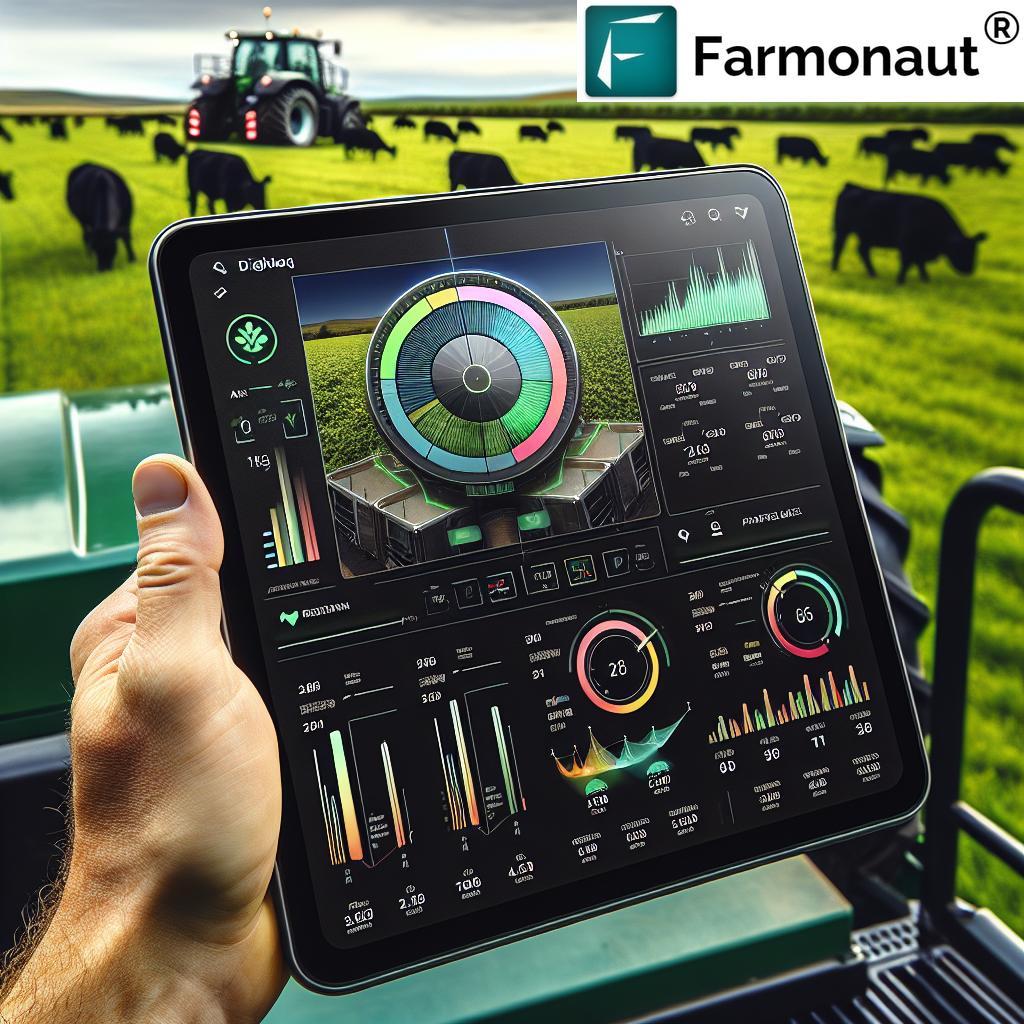

The Importance of Effective Pasture Management
Pasture management is a set of measurable practices — rotational grazing intervals, stocking density, soil nutrient tracking, and livestock movement records — not a vague commitment to “keeping grass healthy.” A central Georgia trial (Hoveland et al., Journal of Production Agriculture, 1997) compared a 12-paddock rotation, with 2 days of grazing and 22 days of rest, against continuous stocking on tall fescue and bermudagrass. Rotation carried a 38% higher stocking rate and produced 37% more calf weaning weight per acre, though individual calf weaning weights did not differ. Those are the two numbers that justify the switch to a pasture planning tool: more animals per acre, more pounds per acre, from the same land base.
- Boosting Forage Productivity: Rotational systems that rest paddocks on a schedule outperform continuous grazing on both stocking rate and gain, per the Georgia data above.
- Protecting Soil Health: Scheduled rest prevents the overgrazing that strips ground cover and depletes soil nutrients season over season.
- Resource Optimization: Matching herd movement to pasture growth cycles is the entire function of a grazing planning tool — it replaces guesswork with a paddock-by-paddock schedule.
- Environmental Compliance: A 2018 Michigan State University study of adaptive multi-paddock beef finishing (Stanley et al., Agricultural Systems) found soil carbon gains large enough to offset the system’s emissions, which matters for carbon-market or conservation-program eligibility.
- Livestock Health: Better-distributed, higher-quality forage under rotation reduces the nutritional stress that drives veterinary costs.
None of this requires guessing at figures that don’t exist. The gaps that do exist are worth naming plainly: there is no published USDA or NASS figure for what share of U.S. farms specifically use pasture management software (as distinct from rotational grazing as a practice), and no USDA-compiled national benchmark comparing continuous-grazing to feedlot economics per pound of gain. If you need either number for your own operation, the way to get it is to ask your state Extension office for the latest regional forage and economics fact sheet, since these are tracked locally rather than nationally.
How Technology is Transforming Pasture and Grazing Management
Digital adoption on U.S. farms has a documented baseline: 85% of U.S. farms had internet access and 55% had a broadband connection as of the USDA NASS 2025 Technology Use report, and 50% of U.S. farms used the internet to purchase agricultural inputs. That’s the connectivity floor pasture apps are built on. Because 74% of farms reach the internet through a cellular data plan, and paddocks often sit outside coverage, offline capture still matters.
- Grazing Patterns and Rotations: Track where, when, and how animals graze against a paddock-by-paddock schedule.
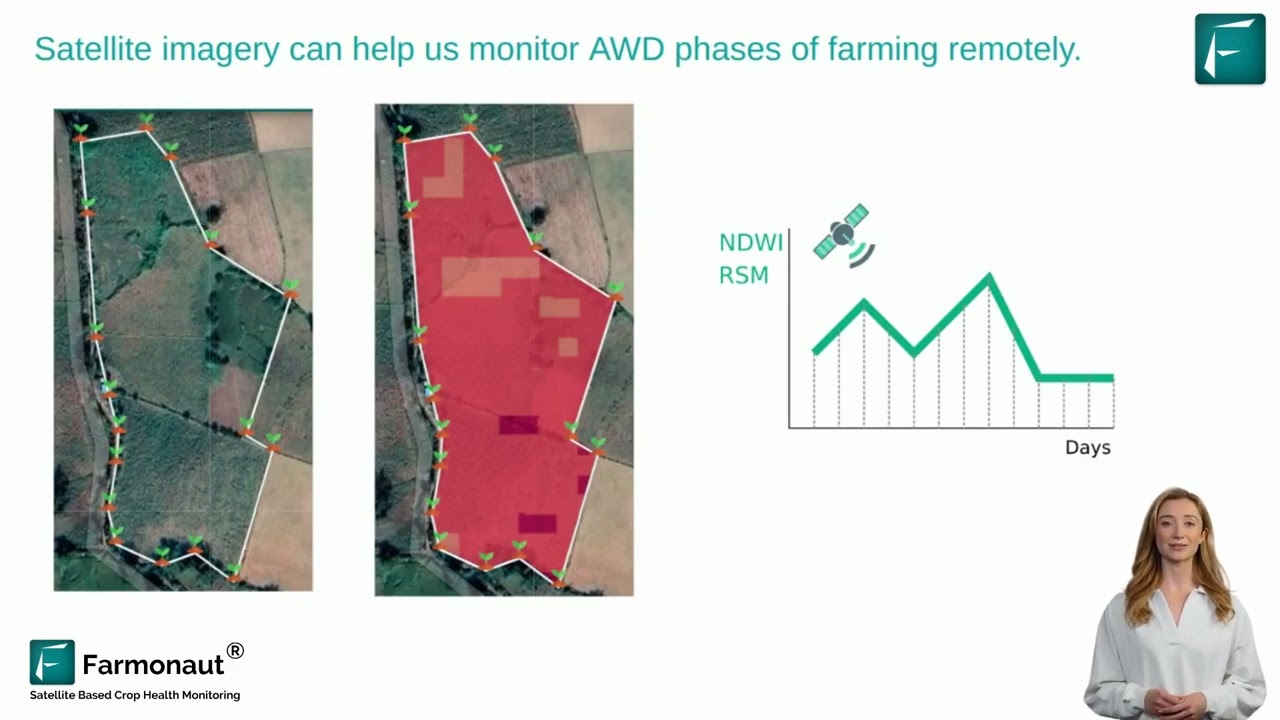
- Pasture and Soil Health: Assess moisture, nutrient content, and vegetation vigor via satellite imagery or field sensors.
- Livestock Movements: Monitor animal locations and grazing duration using GPS collars and digital tags.
- Farm Task Scheduling: Track fence repairs, water source checks, and other maintenance against a calendar instead of memory.
- Resource Use: Measure fertilizer and irrigation inputs against outcomes for cost and environmental accounting.
Centralizing this data doesn’t just save paperwork — it’s the difference between a 628-acre beef operation (the 2022 Census average) managing paddocks by memory and managing them by record. At that scale, a missed rest period on one paddock compounds across a full rotation before anyone notices without a log.
Pasture Management App: 7 Powerful Tools for Smarter Farming
These are the seven functional categories that make up a modern pasture management app, cattle pasture app, or livestock grazing software platform. Products differ in which of the seven they bundle — that’s the actual basis for comparing a pasture mapping software tool against a full grazing management suite.
1. Grazing Management Tools
- What it does: Plans, monitors, and adjusts grazing rotations across paddocks.
- Why it matters: Automated scheduling ensures each paddock gets a productive grazing period and adequate rest, preventing the overgrazing that a continuous system allows by default.
- Technical Superpower: Custom maps and data-driven recommendations align grazing pressure with pasture growth cycles — the same logic behind the Georgia study’s 12-paddock rotation.
2. Livestock Tracking Technology
- What it does: Uses GPS devices and field sensors to track animal movement and time spent in each paddock.
- Why it matters: Reduces labor for herd checks and supplies the movement data that pasture rotation and water-access planning depend on.
- Technical Superpower: Location and occupancy alerts flag both overgrazing and underused pasture before either becomes a season-long problem.
3. Soil and Pasture Health Monitoring
- What it does: Captures soil moisture, nutrient levels, and vegetation indices via satellite or ground sensors.
- Why it matters: Informs fertilization and irrigation timing directly, instead of on a fixed calendar regardless of actual pasture condition.
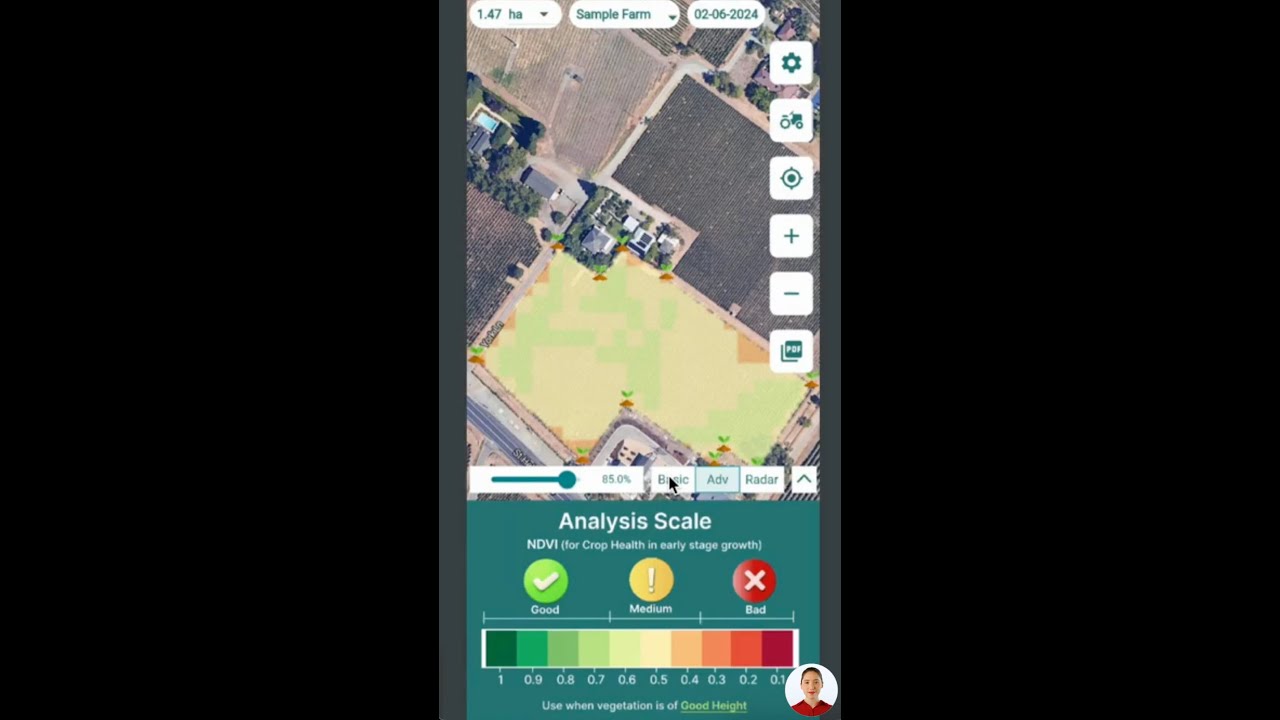
- Technical Superpower: NDVI and related vegetation indices flag underperforming zones at the paddock level, not just farm-wide.
4. Record-Keeping and Automated Reporting
- What it does: Replaces manual logs with cloud-based or offline digital records of grazing schedules, movements, and inputs.
- Why it matters: Cuts the administrative time behind compliance reporting and season-over-season performance review.
- Technical Superpower: Instant compliance and performance reports replace end-of-season paperwork reconstruction.
5. Task and Farm Maintenance Management
- What it does: Schedules and tracks fence repairs, water source inspections, and pasture improvement work.
- Why it matters: A missed fence repair or dry water trough is the most common reason a rotation plan fails in practice, not the plan itself.
- Technical Superpower: Task notifications sync with digital field mapping so maintenance work is tied to the same map used for grazing decisions.
6. Digital Pasture Mapping & Forage Analytics
- What it does: Visually maps paddocks, gates, water sources, and fence lines, often with forage growth analytics layered in.
- Why it matters: Identifies underperforming areas and shortens the route-planning work behind moving a herd efficiently.
- Technical Superpower: Layered maps combining boundaries, imagery, and growth data support faster paddock-by-paddock decisions.
How to Map Pastures Before You Plan Grazing
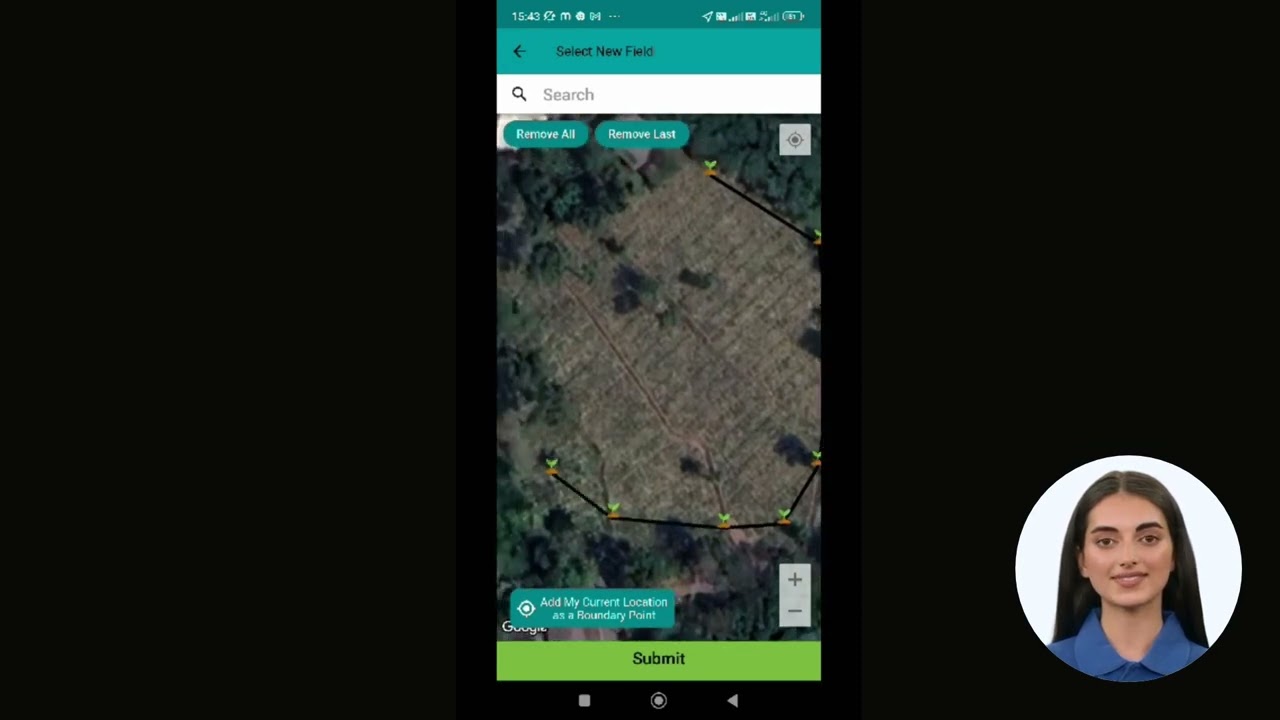
Pasture mapping software is only as useful as the first map you draw. A good base map takes an afternoon and saves weeks of guesswork later.
- Import a boundary. Start from an existing file (NRCS conservation plan map, Google Earth KML or a shapefile) rather than tracing by hand.
- Draw every paddock as its own shape. The software calculates the area, which drives stocking-rate and animal-days-per-acre figures. Wrong areas mean wrong rest periods.
- Mark water, gates and lanes. A paddock without reliable water is not really available, and gate positions decide how fast you can move a herd.
- Add temporary fences as separate cells. Polywire strips and breaks should be drawn as their own grazing cells so rest days are tracked for each one.
- Record the first grazing event. Log which herd went in, when, and the pasture condition. From then on the app counts grazing days and rest days on its own.
For pasture design, such as splitting a large paddock, sketch the new fence lines in the app first and check the resulting paddock sizes and water access before building anything.
7. Automated Alerts & AI-driven Decision Support
- What it does: Uses AI to recommend rotation timing, input adjustments, or flag livestock behavior anomalies.
- Why it matters: Shifts management from reactive to proactive, catching problems before a paddock is visibly overgrazed.
- Technical Superpower: Algorithm-driven insights support both daily decisions and season-long strategic planning.
Key Features of Pasture Management Tools and Their Estimated Benefits
The table below breaks the seven tool categories down by function so you can match features to what your farm actually needs, rather than buying a bundle for capabilities you won’t use.
| Tool Category | Core Functionality | Best Suited For | Requires Connectivity |
|---|---|---|---|
| Grazing Management Tools | Plan, schedule, and analyze grazing rotations for optimal pasture utilization | Rotational grazing operations, 628-acre average beef operations | Offline-capable in most products |
| Livestock Tracking Technology | GPS-enabled monitoring of animal movements and location | Large-acreage ranches with dispersed herds | GPS only; syncs when connected |
| Soil & Pasture Health Monitoring | Satellite/sensor assessment of soil moisture, nutrients, and vegetation vigor | Operations pursuing fertilization and irrigation precision | Satellite-based, no field sensor required |
| Record-Keeping & Automated Reporting | Digital logs and instant compliance/performance reports | Operations under conservation-program or buyer compliance requirements | Offline capture, cloud sync |
| Task & Maintenance Management | Schedule and track fence repairs, water inspections | Multi-person teams needing task assignment | Cloud-based, mobile notifications |
| Digital Pasture Mapping & Forage Analytics | Visual mapping of fields, features, and forage growth analytics | Farms planning paddock subdivisions or new fencing | Satellite imagery, low bandwidth |
| Automated AI-driven Alerts | AI-generated recommendations for rotations, inputs, livestock health | Operators wanting proactive rather than reactive management | Cloud processing, mobile alerts |
The gaps worth flagging here: no USDA or peer-reviewed source publishes standardized labor-hours-saved or grazing-efficiency-percentage figures by software category, so this table reports functionality and fit rather than manufactured percentages. If a vendor’s marketing page gives you an exact “22% efficiency gain” figure, ask what study it’s sourced from — most of these numbers in the category are vendor estimates, not third-party research.
Rotational Grazing Stocking-Rate Calculator
Use your own paddock count and rest period to estimate how a rotational system compares to continuous grazing, based on the 38% stocking-rate gain and 37% gain in calf weaning weight per acre measured in a central Georgia 12-paddock trial (Hoveland et al., 1997). Results on your land will differ with forage, rainfall and management.
Run your own numbers
Benefits of Using Pasture Management Apps
Consolidating grazing, mapping, and livestock data in one platform delivers benefits that compound with farm size — a 628-acre average beef operation has more to gain from centralized records than a 40-acre hobby farm, simply because manual tracking breaks down faster at scale.
- Enhanced Efficiency: Centralizing grazing, mapping, and livestock tracking data streamlines workflow and decision-making across a full rotation.
- Effective Record-Keeping: Digital logs and automated reports reduce manual error and administrative burden while easing compliance documentation.
- Cost Savings: Pinpointing inefficiencies and reducing unnecessary fertilizer or water inputs directly improves margins.
- Sustainability: Well-managed rotational grazing can build soil carbon; the 2018 Michigan State University study above found adaptive multi-paddock finishing stored enough to offset its emissions.
- Improved Grazing Decisions: Reliable maps and analytics match animal demand to forage availability, reducing overgrazing risk the way the Georgia study’s 12-paddock rotation did.
Farmonaut: Bringing Advanced Farm Management Technology to Farmers Worldwide
Among the pasture management app options, Farmonaut is built on satellite monitoring rather than field sensors or GPS collars alone — a meaningful difference for the 628-acre average U.S. beef operation, where instrumenting every paddock with hardware is a real cost barrier.
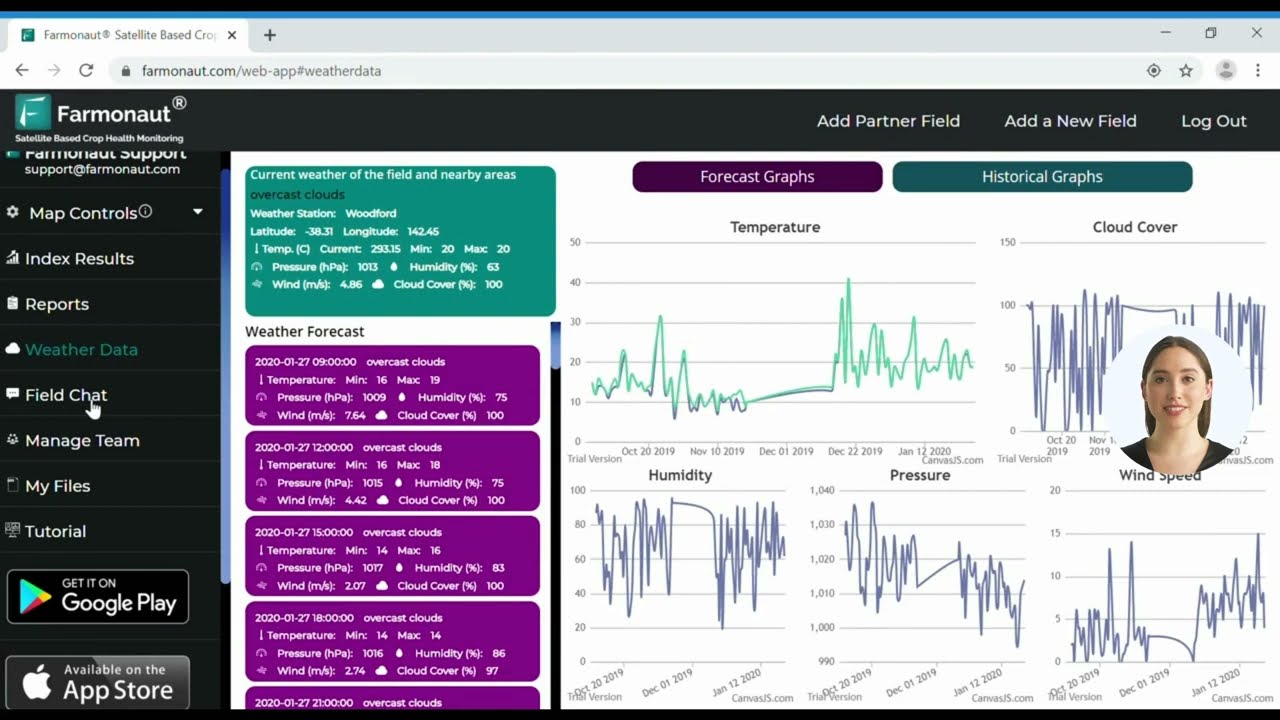
- Satellite-Based Crop and Soil Health Monitoring: Using multispectral imagery and mobile/web apps, Farmonaut monitors pasture and crop health — including NDVI, soil moisture, and nutrient status — without ground sensors.
- Jeevn AI Advisory System: Combines weather, satellite insight, and farm history into recommendations for fertilizer use, grazing schedules, and more.
- Traceability: Farmonaut’s blockchain-based traceability tracks produce from pasture to table, supporting buyer and consumer trust.
- Fleet and Resource Management: Fleet management tools track vehicles and machinery across large pasture estates.
- Carbon Footprinting: Real-time emission tracking supports operations pursuing eco-certification or the kind of soil-carbon outcomes documented in the Michigan State study above.
- Access to Farm Data via API: Developers and agribusinesses can integrate Farmonaut’s satellite data with existing farm management technology; see the API documentation.
- Scalability: From a smallholder up to large-scale farm operations, the platform scales with tailored modules per operation size.
All Farmonaut services are available via Android, iOS, and web apps.



How to Choose the Right Pasture Management App (and MaiaGrazing Alternatives)
The number of pasture planning software options keeps growing, and some older names are being retired or folded into new products. Selecting the right one — and finding a MaiaGrazing alternative that fits your operation better — comes down to five factors:
- Device Compatibility: Confirm the app runs on your preferred platform (Android, iOS, or web) and integrates with other farm management technology you already use.
- User-Friendliness: An intuitive interface matters most if multiple people on the operation will use it.
- Offline Functionality: Only 55% of U.S. farms used a broadband connection in 2025 (USDA NASS), and phone coverage is patchy in many paddocks, so look for local data storage that syncs when connectivity returns.
- Support & Training: Vendor support and training resources directly affect adoption and return on the software cost.
- Cost: Match budget to features — a 628-acre operation doesn’t need the same tier as a 5,000-acre ranch.
Popular Pasture Management Apps and MaiaGrazing Alternatives
- Pasture Pro: ranch app covering maps, tasks, livestock records and grazing rotations; works offline with unlimited users, with the livestock module paid.
- Pasture.io: web-based grazing planner with paddock history, satellite pasture measurement and an AI assistant called Pio.
- MaiaGrazing: grazing planning and forage budgeting platform; its developer, Atlas Ag, now lists it as a legacy platform and points new customers to Atlas Grazing.
- fieldmargin: farm mapping, herd moves with automatic grazing-day and rest-day counts, and tasks pinned to map locations.
- Herdwatch: herd records app sold in Ireland, the UK, the U.S. and Canada, with paddock maps, grazing-day and rest-period tracking, and grazing reports.
Need satellite-driven analytics rather than field-sensor or manual-entry data alone? Farmonaut is worth evaluating alongside the five above, particularly for operations wanting global-scale monitoring without instrumenting every paddock.
Pasture Management Software Compared
The table uses what each maker says on its own site, checked September 2026. Prices change often, so confirm before you subscribe.
| App | Grazing planning | Mapping | Field use | Listed price |
|---|---|---|---|---|
| PastureMap (Grassroots Carbon) | Grazing periods, rest days, stocking and carrying capacity, animal days per acre, season forecasts | Upload NRCS, Google Earth or ArcGIS maps; paddocks and water points | Browser, iOS and Android; works offline | Starter US$10/month (50 animals, one user); larger tiers on request |
| Pasture.io | Online grazing planner with full paddock history and nutrition calculator; AI assistant (Pio) | Satellite pasture measurement and weather stations | Web app | See vendor |
| Herdwatch | Grazing days, rotation history and rest periods per paddock | Digital pasture maps with paddock history | Mobile app; herd records in the same account | See vendor |
| fieldmargin | Herds moved on the map; grazing and rest days counted automatically | Farm map with fences, gateways, water pipes; grazing cells | Mobile and web; tasks pinned to map locations | See vendor |
| Pasture Pro (MyAgInnovations) | Grazing rotations in the paid livestock module | Property boundaries, livestock locations, points of interest | iOS and Android; offline; unlimited users | Maps and tasks at no charge; livestock module paid |
| MaiaGrazing / Atlas Grazing (Atlas Ag) | Grazing planning and forage budgeting | Paddock maps | Mobile app | MaiaGrazing is now listed as a legacy platform; new customers are pointed to Atlas Grazing |
If you mainly want a rotation calendar and rest-day counts, PastureMap, fieldmargin or Herdwatch cover it. If you want pasture cover estimated from satellite images rather than walked with a plate meter, look at Pasture.io or a satellite platform such as Farmonaut.
Integrating Modern Solutions for Smarter Pasture Management
The future of farming lies in integrating monitoring and management tools rather than running separate apps for mapping, compliance, and finance. Pairing pasture monitoring software with broader resource management unlocks productivity gains beyond what any single tool delivers alone.
- Farmonaut API: Developers can connect custom platforms via the Farmonaut satellite data API for pasture and crop analytics.
- Product Traceability: Add marketplace and consumer trust with blockchain-based product traceability.
- Fleet Management: Manage agricultural machinery and logistics from one dashboard via fleet management tools.
- Crop, Plantation, and Forest Advisory: Use AI-driven advisory for crop rotation, irrigation, and fertilization schedules.
- Crop Loan and Insurance: Facilitate satellite-based verification for loan and insurance through Farmonaut’s solutions.
Frequently Asked Questions About Pasture Management Apps
What is a pasture management app?
A pasture management app is software that helps farmers and ranchers monitor, plan, and optimize pasture and grazing management — mapping fields, tracking livestock, scheduling tasks, and analyzing soil health from a phone, tablet, or computer.
What’s the best MaiaGrazing alternative?
MaiaGrazing is now a legacy product, and its developer points new users to Atlas Grazing. Among other options, PastureMap and Pasture.io focus on grazing plans and paddock history; Herdwatch pairs grazing records with herd records; fieldmargin bundles mapping and tasks; Pasture Pro works offline with unlimited users; Farmonaut adds satellite-based soil and vegetation monitoring that field-sensor-based tools don’t cover. See the comparison in the “How to Choose” section above.
How can these apps improve my farm’s efficiency?
By centralizing data and automating routine tasks, they cut the manual record-keeping load and support faster, better-informed grazing decisions — the kind of rotation management behind the 38% stocking-rate gain in the Georgia trial cited above.
Can I use these tools if my farm is in a remote area?
Yes. With 55% of U.S. farms on broadband as of the USDA NASS 2025 Technology Use Survey, many platforms — including Farmonaut — offer offline functionality so data collection continues without a live connection and syncs later.
Are there cost-effective options for smaller farms?
Yes. Subscription pricing and modular features let smaller operations pay only for what they use. Farmonaut’s pricing tiers are viewable through the app link above.
How do pasture management apps help with sustainability?
Soil health monitoring, resource analytics, and grazing tracking support well-managed rotational grazing, which a 2018 Michigan State University study linked to soil carbon gains large enough to offset emissions from beef finishing.
Do these apps integrate with livestock tracking technology?
Most leading apps support livestock tracking via GPS collars, digital tags, or sensor integration for real-time monitoring of animal movement and grazing patterns.
Conclusion: The Future of Pasture Management is Digital
The category’s direction is set by the numbers above: 622,162 U.S. farms with beef cows, beef farms averaging 628 acres, and a documented 38% stocking-rate gain from rotation that about 60% of cow-calf operations still don’t use. Whichever pasture management app you choose — Atlas Grazing, PastureMap, Pasture.io, Herdwatch, fieldmargin, Pasture Pro, or a satellite-based platform like Farmonaut — the decision should rest on which of the seven tool categories above your operation is actually missing, not on which app has the most features listed.
For a rundown of what to check before switching software, revisit the “How to Choose the Right Pasture Management App” section, and use the stocking-rate calculator above to estimate what a rotational system could do for your own acreage before you commit to a platform.

 Blue BearX
 Insignito
 Croptimum
 Dalmia Bharat Sugar
 DnCubed
 Pistachio ST
 Field Capacity
 Indosistim Teknologi
 Liquify Digital
 CU Foods
 BeyondTech Global
 Rouge VC
 AgroGreen Dynamics
 AgroRisk
 Oath Inc
 Reddane Farming
 Esri North East Africa
 Cresol
 MDCV UK
