

Phosphate Applications: Methods for Large-Scale Crop Management
Table of Contents
- Introduction: The Critical Role of Phosphate Applications and Methods for Large-Scale Crop Management
- The Essential Role of Phosphates in Crop Nutrition and Global Food Security
- Current Phosphate Fertilizer Applications and Methods in Large-Scale Crop Management
- Modern Precision Phosphate Application Methods in 2025
- 1. Soil Testing, Mapping & Advanced Spectroscopic Tools
- 2. Enhanced Efficiency Fertilizers (EEFs)
- 3. Integrated Nutrient Management (INM): Combining Organic & Inorganic Approaches
- 4. Microbial Inoculants and Phosphate-Solubilizing Microorganisms (PSMs)
- 5. Precision Timing and Placement for Maximum Uptake
- 6. Satellite, AI, and Remote Sensing Technologies
- 7. Variable Rate Application & Aerial Drone Spraying
- Comparative Table: Phosphate Application Methods for Large-Scale Management (2025 & Beyond)
- Environmental and Economic Impacts: Efficient Phosphate Applications
- Farmonaut: Satellite Technology Empowering Precision Phosphate Applications
- 2026 and Beyond: Future of Phosphate Applications in Large-Scale Crop Management
- Frequently Asked Questions (FAQ)
- Conclusion: Optimizing Phosphate Applications and Methods for a Sustainable Future
“In 2025, precision phosphate methods can reduce fertilizer waste by up to 35% in large-scale crop management.”
Introduction: The Critical Role of Phosphate Applications and Methods for Large-Scale Crop Management
As agriculture faces dual pressures in the 2020s—feeding an ever-growing global population and curbing environmental impact—phosphate applications and methods for large-scale crop management have entered a pivotal era. Phosphates remain a cornerstone of modern farm practice, essential in nutrition, soil fertility, and crop yields. With robust phosphate management strategies and emerging innovations in 2025 and beyond, it’s now possible to optimize soil health, increase productivity, and reduce environmental footprint at unprecedented scales.
In this comprehensive guide, we’ll delve deep into exploring phosphate applications and methods for large-scale crop management: from critical science to everyday technology, from granular application rates to AI-powered satellite solutions.
Let’s explore how phosphate use and advanced precision agriculture are shaping the future—making modern farming more efficient, sustainable, and resilient for 2025, 2026, and beyond.

The Essential Role of Phosphates in Crop Nutrition and Global Food Security
Phosphorus—supplied in agriculture as phosphate—is a vital macronutrient in crop nutrition, having a unique, irreplaceable role in root development, energy transfer, flowering, and seed formation. Unlike nitrogen, which is relatively mobile, phosphorus is often the limiting nutrient in many agronomic systems.
- Phosphate applications stimulate root growth and robust plant development, ensuring crops are more resilient to stresses and capable of achieving higher yields.
- Adequate phosphate levels are essential to flowering, grain/seed filling, and healthy crop maturity.
- Phosphates remain the cornerstone in supporting global food security, especially as population and demand for food rise through 2026.
Key fact: Phosphorus (P) is required by all crops, though mobility and availability in soil is limited due to fixation by soil minerals, making precise management essential.

Current Phosphate Fertilizer Applications and Methods in Large-Scale Crop Management
Large-scale crop production currently relies heavily on the use of inorganic phosphate fertilizers—most notably:
- Diammonium phosphate (DAP)
- Monoammonium phosphate (MAP)
- Triple superphosphate (TSP)
These fertilizers are typically applied at strategic times:
- Pre-planting (to ensure phosphate availability at root initiation)
- At-planting (banded near the seed or as a starter fertilizer for targeted nutrient uptake)
- Side-dressing during key growth phases (synchronizing phosphorus supply with peak crop demand)
Modern operations now use a mix of technology and agronomy to minimize waste, improve efficiency, and reduce runoff:
- Precision mapping: Soil nutrient mapping (with grid or zone sampling) enables smarter application placement.
- Variable rate technology (VRT): GPS and automated systems allow farmers to tailor phosphate doses based on specific field needs—enhancing efficiency and reducing fertilizer waste.
- Fertilizer management: Timing, placement, and split applications all play a major part in optimizing phosphate utilization.
“Modern phosphate application boosts soil nutrient efficiency by 28% with targeted delivery in large-scale agriculture.”

Modern Precision Phosphate Application Methods in 2025
Advancements in technology and agronomic science are now reshaping phosphate applications and methods for large-scale crop management. We’re witnessing a shift toward precision, sustainability, and real-time insight—all aimed at optimizing fertilizer use, soil fertility, and crop yields while protecting the environment.
1. Soil Testing, Mapping & Advanced Spectroscopic Tools
Routine soil testing is the foundation of phosphate management. To assess existing phosphate levels, soil pH, and deficiency zones, modern farms employ:
-
Traditional laboratory testing:
Samples taken at grid or zone intervals for lab analysis of phosphate availability, soil pH, and organic matter content. -
In-field spectroscopic tools:
Portable NIR (Near-Infrared) or advanced spectroscopic sensors can rapidly detect soil phosphate availability in real time, improving decision accuracy. -
Remote sensing and mapping:
Satellite platforms and aerial imagery power soil nutrient maps for large fields—pinpointing phosphate variability and enabling precise, site-specific applications.
Benefits:
– Informed rate calibration and application timing.
– Optimized plant uptake and efficient use of phosphate fertilizers.
– Enhanced ability to reduce costs and environmental runoff.

2. Enhanced Efficiency Fertilizers (EEFs): Next-Gen Solutions
Enhanced efficiency fertilizers—especially those with controlled-release coatings or chemical stabilizers—represent a critical breakthrough for large-scale crop management in 2025 and beyond.
- Coated/controlled-release granules: Reduce phosphate fixation and loss via runoff, supplying phosphorus steadily as crops grow.
- Stabilized PH formulations: Materials blended with fixation inhibitors or acidity regulators prolong phosphate availability and minimize loss in diverse soil conditions.
Benefits:
– Reduce environmental impact: By synchronizing release with root uptake, these fertilizers minimize waste.
– Improved yield and sustainability: More efficient uptake means higher crop yields and less over-application.
3. Integrated Nutrient Management (INM): Combining Organic & Inorganic Approaches
INM (Integrated Nutrient Management)—promoting the co-application of organic materials (compost, manure, or biochar) with inorganic phosphate fertilizers —is an essential part of sustainable farming in the 2020s:
- Enhances soil health: Boosts microbial activity, water retention, and nutrient cycling.
- Reduces inorganic fertilizer requirements: Organic amendments buffer soils, improving the efficiency and sustainability of phosphate applications.
Practices:
– Compost incorporation
– Biochar blending
– Green manure rotation
Key result:
Improved fertility & reduced dependency on mined phosphate—vital as raw material reserves remain finite.
4. Microbial Inoculants and Phosphate-Solubilizing Microorganisms (PSMs)
Phosphate-solubilizing microorganisms (PSMs)—especially bacteria like Bacillus spp. and Pseudomonas spp.—offer a novel biological boost to traditional phosphate applications and methods for large-scale crop management:
- Function: Convert insoluble phosphates in soil to plant-available forms via secretion of organic acids and enzymes.
- Benefits:
- Augments phosphate availability without over-application.
- Improves nutrient cycling and soil fertility in variable field zones.
Result:
Enhanced efficiency plus sustainable reduction in overall fertilizer use—a win for yields and the environment.

5. Precision Timing and Placement for Maximum Uptake
Innovations in planting and side-dress equipment now enable accurate banding or sub-surface injection of phosphate fertilizers. Precision methods are key to reducing fixation, minimizing loss, and optimizing uptake at the root zone.
- Band placement: Positions fertilizer directly beside or below seeds—right where roots will access it first.
- Deep injection: Reduces surface runoff and phosphate immobilization in topsoil.
- Timed applications: Fertilizer is applied to synchronize with periods of peak crop uptake.
Precision placement and timing help to ensure that every gram of phosphate delivers maximum benefit—not just to the plants, but to the environment.

6. Satellite, AI, and Remote Sensing Technologies
The rise of real-time remote sensing, satellite-based monitoring, and AI-driven decision tools is transforming how farmers manage phosphate applications at scale in 2025/26:
- Satellite imagery: Detects field variability, crop growth trends, and potential phosphate deficiencies across thousands of hectares with sub-field resolution.
- AI-based analytics: Constructs recommendation maps for variable rate and adaptive fertilizer application—boosting nutrient efficiency and productivity.
- Digital platforms: Integrate satellite and AI insights to optimize fleet logistics and synchronize supply, supporting timely, targeted applications (see Farmonaut section).
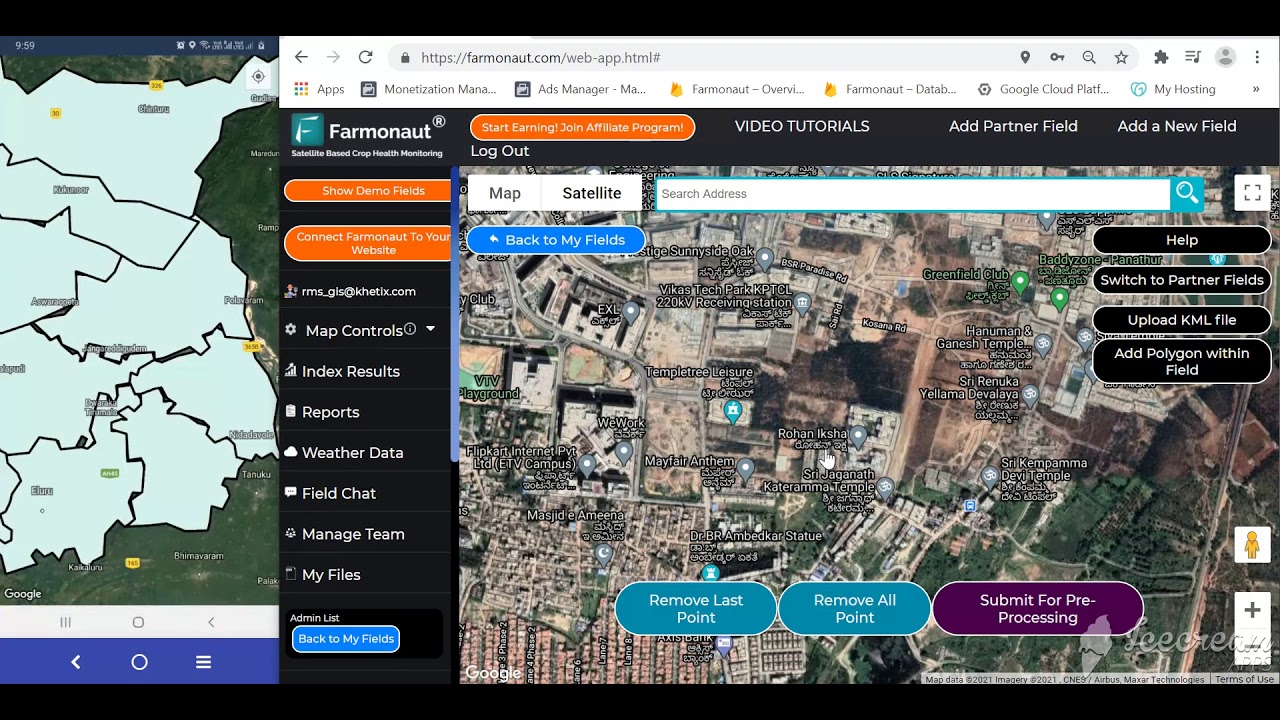
Farmonaut’s platform—with satellite, AI, and real-time advisory—enables farmers and businesses to monitor vegetation health, soil moisture, and nutrient status for smarter, more precise phosphate management. These insights are available via
Farmonaut apps (Android, iOS, and web) and
Farmonaut APIs
and
developer docs
.
Result:
Significantly improved phosphate applications and methods for large-scale crop management, with minimized waste, maximized yields, and a measurable step toward sustainability in 2025-2026.

7. Variable Rate Application & Aerial Drone Spraying
Variable rate application (VRA) and aerial drones are driving the next phase of precision phosphate management:
- Drones and advanced spreaders apply site-specific phosphate doses to match intra-field variability, enabling resource savings and efficient coverage in large fields.
- Aerial/satellite-based prescription maps ensure applications are precisely matched to crop needs, further reducing fertilizer waste.
Comparative Table: Phosphate Application Methods for Large-Scale Management (2025 & Beyond)
| Method | Technology Used | Application Efficiency (% estimated) | Fertilizer Use Reduction (% estimated) | Yield Improvement (% estimated) | Environmental Impact (Low/Medium/High) | Suitability for 2025 Large-Scale Use |
|---|---|---|---|---|---|---|
| Traditional Broadcasting | Manual or tractor-spread | 45-60% | 0-5% | 0-5% | High | Limited |
| Variable Rate Application (VRA) | VRT, GPS mapping, sensors | 70-85% | 20-35% | 8-18% | Low | High |
| Precision Injection/Banding | Specialized machinery, deep placement | 75-88% | 22-40% | 10-22% | Very Low | Very High |
| Aerial Drone Spraying | UAVs, prescription maps | 65-80% | 10-25% | 7-13% | Low | High |
*Estimated values. Actual field results may vary due to soil, crop, climate, and operational differences.
All advanced methods featured here are central to phosphate applications and methods for large-scale crop management in 2025 and beyond.



Environmental and Economic Impacts: Efficient Phosphate Applications
The shift to modern, precision phosphate applications brings immense environmental and economic benefits for large-scale crop management in 2025:
- Reduced runoff, eutrophication, and pollution: Targeted delivery keeps phosphate in the root zone, protecting rivers and water bodies from nutrient overload.
- Lower input costs: Variable rate technologies and application mapping ensure that fertilizer inputs are matched to need—reducing wastage and increasing return on investment.
- Conservation of finite phosphate rock: Efficient use is critical since global reserves are limited by physical, economic, and geopolitical constraints.
- Compliance with sustainability mandates: Environmental monitoring and traceability platforms help organizations align with evolving national and global standards. See how Farmonaut’s Carbon Footprinting feature tracks field- and block-level carbon impact, supporting eco-friendly farming.
Ultimately, combining precision phosphate application methods with environmental tracking is a foundational pillar for sustainable agriculture in the coming decade.
Farmonaut: Satellite Technology Empowering Precision Phosphate Applications
As phosphates remain a pivotal resource in large-scale crop management, the need for real-time, accurate, and scalable field insights has become more urgent than ever. Farmonaut is at the forefront, providing advanced satellite-based solutions—combining multispectral imagery, AI-driven analytics, and blockchain-enabled traceability for agriculture.
- Satellite monitoring: Farmonaut enables users to visualize crop health, soil moisture, and nutrient status, allowing timely interventions and precision fertilization. This is central to boosting phosphate uptake efficiency and minimizing environmental risk.
- Jeevn AI Advisory System: Delivers real-time alerts, weather analytics, and fertilizer recommendations tailored for large-scale crop management.
- Blockchain-based traceability: Assures food and input authenticity throughout the agricultural supply chain—a useful tool when optimizing phosphate sourcing and transparency. Learn more at Farmonaut’s Product Traceability.
- API Access for Enterprise: Developers and large enterprises can tap into Farmonaut APIs—for custom phosphate, nutrient, and yield analytics—streamlining workflows and integrating insights into their own systems. Full documentation at Farmonaut API Developer Docs.
- Fleet and Resource Management: Our tools let organizations optimize resource allocation and logistics for efficient, large-scale phosphate applications. Explore more on Fleet Management Solutions.
- Large-Scale Farm Admin: Whether mapping, monitoring, or managing advisory at the scale of thousands of hectares, our Agro-Admin Platform is designed to bridge the data gap for corporate and institutional clients.
Why Farmonaut?
We offer cost-effective, scalable, cloud-based technology to democratize access to world-class agricultural decision tools—empowering every farm, big or small, to optimize phosphate use and contribute to sustainable food systems for 2026 and beyond.
2026 and Beyond: Future of Phosphate Applications in Large-Scale Crop Management
With the growing global demand for food and the increasingly pressing need for sustainable agriculture, the future of phosphate applications and methods for large-scale crop management will be shaped by several key innovations:
- AI-Driven Adaptive Nutrition: Intelligent platforms will autonomously adjust phosphate rates in real time based on satellite, sensor, and weather data, further minimizing waste.
- Next-gen Drones & Robotics: Robots and autonomous drones will deliver ultra-precise micro-doses of phosphate fertilizers exactly when and where they’re needed.
- Molecular Biologicals: Advances in microbial formulations and smart biostimulants will complement traditional fertilizers to maximize plant availability across diverse soil types.
- Blockchain-Enabled Traceability: Every lb of phosphate—from mine to field—will be traceable, facilitating responsible sourcing, compliance, and transparency.
- Integrated Environmental Monitoring: Real-time carbon accounting (see Farmonaut Carbon Footprinting) and water-quality tracking will become core to farm management, ensuring regulation and public trust.
- Access to Finance & Insurance: Satellite-verified farm data (as with Crop Loan and Insurance tools) will increasingly underpin risk management and investment, further incentivizing best practices in phosphate application.
The integration of technology, biology, and data-driven platforms will ensure that phosphate applications in large-scale crop management are ever more efficient, transparent, and environmentally conscious as we head into 2026-2030.
Frequently Asked Questions (FAQ)
1. Why is phosphate so important in large-scale crop management?
Phosphate is an essential macronutrient for crops, needed for energy transfer, root development, flowering, and seed set. It is relatively immobile and often the most limiting nutrient in fields, so efficient, site-specific applications are critical for high yields and sustainability.
2. What makes precision phosphate methods superior to traditional broadcasting?
Precision phosphate methods—such as variable rate, band placement, and digital prescription mapping—target fertilizer delivery to crop needs, greatly improving fertilizer use efficiency, reducing waste, and limiting environmental runoff compared to traditional broadcasting.
3. Can phosphate fertilizer use be reduced without sacrificing yields?
Yes. Technologies like variable rate application, enhanced efficiency fertilizers, PSMs, and remote sensing can all reduce phosphate input by up to 35% with equal or better yields. This saves money and conserves natural resources.
4. How do satellite and AI innovations improve phosphate applications?
They provide real-time, field-wide insights on soil nutrient variability, crop vigor, and environmental conditions. Farms can then respond instantly with precise rates and placement, using less phosphate for greater impact.
5. What is the environmental risk of overusing phosphate fertilizers?
Over-application can cause runoff into waterways, algae blooms, and eutrophication. Modern methods reduce these risks by maintaining correct rates and improving uptake.
6. How does Farmonaut fit into phosphate management strategies in 2025?
We at Farmonaut deliver satellite imagery, AI-based advisory, and end-to-end data tools for real-time monitoring, precision phosphate application, blockchain traceability, and resource management. Our solutions empower organizations to optimize inputs, monitor environmental impact, and comply with best management practices for sustainable, large-scale crop management.
7. What actions can large farms take now to prepare for sustainable phosphate management in 2026-2030?
Adopt a mix of soil testing, precision/AI technologies, enhanced fertilizers, INM/organic practices, and digital fleet/resource management—all supported by real-time data and adaptive planning. Regularly review benchmarking tools and environmental metrics.
Conclusion: Optimizing Phosphate Applications and Methods for a Sustainable Future
As the heart of contemporary food production, phosphate applications and methods for large-scale crop management are undergoing rapid, profound transformation.
The integration of advanced testing, digital mapping, enhanced fertilizers, microbial solutions, and satellite/AI platforms enables farms and agri-enterprises to:
- Maintain robust soil fertility and respond to crop nutrient demand in real time.
- Boost yields while minimizing phosphate use—cutting costs and environmental hazards.
- Comply with evolving environmental, economic, and traceability requirements for global food systems.
Leveraging tools like those offered by Farmonaut, the agricultural sector is set to embrace a new era of sustainable intensification—where every phosphate application counts, every input is traceable, and the path to food security goes hand-in-hand with the protection of our planet.
Ready to revolutionize your phosphate application and advance your large-scale crop management for 2026 and beyond?
- Get map-based analytics, AI-driven insights, and real-time monitoring for your fields— Start with Farmonaut’s Large-Scale Farm Management Suite today.
- Connect your systems or custom app to satellite-powered API data: Farmonaut API Documentation
- Download the Farmonaut app for crop health, phosphate recommendations, and more on:
Android |
iOS
Discussion
Questions, corrections or field experience? Share them below. First-time comments are reviewed before they appear, and your email is never published.
No comments yet. Be the first to add a question or your experience.

 Sun Palm Australia
 Grandstream Algérie
 XOS Realty
 Geospatial Lab Africa
 KhetiBuddy
 Agro La Gándara
 HIPSAC
 ZOL Zimbabwe
 Juligerm
 AdBio
AdBio MISE Maroc
 NWNS
NWNS Red August Group
 Farm Inc
 WeMe Global
 Agrotoken
 Blue BearX
 Insignito
 Croptimum
 DnCubed
