

Table of Contents
- Introduction: The Smart Revolution in Farming Machines (2025 & Beyond)
- The Evolution of Agriculture Machines: From Mechanical to Smart
- Precision Agriculture: The Rise of Smart Farming Machines
- Automation in Agriculture: Boosting Labor Efficiency
- Smart Farming Machines and Sustainability Impact in 2025
- Comparison Table of Smart Farming Machines and Key Benefits (2025)
- Empowering Farming with Farmonaut Satellite Technology
- Challenges & The Future Path for Smart Machines in Agriculture
- FAQ: Smart Farming Machines 2025
- Conclusion: Transforming Agriculture for a Sustainable Tomorrow
“By 2025, smart farming machines are projected to increase crop yields by up to 30% globally.”
Smart Farming Machines 2025: Revolutionizing Agriculture
The agricultural sector has witnessed a significant transformation in recent years, propelled by the rapid integration of advanced technologies and next-generation farming machines. As we approach 2025 and beyond, the adoption of smart farming machines and automation is unlocking unprecedented gains in efficiency, productivity, and sustainability for farmers across the world.
Increasing food demands, combined with climate change, labor shortages, and the quest for environmental responsibility, have brought forth a new era—one characterized by precision agriculture and intelligent machines in agriculture. In this comprehensive exploration, we delve into the evolution, advancements, and transformative impact of smart farming machines in 2025, their role in shaping sustainable agriculture, and how companies like Farmonaut empower this revolution through cutting-edge satellite and AI-driven insights.
The Evolution of Agriculture Machines: From Mechanical to Smart
Traditional agriculture machines—such as tractors, harvesters, and seeders—have formed the backbone of modern farming for decades. Their introduction revolutionized agriculture, replacing manual labor with mechanical muscle and enabling the large-scale cultivation of crops on diverse soil types and challenging terrains.
- Early machines mechanized plowing, planting, and harvesting.
- Semi-automated machinery emerged, featuring basic hydraulics and engine-driven power for increased productivity.
- However, these iterations, while pivotal, remained largely rudimentary mechanical tools—limited in their adaptability, efficiency, and ability to respond to changing field conditions in real-time.
The latest iterations of agriculture machines have evolved far beyond just mechanical force. Today, we see IoT-embedded, AI-powered, and sensor-equipped smart farming machines that are adaptable to the diverse field conditions and can respond intelligently to their environment. This integration of cutting-edge technologies is the linchpin of our sector’s ongoing transformation.
Key Advancements in Smart Agriculture Machines (2025)
- IoT Sensors: Modern farming machines come equipped with sensors that monitor soil moisture, nutrient levels, crop growth, and environmental conditions in real-time.
- GPS Guidance Systems: Autonomous tractors and smart seeders employ GPS for precision planting, field mapping, and route optimization—maximizing productivity and minimizing input wastage.
- AI-powered Analytics: Advanced AI algorithms process vast streams of field data, offering actionable recommendations and automation capabilities previously unattainable.
- Machine Learning Capabilities: Machines leverage machine learning to adapt to changing soil conditions, forecast weather variability, and detect pest infestations on the fly.
- Cloud Connectivity: Real-time connection to cloud-based platforms, enabling farm-wide management and data-driven decision-making.
For instance, a combine harvester in 2025 is no longer a mere mechanical reaper—it is an intelligent harvester equipped with sensor arrays that monitor grain quality, crop moisture levels, and relay this data for instant adjustment of machine settings, maximizing both speed and quality of harvesting.
The Backbone of Productivity: Modern Tractors, Harvesters & Seeders
- The tractor—once a simple plow-pulling mechanical horse—is now an autonomous, GPS-guided platform capable of precision tillage, planting, and resource application with minimal human intervention.
- Precision seeders utilize AI-driven guidance systems to plant at optimal depths and intervals, maximizing germination success and reducing wastage.
- Harvesters monitor moisture and grain quality in real-time, adjusting operational settings for the best yield and post-harvest quality.

Precision Agriculture: The Rise of Smart Farming Machines
Precision agriculture is a revolutionary methodology—aiming to optimize every input (water, fertilizers, pesticides) and maximize output while minimizing environmental impact. Central to this approach are smart farming machines that blend real-time data with
AI-based decision-making.
How Smart Farming Machines Enable Precision Agriculture in 2025
- Drones and Multispectral Imaging: Specialized agriculture drones capture detailed multispectral images of crops, soil, and pest infestations. This data is analyzed for variances in plant health, early detection of disease, and nutrient deficiencies.
- Soil Sensors and Data Analytics: In-field IoT sensors gather granular data on soil moisture, pH, salinity, and organic matter—enabling farmers to apply water, fertilizers, and pesticides precisely where and when needed.
- Cloud-Based Platforms: These allow the connection of machines, sensors, and farm data to central dashboards, turning raw data into actionable insights and recommendations for irrigation, fertilization, and pest control.
- AI and Machine Learning Algorithms: AI processes historical and real-time data, optimizing planting intervals, resource distribution, and predicting weather-driven growth patterns.
For example, a precision seeder uses GPS and AI to plant seeds at optimal intervals and depths, proactively maximizing germination rates and reducing seed wastage. Meanwhile, a drone inspects the field for early pest infestations, prompting a robotic sprayer to treat only affected areas—minimizing chemical use and environmental impact.

The integration of these technologies accelerates adoption of
sustainable farming methods as farmers get recommendations on when and where to irrigate, fertilize, and apply pest control—reducing input wastage and curbing chemical runoff.
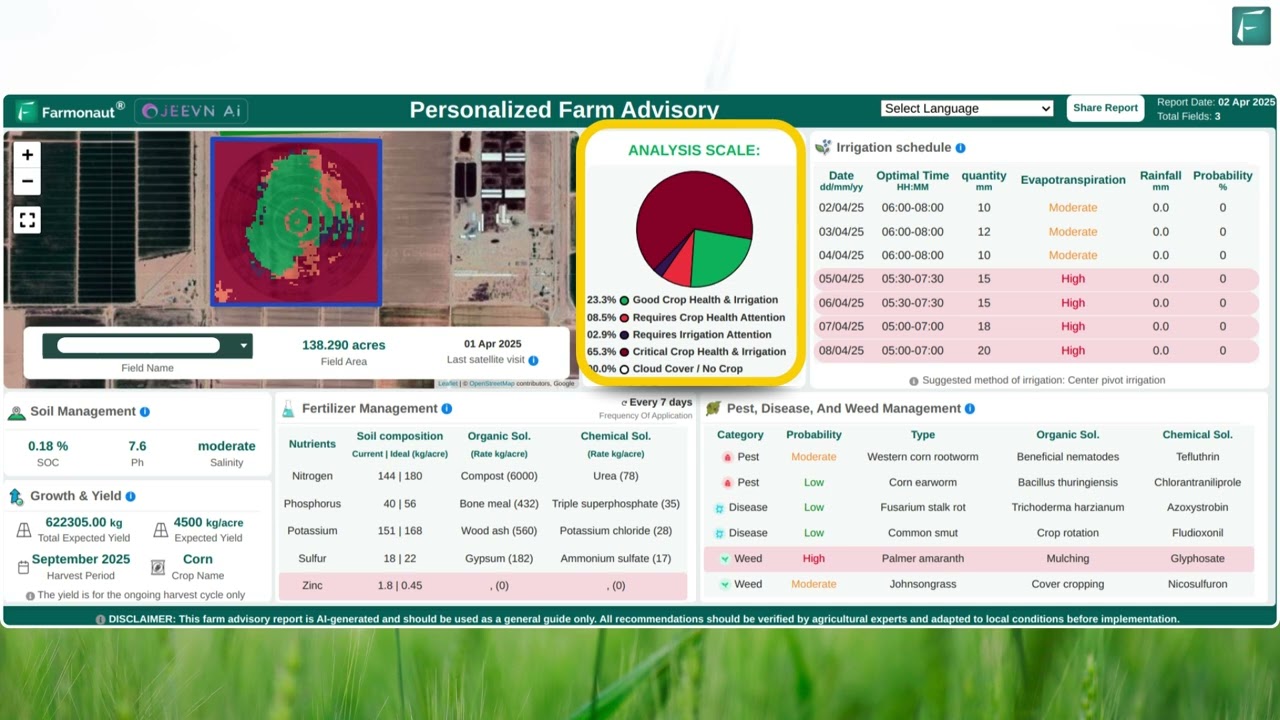
Optimizing plantation cycles and resource scheduling is now easier than ever with Farmonaut’s Advanced Crop Plantation & Forest Advisory platform, powered by satellite data and AI. Make every field decision smarter!



Automation in Agriculture: Boosting Labor Efficiency
Labor shortages are a critical pain point for agriculture worldwide—especially as rural populations dwindle and urban migration continues. Smart farming machines in 2025 directly address this challenge by infusing automation into labor-intensive tasks, liberating farmers from repetitive manual work and ensuring productivity does not falter in the face of personnel scarcity.
Labor-Saving Automation: Key Types of Smart Agriculture Machines
- Autonomous Tractors: Self-driving tractors carry out tilling, planting, cultivating, and even spraying—following optimized routes with GPS guidance.
- Robotic Harvesters: These machines autonomously detect ripeness, maneuver through rows, and delicately harvest crops such as fruits and vegetables, protecting delicate produce quality.
- Drone Sprayers: Automated drones apply fertilizers and pesticides with surgical accuracy—reducing overall chemical usage and furthering sustainability.
- Weeding Robots: Autonomous weeders are equipped with advanced vision systems to target only unwanted plants, substantially reducing herbicide reliance and improving soil health.
- Fleet Management Systems: Connected cloud platforms optimize farm vehicle deployment, monitor active status, and ensure safety in real-time, reducing operational costs and downtime.
“Automation in agriculture could reduce labor costs by 25% in large-scale farms by 2025.”
Examples: Automation in Practice (2025)
- A robotic fruit harvester scans for color and firmness to assess ripeness, then gently picks each fruit—minimizing human error and product loss.
- Autonomous weeding robots patrol fields, targeting weeds with mechanical arms or micro-dosed herbicides, resulting in healthier, less-compacted soil.
- Drone fleets act as both data gatherers (monitoring crop health) and precision input applicators, working tirelessly and efficiently day and night.
These smart agriculture machines, by reducing manual labor and labor-related costs, unleash new opportunities for rural farmers—letting them oversee, manage, and optimize even large-scale operations with limited staff.

Managing your farm’s entire fleet of machines has never been easier—thanks to Farmonaut’s Fleet and Resource Management tools, which optimize logistics, enhance safety, and minimize machinery costs for complete agricultural operations.
Smart Farming Machines and Sustainability Impact in 2025
Sustainability is central to the future of agriculture. As pressures from climate change mount, smart machines in agriculture are enabling farmers to strike the delicate balance between increased productivity and minimizing environmental impact.
- Precision Input Application: By delivering the exact water, fertilizers, and pesticides needed—down to individual plant level—these machines reduce chemical overuse and prevent pollution and soil degradation.
- Soil Health Preservation: GPS-guided tractors and harvesters follow optimized traffic patterns, minimizing soil compaction and maintaining field structure for enhanced fertility.
- Early Detection of Crop Stress and Pests: AI-powered sensors and satellite platforms can spot signs of disease or pest infestations long before they become widespread—enabling timely, area-specific responses that reduce total chemical use.
- Energy Efficiency: The shift toward solar-powered and hybrid energy systems in farming machines helps reduce fossil fuel dependency and lower the farm’s carbon footprint.
Want to track and reduce your agricultural carbon footprint? Explore Farmonaut’s Carbon Footprinting tools for scientifically measuring, monitoring, and offsetting climate impact—empowering farms to meet sustainability goals and regulatory compliance.
The cumulative result is resource-efficient, climate-resilient farming that nurtures soil health, water reserves, and biodiversity, while remaining profitable and scalable for modern farmers.
Be transparent, sustainable, and ready for the future of food supply chains. Farmonaut’s blockchain traceability solutions unlock full tracking of agricultural products—from field to fork.
Comparison Table of Smart Farming Machines and Key Benefits (2025)
| Machine Type | Main Function | Estimated Efficiency Increase (%) | Estimated Cost Reduction (%) | Sustainability Impact | Example Usage/Applications |
|---|---|---|---|---|---|
| Autonomous Tractors | Self-driving plowing, planting, spraying | 20–30% | 10–20% | Reduces soil compaction, fuel savings | Large field preparation, precision seeding |
| Robotic Harvesters | Automated crop picking & quality sorting | 15–25% | 20–30% | Less post-harvest loss, no chemical residue | Fruit and vegetable harvesting |
| Drones (Spraying & Sensing) | Precision input application, crop monitoring | 20–35% | 5–20% | Reduces water & chemical use | Aerial pest control, NDVI imaging |
| AI-Based Irrigation Systems | Automated, real-time water application | 10–25% | 5–15% | Saves water, protects aquifers | Drip & pivot irrigation optimization |
| GPS-Enabled Seeders | Precision planting, rate & depth control | 15–20% | 5–10% | Reduces seed wastage, healthier stands | Row crop planting, variable rate seeding |
| Weeding Robots | Automatic weed targeting & removal | 10–18% | 8–20% | Less herbicide, improved soil biodiversity | Row crop, vegetable beds, organic farming |

Empowering Farming with Farmonaut Satellite Technology
At Farmonaut, we are dedicated to empowering farmers and businesses worldwide by delivering affordable, real-time satellite-based insights and AI-driven recommendations for smarter, more sustainable farming. Our mission in 2025 and beyond is to integrate cutting-edge satellite, blockchain, and AI technology to bridge data gaps and put intelligence at the heart of machines in agriculture.
How Farmonaut Solutions Support Smart Farming Machines and Sustainability:
- Satellite-Based Monitoring: We provide real-time NDVI crop health, soil condition, and structural monitoring using multispectral imagery, accessible on web and mobile apps.
- Jeevn AI Advisory: Our AI-driven system analyzes satellite data to offer actionable insights, weather forecasts, and tailored recommendations—enhancing operational efficiency and yield.
- Blockchain Traceability: By integrating blockchain, we enable transparent supply chains, enhancing trust and quality assurance for food and resource tracking.
- Fleet & Resource Management: Our platform offers end-to-end fleet optimization tools for monitoring machine utilization, safety, and resource allocation.
- Environmental Impact Tracking: We help businesses assess and reduce carbon emissions, resource usage, and environmental footprint, supporting climate action in agriculture.
Get API access for your own systems: Farmonaut Satellite Data API |
Developer Documentation
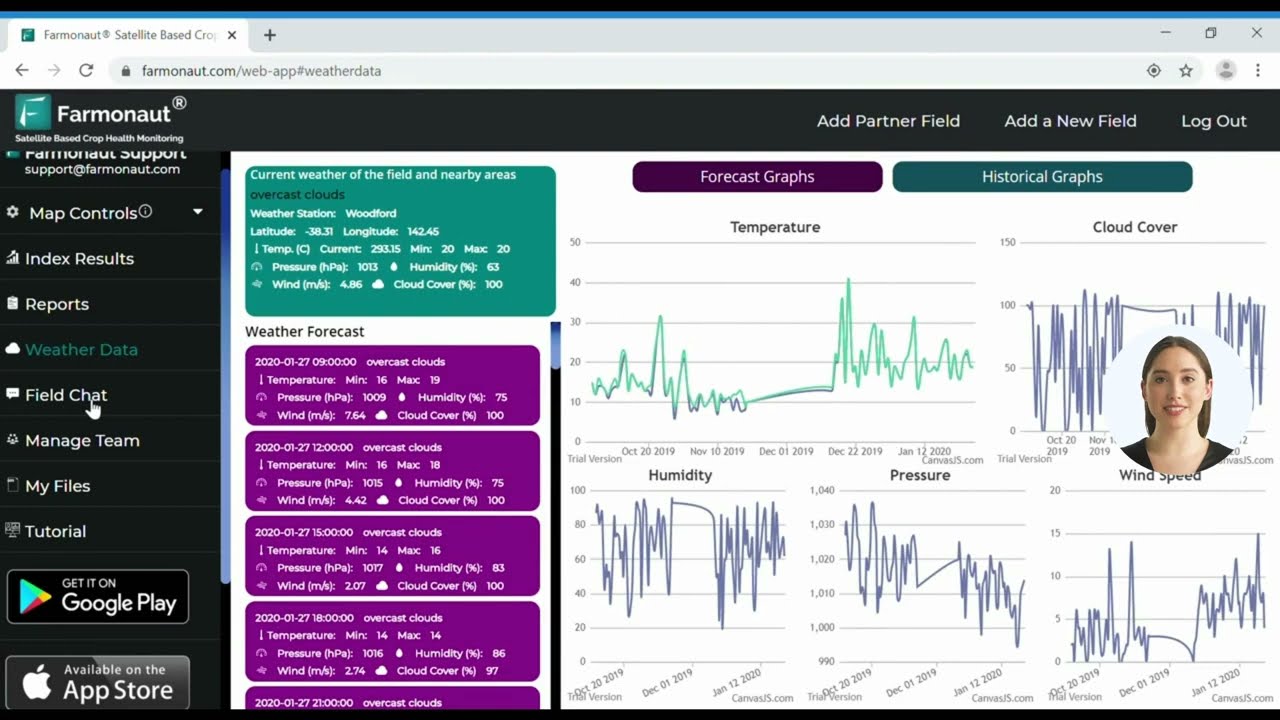
For individual farmers, we provide accessible insights on crop and soil health, allowing timely interventions, reduced input costs, and improved yields. Enterprises, government bodies, and financial institutions leverage our platform for large-scale monitoring, loan verification, insurance, and sustainable resource management.
Farmonaut’s subscription-based model ensures cost-effective access for farms of every scale, from small plot owners to extensive agribusinesses—helping to democratize data-driven farming.
Challenges & The Future Path for Smart Machines in Agriculture
While the benefits of smart farming machines are abundant, several challenges remain that can slow or complicate adoption—especially among smallholder or rural farmers:
- High Initial Investment: Advanced agricultural machinery often requires significant upfront costs, including not just the hardware, but also digital infrastructure (connectivity, data storage, maintenance).
- Technical Expertise: Many farmers need additional training to operate, manage, and maintain new smart machines and interpret data outputs.
- Rural Connectivity: Reliable internet and mobile networks are not universally available, especially in remote farming locations—limiting real-time cloud connectivity.
- Data Security and Privacy: As more farm data becomes digitized and cloud-stored, issues of data ownership, privacy, and security must be addressed via robust protocols.
- Scaling for Small Farms: Not all machines in agriculture are cost-effective for smaller plots or diverse cropping systems, necessitating adaptable, modular solutions.
However, the future is promising. Government grants, mobile-based training programs, cooperative ownership, and modular subscription models (as seen with Farmonaut) are reducing barriers and paving the way for broader smart agriculture adoption.
As 2025 and beyond unfolds, we will see the convergence of robotics, artificial intelligence, biotechnology, and satellite-driven farming continue to reshape agriculture—delivering higher yields, greater efficiency, and lower environmental impact.
FAQ: Smart Farming Machines 2025
What are smart farming machines?
Smart farming machines are advanced agriculture machines that integrate technologies such as IoT sensors, AI-driven analytics, automation, and GPS guidance to perform tasks like planting, harvesting, spraying, and monitoring crops with high precision and efficiency.
How do smart farming machines improve efficiency?
By leveraging real-time data and intelligent automation, smart farming machines minimize input wastage, maximize resource use, and reduce human error, leading to increased productivity and lower operational costs.
Are smart farming machines suitable for small farms?
Many smart agriculture machines are designed for scalability and can be adapted to smaller farms, especially through subscription platforms or cooperative usage models that lower upfront investment and ownership costs.
What is precision agriculture?
Precision agriculture utilizes technology and data-driven approaches to optimize every aspect of farming—ensuring that water, fertilizers, and pesticides are applied only as needed, reducing environmental impact and increasing yields.
How does Farmonaut support smart farming?
Farmonaut offers satellite-based monitoring, AI advisory, blockchain traceability, and fleet/resource management tools that enhance crop health monitoring, input optimization, traceability, and sustainability across various farm sizes and sectors.
Conclusion: Transforming Agriculture for a Sustainable Tomorrow
Smart farming machines in 2025 represent a new agricultural paradigm—one where machines blend seamlessly with intelligence, automation, and sustainability. Through the adoption of precision farming, automation, and satellite-guided analytics, the modern farmer is equipped to boost yields, reduce input costs, and protect natural resources for generations to come.
As food demands mount and climate change risks intensify, only innovation-powered machines in agriculture—driven by advances in AI, robotics, and satellite monitoring—can meet the world’s needs. With platforms like Farmonaut democratizing access to these critical insights and tools, every field, farm, or region—regardless of size—can participate in the global drive for sustainable, traceable, and productive agriculture.
Let’s welcome the era of smart farming machines—and help pave the way towards smarter, greener, and more resilient food systems.
Learn more about Farmonaut’s latest solutions:
Carbon Footprinting |
Traceability |
Crop Loan & Insurance |
Fleet Management |
Large Scale Farm Management

 Godrej Agrovet
 Hayleys Agriculture
 Linx Agritech
 Adinet
 Save Your Soils
 GalaxEye Space
 Grandstream Algérie
 XOS Realty
 Geospatial Lab Africa
 Agro La Gándara
 HIPSAC
 ZOL Zimbabwe
 Juligerm
 AdBio
AdBio MISE Maroc
 NWNS
NWNS Red August Group
 Farm Inc
 WeMe Global
 Agrotoken
 Blue BearX
 Insignito
 DnCubed
 Indosistim Teknologi
 Liquify Digital
 CU Foods
 BeyondTech Global
 Rouge VC
 AgroRisk
 Oath Inc
 Esri North East Africa
 MDCV UK
 Etech Consulting Madagascar
 Vestlandsforsking
 WB Dev
 Sama Premium
 Tres Valles
 Blickwinkel
 Agricultural Credit Policy Council
 eKGIS
eKGIS Mostas Tech
 Andex
Andex Deluxe Conseil
 WICO
WICO Chimera Innovation
 SkyHarvest
 Teledarbas
 Exurbia Geospatial
 FieldZero
