

Smart Livestock Farming 2026: Powerful Data-Driven Systems
Introduction: Redefining Livestock & Farming with Smart Systems
Smart livestock farming and climate-smart livestock farming are redefining the farming and livestock landscapes across agriculture, forestry, and even mining-adjacent lands as we approach 2026. The core idea underpinning this rapid transformation is to optimize animal productivity, maximize welfare, and elevate environmental stewardship, all while aligning with evolving regional resource constraints and dynamic market demands.
The next generation of livestock and farming systems is powered by sensors, advanced automation, and cloud-centric analytics, allowing us to monitor, control, and optimize every aspect of animal health, grazing, nutrition, breeding, and environmental impact. This holistic evolution is about more than just farming; it’s about building sustainable systems that reduce methane and other emissions, improve forage and soil quality, support resilient farm incomes, and set the stage for a low-carbon, high-welfare era across diverse landscapes.
Context & Scope: Smart Livestock Farming Across Sectors
Smart livestock farming is a cross-disciplinary innovation, transforming not only traditional farming of livestock but also their role in managed forest lands and even rehabilitated mining sites. Here’s how the context and scope play out:
Agriculture & Farming
- Integration of sensors, data analytics, and automation for real-time monitoring of animal health, nutrition, genetics, and housing.
- Climate-smart elements like reducing greenhouse gas emissions, water use, and combating land degradation while maintaining or enhancing productivity and output quality.
Forestry & Grazing Lands
- Smart livestock practices applied within pasture systems, managed forests, and silvopastoral landscapes.
- Prevention of overgrazing and promotion of conservation objectives to enhance biodiversity through rotational grazing, portable fencing, and forage optimization.
Mining-Adjacent & Rehabilitated Landscapes
- On remote or rehabilitated mining sites, livestock—under properly vetted management—can support restoration, control invasive species, and offer alternative income streams for local communities.
The overlap of digital infrastructure, precision practices, and ecosystem-sensitive approaches defines the leading edge of smart livestock and farming systems in 2026.
📊 Key Smart Livestock Scope Areas
- ✔ Real-time digital monitoring systems for animal health & farming data
- 🌱 Regenerative grazing and forage planning for soil and ecosystem improvement
- 🔄 Automated and precision feed systems with climate-adaptive optimization
- 📈 Farm-level analytics for productivity, welfare, and emissions reduction
- 🔗 Blockchain-based traceability for ethical and certified market access
“Smart sensors can monitor up to 50 animal health parameters in real-time, revolutionizing livestock welfare and management.”
Key Components of Smart Livestock Farming 2026
The 2026 landscape of smart livestock farming is grounded in a powerful mix of precision monitoring, nutritional optimization, health management, digital integration, and climate-smart planning. Let’s explore these key components that are shaping the future of farming and livestock management across agriculture, forestry, and mining-linked lands:
1. Precision Monitoring: Sensors, Wearables & Data Analytics
- Wearables & Sensors: Devices such as RFID tags, rumen boluses, gait analysis trackers offer continuous tracking of animal temperature, respiration, activity, body condition, and feeding patterns.
- Dashboards: Real-time monitoring dashboards enable farmers to identify illness, stress, or nutritional gaps at an early stage, supporting rapid intervention.
- Integration: Cross-device compatibility is critical for farm-level data centralization and actionable insights.
2. Nutritional Optimization: Digital Formulations & Methane Reduction
- Feed Formulation: Digital feed solutions dynamically consider forage quality, energy requirements, growth, lactation, and seasonal variability.
- Waste Reduction: On-farm silage production and total mixed rations (TMR) slash waste while targeted supplements reduce methane intensity and support animal health.
3. Health & Welfare: Data-Driven Interventions
- Predictive Health: Proactive health management—from automated vaccination alerts to precision parasite control and calving support.
- Barn Climate: Air quality sensors and automated climate control (fans, misters, shading systems) improve animal comfort and reduce heat stress.
- ✔ Reduced illness and mortality through early detection
- 📊 Consistent welfare improvement via targeted interventions
- ⚡ Optimized resource use for vaccines, feed, and climate systems
- 🔄 Automated tracking of treatment efficacy across the farm
- 🔒 Enhanced traceability for compliance and premium markets
4. Breeding & Genetics: Accelerated Adaptation and Productivity
- Genomic Selection: Leveraging genetic data for disease resistance, productivity improvement, and futureproofing against climate stress (heat/drought adaptability).
- Data Integration: Cross-referencing veterinary, production, and maternal lineage in farm-level databases enables informed breeding plans.
5. Climate-Smart & Environmental Objectives
- Emissions Management: Focused on enteric methane reduction, effective roughage utilization, and precision manure management (composting, biogas).
- Soil Carbon: Smart grazing plans guide soil restoration, carbon sequestration, and erosion reduction especially in pasture and rehabilitated landscapes.
- Read more about carbon footprinting solutions powered by advanced satellite analytics for agriculture and livestock.
6. Digital Infrastructure, Interoperability & Data Security
- Cloud Platforms: Cloud-based management, mobile apps, and edge computing allow seamless monitoring and control across equipment types.
- Farmonaut Integration: Solutions like large-scale farm management empower actionable decision-making through satellite data, AI advisories & blockchain-backed traceability.
- Data Control & Access: Privacy, ownership, and equitable access are essential for farmer trust and efficient collaboration.
- API integrations are now standard for synchronizing external analytics and infrastructure—see Farmonaut’s API and developer docs.
🔗 Essential Digital Livestock Tools
- 📱 Mobile monitoring apps for field-based decision support
- 🛰️ Satellite-driven farm analytics for pasture, mining and forest context
- 🔒 Blockchain traceability for transparent livestock certification
- 🛡️ Real-time biosecurity alerts across farm sites
Key Technologies in Smart Livestock Farming: Features & Estimated Benefits
| Technology | Main Function | Data/Automation Used | Estimated Productivity Gain (%) | Estimated Welfare Improvement (%) | Estimated Environmental Impact Reduction (%) |
|---|---|---|---|---|---|
| IoT Sensors & Wearables | Animal health & behavior monitoring | Temperature, respiration, activity, RFID, live analytics | 12–18% | 20–30% | 6–15% |
| Automated Feeding Systems | Precision nutrition management | Digital rations, energy/forage analysis, methane/feeding data | 10–15% | 12–18% | 15–25% |
| Wearable Health Trackers | Real-time illness & stress alerts | Continuous tracking, pattern recognition | 6–12% | 17–28% | 5–10% |
| Climate Monitoring | Barn air quality, temperature, humidity | Sensors, real-time dashboards, automated alerts | 8–13% | 14–20% | 8–16% |
| AI-Based Analytics | Decision support for welfare, emissions, breeding | Machine learning, multi-source big data, cloud advisory systems | 20–28% | 17–25% | 18–30% |
Applications by Sector: Smart Livestock Systems in Action
Dairy & Beef: Smart Monitoring for Precision Productivity
- Sensor-driven heat detection optimizes insemination and calving intervals, raising productivity.
- Smart milking and nutritional analytics enhance milk yield and consistency while reducing methane per unit output.
- Mobile farm management—data everywhere, anytime. Download our Farmonaut Android App
 or iOS App
Smallholder & Pasture-Based Systems
- Mobile decision-support tools help smallholders guide rotational grazing, supplementation, and breeding for resilience against drought & market volatility.
- Satellite monitoring enables input-efficient management even with limited on-farm infrastructure.
- Farmonaut’s crop loan and insurance solutions use satellite data to reduce fraud and improve financing for scalable rural livestock systems.
Forestry Integration: Silvopastoral Smart Systems
- Timber, forage, and livestock combine for optimized land use and carbon sequestration.
- Smart monitoring of forage species and animal welfare enables balanced conservation and productivity in these mixed landscapes.
- Read about Farmonaut’s crop, plantation, and forest advisory tools for forestry-pasture integration with satellite analytics.
Mining Rehabilitation: Livestock for Restoration & Income
- Properly managed, livestock play a role in soil stabilization, invasive species control, and income diversification for local communities in rehabilitated mining sites.
- Environmental safeguards and remote monitoring ensure livestock do not impede restoration objectives.
- Optimize mining fleet use and restoration logistics with Farmonaut Fleet Management solutions.

Market & Policy: Sustainability, Certification, and Premiums
- Compliance with new policy incentives and certification schemes for animal welfare and sustainability opens access to premium international markets.
- Blockchain-based traceability and audit-ready reporting (see Farmonaut Traceability) are rapidly becoming prerequisites for future livestock markets.

Challenges & Considerations: Getting Smart Right
The transition to smart livestock farming is powerful but not without hurdles. Here are major challenges, risks, and considerations for successful, sustainable adoption:
- ⚠ High initial investment for sensors, infrastructure, and digital services; creative financing/equity models can help.
- 🛑 Data reliability & interoperability: Open data standards are essential to avoid vendor lock-in and enable cross-farm learning.
- 🦠 Biosecurity risks if automation neglects hands-on welfare checks; robust protocols and remote monitoring are critical.
- 🔥 Climate risk adaptation—drought, heatwaves, and shifting disease patterns require flexible plans and adaptive infrastructure.
- 🤝 Inclusive community engagement ensures equitable benefits, especially for indigenous, rural, and post-mining communities.
Farmonaut’s Edge: Enabling Smart & Climate-Smart Livestock Farming
At Farmonaut, we recognize the immense opportunity in data-driven livestock management. Our satellite-based solutions make real-time insights affordable and accessible—transforming agriculture, livestock, mining, and forestry operations across the globe.
- 🛰️ Satellite-based monitoring for livestock pasture health, soil condition, and mining site restoration—actionable from anywhere via Android, iOS, or browser.
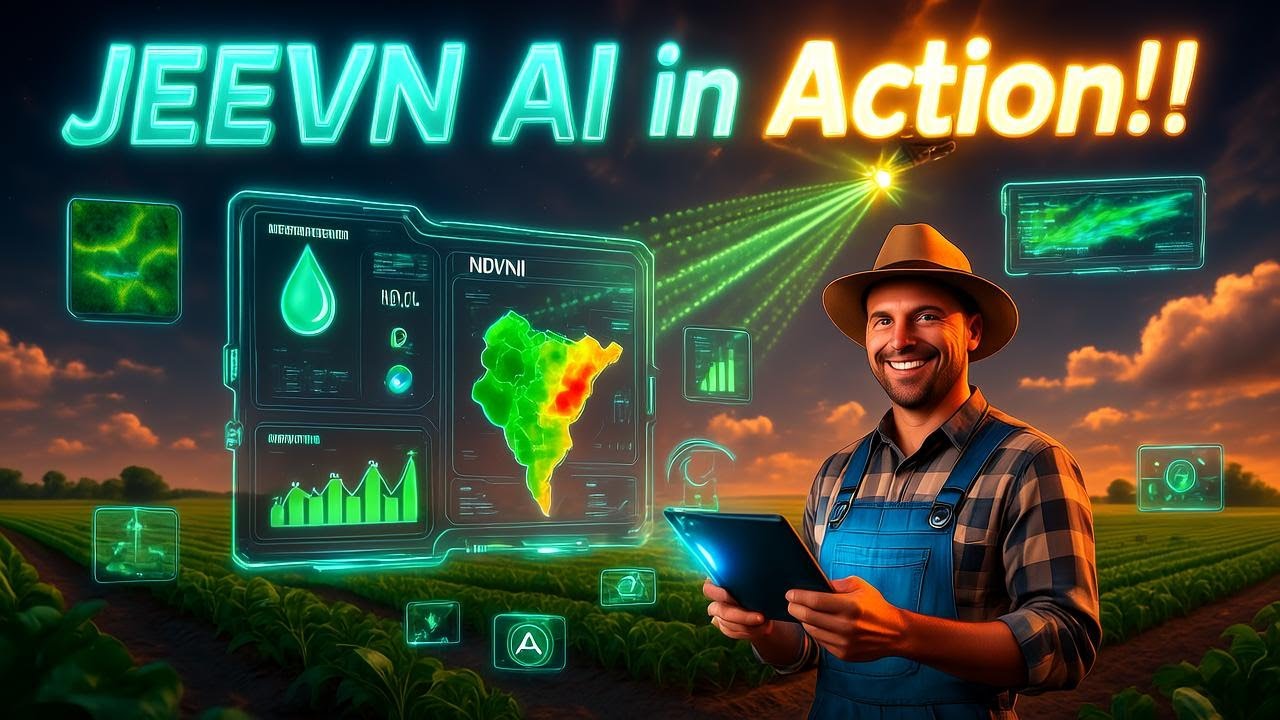
- 🤖 Jeevn AI advisory system—AI-powered recommendations for climate-adaptive feeding, grazing, and risk mitigation.
- 🔗 Blockchain traceability—delivering transparency for certified animal welfare and low-emission product markets (learn how traceability works).
- 🌎 Environmental impact monitoring—including carbon footprinting for livestock systems and mining impact mitigation, supporting both sustainability and compliance.
- 💡 API-first approach—seamlessly connect our data to your livestock ERP or digital infrastructure (get API details).


With this approach, we empower producers, businesses, and governments worldwide to scale smart livestock farming responsibly and bring climate smart livestock farming into the mainstream.
Watch & Learn: Smart Farming Videos
Stay up-to-date with the latest in smart livestock and farming innovation by watching these expert walkthroughs and system demonstrations:
-
JEEVN AI: Smart Farming with Satellite & AI Insights:
Watch Now -
Regenerative Agriculture 2025 🌱 Carbon Farming, Soil Health & Climate-Smart Solutions | Farmonaut:
Watch Now -
Smart Farming Future : Precision Tech & AI: Boosting Harvests, Enhancing Sustainability:
Watch Now -
Smart Farming Future: Precision Tech & AI Boosting Harvests, Enhancing Sustainability
Watch Now -
Farmonaut® Satellite Based Crop Health Monitoring:
Watch Now -
JEEVN AI: The Future of Smart Farming with Satellite & AI Insights:
Watch Now -
Farmonaut Web System Tutorial: Monitor Crops via Satellite & AI:
Watch Now -
Farmonaut® | Making Farming Better With Satellite Data:
Watch Now
Frequently Asked Questions (FAQ)
What is smart livestock farming?
Smart livestock farming refers to the use of advanced technologies—like IoT sensors, wearables, automation, cloud analytics, and AI—to optimize animal monitoring, health, nutrition, breeding, and overall resource management in livestock systems.
How does climate smart livestock farming reduce emissions?
By integrating precise feed optimization, methane-reducing supplements, smart grazing plans, and manure management techniques—often monitored and adjusted through digital platforms—climate smart livestock farming significantly reduces greenhouse gas emissions per unit of output.
Can smallholder farmers access smart livestock technologies?
Yes! Many mobile-friendly, API-integrated platforms (like the Farmonaut App) are designed for scalable, affordable access—helping smallholders improve productivity and resilience even with limited infrastructure.
What environmental benefits do smart livestock systems provide?
They support soil restoration, carbon sequestration, water conservation, reduction of land degradation, and enhanced biodiversity through carefully managed grazing and precision intervention.
Is data privacy maintained in smart livestock systems?
Leading platforms prioritize robust data encryption, farmer control, and transparent privacy policies. API-driven systems ensure interoperability without sacrificing data ownership.
Conclusion: Smart Systems Driving Sustainable Livestock Futures
Smart livestock farming is no longer just a trend—it’s the new foundation for sustainable, resilient farming and livestock systems in 2026 and beyond. By leveraging data, sensors, and automation across agriculture, forestry, and mining-linked landscapes, we unlock new levels of productivity, animal welfare, and environmental stewardship while meeting global demand for ethical, low-carbon animal products.
With platforms like Farmonaut providing affordable, scalable, and inclusive satellite-driven solutions—and with forward-thinking engagement from producers, businesses, and local communities—the smart, data-powered future of livestock is within reach.
Ready to optimize your livestock outcomes and climate impact? Join the revolution today with Farmonaut.
Farmonaut: Subscription & Access
Unlock the full power of satellite & AI-driven insights for smart livestock farming, climate smart farming, and sustainable management across agriculture and mining. Choose your subscription and get started:
Access satellite-powered smart farming now:
Discussion
Questions, corrections or field experience? Share them below. First-time comments are reviewed before they appear, and your email is never published.
No comments yet. Be the first to add a question or your experience.

 AgroRangers
 FCF India
 Unifrutti Gulf
 Deluxe Conseil
 TVS Electronics
 BW Pipelines
 WICO
WICO Gen Chayat
 Chimera Innovation
 SkyHarvest
 Polaris Digitech
 Teledarbas
 Wild Oak Farm
 SFX
SFX
 Licence holder · Niger · Gold










