

Crop pests · Insecticide buyer guide
Best Insecticide for Aphids: 8 Options and When to Spray
The right aphid insecticide depends on the crop. UC IPM favours soaps and oils for most garden situations. On commercial crops, selective actives such as flonicamid and afidopyropen help where pyrethroid resistance is a problem. Always follow the label and local rules.
Key takeaways
- UC IPM calls insecticidal soaps and oils the best choices for most garden and landscape aphid situations; they kill only what they touch.
- Iowa State reports soybean aphid resistance to pyrethroids in Iowa, Minnesota, South Dakota and North Dakota.
- Iowa State’s soybean threshold: at least 250 aphids per plant, 80% of plants infested, numbers rising, up to R6.
- Harvest intervals change by crop: flonicamid is 0 days on Florida tomato and 7 days on Maryland beans.
- In field trials, organic products gave 52.6% to 78.3% control of green peach aphid with repeat sprays, and about 16% to 20% on pea aphid with one spray.
In this article
- The best insecticide for aphids at a glance
- Eight options for the best insecticide for aphids
- Which aphid spray for which crop
- Organic aphid sprays: what trials measured
- Timing: when to spray, and when not to
- Aphid insecticide resistance and rotation
- Bees, natural enemies and label rules
- Non-chemical aphid control that works alongside sprays
- Scouting and satellite maps for aphid hotspots
- FAQ
The best insecticide for aphids depends on the crop and the setting. For gardens and small plots, UC IPM calls insecticidal soaps and oils the best choices for most situations. On commercial crops, narrow-spectrum actives such as flonicamid and afidopyropen kill aphids while sparing more natural enemies than pyrethroids do, and they avoid the pyrethroid resistance now reported in soybean aphid.
This guide compares eight options, shows re-entry and harvest intervals from university spray guides, and gives a calculator to test whether a spray pays on your field. Product approvals differ by country, state and crop. Always check the label and local rules, and ask a licensed adviser before you spray.
The best insecticide for aphids at a glance
The table lists each option with its IRAC mode-of-action group. The group number matters because you rotate between groups, not between brand names. The groups below come from the IRAC mode of action classification. Spectrum notes come from the UC IPM selectivity table for citrus where it lists the product. The bee column is explained in the safety section.
| Active | IRAC group | How it works in practice | Best for |
|---|---|---|---|
| Soaps and oils | None / UN | Contact; smothers aphids it touches | Gardens, small plots, repeat use |
| Pyrethrins | 3A | Contact; breaks down fast; broad spectrum | Organic growers needing knockdown |
| Flonicamid | 29 | Narrow spectrum (aphids, psyllids) | Vegetables where natural enemies matter |
| Afidopyropen | 9D | Narrow spectrum (aphids, psyllids) | Rotation partner for group 4 and 3A |
| Pymetrozine | 9B | Listed for aphids in tomato | Rotation in vegetables, where approved |
| Spirotetramat | 23 | Low bee rating in Maryland’s bean guide | Bean and tomato programmes, where approved |
| Sulfoxaflor | 4C | Aimed at pests resistant to older classes | Hard-to-control aphids, away from bloom |
| Flupyradifurone | 4D | Foliar or soil use on tomato | Rotation within a seasonal plan |
Older broad-spectrum sprays are still on many labels: pyrethroids (3A), organophosphates (1B), carbamates (1A) and neonicotinoids (4A). We rank them lower here for two reasons covered below: resistance and harm to natural enemies.
Eight options for the best insecticide for aphids
1. Insecticidal soaps and horticultural oils
Best for: gardens, greenhouses and small plots. UC IPM’s aphid pest note says these products kill mainly by smothering, so coverage decides the result. Spray the undersides of leaves as well as the tops. The note gives a usual oil mix of 1 to 2% in a high volume of water. These sprays kill only the aphids present on the day, so you may need to repeat them. Do not use them on drought-stressed plants or in very hot weather. Aphids inside curled leaves stay protected, so prune those shoots out. Neem oil is one of the plant-derived oils in this group.
Chart
Restricted-entry interval by active on tomato
Hours before workers may re-enter, for selected aphid products, Florida tomato guide
2. Pyrethrins
Best for: organic growers who need quick knockdown. The UF/IFAS tomato guide lists PyGanic as OMRI-listed and notes that it degrades fast in sunlight, so coverage matters. UC IPM rates pyrethrin as broad spectrum but short-lived. It carries a Group I bee rating in UC’s citrus table, so keep it off flowering plants.
3. Flonicamid
Best for: vegetable and fruit crops where you want to keep predators working. UC IPM lists flonicamid (Beleaf) as narrow spectrum, for aphids and psyllids, with short persistence on natural enemies. UF/IFAS tomato guidance allows no more than two applications per season, at least 7 days apart, and says to begin before pests reach damaging levels.
4. Afidopyropen
Best for: rotation away from group 3A and group 4 products. UC IPM lists it as narrow spectrum for aphids and psyllids. UF/IFAS gives a minimum of 7 days between sprays on tomato, and the UC IPM citrus aphid guideline gives the same interval on citrus.
5. Pymetrozine
Best for: a rotation slot in vegetables, where the product is still registered. UF/IFAS lists Fulfill for aphids on tomato, with a limit of 5.5 oz per crop. Check approval before you plan around it, as it is not available in every market.
6. Spirotetramat
Best for: vegetables close to harvest, within label limits. The University of Maryland bean guide lists Movento for aphids, with a 1-day harvest interval and a low bee toxicity rating. UC’s citrus table gives it a Group II bee rating, which limits sprays near flowers to the hours between sunset and midnight where the label allows. The two ratings use different systems, so read your own label. UC IPM lists it as broad range with long persistence on pests. It spares predatory and parasitic insects but is quite toxic to predatory mites.
7. Sulfoxaflor
Best for: aphids that have survived older classes. The US EPA’s sulfoxaflor page says it works on pests becoming resistant to carbamates, neonicotinoids, organophosphates and pyrethroids. EPA also requires a label warning that it is highly toxic to bees exposed to direct treatment or residues on blooming crops or weeds. Maryland’s guide marks it as high bee toxicity.
8. Flupyradifurone
Best for: a planned group 4D slot, as foliar spray or soil treatment on crops where it is labeled. UF/IFAS lists a 1-day harvest interval for foliar use on tomato and 45 days for soil use. UC gives it a Group I bee rating, while Maryland’s guide rates it medium.
Which aphid spray for which crop
The same active can carry very different rules on different crops, so the best insecticide for aphids on one crop can be a poor fit on the next. Start with the crop and the harvest date.
Chart
Days to harvest for the same active on two crops
Pre-harvest interval in days, foliar use, selected actives from two university guides
- Vegetables near harvest: compare harvest intervals first. Flonicamid has a 0-day interval on Florida tomato but 7 days on Maryland beans.
- Soybean: Iowa State says neonicotinoid seed treatments are not reliable because aphids usually arrive after the protection has faded. It says many labeled foliar products work well if used by the label, but warns about pyrethroids.
- Citrus: UC IPM says natural enemies normally give full control within 6 weeks, so a spray is rarely warranted. Sprays are kept for special cases such as area-wide tristeza virus programmes.
- Winter oilseed rape: in the UK, AHDB’s aphid guidance says peach-potato aphid, the main carrier of turnip yellows virus, is resistant to a number of actives, so control leans on integrated methods.
- Canola and pulses in Australia: Cesar Australia advises identifying the aphid species first, as green peach aphid has resistance to several chemical groups.
Organic aphid sprays: what trials measured
Organic products can work, but pressure and spray count change the result. A study in the journal Insects (2020) tested them in field trials. Against green peach aphid in five cabbage and collard trials, with two or three weekly sprays, control averaged 78.3% for Azera (azadirachtin plus pyrethrins), 75.1% for PyGanic and 52.6% for Neemix. Confidence ranges overlapped, so the study found no significant difference between them.
Chart
Control of green peach aphid by organic product
Mean percent control vs untreated, five cabbage and collard trials, two or three weekly sprays
The same products did far less against pea aphid in seven alfalfa trials with one spray: 19.4% to 20.3% for Azera and PyGanic, and 16.0% for Neemix. Pest numbers there were below the economic threshold. Take the lesson as a pattern, not a ranking: one spray of a short-lived contact product should not be expected to hold.
Timing: when to spray, and when not to
A good product at the wrong time still loses money. Aphid thresholds are crop-specific, and these two come from extension services:
- Soybean: Iowa State University says to treat up to R6 when the field average is at least 250 aphids per plant, at least 80% of plants are infested, and numbers are rising. It recommends sampling at least 30 plants, every 7 to 10 days, in a W or Z pattern.
- Snap and lima beans: Maryland’s guide says to treat only if 50% or more of terminals carry 5 or more aphids, weather favours growth, and beneficial insects are lacking.
Iowa State notes that soybean aphid feeding can cost up to 40% of yield, but that this extreme loss usually comes with heavy infestations and sooty mold. Light infestations are a different decision. On larger garden plants, UC IPM says light to moderate numbers cause little damage, and large populations often fall on their own through natural enemies or hot weather.
Use the calculator below to compare the cost of a pass with the yield it may save. Your agronomist or local extension service can help you estimate the loss figure.
Try the numbers for your own farm below.
Calculator
Will an aphid spray pay on this field?
Enter your own numbers to compare the yield saved with the cost of the pass.
- Yield value saved per acre, US$: $30
- Cost per acre, US$: $30
- Break-even yield loss: 7.1 %
All default values are examples near break-even, not benchmarks or forecasts. Loss and control figures are your own estimates; ask your agronomist. Check the label and local rules before any application.
Aphid insecticide resistance and rotation
Aphids often reproduce without mating. Cesar Australia explains that this passes genes down clonally, so resistance can establish quickly. The records are clear for several pests:
- Iowa State reports soybean aphid resistance to pyrethroids such as bifenthrin and lambda-cyhalothrin in Iowa, Minnesota, South Dakota and North Dakota. It expects every aphid in Iowa to carry at least one resistance mutation.
- UC IPM reports cotton aphid in California’s San Joaquin Valley with resistance to organophosphates, carbamates and pyrethroids.
- AHDB and Cesar Australia both report resistance in peach-potato (green peach) aphid.
Three habits help. Rotate IRAC group numbers between generations, not brand names. Check the premix label too, because Ridgeback pairs sulfoxaflor with bifenthrin and so carries groups 4C and 3A. After any spray, scout again: Iowa State tells growers to watch for resurgence, replacement pests and product failure.

▶ Our deep dive on scouting and managing soybean aphid · 22:28
Bees, natural enemies and label rules
Bee risk differs by product and by rating system. UC IPM’s citrus table uses three ratings. Group I means do not apply or drift onto flowering plants. Group II allows application from sunset to midnight if the label permits. Group III means no bee precaution beyond the label. UC rates flonicamid III, and neem oil and spirotetramat II. It rates imidacloprid, pyrethrins and flupyradifurone I. UC’s table has no rating listed for afidopyropen.
Lower risk to pollinators still needs care. Spray outside bloom, control flowering weeds under the crop, and avoid drift. UC IPM also says to keep imidacloprid and other systemics off plants before and during bloom.
Rules also differ across borders. The European Commission records that member states backed a complete ban on outdoor use of imidacloprid, clothianidin and thiamethoxam in April 2018. A product that is routine in one country can be illegal in the next. In the UK, the Royal Horticultural Society advises gardeners not to use pesticides on aphids at all.
Natural enemies do real work. Lady beetles and soldier beetles feed on aphids. Parasitic wasps lay eggs inside them and leave round, discoloured mummies behind. Broad-spectrum sprays remove them, which can leave a field exposed to a rebound. UC IPM also says ants protect aphids from predators, so managing ants is part of aphid control.
Non-chemical aphid control that works alongside sprays
How do you get rid of aphids without a spray? UC IPM lists these steps before any insecticide:
- Water: a strong stream knocks aphids off sturdy plants, even large trees with the right equipment.
- Pruning: cut out infested shoots and curled leaves.
- Fertilizer: avoid excess nitrogen, as aphids feed on soft, new growth.
- Ant control: keep ants off the plants so predators can reach the colony.
On farms, Iowa State flags risk by location: early-planted fields and fields near buckthorn need scouting first, since buckthorn is the soybean aphid’s winter host.
Scouting and satellite maps for aphid hotspots
Ground scouting is what triggers a spray, because a threshold needs a count. Lady beetles and ants on plants are early clues, and shiny leaves, sooty mold or white cast skins point to high numbers, according to Iowa State.
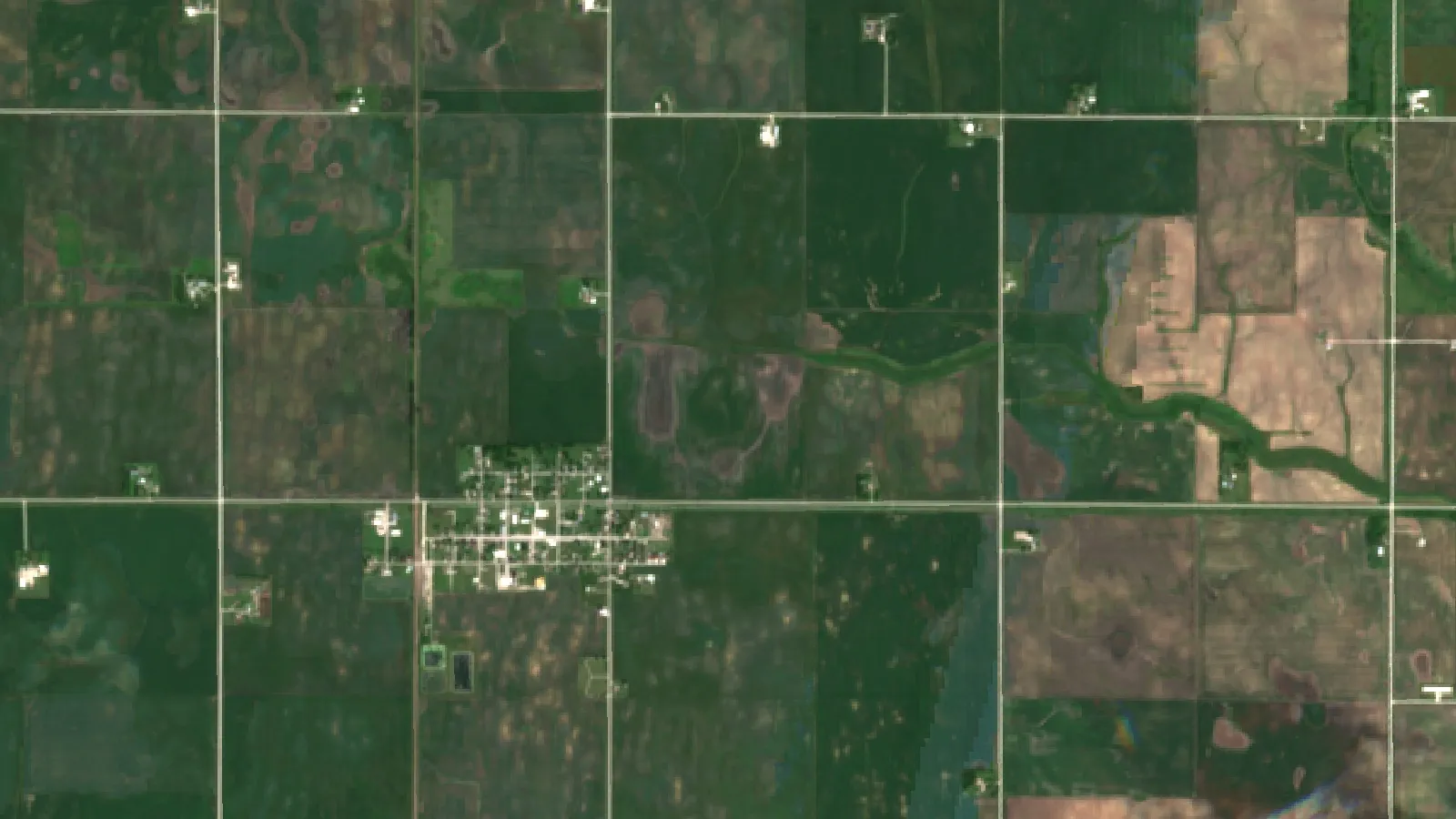
Satellite maps can help you decide where to walk first. They show vegetation change, not the insect or its cause, so a weak patch still needs a field check. The Farmonaut Satellite + AI Farm Monitoring System shows crop health maps by field, which you can use to plan a scouting route.
Related pages on our site: aphids vs mealybugs, aphid life cycle, Bt and aphids, crop monitoring app, agribusiness admin tools, product traceability, carbon footprinting, crop loans and insurance, satellite data API, API developer docs.

▶ Tutorial: using the Farmonaut web system to view crop health maps · 8:43
FAQ
What is the best insecticide for aphids on vegetables?
There is no single winner. Soaps and oils suit small plots. On commercial crops, compare labeled actives such as flonicamid, afidopyropen and spirotetramat by harvest interval and bee rating. Follow the label and local rules.
Which systemic insecticide works on aphids?
UC IPM calls imidacloprid very effective, mainly for woody ornamentals with serious infestations, but warns it can harm predators, parasitoids and pollinators. It advises against use where soaps and oils would do, and before or during bloom. Outdoor use is banned in the EU.
Which aphid sprays are safer around pollinators?
In UC’s citrus table, flonicamid has the lowest bee precaution rating (Group III). Maryland’s bean guide rates flonicamid and spirotetramat low. Your label still governs, so avoid flowering plants and drift.
Why did a pyrethroid fail on my aphids?
Resistance is a possible cause in several regions, including the soybean aphid states named above. Poor coverage and hidden colonies in curled leaves are other causes. Switch to a different IRAC group and scout again.
How many times do I need to spray?
Contact products kill only what they touch on the day, so repeats are common. Labels cap the count: UF/IFAS lists a maximum of two flonicamid applications per season on tomato. Spray again only if scouting shows numbers are still above the threshold.
Farmonaut crop monitoring
See your own fields from space
Use crop health maps to choose where to scout first.




Keep reading
Sources
- UC IPM, Aphids Pest Note 7404: ipm.ucanr.edu
- UC IPM, Aphids in Citrus guideline: ipm.ucanr.edu
- UC IPM, Selectivity of Insecticides and Miticides, Citrus: ipm.ucanr.edu
- UC IPM, Intervals and Hazards to Bees, Citrus (updated 01/25): ipm.ucanr.edu
- Dively et al., Comparative Efficacy of Organic Insecticides, Insects (2020): pmc.ncbi.nlm.nih.gov
- UF/IFAS EDIS, Chapter 18 Tomato Production: edis.ifas.ufl.edu
- University of Maryland Extension, Snap and Lima Beans (2026): extension.umd.edu
- Iowa State University, Soybean Aphid: crops.extension.iastate.edu
- US EPA, Sulfoxaflor: epa.gov
- European Commission, Neonicotinoids: food.ec.europa.eu
- IRAC, Mode of Action Classification: irac-online.org
- AHDB, Aphids and virus guidance: ahdb.org.uk
- Cesar Australia, Green peach aphid: cesaraustralia.com
- Royal Horticultural Society, Aphids: rhs.org.uk
Discussion
Questions, corrections or field experience? Share them below. First-time comments are reviewed before they appear, and your email is never published.
No comments yet. Be the first to add a question or your experience.

 Vestlandsforsking
 Global Launch Base
 Elders
 Agritein
 Delicio
 WB Dev
 Sama Premium
 Prochecker
 Tres Valles
 LACOS Geoinformation
 Magrifly
 LatConnect 60
 WebsEdge
 Blickwinkel
 Agricultural Credit Policy Council
 Marei Nursery
 eKGIS
 Mostas Tech
 Andex

 Exploration consultancy · South Africa · Gold
 Licence holder · Niger · Gold
 Licence holder · Nigeria · Gold + lithium
 Client · Tanzania · Gold










