

Urea Fertilizer: Boost Yields Near Me in 2026
“Precision application of liquid urea can increase crop yields by up to 20% compared to conventional methods by 2026.”
Urea Fertilizer in Modern Agriculture: Enhancing Crop Productivity in 2026
Urea fertilizer remains one of the most widely used nitrogenous fertilizers in agriculture due to its high nitrogen content, cost-effectiveness, and ease of application. As global food demand grows amid climate challenges, urea continues to play a pivotal role in sustaining crop yields, improving soil fertility, and supporting sustainable farming practices now and for 2026 and beyond.
In this blog, we take an in-depth look at urea fertilizer—including liquid urea fertilizer, urea 46 0 0 fertilizer, and innovative tree fertilizer blends—examining how these forms are boosting yields and transforming farming practices. We’ll explore the science, technology, and digital solutions farmers are harnessing to source “urea fertilizer near me” and ensure optimal productivity in the evolving landscape of modern agriculture.

What is Urea Fertilizer?
Urea is a fertilizer recognized globally for its unparalleled nitrogen content. Chemically, urea is a synthetic compound with the chemical formula CO(NH2)2. This formulation means that every granule contains 46% nitrogen, making it one of the most concentrated and efficient sources of nutrient available for plants.
The labeling “46-0-0” or “urea 46 0 0 fertilizer” refers to its NPK ratio:
46% nitrogen (N), 0% phosphorus (P), and 0% potassium (K). Nitrogen is an essential element for plant growth, driving chlorophyll synthesis, protein formation, and vital cellular processes. Because plants readily absorb nitrogen from urea, it promotes vigorous vegetative growth, higher yields, and superior crop productivity.
- Urea is a fertilizer extensively used in grains (wheat, corn, rice), vegetables, orchard, and forestry applications.
- Its high nitrogen content means smaller volumes are needed compared to other sources.
- Modern farming relies on urea to meet global food demand sustainably and cost-effectively.

Types and Forms of Urea Fertilizer in 2026
By 2026, urea fertilizer is available in multiple types, ensuring farmers can match their choice of fertilizer to their crops, soil conditions, and management systems.
Let’s review the primary forms:
Granular Urea Fertilizer
- Granular urea is the most traditional, solid form, suitable for field crops such as wheat, corn, rice, and vegetables.
- It is often broadcasted directly or applied with mechanized spreaders, ensuring even coverage.
- Farmers favor it for its cost-effectiveness, storage ease, and compatibility with large-scale grain production.
Liquid Urea Fertilizer
- Liquid urea fertilizer has gained attention due to advances in handling, precise application, and synergistic solutions with nutrients and additives.
- Ideal for fertigation (applying fertilizers via irrigation systems) and foliar feeding (applying directly to leaves).
- Especially useful in precision and sustainable agriculture, where timing and dose are critical for crop health and efficiency.
46-0-0 Urea Fertilizer
- 46-0-0 urea fertilizer—the industry standard—contains high nitrogen content (46%) for maximum nutrient delivery per unit weight.
- Because of its concentrated form, it offers environmentally friendly solutions by reducing packaging and transport losses.
- Widely used in both dry broadcast and liquid dissolved applications.
Tree Fertilizer Blends with Urea
- Tree fertilizer blends are incorporating urea specifically for forestry and orchard crops.
- Custom blend formulations ensure steady release and sustainable nitrogen supply for fruit and timber trees.
- Helps improve soil fertility for timber, trees, and orchard management systems.




Benefits of Urea Fertilizer for Crop Yields & Sustainability
-
High Nitrogen Efficiency & Content:
- With 46% nitrogen content, urea delivers more nitrogen per unit weight compared to most other sources.
- This means lower application rates, reducing labor, transport and environmental footprints.
-
Cost-Effectiveness for Farmers Worldwide:
- Urea fertilizer remains among the least expensive nitrogenous fertilizers globally.
- Affordable access is critical for food security and sustainable agricultural production.
-
Versatile Applications for Diverse Crops:
- Suited for a wide variety of crops and soil types.
- Can be applied in both dry and liquid forms, through irrigation systems, or combined with organic and mineral fertilizers for integrated nutrient management.
-
Enhanced Crop Yields & Quality:
- Proper application of urea fertilizer boosts crop growth, grain filling, fruit development, and protein content—key for global nutritional needs.
- Optimized systems support higher and more consistent yields.
- Precision application with digital tools can boost efficiency and sustainability even further.
-
Supports Sustainable and Climate-Smart Practices:
- Less total fertilizer needed for the same crop yield minimizes environmental impacts.
- Integration with precision agriculture and green ammonia solutions empowers more sustainable farming at scale.
“46-0-0 urea fertilizer adoption is projected to reach 75% of major farms near you, boosting sustainability efforts by 2026.”

Challenges, Innovations & Advanced Technologies
Common Challenges in Urea Fertilizer Application
- Nitrogen Losses: Urea is prone to ammonia volatilization and leaching, especially if applied under warm, moist, or exposed soil conditions. This decreases efficiency and increases cost.
- Environmental Impact: Runoff and leaching can cause water pollution (nitrate leaching and algal blooms), especially in sensitive areas.
- Over-Application: Excessive use without soil monitoring leads to reduced soil health, wasted inputs, and risk of damaging crops.
Innovative Solutions in 2026
-
Urease & Nitrification Inhibitors: Advanced additives are now widely used to slow nitrogen conversion,
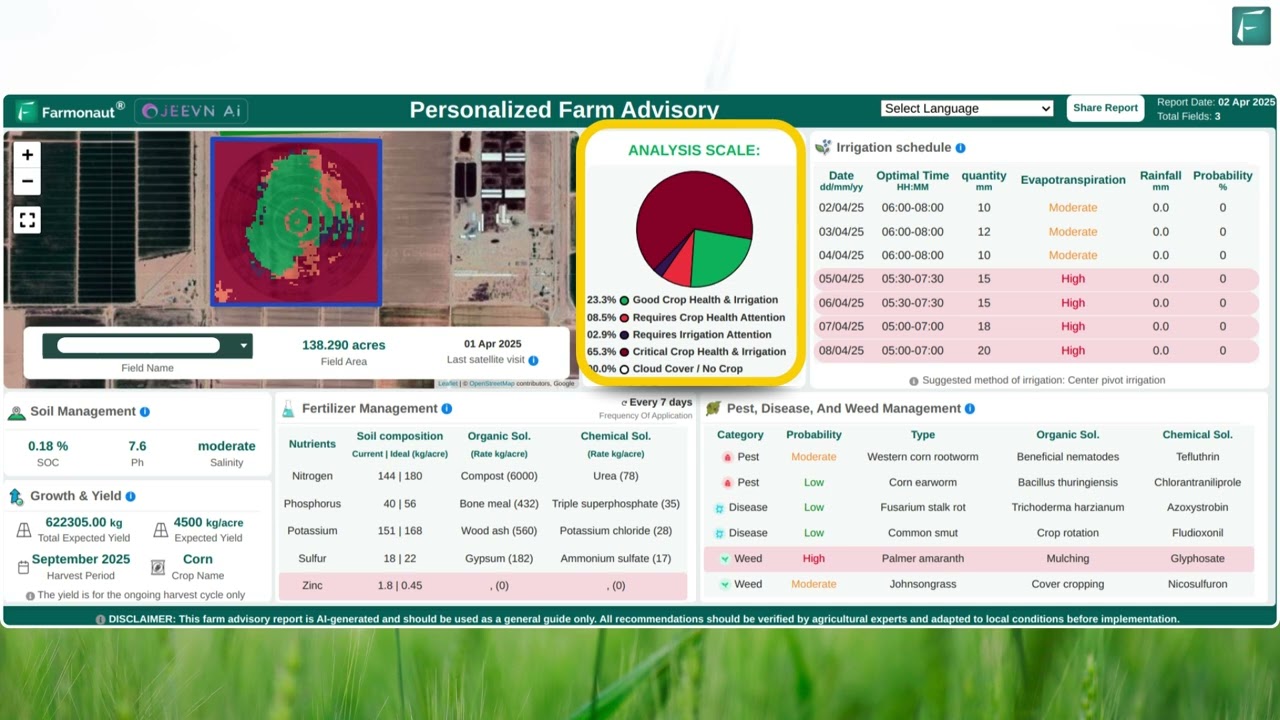
reduce volatilization losses and enhance plant uptake, crucial for sustainable food production. - Precision Agriculture Technologies: Satellite-guided application, in-field sensors, and AI-powered advisory systems (like Farmonaut’s Jeevn AI) enable optimal rates and timing, greatly improving efficiency and reducing environmental waste.
- Integrated Nutrient Management: Blending urea fertilizers with organic compost and tailored micronutrients helps address soil health and maximize nutrient-use efficiency across diverse crops and farming systems.
- Smart Blends for Tree & Orchard Fertilizer: Tree fertilizers now combine urea with slow-release additives, offering steady nutrition for forestry and orchard operations in 2026.
For a closer look at environmental tracking and sustainable protocols, see how
Farmonaut Carbon Footprinting supports better management of fertilizer use and overall agriculture production. This is pivotal in reducing emissions amid growing climate challenges.

Farmonaut Tech Insights: Precision Application & Sustainable Practices
As a satellite technology company, we at Farmonaut are passionate about bridging innovation and sustainability in agriculture. While urea fertilizer forms the backbone of nitrogen application for most farmers worldwide, how it is applied in 2026 is fundamentally reshaped by digital and satellite-driven solutions.
-
Satellite-Based Crop & Soil Monitoring:
Our platform captures multispectral satellite images to monitor crop and soil health, providing precise guidance for urea fertilizer application—maximizing yield and minimizing losses. -
AI & Jeevn Advisory:
The Jeevn AI system analyzes weather, field, and growth patterns in real-time, recommending the ideal timing and amounts for fertilizer application. -
Blockchain Traceability:
By leveraging blockchain, we help verify and trace fertilizer use and crop inputs—bolstering supply chain trust and transparency. Learn more about how this supports food safety and consumer expectations on our Traceability Product Page. -
Real-Time Resource & Fleet Management:
For those managing large acres or fleet operations for crop input logistics, Farmonaut Fleet Management enhances operational efficiency, ensuring urea and other fertilizers get applied exactly where and when needed.
Autonomous decision-making, enabled by these advanced technologies, significantly enhances nitrogen use efficiency, reduces losses, and supports sustainable practices for both small and large-scale producers.
Comparative Table of Urea Fertilizer Forms and Their 2026 Application Benefits
| Fertilizer Form | Nitrogen Content (%) | Typical Application Method | Estimated Yield Increase (%) | Sustainability Score (1–10) |
Suitability for Precision Agriculture |
|---|---|---|---|---|---|
| Granular Urea Fertilizer | 46 | Broadcasted directly, mechanized spreaders, top dressing | 15-18 | 7 | No/Conditional |
| Liquid Urea Fertilizer | ~30-40 (solution dependent) | Fertigation, foliar feeding, irrigation, drone/pivot systems | 18-20 | 9 | Yes |
| 46-0-0 Urea Fertilizer | 46 | Granular (solid), dissolved liquid, both traditional and precision tools | 16-19 | 8 | Yes |
| Tree Fertilizer Blends | 15-30 (blend dependent) | Deep soil integration, root zone application, slow-release systems | 12-17 | 8 | Yes |
This table illustrates how different urea fertilizer forms, including liquid and 46-0-0, can be strategically chosen to maximize yield and sustainability in agriculture—especially when aligned with
precision application technologies and digital farming practices in 2026.

Finding Urea Fertilizer Near Me: Digital Access & Location Solutions
With advances in e-commerce and digital supply chains, sourcing urea fertilizer near me has never been easier for farmers—whether located
in remote, peri-urban, or suburban zones in 2026.
How Farmers Are Locating Urea Fertilizer Near Me
- Searching digital platforms, farm input apps, and online directories for local agro-dealer networks.
- Utilizing large-scale farm management tools—these offer real-time farm input tracking, ensuring the right inputs are available at the right time for field application.
- Maximizing farm input e-marketplaces with geo-location tools to match nearest supplier inventory.
- Engaging with agri-tech advisors (often integrated in mobile/web platforms) for on-demand access to appropriate fertilizer blends, including tree fertilizer options.
Prompt access allows timely fertilizer application, critical for matching crop growth cycles and optimizing both yield and fertilizer use efficiency.
Those managing tree plantations or agroforestry projects should explore Farmonaut Crop Plantation & Forest Advisory for insights on regime scheduling, health monitoring, and sustainable tree fertilizer use.

Frequently Asked Questions
- 1. Why is urea fertilizer considered the most efficient nitrogen source?
- Urea fertilizer contains 46% nitrogen, making it the most concentrated and efficient nitrogen source for plants. This allows for lower application volumes, cost savings, and reduced environmental impact compared to less concentrated fertilizers.
- 2. What does 46-0-0 mean in urea 46 0 0 fertilizer?
- The numbers in 46-0-0 urea fertilizer denote the N-P-K ratio: 46% Nitrogen, 0% Phosphorus, and 0% Potassium. This highlights its utility exclusively as a nitrogenous fertilizer.
- 3. How does liquid urea fertilizer improve precision application?
- Liquid urea fertilizer enables integration with irrigation systems (fertigation), foliar spraying, and advanced “split application” timing, allowing for exact nutrient delivery according to crop need and environmental factors. This reduces loss and pollution while maximizing efficiency.
- 4. What’s the advantage of tree fertilizer blends with urea?
- Tree fertilizer blends often include urea and slow-release additives, providing steady, timed nitrogen feed to long-cycle crops (orchards, timber) and minimizing leaching losses.
- 5. What role does Farmonaut play in urea fertilizer management in 2026?
- We at Farmonaut offer digital technologies—satellite crop monitoring, AI advisories, and blockchain traceability—to help farmers and businesses maximize fertilizer use efficiency, ensure sustainable practices, and support operational decision-making. We do not directly supply or sell fertilizer inputs.
- 6. Are there real benefits to using inhibitors with urea fertilizer?
- Yes. Both urease and nitrification inhibitors increase nitrogen use efficiency by slowing conversion to volatile forms, promoting better crop absorption, and reducing environmental pollution.
- 7. How can I integrate digital tracking for fertilizer application on my farm?
- You can leverage Farmonaut Fleet Management Tools and mobile apps to monitor, schedule, and record all crop input applications, including urea types, quantities, and timing for regulatory and operational efficiency.
Conclusion: Urea Fertilizer’s Future in 2026 & Beyond
Urea fertilizer, particularly in 46-0-0 and liquid forms, remains the gold standard for nitrogen application in modern agriculture. Its widespread use is a testament to its efficiency, high content, and vital role in delivering higher crop yields.
As precision tools, advanced application methods, and digital insights reshape fertilizer management, farmers worldwide can look forward to even more sustainable, productive, and climate-friendly solutions in 2026 and beyond. With Farmonaut’s empowering tech, our users can track, optimize, and document their fertilizer practices to meet the challenges of food production, regulatory compliance, and environmental stewardship.
For those searching urea fertilizer near me, rapid access to location-based solutions ensures you can synchronize application cycles, maintain soil fertility, and drive the next wave of agricultural productivity—securing food security for generations.
Optimize your farm’s future today with data-driven, sustainable fertilizer strategies!
Farmonaut Subscription Options
To harness the full potential of satellite-powered crop and input management, explore our real-time subscription services below for agriculture, mining, and more. Affordable, scalable, and empowering for farms and businesses of any size:

 Fresh Platter
 Andex
Andex FCF India
 Unifrutti Gulf
 Deluxe Conseil
 TVS Electronics
 BW Pipelines
 WICO
WICO Gen Chayat
 Chimera Innovation
 SkyHarvest
 Polaris Digitech
 Teledarbas
 Wild Oak Farm
 SFX
SFX
