

Deforestation from Space: AI Rate Insights for 2026
“By 2026, AI-powered satellites are projected to detect deforestation events with up to 90% accuracy worldwide.”
Introduction: Deforestation from Space in 2026
Deforestation from space is no longer a futuristic concept reserved for specialized researchers or governmental agencies. In 2026, the combination of advanced satellite imagery, deforestation AI, and powerful analytics platforms has profoundly transformed how we monitor, report, and manage the world’s forests and land resources. This technological evolution is particularly impactful for agriculture, forestry, and mining — sectors where the interface between productive activity and environmental responsibility is most intricate.
With the rapid expansion of satellite constellations, improvements in machine learning and AI, and the increasing integration of remote sensing platforms — such as ours at Farmonaut — global users now have unprecedented access to near-real-time, high-resolution data on forest cover, loss, and land-use change. In this post, we guide you through the essential technologies, sectoral impacts, and policy implications of this space-enabled revolution.

Context and Concepts: Understanding Deforestation
Deforestation is defined as the permanent removal of forest cover, typically for agriculture, mining, infrastructure, or urban expansion. The complexity in 2026 arises from dynamic socioeconomic and environmental factors:
Main Drivers of Deforestation
- ✔ Agriculture: Smallholder farming and large-scale plantations drive a significant portion of conversion, often at forest edges or in biodiversity-rich primary forests.
- ✔ Mining & Extraction: Mineral extraction, especially when linked to new infrastructure (roads, tailings ponds), leads to accelerated loss and fragmentation.
- ✔ Urban & Infrastructure Expansion: The spread of urban footprints and new roads causes habitat fragmentation and increased accessibility for logging and farming.
The deforestation rate refers to the speed at which forested land is converted to non-forest use, often expressed as hectares per year or percentage of a given stock. Reporting in the 2020s and beyond, especially 2026, focuses on both net deforestation (loss minus reforestation) and gross deforestation (total area cleared, regardless of regeneration).
From Satellites to AI: A New Paradigm in Deforestation Monitoring
- 📊 Artificial Intelligence: Deforestation AI algorithms detect, categorize, and project changes using satellite imagery, radar, and lidar data.
- 📊 Remote Sensing: “Deforestation from space” emphasizes remote sensing as an early warning and verification mechanism — crucial for supply-chain compliance and policy effectiveness.
Key Metrics in Deforestation Reporting
- Net Deforestation: Forest loss minus reforestation — indicates ecosystem service loss and recovery potential.
- Gross Deforestation: Total area (hectares/year or % of forest stock) converted — reveals absolute change and pressure on land cover.
- Deforestation Rate: The speed of clearance, often expressed in annual terms, vital for sustainable harvest and resource planning.
AI Deforestation Rate Monitoring Technologies in 2026
At the epicenter of deforestation monitoring in 2026 are the remarkable strides made in integrating artificial intelligence with satellite remote sensing. Here, we examine the technologies that have redefined the monitoring landscape — and, with them, our global capacity to quantify and mitigate forest loss.
Satellite Imagery: Seeing Deforestation from Space
- ✔ Optical Satellites: Programs like Landsat, Sentinel, and high-resolution commercial satellites deliver multispectral images usable for time-series analysis of forest and land-use change.
- ✔ Radar & Lidar: Radar sensors penetrate clouds, while lidar provides three-dimensional structure, helping distinguish forest types, seasonality, and drivers (such as fires or logging).
AI and Machine Learning: Next-Gen Deforestation Detection
- ✔ Deep Learning Models: Analyze pixel-level change, attribute drivers, and forecast deforestation risk using historical and real-time data.
- ✔ Transfer Learning: Models trained on one region adapt to others with minimal local data — crucial for global scalability in deforestation detection.

Cloud Platforms, Open Data, and Real-Time Analytics
- ✔ Cloud-Based Platforms: Platforms like those developed by Farmonaut deliver cross-border monitoring, link collateral data to supply chains, and enable transparent reporting for sustainable sourcing.
- ✔ Participatory Verification: Combines satellite alerts with ground truthing, community mapping, and stakeholder engagement for accuracy and equitable monitoring.
Integrating Blockchain and Traceability
- ✔ Blockchain Traceability: Ensures supply chain compliance and resource origin verification, especially in agriculture and mining sectors. See Farmonaut’s Product Traceability for traceable agriculture and mineral sourcing.

Deforestation from Space: Sectoral Impacts
When discussing deforestation from space, it is vital to understand the nuanced interplay between various land-use sectors. Monitoring deforestation AI trends in these sectors not only quantifies forest stock change but informs sustainable management strategies.
Agriculture & Farming
- ✔ Field Encroachment Detection: Satellite monitoring identifies fields encroaching forest margins, supporting proactive land use planning and regulatory enforcement.
- ✔ Agroforestry and Sustainability: Deforestation AI distinguishes between shade-grown crops and primary forest clearance, crucial for organic certification and climate resilience. See Farmonaut’s Large-Scale Farm Management for scalable compliance and operational insights.
- ✔ Enhanced Productivity: Precise change detection through AI informs yield forecasting, soil health optimization, and links land-cover dynamics to productivity outcomes.
- ✔ Insurance & Finance: Real-time remote validation helps in crop loan and insurance, reducing risk and fraudulent claims. Explore Farmonaut’s Crop Loan & Insurance page.
Forestry
- ✔ Sustainable Harvest Planning: High-resolution time-series imagery enables monitoring of logging concessions, regeneration rates, and edge effects, informing adaptive management.
- ✔ REDD+ and SEEA Reporting: Deforestation rate quantification is essential for UN REDD+ programs and System of Environmental-Economic Accounting (SEEA), supporting policy and international finance mechanisms.
- ✔ Illegal Logging Detection: AI models can distinguish natural from anthropogenic disturbances—enabling swift intervention against illegal activity and enforcement of compliance.

Mining and Infrastructure
- ✔ Extraction Footprint Mapping: Satellite analytics rapidly map extraction area growth, new infrastructure, and fragmentation, allowing regulators to track mineral impact in near-real-time.
- ✔ Sustainability Verification: AI-driven change detection verifies reclamation, ecological offset plans, and adherence to zero-deforestation commitments.
- ✔ Carbon Footprinting: Environmental impact assessment tools — such as Farmonaut’s Carbon Footprinting — help mining and agriculture companies align with global sustainability standards.
“Satellite data analysis can now monitor over 1.2 billion hectares of forest for deforestation risks in real time.”
Platforms and Solutions: The Farmonaut Advantage
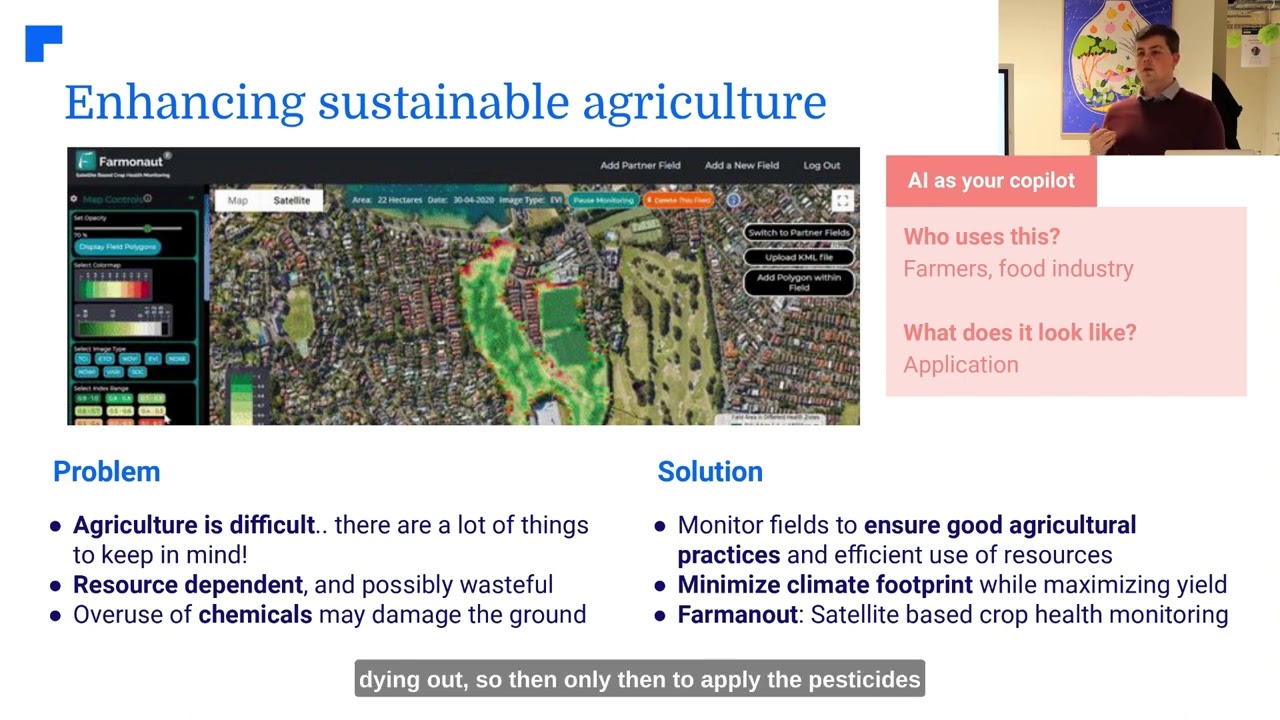
At Farmonaut, we have built our platform to democratize access to these advanced tools for businesses, governments, and individuals worldwide. Our solutions integrate satellite-based monitoring, AI-driven advisory, blockchain traceability, and resource management into a modular, scalable service accessible via web, Android, or iOS — and through APIs for custom integration (API access, API developer docs).
Our mission is to make satellite-driven insights affordable and actionable for anyone managing agriculture, mining, infrastructure, and forestry assets. We combine:
- ✔ Multispectral data for land and vegetation health
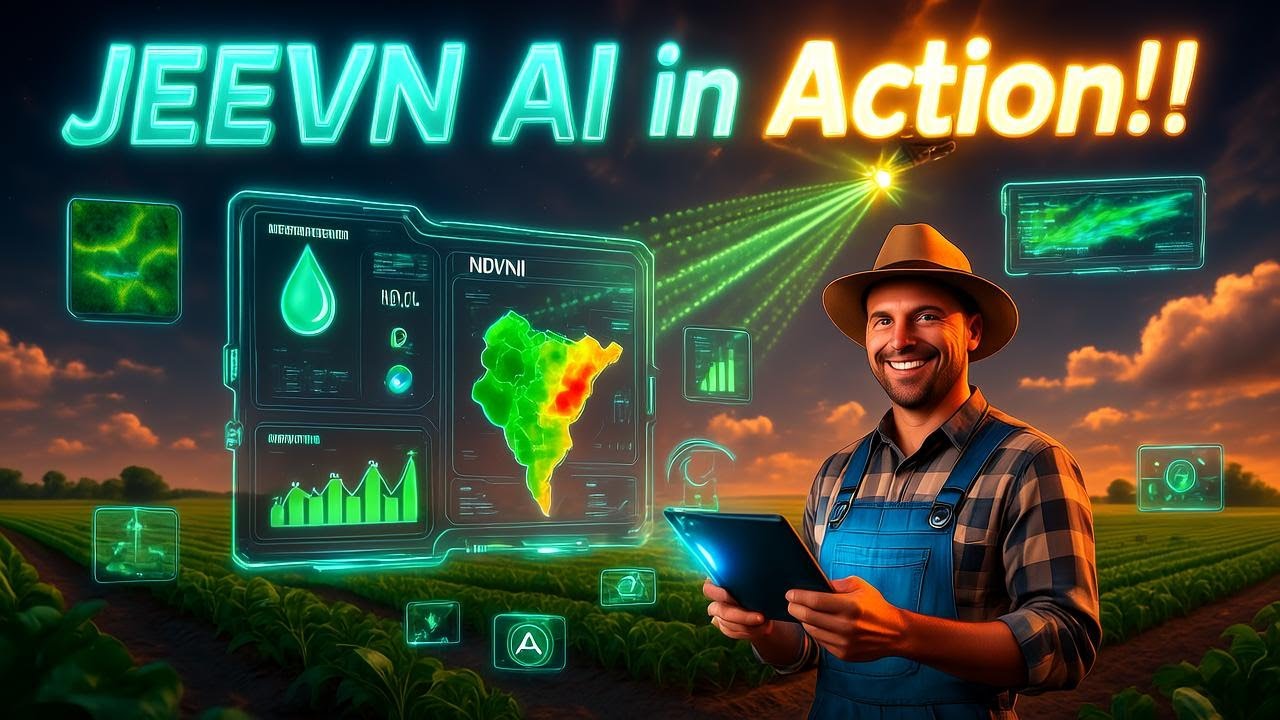
- ✔ Jeevn AI for farm, mining, and infrastructure optimization
- ✔ Blockchain tools for compliance in global supply chains
- ✔ Environmental impact modules (carbon, water, land use)
- ✔ Fleet and resource management for logistics optimization
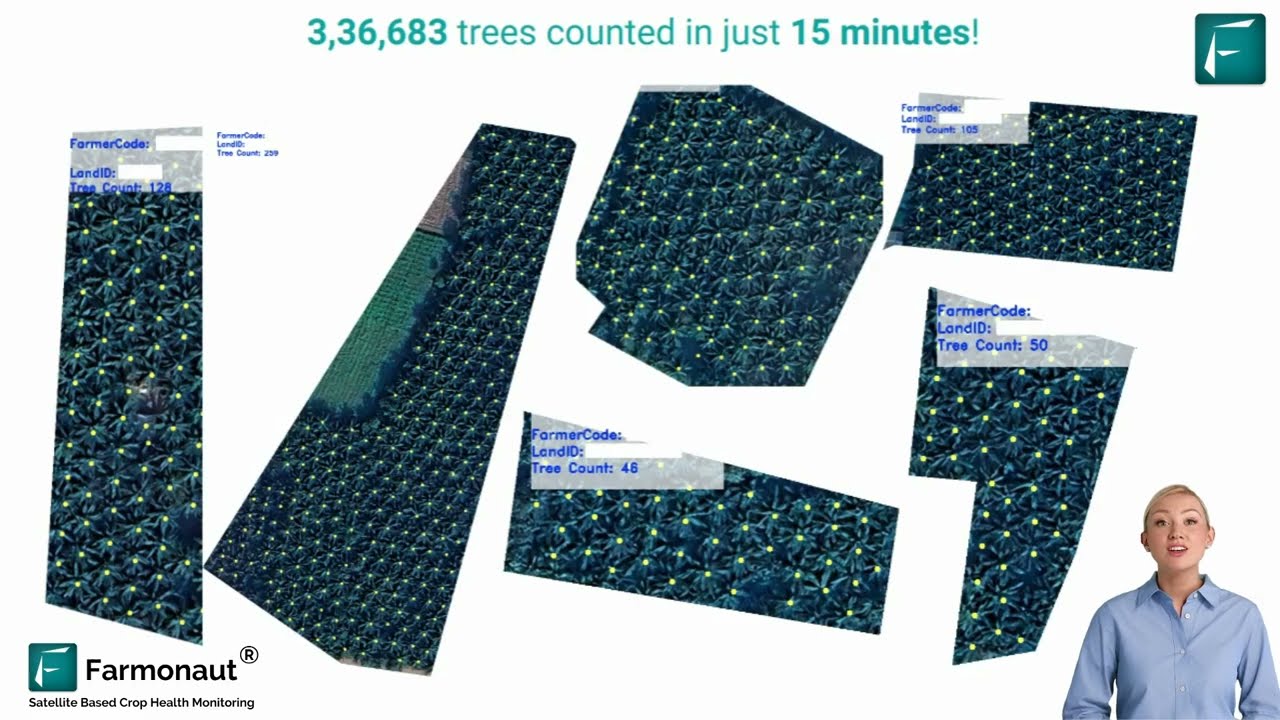
You can explore all functionality through our platform and apps:




For forest and plantation managers, our Crop, Plantation, and Forest Advisory delivers AI-based insights for sustainable harvest, restoration monitoring, and risk mitigation.
AI-Driven Deforestation Rate Comparison Table (2026)
An essential advantage of AI-driven deforestation monitoring is unmatched accuracy and timeliness. The following table summarizes estimated annual deforestation rates across key global regions in 2026, comparing outcomes detected by AI-enhanced satellite platforms versus traditional (ground-reporting/visual-interpretation) methods.
Key Insight: AI deforestation monitoring consistently reports 17–39% greater forest loss than traditional reporting, illustrating its critical role in “closing the gap” for 2026’s ecosystem and biodiversity strategies.
Policy and Compliance: Deforestation AI Implications
Policy ecosystems are now rapidly adapting to meet the realities of near-real-time deforestation reporting. Here’s how AI-enabled monitoring is shaping regulatory strategy and sectoral best practices in 2026:
Zero-Deforestation Commitments & Certification
- ✔ Verification Mechanisms: Deforestation AI platforms are the backbone of enforceable, auditable “zero-deforestation” commitments made by commodity traders, governments, and certification bodies.
- ✔ Traceability: Blockchain-based traceability (as offered by Farmonaut) ensures everything from palm oil to rare earth minerals is responsibly sourced, preventing laundering of goods tied to illegal forest loss. See more: traceability for deforestation compliance.
Policy Design, Incentives, and Restoration
- ✔ Spatial Planning: Fine-grained loss data informs planning for protected areas, buffer zones, and reforestation priorities.
- ✔ Performance-Based Finance: Carbon markets and REDD+ programs depend on AI-driven quantification for payment-triggered restoration outcomes.
Supply Chain Management
- ✔ Transparent Reporting: End-to-end supply chain monitoring — anchored by real-time satellite and blockchain data — fosters consumer trust and enables regulatory compliance.
- ✔ Participation: Participatory platforms integrate local community alerts and stakeholder mapping, ensuring inclusiveness and fair benefit-sharing.
- ✔ Insurance and Lending: Remotely validated land cover analytics are now essential for risk-adjusted insurance and loans. For integrated verification and insurance solutions, see Farmonaut’s Crop Loan and Insurance.
Key Callouts and Highlight Boxes
Regular, AI-powered, space-based monitoring detects previously overlooked instances of small-scale or illegal deforestation, improving the accountability and protection of global forests in the agricultural, forestry, and mining sectors.
Combining AI deforestation alerts from satellite imagery with participatory verification at the ground level maximizes accuracy, reduces false positives, and builds community trust in reporting platforms.
Relying solely on traditional (ground-based) deforestation reporting can underestimate actual loss by up to 39%, as shown in regional comparisons for 2026. Modern compliance demands integrating AI-driven satellite data for precise land cover assessments.
The geospatial analytics and AI deforestation monitoring market is projected to grow at over 15% CAGR through 2030, driven by ESG reporting, regulatory compliance, and sustainable investment strategies in resource management.
AI deforestation tools empower agroforestry and plantation managers to maintain sustainability certifications by distinguishing between shade-grown crops and cleared primary forest, critical for resilient and certified land management.
AI Deforestation Monitoring: Visual Lists & Bullet Points
Top 5 Benefits of AI-Powered Deforestation Monitoring
- ✔ Real-time Alerts: Enables immediate response and mitigation, reducing irreversible damage.
- 📊 Improved Accuracy: AI and deep learning models detect subtle changes traditional methods may miss.
- 🌍 Scalability: Monitors entire continents or specific sites of interest — essential for cross-border compliance.
- ⚡ Risk-Based Planning: Prioritizes intervention where deforestation rate is climbing or undetected loss is high.
- ✅ Supply Chain Reporting: Supports environmental, social, and governance (ESG) claims for industries and governments.
Top AI-Driven Data Insights for 2026
- 🛰️ Detect Encroachment: Automated field boundary changes — early warning of illegal or unauthorized land use.
- 🔥 Attribute Drivers: Categorize land changes as fire, flood, logging, or crop conversion with higher confidence.
- 🌱 Support Reforestation: Verifies actual regrowth, not just reported plantings, aiding in credible restoration reports.
- 🌐 Integrate Local Data: Combine satellite, ground sensors, and participatory mapping using single collaborative platforms.
- ⏰ Time-Series Modeling: Quantifies seasonal patterns, peaks in conversion activity, and guides proactive intervention.
Risks and Limitations (2026)
- ⚠ Cloud Cover Limitations: Optical satellites can be hindered by persistent clouds; radar and AI compensation are essential.
- ⚠ Data Overload: High-frequency data streams require robust AI and user-friendly platforms to deliver actionable insights, not just information.
- ⚠ Socioeconomic Data Gaps: Not all drivers are visible from space — collaboration with local communities fills crucial gaps.
- ⚠ Algorithm Bias: Deforestation AI may underperform in underrepresented ecoregions unless models are regularly trained and validated.
- ⚠ Privacy/Surveillance Concerns: Stakeholder engagement and transparent policy are vital for equitable monitoring.
Visual List: Essential Elements in AI-Driven Deforestation Monitoring
- Satellite Constellations (Optical and Radar)
- AI Deep Learning Models for Change Detection
- Blockchain Traceability for Compliance
- Cloud-Based Data Platforms
- Participatory Verification and Ground Truthing
Visual List: Top Applications of Deforestation AI in 2026
- Supply Chain Sustainability Reporting
- Land Use Planning and Policy Design
- Reforestation and Ecosystem Resilience Incentives
- Insurance and Loan Verification in Agriculture & Mining
- Carbon Market Performance Tracking
Farmonaut Access & Tools
Ready to harness deforestation from space tools for your sector? We invite you to try Farmonaut’s integrated platform, offering you:
- ✔ Real-time satellite monitoring of agriculture, mining, and forestry sites
- 📊 AI-powered crop, yield, and soil health insights (read about Jeevn AI above)
- 🌱 Blockchain-based traceability for transparency in sourcing
- 🚚 Fleet and resource management for optimized logistics: Learn more about our Fleet Management Tools
- 🌳 Environmental impact and carbon footprinting modules for credible ESG, supply chain, and restoration reporting
Farmonaut subscriptions are available for individuals, businesses, and government agencies:
For developers: Integrate Farmonaut’s API satellite data directly into your decision systems or applications. See the developer docs for details.
FAQ: Deforestation from Space in 2026
Deforestation from space refers to the use of satellite imagery and AI analytics to monitor, detect, and report forest cover loss. It is crucial because it offers real-time, accurate, and auditable data at scale—essential for compliance and sustainability in agriculture, forestry, and mining.
Q2: How does AI improve deforestation rate monitoring compared to traditional methods?
AI deep learning models identify subtle or rapid changes in forest cover undetected by ground reports. For 2026, this means up to 30–40% more deforestation events are detected, reshaping policy action and global supply chain risk assessment.
Q3: What land-use drivers account for most deforestation in 2026?
The largest drivers are agriculture expansion (both smallholder and large-scale), mining activities, infrastructure (especially roads), and urban growth. Regionally, logging and plantation crops (palm, cocoa) are key.
Q4: Can Farmonaut’s solutions help my farm, plantation, or mining operation become more sustainable?
Yes—we provide real-time AI-based monitoring, environmental impact tracking, fleet/logistics management, and blockchain traceability, supporting sustainable management and regulatory compliance for any scale of operation.
Q5: How do I get started with Farmonaut’s platform?
Simply register via our web app or mobile apps for Android and iOS. Subscription options fit every user, from individual farmers to government agencies.
Conclusion & Summary
Deforestation from space, powered by AI deforestation analytics and rich satellite imagery, is the cornerstone of sustainable forest, agriculture, and mining resource management in 2026 and beyond. With real-time and historic data, supply chain transparency, compliance with zero-deforestation commitments, and platforms like Farmonaut, businesses and governments are better equipped than ever to quantify, explain, and mitigate forest loss — all while balancing economic activity with the provision of irreplaceable ecosystem services.
The future of land management is increasingly integrated, data-driven, and actionable. Whether you are a farmer, forest manager, miner, or policymaker, leveraging deforestation from space technologies unlocks sustainability, resilience, and long-term profitability for your sector.
Tap into the potential of AI-driven deforestation monitoring and space-based analytics — your forests, ecosystems, and operations will thank you.
Discussion
Questions, corrections or field experience? Share them below. First-time comments are reviewed before they appear, and your email is never published.
No comments yet. Be the first to add a question or your experience.

 TVS Electronics
 BW Pipelines
 WICO
WICO Gen Chayat
 Chimera Innovation
 Hiteshi Infotech
 SkyHarvest
 Polaris Digitech
 Teledarbas
 Wild Oak Farm
 SFX
SFX BACF Africa
 Doodlakine
 Exurbia Geospatial
 FieldZero
 Indico Company
 Licence holder · Niger · Gold










