

Peru Agriculture Exports: 7 Innovations for Sustainable Growth
“Peru’s agricultural exports grew by over 300% in the last 15 years, driven by sustainable innovations and diversification.”
“Over 50% of Peru’s exported crops now meet international sustainability standards, boosting access to global markets.”
Table of Contents
- Introduction
- Peru Agriculture Exports: A Dynamic Landscape
- Key Commodities and Market Diversification
- 7 Innovations Powering Sustainable Growth
- Comparative Table: Innovations in Peru’s Agriculture Exports
- Farmonaut Technology Supporting Exporters
- Export Logistics, Traceability & Quality Assurance
- Policy & Institutional Support for Growth
- Visual Insights & Bullet Points
- FAQ: Peru Agriculture Exports & Innovation
- Conclusion
Introduction: Peru’s Agricultural Export Revolution
Peru’s agricultural exports sector stands as a dynamic pillar of the national economy, shaping the landscape for rural development, livelihoods, and international trade. In an ever-evolving global market, Peru’s farmers, cooperatives, and agro-industrial firms are championing an innovative approach to quality, sustainability, and resilience. This detailed blog explores how innovations across production, processing, logistics, and sustainability practices power the country’s meteoric rise in agriculture exports, positioning Peru as a global leader in the export of fruits, vegetables, superfoods, and value-added products.
Peru’s agriculture exports stand out for their rapid growth and focus on sustainable supply chains, resilient practices, and high-value innovation. Diversification and strict quality standards have set a global benchmark.
Peru Agriculture Exports: A Dynamic Landscape
Peru agriculture exports have transformed the Peruvian sector, shaping it into a model for sector diversification and sustainability. Over the last two decades, the country has rapidly elevated itself from a supplier of bulk commodities to a hub of premium fresh fruits, vegetables, and superfoods, consistently meeting strict international quality standards.
As the export narrative unfolds, Peru’s successes are driven by a mixture of strategic investments in infrastructure, certification, and production processes. These advances not only enhance market access but pave the way for long-term economic and environmental sustainability.
Key Focus: By integrating innovative technologies and sustainability practices, Peru’s farmers, exporters, and supply chain actors protect soil health, water resources, and biodiversity. This transition elevates the country’s global reputation and extends the value proposition for local communities and overseas buyers alike.

Peru agriculture exports are turbocharged by investment in modern irrigation, AI-based monitoring, and post-harvest logistics. These innovations are improving supply chain efficiency and ensuring consistency for international buyers.
Key Commodities & Market Diversification: Driving the Export Narrative
Fresh fruits and vegetables are the backbone of Peru’s agriculture exports, with commodities like avocados, table grapes, blueberries (berries), and citrus regularly capturing premium positions in overseas markets. These crops benefit from the country’s unique geography, enabling near year-round availability that meets the ever-increasing global demand.
- Avocados (palta): Exported mainly to the U.S., European Union, and Asia. Recognized for quality, consistency, and adherence to strict phytosanitary standards.
- Table grapes: One of Peru’s most valuable export crops, with robust post-harvest management and cold chain integrity.
- Berries (blueberries, raspberries): Gaining notoriety in America, Europe, and China, bolstered by modernized packing facilities and traceability systems.
- Citrus (tangerines, oranges): Valued for high quality and international citrus market penetration.
Beyond traditional fruits, Peru leads in non-traditional crops with mass consumer appeal:
- Quinoa & Maca: Ancient Andean grains and roots, now recognized as global health foods, subject to strict quality standards and organic certification.
- Specialty peppers (ají): Exported for culinary innovation and gourmet market niches worldwide.
- Dried fruits, pulps, and oils: Major in value-added agro-processing, extending revenue beyond raw produce.
- Coffee & Cocoa: Sustainable, certified, and organic coffee/cocoa are penetrating the premium international markets.
- Artichokes, Asparagus: Grown mainly for export to America and Europe, benefiting from Peru’s favorable climate.
- Superfoods (Camu Camu, Sacha Inchi): Specialized production aimed at health-focused international buyers.
- 📊 Data Insight: Peru is among the top three global exporters of blueberries, avocados, and grapes, with consistent export growth each year.
- ✔ Key Benefit: >50% of exported crops now meet international sustainability standards, enhancing market entry.
- 📦 Packaging: Modern packing facilities and cold chain systems reassure buyers of product safety and origin.
- ⚠ Risk: Commodity price volatility is hedged by sector diversification into specialty and value-added products.
- 🔑 Key Fact: The sector’s transformation relies on the synergy of quality, export compliance, and sustainability.

Some exporters underestimate the importance of traceability and certification in opening international markets. Full compliance with quality norms is essential.
7 Innovations Powering Sustainable Growth in Peru Agriculture Exports
The future of Peru agriculture exports depends on continuous innovation across environmental stewardship, production management, supply chain optimization, and digital adoption. Here are the seven most powerful drivers:
-
Precision Agriculture & AI-Powered Monitoring:
The use of satellite imagery, drones, and AI (such as the Jeevn AI Advisory System) enables data-driven decisions across planting, fertilization, and irrigation. Yield stability and soil health are improved, reducing water use and maximizing productivity. -
Advanced Irrigation & Water Resource Management:
Efficient irrigation systems and water allocation programs combine real-time soil moisture data with weather analytics, reducing water waste. This directly supports the integrity and volume of export crops like asparagus, grapes, and avocados. -
Certification: Organic, Fair Trade, & Compliance Schemes:
Programs ensuring certification — whether for organic, GlobalG.A.P., or Fair Trade — deepen access into premium international segments. Certified products fetch higher prices and guarantee better labor conditions. -
Post-Harvest & Cold Chain Innovation:
Modern packing, integrated cold chains, advanced packaging, and rapid export logistics safeguard Peru’s position in distant markets, ensuring consistent quality, safety, and freshness across all chains. -
Blockchain-Based Traceability & Transparency:
Technologies like blockchain, which Farmonaut enables, offer end-to-end traceability from the field to the port. This reassures buyers and meets strict compliance norms for origin and handling, especially in America, China, and Europe. -
Agro-Processing & Value Addition Expansion:
Value-added products — including dried fruits, pulps, oils, and convenience foods — elevate rural incomes, enable portfolio diversification, and extend shelf life for export. -
Digital Solutions: Mobile Apps & Data-Driven Programs:
Real-time data sharing, order tracking, and compliance workflows (accessible via Web and Mobile Apps such as Farmonaut’s platform) streamline management for exporters and enable cooperatives to optimize every stage of the export process.
Investment in post-harvest handling and modern packaging solutions pays dividends by substantially lowering post-harvest losses, especially for sensitive crops like berries and grapes.


Comparative Table: Innovations in Peru’s Agriculture Exports
| Innovation/Practice | Exported Crop/Product | Estimated Value/Volume Increase | Sustainability Enhancement |
|---|---|---|---|
| Precision agriculture (satellite, AI, drones) | Avocados, Table grapes, Blueberries | +18% export growth (yield and export quality) | Reduced water use, Improved soil health |
| Advanced irrigation and water management | Asparagus, Citrus fruits, Coffee | +15% production volume, +10,000 ha irrigated | Lower water footprint, Climate resilience |
| Organic and Fair Trade certification | Quinoa, Cocoa, Coffee | +25% price premium, Broader market access | Biodiversity protection, Improved labor conditions |
| Cold chain and packaging innovation | Berries, Grapes, Citrus, Avocados | -20% post-harvest losses, +12 days shelf-life | Lower food waste, Reduced carbon emissions |
| Blockchain traceability and documentation | Chia seed, Maca, Coffee | +10% volume (new buyers), Higher transaction speed | Transparency, Reduced fraud risk |
| Value addition (agro-processing) | Dried fruits, Pulps, Oils | +40% revenue vs. raw produce, +16 export markets | Less spoilage, Rural income growth |
| Supply chain digital platforms | All crops & products | -30% admin costs, Quicker market cycles | Better compliance, Reduced paper waste |
Every innovation is a lever for both economic growth and environmental sustainability, reducing footprints while opening lucrative new market channels.
Farmonaut Technology Supporting Exporters and Rural Development
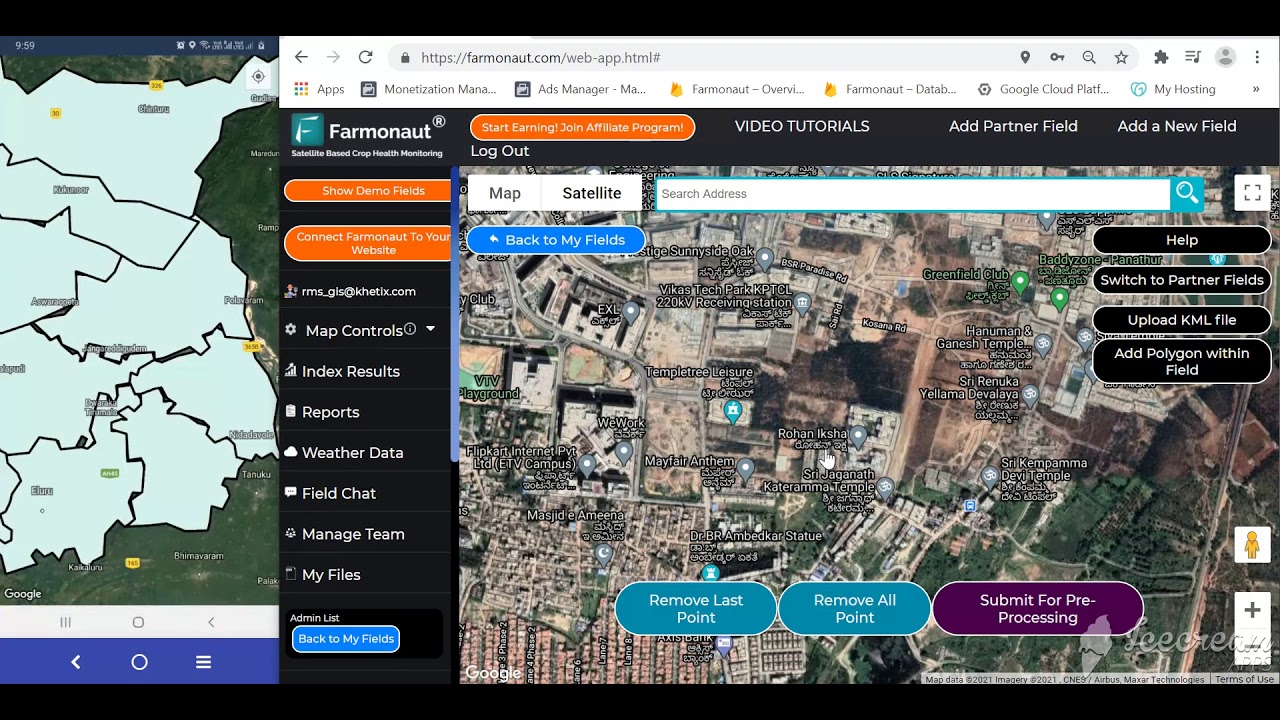
As demand for sustainable agriculture exports intensifies, technology is key to optimizing production, supply chain management, resource conservation, and compliance. Farmonaut offers a suite of advanced satellite-based tools designed to empower farmers, businesses, and governments across Peru and beyond.
- 🛰️ Satellite-Based Monitoring:
Multispectral imagery for crop health, soil analysis, and irrigation mapping increases productivity and ensures exports meet international quality standards. - 🤖 AI Advisory (Jeevn AI System):
Real-time insights—prediction of weather, disease, and yield—guide farmers and organizations in optimizing every stage of production. - 🔗 Blockchain Traceability:
Farmonaut’s traceability solutions create secure, tamper-proof records for international buyers, supporting compliance and transparency. - 🛠️ Fleet and Resource Management:
Tools for tracking and optimizing machinery, vehicles, and assets streamline logistics and lower operational costs. Learn more about Farmonaut’s fleet management solutions. - 🌍 Environmental Impact Monitoring:
Track carbon footprinting, resource use, and compliance via Farmonaut’s carbon footprinting services. This aids exporters in meeting ever-stricter market requirements.





Export Logistics, Traceability, and Quality Assurance
Efficient logistics and market access strategies are central to Peru’s agricultural exports success. Exporters focus on:
- Geographic diversification: Expanding beyond traditional U.S. and European markets to China, Asia-Pacific, and Middle East, which brings resilience against market fluctuations.
- Port and freight optimization: Leveraging port efficiency and integrated transport chains prevents bottlenecks and enables faster, safer deliveries.
- Standardized packaging and labeling: Meeting unique requirements for each market, maintaining quality and safety during handling.
- Documentation & compliance workflows: Digitalization reduces paperwork, ensures fast responses, and supports authentication for buyers and customs authorities.
Traceability is non-negotiable. Blockchain-verified provenance (learn more about product traceability) and strict phytosanitary checks — driven by both government and private programs — create global confidence in Peru’s agriculture exports.
Some smallholders neglect to adopt digital compliance solutions and risk delays at customs or even rejection by international buyers. Digital platforms are critical for export success.
Farmonaut Subscriptions: Affordable Satellite Tools for Everyone
Farmonaut operates on a simple subscription model, offering flexible plans for individuals, businesses, and governments concerned with crop health, traceability, logistics, and environmental compliance. Our services are accessible on web, Android, and iOS, making advanced monitoring affordable for all.
Policy and Institutional Support: Building a Resilient Export Sector
Government and institutional policies underpin the resilience of Peru’s agriculture export sector. The right environment for growth includes:
- 📝 Export procedure simplification: Digitalized applications and shorter lead times speed up market access.
- 💡 Technical support programs: Extension services, training, and access to modern practices build cooperative capacity and farmers’ knowledge.
- 🏦 Facilitated financing: Satellite-based verification by platforms such as Farmonaut’s crop loan and insurance solution reduces risks and accelerates rural investment.
- ⚙️ Public-private collaboration: Sector-wide infrastructure development, from irrigation projects to port modernization and research, enables consistency in nationwide export standards.
📈 Major Advantages of Peru Agriculture Exports Model
- ✔ Sector diversification offsets risks and increases revenues
- ✔ Expansive international market reach (America, China, Europe, Asia-Pacific)
- ✔ Value addition via agro-processing and premium certifications
- ✔ Sustainable practices integrated throughout supply chains
- ✔ Robust logistics and traceability foster buyer trust and compliance
🌱 Sustainability & Tech-Driven Export Benefits
- 🌎 Reduced environmental impact via precision irrigation and inputs
- 🌱 Soil and biodiversity protection through crop rotation and organic/fair trade programs
- 📦 Lower post-harvest losses and emissions with modern packing and cold chain integration
- 🔗 Traceability and transparency in every export shipment
- 🛡️ Resilience against price shock with innovative risk management tools
Frequently Asked Questions (FAQ): Peru Agriculture Exports & Innovation
- What are Peru’s most important agricultural export commodities?
- Fresh fruits (avocados, table grapes, blueberries), vegetables (asparagus, artichoke), roots/tubers (maca), and superfoods (quinoa, sacha inchi) form the bulk of Peru agriculture exports. Increasingly, value-added products like dried fruit, pulps, and specialty oils are boosting diversification and income.
- How does Peru ensure international quality and phytosanitary compliance?
- Strict adoption of international phytosanitary standards, certification schemes (organic, fair trade), and modern supply chain systems (cold chain, traceability) all ensure that exporters meet global buyers’ quality and safety expectations.
- What innovations have made Peru a leader in sustainable agriculture exports?
- The sector’s leap in satellite-based precision agriculture, AI-driven advisory systems, advanced irrigation, blockchain traceability, and value-added processing directly link to Peru’s competitive advantage on the international stage.
- Why is certification (like organic or fair trade) important for Peruvian exporters?
- Certification programs open up premium international segments, increase unit prices, and align with sustainability criteria that buyers now demand. Over half of Peru’s exports now conform to such standards.
- How does digital technology support smallholder farmers in Peru?
- Platforms such as Farmonaut (accessible on web and mobile) bring satellite, AI-analysis, and resource management direct to farmers, enabling them to optimize field operations, comply with export documentation, and access microfinance and crop insurance (learn more here).
- How does Peru compare to Chinese and American agricultural exports?
- While Chinese agricultural exports and American agricultural exports lead in large volumes and commodity staples, Peru distinguishes itself through quality-driven, year-round exports of premium, certified, and niche produce with consistent sustainable practices.
Technology adoption, market diversification, and sustainability certifications are key differentiators in Peru’s agricultural exports sector. Exporters who invest here see greater resilience and profitability, meeting the evolving requirements of global buyers and regulators.
Conclusion: Building Long-Term Value in Peru Agriculture Exports
Peru’s agricultural export sector stands as a case study in diversification, innovative supply chain management, and the seamless adoption of sustainability practices. Breakthroughs in precision agriculture, value-added processing, and digital traceability are not only transforming Peru’s ability to meet global demand but are also paving the way for rural prosperity and environmental protection.
With continuing investment in sustainable production, optimizing logistics and market access, and integrating real-time technology platforms, Peru is solidifying its place among the world’s leaders in agricultural exports. The future will be defined by how quickly and thoroughly exporters, cooperatives, and farmers can embrace these innovations — for the benefit of the national economy, global buyers, and the planet.
For exporters and agricultural stakeholders worldwide, Peru offers a roadmap where resilience, quality, sustainability, and innovation align to shape the next chapter of international agriculture trade.

 Global Launch Base
 Elders
 Agritein
 Delicio
 WB Dev
 Sama Premium
 Prochecker
 Tres Valles
 LACOS Geoinformation
 Magrifly
 LatConnect 60
 WebsEdge
 Blickwinkel
 Agricultural Credit Policy Council
 Marei Nursery
 eKGIS
eKGIS Mostas Tech
 Andex
Andex FCF India
