

Reviewed August 2026 against USDA Farm Service Agency lending rate notices and USDA NASS farm machinery price data.
Try it: Run your own numbers →
Producers near Ada, Oklahoma have five main paths to ag financing: USDA Farm Service Agency (FSA) direct loans, FSA-guaranteed loans through a bank or Farm Credit lender, traditional bank ag loans, agricultural co-op financing, and fintech input-loan apps. As of August 2026, FSA Direct Farm Operating Loans carry a 5.25% interest rate and Direct Farm Ownership Loans carry 6.00%, both set monthly by the USDA Farm Service Agency. Bank equipment loans run well above that, averaging 6.75%–8.25% APR according to Crestmont Capital. This article breaks down what each option actually costs, how long approval takes, and how to check current terms yourself rather than relying on a rate that will be stale by next planting season.
Ag Financing Ada, Oklahoma: What’s Actually Available
Ada sits in Pontotoc County, in a part of south-central Oklahoma where grain, cattle, and hay operations dominate the credit demand. Ag financing Ada, Oklahoma producers can draw on runs through the same national and regional channels available across the state: USDA FSA direct and guaranteed loans, Farm Credit System cooperatives, community banks, agricultural co-ops, and a newer layer of fintech input-loan apps. What differs by location is which of these actually have local presence and how fast they move.
The FSA’s direct loan program caps out at $600,000 per direct loan, per the USDA Farmers.gov loan program guide, with repayment terms up to 40 years for Direct Farm Ownership Loans and 1 to 7 years for Direct Farm Operating Loans, according to the FSA farm ownership loan program page. In Oklahoma specifically, the USDA has obligated $184 million in FSA loans to beginning farmers and ranchers in a recent program year, per the Texas and Southwestern Cattle Raisers Association — a meaningful signal that targeted funding for new and underserved producers is actively flowing into the state, not just theoretically available.
Contents
- Ag Financing Ada, Oklahoma: What’s Actually Available
- FSA Loan Rates and Terms, and How to Check Them
- Ag Input Financing: Covering Seed, Fertilizer, and Fuel
- Tractor Financing Options and Equipment Costs
- Comparison: Ag Financing and Ag Loan Options for Ada, Oklahoma
- How Satellite and Digital Verification Speed Up Approval
- Tractor Loan Payment Calculator
- Financing Challenges Specific to Oklahoma Producers
- A Durable Checklist: How to Compare Any Ag Loan
- FAQs: Ag Financing and Ag Loans in Ada, Oklahoma
- Conclusion

FSA Loan Rates and Terms, and How to Check Them
FSA rates change monthly, so any number printed here has an expiration date. As of the August 2026 notice, the USDA Farm Service Agency published these rates for direct loans:
- Direct Farm Operating Loans: 5.25%
- Direct Farm Ownership Loans: 6.00%
- Joint Financing Farm Ownership Loans: 4.00%
- Down Payment Farm Ownership Loans (beginning farmers): 2.00%
These are direct-loan rates, meaning the FSA is the lender itself, not a guarantor of a bank loan. Guaranteed loans, where FSA backs a percentage of a loan issued by a bank or Farm Credit institution, use the lender’s own rate rather than FSA’s published figure. To get the rate for the month you actually apply, go to the FSA newsroom and look for the release titled “USDA Announces [Month] [Year] Lending Rates for Agricultural Producers” — it publishes early in the month following the rate period, so a September rate appears in early October, and so on. This is the single most reliable way to future-proof any comparison you make against this article.
Loan size and term matter as much as rate. FSA direct loans max out at $600,000, and Direct Farm Ownership Loans can be repaid over as long as 40 years — a term no commercial bank offers for equipment or operating credit. Direct Operating Loans repay over 1 to 7 years, which fits a single-season input cycle far better than a multi-decade ownership loan.
Ag Input Financing: Covering Seed, Fertilizer, and Fuel
Ag input financing exists to solve one specific cash-flow problem: seed, fertilizer, and crop protection products have to be bought and paid for months before a harvest generates revenue. FSA Direct Operating Loans, with their 1–7 year terms, are structured for exactly this — inputs, fuel, and labor are eligible uses of the funds, alongside equipment and minor real estate repairs.
What isn’t published in a single national figure is the interest rate lenders charge specifically for input purchases as distinct from equipment or real estate. Input financing at a bank or co-op is frequently structured as a revolving operating line rather than a fixed-rate term loan, and the rate on that line depends on the lender, your collateral, and your credit history. If you want the specific number for your operation, ask your local Farm Credit office or bank loan officer directly for their current operating-line rate; there is no single published figure that applies to every lender, and stating one here would be a guess dressed as a fact.
What is true regardless of lender: an operating loan for inputs is short-term credit, meant to be repaid inside a single crop cycle, and lenders will want to see either a marketing plan, crop insurance, or both before extending it. Farm Credit System cooperatives, which have a strong presence across southern Oklahoma, typically underwrite these faster than commercial banks because seasonal ag lending is their core business rather than a side product.

Tractor Financing Options and Equipment Costs
Tractor financing is a distinct question from operating-line input financing, because equipment is a capital asset with resale value that lenders can use as collateral. That collateral is exactly why tractor financing with collateral options — using the tractor itself, other equipment, or land as security — generally gets a materially better rate than an unsecured operating advance.
Equipment costs have moved sharply. A 200–249 horsepower tractor averaged $327,000 in 2026, according to the Oklahoma Farm Report, citing USDA NASS data. The same report put the USDA NASS Farm Machinery Tractor Price Index at 145.6 as of June 2026 — an index number, not a dollar figure, but useful for tracking the direction and pace of equipment inflation over time relative to a base period.
Against that backdrop, tractor financing options for Oklahoma producers generally fall into four categories, each with a different rate band:
- Dealer/manufacturer captive finance: often promotional low or 0% rates on new equipment for qualified buyers, time-limited to specific models and sales periods — check with the dealer for the current offer, since these change by manufacturer and season.
- Traditional bank equipment loans: averaging 6.75%–8.25% APR in 2026 per Crestmont Capital, typically secured by the equipment itself.
- Farm Credit System term loans: rate set by the local Farm Credit association, usually competitive with bank rates and often faster to close for existing members.
- FSA Direct Farm Ownership or Operating Loans: 6.00% and 5.25% respectively as of August 2026, available to eligible producers who meet FSA’s farm-ownership and operating history requirements, capped at $600,000 total direct-loan exposure.
On a $327,000 tractor, the gap between an FSA Operating Loan rate (5.25%) and the high end of the bank equipment-loan range (8.25%) is 3 full percentage points — on that principal, roughly $9,800 a year in interest at simple approximation, before amortization effects. That gap is why it’s worth checking FSA eligibility before defaulting to a dealer or bank quote, even though FSA’s $600,000 direct-loan cap and eligibility rules (operating history, credit history, owner-operator status) won’t fit every buyer.




Comparison: Ag Financing and Ag Loan Options for Ada, Oklahoma
Rate alone doesn’t tell you which financing route fits your situation. Loan cap, approval speed, and collateral requirements decide that. Here’s how the main channels compare, built from the published figures above plus standard published program terms:
| Financing Option | Interest Rate | Maximum Loan | Typical Term | Best For |
|---|---|---|---|---|
| FSA Direct Operating Loan | 5.25% (Aug 2026) | $600,000 direct-loan cap | 1–7 years | Seasonal input purchases, fuel, labor |
| FSA Direct Farm Ownership Loan | 6.00% (Aug 2026) | $600,000 direct-loan cap | Up to 40 years | Land purchase, major equipment, infrastructure |
| FSA Joint Financing Ownership Loan | 4.00% (Aug 2026) | Blended with participating lender | Set by participating lender | Buyers pairing FSA funds with a bank or co-op loan |
| FSA Down Payment Loan (beginning farmers) | 2.00% (Aug 2026) | Set by program formula | 20 years | First-time or underserved producers buying land |
| Traditional bank equipment loan | 6.75%–8.25% (2026) | Set by lender, often equipment value-based | 3–7 years, equipment-dependent | Tractor and machinery purchases with collateral |
| Farm Credit System cooperative loan | Set by local association | Set by local association | Varies by loan purpose | Members seeking local advisory plus seasonal credit |
| Fintech/digital input-loan apps | Set by individual platform | Set by individual platform | Typically single-season | Fast digital approval, smaller input purchases |
*FSA rates shown are those published for August 2026 and change monthly — verify the current rate at the FSA lending rates notice before applying. Bank, Farm Credit, and fintech rates vary by lender and creditworthiness — ask for a current quote rather than relying on any published range.
**Farmonaut is not a lender; it provides satellite-based verification and advisory services that some lenders use during underwriting.
How Satellite and Digital Verification Speed Up Approval
Regardless of which lender you use, the slowest part of any ag loan is verification: confirming acreage, crop history, field condition, and collateral value. This is where digital tools change the timeline rather than the rate.
- 🔗 Blockchain-based traceability (see Farmonaut traceability solution) can document input purchases and their use across the supply chain, which some lenders use to support loan-linked verification.
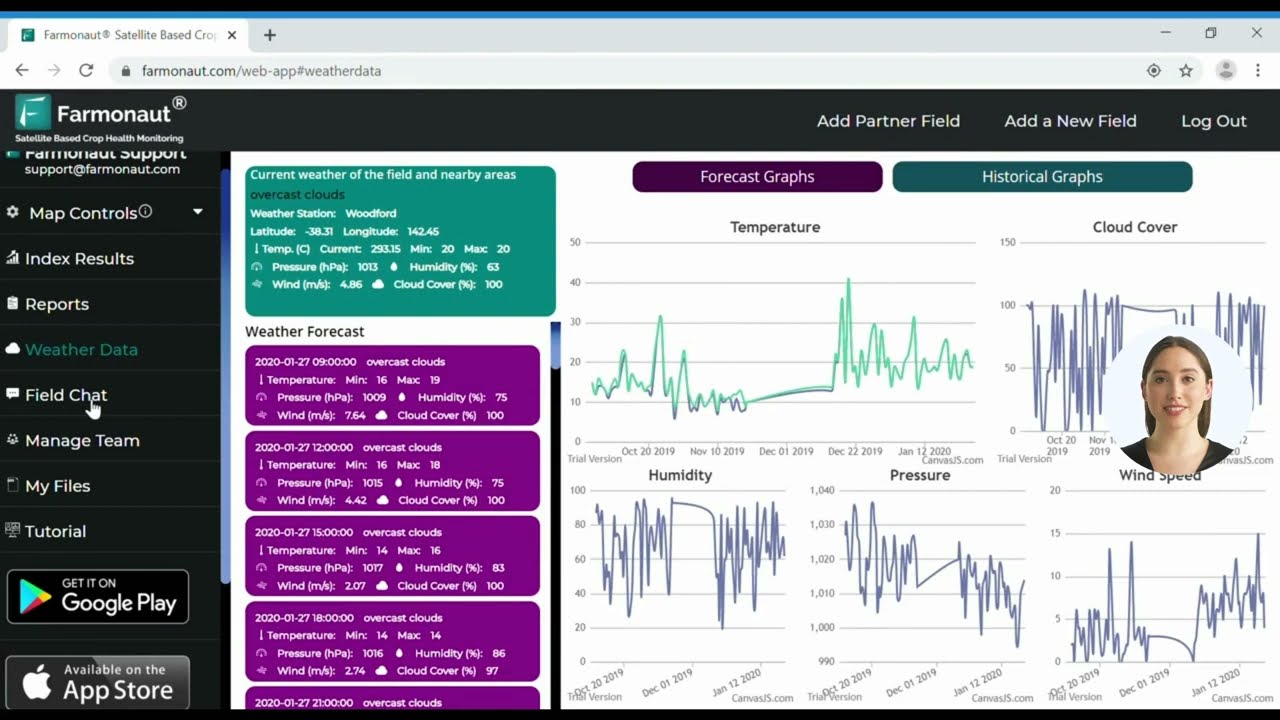
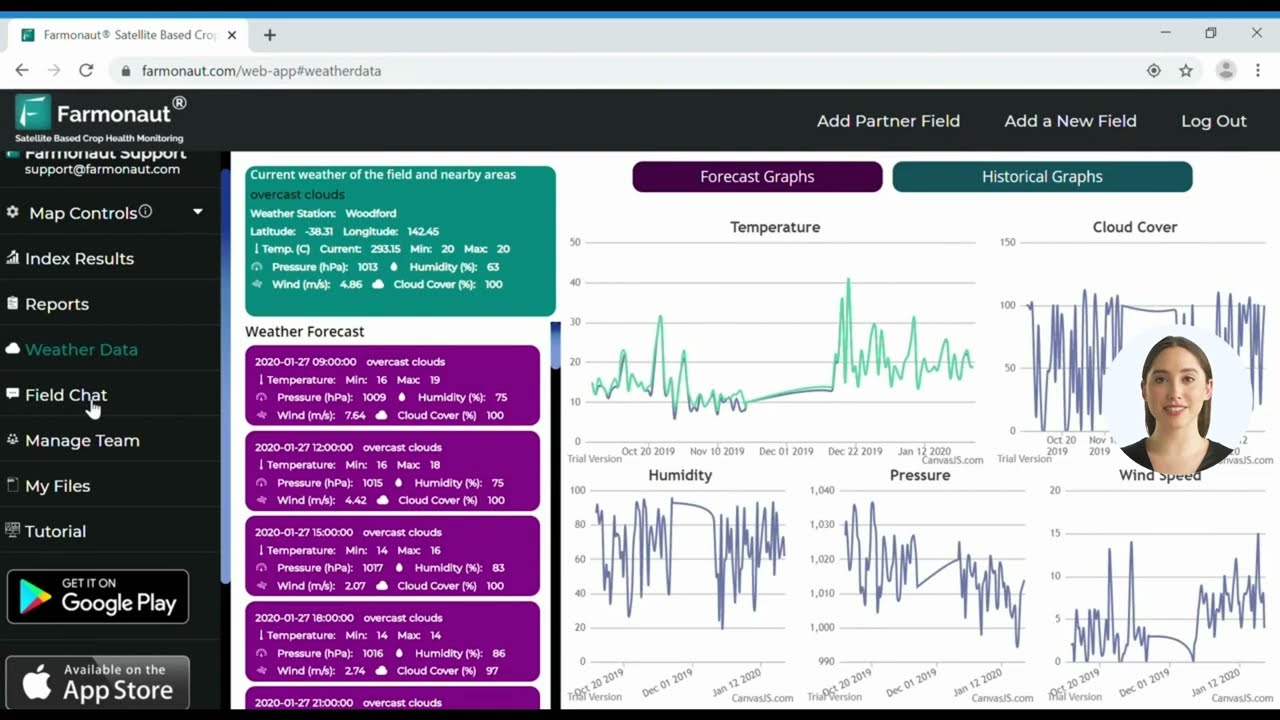
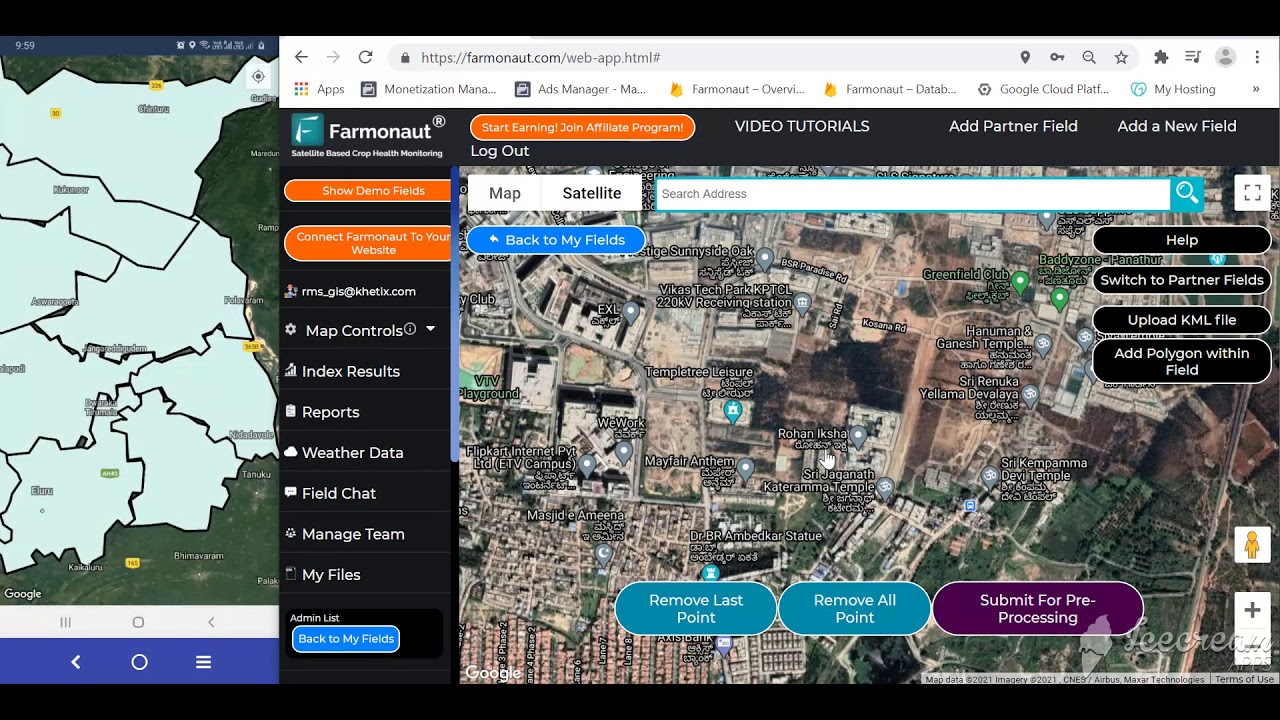
- 🛰️ Satellite-based field monitoring gives lenders a way to check current crop and land condition against loan applications without an in-person site visit for every file.
- 📉 Automated data analytics can help a lender assess field history and current condition faster than manual document review, though the underwriting decision and rate remain the lender’s own.
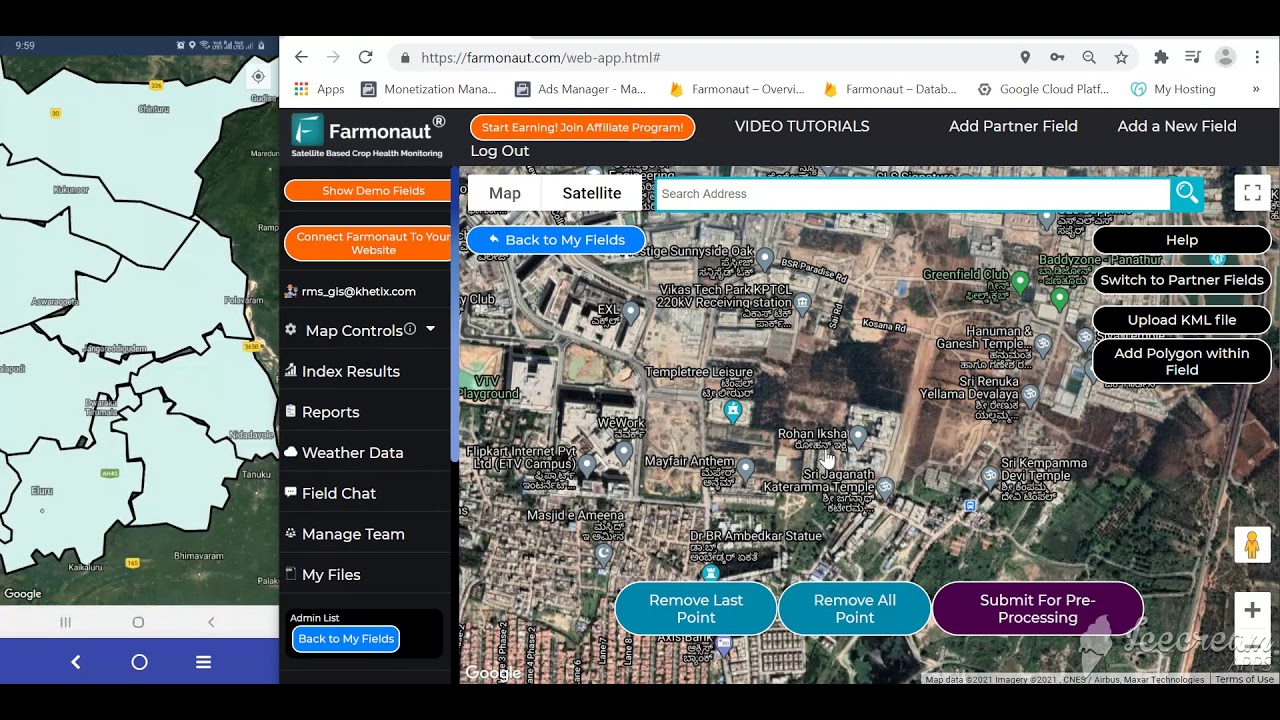
Use Case: By connecting to the Farmonaut API or developer documentation, a lender or fintech platform can pull field history and current satellite imagery into its own underwriting workflow, which is one route by which “digital application” loan options reduce processing time compared to a paper-only file.

Tractor Loan Payment Calculator
Enter a purchase price, down payment, rate, and term to estimate a monthly payment for equipment financing — useful for comparing an FSA-rate quote against a bank quote on the same tractor.
Run your own numbers
Assumes a standard fixed-rate amortizing loan with equal monthly payments. Excludes taxes, fees, insurance, balloon payments, and any promotional dealer financing terms. Use it to compare rate quotes side by side, not as a binding payment figure — confirm the actual amortization schedule with your lender.
Financing Challenges Specific to Oklahoma Producers
Oklahoma’s ag financing landscape carries a few recurring friction points that show up regardless of which lender a producer chooses:
- ⚠ Equipment cost inflation — with the average 200–249 HP tractor at $327,000 in 2026 and the NASS tractor price index at 145.6 in June 2026, financed amounts on new equipment have grown faster than many operating budgets, pushing more buyers toward used equipment or extended terms.
- ⚠ Rate-type confusion — FSA direct rates (5.25%–6.00% as of August 2026) are frequently compared against bank rates (6.75%–8.25%) without accounting for the fact that FSA direct loans are capped at $600,000 and have eligibility requirements banks don’t apply.
- ⚠ Documentation timelines — FSA and other government-backed programs require layered documentation that can slow disbursal relative to a bank or fintech platform’s digital application, even though the FSA rate is frequently lower.
- ⚠ Collateral requirements — tractor financing with collateral options generally beats unsecured operating credit on rate, but ties up the equipment or land as security, which matters if you need that same collateral for a second loan later in the season.
A Durable Checklist: How to Compare Any Ag Loan
Rates and loan caps will change; the method for comparing offers won’t. Use this checklist every time you shop ag financing, whether that’s this season or several years from now:
- Pull the current FSA rate sheet. Check the FSA newsroom for the latest “Lending Rates for Agricultural Producers” release before comparing any other quote against it.
- Match loan type to loan purpose. An Operating Loan (1–7 year term) is for inputs and seasonal costs; an Ownership Loan (up to 40 years) is for land and major capital purchases. Don’t compare their rates as if they’re substitutes.
- Check the loan cap against your need. FSA direct loans cap at $600,000 total — if your purchase exceeds that, you’ll need a guaranteed loan or a blended/joint financing structure instead.
- Get a same-day equipment price benchmark. Ask your dealer for the current price on the specific horsepower class you need, and check whether USDA NASS Quick Stats (quickstats.nass.usda.gov) has published a more recent machinery price index than the one cited here.
- Ask every lender for total cost, not just rate. Origination fees, prepayment penalties, and required insurance change the effective cost of credit as much as the headline APR.
- Confirm collateral requirements before signing. If a tractor loan requires the tractor as collateral, know whether that blocks you from using the same asset to secure an input loan later in the season.
FAQs: Ag Financing and Ag Loans in Ada, Oklahoma
- What is the current interest rate for ag loans in Ada, Oklahoma?
- FSA Direct Operating Loans were set at 5.25% and Direct Farm Ownership Loans at 6.00% as of the August 2026 rate notice from the USDA Farm Service Agency. These rates are set monthly, so check the FSA newsroom directly for the rate in effect when you apply. Bank equipment loans averaged 6.75%–8.25% APR in 2026 per Crestmont Capital.
- What ag input financing options exist for Oklahoma producers?
- FSA Direct Operating Loans (1–7 year terms, inputs and operating costs eligible), bank and Farm Credit operating lines, agricultural co-op financing, and fintech input-loan apps. There is no single published national rate for input-specific financing separate from general operating credit — ask your lender for their current operating-line rate.
- What are the best tractor financing options with collateral?
- Dealer/manufacturer captive finance (often promotional rates on new equipment), traditional bank equipment loans (6.75%–8.25% APR in 2026), Farm Credit System term loans, and FSA Direct Farm Ownership Loans (6.00% as of August 2026, capped at $600,000). Using the tractor or other assets as collateral typically secures a lower rate than an unsecured loan.
- How much does a tractor cost in 2026, and how does that affect financing?
- A 200–249 HP tractor averaged $327,000 in 2026, per USDA NASS data reported by the Oklahoma Farm Report. At that price, the difference between an FSA Operating Loan rate (5.25%) and a bank loan at the high end of its range (8.25%) is roughly 3 percentage points — worth checking FSA eligibility before financing through a dealer or bank alone.
- Are there ag loans in Oklahoma for beginning farmers specifically?
- Yes. The FSA Down Payment Farm Ownership Loan carried a 2.00% rate as of August 2026 and is specifically for beginning farmers purchasing land. Oklahoma has also received $184 million in FSA loans obligated to beginning farmers and ranchers in a recent program year, per the Texas and Southwestern Cattle Raisers Association.
- Does Farmonaut offer direct loans?
- No. Farmonaut provides satellite, AI, and blockchain verification and advisory tools that some lenders use during underwriting for loan eligibility, risk scoring, and resource tracking. Farmonaut is not a lender and does not set loan rates or terms.
Flexible Farmonaut Subscriptions for Precision Monitoring & More
For lenders, insurers, and producers in Ada evaluating loan-linked verification tools, Farmonaut subscription plans include:
- ✔ Real-time crop and soil health monitoring for loan eligibility checks
- ✔ Blockchain-driven traceability supporting input-purchase documentation
- ✔ Environmental tracking for sustainability-linked loan products (explore Farmonaut carbon footprinting)
- ✔ Developer-ready APIs for banks and fintechs building satellite verification into underwriting
- ✔ Fleet and machinery tracking to support equipment-loan asset verification (Farmonaut fleet management)






Conclusion
Ag financing in Ada, Oklahoma isn’t one product — it’s a stack of programs with different rates, caps, and timelines that serve different purposes. FSA direct loans at 5.25%–6.00% (August 2026) beat bank rates of 6.75%–8.25% on price, but come with a $600,000 cap and eligibility requirements banks don’t apply. The right choice depends on whether you’re financing seasonal inputs, a tractor, or land — and on how quickly you need the funds.
The one step that stays useful no matter how rates move: check the FSA’s current monthly rate notice before comparing any other offer, and ask every lender for the total cost of credit, not just the advertised rate. That habit outlives every number in this article.
For related tools on satellite-based farm management and loan verification, see:
- 👉 Farmonaut Carbon Footprinting
- 👉 Blockchain Product Traceability
- 👉 Fleet Management Solution
- 👉 Crop Loan & Insurance Advisory
- 👉 Large Scale Farm Management Platform
- 👉 Ag & Land Direct Financing Tips

 Godrej Agrovet
 Hayleys Agriculture
 Linx Agritech
 Adinet
 Save Your Soils
 GalaxEye Space
 Grandstream Algérie
 XOS Realty
 Geospatial Lab Africa
 Agro La Gándara
 HIPSAC
 ZOL Zimbabwe
 Juligerm
 AdBio
AdBio MISE Maroc
 NWNS
NWNS Red August Group
 Farm Inc
 WeMe Global
 Agrotoken
 Blue BearX
 Insignito
 DnCubed
 Indosistim Teknologi
 Liquify Digital
 CU Foods
 BeyondTech Global
 Rouge VC
 AgroRisk
 Oath Inc
 Esri North East Africa
 MDCV UK
 Etech Consulting Madagascar
 Vestlandsforsking
 WB Dev
 Sama Premium
 Tres Valles
 Blickwinkel
 Agricultural Credit Policy Council
 eKGIS
eKGIS Mostas Tech
 Andex
Andex Deluxe Conseil
 WICO
WICO Chimera Innovation
 SkyHarvest
 Teledarbas
 Exurbia Geospatial
 FieldZero
