

Reviewed September 2026 against the USDA NASS Census of Agriculture (2022) and USDA NASS Colorado crop and livestock reports (2024).
Try it: Alfalfa Hay Revenue Calculator →
Colorado agriculture covers 30.2 million acres across 36,056 farms and generated $9.0 billion in agricultural product sales, according to the USDA NASS 2022 Census of Agriculture — the most recent full count available. Livestock, dairy, and poultry accounted for $6.4 billion of that total, with crops (including nursery and greenhouse) making up the remaining $2.8 billion. This article works through the census numbers, the newer annual crop and cattle data, farmland characteristics, and the jobs tied to each part of the sector, with a source link next to every figure so you can pull the current number yourself.
Table of Contents
- Colorado Agriculture Overview: The Census Numbers
- Key Colorado Agriculture Facts: Farms, Sales, and Livestock
- Farmland Colorado: Acreage, Regions, and Farm Size
- Colorado Crop Production: Corn, Alfalfa, and Hay in Detail
- Types of Agriculture Colorado Jobs Across the State
- Strengths and Diversity Across Colorado’s Farmland
- Irrigation Management and Water Efficiency in Colorado Farming
- Building a Robust Workforce in Colorado’s Farming Economy
- Agricultural Technology Drives Productivity and Sustainability
- From Farm to Table: Colorado’s Local Markets and Value Chains
- Environmental Stewardship & Sustainability in Colorado Farmland
- Challenges, Opportunities, and the Future in Colorado Agriculture
- Farmonaut: Advanced Satellite Technology for Colorado Farming
- Alfalfa Hay Revenue Calculator
- Colorado Agriculture Data Table
- FAQs on Agriculture of Colorado
- Conclusion
- Try it: Alfalfa Hay Revenue Calculator
Colorado Agriculture Overview: The Census Numbers
Every five years, the USDA NASS Census of Agriculture counts every farm in the state. The 2022 census — the most current full count — recorded 36,056 farms operating across 30.2 million acres in Colorado, with a total market value of agricultural products sold of $9.0 billion. That acreage works out to an average farm size of 838 acres, well above the roughly 460-acre US average recorded in the same census cycle, reflecting how much of Colorado’s farmland is extensive rangeland and dryland grain rather than intensively cropped irrigated acreage.
30.2 million acres of farmland, spread over 36,056 farms, generated $9.0 billion in sales in the 2022 Census of Agriculture — $6.4 billion from livestock, poultry, dairy, and eggs, and $2.8 billion from crops. Source: USDA NASS Census of Agriculture, 2022.
Livestock and dairy sales outweigh crop sales by more than two to one in Colorado — a ratio that lines up with the state’s semi-arid climate, where cattle grazing on rangeland and hay-fed operations use far more acreage per dollar of output than irrigated row crops. The eastern plains carry most of the grain and hay acreage; the mountain valleys and western slope carry livestock, hay, and specialty crops. That regional split is covered in more detail below.
Because the census only runs every five years, the next full recount is due in 2027. Between census years, USDA NASS Quick Stats (quickstats.nass.usda.gov) publishes updated annual estimates for crop production, livestock inventory, and some economic indicators — that’s the source for the more current alfalfa, hay, corn, and cattle figures in the sections below.
Key Colorado Agriculture Facts: Farms, Sales, and Livestock
The Numbers
- ✔ 36,056 farms statewide (2022 Census of Agriculture).
- ✔ 30.2 million acres of farmland — average farm size 838 acres.
- ✔ $9.0 billion in total agricultural product sales (2022).
- ✔ 2.61 million head of cattle and calves on Colorado farms and ranches as of January 1, 2024.
- ✔ Top commodities by sales value: cattle, dairy, wheat, corn, hay/alfalfa, and specialty crops (fruit, hops, vineyards).
🌱 Colorado Farm Output at a Glance
- 🐄 Cattle and Calves — 2.61 million head (Jan. 1, 2024)
- 🌾 Grain Corn — 1.18 million acres harvested (2024)
- 🌿 Alfalfa Hay — 2.498 million tons produced (2024)
- 🌾 Other Hay — 930,000 tons produced (2024)
- 🥛 Dairy — part of the $6.4B livestock/dairy/egg sales total (2022)
The 2.61 million head of cattle and calves reported by USDA NASS’s Colorado Cattle Inventory report as of January 1, 2024, is the figure to watch if you’re tracking herd size, since NASS reissues cattle inventory reports on a regular cycle — typically twice a year — and each new release supersedes the last. For a number newer than the one cited here, search the USDA NASS Colorado statistics page directly rather than relying on any single archived PDF.

Colorado-specific figures for potato acreage, sugar beet production, irrigated-acreage share, and state-level farm income are not confirmed in the sources checked for this article. For potatoes and sugar beets, search NASS Quick Stats by commodity and state; for irrigated acreage, the 2022 Census of Agriculture’s irrigation tables (same URL as the farm-count data above) break out irrigated versus non-irrigated land by county.
Farmland Colorado: Acreage, Regions, and Farm Size
Farmland in Colorado totaled 30.2 million acres in the 2022 Census of Agriculture, split across three distinct agricultural regions shaped by elevation and water access:
- ✔ Eastern Plains: Dryland and irrigated grain country — wheat, corn, and sunflowers, plus large cattle ranches on native rangeland.
- ✔ Mountain Valleys & Foothills: Hay and alfalfa production feeding cattle operations, with cooler-season grazing meadows.
- ✔ Western Slope & River Valleys: Orchards, vineyards, and hop yards benefiting from microclimates along the Colorado, Gunnison, and North Fork river valleys.
At 838 acres, the average Colorado farm is nearly double the national average recorded in the same 2022 census — a reflection of how much of the state’s farmland is rangeland grazed at low stocking density rather than continuously cropped ground. This matters for “farmland Colorado” as a search: the term covers everything from a 40-acre irrigated vegetable operation on the Front Range to a 20,000-acre eastern-plains cattle ranch, and the census’s farm-count and acreage figures are the only apples-to-apples way to compare that range statewide.
Sustainability in agriculture begins with precise land and water management. Farmonaut’s carbon footprinting tools help farm operators track emissions, enabling environmentally responsible farming and compliance with new agricultural standards.
Colorado Crop Production: Corn, Alfalfa, and Hay in Detail
Beyond the five-year census, USDA NASS publishes annual crop production estimates for Colorado. The most recent figures, from the October 2024 USDA NASS Colorado Crop Production report, show:
- ✔ Grain corn: 1.18 million acres harvested in 2024.
- ✔ Alfalfa hay: 675,000 acres harvested, producing 2.498 million tons at an average yield of 3.70 tons per acre in 2024.
- ✔ Other hay (non-alfalfa): 930,000 tons produced in 2024.
Alfalfa’s 3.70 tons-per-acre yield in 2024 is the number to compare against in future years to judge whether a given growing season ran ahead of or behind trend — drought years show up directly in that yield figure, since alfalfa is almost entirely irrigated in Colorado and yield tracks water delivery closely. Corn and hay acreage estimates update annually; NASS typically issues preliminary numbers in mid-summer and final figures in the fall, so for the current growing season’s acreage, check the Colorado statistics index rather than this article once a new report has posted.
Two crops with real production weight in Colorado — potatoes (concentrated in the San Luis Valley) and sugar beets (concentrated on the northeastern plains near Greeley and Fort Morgan) — do not have confirmed acreage or tonnage figures in the sources used for this rewrite. Rather than guess, the honest answer is: search NASS Quick Stats for “potatoes” or “sugarbeets” filtered to Colorado, which will return the current year’s acreage, yield, and production once released.

Types of Agriculture Colorado Jobs Across the State
Agriculture jobs in Colorado span field labor, machinery operation, agronomy, irrigation, and processing. State-level employment counts specific to Colorado agriculture were not confirmed in the sources used for this article — the search located only national Bureau of Labor Statistics categories, not a Colorado-specific total. For a current count, the Colorado Department of Labor and Employment’s Labor Market Information division publishes county- and industry-level employment data, including NAICS 111 (crop production) and 112 (animal production), and is the authoritative source to check directly rather than relying on a statewide estimate here.
What the census and crop reports do make clear is the range of roles behind the acreage and production figures above:
- ✔ Farm Workers & Field Hands: Planting, weeding, irrigation management, and harvest across the 30.2 million acres counted in the 2022 census.
- ✔ Equipment Operators: Tractors, combines, and center-pivot irrigation systems across corn, wheat, and hay ground.
- ✔ Agronomists and Crop Consultants: Soil health, variety selection, and nutrient management, particularly relevant given alfalfa’s 3.70 tons/acre yield benchmark noted above.
- ✔ Irrigation Technicians: Maintain pivot systems and monitor soil moisture on the state’s irrigated acreage.
- ✔ Processing & Value-Added Product Workers: Convert raw harvests into dairy products, packaged grain, and specialty foods.
- ✔ Extension Services & Educators: Colorado State University Extension provides training and knowledge transfer to new and existing operators.

🌄 Seasonal & Permanent Roles Across Colorado Agriculture
- 🔹 Field Workers – Seasonal roles during planting and harvest
- 🔹 Irrigation/Machinery Technicians – Year-round system maintenance
- 🔹 Crop Consultants & Agronomists – Ongoing support for farms and ranches
- 🔹 Dairy & Food Processors – Roles in year-round production facilities
- 🔹 Agri-business Operators – Supply chain, sales, logistics, management
Many overlook the technical roles in Colorado agriculture — precision irrigation technicians and farm data analysts — that keep 838-acre-average operations running efficiently on limited water.



Access Farmonaut’s real-time crop, soil, and irrigation insights—for powerful decision support from desktop or mobile, anywhere in Colorado.
Strengths and Diversity Across Colorado’s Farmland
Colorado’s farmland strength comes from how its three agricultural regions complement one another rather than compete for the same water or growing conditions:
- ✔ Eastern Plains: Home to most of the state’s 1.18 million acres of grain corn (2024) plus wheat and sunflowers. Large cattle operations use adjoining rangeland.
- ✔ Mountain Valleys & Foothills: Carry the bulk of the 675,000 acres of alfalfa hay harvested in 2024, feeding livestock through Colorado’s long winters.
- ✔ Western Slope & River Valleys: Host orchards, vineyards, and hop yards in river-valley microclimates distinct from the plains and mountain parks.
This geographic split is also why the 838-acre average farm size (2022 census) hides more than it reveals on its own — a 40-acre Western Slope orchard and a 15,000-acre eastern-plains ranch both count as one farm in that average. For county-level detail on any of these regions, the 2022 Census of Agriculture’s county tables (linked above) break the state total down further.

Crop and regional diversification stabilizes farm incomes and reduces the risk of a single drought year or price drop affecting the entire state’s agricultural output.
Irrigation Management and Water Efficiency in Colorado Farming
Water availability shapes almost every production figure cited above. Alfalfa hay’s 3.70 tons-per-acre yield in 2024 depends on reliable irrigation delivery, since Colorado’s semi-arid climate cannot sustain that yield on rainfall alone across most of the state. Producers on the plains, in mountain valleys, and on the western slope have increasingly adopted:
- ✔ Pivot systems – Efficient, large-scale watering across grain and hay fields
- ✔ Soil moisture sensors – Real-time data on when and how much to irrigate
- ✔ Drip and micro-irrigation systems – Targeted delivery for orchards, vineyards, and specialty crops
- ✔ Water reuse and conservation measures – Support yield stability in drought years
The specific share of Colorado’s 30.2 million farmland acres that is irrigated versus dryland is not confirmed in the sources checked for this article; the 2022 Census of Agriculture’s irrigation tables (same report cited throughout this piece) break out irrigated acreage by county and are the source to check for that figure directly.

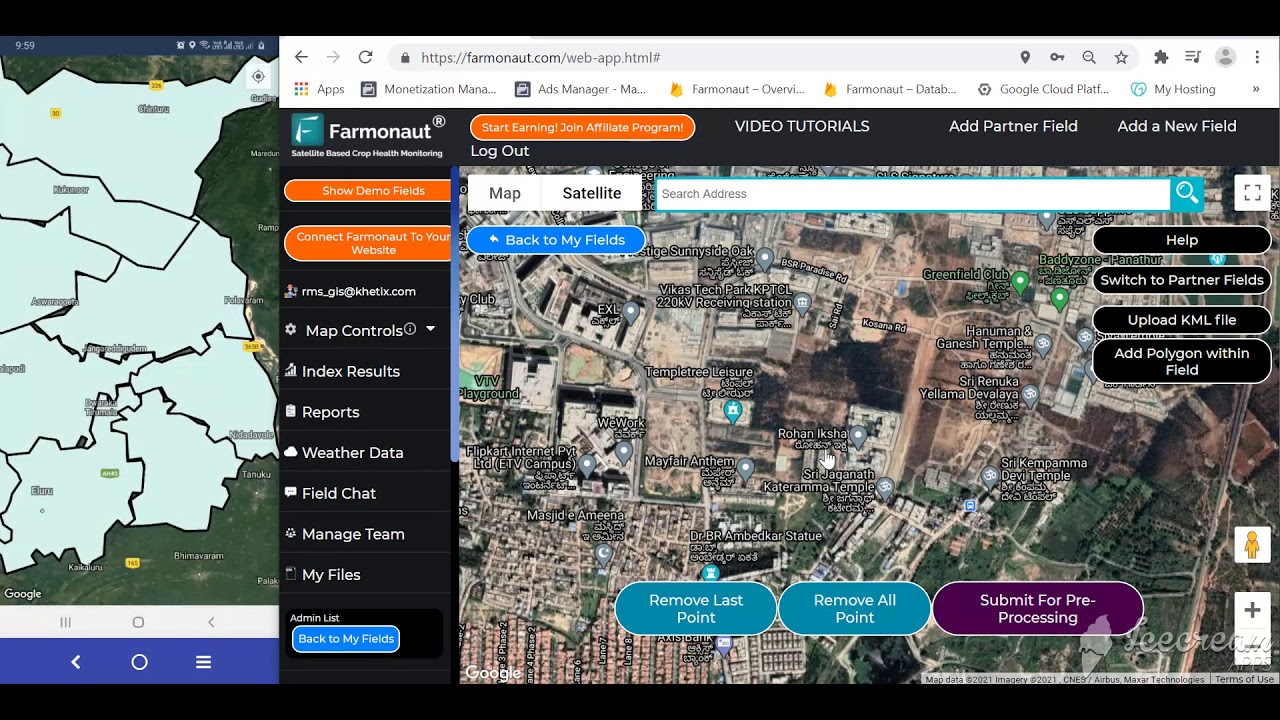
At Farmonaut, we equip farmers in Colorado and worldwide with satellite-based tools that track crop health, carbon footprinting, and real-time soil moisture — accessible via Android, iOS, web app, and API.
Get started with Farmonaut’s web or app systems to monitor your fields, soil, water use, and environmental impact. For integration and automation, explore our API & API Developer Docs—seamlessly connect satellite-driven insights with your existing management systems.
Alfalfa Hay Revenue Calculator
Building a Robust Workforce in Colorado's Farming Economy
Colorado's farm and ranch workforce spans generational family operations, seasonal labor, and technical specialists. As noted above, a Colorado-specific employment total for agriculture was not confirmed in the sources used for this rewrite — check the Colorado Department of Labor and Employment's Labor Market Information division for current NAICS 111/112 employment counts by county.
- ✔ Generational families—form a steady pipeline of talent and ensure farm succession.
- ✔ Extension education—programs provide training in new technologies, best practices, and risk management.
- ✔ Seasonal labor—an essential force for planting, growing, irrigation, and harvest activities.
- ✔ Skilled operators & agronomists—guide farms with data, analytics, and crop consulting for yield improvement.
- ✔ Veterans and retirees—contribute experience in both operation and leadership for community resilience.

Colorado State University's agricultural extension system provides training in agronomy, water management, and new technology adoption for producers across all three of the state's growing regions.
Agricultural Technology Drives Productivity and Sustainability
Given that Colorado's average farm covers 838 acres (2022 census) and much of that ground depends on irrigation, remote monitoring tools are increasingly relevant to how producers manage water and inputs across large, often non-contiguous parcels.
- 🛠️ Satellite Imaging & NDVI: Vegetation monitoring for timely intervention across large acreages
- 🌐 Farm Management Platforms: Remote monitoring of crop health, irrigation, and environmental impact via apps
- 🕹️ Automated Equipment/Telemetry: Precision machines, drones, and moisture sensors streamline operations
- 🔗 Blockchain Traceability: Tracking produce for food safety and transparency through systems like Farmonaut Product Traceability
- 🌱 Resource Optimization: AI-driven recommendations reduce waste and optimize inputs across crop cycles
At Farmonaut, we support Colorado's agricultural communities with satellite-based monitoring and AI-driven insights—for everything from large scale farm management to fleet and resource management. Accessing the latest tools is easy—with our cross-platform apps or through the API.
From Farm to Table: Colorado's Local Markets and Value Chains
Colorado's farm-to-table movement and local markets connect producers directly with consumers, restaurants, and regional co-ops—offering fresh produce, meat, dairy, and artisanal goods with traceable, local origins.
- ✔ Farmers markets and direct sales—support local economies and higher farm-gate margins
- ✔ Cooperatives & Agritourism—build regional identity and connect visitors to working farms and ranches
- ✔ Value-Added Processing—plants grind wheat, process dairy, and create specialty goods (cheese, fruit preserves, craft beverages)
This chain—spanning production, processing, and consumer engagement—supports the same $2.8 billion crop and $6.4 billion livestock sales figures cited earlier by capturing more value per acre than raw commodity sales alone.
Farm-to-table and local value-chain initiatives help insulate Colorado's farm sector against commodity price swings while creating processing and marketing roles beyond field production.
Environmental Stewardship & Sustainability in Colorado Farmland
Preserving soil, water, and biodiversity across 30.2 million acres is central to keeping Colorado's agriculture sector productive over the long term.
- ✔ Wildlife habitat and buffer strips integrated into farm and ranch plans to protect pollinators and beneficial insects.
- ✔ Soil health programs and conservation tillage reduce erosion and boost organic matter, supporting yields like the 3.70 tons/acre alfalfa average cited above.
- ✔ Crop rotation and diversification minimize disease risk and nutrient depletion.
- ✔ Precision agriculture, sensors, and AI optimize water, energy, and fertilizer inputs.
At Farmonaut, we help Colorado's producers track and reduce their carbon footprint with satellite monitoring—while our traceability tools support transparent, sustainable supply chains.
Looking for advanced environmental analytics for your farm, ranch, or agri-business? Explore Farmonaut's Carbon Footprinting solution—monitor emissions and gain insights for certification or regulatory compliance.
Challenges, Opportunities, and the Future in Colorado Agriculture
Water competition, urban expansion along the Front Range, and market volatility all bear on whether Colorado's 36,056 farms remain viable long-term. Producers and policy-makers are pursuing several strategies:
- ☀️ Drought resilience—Ongoing investment in irrigation efficiency and drought-tolerant crop varieties, directly affecting figures like the 2024 alfalfa yield cited above.
- 📈 Access to capital—Small and mid-sized farms rely on loans, insurance, and technical support to invest in upgrades.
- 🛤️ Land conservation & planning—State and local programs help keep working farmland available amid pressure from urban and suburban growth.
- 🔬 Continuous education—Extension programs and agricultural colleges build a pipeline of skilled employees.
- 🌎 Technological adoption—Growing use of AI, sensors, remote monitoring, and blockchain to keep the sector competitive.
For farmers and agri-businesses seeking financing, Farmonaut's crop loan and insurance verification service leverages satellite data for accurate, fraud-resistant risk assessment—accelerating access to critical funds.
Farmonaut: Advanced Satellite Technology for Colorado Farming
Farmonaut integrates artificial intelligence, satellite imagery, and blockchain to help Colorado producers manage the challenges above:
- 📡 Monitor crop health, soil conditions, and irrigation in real-time—using NDVI, soil moisture, and resource management dashboards
- 🤖 AI-based advisory—Tailored recommendations for water use, nutrient planning, and harvesting timing
- 🔄 Traceability—Blockchain tracking for food supply chains, ensuring product authenticity
- 🪙 Carbon Footprint Monitoring—Track environmental impact for compliance and sustainability
- ⚙️ Fleet and resource management tools—Optimize equipment usage, reduce costs, and maintain safety
The platform is available across web, Android, iOS, and API—offering scalable monitoring for family farms and large agri-businesses in Colorado and beyond.
✔ Satellite monitoring for crop health
✔ Fleet management solutions for machinery and resource movement
✔ Blockchain-based traceability of produce (from farm to plate)
✔ Real-time environmental analytics for compliance and sustainability
✔ Mobile apps for in-field decisions anywhere in Colorado
Colorado Agriculture Data Table
| Metric | Figure | Period | Source |
|---|---|---|---|
| Number of farms | 36,056 | 2022 | USDA NASS Census of Agriculture |
| Total farmland acreage | 30.2 million acres | 2022 | USDA NASS Census of Agriculture |
| Average farm size | 838 acres | 2022 | USDA NASS Census of Agriculture |
| Total agricultural sales | $9.0 billion | 2022 | USDA NASS Census of Agriculture |
| Crop sales (incl. nursery/greenhouse) | $2.8 billion | 2022 | USDA NASS Census of Agriculture |
| Livestock, poultry, dairy & egg sales | $6.4 billion | 2022 | USDA NASS Census of Agriculture |
| Cattle and calf inventory | 2.61 million head | Jan. 1, 2024 | USDA NASS Cattle Inventory Report |
| Grain corn area harvested | 1.18 million acres | 2024 | USDA NASS Colorado Crop Production |
| Alfalfa hay production | 2.498 million tons | 2024 | USDA NASS Colorado Crop Production News Release |
| Alfalfa hay yield | 3.70 tons/acre | 2024 | USDA NASS Colorado Crop Production News Release |
| Alfalfa hay area harvested | 675,000 acres | 2024 | USDA NASS Colorado Crop Production News Release |
| Other hay production | 930,000 tons | 2024 | USDA NASS Colorado Crop Production News Release |
Every figure in this table has a five-year (census) or annual (crop/livestock report) refresh cycle. Bookmark USDA NASS Quick Stats if you need a number newer than what's shown here.
Demand for sustainable farm practices and resource management tools is rising, creating opportunities for investment and innovation in Colorado's agricultural technology and environmental analytics sector.
FAQs on Agriculture of Colorado
How many farms are in Colorado?
36,056 farms, covering 30.2 million acres, according to the 2022 USDA NASS Census of Agriculture — the most recent complete count, with the next full census due in 2027.
What is the market value of Colorado's agricultural production?
$9.0 billion in total sales in 2022: $6.4 billion from livestock, poultry, dairy, and eggs, and $2.8 billion from crops, including nursery and greenhouse products.
What are the top crops in Colorado agriculture?
By harvested acreage, grain corn (1.18 million acres in 2024) and alfalfa hay (675,000 acres, 2.498 million tons in 2024) are among the largest. Wheat, other hay, and specialty crops (fruit, berries, vineyards, hops) round out the state's crop mix, concentrated on the eastern plains, mountain valleys, and western slope respectively.
How large is Colorado's cattle industry?
2.61 million head of cattle and calves were on Colorado farms and ranches as of January 1, 2024, per USDA NASS's Colorado Cattle Inventory report. NASS reissues this report on a recurring cycle, so check the Colorado NASS statistics page for the current figure.
How can I monitor my own farmland with modern tools?
Farmonaut's satellite-based monitoring gives real-time field insights via web app, Android/iOS apps, or the API for data-driven farming across Colorado.
How is technology shaping Colorado's agriculture?
Precision irrigation, carbon tracking, blockchain traceability, remote soil monitoring, and fleet management tools are increasingly used across the state's 30.2 million acres of farmland to raise productivity while managing water constraints.
Conclusion: What the Numbers Say About Colorado Agriculture
Colorado agriculture, measured by the 2022 Census of Agriculture, is 36,056 farms working 30.2 million acres to produce $9.0 billion in annual sales — a mix weighted toward livestock and dairy ($6.4 billion) over crops ($2.8 billion). The annual crop and cattle reports since then — 2.61 million head of cattle as of January 2024, 1.18 million acres of grain corn and 2.498 million tons of alfalfa hay in 2024 — show a sector that keeps producing at scale between census years, even as specific figures like potato acreage, sugar beet production, and state agricultural employment remain gaps to fill from NASS Quick Stats and Colorado's own labor data rather than guesses.
The durable takeaway is the method, not the numbers themselves: for any current figure on Colorado agriculture, start with the USDA NASS Census of Agriculture for the five-year structural picture, then layer in the Colorado NASS statistics page for the current year's crop and livestock estimates. Those two sources, checked together, will always be more current than any single archived figure.
At Farmonaut, we support producers, advisors, and rural economies with satellite-based tools engineered for efficiency, transparency, and sustainability — helping translate figures like these into field-level decisions.
Colorado farmland's enduring value is rooted in stewardship, continual adaptation, and a willingness to check the current numbers rather than rely on last year's — preserving land, livelihoods, and a vibrant rural economy for the future.

 Godrej Agrovet
 Hayleys Agriculture
 Linx Agritech
 Adinet
 Save Your Soils
 GalaxEye Space
 Grandstream Algérie
 XOS Realty
 Geospatial Lab Africa
 Agro La Gándara
 HIPSAC
 ZOL Zimbabwe
 Juligerm
 AdBio
AdBio MISE Maroc
 NWNS
NWNS Red August Group
 Farm Inc
 WeMe Global
 Agrotoken
 Blue BearX
 Insignito
 DnCubed
 Indosistim Teknologi
 Liquify Digital
 CU Foods
 BeyondTech Global
 Rouge VC
 AgroRisk
 Oath Inc
 Esri North East Africa
 MDCV UK
 Etech Consulting Madagascar
 Vestlandsforsking
 WB Dev
 Sama Premium
 Tres Valles
 Blickwinkel
 Agricultural Credit Policy Council
 eKGIS
eKGIS Mostas Tech
 Andex
Andex Deluxe Conseil
 WICO
WICO Chimera Innovation
 SkyHarvest
 Teledarbas
 Exurbia Geospatial
 FieldZero
