

New Jersey Agriculture Facts & Innovation 2025
New Jersey Agriculture in 2025: A Vital Pillar of the Garden State’s Economy

The “Garden State” moniker is more than a legacy—it’s a living testament to our state’s enduring commitment to agriculture, sustainability, and innovation. As we look to 2025 and beyond, New Jersey agriculture remains a vital pillar of our economy, supporting food security, job growth, and environmental stewardship despite the state’s small geographic size and dense urbanization.
Our state’s farming sector is continually evolving, shaped by climate challenges, cutting-edge technology, and an unwavering focus on sustainability. From world-leading blueberry fields to innovative vertical farms in cities, New Jersey’s agricultural industry remains robust, diverse, and forward-looking. In this comprehensive blog, we’ll explore essential New Jersey agriculture facts, top crops like blueberries and cranberries, sustainability initiatives, technological advances, and future prospects through 2025—and how companies such as Farmonaut are contributing innovative solutions with satellite tech, real-time monitoring, and environmental management tools.
Whether you’re a grower, policymaker, consumer, or advocating for sustainable food supply, this deep dive into New Jersey farming will reveal how our “Garden State” is setting standards for the nation and the world.
The Rich Heritage & Current State of New Jersey Farming
New Jersey’s reputation as the “Garden State” is well-deserved. Agriculture in New Jersey has deep historical roots, dating back to the original Lenape inhabitants and early colonial settlements. Our soils—once supporting indigenous maize and beans—now grow a much broader spectrum of fruits, vegetables, and nursery stock. As of 2025, the sector continues to thrive, evolving through generations of farmers embracing change and innovation while preserving our rich agricultural heritage.
Despite ranking among the smallest U.S. states by land area, New Jersey farming is characterized by high productivity, exceptional diversity of crops, and innovative land use. The state boasts about 730,000 acres of farmland (over 15% of the total state land), supporting more than 9,900 farms. Urbanization has posed significant challenges, specializing and compressing farm sizes, but it also spurred an adaptive spirit and spurred investments in technology, value-added products, and alternative farming systems.
Diversity & Productivity: What Makes New Jersey’s Crops Thrive
What makes New Jersey agriculture particularly remarkable is its crop diversity. As we move into 2025, New Jersey continues to rank among the top U.S. states for certain specialty crops, notably blueberries, cranberries, and tomatoes. Seasonal harvests and year-round innovation have enabled local farmers to cater to both local consumers and national/international export markets.
Key Crops in New Jersey
- Blueberries: New Jersey leads the nation, mainly producing highbush blueberries in Atlantic County’s Hammonton area.
- Cranberries: Mainly grown in the special Pine Barrens region—unique sandy soils and water resources are key.
- Tomatoes: Known for sweet flavor; cherished in both home gardens and commercial farms.
- Sweet Corn, Peppers, Cucumbers: Represent important summertime staples, locally grown.
- Nursery Plants & Flowers: Another economic driver, serving urban and suburban landscaping needs.
This varied output is possible due to our diverse microclimates, innovative management practices, and strategic investments in soil health. Local consumption also remains strong, as NJ-grown produce is favorites in home kitchens, groceries, and farm-to-table restaurants.
Sustainable Practices & Environmental Impact in NJ Farms
Environmental stewardship is central to New Jersey agriculture. In 2025, over 70% of New Jersey farms leverage sustainable practices to reduce environmental impact. These efforts align with broader state sustainability and environmental protection goals, ensuring preservation of farmland resources for generations to come.
Key sustainable practices adopted in New Jersey farming include:
- Cover Cropping & Crop Rotation: Protect soil between harvests, improve nutrient content, and reduce erosion.
- Precision Irrigation: Utilizing computer-controlled drip and sprinkler systems to conserve water.
- Reduced Pesticide Use: Integrated pest management (IPM) efforts lessen reliance on chemicals, favoring natural predators and crop diversity.
- Soil Health Monitoring: Real-time monitoring and soil mapping (often with satellite or drone data) help optimize fertilizer and lime usage, lowering environmental footprint.
- Climate-Smart Farming: Focus on carbon sequestration, reduced tillage, and utilizing renewable energy (solar panels, biodigesters).
- Wetlands & Water Conservation: Innovative cranberry bogs with recirculating water systems and pond restoration efforts in threatened wetland zones.
By adopting these sustainable methods, New Jersey agriculture not only protects the environment but also boosts soil productivity, resilience to droughts, and market value of its products. These practices make the sector more adaptive to changing climatic conditions and elevate New Jersey’s reputation as a model for sustainable farming.
Learn about Farmonaut’s Carbon Footprinting Solution—track and reduce your farm’s greenhouse emissions with satellite-driven insights—empowering sustainable agriculture in New Jersey and beyond.



Technology Adoption & Precision Agriculture in the Garden State
One of the most compelling facts about agriculture in New Jersey is its rapid technology adoption. As of 2025, a significant share of farms are integrating advanced precision agriculture technologies to maximize yield and minimize environmental impact.
Common technologies and innovations in use among New Jersey farmers include:
- GPS-Guided Farm Equipment: Enables accurate planting, fertilizing, and harvesting—reducing overlap and conserving resources.
- Drones & Satellite Surveillance: For pest surveillance, plant health monitoring, and even irrigation mapping.
- Soil & Crop Health Sensors: Deploying in-field or satellite-based data to continually assess moisture, nutrients, and plant stress.
- Automated Irrigation Systems: Connected to weather data, minimizing water use and maximizing crop health.
- Mobile Apps and Advisory Systems: Real-time alerts on weather, disease, or irrigation needs, accessible directly on-farm.
These methods enable better nutrient management, cut down on pesticide use, and facilitate easy compliance with state and federal conservation programs. Modern farmers in New Jersey are leveraging **data-driven approaches** to overcome the challenges posed by urban encroachment, labor shortages, and climatic uncertainty.
Find out more about Farmonaut’s Blockchain-Based Traceability—guaranteeing transparency and food safety from farm to table.
Access Farmonaut’s Satellite API for agriculture management
|
Developer Documentation
Urban & Vertical Farming: Agriculture Innovation in NJ Cities

Urbanization and land scarcity have always posed challenges for agriculture of New Jersey, but in 2025, these issues are increasingly being addressed through innovative urban farming and vertical agriculture practices. Dense urban areas like Jersey City, Newark, and Camden are now home to rooftop gardens, container farms, and hydroponic or aeroponic vertical operations.
- Rooftop Farms: Supplying fresh produce like lettuce, spinach, and herbs to local communities year-round.
- Vertical Farms: Using multi-layered artificial lighting, hydroponics, and automation to grow crops in repurposed warehouses.
- Community Supported Agriculture (CSA): Expanding urban access to locally grown food—even within city environments.
These urban innovations help supplement the local food supply, reduce transportation emissions, and empower communities through education and hands-on engagement. They also create new economic opportunities for young agripreneurs and urban residents looking for meaningful work, as well as contribute to food justice initiatives.
Discover Farmonaut’s Large Scale Farm Management Tool—even urban or vertical farms can benefit from sophisticated satellite monitoring, enhancing resource allocation and maximizing productivity, regardless of farm size or location.
Key Crops and Sustainable Practices in New Jersey Agriculture (2025 Estimate)
| Crop Type | Estimated Annual Yield (tons) | Primary Growing Regions | Major Sustainable Techniques Adopted | % of Farms Using Tech Solutions | Environmental Impact Rating |
|---|---|---|---|---|---|
| Blueberries | 50,000+ | Atlantic County (Hammonton), Burlington | Precision irrigation, cover cropping, biological pest control | 80% | Low |
| Cranberries | 18,000 | Pine Barrens (Burlington, Ocean) | Water recycling/reuse, wetland conservation | 75% | Low |
| Tomatoes | 36,000 | Cumberland, Gloucester, Salem, Camden | Drip irrigation, integrated pest management | 72% | Medium |
| Sweet Corn | 42,000 | Southern NJ (Cumberland, Atlantic) | Mulching, crop rotation, drought monitoring | 68% | Medium |
| Nursery Plants | 48,000 | Statewide (esp. Central & North Jersey) | Closed-loop water systems, integrated pest control, greenhouse energy recapture | 88% | Low |
This table highlights how New Jersey agriculture leads the nation in adopting sustainable methods and advanced technology, ensuring crop productivity while lowering the environmental impact.
Farmonaut: Satellite-Driven Innovation in Sustainable Agriculture
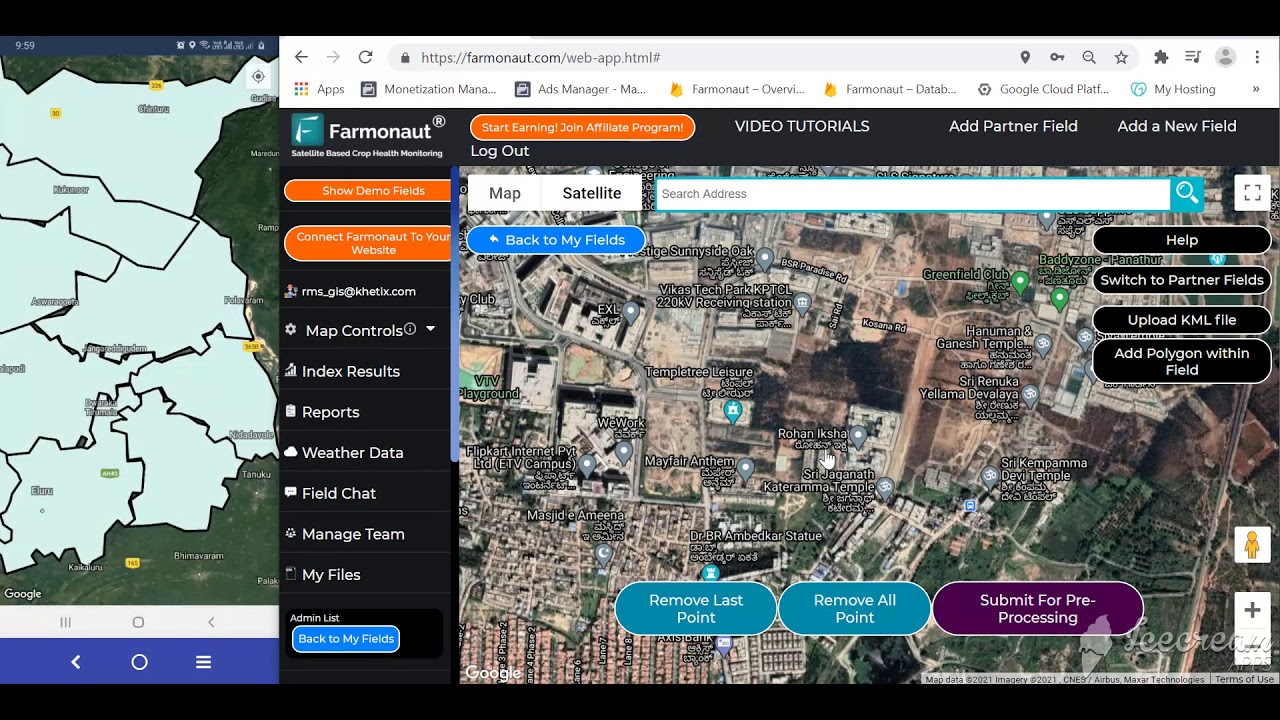
At Farmonaut, we are committed to making advanced, satellite-based agricultural solutions more accessible and affordable for farms throughout New Jersey and around the world. Our platform helps farmers and agri-businesses leverage real-time data, AI-powered advisory systems, and blockchain-based traceability to improve productivity, sustainability, and profitability.
- Satellite Monitoring: We provide near real-time insights into crop health (NDVI), soil conditions, and vegetation stress—empowering precise nutrient and resource management.
- AI-Based Advisory: Our Jeevn AI analyzes weather and satellite data for custom recommendations, improving in-season decision-making and operational efficiency.
- Blockchain Traceability: By integrating blockchain into farm-to-fork systems, we offer unparalleled transparency for New Jersey agriculture and its specialty crops—boosting consumer trust and verifying food safety.
- Carbon Footprinting: We offer intuitive tools to track carbon emissions, helping New Jersey farmers align with sustainability regulations and market preferences.
- Fleet and Resource Management: Our platform improves vehicle and equipment usage, reduces costs, and increases operational safety on New Jersey’s bustling produce farms and nurseries—discover more at Fleet Management .
Our technology is available via web and mobile apps, and can also be integrated into existing systems via our API. Whether in the orchards of Atlantic County or the greenhouses of East Brunswick, Farmonaut empowers NJ growers and agri-businesses to thrive in a rapidly evolving, sustainability-focused agricultural landscape.
Cutting-Edge Research & Agricultural Programs
New Jersey’s agricultural success is underpinned by world-class research institutions such as the Rutgers University School of Environmental and Biological Sciences and the New Jersey Agricultural Experiment Station. These organizations are continually innovating to produce crops better adapted to the state’s unique soils, microclimates, and pest/disease pressures.
- Pest and Disease Resilience: Breeding programs are focused on crops resistant to new pests and unpredictable weather events—crucial as climate patterns change.
- Climate-Smart Breeding: Developing new blueberry and cranberry cultivars that mature earlier, require less irrigation, or showcase superior disease resistance.
- Extension Outreach: Field days, online guides, and digital recommendations to help all farmers, big or small, capitalize on best-in-class management techniques in real time.
Robust extension programs, along with the latest in satellite data and remote sensing, make New Jersey farming among the most innovative and research-driven in the United States.
Farmonaut’s Crop Loan & Insurance Verification tool—enabling streamlined, risk-reduced access to agricultural financing for New Jersey’s farms, from blueberries to nursery crops.

Policy, Programs, and Future Prospects in New Jersey Agriculture
The state government remains a proactive advocate for agriculture in New Jersey. In 2025, multiple government programs aim to sustain growth, protect farmland, and encourage the next generation of farmers:
- Farm Modernization Grants: Funding for buying advanced equipment, renewable energy installations, and automation systems.
- Renewable Energy Incentives: Offsetting costs for solar, wind, and biodigester implementations—lowering farm emissions and operational costs.
- Young Farmer Programs: Financial and educational support, including easier access to land and risk insurance, encouraging succession and generational continuity.
- Farmland Preservation: Zoning laws and conservation easements that protect agricultural land from suburban development, sustaining New Jersey’s iconic agricultural landscapes and food supply resilience.
Government extension offices also provide real-time alerts on weather risks, pest outbreaks, and regulatory changes, supplemented by open data and digital platforms, enhancing the digital literacy and resilience of New Jersey’s agricultural sector.
Try Farmonaut’s Crop Plantation & Forest Advisory—tailored intelligence for adapting to climate shifts, managing diversified farm operations, and optimizing sustainable production in New Jersey.
“By 2025, over 70% of New Jersey farms will use sustainable practices to reduce environmental impact.”
Economic Impact & Agritourism
New Jersey agriculture is not just about food—it’s a vital economic pillar. In 2025, the industry is generating billions in annual revenue and supporting tens of thousands of jobs, from farm workers to food scientists and distribution professionals.
- Agritourism: An increasingly popular sector, with farms offering pick-your-own berries, fall hayrides, pumpkin patches, and seasonal fairs that draw urban residents into the rural heartland.
- Farm-to-Table Movement: Direct market relationships between NJ farmers and the state’s extensive network of restaurants, urban groceries, and homemade food businesses.
- Value-Added Products: From artisanal cheeses to blueberry salsas and cranberry juices, local processing boosts farm incomes and consumer options alike.
The synergy between agriculture, community engagement, and rural economies is deeper than ever, underpinned by robust technology, innovative business models, and a growing consumer movement toward transparency and locally produced food.
FAQs – New Jersey Agriculture 2025
What are the leading crops in New Jersey agriculture in 2025?
Top crops include blueberries, cranberries, tomatoes, sweet corn, and nursery plants. New Jersey is #1 nationally in blueberry production and remains a key supplier of cranberries and tomatoes.
How are New Jersey farmers using technology to improve sustainability?
Farms are increasingly adopting precision agriculture (GPS-guided equipment, drones, satellite monitoring), soil health sensors, automated irrigation, and data-driven advisory platforms. These advancements improve yield, reduce pesticide and water use, and help comply with environmental standards.
What sustainable practices are common in New Jersey agriculture?
Major practices include cover cropping, crop rotation, precision irrigation, integrated pest management, and use of renewable energy sources (like solar and biogas). Over 70% of NJ farms have adopted at least one sustainable strategy.
How does urban agriculture fit into New Jersey’s farming sector?
Urban and vertical farming are on the rise in NJ’s densely populated areas, supplementing local food supply, reducing emissions, and providing year-round fresh produce through hydroponic, rooftop, and containerized systems.
How are blueberries and cranberries harvested in New Jersey?
Blueberries are harvested primarily in Atlantic County using a mix of hand and mechanical methods. Cranberries, concentrated in the Pine Barrens, rely on innovative water management and bog flooding techniques—helping growers adapt to changing climatic conditions.
What role does Farmonaut play in New Jersey agriculture?
As a satellite technology company, we at Farmonaut provide real-time crop and soil monitoring, AI-based advisory, blockchain-based food traceability, carbon tracking, and fleet/resource management tools for growers, agribusinesses, government agencies, and financial institutions, enhancing sustainability, productivity, and transparency in New Jersey agriculture.
Conclusion: The Path Forward for New Jersey Farming
In 2025, New Jersey agriculture epitomizes the dynamic blend of heritage and innovation, anchored by sustainable practices, technology adoption, and community engagement. Our state may be small and densely populated, but its agricultural sector remains a vital pillar of the state’s economy, environment, and food security.
With leading specialty crops, robust support for new farmers, growth in urban/vertical farming, and the adoption of real-time, data-driven, and precision management tools, the future of New Jersey farming promises to deliver locally grown, sustainable food—nourishing communities, preserving our landscapes, and setting an example for the nation.
For producers, policymakers, and consumers alike, the continued success of agriculture in New Jersey is intertwined with our ability to innovate, collaborate, and put environmental stewardship at the heart of farming. Whether you seek to reduce your farm’s emissions, verify your supply chain, or leverage satellite data for smarter decisions, tools like Farmonaut are empowering a bold new era for New Jersey’s “Garden State” legacy.
Want to get started? Explore the latest in satellite-based agricultural solutions for New Jersey farms:

 FFBS
FFBS Jontra
 Yaduka Agrotech
 Kalustyan
 Tucor
Tucor Geno
Geno Hayleys Agriculture
 Linx Agritech
 Adinet
 Save Your Soils
 Grandstream Algérie
 XOS Realty
 Geospatial Lab Africa
 Agro La Gándara
 HIPSAC
 ZOL Zimbabwe
 Juligerm
