

Smart Agriculture: University of Delaware IoT Farmers Equipment Transforming Delaware Farming in 2025 and Beyond
“In 2025, University of Delaware farms deployed over 200 IoT sensors to monitor real-time soil and crop conditions.”
Introduction: Smart Agriculture’s New Era in Delaware
As we engage with mounting global challenges in 2025—climate change, population growth, and resource depletion—agriculture evolves rapidly. Nowhere is this transformation more evident than in Delaware, a state with deep agricultural heritage and a patchwork of farms ranging from small family operations to innovative commercial enterprises. Here, the integration of smart agriculture and IoT (Internet of Things) technologies is empowering farmers to meet new demands for efficiency, sustainability, and profitability.
The University of Delaware stands at the forefront of this transformation, deploying inventive farmers equipment, establishing regional research programs, and offering hands-on education—all leveraging IoT, data analytics, and smart equipment. In this blog, we explore how agriculture in Delaware is being revolutionized, investigate the real-world impact of smart agriculture IoT equipment pioneered by the University, and share what the future holds for Delaware’s landscape and food production systems through 2026 and beyond.
Understanding Smart Agriculture & IoT: The New Pillars
Smart agriculture—sometimes called precision agriculture—refers to the integration of advanced digital technologies into agricultural sector operations. This includes sensors, IoT devices, automation systems, data analytics platforms, and even remote-control capabilities, all designed to enhance productivity, optimize resource management, and promote environmental sustainability.
- IoT (Internet of Things): The network of connected devices—like soil monitors, weather stations, and automated irrigation systems—that collect real-time field data and connect cattle, crops, and equipment with farmers and researchers remotely.
- Advanced Analytics: Powerful algorithms, frequently AI-powered, analyze data streams for actionable insights, including crop growth trends, pest outbreaks, and optimal irrigation timing.
- Automation: Enabled by IoT data, modern machinery (tractors, seeding systems, sprayers) can work with unprecedented precision—increasing output and reducing manual labor and waste.
In Delaware’s agricultural context, embracing smart IoT technologies is pivotal. This is especially so given the state’s reliance on diverse, small-to-medium-sized farms that grow grains, vegetables, poultry, and horticulture crops.

The University of Delaware: Leading Smart Agriculture Transformation
The University of Delaware—specifically its College of Agriculture and Natural Resources—is driving innovation in smart agriculture on a scale aligned with the unique needs of Delaware farms. Through robust research programs and direct engagement with the local agricultural community, the University is deploying IoT-based farming equipment and systems tailored to the region’s varied crops and landscapes.
- Pioneering Research: From developing custom soil moisture sensors to real-time crop health monitors, the University actively creates and tests IoT solutions on Delaware’s own research farms.
- Collaborative Field Trials: University experts work with local growers to pilot and refine new devices and systems—ensuring that smart agriculture innovations deliver measurable impact on operational efficiency and sustainability.
- Analytics-Driven Decision-Making: Comprehensive data platforms developed at UD allow local farmers to access and interpret sensor data on smartphones and computers—translating research into practical activities across the sector.
IoT Farmers Equipment in Delaware: Innovations Shaping 2025
The university of delaware iot farmers equipment initiative is rapidly transforming farms in Delaware. Smart equipment—including intelligent tractors, advanced soil sensors, automated weather stations, and drone-based monitoring—now form the core tools at many local farms, especially as 2026 approaches and technology adoption accelerates.
Key Smart Equipment and IoT Devices
- Soil Sensors: Placed across fields, these measure moisture, temperature, and nutrient levels. The real-time data informs targeted irrigation, reduces waste, and ensures crops receive optimal care.
- Weather Stations: Localized IoT weather systems record field-level data on rainfall, humidity, wind, and sunlight, supporting precise decision-making regarding planting, pesticide application, and harvest timing.
- Automated Irrigation: Linked to soil sensors and weather feeds, these systems apply water only where and when needed, drastically minimizing water use and operating costs.
- Drone Monitoring: Aerial drones—equipped with multispectral sensors—quickly scan fields to identify crop health issues, pest outbreaks, and nutrient deficiencies, allowing for fast, targeted interventions.
- Smart Tractors and Harvesters: Fitted with IoT modules and GPS-guidance, these machines optimize routes, minimize fuel use, reduce soil compaction, and collect data on planting or harvesting as they work.
- Cow Tracking and Livestock IoT: Wearable tags monitor cattle health, behavior, and grazing patterns—reducing disease spread and maximizing animal welfare.
By 2026, adoption of these iot farmers equipment solutions is expected to cover an even wider range of the delaware agriculture sector—from large cooperative farms to specialty growers.
“Smart tractors at UD analyzed 1,000+ acres daily, leveraging IoT to optimize equipment usage and improve resource tracking.”
Smart Agriculture IoT Equipment Impact Table
The following comparative table highlights how each key IoT equipment or technology—as adopted by the University of Delaware—impacts efficiency, cost, and environmental sustainability for agriculture Delaware:
| Equipment/Technology | Primary Function | Efficiency Improvement (%) | Cost Savings (%) | Sustainability Impact | Implementation Year |
|---|---|---|---|---|---|
| Soil Sensors | Monitor real-time soil moisture, temperature, nutrients | +30% | +20% | Reduces water & fertilizer waste | 2024 |
| Automated Weather Stations | Field-level environmental monitoring | +15% | +10% | Lowers chemical & fuel use | 2025 |
| Automated Irrigation Systems | Precision water delivery based on sensor feedback | +25% | +30% | Cuts water usage up to 40% | 2024 |
| Smart Tractors & Equipment | Automated, GPS-guided seeding, plowing, & harvesting | +35% | +25% | Reduces emissions, increases yields | 2025 |
| Drone Monitoring Systems | Crop health & pest surveillance via aerial imaging | +40% | +18% | Minimizes pesticide/fertilizer use | 2025 |
| Livestock IoT Wearables | Health & location tracking for animals | +28% | +15% | Improves animal welfare & reduces losses | 2025 |
These quantitative improvements illustrate why the surge in IoT adoption across Delaware’s agricultural sector is more than hype—it’s a game-changing reality for resource efficiency and sustainability in 2026 and beyond.
Precision Agriculture: Data-Driven Optimization in Delaware
At the heart of smart agriculture is precision farming—using data to drive every decision, from when to irrigate to how much fertilizer to apply. In Delaware, this revolution is being powered by IoT-connected farmers equipment and the University’s advanced research & monitoring systems.
- Targeted Water Use: Soil moisture sensors feed real-time data into automated irrigation, applying water only where and when it’s needed. This technology not only saves water—a critical resource (see Farmonaut’s Carbon Footprinting solutions for detailed environmental tracking)—but it also minimizes runoff into Delaware’s waterways, helping protect sensitive ecosystems like the Chesapeake Bay.
- Fertilizer Efficiency: Nutrient sensors and drone imaging enable farmers to pinpoint fertilizer application, reducing operational costs and environmental impact. Through data-driven insights, growers avoid over-fertilization and minimize harmful nutrient runoff.
- Automated Weed & Pest Control: Connected monitoring platforms detect outbreaks early, triggering swift interventions that reduce chemical usage and preserve crop health.
- Yield Improvement: Detailed mapping—generated by automated field operations and drone surveillance—gives farmers precise estimates of crop development and expected harvests, allowing for better market planning and logistics management.
This data-driven approach is expected to make Delaware’s agricultural sector one of the most productive and sustainable in the U.S. by 2026.

Sustainability & Environmental Management with IoT
The intersection of IoT, smart agriculture, and environmental management is perhaps most vital in Delaware. Given the state’s environmental concerns—notably nutrient runoff affecting the Chesapeake Bay and other waterways—the deployment of IoT-driven resource management is reshaping outcomes for both farms and the local ecosystem.
How Smart Agriculture Reduces Environmental Footprint
- Precision Irrigation: Cutting-edge systems rely on accurate soil & weather data to reduce water waste by up to 40%. Lowered water usage also supports the region’s natural resources conservation programs.
- Fertilizer & Chemical Reduction: By applying inputs only as needed, farms minimize environmental impacts—a critical development for sustainable food production and long-term farm viability.
- Emissions Monitoring & Decrease: With smart tractors and automated field work, fuel consumption drops, machinery operates more efficiently, and overall emissions decline. Platforms like Farmonaut Carbon Footprinting let users assess and manage their farm’s carbon footprint in real-time.
- Pest Management: IoT-enabled monitoring allows for early detection and precise treatment, further reducing chemical runoff and promoting biodiversity across Delaware’s fields.
The movement toward smarter, greener, data-driven agriculture in Delaware is well underway—and poised for exponential growth by 2026 as new equipment and platforms become increasingly user-friendly and affordable.
From Data to Decisions: Connectivity & Digital Platforms
The University of Delaware not only invents new IoT-enabled farmers equipment, but also integrates this data into powerful management systems. These digital platforms bridge the field and the office (or even the living room) by allowing farmers to access real-time information from any device.
Key Features of Modern Agri Data Platforms
- Remote Access: Farmers act on field insights from anywhere using smartphones or computers—improving response speed and flexibility.
- Community & Collaborative Features: Local growers can share insights, coordinate on pest outbreaks, and pool resources for bulk purchasing or services, all through university-developed systems.
- Analytics Dashboard: Data streams are converted into actionable management recommendations for irrigation, planting, harvesting, and fleet optimization.
- Integration with Equipment: Platforms connect directly with smart tractors, drones, and weather stations, automating operations and providing a central command for the smart farm.
Anyone exploring large-scale digital farm management can benefit from platforms like Farmonaut’s Large-Scale Farm Management App, which empowers operators to monitor, analyze, and optimize every aspect of their farming business remotely—via app or API.



Developers and integrators can leverage the Farmonaut API and its API documentation to embed satellite and IoT data flows into custom dashboards or agri-ecosystem platforms.
Education, Training, and the Future IoT-Ready Delaware Farmer
The shift to IoT-driven smart agriculture requires more than just new equipment—it demands new skills. Recognizing this, the University of Delaware delivers specialized educational programs and extension courses that upskill Delaware’s traditional farming population for the modern sector.
How Training Supports Rapid IoT Adoption
- On-Farm Workshops: Hands-on instruction in device usage, field sensor calibration, drone operation, and digital platform navigation.
- Data Interpretation Modules: So farmers can turn digital readings into practical actions—be it adjusting irrigation on the spot or planning fertilizer rounds for the week.
- Workforce Development: Equips workers for new roles in agri-data analysis, smart equipment servicing, and sustainable operations management.
- Youth and Community Education: Prepares the next generation to manage tomorrow’s IoT infrastructure and harness technology for food security and resilience.
The result by 2026? A highly skilled, adaptable, and future-ready agricultural workforce in Delaware, advancing the region’s role as a smart farming leader.
2026 & Beyond: The Evolving Landscape of Delaware Agriculture
As we look toward 2026 and beyond, the future of Delaware’s smart agriculture sector is promising. Driven by persistent research innovation, IoT adoption, and regional education, we expect:
- Ubiquitous Smart Equipment: The majority of arable land in Delaware will be managed by networks of sensors and semi-autonomous machinery—supported by powerful data analytics.
- Widespread Use of Digital Farm Management Platforms: More farms will adopt multi-modal management systems, from planting and irrigation to harvest logistics, all driven by real-time field data. As operations scale, Farmonaut’s Fleet Management tools become essential for tracking, deploying, and optimizing agricultural equipment fleets across counties or entire states.
- Advanced Traceability: As transparent supply chains become crucial for markets and regulators, blockchain-based traceability—such as Farmonaut Traceability—will become integral, empowering Delaware producers to prove the authenticity and sustainability of their produce.
- Resilient & Sustainable Practices: Climate adaptation will demand continued improvements in irrigation efficiency, crop diversification, and soil health monitoring, paying dividends for long-term food security.
- Empowered Farmers: With ongoing training and easy access to smart platforms, Delaware’s farmers will be leaders in agricultural innovation—not just participants.
- Access to Financial Tools: Satellite-verified farm records and IoT-based platforms (like Farmonaut’s Crop Loan and Insurance) will simplify accessing loans and insurance, lowering risk for lenders while empowering local producers.
In summary, the state’s agricultural landscape by 2026 will be more productive, transparent, and resilient, underpinning food security and supporting local communities.
Farmonaut: Empowering Smart Agriculture with Satellite Technology
As the momentum behind smart agriculture and IoT continues to accelerate—both in Delaware and globally—we at Farmonaut are proud to offer powerful, scalable solutions that complement and extend the reach of local IoT and data initiatives.
How Farmonaut Supports the Smart Agriculture Revolution
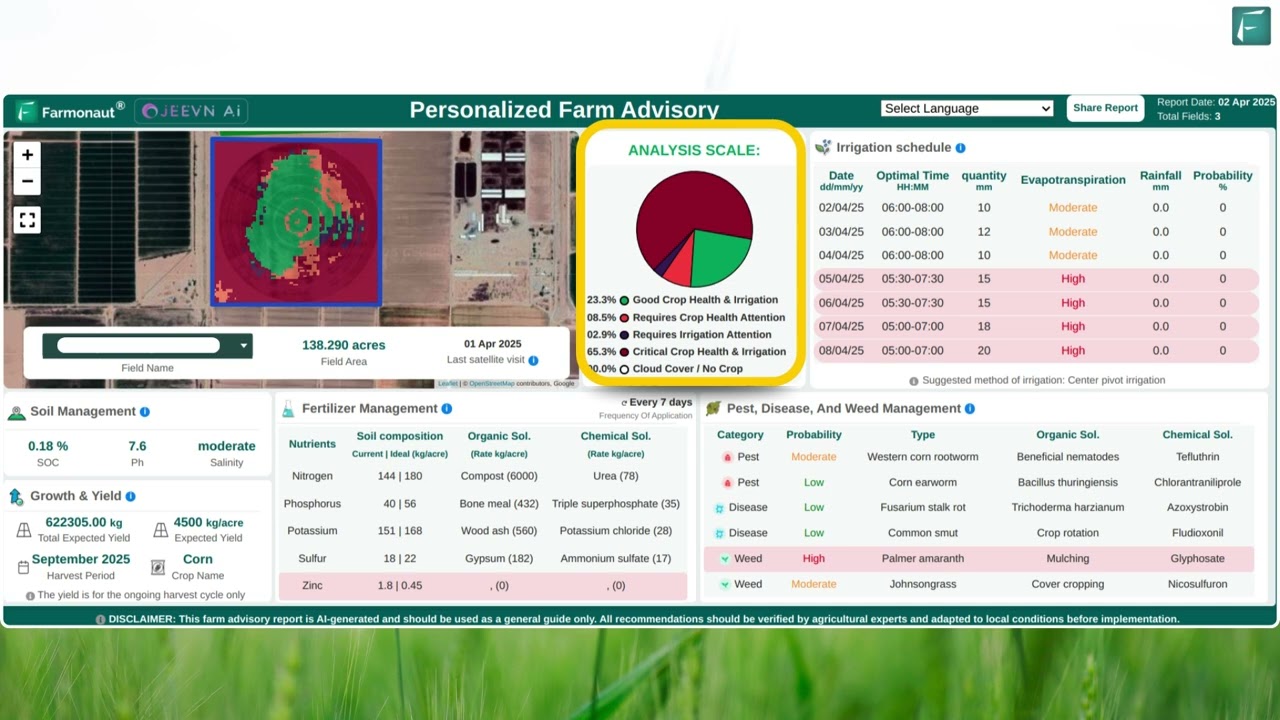
- Advanced Satellite-Based Monitoring: Our platform delivers high-resolution satellite imagery and multispectral data, enabling detailed vegetation health mapping, soil condition analysis, and carbon tracking—critical for precision agriculture and sustainability.
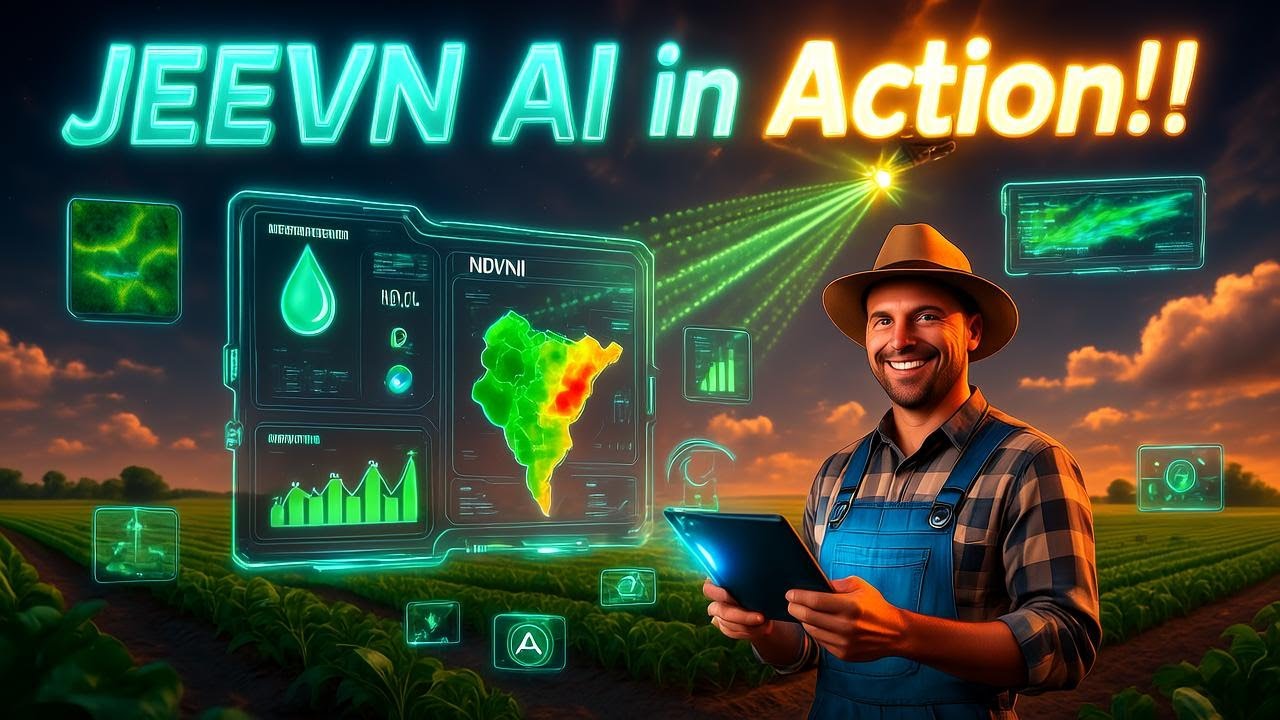
- AI-Powered Advisory Systems: Jeevn AI provides actionable, real-time insights, including weather forecasts and custom recommendations for irrigation, fertilization, and pest management.
- Blockchain-Driven Traceability: We support transparent, tamperproof food supply chains and product verification, helping businesses earn market trust and comply with global standards.
- Environmental Impact & Compliance: Our carbon footprinting features help farms monitor and optimize resource use for low-emission, high-efficiency operations.
- Scalable Access: With Android, iOS, and web apps, as well as APIs and real-time satellite feeds, we make advanced agricultural intelligence accessible for operations of any size.
Our mission is to democratize access to smart, satellite-driven agricultural insights—enabling Delaware’s farmers and agricultural businesses to thrive in an ever-evolving, data-driven world.
Ready to explore how Farmonaut can transform your farm management and accelerate sustainability? Access our real-time satellite and AI tools here.
FAQ: Smart Agriculture, IoT, and University of Delaware Initiatives
What is smart agriculture?
Smart agriculture refers to the use of advanced technologies—like IoT sensors, automation, big data analytics, and remote sensing—to enhance productivity, optimize resource management, and improve sustainability within the agricultural sector.
How has the University of Delaware adopted IoT in agriculture?
The University of Delaware has deployed various IoT-enabled farming equipment—including soil sensors, smart tractors, automated weather stations, and drone-based crop monitoring—across research and local farms to collect real-time data and drive precision agriculture practices.
What benefits do smart IoT devices bring to Delaware’s farms?
IoT devices provide benefits such as increased operational efficiency, higher crop yields, cost savings through optimized resource use, early detection of pests and diseases, reduced water and fertilizer waste, and improved environmental sustainability.
What are the critical challenges in adopting smart agriculture in Delaware?
Major challenges include the initial investment for equipment, need for farmer education, integration of diverse tech systems, data privacy concerns, and ensuring reliable digital connectivity across rural areas.
How can farmers gain access to Farmonaut’s tools?
Farmonaut’s solutions are accessible through Android, iOS, and web apps, as well as API integration for larger enterprises. Subscription options are available for individual users, commercial businesses, and institutions.
How do IoT and digital platforms improve environmental sustainability?
By enabling precise irrigation, targeted fertilizer and pesticide application, and early detection of environmental threats, IoT and digital systems minimize waste, reduce emissions, lower chemical runoff, and protect natural ecosystems such as those around the Chesapeake Bay.
Conclusion: Cultivating Delaware’s Future with Smart Agriculture
The agriculture Delaware sector in 2026 stands on the cusp of a technological renaissance, blending traditional farming heritage with the transformative power of smart IoT-driven innovations. Thanks to ongoing adoption of university of delaware iot farmers equipment—from soil sensors to satellite-powered management apps—Delaware’s farms are more precise, efficient, and sustainable than ever before.
The University of Delaware continues to lead with advanced research and real-world deployments, ensuring that smart agriculture technologies serve not just the sector’s productivity needs, but also its environmental and community obligations. As global shifts in climate and population intensify challenges for food systems, Delaware’s proactive embrace of IoT, data management, and digital farming platforms sets a benchmark for agricultural regions everywhere.
We at Farmonaut remain committed to making satellite-driven, AI-powered, and blockchain-backed insights accessible for every farm—helping agricultural businesses thrive, innovate, and meet the needs of tomorrow.
The future is smart, sustainable, and resource-efficient—and it’s already growing in Delaware’s fields.
Discussion
Questions, corrections or field experience? Share them below. First-time comments are reviewed before they appear, and your email is never published.
No comments yet. Be the first to add a question or your experience.

 Unnati Agri
 Geno
Geno Hayleys Agriculture
 Linx Agritech
 Adinet
 Save Your Soils
 Grandstream Algérie
 XOS Realty
 Geospatial Lab Africa
 Agro La Gándara
 HIPSAC
 ZOL Zimbabwe
 Juligerm
 AdBio
AdBio MISE Maroc
 NWNS
NWNS Red August Group
 Farm Inc
