

Reviewed August 2026 against USDA’s National Agricultural Statistics Service, the Chartis Center for Rural Health’s state rankings, and Nashville Banner’s primary-night results reporting.
Try it: Run your own numbers →
Tennessee Governor 2026: Candidates & Primary Results
U.S. Sen. Marsha Blackburn (R) and Memphis City Council member Jerri Green (D) are the two names on Tennessee’s Nov. 3, 2026 general-election ballot for governor. Blackburn won the Aug. 6, 2026 Republican primary with 43% of the vote, beating U.S. Rep. John Rose (about 33%) and state Rep. Monty Fritts (about 24%); Green won a five-way Democratic primary with roughly 70%, well ahead of runner-up Carnita Atwater’s 17%, according to Nashville Banner’s primary-night reporting. Gov. Bill Lee is term-limited and cannot seek a third term, so November will produce Tennessee’s first new governor since 2019 — and, if Blackburn wins, the state’s first elected female governor.

Tennessee’s Governor Race, By the Numbers
The Republican primary broke differently than pre-election polling suggested. A Beacon Center of Tennessee poll fielded May 7, 2026 among 1,200 Tennessee voters had Blackburn at 63% support among likely GOP primary voters, with Rose at 10% and Fritts at 5% — a lead that had grown from 56% in the same pollster’s January 2026 wave. The actual Aug. 6 result was tighter: Blackburn’s 43% beat Rose’s 33% and Fritts’s 24% by a smaller margin than the spring poll implied, even though she still won comfortably. That gap between a spring snapshot and an August result is the reason to treat any single poll as a range, not a forecast.
Meet the Candidates Heading to November
Marsha Blackburn (R)
- Background: First elected to the U.S. Senate in 2018 after 16 years in the U.S. House; the state’s first woman senator.
- Campaign focus: Continuing Tennessee’s current economic growth trajectory, border security, support for law enforcement, and alignment with President Trump’s agenda.
Jerri Green (D)
- Background: Memphis City Council member who topped a five-candidate Democratic field.
- Campaign focus: Democrats have not won a statewide Tennessee race since Phil Bredesen’s 2006 governor’s re-election, which sets the baseline Green is running against.
Rose campaigned on infrastructure spending, a pledge to get every Tennessean within 30 minutes of emergency medical care, appointing a classroom teacher as education commissioner, and nuclear power expansion — planks that lost the primary but that Blackburn and Green will each be pressed to answer on the trail. The full candidate list and status is below.
| Candidate | Party | Aug. 6, 2026 Primary Result | Status |
|---|---|---|---|
| Marsha Blackburn | Republican | 43% | Advances to Nov. 3 general election |
| John Rose | Republican | ~33% | Eliminated in primary |
| Monty Fritts | Republican | ~24% | Eliminated in primary |
| Jerri Green | Democratic | ~70% | Advances to Nov. 3 general election |
| Carnita Atwater | Democratic | ~17% | Eliminated in primary |
| Remaining Democratic field (3 candidates) | Democratic | ~13% combined | Eliminated in primary |
Rural Tennessee and Agriculture
Whoever wins in November inherits a farm economy that is smaller, on average, than the national one. Tennessee counted 62,500 farms covering 10.7 million acres as of USDA’s 2025 survey year, for an average operation of 171 acres — well under USDA’s 2025 national average farm size of 469 acres, reflecting Tennessee’s mix of small and mid-size row-crop and hay operations rather than large Western or Midwestern spreads, per the USDA NASS Tennessee state overview. Soybeans, corn, and hay are the state’s top three commodities by production value.
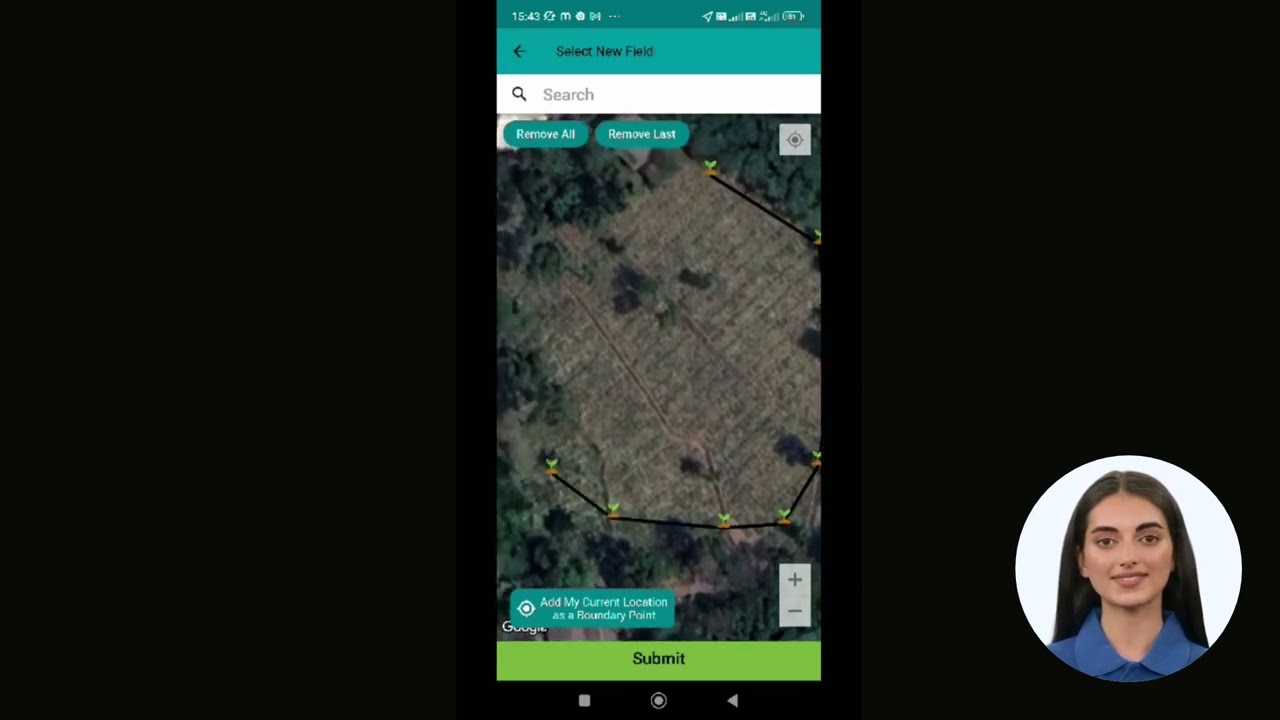
Gov. Lee appointed Andy Holt to a leadership position as Tennessee’s 39th Commissioner of Agriculture, effective Oct. 1, 2025, making him the department’s first first-generation-farmer commissioner, per the Tennessee Farm Bureau. That appointment sits with the sitting governor regardless of who wins in November, and it is one of the first signals to watch for how a new administration will run the department. Farmonaut’s satellite crop-monitoring and Jeevn AI advisory tools are built for exactly this kind of small-to-mid-size row-crop operation, tracking field-level health between the USDA survey windows that set the statewide numbers above.
Rural Health Care and Emergency Medical Access
Rural hospital access is one of the sharpest rural-versus-urban splits in this race. Sixty-one percent of Tennessee’s rural hospitals were rated “vulnerable to closure” in the Chartis Center for Rural Health’s report published Feb. 10, 2026 — the highest share of any state — up from 44% in the prior year’s edition. Since 2010, 18 Tennessee facilities have closed or converted away from inpatient care, second only to Texas’s 27, according to the Chartis 2026 Rural Health State of the State report. That backdrop is why Rose’s primary pledge to put every Tennessean within 30 minutes of emergency care resonated with rural voters even though his campaign did not survive the primary; expect both Blackburn and Green to be asked how they would address it.

Education, Workforce, and Small Business
Rose’s pledge to appoint a classroom teacher as education commissioner did not survive his primary loss, but the underlying debate — teacher pay, vocational and technical program funding, and higher-education affordability — carries into the general election regardless of nominee. On the business side, both campaigns are expected to address tax incentives for relocating employers, workforce-training programs tied to community colleges, and rural broadband buildout as a precondition for any small-business growth outside Nashville, Knoxville, Chattanooga, and Memphis.

Infrastructure, Energy, and Environmental Policy
Rose’s infrastructure platform — widening interstates, expanding rural broadband, and adding nuclear generating capacity — set the terms of this debate before he lost the primary, and both remaining candidates will need positions on road funding mechanisms and grid capacity for the state’s growing manufacturing base. Environmental oversight of mining and quarrying operations is part of that portfolio; readers weighing the tradeoffs can review the top environmental impacts of subsurface mining for the water-table and land-disturbance issues state regulators weigh alongside economic development. The next governor also inherits Tennessee’s seat at the table with the Tennessee Valley Authority, whose president and chief executive controls reservoir levels and power generation that intersect with mining reclamation and the water-quality rules enforced under the federal Clean Water Act. Second Amendment protections and concealed-carry law remain a separate, largely settled plank for both Republican candidates and a point of contrast with the Democratic nominee.
Real-Time Field Data vs. Lagging Survey Estimates
Agricultural policy debates run on USDA survey numbers that are necessarily backward-looking, and 2025’s Tennessee cotton season is a clean illustration of how far in-season estimates can drift from the final count. USDA’s Aug. 12, 2025 in-season estimate put statewide cotton yield at 1,061 lb/acre; by Nov. 14 that estimate had risen to 1,213 lb/acre; the Dec. 9 report went to 1,440 lb/acre. The actual final yield, reconciled from USDA AMS classing records and FSA certified acreage, came in at roughly 860 lb/acre — well below every in-season estimate — according to the University of Tennessee Institute of Agriculture’s UT Crops News analysis.
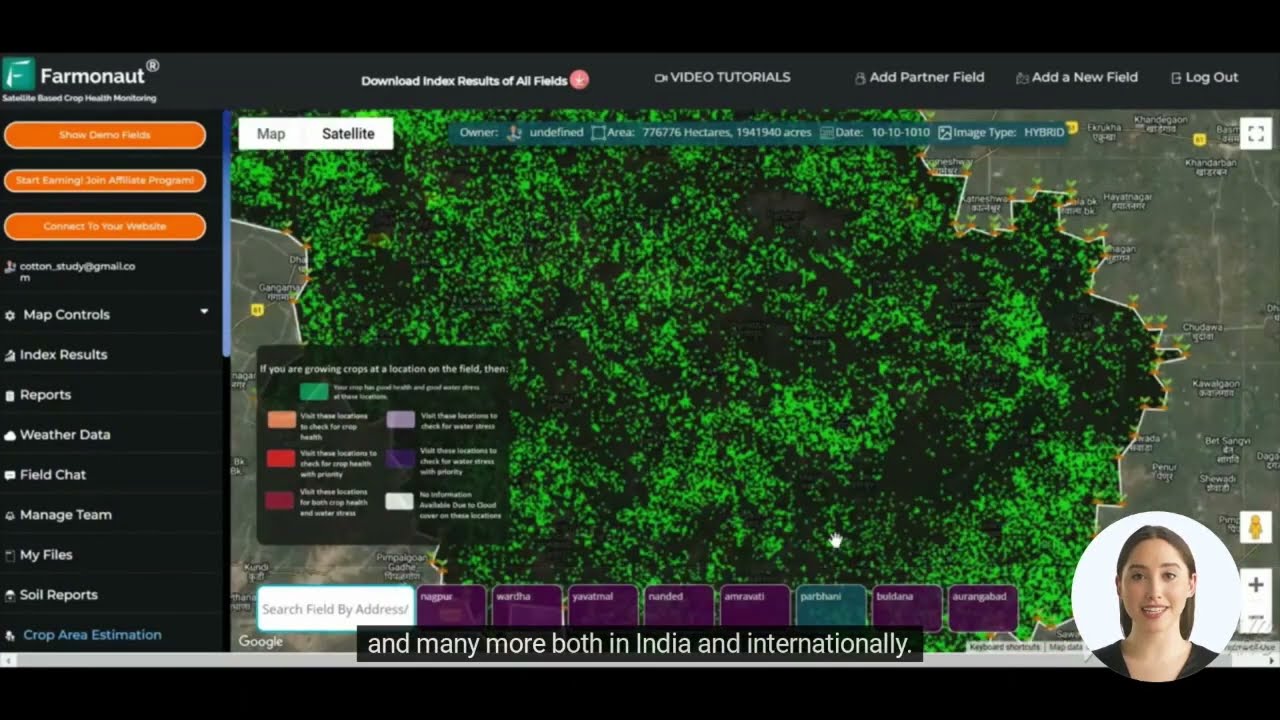
Satellite-based monitoring exists precisely to close that gap between a survey estimate and what is happening in the field right now. Farmonaut’s platform pulls field-level NDVI and soil-moisture readings between USDA report windows, which is the kind of data point a policy debate about “supporting farmers” tends to skip past. Try the calculator below with your own numbers to see what a repeat of 2025’s estimate-to-actual gap would be worth on your acreage.
Run your own numbers
Assumes 2025’s statewide in-season-to-final gap repeats on your farm; it does not account for your soil type, irrigation, or local weather, and it is not a yield forecast for the current season.
Why This Race Matters Beyond Tennessee
Tennessee has not elected a Democrat statewide since 2006, and a Blackburn win would end her Senate tenure early, triggering a special election for her seat and a fresh round of jockeying inside the state’s Republican delegation. Her national profile and Trump alignment mean the margin she wins by — not just the outcome — will be read as a data point on the president’s standing in a safely red state. For Democrats, Green’s showing is a test of whether a Memphis-based candidate can move numbers in Middle and East Tennessee at all.
How to Track This Race Between Now and November
- Certified results: Primary-night percentages above are unofficial returns as reported by Nashville Banner; certified counts post afterward through your county election commission.
- General-election polling: Treat any single poll as a range — the Beacon Center’s own primary poll was off by roughly 20 points on Blackburn’s final share, a useful reminder before reading too much into any one general-election survey.
- Candidate platforms: Official campaign filings and position pages update through the fall; cross-check specific promises against what a candidate has actually filed or voted on, not just what a stump speech claims.
- Farm and rural-health data: USDA NASS republishes Quick Stats on a rolling basis and Chartis publishes its rural health rankings annually each February — both linked above — so you can pull a fresher number than the one in this article at any point.
FAQs
- Who is running for governor of Tennessee in 2026?
Marsha Blackburn (R) and Jerri Green (D) are on the Nov. 3, 2026 general-election ballot. John Rose and Monty Fritts ran against Blackburn in the Republican primary and lost on Aug. 6, 2026. - When is the Tennessee governor election?
The primary was Aug. 6, 2026. The general election is Nov. 3, 2026. - Who won the Tennessee governor primary?
Blackburn won the Republican primary with 43% of the vote. Green won the Democratic primary with roughly 70%. - What are the key issues in the 2026 Tennessee governor election?
Agriculture and rural economic development, rural hospital access and emergency medical care, education funding and teacher pay, infrastructure and energy capacity, and gun rights. - Why does Tennessee’s rural hospital situation matter to this race?
Sixty-one percent of the state’s rural hospitals were rated vulnerable to closure in Chartis’s February 2026 report, the highest share of any state, which is why emergency-care access became a primary-season talking point.
Earn With Farmonaut: Join Farmonaut’s affiliate program and earn 20% recurring commission by sharing your promo code and helping farmers save 10%. Onboard 10 Elite farmers monthly to earn a minimum of $148,000 annually—start now and grow your income!
For more information on how Farmonaut’s satellite-based tools can support Tennessee farms regardless of who wins in November, visit:



For developers interested in integrating Farmonaut’s satellite and weather data into their own systems, check out our API and API Developer Docs.
Discussion
Questions, corrections or field experience? Share them below. First-time comments are reviewed before they appear, and your email is never published.
No comments yet. Be the first to add a question or your experience.

 Agricultural Credit Policy Council
 BayWa
BayWa Azure Clouds
 MCSOD
MCSOD Marei Nursery
 eKGIS
eKGIS Mostas Tech
 Native Seeds
 Andex
Andex FCF India
 Unifrutti Gulf
 Deluxe Conseil
 TVS Electronics
 WICO
WICO Chimera Innovation
 SkyHarvest
