

Farm machinery · Pennsylvania makers
Pennsylvania Agricultural Manufacturing Companies: Top 7
New Holland, Weaverline, JLG, Pequea, E. Rissler, Millcreek and Conestoga build farm machines in Pennsylvania. Each entry gives the town, the start year, products and a source.
Key takeaways
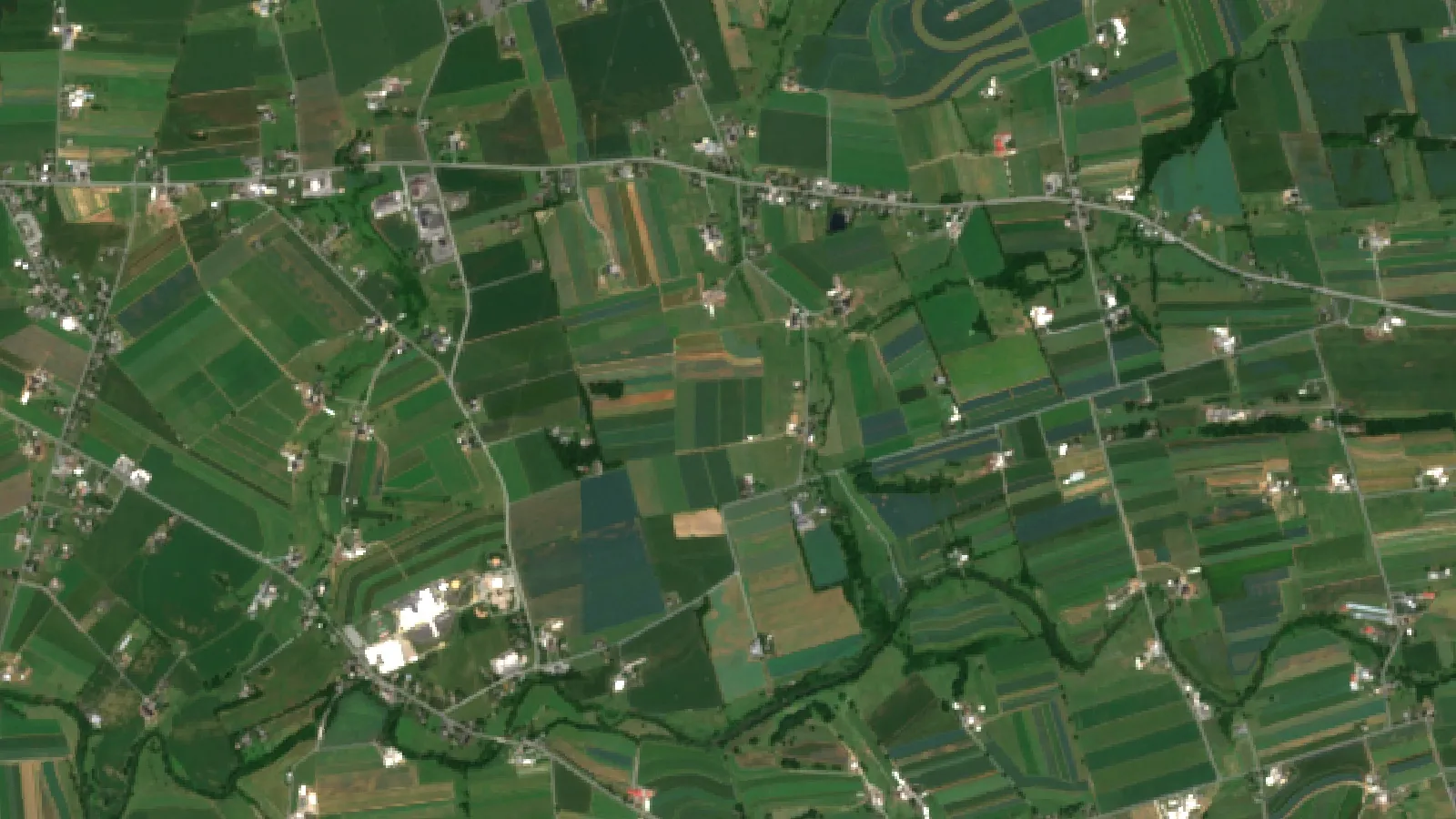
- New Holland Agriculture began in New Holland, PA in 1895 and the town is still the brand’s North American headquarters (now owned by CNH Industrial).
- Four of the seven makers are in Lancaster County, which had the most land in farms in Pennsylvania in 2022, about 378,600 acres (USDA Census of Agriculture).
- Pennsylvania had 49,053 farms averaging 144 acres in 2022; livestock and livestock products were about two-thirds of sales, so local makers focus on feeding, hay and manure tools.
- Machinery costs on central Illinois corn farms rose from $136 to $171 per acre between 2021 and 2024 (farmdoc daily), and US tractor sales fell 10.9% year-over-year in July 2026 (AEM data).
In this article
- Agricultural manufacturing companies in Pennsylvania at a glance
- How we chose and ranked these companies
- Pennsylvania farming: the market these makers serve
- The top 7 agricultural manufacturing companies in Pennsylvania, ranked
- Types of farm machines built in Pennsylvania
- How to choose a Pennsylvania-made farm machine
- What farm machinery costs now
- Own or hire: a cost calculator for one machine
- Jobs, skills and service in the machinery trade
- Using field data with your machines
- FAQ
The best-known agricultural manufacturing companies in Pennsylvania are New Holland Agriculture, Weaverline, JLG Industries, Pequea, E. Rissler Manufacturing, Millcreek Manufacturing and Conestoga Manufacturing. Most of them sit in or near Lancaster County, the state’s largest farm county by land (USDA Census of Agriculture, 2022). They build hay tools, feed carts, manure spreaders, telehandlers and full-line tractors and combines.
This page ranks seven real firms by years in business, with the town, the main products and the source for each fact. It also gives a buyer guide for local machines, cost data, and a calculator to test whether owning a machine beats paying a custom operator.
Agricultural manufacturing companies in Pennsylvania at a glance
The table lists each company with the founding year it publishes or a trusted source gives. Where no year is published, we say so instead of guessing.
| Company | Town | Since | Main products | Best for |
|---|---|---|---|---|
| New Holland | New Holland, PA | 1895 | Tractors, combines, balers, hay tools | Full-line dealers and large farms |
| Weaverline | Narvon, PA | 1965 | Feed carts, silage packers | Tie-stall and small dairy barns |
| JLG Industries | McConnellsburg, PA | 1969 | Telehandlers, aerial lifts | Lifting and loading around the yard |
| Pequea | New Holland, PA | 1970 | Tedders, rakes, spreaders, trailers | Hay makers on small and mid-size farms |
| E. Rissler Mfg. | New Enterprise, PA | 1973 | TMR mixers, conveyors, feed carts | Livestock feeding systems |
| Millcreek Mfg. | Honey Brook, PA | Not published | Manure and compost spreaders | Horse farms and small livestock farms |
| Conestoga Mfg. | Kirkwood, PA | Not published | Ground-drive and PTO spreaders | Hobby, organic and horse farms |
How we chose and ranked these companies
The old version of this page listed several firms we could not find in any public record, with made-up staff counts. We removed them. Every company below passed three checks.
- It designs and builds machines, not just sells them. Dealers such as equipment stores in Mercersburg or Myerstown were left out.
- Its address in Pennsylvania appears on its own website or a third-party listing.
- Its products are used on farms, either directly or for farm yard work.
We rank by years in business because it is a fact anyone can check. It is not a quality score. A young firm can build a better spreader than an old one. Staff counts and sales are not public for most of these firms, so we do not rank on size.
Chart
Pennsylvania farms by size
Number of farms by acres, 2022
Pennsylvania farming: the market these makers serve
Pennsylvania had 49,053 farms in 2022, 8% fewer than in 2017, on about 7.06 million acres, according to the USDA Census of Agriculture state profile for Pennsylvania. The average farm was 144 acres. Farms sold about $10.3 billion of products, and livestock, poultry and their products made up about two-thirds of that.
That mix explains what local factories build. A state of small dairy, beef, horse and poultry farms needs feed carts, mixers, manure spreaders and hay tools more than 40-foot planters. Lancaster County leads the state in land in farms, with about 378,600 acres, followed by Bradford, Franklin, York and Bedford counties.
Most Pennsylvania farms are small. In 2022, 30% sold less than $2,500 of products, while 23% sold $100,000 or more. Only about 2% had 1,000 acres or more. This is why compact, ground-drive and ATV-towed machines sell well here.
Chart
Pennsylvania farms by value of sales
Share of farms, 2022 Census of Agriculture
The top 7 agricultural manufacturing companies in Pennsylvania, ranked
Each entry gives the town, the year the business started, what it makes and who it suits. Check current models and prices with the maker or a dealer, since product lines change.
1. New Holland Agriculture (New Holland, Lancaster County)
New Holland began as the New Holland Machine Company in 1895 in the town of New Holland, Pennsylvania, per its Wikipedia company entry. The brand is now owned by CNH Industrial. Its main office is in Turin, Italy, and New Holland, PA is the brand’s North American headquarters. The Lancaster Chamber’s profile of the borough also names it as home to CNH.
Products: tractors, combines, balers, forage harvesters, hay tools, seeding gear and utility vehicles.
Best for: farms that want one dealer for most machines, and parts support across North America.
Keep in mind: it is a global brand with plants in many countries, so not every New Holland machine is built in Pennsylvania.
2. Weaverline (Narvon, Lancaster County)
Weaverline says it has made “quality equipment since 1965” on its company website. It is based in Narvon, in eastern Lancaster County, and most of its products are for feeding and bedding in barns.
Products: motorized feed carts, silage packers and debris blowers.
Best for: dairy and beef barns where a tractor and mixer wagon are too big for the alleys.
Keep in mind: the range is narrow, so you will still need other brands for field work.
3. JLG Industries (McConnellsburg, Fulton County)
JLG was founded in 1969 in McConnellsburg by John L. Grove, according to the Wikipedia entry on JLG Industries, and is now part of Oshkosh Corporation. The company’s About JLG page calls it a designer and maker of access equipment since 1969.
Products: telehandlers and aerial work platforms, mainly for building sites and industry.
Best for: farms that stack big bales, load feed or do barn repairs at height.
Keep in mind: JLG is not a farm-only brand. Ask your dealer whether a model has the hitch and attachments farm work needs.
4. Pequea (New Holland, Lancaster County)
Pequea says on its company website that an Amish farmer started the business in 1970 in Lancaster County to dry his hay faster. It is now a mid-size firm based in a 100,000-square-foot plant in New Holland, PA, and sells through dealers across North America.
Products: hay tedders, rakes, manure spreaders and trailers.
Best for: small and mid-size hay makers who want simple, strong tools.
Keep in mind: Pequea does not build tractors or balers, so it pairs with a full-line brand.
5. E. Rissler Manufacturing (New Enterprise, Bedford County)
FARM SHOW Magazine reports that E. Rissler Mfg. was founded in Bedford County in 1973, first making conveyor systems and TMR mixers for livestock feeding. The National AgrAbility Project supplier listing gives its address in New Enterprise, PA and lists a motorized feed cart.
Products: TMR mixers, conveyors, feed carts and custom fabrication.
Best for: livestock farms that need a feed system built to fit an older barn.
Keep in mind: it is a small firm, so ask about lead times before you order.
6. Millcreek Manufacturing (Honey Brook, Chester County)
Millcreek lists its North American base at Honey Brook, PA, and a UK distributor, on its company website. The site does not give a founding year, so we place it after firms with published dates.
Products: standard and stainless steel manure spreaders, arena rakes, top dressers and row mulchers.
Best for: horse stables, small livestock farms and market gardens that spread compost.
Keep in mind: these are small-capacity spreaders, not for large dairy herds.
7. Conestoga Manufacturing (Kirkwood, Lancaster County)
Conestoga Manufacturing builds ground-driven and PTO manure spreaders in Kirkwood, PA, according to its LancasterPA.com business listing. Its two ground-drive models hold 25 or 50 cubic feet and can be towed by a lawn tractor, ATV, UTV or farm tractor.
Products: ground-drive and PTO manure spreaders with stainless steel apron chains.
Best for: hobby, organic and horse farms with a few animals.
Keep in mind: no founding year is published, and the range is small.
Types of farm machines built in Pennsylvania
The seven firms above fall into four groups. Knowing which group you need saves time when you call dealers.
- Full-line field machines: tractors, combines and balers. New Holland is the main local name.
- Hay tools: tedders and rakes that speed up drying. Pequea is the local specialist.
- Feeding gear: feed carts, TMR mixers and conveyors for barns. Weaverline and E. Rissler fit here.
- Manure handling: spreaders for every size of farm. Millcreek, Conestoga and Pequea all build them.
Telehandlers from JLG sit across groups, since they move bales, feed and building materials.
▶ How satellite crop maps create the zones that variable-rate farm equipment acts on. · 2:12
How to choose a Pennsylvania-made farm machine
A local maker can mean faster parts and a factory you can visit. But a machine still has to fit your farm. Use these steps.
- Match the machine to your acres and herd. A 25-cubic-foot spreader suits a few horses. A 300-cow dairy needs a much larger unit.
- Check your power. Ground-drive spreaders need no PTO. Hay tools and mixers need a tractor with enough horsepower and the right hitch.
- Ask about parts. Find out which dealer stocks parts and how long a breakdown repair takes in hay season.
- Compare own versus hire. For machines you use a few days a year, a custom operator may cost less. Use the calculator below.
- Read the safety manual. Guards, shields and slow-moving vehicle signs matter on every machine.
The OSHA agricultural operations page notes that farmworkers face a high risk of fatal and non-fatal injuries. Follow the operator’s manual and get training before using new machines.
▶ Six plain steps to start precision farming without buying a robot. · 4:18
What farm machinery costs now
Machinery prices rose fast in recent years. The University of Illinois team behind farmdoc daily’s October 2025 machinery cost article found that prices of new farm equipment rose by over 20% between 2021 and 2023. On central Illinois corn farms, machinery-related costs went from $136 per acre in 2021 to $171 in 2024, a 25% rise.
Chart
Machinery costs per acre, central Illinois corn
US dollars per acre, Illinois Farm Business Farm Management farms
These are Midwest grain-farm figures, not Pennsylvania numbers. They still show the direction of costs any buyer faces. Depreciation was the largest item, at $87 per acre in 2024.
Sales have slowed. U.S. farm tractor sales fell 10.9% and combine sales 5.3% year-over-year in July 2026, based on Association of Equipment Manufacturers data reported by Farm Policy News at the University of Illinois. Year-to-date sales to July were down 13.1%. A soft market can mean better deals on dealer stock, so ask for quotes from more than one dealer.
Prices in this section are cost-per-acre estimates and sales counts, not list prices. For any purchase, get a written quote with the date.
Own or hire: a cost calculator for one machine
Use this to compare owning a machine, such as a hay tedder or a spreader, with paying a custom operator. Enter your own numbers. The default values are examples only, set close to break-even.
Try the numbers for your own farm below.
Calculator
Should you own the machine or hire a custom operator?
Enter the machine price, its life, your yearly running cost and the custom rate in your area.
- Yearly cost to own: 3,110 $
- Yearly cost to hire: 2,600 $
- Acres where owning breaks even: 257 acres
Example values only, not quotes or benchmarks; every number is your input. The ownership cost uses simple straight-line depreciation plus an interest charge on the average money tied up, and ignores your own labour and tractor time. Get local custom rates from your extension office and get financial advice before a large purchase.
Jobs, skills and service in the machinery trade
Machines need people to fix them. A January 2026 farmdoc daily article on farm service technician demand looks at how precision farming gear is raising demand for skilled technicians. For a buyer, this means service capacity at your dealer matters as much as the machine itself.
Small local makers often help here. You can call the factory, and many build parts to order. Large brands offer wide dealer networks and longer parts lists.
Using field data with your machines
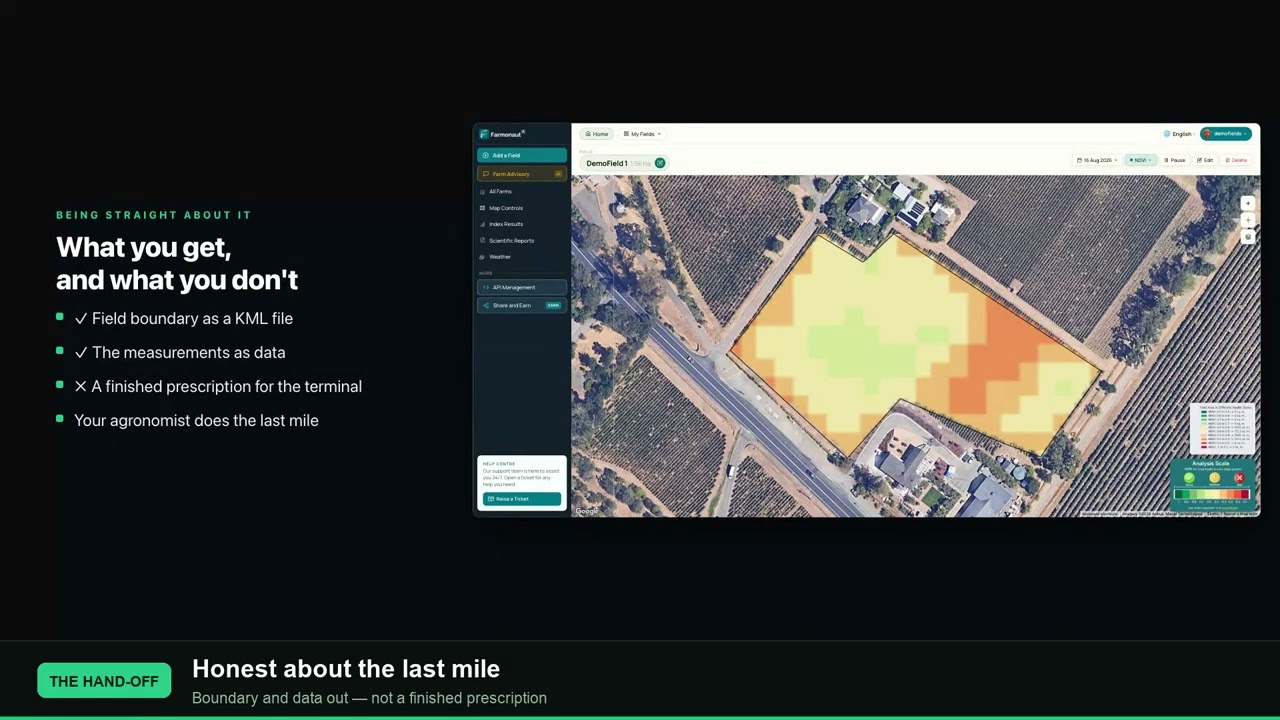
Many hay, spreader and planter decisions depend on where the crop is strong or weak. Satellite crop maps can show those zones before you go out with a machine. Farmonaut offers satellite vegetation maps of your own fields on web, Android and iOS, which you can use to plan where to spread manure or which hay field to cut first.
Farms that run several machines may also want to track them. See our pages on farm fleet management and carbon footprinting for farms.
Related pages on our site: agribusiness admin app, satellite data for crop loans and insurance, product traceability, satellite and weather API docs, our apps.
▶ How NDVI satellite maps show crop stress before you can see it in the field. · 4:09
FAQ
Which is the largest farm machinery maker based in Pennsylvania?
New Holland Agriculture is the largest brand with roots in the state. It started in New Holland, PA in 1895, and the town is still its North American headquarters. It is owned by CNH Industrial.
Why are so many farm equipment makers in Lancaster County?
Lancaster County has the most land in farms in Pennsylvania, about 378,600 acres in 2022 (USDA). Many makers started by building tools for local dairy and hay farms, such as Pequea and Weaverline.
Are there farm equipment manufacturers near Philadelphia?
Yes. Millcreek Manufacturing is in Honey Brook, Chester County, and Conestoga, Pequea, Weaverline and New Holland are in Lancaster County, all within about an hour or two of Philadelphia by road.
Can I buy straight from the factory?
Most of these firms sell through dealers. Some small makers will talk to farmers directly about custom builds. Check each company’s website for its dealer list.
Is it cheaper to own or hire a machine?
It depends on how many acres you cover each year. Use the calculator on this page with your own price, life and custom rate. Get financial advice before a large purchase.
Is New Holland still American?
New Holland is a brand of CNH Industrial, a company incorporated in the Netherlands with brand offices in Turin, Italy. New Holland, PA remains its North American base.
Farmonaut crop monitoring
See your own fields from space
Draw your fields once and Farmonaut shows satellite vegetation maps for them through the season, on web, Android or iOS.




Sources
- USDA NASS, 2022 Census of Agriculture, Pennsylvania state profile: nass.usda.gov
- Wikipedia, New Holland Agriculture: en.wikipedia.org
- Lancaster Chamber, New Holland community profile (2024): lancasterchamber.com
- Weaverline, company website: weaverline.com
- Wikipedia, JLG Industries: en.wikipedia.org
- JLG Industries, About JLG: jlg.com
- Pequea, company website: pequea.com
- FARM SHOW Magazine, Farm Manufacturer Offers Custom Fabrication (E. Rissler Mfg.): farmshow.com
- National AgrAbility Project, E. Rissler Manufacturing supplier listing: agrability.org
- Millcreek Manufacturing, company website: millcreekspreaders.com
- LancasterPA.com, Conestoga Manufacturing listing: lancasterpa.com
- OSHA, Agricultural Operations: osha.gov
- Schnitkey, Paulson, Zulauf and Zwilling, Large Increase in Machinery Costs Suggests Need to Reconsider Machinery Purchase Decisions, farmdoc daily (October 2025): farmdocdaily.illinois.edu
- Farm Policy News, Tractor Sales Fall in July Amid Continued Ag Economy Pressure (August 2026): farmpolicynews.illinois.edu
- Kalva and Janzen, The People Behind the Machines, farmdoc daily (January 2026): farmdocdaily.illinois.edu
Discussion
Questions, corrections or field experience? Share them below. First-time comments are reviewed before they appear, and your email is never published.
No comments yet. Be the first to add a question or your experience.

 GalaxEye Space
 Soybean Processors Association
 Sun Palm Australia
 Grandstream Algérie
 XOS Realty
 Geospatial Lab Africa
 Agro La Gándara
 HIPSAC
 ZOL Zimbabwe
 Juligerm
 AdBio
 MISE Maroc
 NWNS
 Red August Group
 Farm Inc
 WeMe Global
 Agrotoken
 Blue BearX
 Insignito
 DnCubed

 Licence holder · Niger · Gold
 Licence holder · Nigeria · Gold + lithium










