

US rare earths · Project and data guide
Rare Earth Mining in the USA: 7 Projects Compared
The USA mined about 51,000 tons of rare-earth oxide in 2025, almost all at Mountain Pass. This guide compares seven projects by filing stage and shows the output, price and price-floor numbers.
Key takeaways
- US mines produced about 51,000 metric tons of REO in concentrates in 2025, up 12% from 2024; China produced 270,000 tons of a 390,000-ton world total (USGS, 2026).
- US production of separated compounds and metals rose from 4,300 tons in 2024 to an estimated 8,900 tons in 2025; net import reliance for compounds and metals was 67% (USGS, 2026).
- The Department of Defense set a 10-year NdPr price floor of $110 per kilogram for MP Materials; the USGS 2025 average NdPr oxide price was $69 per kilogram.
- Bear Lodge (Wyoming) is in a federal EIS; Halleck Creek has a 30 September 2026 scoping study; Round Top (Texas) is still at the exploration stage (10-Q, June 2026).
- Heavy rare earths are the thinnest part of US supply: Energy Fuels’ dysprosium and terbium circuits are due by the end of 2027.
In this article
- How much rare earth does the USA mine?
- US rare earth mining projects compared
- Why the USA still imports most separated rare earths
- How fast US separation is growing
- The Pentagon price floor and the magnet build-out
- Heavy rare earths: the harder gap to close
- Permits, radioactivity and water: what slows a new mine
- How explorers screen rare earth ground from space
- What to check before trusting a project claim
- Frequently asked questions
The United States does mine rare earths today, and it is the world’s second-largest producer by tonnage: about 51,000 metric tons of rare-earth oxide (REO) equivalent in mineral concentrates in 2025, nearly all of it from one open pit at Mountain Pass, California (USGS Mineral Commodity Summaries, February 2026). The weak link is not the mine but what comes after it: separating the oxides, making metal and building magnets. This guide compares seven US projects by their stage in company and regulator filings, shows the production and price data, and lists what to check before you rely on any project claim.
Rare earth elements (REEs) are 17 chemically similar metals: the 15 lanthanides plus scandium and yttrium. They are not rare in the crust, but minable concentrations are uncommon (USGS). Light rare earths such as cerium and lanthanum are plentiful. The magnet metals neodymium and praseodymium (together “NdPr”) and the heavy elements dysprosium and terbium are the ones governments worry about.
How much rare earth does the USA mine?
USGS estimates 2025 US output at 51,000 metric tons of REO in mineral concentrates, worth about $240 million, up from 45,500 tons in 2024 and 42,400 tons in 2021 (USGS, 2026). That is a rise of about 12% in one year. Bastnaesite, a rare-earth carbonate-fluoride mineral, was mined as a primary product at Mountain Pass. Monazite, a rare-earth phosphate, was produced from heavy-mineral-sand concentrates in the south-eastern states. Mine and mill employment was about 670 people in 2025 (USGS, 2026).
Chart
US rare earth output in mineral concentrates
Metric tons of rare-earth oxide (REO) equivalent; 2025 is an estimate
Two points keep the headline in proportion. First, concentrate is only the first product; it still has to be split into individual oxides. Second, growth has been steady rather than explosive: the USGS series shows 12% from 2024 to 2025. Mountain Pass is covered in depth in our Mountain Pass mine guide; this page looks at the whole country.
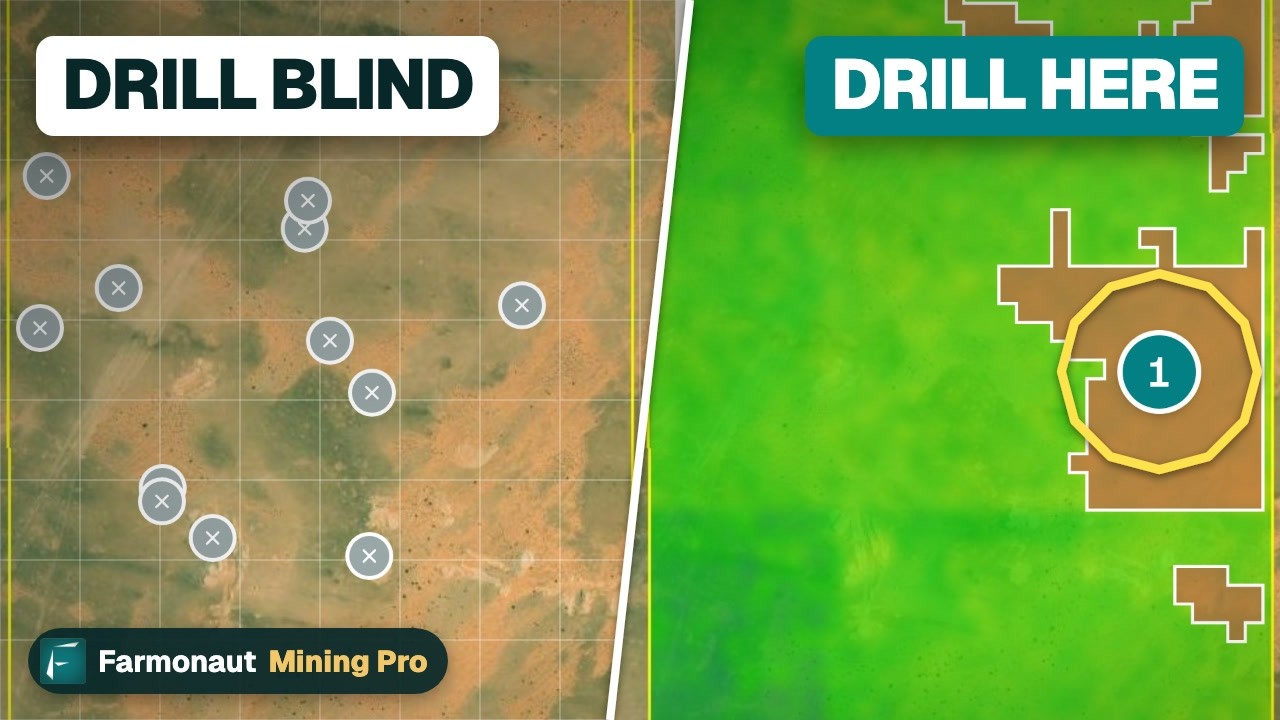
▶ What mining contributes to an economy and why energy-transition minerals are in demand. · 5:03
US rare earth mining projects compared
The table lists one operating mine and six projects that matter for US supply. Stage is taken from each company’s own filing or a regulator page, with the date. A scoping study is an early-stage cost estimate; a feasibility study is the level lenders need.
| Project | State | Operator | Stage (latest filing seen) | What it is about |
|---|---|---|---|---|
| Mountain Pass | California | MP Materials (NYSE: MP) | Operating; NdPr output 840 t in Q2 (Aug 2026) | Light rare earths; heavy-element separation planned |
| Round Top | Texas | USA Rare Earth | Exploration stage (10-Q, quarter to June 2026) | Heavy rare earths; TMRC purchase closed 7 Aug 2026 |
| Bear Lodge (Bull Hill) | Wyoming | Rare Element Resources | Federal EIS under way; notice of intent 29 July 2026 | Open pit, NdPr-rich |
| Halleck Creek | Wyoming | American Rare Earths (ASX: ARR) | Scoping study, 30 Sept 2026 | Large, low-grade resource |
| Bokan Dotson Ridge | Alaska | Ucore Rare Metals (TSXV: UCU) | Resource update, 14 Apr 2026 | Heavy-rare-earth-rich vein deposit |
| Elk Creek | Nebraska | NioCorp | Permitted; early construction (company page) | Niobium, scandium and titanium with magnet rare earths |
| White Mesa Mill | Utah | Energy Fuels | Heavy circuits under construction (Q2 2026) | Processing, not a mine |
How we chose these projects
We kept US projects that appear in a 2026 company filing, a regulator page or the USGS summary, where rare earths are the main product or a declared co-product. The list is not complete: smaller prospects and by-product ideas exist, and a project can leave the list the day a financing fails. We did not rank the projects by value, because the studies use different bases (scoping, PEA, 43-101, JORC) and different prices.
Mountain Pass, California: the only large producer
MP Materials reported NdPr production of 840 metric tons in the second quarter of 2026, up 41% on the same quarter a year earlier, and NdPr sales of 1,006 tons (MP Materials, 6 August 2026). The company ended concentrate sales in July 2025 (MP Q2 2026 release: “cessation of concentrate sales beginning in July 2025”). Magnet qualification at its Independence plant in Texas was advancing, and a long-term gadolinium supply agreement with a new US aerospace and defense customer was signed, which widens the heavy-rare-earth side of the business.
Round Top, Texas: heavy rare earths still at the exploration stage
USA Rare Earth’s quarterly report for the period to 30 June 2026 says the Round Top project is at the exploration stage and that construction has not started. The same filing says the company closed its purchase of Texas Mineral Resources Corp. (TMRC) on 7 August 2026, which gives it TMRC’s 18.6% interest in Round Top, and that its Stillwater, Oklahoma magnet plant has been commissioned and has begun commercial production, though it had not yet earned revenue from sintered magnets (USA Rare Earth Form 10-Q).
Bear Lodge, Wyoming: permitting is the milestone
Rare Element Resources’ Bear Lodge project received FAST-41 coverage in March 2026. FAST-41 is a federal law from 2015 that sets a public timetable for reviews; it does not waive any environmental rule. The Forest Service deemed the mine plan of operations complete in late July 2026, issued its notice of intent on 29 July 2026 to start the environmental impact statement (EIS), and took public comment to 28 August 2026 (Rare Element Resources; Federal Permitting Council). The proposed plan is a starting point for review, not an approval.
Halleck Creek, Wyoming: a large resource with a scoping study
American Rare Earths reports a JORC resource of 2.63 billion tonnes at 3,292 parts per million (ppm) total rare earth oxide (TREO), with magnet rare earths about 26% of TREO (American Rare Earths project page). Its 30 September 2026 scoping study for the first phase, the Cowboy State Mine, shows an after-tax net present value of about US$1.07 billion at an 8% real discount rate, initial capital of about US$900 million, 4.5 million tonnes a year of feed and about 2,500 tonnes a year of NdPr oxide over 26 years (ASX announcement, 30 September 2026). The company states the study cannot support ore reserves and is not a pre-feasibility study; separated oxide from pilot work is targeted for late Q2 2027.
Bokan Dotson Ridge, Alaska: heavy-rare-earth grades
Ucore’s April 2026 update, prepared under Canadian NI 43-101 and US SEC Regulation S-K 1300 rules, reports measured and indicated resources of about 4.17 million tonnes (801,600 t measured at 0.60% TREO and 3.37 million t indicated at 0.58%), holding roughly 24,400 tonnes of TREO, plus 980,300 t inferred, at a 0.4% TREO cut-off grade (the lowest grade counted as ore). About 0.22% to 0.23% of the rock is heavy rare earth oxide (Ucore, 14 April 2026). The release is a resource estimate; it does not report construction.
Elk Creek, Nebraska: rare earths as co-products
NioCorp says Elk Creek holds all major construction permits, is an underground mine design, and has early construction under way while financing continues. Its 2026 technical report life-of-mine averages are 8,095 short tons a year of ferroniobium, 672 short tons of NdPr oxide, 67 short tons of dysprosium oxide and 17 short tons of terbium oxide (NioCorp). Niobium, not rare earths, is the main product.
White Mesa Mill, Utah: processing capacity
Energy Fuels began building a heavy-rare-earth expansion at its White Mesa Mill in July 2026. The terbium and dysprosium circuits are due by the end of 2027 and the samarium, europium and gadolinium circuits by the end of 2028 (Energy Fuels, 5 August 2026). The expansion is sized for monazite from the Donald project in Australia, not for a US mine. It shows how much of the US rare earth story is about processing capacity.
Why the USA still imports most separated rare earths
China mined 270,000 tons of REO in 2025 against 51,000 tons for the USA and 29,000 tons for Australia, out of a world total of about 390,000 tons (USGS, 2026). That is a mine-output share of roughly 69% for China, not the “over 80%” figure often quoted; the larger shares people cite refer to separation and magnet making. USGS records that 71% of US rare-earth compound and metal imports in 2021 to 2024 came from China, with Malaysia, Japan and Estonia supplying most of the rest, and that net import reliance for compounds and metals was 67% in 2025, down from more than 95% in 2021 and 2022.
Chart
World rare earth mine output by country
Metric tons of REO equivalent, 2025 estimate, selected producers (India, 2,900 t, not shown)
China tightened export controls on samarium, gadolinium, terbium, dysprosium, lutetium, scandium and yttrium in April 2025, widened them in October, then suspended the October additions for one year in November while the April controls stayed in place (USGS, 2026). For a US buyer, that is the reason a mine matters less than a separation plant.
How fast US separation is growing
USGS lists US production of rare-earth compounds and metals at 120 tons in 2021, 800 tons in 2023, 4,300 tons in 2024 and an estimated 8,900 tons in 2025. Compounds come from California and Utah. This is the number to watch, because it measures what stays home after mining. It is still small next to 51,000 tons of concentrate, which is why exports of ores and compounds, 14,000 tons in 2025, and imports of compounds, 21,000 tons, both remain large (USGS, 2026). For a related market view, see our guide to rare earth ETFs and ASX stocks.
Chart
US production of rare earth compounds and metals
Metric tons, REO equivalent; 2025 is an estimate
The Pentagon price floor and the magnet build-out
In July 2025 the Department of Defense (now styled the Department of War) agreed a 10-year price floor of $110 per kilogram for MP Materials’ NdPr products that are stockpiled or sold, plus a 10-year commitment to buy the output of a second magnet plant, the “10X Facility,” due to start commissioning in 2028 and to bring US magnet capacity to an estimated 10,000 metric tons a year. A $150 million Department loan funds heavy-rare-earth separation at Mountain Pass (MP Materials, 10 July 2025). The floor works as a top-up: when the market NdPr price is below $110 a kilogram, the government pays the difference. In the second quarter of 2026 that produced $17.6 million of price protection income for MP.
Chart
Average oxide prices in US dollars per kilogram
USGS annual averages, 2024 and 2025 estimate
The gap is large. USGS puts the 2025 average NdPr oxide price at $69 a kilogram, so a floor of $110 is about 59% above it. The calculator below lets you test the top-up on your own tonnage and price. It is a simplified model, not a reading of the contract.
Calculator
How big could a price-floor top-up be?
Enter your own NdPr tonnage and market price.
- Revenue at market price: 69.0 US$ m
- Revenue at the floor price: 110.0 US$ m
- Floor above market price: 59.4 %
Simplified model. The $110 per kilogram floor is from the MP Materials and Department of Defense agreement of 10 July 2025; real contract terms have more conditions. Tonnage and market price are examples; price is an input: example, use today’s price (US$ per kilogram).
Heavy rare earths: the harder gap to close
Dysprosium and terbium are added in small amounts to NdFeB magnets so they keep their strength when hot. Fastmarkets assessed terbium oxide at $5,000 to $8,000 a kilogram and dysprosium oxide at $2,500 to $3,500 a kilogram, delivered outside China, on 1 October 2026, after sharp weekly rises tied to US defense sourcing rules that bar the Pentagon from buying samarium-cobalt and NdFeB magnets with Chinese-origin materials from January 2027 (Fastmarkets, 6 October 2026). Lynas said, as reported there, that demand for these two elements outside China is around 400 tonnes a year.
US sources of heavy rare earths are early: Round Top is at the exploration stage, Bokan has a resource estimate, Elk Creek would add 67 tons of dysprosium oxide and 17 tons of terbium oxide a year if built, and White Mesa’s heavy circuits are not due until the end of 2027. Mountain Pass is expected to add heavy separation with the $150 million loan. Prices in this section are a one-week assessment, not a trend.
Permits, radioactivity and water: what slows a new mine
Rare earth ores often carry thorium and uranium. The Forest Service’s list of issues for Bear Lodge includes naturally occurring radioactive materials, air quality and dust, and hydrology (surface water, groundwater and stream flows), all to be tested in the EIS (Rare Element Resources, 2026). At Bear Lodge, reclamation is to be bonded through the Wyoming Department of Environmental Quality. On state land the route can be faster: American Rare Earths says Wyoming’s permit-to-mine process typically takes two to three years against more than ten years on federal land. That is a company statement, not a government timeline.
Land disturbance is the other issue. Our short explainer on the seven environmental impacts of mining shows how the same questions apply to any pit.
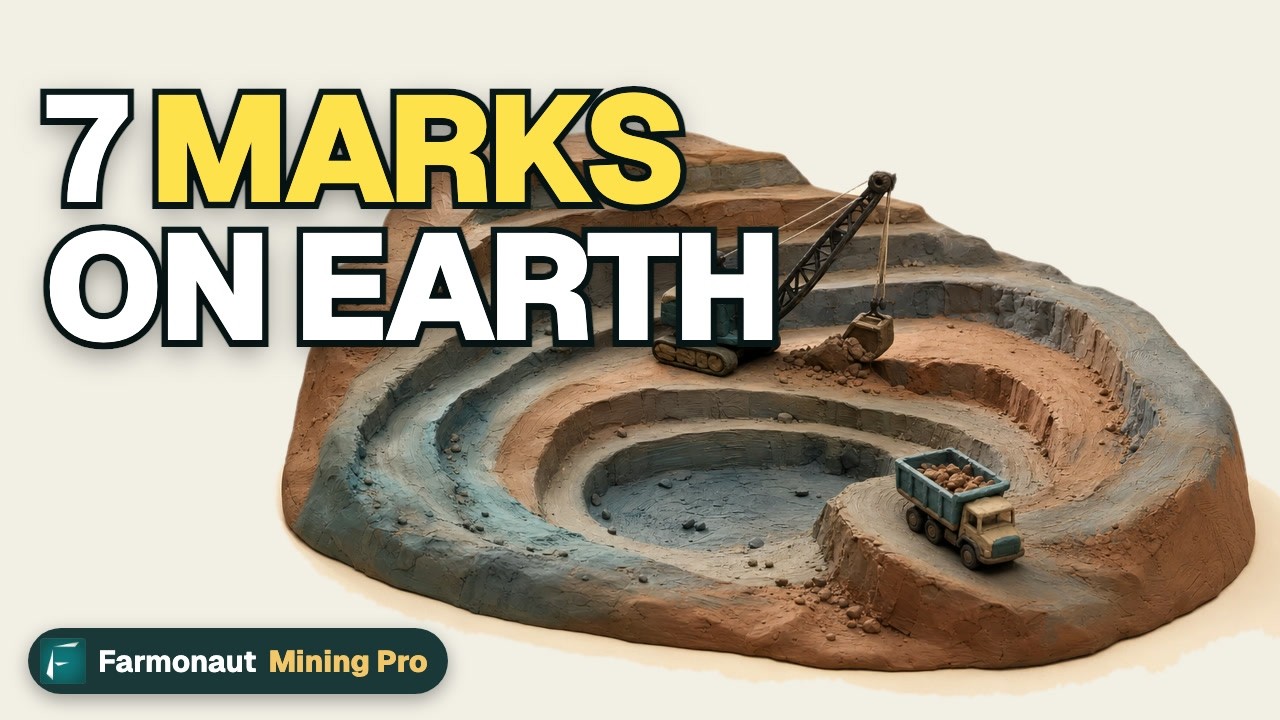
▶ A plain-language claymation on the seven environmental impacts of mining. · 2:31
How explorers screen rare earth ground from space
USGS notes that the world’s rare earths come mainly from carbonatites, which are igneous rocks rich in carbonate minerals, and from alkaline igneous rocks (USGS Fact Sheet 2014-3078). Satellites cannot measure rare earth grade. Multispectral and hyperspectral imagery can map rock types, iron staining, clay and carbonate alteration and fault patterns that point to where such rocks sit, which helps a team decide where to sample first.
Farmonaut’s satellite-based mineral detection reports turn a licence boundary into ranked exploration targets, with delivery in 5 to 20 business days and up to 80-85% lower early-exploration cost than ground-first programs. A satellite target is a place to look, ahead of any resource estimate; drilling decides. Licence owners can request a quote or contact the team. To find who holds ground in a given country, see the mining cadastre portal guide.
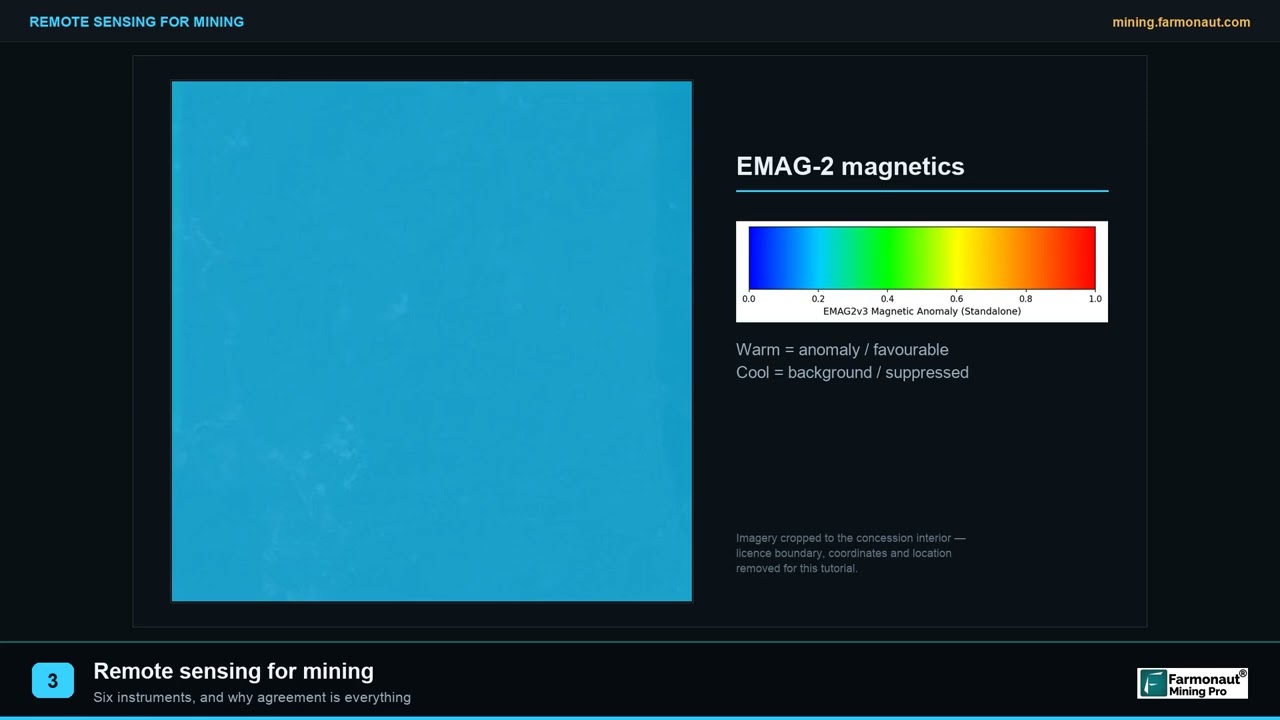
▶ Remote sensing for mining in three minutes: what the instruments measure and why agreement between them matters. · 2:01
What to check before trusting a project claim
- Resource class. Measured and indicated counts for more than inferred. Halleck Creek’s production target uses indicated resources only; its larger resource includes inferred tonnes.
- Study level. Scoping is early. Ask for pre-feasibility or feasibility before treating an NPV as bankable.
- Permits. Separate “applied,” “under review” (Bear Lodge) and “granted” (Elk Creek, per the company).
- Processing route. A mine without a separation plant sells concentrate; the margin sits downstream.
- Price basis. Check whether an NPV uses spot NdPr, a floor or a forecast, and the date.
- Offtake and funding. Look for signed offtake and committed finance, not letters of interest.
Infographic
From rock to magnet in 5 steps
- 1Mine and crushOre is mined, often from a carbonatite or alkaline rock body, and crushed.
- 2ConcentrateMinerals such as bastnaesite or monazite are separated from waste rock.
- 3SeparateChemical circuits split the mixed concentrate into individual oxides.
- 4Make metal and alloyOxides such as NdPr are reduced to metal and alloyed.
- 5Build magnetsAlloy is cast, powdered, pressed and sintered into NdFeB magnets.
This page is not investment advice and gives no share prices or targets.
Calculator
How much oxide is in a resource?
Enter tonnes, grade and the magnet-metal share of your resource.
- Contained magnet-metal oxide: 75,000 t
- Value if all priced at the NdPr price: 5,175.0 US$ m
Example values only, not a project’s figures. Grade is TREO in parts per million (ppm); 1,000 ppm is 0.1%. Halleck Creek’s stated 3,292 ppm and about 26% magnet share (American Rare Earths) are a useful comparison. Price is an input: example, use today’s price (US$ per kilogram of NdPr oxide); recovery losses and costs are left out. The value line prices all magnet-metal oxide at the NdPr price, which overstates it if dysprosium, terbium or samarium are in the share, and understates it if they are priced higher.
Related reading on this site: Uranium vs Gold Stocks: Data Compared Side by Side.
We cover a connected topic in Rare Earth Elements Australia: Mines, Projects, Reserves.
Frequently asked questions
Is rare earth mining happening in the USA now?
Yes. USGS estimates 51,000 tons of REO in concentrates in 2025, mainly bastnaesite from Mountain Pass, plus monazite from sand deposits in the south-east (USGS, 2026).
Where are rare earths mined in the United States?
Mountain Pass in California is the main mine. Monazite is also produced from heavy-mineral-sand concentrates in the south-eastern states. Projects in Wyoming, Texas, Alaska and Nebraska have not started mining.
Who owns the Mountain Pass mine?
MP Materials Corp., listed on the NYSE as MP. Our Mountain Pass mine page covers the deposit and plant in detail.
How does US production compare with China?
In 2025 the USA produced about 51,000 tons and China 270,000 tons of REO, out of about 390,000 tons worldwide (USGS, 2026).
Does the USA mine heavy rare earths?
Not at scale. Heavy rare earths such as dysprosium and terbium are planned from Mountain Pass separation, White Mesa Mill, Elk Creek and others, but the filings above show these are 2027 or later.
Why does the USA import so many rare earth products if it mines them?
Mined concentrate must be separated, refined and made into metal and magnets. USGS puts net import reliance for compounds and metals at 67% in 2025.
What is the Pentagon price floor for NdPr?
A 10-year commitment by the Department of Defense to pay MP Materials the difference between the market price and $110 per kilogram of NdPr products stockpiled or sold (MP Materials, July 2025).
Which US rare earth projects are in permitting?
Bear Lodge in Wyoming is in a Forest Service EIS under FAST-41 coverage. Halleck Creek’s first phase is planned on state land and is at scoping-study stage; the company says Wyoming’s permit-to-mine process typically takes two to three years.
Are rare earth mines radioactive?
The ore can contain naturally occurring radioactive material such as thorium, which regulators review in the EIS and state licensing. This is managed in tailings and waste handling.
Can I invest in US rare earth mining?
Some US-listed companies and ETFs hold rare earth exposure; our rare earth ETF guide lists funds and holdings. This is not investment advice.
This page is for information only. It is not investment advice. It gives no share prices or targets. Company stage descriptions come from each filing on the date shown.
Farmonaut mining
Map your mining site from space
Consultants can see how satellite data screens a licence area for mineral targets ahead of any resource estimate.
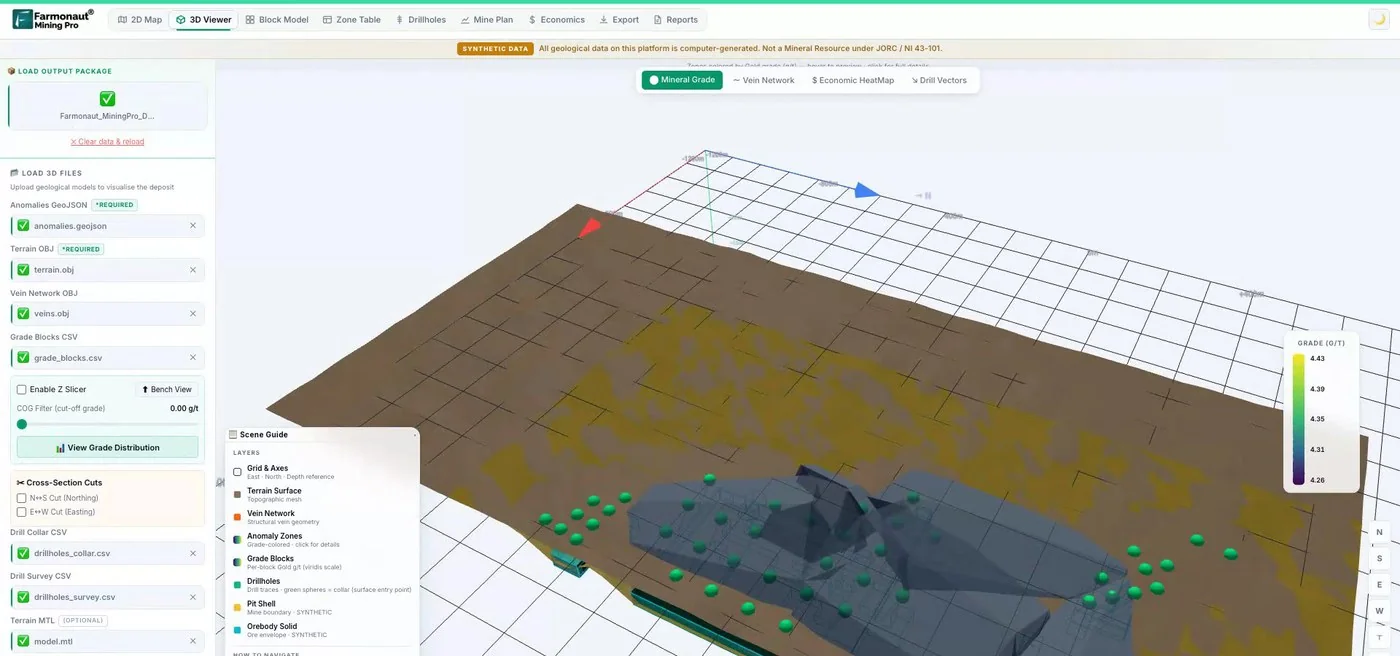
Mining Pro sample view, synthetic data
Keep reading

Sources
- USGS, Mineral Commodity Summaries 2026: Rare Earths: pubs.usgs.gov
- USGS Fact Sheet 2014-3078, Rare earth elements: pubs.usgs.gov
- MP Materials, second quarter 2026 results (6 August 2026): mpmaterials.com
- MP Materials, Department of Defense partnership (10 July 2025): mpmaterials.com
- USA Rare Earth, Form 10-Q for the quarter ended 30 June 2026 (SEC): sec.gov
- Rare Element Resources, Bear Lodge project: rareelementresources.com
- Federal Permitting Council, Bear Lodge FAST-41 coverage: permitting.gov
- American Rare Earths, Halleck Creek project page: americanree.com
- American Rare Earths, Cowboy State Mine scoping study (ASX, 30 September 2026): announcements.asx.com.au
- Ucore Rare Metals, Bokan Dotson Ridge resource update (14 April 2026): newsfilecorp.com
- NioCorp, Elk Creek project: niocorp.com
- Energy Fuels, Q2 2026 results (5 August 2026): investors.energyfuels.com
- Fastmarkets, US demand drives sharp increases in terbium and dysprosium prices (6 October 2026): fastmarkets.com
Discussion
Questions, corrections or field experience? Share them below. First-time comments are reviewed before they appear, and your email is never published.
No comments yet. Be the first to add a question or your experience.

 Vortex Minerals Pty Ltd
 Faith At Work (Pty) Ltd
 Geotech Mining Solutions plc
 Vulcan International Limited
 Kidepo Associates
 GKY Mining
 Alkimy SARL
 Double A Trading
 GemSprout Metals Limited
 Qader Group
 Ileys General Trading
 SG Gold Mining LLC
 VRV Global Pte Ltd
 Omsri International FZE
 G.I.T.T.
 Jaunita Erss Ltd
 Almosi SARL
 SRK Consulting
 Berks Gold Limited
 Mwerezi Minerals Company Limited
 Mining SARL
 SenGold Invest SAS
 Exploration consultancy · South Africa · Gold










