

Farming and society · Evidence guide
Social Impact of Agriculture: 7 Ways It Changed Society
Farming spread settled life from about 12,000 years ago and still provides about a quarter of the world’s jobs. It also leaves hard problems: 645 million people faced hunger in 2025, women earn less in farm wage work, and few EU farm managers are under 40.
Key takeaways
- The rise of agriculture replaced nomadic life with permanent settlements about 12,000 years ago (National Geographic).
- Agriculture’s share of world employment fell from 42.8% in 1991 to 25.8% in 2025 (World Bank modelled estimates).
- An estimated 645 million people faced hunger in 2025, and about 2.7 billion cannot afford a healthy diet (UN food security report, 2026).
- Women earned 82 cents for each dollar men earned in agricultural wage work (FAO, 2023).
- Only 10.7% of EU farm managers were under 40 in 2023, and 61.0% were at least 55 (Eurostat).
In this article
- The social impact of agriculture at a glance
- Qué cambios trae la agricultura a la vida social
- 1. Settled life: the first social change
- 2. Food security and who can get food
- 3. Income, jobs and rural economies
- 4. Health, nutrition and well-being
- 5. Gender roles, culture and land rights
- 6. Land, water and climate as shared risks
- 7. Knowledge sharing and who farms next
- Fewer farmers, fewer rural residents
- What farmers and communities can do
- FAQ
The social impact of agriculture is the way farming shapes how people live together: where they settle, how they divide work, who owns land, who eats well and who stays in rural places. About 12,000 years ago it moved people from nomadic life to permanent settlements, according to National Geographic. Today it still employs about 25.8% of the world’s workers (World Bank modelled estimate, 2025), yet 645 million people faced hunger in 2025, according to the UN’s food security report.
This guide covers seven social impacts, the good and the bad, with dated numbers. It also has charts of farm jobs, rural populations and farm succession, plus a break-even calculator for a community-supported farm. For a shorter look at the same theme, see our page on agriculture and society.
The social impact of agriculture at a glance
The table sums up each impact with one figure and the main trade-off. Each has its own section below.
| Impact | What changes for people | A dated figure | The trade-off |
|---|---|---|---|
| 1. Settled life | Villages, cities, shared rules | Began about 12,000 years ago | Tied people to land and harvests |
| 2. Food security | A more reliable food supply | 645 million hungry, 2025 | Food exists, but not everyone can afford it |
| 3. Income and jobs | Work and rural livelihoods | 25.8% of world jobs, 2025 | Farm income alone often falls short |
| 4. Health and diet | What food costs and what is eaten | 2.7 billion cannot afford a healthy diet (2026 report) | Calories are easier to supply than variety |
| 5. Gender and culture | Who works, owns and decides | 82 cents per male dollar in farm wages | Women carry work without equal rights |
| 6. Land and climate | Soil, water and shared risk | 876 million US farm acres, 2024 | Damage falls on neighbours and later generations |
| 7. Knowledge and succession | Skills passed between generations | 10.7% of EU farm managers under 40 | Few managers are young, so succession is a concern |
Qué cambios trae la agricultura a la vida social
If you searched in Spanish, here is a short answer. La agricultura cambió la vida social porque las personas dejaron la vida nómada y formaron asentamientos permanentes. Con un suministro de alimentos más estable crecieron la población, las aldeas y después las ciudades. También cambiaron el trabajo, la propiedad de la tierra y los papeles de hombres y mujeres. Hoy sigue influyendo en el empleo rural, la alimentación y la vida de las comunidades. The sections below explain each change in English.
1. Settled life: the first social change
What important social impact did the rise of agriculture have? The change most often named is permanent settlement. National Geographic’s account of the Neolithic Revolution says farming replaced hunter-gatherer life with settlements and a reliable food supply, and that cities and civilizations grew out of it.
The change was slow. A study in Scientific Reports found wear on Natufian flint sickle blades from the Southern Levant, dated about 15,000 to 11,700 years ago. It suggests that people were harvesting cereals long before fully domesticated crops appear in the record. Farming also began in several regions. Squash was grown in Mexico around 10,000 years ago, and potato growing in the Andes began some 5,000 years ago.
Settled life changed social life in four ways:
- Place: families stayed near fields and stores, so neighbours became long-term partners.
- Numbers: a steadier food supply let populations grow.
- Property: fields, herds and stored grain could be owned and passed on, and fought over.
- New roles: once some people could feed others, towns had room for work other than farming.
Those shifts were not all gains. Settled people depended on a harvest, and a bad year hit a whole community. That shared risk is still a reason farmers form co-ops, mutual groups and insurance schemes.
2. Food security and who can get food
Farming’s plainest duty to society is feeding it, and the world is not there yet. The State of Food Security and Nutrition in the World estimates that 645 million people faced hunger in 2025. Its 2026 edition says hunger and food insecurity remain far above the 2030 targets, despite gradual improvement in recent years.
The same report points to cost: access depends on what people can pay, as well as on how much food exists. That is why social programmes look at prices, wages and distribution, along with yields.
Local food networks are one small part of the answer. The USDA’s National Agricultural Library describes community supported agriculture (CSA) as a community of people who pledge support to a farm, with growers and consumers sharing the risks and benefits of production. Co-ops and farmers’ markets build similar ties. These links can strengthen trust between town and farm. They do not replace bulk supply chains, and shoppers still need outlets they can reach and afford.
Trust also depends on knowing where food came from. Records that follow a batch from field to shelf help buyers check origin claims and help regulators trace a food safety problem back to its source.
What a CSA share has to earn
A CSA turns a social idea into a budget. Members pay up front, which gives the grower cash before harvest. The share price still has to cover growing costs and fixed costs. The USDA’s research page on local foods lists studies on the market and on how local food producers perform financially, and its library page lists grower guides. Use the calculator below to test your own numbers. All the default values are examples set near break-even, not benchmarks.
Try the numbers for your own farm below.
Calculator
CSA break-even calculator
Enter your own member numbers, share price and costs.
- Member income (US$): 36,000 US$
- Total costs (US$): 35,400 US$
- Members needed to break even: 58 members
Example values only, set near break-even; they are not benchmarks or forecasts. Share price is an example, use today’s price in your area. Include your own pay in fixed costs. If the share price does not exceed the cost per share, no member count breaks even, so ignore that line. Get local financial and tax advice before setting prices.
3. Income, jobs and rural economies
Farm work has shrunk as a share of jobs in almost every economy. The World Bank’s modelled estimates put agriculture at 42.8% of world employment in 1991 and 25.8% in 2025. In the United States the share fell from 2.9% to 1.5% over the same period. These are modelled figures, so treat them as a guide to direction and scale.
Chart
Share of workers employed in agriculture
Percent of total employment, modelled estimates
The USDA’s Economic Research Service (ERS) explains the American version of this story. Self-employed and family farmworkers fell from 7.60 million in 1950 to 2.06 million in 2000, and hired workers fell from 2.33 million to 1.13 million. ERS links the decline from 1950 to 1990 to mechanization and rising productivity, and says employment levels have stabilized since 1990. Farms fell too, from a peak of 6.8 million in 1935 to 1.88 million in 2024.
Fewer farm jobs does not mean farming stopped mattering. Agriculture, food and related industries contributed about US$1.537 trillion to US GDP in 2023, a 5.5% share, while farms alone contributed 0.8%, according to ERS. Much of the economic link now runs through processors, stores and restaurants, and many of those jobs are far from the field.
Three facts show how uneven the farm economy can be:
- Farm structure: family farms were 97% of US farms in 2024. Small family farms were 86% of all farms, while large-scale family farms were about 5% of farms and 50% of production value (ERS).
- Household income: ERS forecasts median total farm household income at US$108,460 for 2026. Median income from the farm itself is forecast at -US$467, and median off-farm income at US$93,975. Many households depend on income from off the farm.
- Rural poverty: nonmetro US poverty was 15.4% in 2019, against 11.9% in metro areas (American Community Survey, reported by ERS). Rural poverty also has causes well beyond farming.
Co-ops, farmer groups and secure land rights are common tools for spreading gains more widely. Crop insurance and credit matter too, because one lost season can decide whether a family keeps its land. Before signing any loan or policy, get advice from a qualified local adviser.
Chart
Number of US farms
Millions of farms: 1935 peak, 2017 census and 2024 survey
4. Health, nutrition and well-being
Farming choices reach people’s plates through price and variety. Healthy diets are unaffordable for about 2.7 billion people, according to the 2026 UN report, which looks at the structural drivers behind their high cost. The figure matters to farmers because what is grown, how far it travels and how much is lost along the way all feed into the shelf price.
Spending shows the other side. ERS reports that US households spent 12.9% of their budgets on food in 2024, on average, down from 13.3% in 2004. Food ranked third after housing and transportation. An average hides large differences, though, and low-income households feel a price rise far more.
Farming also affects the health of the people who live and work near it. Dust, machinery, long hours, and pesticide handling are daily concerns on many farms. Good habits reduce the risk: train every worker, store chemicals safely and keep records. Always check the product label and local rules before using any pesticide or fertilizer, and get professional advice if you are unsure.
Community ties are part of well-being as well. On-farm visits, school garden links and shared markets give people who never work on a farm some contact with where their food comes from. These benefits are hard to measure, so be careful with any page that puts a precise number on them.
5. Gender roles, culture and land rights
Farming helped shape ideas about men’s and women’s work, and some of those ideas have lasted for centuries. Alesina, Giuliano and Nunn (National Bureau of Economic Research, 2011) found that descendants of societies that traditionally used the plough today have lower female participation in the workplace, politics and entrepreneurship, and more attitudes favouring gender inequality.
The present-day gaps are measured by FAO’s The Status of Women in Agrifood Systems (2023):
- 36% of working women and 38% of working men worked in agrifood systems in 2019.
- Women earned 18.4% less than men in agricultural wage work, or 82 cents for each dollar.
- The land productivity gap between female-managed and male-managed farms of the same size was 24%.
- In more than 40% of reporting countries, the share of men with ownership or secure tenure over farmland is twice that of women.
FAO estimates that closing the farm productivity and wage gaps would raise global GDP by about 1%, or nearly US$1 trillion, and cut the number of food-insecure people by 45 million. These are model estimates, not forecasts of what any one policy would deliver.
In Europe, the numbers are moving slowly. Eurostat reports that women were 31.5% of EU farm managers in 2023, up from 28.3% in 2010.
Culture travels with farming too. Harvest festivals, shared labour, seed saving and family stories about the land all tie generations together. When farms close, a community can lose that shared memory as well as the jobs.
6. Land, water and climate as shared risks
A farm’s soil and water decisions rarely stay inside the fence. Runoff reaches a neighbour’s well, eroded soil fills a ditch, and a dry year hits the suppliers and shops in town. That makes care of land a social issue as well as a technical one. ERS counts 876 million acres in US farms in 2024, down 3% from 900 million acres in 2017, so the choices of 1.88 million farms touch a large share of the country.
▶ Seven simple ways to protect soil and water, told with memes. · 4:34
Practical steps include crop rotation, cover crops, careful irrigation and buffer strips along streams. Our other guides cover these in more detail, including soil health practices, water management, resource stewardship and protecting water sources.
Climate risk is shared in the same way. Heat, drought and floods can cut income across a whole district in one season. Communities that plan together tend to have more options: shared water plans, seed and feed reserves, and agreed contacts for an emergency. FAO’s 2023 report adds that shocks hit women’s livelihoods harder, because they have fewer assets and savings to draw on.
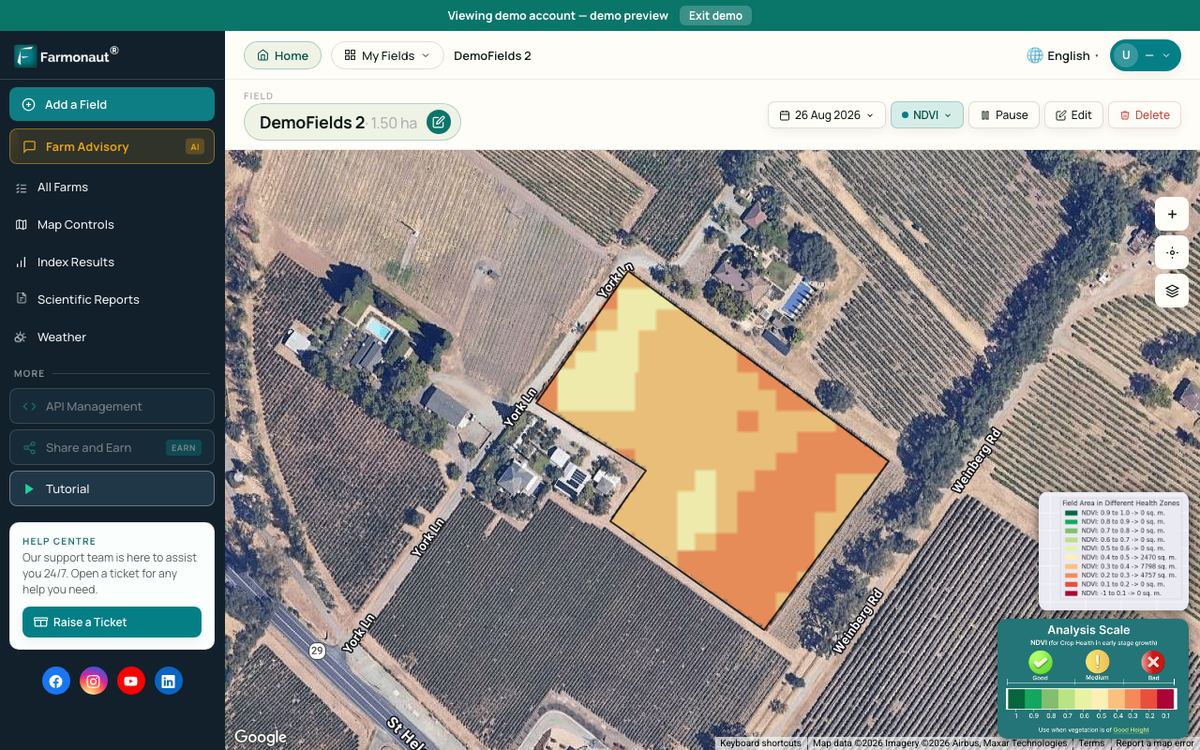
Monitoring helps a group act early. Satellite vegetation maps can show which fields are under stress before the damage is obvious from the road. Farmonaut offers this kind of field monitoring, and a shared map can give a co-op or a farmer group a common picture of a dry spell. It supports local knowledge and does not replace it.
7. Knowledge sharing and who farms next
Farming knowledge has always moved from person to person: parent to child, neighbour to neighbour, adviser to grower. That chain is under strain. Eurostat reports that just 10.7% of EU farm managers were under 40 in 2023, while 61.0% were at least 55. Young managers were more likely to have full agricultural training: 20.1%, compared with 4.1% of those over 65.
Chart
Farm managers under 40
Percent of farm managers, 2023, the highest and lowest EU shares
Succession is a social issue because a farm with no successor can mean a sale, a merger or a closure, and each changes who lives in a place. The US runs a Beginning Farmer and Rancher Development Program through the National Institute of Food and Agriculture, which funds training for new growers.
Fair access matters here. Farmer-to-farmer groups, extension services and open data all work best when new, small and minority growers can use them as well as the largest operators. Four habits help a community pass on what it knows:
- Write down field history, not only yields, so a successor knows what was tried.
- Pair a new grower with an experienced one for at least a full season.
- Agree a succession plan early, with legal and financial advice.
- Share local trial results through a group, so one farm’s lesson reaches many.

▶ Why soil carbon matters for farmers and everyone else. · 12:15
Fewer farmers, fewer rural residents
A long-run result of all this is a smaller rural population. ERS notes that early 20th century US farming took place in rural areas where more than half the population lived, and that today’s takes place in areas with less than a fourth. World Bank data shows that the world’s rural share fell from 56.8% in 1991 to 42.2% in 2025.
Chart
Rural share of the population
Percent of people living in rural areas, 1991 and 2025
The pace varies. Brazil and South Africa changed quickly, while Germany barely moved. Fewer residents can mean fewer schools, clinics and shops within easy reach, which in turn makes farming families harder to keep. Rural towns depend on far more than farming, and a shrinking town has many causes, so a chart like this shows a pattern and not a single cause.
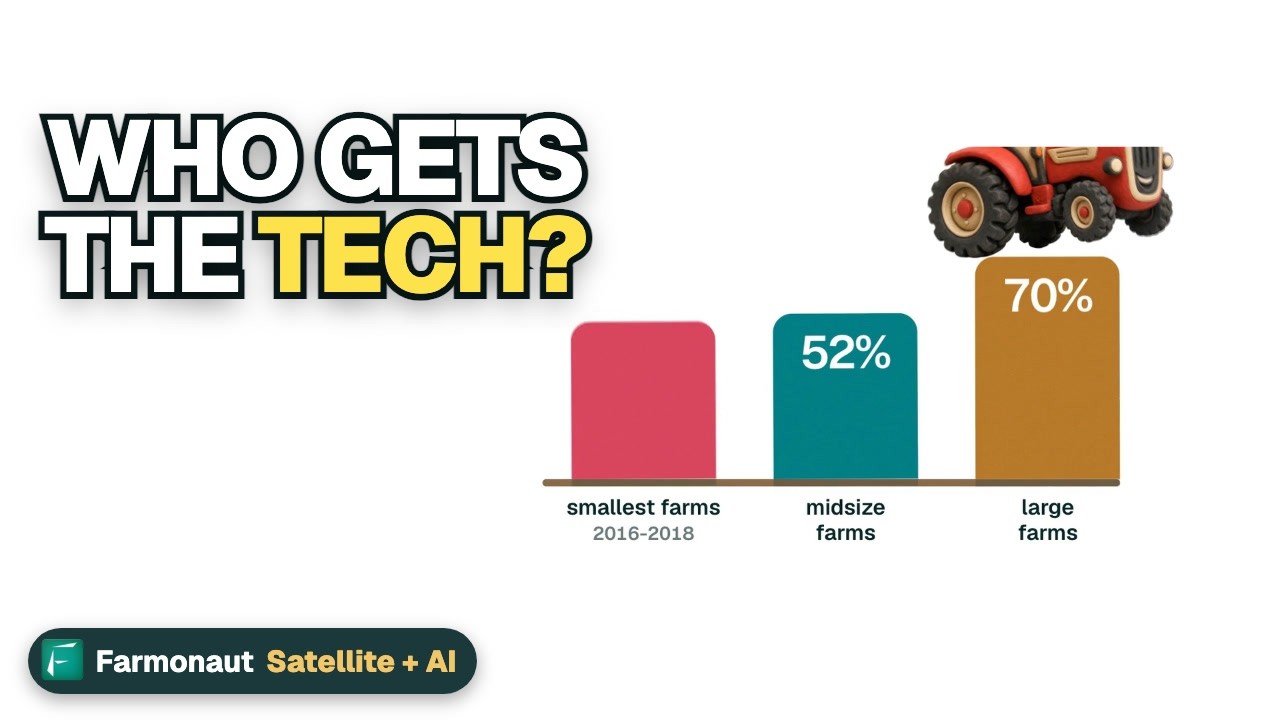
▶ What farm technology means for rural towns: money, jobs and internet. · 3:50
What farmers and communities can do
Most of the seven impacts come down to local choices. A practical starting list:
- Farm owners: keep field and labour records, write a succession plan and review who holds title to the land.
- Co-ops and groups: share water plans, input buying and market access. Open membership to new and women growers.
- Local government: keep rural services and broadband in the plan, and include farmers early in climate planning.
- Buyers and shoppers: ask for origin records, and back local outlets where they fit your budget.
Related pages on our site: carbon footprint tracking, food traceability, crop loan and insurance checks, climate-smart farming tips, large-scale farm management, fleet management, web and mobile apps, satellite data API and developer docs.
FAQ
What is the social impact of agriculture?
It is the effect of farming on how people live together. That covers settlement, jobs, income, diet, gender roles, land rights and rural community life. The effects are mixed: farming supports billions of people, yet hunger, wage gaps and rural decline persist.
What important social impact did the rise of agriculture have?
It led people to give up nomadic life and live in permanent settlements. A more reliable food supply allowed populations to grow, and cities and civilizations developed from there, as National Geographic’s history of farming explains.
What does “soc agriculture” mean?
It is not a standard technical term. On this page it is shorthand for the social side of agriculture. In soil science, SOC usually means soil organic carbon, which is a different subject.
How does agriculture affect people today?
It provides about a quarter of the world’s jobs on World Bank modelled estimates, shapes food prices, and affects soil and water for neighbours. In wealthy countries, few people farm directly, but many work in the food businesses that depend on farms.
Why are there fewer farmers than before?
ERS links the long US decline to mechanization, rising productivity and more job options outside farming. Age is now a concern as well: in the EU, 61.0% of farm managers were at least 55 in 2023.
Is community supported agriculture profitable?
It depends on the share price, the number of members and costs, and results vary between farms. Upfront payments help with cash flow, but they do not guarantee a profit. Test your own figures in the calculator above and check them with a local adviser.
Farmonaut crop monitoring
See your own fields from space
Draw your fields once and Farmonaut shows satellite vegetation maps for them through the season, on web, Android or iOS.



Sources
- National Geographic Education, The Development of Agriculture: education.nationalgeographic.org
- Scientific Reports (2026), Natufian sickle blades reveal cereal cultivation before domestication: pmc.ncbi.nlm.nih.gov
- FAO and partners, The State of Food Security and Nutrition in the World 2026: fao.org
- FAO, The Status of Women in Agrifood Systems (2023): fao.org
- Alesina, Giuliano and Nunn, On the Origins of Gender Roles: Women and the Plough, NBER Working Paper 17098 (2011): nber.org
- World Bank, Employment in agriculture (% of total employment), modelled ILO estimate: data.worldbank.org
- World Bank, Rural population (% of total population): data.worldbank.org
- USDA ERS, Farm Labor: ers.usda.gov
- USDA ERS, Farming and Farm Income: ers.usda.gov
- USDA ERS, Ag and Food Sectors and the Economy: ers.usda.gov
- USDA ERS, Farm Household Income Forecast: ers.usda.gov
- USDA ERS, Rural Poverty and Well-Being: ers.usda.gov
- USDA ERS, Local Foods: ers.usda.gov
- USDA National Agricultural Library, Community Supported Agriculture: nal.usda.gov
- USDA NIFA, Beginning Farmer and Rancher Development Program: nifa.usda.gov
- Eurostat, Farmers and the agricultural labour force, statistics: ec.europa.eu
Discussion
Questions, corrections or field experience? Share them below. First-time comments are reviewed before they appear, and your email is never published.
No comments yet. Be the first to add a question or your experience.

 Kisanwala
 Agro La Gándara
 Global Agrifood
 HIPSAC
 ZOL Zimbabwe
 Juligerm
 AdBio
 MISE Maroc
 NWNS
 Red August Group
 Farm Inc
 WeMe Global
 Agrotoken
 Blue BearX
 Insignito
 Croptimum
 DnCubed
 Field Capacity
 Indosistim Teknologi

 Licence holder · Niger · Gold
 Licence holder · Nigeria · Gold + lithium
 Client · Somalia · Gold
 Client & affiliate partner · Ghana · Gold










