

Mineral Asset Valuation: Methods, Standards & Tools
Reviewed September 2026 against CIM Standards (CIMVAL), VALMIN Code, and World Bank Commodity Markets Outlook.
Try it: Run your own numbers →
Mineral asset valuation estimates economic worth of a mineral property using discounted cash flow (DCF) against a finite mine life, following codes like CIMVAL (Canada, 2019 edition) or VALMIN (Australasia, 2015 edition). Mineral separation splits valuable minerals from waste rock, with flotation the most widely used method for polymetallic ore; recovery rates in beneficiation range 20–75% depending on ore and technology. Both feed the same decision: is this deposit worth developing, and at what recovery is it profitable.
What Mineral Asset Valuation and Separation Actually Mean
“AI-driven mineral separation is projected to boost mining efficiency” is the kind of claim that gets repeated without a source. Here is what is actually documented: mineral asset valuation is a regulated discipline with published codes (CIMVAL, VALMIN, NI 43-101 disclosure rules), and mineral separation is a physical process (flotation, gravity, magnetic, sensor sorting) with measurable recovery rates. Confusing the two — or worse, treating valuation as a single output number — is the most common error in mining feasibility reviews.
This article covers both disciplines as they are actually practiced: what a mineral asset inventory contains, which valuation method applies to which project stage, how separation efficiency is measured, and where financial efficiency evaluation methods intersect with extraction economics. Where a benchmark figure is not publicly available — separation efficiency by exact commodity, for instance — that gap is stated directly rather than filled with an invented percentage.

Watch: Rare Earth Boom — AI, Satellites & Metagenomics Redefine Canadian Critical Minerals
Mineral Asset Valuation: Standards, Methods, Inputs
Mineral asset valuation is the process of estimating economic value of mineral resources and reserves for investment, financing, mergers, acquisitions and regulatory disclosure. Unlike valuing a going-concern business, mineral asset valuation must account for a finite mine life — the deposit runs out, so a perpetual-growth model is the wrong tool. This constraint is written directly into NI 43-101 and CIMVAL guidance for Canadian public disclosure.
- Why finite life matters: A DCF model for a mine forecasts cash flow only across the years reserves support production, then terminates. Any valuation that ignores depletion overstates asset worth.
- Who regulates this: In Canada, public mineral project disclosure follows NI 43-101, administered through provincial securities commissions including the Ontario Securities Commission. Valuation methodology specifically follows the CIMVAL Code (2019 edition), published by the Canadian Institute of Mining, Metallurgy and Petroleum.
- Australasian equivalent: The VALMIN Code (2015 edition), from the AusIMM/AIG Joint Committee, governs mineral asset valuation and reporting for Australian and New Zealand listed entities.
- Try it: Run your own numbers



Access real-time mineral asset valuation, mineral separation and mining data through Farmonaut’s web and mobile applications.
DCF, NPV and the Standards Bodies
Discounted cash flow is the primary mineral asset valuation method, and net present value (NPV) is the standard resulting metric for hard-rock mining assets, according to Resource Capital Funds’ mining valuation guidance. The mechanics: forecast annual cash flow across the finite mine life (revenue from recovered mineral at forecast prices, minus operating cost, capital cost and taxes), discount each year back to present value at a chosen rate, sum the result.
- Inputs that drive the number: commodity price forecast, recoverable tonnage and grade, recovery rate from separation/beneficiation, operating cost per tonne, discount rate, and mine life in years.
- Commodity price direction: the World Bank’s Commodity Markets Outlook projects precious metals prices growing roughly 5% in 2026 — a single macro input among several a DCF model needs, not a substitute for project-specific forecasting.
- Discount rate: the research available does not point to a single regulatory-mandated discount rate for US or Canadian mineral DCF models; rate selection is project-specific and disclosed in the technical report itself. If you are building or reviewing a valuation, the discount rate assumption should be stated explicitly in the NI 43-101 or CIMVAL-compliant technical report — request it rather than assume a standard figure.
- Where alternative methods apply: CIMVAL and VALMIN both recognize market-based (comparable transactions) and cost-based (appraised value) approaches alongside income-based DCF, used mainly for early-stage exploration properties that lack cash-flow-supporting reserves.
Did you know? CIMVAL explicitly separates “Mineral Asset” valuation from “Mineral Property” valuation — the asset value includes the property plus all related plant, equipment and permits, while property value is the ground alone. Mixing the two inflates reported project value.
Boost transparency and compliance in your mining projects with Farmonaut Traceability solutions — secure the authenticity and oversight your operations demand, from mineral asset valuation to delivery.

Watch: Arizona Copper Boom — AI Drones, Hyperspectral & ESG Tech Triple Porphyry Finds
Mineral Asset Inventory: What Belongs In It
A mineral asset inventory is the structured record of every deposit, property, permit and associated infrastructure a company holds or controls — it is the input list a valuation is built from, not the valuation itself. A complete inventory entry for one deposit includes:
- Resource classification: measured, indicated or inferred, per the reporting code governing the jurisdiction (NI 43-101 for Canada, JORC for Australia).
- Tonnage and grade: total contained tonnes and average grade by resource category, updated as new drilling data arrives.
- Legal and permit status: ownership structure, mineral rights, environmental permits, and any land-use or Indigenous consultation obligations.
- Infrastructure and plant: processing plant capacity, tailings storage, power and water access — items CIMVAL counts as part of “mineral asset” value beyond raw ground.
- Separation/recovery data: historical or test-work recovery rates by method, since this directly scales recoverable tonnage into the DCF model above.
Best-practice adoption rates for structured mineral asset inventories across the US and Canadian industry are not published in a single tracked benchmark; the closest proxy is compliance with NI 43-101 technical report filings, searchable through SEDAR+ for any Canadian-listed issuer.
Mining Separation: How Beneficiation Recovers Value
Mineral separation — also called beneficiation or mineral processing — is the step that turns mined ore into a saleable concentrate by removing waste rock (gangue). Recovery rate, the percentage of valuable mineral carried into the final concentrate, is the production-efficiency metric that connects the plant floor back to the DCF model: a lower recovery rate means less payable metal per tonne mined, which lowers project NPV directly.
- Flotation: the most widely used beneficiation technology for polymetallic ore, per mineral processing industry literature — reagents attach to target mineral particles, which float to the surface for skimming while gangue sinks.
- Recovery efficiency range: separation efficiency in mineral beneficiation runs from 20% to 75% depending on ore mineralogy and process, illustrated by kaolin recovery operations in the technical literature. This is a wide range precisely because recovery is mineral- and deposit-specific — there is no single industry-average figure that applies across commodities.
- Gravity and magnetic separation: used where density or magnetic susceptibility differences between target mineral and gangue are large enough to separate without chemical reagents — lower reagent cost, but narrower applicability than flotation.
Optimize mining logistics and reduce operational costs with Farmonaut Fleet Management — the definitive resource management solution for tracking vehicles, machinery, and assets across your mining projects.
Separation Technology Trends
- Sensor-Based Ore Sorting: X-ray fluorescence and infrared spectroscopy separate ore from waste at the extraction site, before material ever reaches the flotation circuit — cutting downstream energy and reagent load.
- Process control automation: continuous adjustment of separation parameters (reagent dosing, air flow, residence time) against real-time ore feed characteristics, aimed at holding recovery rate steady as feed grade varies.
- Reagent substitution: shift toward lower-toxicity flotation reagents, driven by tailings-disposal permitting requirements rather than recovery-rate improvement alone.
- Bioleaching: microbial processing for mineral liberation, applied mainly to low-grade or refractory ore where conventional flotation recovery is poor.
Separation efficiency benchmarks broken out by specific beneficiation technology (flotation vs. gravity vs. magnetic vs. leaching, by commodity) are not consolidated in a single public dataset. To get a number for a specific ore type, request bench-scale or pilot-plant test-work recovery data from a metallurgical laboratory — this is standard practice ahead of any CIMVAL or VALMIN-compliant valuation, since the technical report will require it regardless.
Monitor, analyse & report environmental impact for ESG-driven mineral asset valuation, mineral separation and mining operations with Farmonaut Carbon Footprinting. Achieve responsible extraction and improved regulatory compliance.

Watch: Satellite Mineral Exploration | AI Soil Geochemistry Uncover Copper & Gold in British Columbia
Financial Efficiency Evaluation Methods for Mineral Extraction
Financial efficiency evaluation for a mineral extraction project layers on top of the DCF/NPV valuation covered above, using metrics that isolate how well capital and operating spend convert into recovered value:
- NPV per tonne processed: normalizes project value against throughput, useful for comparing operations of different scale.
- Internal rate of return (IRR): the discount rate at which project NPV equals zero — used alongside NPV to judge whether a project clears a company’s minimum acceptable return.
- Payback period: years of cash flow required to recover initial capital expenditure, a simpler but widely requested efficiency check by project financiers.
- Recovery-adjusted unit cost: operating cost per tonne processed divided by recovery rate, which is the true cost per unit of payable metal actually recovered rather than per tonne fed into the plant.
Operating cost benchmarks in dollars per tonne processed, broken out by commodity and by US/Canadian region, are not available from the sources checked for this article. The reliable way to get this figure for a specific project is the operating cost section of its NI 43-101 or equivalent technical report, or a direct quote from a metallurgical/engineering consultancy scoping the same ore type.
Comparison: Valuation Methods vs. Separation Technologies
| Category | Method/Technology | Governing Standard or Source | Best Used For |
|---|---|---|---|
| Valuation | Discounted Cash Flow / NPV | CIMVAL (2019), VALMIN (2015) | Projects with defined reserves and finite mine life |
| Valuation | Market-based (comparable transactions) | CIMVAL, VALMIN | Early-stage exploration without cash-flow support |
| Disclosure | Technical report filing | NI 43-101 (Canada) | Public company mineral project disclosure |
| Separation | Flotation | Mineral processing industry standard | Polymetallic ore, most widely applicable |
| Separation | Sensor-based sorting | Pre-concentration technique | Coarse waste rejection ahead of flotation |
| Separation | Bioleaching | Emerging, ore-specific | Low-grade or refractory ore |
Table: Valuation methods pair with governing standards; separation technologies pair with ore characteristics. Neither list substitutes for a project-specific technical report.

Watch: Arlington Gold Hunt — AI DCIP, Hyperspectral & LIDAR Reveal BC High-Grade Zones
Tool: Mineral Asset DCF/NPV Estimator
Enter your own project figures below to see a simplified NPV, built on the DCF method CIMVAL and VALMIN both use as the primary income-based valuation approach.
Run your own numbers
Assumptions: straight-line annual cash flow (no ramp-up/ramp-down years), no taxes, no capital expenditure deduction, constant price and cost across mine life. This is a simplified income-approach estimate for exploration purposes only — it does not replace a CIMVAL or VALMIN-compliant technical report and excludes sustaining capital, closure cost, and price escalation.
Data Inputs: Satellite, API, Traceability
Every valuation input above — tonnage, grade continuity, site infrastructure status — depends on data quality. Farmonaut supplies the monitoring layer that feeds mineral asset inventories and ongoing valuation updates:
- Satellite-Based Monitoring: multispectral data for site condition, land disturbance extent, and environmental baseline tracking that feeds ESG sections of a valuation report.
- Farmonaut API for mineral asset valuation, mineral separation & mining data and API Developer Docs for direct integration into internal valuation or inventory systems.
- AI-Driven Advisory: Jeevn AI system provides mining strategy recommendations from real-time satellite inputs.
- Blockchain-Enabled Traceability: supply-chain accountability documentation that supports the compliance side of asset valuation disclosure.
- Fleet & Resource Management: tracking that feeds the operating-cost inputs used in financial efficiency evaluation.
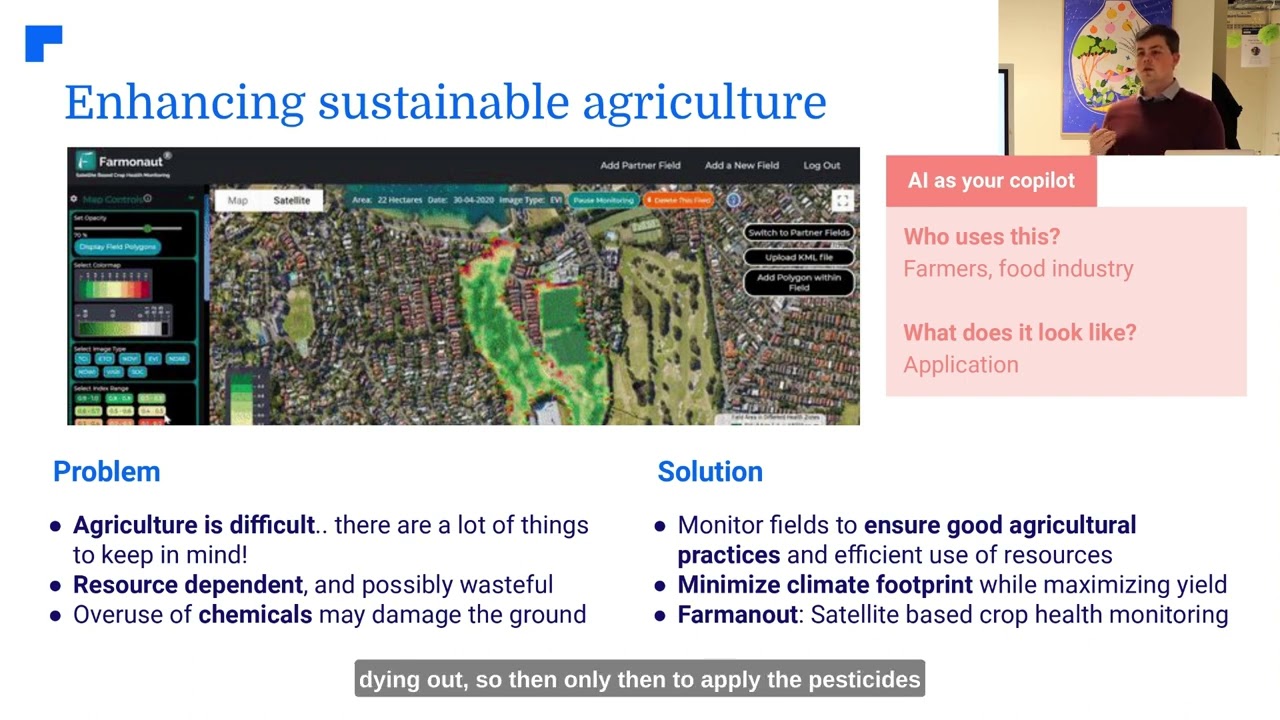
Watch: Farmonaut Covered By Radix AI: Leveraging Remote Sensing and Machine Learning for a Greener Future

Watch: Farmonaut’s Tech Advancements
Compliance, ESG and Financing
Mineral asset valuation and mineral separation are directly linked to regulatory disclosure and financing outcomes. A technical report that cannot demonstrate recovery-rate test work, resource classification aligned to NI 43-101/CIMVAL categories, and environmental permit status will face financing delays regardless of the underlying deposit quality.
- Traceable, auditable process data supports both regulatory filing and lender due diligence.
- Recovery-rate documentation ties separation performance directly into the DCF inputs a lender or acquirer will scrutinize.
- Ongoing inventory updates as drilling and metallurgical test work progress keep the valuation defensible over the project’s life, not just at initial filing.
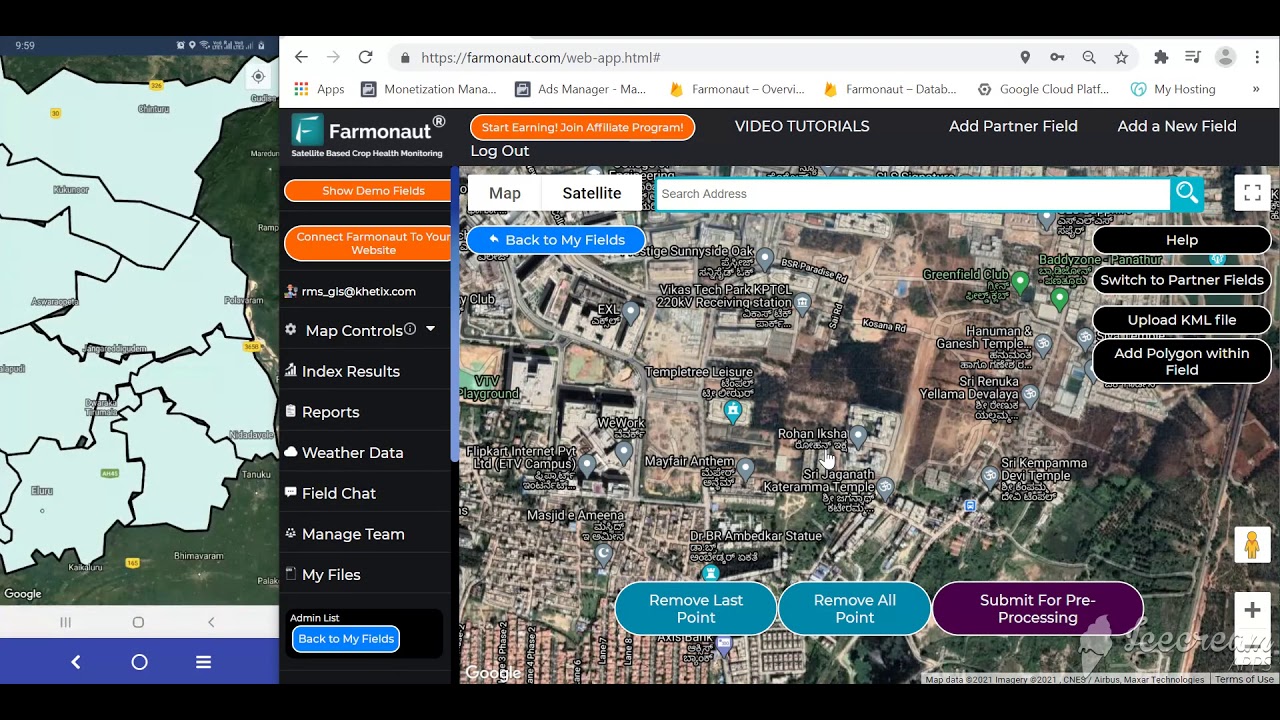
Watch: Farmonaut Large Scale Field Mapping & Satellite Based Farm Monitoring | How To Get Started
Simplify loan approval and insurance compliance for mining resource development with Farmonaut’s Satellite Verification, cutting fraud and speeding up financing for advanced, sustainable asset management.
Seamlessly manage expansive mining sites, automate asset monitoring, and optimize resources with Farmonaut’s Large Scale Management Dashboard. Our platform supports operational efficiency for the largest mineral and resource extraction projects.

Watch: Farmonaut® Satellite Based Crop Health Monitoring (Also applicable to mining site health assessment with similar sensing tech)
FAQ
- What is mineral asset valuation?
Estimating economic value of mineral resources and reserves, generally via discounted cash flow against a finite mine life, following codes like CIMVAL (Canada) or VALMIN (Australasia). Used for investment decisions, financing, mergers, acquisitions and regulatory disclosure. - What is a mineral asset inventory?
The structured record of a company’s deposits, resource classifications (measured/indicated/inferred), tonnage and grade, permits, infrastructure, and recovery test-work data — the input set a valuation is built from. - What is mining separation / mineral separation?
The process of separating valuable minerals from waste rock (gangue) after mining, using methods like flotation, gravity, magnetic separation, or sensor-based sorting. Flotation is the most widely used method for polymetallic ore. - What recovery rate should I expect from beneficiation?
Recovery rates in mineral beneficiation range from 20% to 75% depending on ore mineralogy and process, per technical literature on kaolin and similar operations. There is no single figure that applies across all commodities — request test-work data specific to your ore. - Which financial efficiency evaluation methods apply to mineral extraction?
NPV per tonne processed, internal rate of return (IRR), payback period, and recovery-adjusted unit cost (operating cost per tonne divided by recovery rate) are the standard efficiency metrics layered on top of a base DCF valuation. - Where do I find the current discount rate or operating cost benchmarks?
Neither is published as a single standard figure for US/Canadian mining. Both are project-specific and disclosed in the operating cost and valuation assumptions sections of an NI 43-101 or CIMVAL/VALMIN-compliant technical report — request that document directly.
Summary and How to Keep This Current
Mineral asset valuation runs on DCF and NPV against a finite mine life, governed by CIMVAL in Canada and VALMIN in Australasia, disclosed publicly under NI 43-101. Mineral separation feeds the recovery-rate input directly into that valuation, with flotation the dominant technology and recovery ranging 20–75% by ore type. A mineral asset inventory is the structured record connecting the two: resource classification, tonnage, grade, permits, and recovery test work.
Durable checklist for reviewing any mineral asset valuation, now or later: (1) confirm the mine life is finite and stated, not a perpetuity assumption; (2) confirm which code the report follows — CIMVAL, VALMIN, or another jurisdiction’s equivalent — and check its current edition at the standards body’s own site rather than assuming the version cited here still applies; (3) confirm recovery rate is backed by test work, not assumed; (4) confirm discount rate and commodity price assumptions are stated explicitly, and check the World Bank’s Commodity Markets Outlook (released quarterly) for the latest price-forecast direction before relying on any figure here.
At Farmonaut, we supply the satellite, AI and blockchain data layer that keeps mineral asset inventories and valuations current across the life of a mining project.
Farmonaut Subscription Plans for Mining Operations
Ready to unlock the full potential of satellite-driven mineral asset valuation, mineral separation, and resource management? Discover our affordable scalable subscription plans:
Experience the future of mineral asset valuation, mineral separation, and sustainable mining. Try Farmonaut today.
Discussion
Questions, corrections or field experience? Share them below. First-time comments are reviewed before they appear, and your email is never published.
No comments yet. Be the first to add a question or your experience.

 Mine4Africa
 Lithspo Minerals Limited
 Tintina Mining Group
 Dalgety Minerals Pty Ltd
 Vortex Minerals Pty Ltd
 Faith At Work (Pty) Ltd
 Geotech Mining Solutions plc
 Vulcan International Limited
 Kidepo Associates
 GKY Mining
 Alkimy SARL
 Double A Trading
 GemSprout Metals Limited
 Qader Group
 Ileys General Trading
 SG Gold Mining LLC
 VRV Global Pte Ltd
 Omsri International FZE
 G.I.T.T.
 Jaunita Erss Ltd
 Almosi SARL
 SRK Consulting
 Berks Gold Limited
 Mwerezi Minerals Company Limited

 Exploration consultancy · South Africa · Gold










