

Aquaponics · US grants and farm economics
Grants for Aquaponics and Profit per Square Foot
No US grant is made only for aquaponics, but SARE farmer grants (up to $35,000), USDA urban grants, state programmes and FSA Microloans (up to $50,000) all fund aquaponic farms. Here are their limits, real start-up costs and payback times, and a profit-per-square-foot calculator.
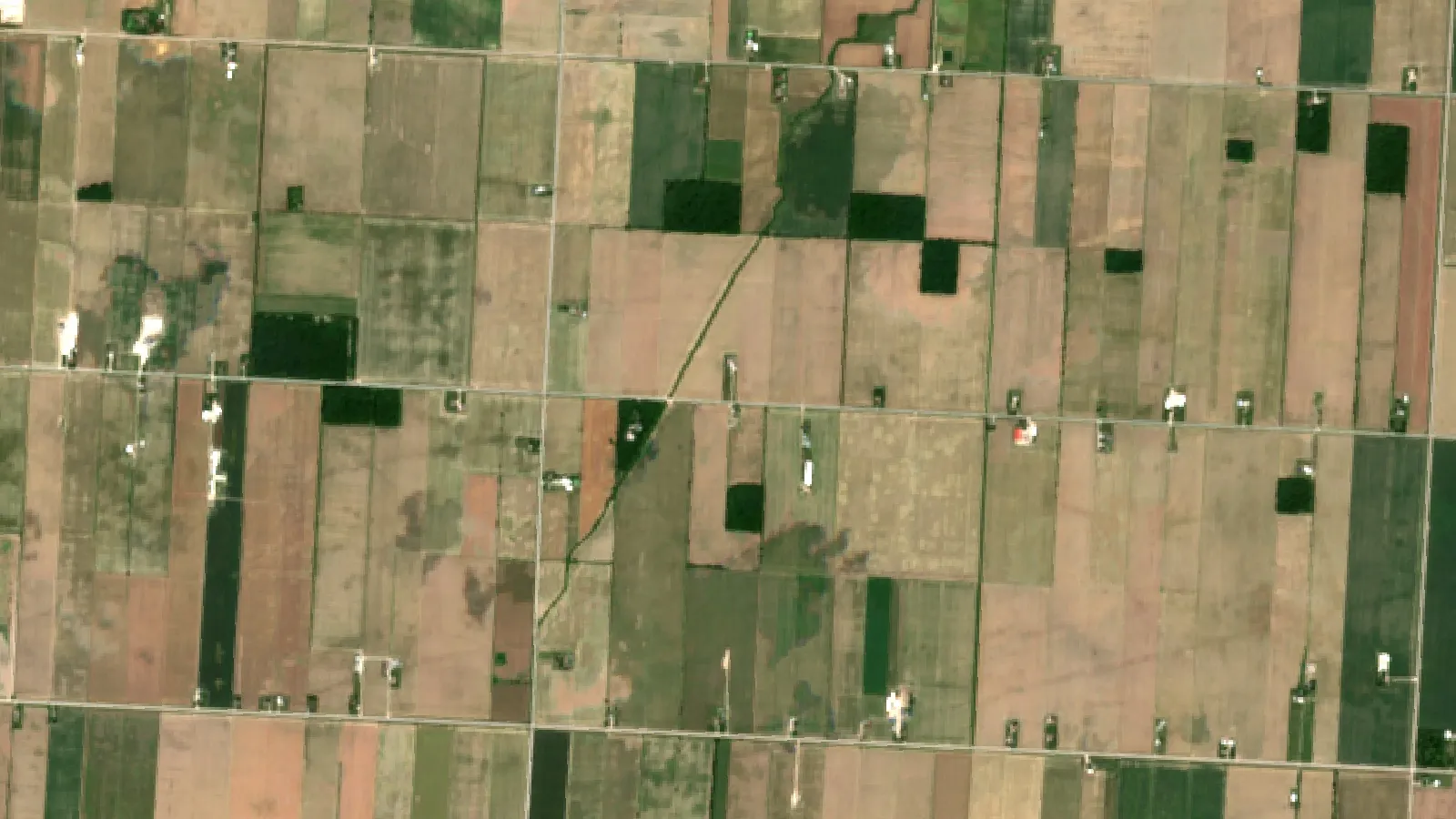
Key takeaways
- Western SARE Farmer/Rancher grants go up to $35,000; North Central SARE offers $15,000 for one farm or $30,000 for a team; Northeast SARE’s 2026 call offered up to $30,000.
- USDA urban agriculture grants list aquaponic facilities as eligible urban agriculture but often go to groups, cities and schools (farmers.gov).
- FSA Operating Microloans of up to $50,000, repaid over one to seven years, can pay for equipment, stock, feed and supplies (USDA FSA).
- In a SARE-funded survey about 46% of commercial aquaponic producers reported a profit in the past 12 months; three modelled US systems paid back in 1.9 to 3.4 years.
- A 2015 survey of 257 operations linked profit to warmer climates, sales of at least $5,000, aquaponics as main income and non-food sales (Love et al., Aquaculture).
In this article
- Grants for aquaponics at a glance
- Which US programmes fund aquaponic farms
- Loans that often come before a grant
- How to write a stronger aquaponics grant application
- Aquaponics profit per square foot: what the data shows
- Startup costs and payback for three real systems
- Estimate your own profit per square foot
- What drives profit in an aquaponic farm
- Running the system: feed, water and records
- How we checked the numbers
- FAQ
There is no US federal grant made only for aquaponics, but several programmes fund aquaponic farms. The main grants for aquaponics are SARE farmer research grants of up to $35,000 in the West and $15,000 to $30,000 in other regions, USDA urban agriculture grants for groups and city projects, and state urban farm grants. Many growers start with a loan instead: an FSA Operating Microloan of up to $50,000.
Profit is the harder part. In a SARE-funded survey of commercial growers, about 46% said their aquaponic business made a profit in the past 12 months. This guide lists the grant and loan options with their limits, shows startup costs and modelled payback times for three commercial systems, and gives you a calculator to test profit per square foot with your own numbers.
Grants for aquaponics at a glance
The table sums up the main US options. Each one has its own section below with the source behind it. Amounts are the upper limits stated by each programme; awards are competitive and many applicants get less or nothing.
| Programme | Type | Upper limit | Who applies |
|---|---|---|---|
| Western SARE | Farmer research grant | $35,000 | Producer with a technical adviser |
| North Central SARE | Farmer research grant | $15,000 single farm, $30,000 team | Farmers and ranchers |
| Northeast SARE | Farmer grant | $30,000 | Farmers |
| USDA urban grants | Planning and building grants | Varies by round | Groups, cities, schools, non-profits |
| NIFA BFRDP | Training grant | Varies by round | Networks of organisations |
| State programmes | Urban farm grants | Varies by state | Farms, groups, schools |
| FSA Microloan | Loan, not a grant | $50,000 | Small and new farms |
Which US programmes fund aquaponic farms
Aquaponic farms do not have a grant line of their own. They compete in programmes for sustainable, urban or innovative farming. That changes how you write the application: reviewers score the farming question, the outreach and the budget, not the fact that you raise fish and plants together.
SARE Farmer/Rancher grants
Sustainable Agriculture Research and Education (SARE) pays producers to test a new practice on their own farm and share what they learn. It is the closest thing to a direct grant for an individual aquaponic grower. The money is for research and outreach, not for general start-up costs.
- Western region. Western SARE says producers may apply for up to $35,000, working with a technical adviser on a project of one to three years. Its page showed the call as closed, opening again in 2027, when we read it in November 2026.
- North Central region. North Central SARE offers up to $15,000 for an individual farm and up to $30,000 for a team of two or more separate farms.
- Northeast region. The 2026 Northeast SARE Farmer Grant call offered awards of up to $30,000, with proposals due on 9 December 2025, according to Rutgers Cooperative Extension.
- Southern region. Southern SARE runs producer and graduate student grants. A Southern SARE graduate grant paid for an economic study of commercial aquaponics, used later in this guide.
Good aquaponics questions for a SARE proposal are narrow and testable. Examples: does a second biofilter cut fish losses in summer, which lettuce variety sells best through a winter market, or how much heat a greenhouse cover saves per pound of produce. Each test must lead to a field day, a fact sheet or a talk so other farmers learn from it.
Best for: an existing grower who wants to test one change and is happy to share the results.
USDA urban agriculture grants
USDA’s farmers.gov urban page lists hydroponic, aeroponic and aquaponic facilities as examples of urban agriculture. Its Office of Urban Agriculture and Innovative Production offers competitive grants for projects that improve local food access, support farm infrastructure or raise production by urban farms. These grants often go to non-profits, local governments and schools rather than single start-ups, so a small grower may do better as a partner in a city or community project.
The same page points urban growers to Conservation Innovation Grants, some aimed at urban farms, and to Natural Resources Conservation Service help with practices such as high tunnels and irrigation.
Best for: a farm working with a community group, a school or a city food programme.
Beginning farmer programmes
The NIFA Beginning Farmer and Rancher Development Program funds training, not individual farms. Applications may only come from a network or partnership of organisations; NIFA states that individuals applying alone are not eligible. A new aquaponic grower gains from these grants by joining a funded course or mentoring scheme. The farmers.gov beginning farmers page also lists the Value-Added Producer Grant and Agricultural Marketing Service grants, which may suit a farm that processes or markets its own produce.
Best for: a new grower who needs training and a mentor before scaling up.
State and city grants
Many states run their own urban farm grants. In Minnesota, for example, the state agriculture department’s urban agriculture grants could pay for equipment and physical improvements, with a 26 February 2026 deadline and a required letter of community support. Look for a similar page at your own state agriculture department, land-grant extension service or city food-policy office. Rules, amounts and dates change each round.
Best for: a small farm or group that needs equipment money and has local support.
▶ Ten small farm businesses you can start without much land, a useful frame before applying for a grant. · 6:03
Loans that often come before a grant
Most grants pay for research, training or community projects, not for tanks and pumps on a private farm. So many aquaponic growers fund equipment with a loan first. The USDA Farm Service Agency says its Operating Microloans provide up to $50,000 per loan, with repayment terms of one to seven years. Microloans can cover equipment, stock, feed and supplies.
The farmers.gov urban page also lists FSA Farm Storage Facility Loans, which can pay for cold storage, washing and packing buildings, and Rural Development guaranteed loans. A loan has to be repaid from sales, so check the payback figures further down before you borrow. This is general information, not financial advice: talk to your FSA office, a lender or a farm business adviser about your own case.
How to write a stronger aquaponics grant application
Reviewers read many proposals. Clear numbers and a clear market help yours stand out. These steps follow what the programmes above ask for.
- Pick the right programme. Match your project to the grant’s purpose: research (SARE), community food access (USDA urban), training (BFRDP) or equipment (state). Read the latest call, not an old one.
- Ask one clear question. SARE wants a test with a result other farmers can use. State what you will compare and how you will measure it.
- Show a market. Name buyers: a restaurant, a grocer, a farmers’ market or a school. Letters of support help, and Minnesota’s grants required one.
- Give real numbers. Include water use, energy use, feed, labour and expected yield. Use your own records where you have them.
- Budget by the rules. North Central SARE limits how much of a farmer grant can go on some equipment, so read the cost rules before you build the budget.
- Plan the outreach. Field days, open farm visits, short videos and fact sheets all count.
- Find a partner. A technical adviser, an extension agent or a university can strengthen the plan. Western SARE requires an adviser.
- Check the deadline. Calls open and close each year. Confirm the date on the programme page.

▶ Low-cost farm businesses, including microgreens and hydroponics, and what they need to start. · 8:32
Aquaponics profit per square foot: what the data shows
Profit per square foot is a common way to compare aquaponic farms, but there is no reliable industry average. Results depend on the system, the crop, the fish, the climate and how you sell. Two studies give a fair picture of what commercial growers report.
The largest survey is by Love and colleagues at the Johns Hopkins Center for a Livable Future, published in Aquaculture in 2015. It covered 257 commercial aquaponic operations, 81% of them in the US. Farms were more likely to be profitable when aquaponics was the owner’s main income, when the farm was in USDA plant hardiness zones 7 to 13, when gross sales were at least $5,000 a year, when the owner knew more about aquaponics, and when the farm also sold non-food products such as supplies, workshops or farm tours.
A later Southern SARE study by Kevin Heidemann at the University of Kentucky surveyed commercial producers and modelled three working systems. In its survey, about 46% of producers said their aquaponic business made a profit over the past 12 months. More than 69% expected a profit over the next 12 months and about 77% over the next 36 months. The report notes that 82% of producers had been selling to commercial markets for less than three years, so many were still paying back their start-up costs.
The same study found an average system footprint of nearly 4,900 square feet. On average, producers sold about 105 fish and about 800 pounds of produce a month. In the three modelled systems, most revenue (71% to 91%) came from plants, not fish.
Chart
Share of commercial growers reporting a profit
% of surveyed commercial aquaponics producers (about 71% in the US), by time frame
Startup costs and payback for three real systems
The SARE study priced three commercial systems: the University of the Virgin Islands (UVI) research design, a system in a converted hen house at Traders Hill Farms (THF) in Kentucky, and three greenhouse systems at Lily Pad Farm (LPF).
- UVI system: about $40,520 in materials if the owner builds it, rising to over $51,100 with first-year fingerlings, feed, seedlings and supplies.
- THF system: over $104,000 to build in an existing hen house.
- LPF system: just over $131,600 for three systems with greenhouses. The first was built for just over $29,000, mostly by the owners. The next two averaged nearly $51,300 each, mainly because contractors built them.
Tanks and grow beds made up about 78% of the UVI start-up cost and about 81% of the THF cost. The author concludes that doing your own site work and building, and bargaining hard on equipment, can save a lot.
Payback times ranged from 1.9 years for UVI to about 2.6 years for THF and 3.4 years for LPF. These were modelled over five years, with a 30% tax rate and an 8% discount rate. The study also tested higher costs: hiring contractors, adding an $80,000 greenhouse, or paying more for land. Each change cut the internal rate of return (IRR), but every system stayed viable in the model.
Chart
Modelled payback time of three US aquaponic systems
Years to recover the start-up cost, base case
Chart
Internal rate of return before and after higher costs
Approximate 5-year IRR, %; higher costs = contractors, land or an $80,000 greenhouse
Estimate your own profit per square foot
Use the calculator to test your own plan. The defaults are example values set close to break-even, not a forecast. Replace them with your yields, local prices and costs. Count every cost, including power, feed, seed, fish, labour, packaging and repairs.
Try the numbers for your own farm below.
Calculator
Aquaponics profit per square foot
Enter your own growing area, yields, prices and costs.
- Gross sales per sq ft: $33.00
- Net profit for the whole area: $2,000 per year
- Years to pay back start-up after grant: 15.0 years
Example values only, set near break-even; they are not a benchmark or a forecast. Use your own yields and today’s local prices. Operating cost should include power, feed, seed, fish, labour, packaging, repairs and rent. A grant that pays for research or outreach may not reduce your equipment cost. Not financial advice.
What drives profit in an aquaponic farm
Crop choice
Leafy greens and herbs grow fast and suit the deep water culture rafts that commercial growers use. The SARE study found tilapia, basil, lettuce and herbs were the most common products. Fruiting crops such as tomatoes need more nutrients from the fish, so the system must carry more fish for the same growing area.
Fish choice
In the Love survey, tilapia was raised by 69% of operations, ornamental fish by 43% and catfish by 25%. Choose fish that suit your water temperature and that you can legally keep and sell where you farm. Tilapia need warm water, which raises heating costs in cold climates. Check state rules on species, live fish sales and processing before you stock.
Climate and building
The Love survey linked warmer hardiness zones with profit. In colder places a greenhouse or building is needed, and the SARE study showed how a greenhouse adds to start-up cost. Heat, light and ventilation then become major running costs.
How you sell
Selling direct to restaurants, grocers or farmers’ markets may earn a higher price than wholesale, but takes time. The Love survey found farms that also sold non-food products, such as supplies, workshops or tours, were more likely to be profitable.
Experience
Knowledge mattered in the survey. Training through extension services, beginning farmer courses or a SARE-funded field day can shorten the learning curve before you invest heavily.
Chart
Aquatic animals raised by commercial aquaponic farms
% of 257 surveyed operations; farms could raise more than one

▶ Mobile hydroponic vertical farms in California and how they save water. · 2:11
Running the system: feed, water and records
The FAO technical paper on small-scale aquaponic food production, by Somerville and colleagues (2014), gives a starting balance between fish and plants. It suggests 40 to 50 grams of fish feed per square metre of growing area per day for leafy greens, and 50 to 80 grams for fruiting vegetables. That is a guide only; test water quality often and adjust.
- Test the water. Check ammonia, nitrite, nitrate, pH and temperature on a schedule and keep the results.
- Size the biofilter. FAO notes that systems with high fish stocking density need a separate biofilter.
- Keep records. Log feed, harvests, sales, power and water. Grant reviewers and lenders ask for these numbers, and they show where profit leaks.
- Plan for power cuts. Fish can die quickly when pumps and aerators stop, so a backup power plan is worth its cost.
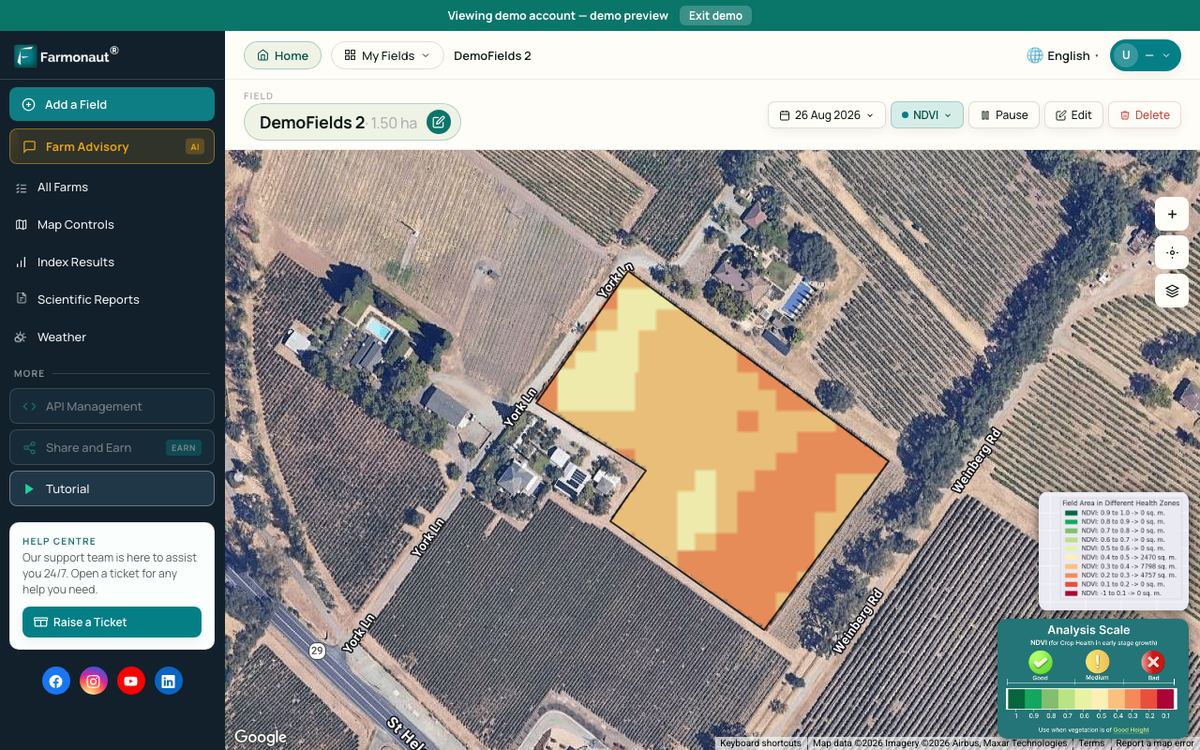
If you also grow field crops or run outdoor plots next to the aquaponic unit, the Farmonaut Satellite + AI Farm Monitoring System can track crop health on those fields from satellite images, on web, Android or iOS. Farmonaut does not measure water inside an aquaponic tank, so keep your own sensor and test records for the system itself.
How we checked the numbers
We read each programme page or call for proposals in November 2026 and give the limits they state. Profit and cost figures come from two studies: the Love survey (2015) and the Heidemann SARE report on three US systems. Both describe farms of their time; prices for equipment, feed and power have changed since, so use them as a guide to the shape of the business, not as current costs.
FAQ
Are there grants for aquaponics for individuals?
Yes, but few. SARE Farmer/Rancher grants accept individual producers, with limits of $15,000 to $35,000 depending on the region and project type. Most USDA urban and beginning farmer grants go to organisations, so individuals often take part as partners.
Can a grant pay to build an aquaponic system?
Sometimes. Some state urban farm grants pay for equipment. SARE grants pay for research and outreach and limit some equipment costs. Many growers use an FSA Microloan of up to $50,000 for equipment instead.
How much does a commercial aquaponics system cost?
In the SARE study, three US commercial systems cost from about $40,520 in owner-built materials to just over $131,600 for three greenhouse systems. Hiring contractors raised costs by tens of thousands of dollars.
How long does aquaponics take to pay back?
The three systems in the SARE study had modelled payback times of 1.9 to 3.4 years. In the same study’s survey, about 46% of growers reported a profit in the past 12 months.
What is a good profit per square foot in aquaponics?
No published industry average exists. Work it out from your own yield, price and costs per square foot, using the calculator above, and compare it with the payback figures from real farms.
Related pages on our site: farm community outreach projects, product traceability, carbon footprint tracking, farm fleet management, crop loan and insurance checks, large farm management, satellite data API, API developer docs and web app.
Farmonaut crop monitoring
Watch your outdoor fields from space
Draw your field boundaries once and Farmonaut shows satellite crop health maps for them through the season, on web, Android or iOS.



Sources
- Western SARE, Farmer/Rancher Research & Education Grant Program (read November 2026): western.sare.org
- North Central SARE, Apply for a Farmer Rancher Grant: northcentral.sare.org
- North Central SARE, 2026 Farmer Rancher Grant call for proposals (PDF): sare.org
- Rutgers Cooperative Extension of Cumberland County, Northeast SARE Farmer Grant applications due 9 December 2025: cumberland.njaes.rutgers.edu
- USDA farmers.gov, Urban Agriculture: farmers.gov
- USDA NIFA, Beginning Farmer and Rancher Development Program (BFRDP): nifa.usda.gov
- USDA farmers.gov, Beginning Farmers and Ranchers: farmers.gov
- Minnesota Department of Agriculture, MDA Opens Grants for Urban Agriculture Projects: mda.state.mn.us
- USDA Farm Service Agency, Operating Microloan: fsa.usda.gov
- USDA Farm Service Agency, Microloans fact sheet (2024, PDF): dts.fsa.usda.gov
- Love D.C. et al., Commercial aquaponics production and profitability: findings from an international survey, Aquaculture, 2015 (Johns Hopkins CLF): clf.jhsph.edu
- Heidemann K., Economic Analysis of Commercial Aquaponics Production Systems, Southern SARE final report GS13-125: projects.sare.org
- Somerville C. et al., Small-scale aquaponic food production, FAO Fisheries and Aquaculture Technical Paper 589, 2014: fao.org
Discussion
Questions, corrections or field experience? Share them below. First-time comments are reviewed before they appear, and your email is never published.
No comments yet. Be the first to add a question or your experience.

 Dirks Bros Farms
 Red August Group
 Farm Inc
 WeMe Global
 Agrotoken
 Blue BearX
 Insignito
 Croptimum
 DnCubed
 Field Capacity
 Indosistim Teknologi
 Liquify Digital
 CU Foods
 BeyondTech Global
 Rouge VC
 AgroGreen Dynamics
 AgroRisk
 Oath Inc
 Reddane Farming
 Esri North East Africa
 MDCV UK
 Etech Consulting Madagascar
 Vestlandsforsking
 WB Dev

 Licence holder · Niger · Gold
 Client · Tanzania · Gold
 Client · Somalia · Gold










