

Reviewed September 2026 against USDA Forest Service Silvics and Fire Effects Information System (FEIS) data.
Try it: Estimated stem age: — →
A yew tree is a slow-growing evergreen conifer in the genus Taxus. In the United States three species are native: Pacific yew (Taxus brevifolia), Canadian yew (Taxus canadensis), and the narrowly distributed Florida yew (Taxus floridana). Pacific yew wood is the densest conifer wood measured in the US at 712 kg/m³, the tree grows so slowly that a stem can take a century to add a few centimeters of diameter, and its bark is the original source of the cancer drug paclitaxel, first isolated in 1971. The rest of this guide covers what each species looks like, how fast it actually grows, why the wood commands specialty prices, and how to check the numbers yourself as they update.
What a Yew Tree Is
The word “yew” covers several species in the genus Taxus, all evergreen conifers with flat needles, red fleshy arils instead of cones, and wood that grows dense because the tree adds so little diameter each year. In North America, the US Forest Service’s Silvics Program recognizes three native yew species: Pacific yew in the Pacific Northwest, Canadian yew across the northern and eastern US and Canada, and Florida yew, a narrow-range species confined to a short stretch of the Apalachicola River in the Florida panhandle. English yew (Taxus baccata) and Japanese yew (Taxus cuspidata) are not native to the US but are widely planted as ornamental hedging.
What separates a yew tree from most other conifers people search for is the combination of extreme wood density, glacial growth rates, and a pharmaceutical compound in the bark that does not exist in comparable concentrations anywhere else in North American forests. Those three facts drive almost everything below.
Yew Tree Species Native to the US
Three yew tree species are native to US forests, and they occupy very different ranges and grow to very different sizes:
- Pacific yew (Taxus brevifolia) — found in understorey forests from British Columbia south through Washington, Oregon, and Northern California, and into the Rocky Mountains. It is the species behind almost every commercial and medicinal use of yew in North America.
- Canadian yew (Taxus canadensis) — a low, sprawling shrub form rather than a tree, ranging across the northern US from New England through the upper Midwest and into eastern Canada. It rarely reaches tree height and is mostly relevant to browse ecology (deer feed on it heavily in winter) rather than timber.
- Florida yew (Taxus floridana) — the rarest of the three. Per the US Forest Service’s Fire Effects Information System, Florida yew reaches a maximum height of about 26 feet and is confined to a range of roughly 15 miles along the Apalachicola River bluffs in Florida’s Liberty and Gadsden counties. It does not occur naturally anywhere else on Earth.
If your search is about “yew tree species” broadly, this three-way split — one commercially significant tree, one shrub-form browse species, one geographically confined rarity — is the answer. There is no fourth native US species, and English and Japanese yew found in gardens and hedges are introduced ornamentals, not wild American natives.

Yew Tree Growth Rate: The Numbers
Yew is one of the slowest-growing trees in North American forestry, and the US Forest Service’s Silvics Program has measured exactly how slow. Pacific yew adds diameter at breast height at a rate of 0.05 to 0.25 centimeters per year under typical forest conditions — for comparison, a fast-growing conifer like Douglas-fir can add over a centimeter a year. The rate is not fixed: it depends heavily on light.
- Under heavy shade, Pacific yew grows at roughly 0.06 cm/year in diameter.
- When released from shade — for example after a nearby tree falls or a stand is thinned — growth increases to roughly 0.18 cm/year.
- The full measured range across conditions is 0.05 to 0.25 cm/year.
Do the arithmetic and the implication is stark: a Pacific yew growing at the low end of that range needs on the order of 100 years to add 5 centimeters of radius. This is why old-growth Pacific yew stems are valued far beyond their size — a modest-diameter log can represent well over a century of growth, and why clear-cutting a yew understorey erases wood that cannot be replaced on any human planning horizon.
This growth-rate data comes from the USDA Forest Service Silvics Program’s Pacific yew page, which the agency updates on an ongoing basis. If you need the current figures rather than the 2024 numbers cited here, that page is the authoritative source to check directly.
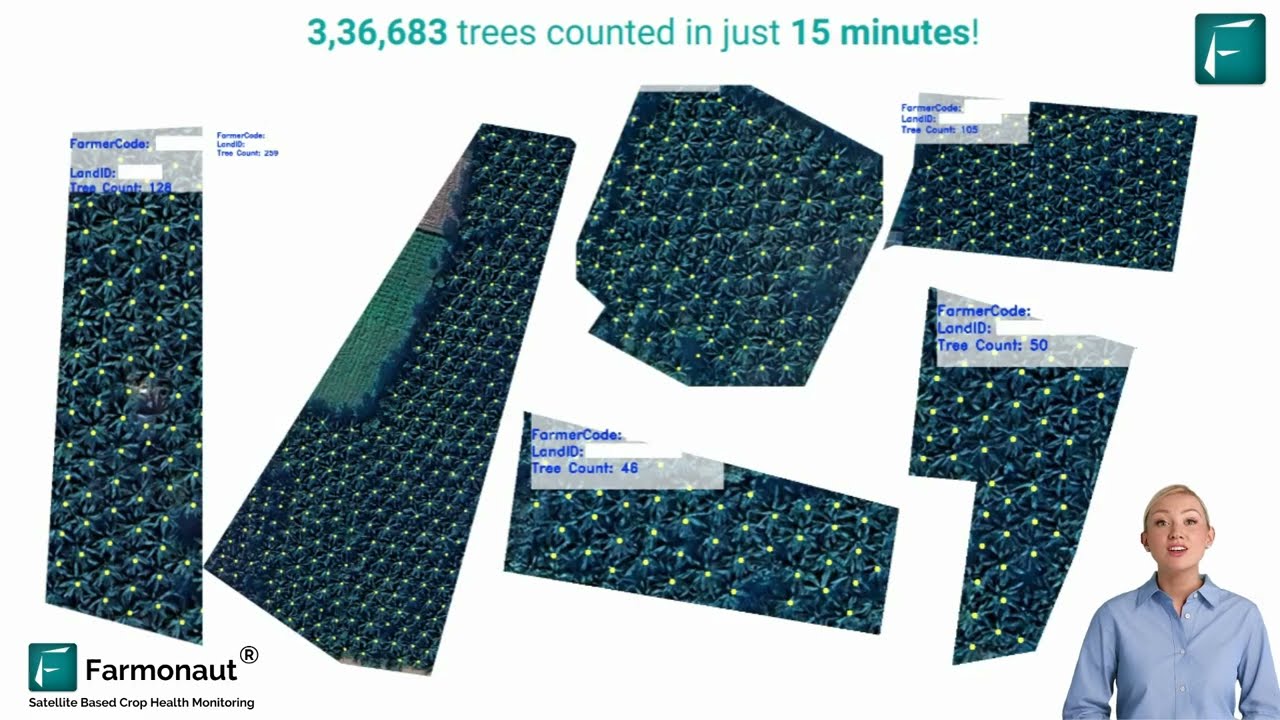
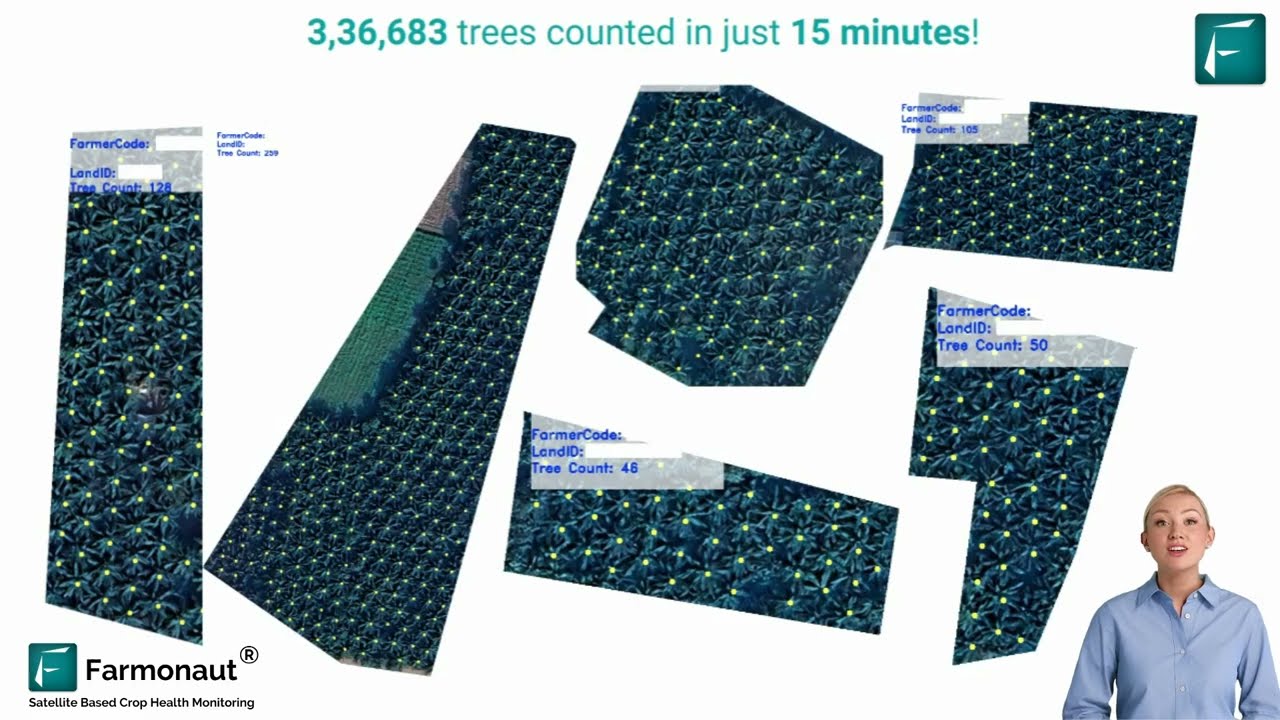
Explore how satellite tree detection and AI-based monitoring can track growth and canopy change across slow-growing understorey species like yew — see Farmonaut’s carbon footprinting solutions, which measure forest health and biomass change across a landscape rather than one stem at a time.
Yew Wood: Density, Value, and Uses
Why Yew Wood Is So Dense
Pacific yew wood has a measured density of 712 kg/m³, making it the heaviest conifer wood documented in the United States, according to the USDA Forest Service Silvics Program. For scale, that is denser than many hardwoods used in flooring and roughly 40–60% denser than typical softwood lumber species like Douglas-fir or western hemlock. This density is a direct consequence of the growth rate described above: fewer, tighter growth rings per unit of diameter pack more wood fiber into the same cross-section.
What Yew Wood Is Used For
Historically, yew wood’s combination of density and elasticity made it the preferred material for European longbows, and that same elasticity carries over to modern niche uses:
- Turned and carved specialty items (bowls, handles, small furniture components) where the reddish-brown heartwood color is prized
- Archery bows, both traditional and reproduction
- Musical instrument components and inlay work
What Yew Wood Costs
The clearest documented price point for high-grade yew is historical: in the 1980s, high-grade Pacific yew logs sold into the Japanese specialty market for approximately $6,100 per thousand board feet, according to USDA Forest Service Silvics records. That figure is decades old and should not be quoted as a current price. Standard USDA timber price indices do not track yew separately from other minor conifer species, so there is no equivalent current government figure to cite. If you need a current price, the accurate method is to contact specialty timber dealers directly — hardwood and specialty-conifer merchants who deal in bow-wood and turning-blank stock are the buyers who set price in this niche market today, not commodity softwood mills.
On supply: the Forest Service’s non-Federal-lands inventory for California, Oregon, and Washington combined counted roughly 700,000 Pacific yew trees at 28 cm diameter at breast height (d.b.h.) or larger. Given the growth rates above, a tree at that diameter threshold likely represents well over a century of growth, which is one reason supply of large-diameter yew logs stays tight regardless of demand.

Managing a mixed woodland that includes specialty species like yew alongside commercial timber? Try Farmonaut’s large-scale farm and forest management tools for tracking plant health and stand composition using satellite data across the whole property, not just the marketable stems.
Traceability for Specialty Wood
Because high-value specialty wood species attract illegal harvesting pressure, buyers increasingly want proof of legal, sustainable sourcing before they pay a premium price. Blockchain-based product traceability tools let a seller document a log’s chain of custody from standing tree to buyer, which matters more for a slow-replenishing species like Pacific yew than for a fast-growing commodity softwood.
Yew Plant and Paclitaxel
The most consequential fact about the yew plant has nothing to do with wood: its bark is the original natural source of paclitaxel, sold under the brand name Taxol, one of the most widely used chemotherapy drugs in oncology. Paclitaxel was first isolated from Pacific yew bark in 1971, according to USDA Forest Service records, and the discovery is why Pacific yew went from an overlooked understorey tree to a species of direct pharmaceutical interest within a few decades.
The concentration of paclitaxel in Pacific yew bark is low: measured at 0.0004% to 0.01% by weight. That range explains why early Taxol production required enormous quantities of bark — harvesting entire trees to extract a small mass of active compound — and why the pharmaceutical industry has since shifted toward semi-synthetic production methods that start from a related compound in yew needles (a renewable, non-lethal harvest) or from fully synthetic and fermentation-based routes. The Forest Service’s brief does not publish a current breakdown of what share of paclitaxel supply still comes from wild-harvested Pacific yew bark versus these alternative routes; if you need that figure, current pharmaceutical-manufacturing and USDA agricultural-statistics sources are where to look, since it is not published in the silvics literature.

Accurate satellite-based monitoring is useful for tracking the health and extent of high-value plant populations, medicinal or otherwise, across a managed landscape. Explore Farmonaut’s API to integrate this kind of forestry and specialty-plant monitoring into your own management applications.
Conservation Status and Threats
The three US native yew species face different pressures:
- Pacific yew was historically cut and discarded as a “weed species” during Douglas-fir harvesting before its pharmaceutical value was known; today the main pressures are habitat loss from broader forest harvest and its own inherently slow regeneration, which means a cut stand takes decades to a century to recover comparable diameter stock.
- Florida yew is the most constrained of the three by simple geography: a natural range of about 15 miles along the Apalachicola River means any single land-use change, disease event, or storm within that corridor affects a large share of the entire wild population. The Florida Fish and Wildlife Conservation Commission maintains the current state conservation status for this species — check their endangered species roster directly for the up-to-date listing rather than relying on a fixed status here, since conservation classifications are reviewed periodically.
- Canadian yew, as a widespread shrub rather than a rare tree, faces more localized pressure — primarily heavy deer browsing in parts of its range, which can suppress regeneration in specific stands even though the species is not considered at risk range-wide.
For anyone tracking a specific yew population over time — a conservation area, a research plot, or a managed timber stand — the durable method is the same regardless of which species you’re watching: establish a fixed set of georeferenced points, remeasure diameter at breast height on a consistent schedule (annual or biennial, given how slowly these trees grow), and log canopy cover changes from aerial or satellite imagery between ground visits.
For landowners or agencies coordinating harvest and monitoring crews across multiple yew-bearing stands, fleet and resource management systems can help schedule field visits and track equipment use without the coordination overhead of a purely manual system.
Can You Farm or Cultivate Yew?
“Yew tree farming” is a real search query, and the honest answer depends on what you mean by it. Yew is not cultivated as a plantation timber crop the way pine or Douglas-fir are — the growth rates above (0.05–0.25 cm/year in diameter) make a commercial rotation impractical on any timeframe a conventional forestry operation would plan around. What does exist:
- Ornamental nursery production — English and Japanese yew cultivars are grown commercially at scale for hedging and landscaping, sold as young container or field-grown stock rather than timber.
- Managed wild-stand harvest — selective, permitted removal of mature Pacific yew from existing forest stands, rather than planting a new crop.
- Needle harvest for pharmaceutical feedstock — where legal and permitted, cutting yew needles (a renewable annual harvest, unlike bark stripping) supplies raw material for semi-synthetic paclitaxel production without killing the tree.
The Forest Service’s silvics literature does not publish managed-stand growth projections or commercial cultivation yield data for yew as a timber crop, because that model of production largely does not exist for this species. If you are evaluating yew for a specific plantation or agroforestry proposal, the realistic comparison point is ornamental nursery production economics, not timber-stand economics — and a state forestry extension office or university agroforestry program is the right place to get current, location-specific guidance, since none is published at the national level.
Table: US Native Yew Species Compared
| Species | Growth Form | US Range | Diameter Growth Rate | Wood Density | Notable Use |
|---|---|---|---|---|---|
| Pacific yew (T. brevifolia) | Understorey tree | BC to N. California, Rockies | 0.05–0.25 cm/yr (0.06 shaded, 0.18 released) | 712 kg/m³ | Paclitaxel source, specialty timber, bow wood |
| Canadian yew (T. canadensis) | Low sprawling shrub | Northern US, NE to upper Midwest | Not published at national level | Not published at national level | Deer browse, ground cover, ornamental |
| Florida yew (T. floridana) | Small tree, up to 26 ft | ~15-mile range, Apalachicola River, FL | Not published at national level | Not published at national level | Endemic conservation priority |
Where a cell reads “not published at national level,” that reflects a genuine gap in the USDA Forest Service silvics and FEIS literature reviewed for this page, not an oversight — Canadian and Florida yew have not been the subject of the same detailed growth-rate studies as Pacific yew, likely because neither is harvested commercially at meaningful volume.
Looking for precise environmental, forest, or biodiversity metrics for your own land? Integrate Farmonaut’s API to access real-time satellite data for forestry planning and monitoring across mixed woodlands or protected reserves.
Tool: Pacific Yew Stem Age Estimator
Estimate roughly how many years a Pacific yew stem took to reach its current diameter, using the USDA Forest Service’s measured diameter growth rates for shaded versus light-released conditions.
Estimated stem age: —
Assumptions: uses USDA Forest Service Silvics Program diameter growth rates for Pacific yew (0.05–0.25 cm/year, with 0.06 cm/year under heavy shade and 0.18 cm/year when released from shade). Assumes constant growth rate over the tree’s life, which real stems rarely follow exactly — a stem’s actual history usually includes years of suppression followed by release, so treat the output as an order-of-magnitude estimate, not a ring count. Does not apply to Canadian or Florida yew, for which the Forest Service has not published equivalent national growth-rate data.
Monitoring Yew Stands with Satellite Data
Because yew grows so slowly and often sits scattered through a shaded understorey rather than in visible even-aged stands, ground survey alone can miss both individual trees and slow canopy change over time. Farmonaut’s satellite-based platform supports:
- Stand-level monitoring: track canopy cover and vegetation health across mixed woodlands that include understorey species like yew alongside overstory timber.
- Tree detection and mapping: geolocate individual trees or clusters, useful for building an inventory of scattered understorey stems that are easy to miss on foot.
- Environmental impact analytics: track canopy and biomass change over successive seasons (learn more), useful given how many years it takes a slow-growing species like yew to show measurable change.
- Blockchain-based traceability: document the chain of custody for harvested specialty wood or plant material from source to buyer (details here).
- Resource and fleet management: coordinate field crews checking scattered monitoring plots across a large forest property (find out how).
Mobile, web, and API access support monitoring from a single research plot up to a full landscape, whether you’re a private woodland owner, a conservation manager, or a specialty-timber buyer verifying supply.


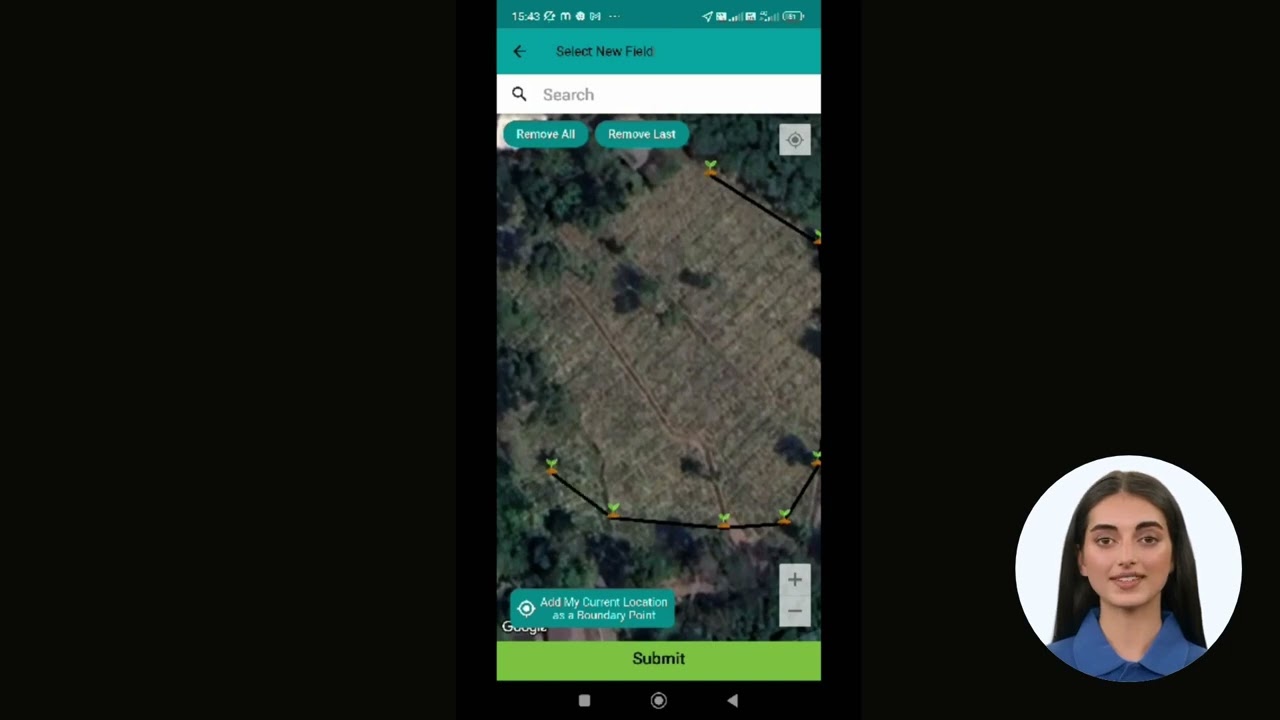
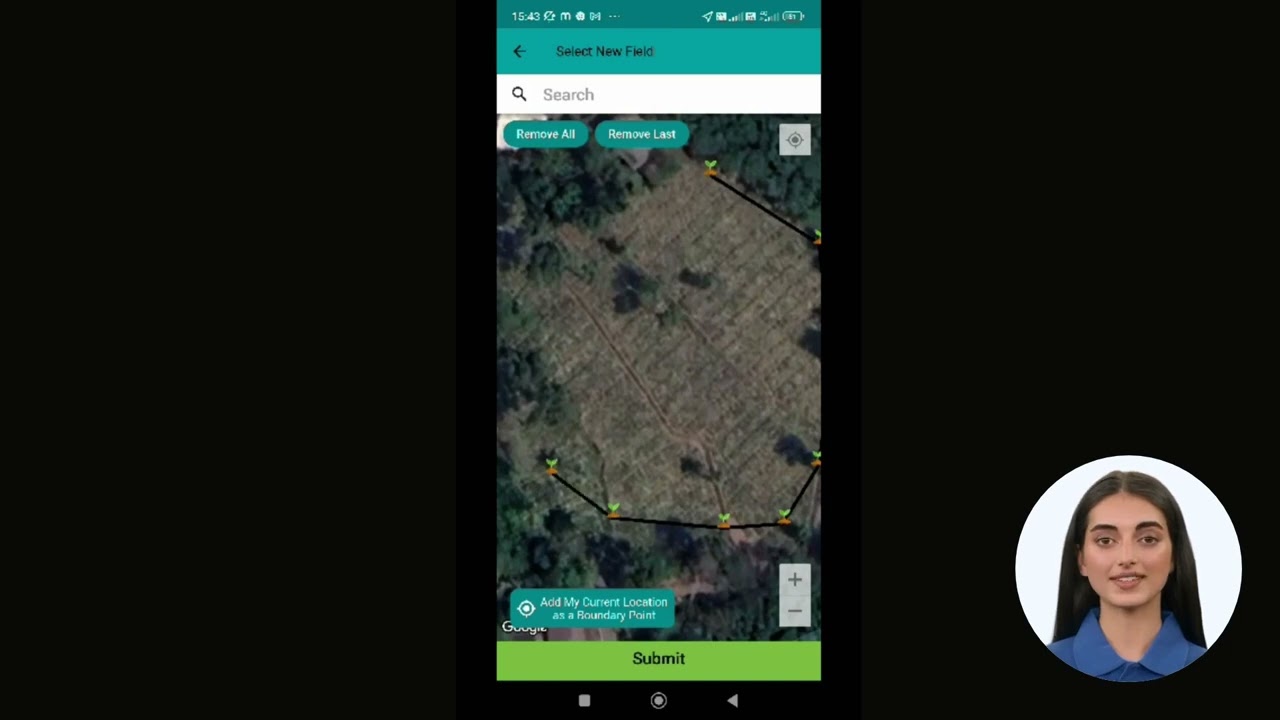
Want to map a woodland that includes yew or other specialty understorey species? Watch the mapping tutorial below:
Farmonaut Subscription Plans for Forestry, Agriculture, and Resource Management
Frequently Asked Questions
1. How many yew tree species are native to the United States?
Three: Pacific yew (Taxus brevifolia), Canadian yew (Taxus canadensis), and Florida yew (Taxus floridana), per USDA Forest Service records. English yew and Japanese yew, commonly seen in gardens and hedges, are introduced ornamentals, not US natives.
2. How fast does a yew tree grow?
Very slowly. Pacific yew adds 0.05 to 0.25 centimeters of diameter per year, according to the USDA Forest Service Silvics Program — as little as 0.06 cm/year under heavy shade, rising to about 0.18 cm/year once the tree is released from shade by canopy opening. This is far slower than fast-growing commercial conifers.
3. Why is yew wood so valuable?
Pacific yew wood is measured at 712 kg/m³, the densest conifer wood documented in the US, per the Forest Service. Combined with its slow growth (which limits supply) and its elasticity (prized for archery bows historically), that density is why it commands specialty prices — high-grade logs sold for around $6,100 per thousand board feet in the Japanese market during the 1980s, though no equivalent current government price index exists for yew.
4. Does yew tree have a connection to stem cells or cancer research?
Yes, though not through “stem cells” in the biological sense some searches imply — the connection is paclitaxel (Taxol), a chemotherapy compound first isolated from Pacific yew bark in 1971. Bark concentration runs 0.0004% to 0.01% by weight, according to the Forest Service, which is why bark harvesting for this compound has largely shifted to semi-synthetic production from renewable yew needles instead.
5. Can you farm or commercially cultivate yew trees?
Not as a timber crop in the way pine or Douglas-fir are farmed — growth rates of 0.05–0.25 cm/year in diameter make a commercial timber rotation impractical. English and Japanese yew cultivars are grown commercially at nursery scale for ornamental hedging, and Pacific yew needles are harvested (without killing the tree) as pharmaceutical feedstock where permitted.
6. Where can I find the most current yew tree data?
For growth rates, wood density, and inventory figures, the USDA Forest Service Silvics Program’s Pacific yew page is updated on an ongoing basis. For Florida yew’s conservation status, check the Florida Fish and Wildlife Conservation Commission’s endangered species roster directly, since that classification is reviewed periodically.





Where to Go for Updated Figures
The figures in this guide — 712 kg/m³ wood density, 0.05–0.25 cm/year growth, 700,000 trees in the CA/OR/WA non-Federal inventory, 0.0004–0.01% paclitaxel concentration — all trace back to the USDA Forest Service’s Silvics Program and Fire Effects Information System, both of which are maintained on an ongoing basis rather than published once and left static.
If you are working with these numbers for a real decision — valuing standing timber, planning a conservation monitoring schedule, or assessing a harvest permit — treat the figures here as a starting point and verify against the source page directly: research.fs.usda.gov/silvics/pacific-yew for Pacific yew, and research.fs.usda.gov/feis/species-reviews/taxflo for Florida yew. For current market pricing, which neither source tracks, specialty timber dealers are the accurate channel, not a general commodity price index.
Working with a mixed woodland, orchard, or specialty planting that includes yew?
Download the Farmonaut app, access our APIs, or explore satellite-based loan and insurance solutions for forest and plantation risk management.

 Oath Inc
 Reddane Farming
 Esri North East Africa
 Farmer Amigo
 Cresol
 Atur Kuliner
 MDCV UK
 Zerella Group
 Etech Consulting Madagascar
 Vestlandsforsking
 Agritein
 Delicio
 WB Dev
 Sama Premium
 Prochecker
 Tres Valles
 LACOS Geoinformation
 Magrifly
 LatConnect 60
 Blickwinkel
 Agricultural Credit Policy Council
