

DRC cobalt · Ranked list
Largest Cobalt Mines in the DRC, Ranked by Output
Kisanfu and Tenke Fungurume, both run by CMOC, are the largest DRC cobalt mines, with about 25% and 14% of world mined cobalt in 2025. See the ranking, owners, export quotas and a revenue calculator.
Key takeaways
- Kisanfu supplied about 25% and Tenke Fungurume about 14% of world mined cobalt in 2025; CMOC made 117,500 tonnes in all (Cobalt Institute, May 2026).
- Glencore’s Kamoto made 22,900 tonnes and Mutanda 10,600 tonnes in 2025; ERG’s Metalkol RTR about 19,000 tonnes (Glencore, 2026; Cobalt Institute, 2026).
- The DRC mined an estimated 230,000 tonnes of the world’s 310,000 tonnes in 2025 and holds 6 million of 12 million tonnes of reserves (USGS, 2026).
- Exports were banned from 22 February 2025; quotas of 96,600 tonnes a year apply for 2026 and 2027, with a 10% royalty prepaid (Cobalt Institute, 2026).
- LME cobalt spot was US$38,445 per tonne in early October 2026, down more than 30% in a month (PricePedia, 6 October 2026).
In this article
- How we ranked the DRC cobalt mines
- Largest cobalt mines in the DRC compared
- The five biggest cobalt mines, one by one
- Other cobalt mines worth knowing in the DRC
- Why the DRC has so much cobalt: the geology
- How much cobalt does the DRC produce compared with other countries
- Export ban and quotas: why output is not the same as supply
- Cobalt price and what it means for a mine
- Environment, communities and traceability at DRC cobalt mines
- Watching a mine from space
- Frequently asked questions
The two largest cobalt mines in the Democratic Republic of the Congo (DRC) are both run by CMOC: Kisanfu, which supplies about 25% of the world’s mined cobalt, and Tenke Fungurume, which supplies about 14% (Cobalt Institute, Cobalt Market Report 2025, May 2026). Glencore’s Kamoto and Mutanda mines and ERG’s Metalkol tailings plant follow. The DRC itself produced an estimated 230,000 tonnes of cobalt in 2025, out of a world total of 310,000 tonnes (USGS Mineral Commodity Summaries 2026).
“Kobolt mine” is a common spelling of “cobalt mine”, and this page answers it for the DRC: which mines are biggest, who owns them, how much they made in 2025, and why that output did not all reach buyers. It is written for consultants, licence owners and analysts who need the facts per mine, with the source and year beside each figure.
How we ranked the DRC cobalt mines
The ranking uses one metric: cobalt produced in 2025, as reported by the operator or estimated by the Cobalt Institute (a producers’ body whose market report is prepared by Benchmark Mineral Intelligence). Cobalt is a by-product of copper in the DRC, so a “cobalt mine” here means a copper-cobalt mine or plant where cobalt is a main product.
- Kisanfu and Tenke Fungurume: CMOC reports the two together, so we use the Cobalt Institute’s share of world mined supply for each.
- Kamoto Copper Company (KCC) and Mutanda: Glencore reports each mine in tonnes.
- Metalkol RTR: ERG is privately held, so the Cobalt Institute’s estimate is the only published figure.
- Not ranked: small and mid-size mines for which no mine-level 2025 figure is published are listed after the table.
World totals differ by source: USGS counts 310,000 tonnes of mined cobalt in 2025 and the Cobalt Institute 270,000 tonnes, so shares from the two sets are not comparable. Production is not sales. From 22 February 2025 the DRC stopped cobalt exports, and a quota system replaced the ban in October 2025 (explained further down), so a mine can rank high on output and still have shipped little.
Largest cobalt mines in the DRC compared
| Rank | Mine | Operator | 2025 cobalt | Source |
|---|---|---|---|---|
| 1 | Kisanfu (KFM), Lualaba | CMOC (71.25%) | About 25% of world mined cobalt | Cobalt Institute, 2026 |
| 2 | Tenke Fungurume (TFM), Lualaba | CMOC (80%) | About 14% of world mined cobalt | Cobalt Institute, 2026 |
| 3 | Kamoto Copper Company (KCC), Kolwezi | Glencore | 22,900 tonnes | Glencore production report, 2026 |
| 4 | Metalkol RTR, Kolwezi | ERG | About 19,000 tonnes | Cobalt Institute, 2026 |
| 5 | Mutanda (MUMI), Lualaba | Glencore | 10,600 tonnes | Glencore production report, 2026 |
Chart
Share of world mined cobalt, five largest DRC mines
Percent of about 297,000 tonnes world base, 2025 (CMOC 117.5 kt = 39.5%)
CMOC’s two mines together produced 117,500 tonnes of cobalt in 2025, up 3% on 2024 and 39.5% of the world market (Cobalt Institute, 2026). The Cobalt Institute also reports that Kisanfu alone is estimated to have made more than 80,000 tonnes of cobalt in hydroxide, almost twice all Indonesian assets combined. Hydroxide is the wet cake the DRC exports to refiners, with 20% to 40% cobalt, so a hydroxide tonne is not a tonne of cobalt metal.
The five biggest cobalt mines, one by one
1. Kisanfu (KFM), the largest single cobalt asset
Best for: readers who want the mine that moves the world cobalt market. Kisanfu sits in Lualaba Province, about 33 km from Tenke Fungurume, and started production in the first half of 2023 (Lobito Corridor mine profile). CMOC holds 71.25%. Its resource is cobalt-rich: 1.95 million tonnes (Mt) of cobalt at 0.87% cobalt, against 0.25% at Tenke Fungurume (CMOC, DRC operations). The Cobalt Institute puts the copper-to-cobalt ratio at about 2.6 to 1, against about 10 to 1 at a typical DRC mine, so each tonne of copper mined brings more cobalt with it.
Watch: CMOC approved a US$1.084 billion second phase in October 2025, due in 2027, adding about 100,000 tonnes of annual copper capacity (Ecofin Agency). Because the quota is set from average output over the previous three years, this newer mine received a proportionally smaller export quota than older mines such as Mutanda (Cobalt Institute, 2026).
2. Tenke Fungurume (TFM), the largest copper producer in the pair
Best for: readers who want the long-running, certified operation. TFM covers 1,600 square kilometres around Fungurume, with annual copper capacity above 450,000 tonnes, and CMOC owns 80% (CMOC, DRC operations). CMOC says TFM was the first mine in Africa to receive The Copper Mark with every criterion fully met. The Cobalt Institute lists TFM as the second-largest cobalt-producing asset, at 14% of the world’s mined supply, and in assessment under IRMA, an independent responsible-mining standard.
3. Kamoto Copper Company (KCC), Glencore’s larger mine
Best for: readers tracking a Western-listed producer. KCC made 22,900 tonnes of cobalt in 2025, down 16% from 27,200 tonnes in 2024, because Glencore chose to put copper ahead of cobalt while exports were restricted (Glencore, 2025 full-year production report). KCC’s copper metal output was 188,700 tonnes. Glencore signed a non-binding memorandum with the Orion Critical Minerals Consortium for a 40% stake in KCC and Mutanda, valuing the two at about US$9 billion (Cobalt Institute, 2026).
4. Metalkol RTR, a tailings plant rather than a pit
Best for: readers interested in recycling old waste. Metalkol RTR does not dig a new orebody. It re-treats historic tailings (the crushed waste left by earlier mills) from the Kolwezi area with an acid leach and solvent extraction circuit, and its nameplate capacity is about 23,000 tonnes of cobalt a year in hydroxide (Lobito Corridor mine profile). The Cobalt Institute estimates it produced 19,000 tonnes in 2025, unchanged from 2024. ERG publishes no mine-level output, so the figure is the Cobalt Institute’s estimate.
5. Mutanda (MUMI), the fastest riser
Best for: readers watching grade and feed changes. Mutanda raised cobalt output 34% to 10,600 tonnes in 2025, and its copper metal rose 74% to 59,100 tonnes (Glencore, 2026). Mining Technology credits higher grades and larger volumes at Mutanda for part of the DRC’s 2025 growth and expects Mutanda feed to support output in 2026 (Mining Technology, GlobalData analysis).
Other cobalt mines worth knowing in the DRC
- Musonoi: underground mining began in September 2025. It is owned 75% by Jinchuan Group and 25% by Gécamines, the state miner, with capacity of about 7,400 tonnes of cobalt and a mine life of up to 14 years (Mining Technology).
- Ruashi: a copper-cobalt mine at Lubumbashi. Its owner Jinchuan Group International made 1,085 tonnes of cobalt across its DRC mines in 2025 (27% more than in 2024) and sold none because of the export ban (Jinchuan Group International, 2025 annual results).
- Deziwa, Kalongwe and Étoile: together they produced 20,430 tonnes in 2025, and are scheduled to close in 2030, 2029 and 2032 respectively on known projects (Mining Technology).
- Chemaf (Étoile and Mutoshi): a proposed sale to Norinco did not receive Congolese approval, while US firm Virtus Minerals agreed a deal with Orion’s backing (Cobalt Institute, 2026).
Why the DRC has so much cobalt: the geology
Most DRC cobalt sits in sediment-hosted stratiform copper deposits, layers of copper and cobalt minerals formed in ancient sedimentary rock along the Central African Copperbelt that runs through southern DRC and northern Zambia. USGS estimates the DRC holds 6 million tonnes of the world’s 12 million tonnes of cobalt reserves (USGS, 2026). Reserves are the part of a resource that can be mined profitably at today’s prices. The same belt hosts the copper projects covered in our junior copper exploration guide, and the licence rules on the Zambian side are covered in our Zambia licence guide.
Cobalt exploration elsewhere targets different rocks: nickel laterites, nickel-copper sulfides and Indonesian processing routes. Our nickel, cobalt, graphite and vanadium exploration guide covers those.
How much cobalt does the DRC produce compared with other countries
USGS estimates DRC mine production at 230,000 tonnes in 2025, up from 226,000 tonnes in 2024, which is roughly three-quarters of world output. The Cobalt Institute gives the DRC 73% of mined supply, down from 77% in 2024, and reports Indonesia at 14%, up from 11%. Indonesia mines cobalt as a by-product of nickel and made 42,500 tonnes in 2025, up 29% (Cobalt Institute, 2026). Because DRC exports were limited while Indonesian output was not, the institute calls Indonesia the largest effective supplier to the market in 2025.
Chart
Cobalt mine output outside the DRC, selected countries
Thousand tonnes of cobalt, 2024 and 2025 estimate
The chart shows selected producers outside the DRC. Indonesia is the only one above 10,000 tonnes.
Export ban and quotas: why output is not the same as supply
Minerals matter to the state budget: the extractive sector made up 46% of DRC government revenue in 2021 (EITI, DRC country page). That is the background to the next step.
The DRC banned all cobalt exports on 22 February 2025, after hydroxide prices fell to $5.60 per pound and cut state revenue. The ban was extended on 21 June 2025 and replaced in October 2025 by a quota system run by ARECOMS, the regulator of strategic minerals markets (Cobalt Institute, 2026). The main rules are:
- Size: 18,125 tonnes for the fourth quarter of 2025, and 87,000 tonnes for 2026 plus a 9,600-tonne strategic quota, a total of 96,600 tonnes a year for 2026 and 2027.
- Basis: each miner’s share follows its average production over the previous three years.
- Cost: miners prepay a 10% mining royalty on their maximum quota at the market price before they can export, and send a control sample of each shipment.
- Glencore’s allocation: 22,800 tonnes for 2026, including the unused 2025 quota (KCC 16,100 and Mutanda 6,700), and 18,800 tonnes for 2027 (Glencore, 2026).
- Use it or lose it: in June 2026 ARECOMS ordered that quota unshipped in the first half of the year is forfeited to the state’s strategic reserve (Investing News, 30 June 2026, citing Bloomberg).
Glencore says it holds enough stocks to meet its quotas and will favour copper over cobalt in the DRC while the quotas last, so cobalt in excess of quota may be stored in-country or held in solution and not reported as production (Glencore, 2026). That is one reason mine-level output and export figures now differ.
Cobalt price and what it means for a mine
Cobalt prices swung widely: the London Metal Exchange (LME) cash price averaged US$11.84 per pound in 2024 and US$15 in 2025 (estimate), against US$28.83 in 2022 (USGS, 2026). Between January and August 2026 the LME price stayed above US$55,500 per tonne, then fell by more than 30% in a month to a spot price of US$38,445 per tonne, with DRC supply recovering and Chinese demand weaker as more batteries use iron phosphate instead of cobalt (PricePedia, 6 October 2026).
Chart
LME cobalt cash price, annual average
US$ per pound, 2021 to 2025 (2025 estimate)
For a mine, the price matters twice: it sets the value of each tonne, and it sets the royalty prepayment. The calculator below shows the revenue of a quota volume after payable terms and the royalty. Payables are the share of the contained metal a buyer pays for; the default is an example, not a contract term.
Calculator
What is a cobalt export quota worth?
Enter your own quota, price, payable share and royalty.
- Contained metal value at your price (US$): $876,627,460
- Value after payable share (US$): $788,964,714
- Royalty prepayment (US$): $87,662,746
Example values only, not a benchmark or a quote. The 10% royalty prepayment on the maximum quota is the ARECOMS rule reported by the Cobalt Institute (2026). The 22,800-tonne default is Glencore’s 2026 allocation including carryover (Glencore, 2026). The price is an input: example, use today’s price; US$17.44 per pound equals the early October 2026 LME spot of US$38,445 per tonne (PricePedia, 6 October 2026). Payable share varies by contract. Costs, freight and tax are not included.
Environment, communities and traceability at DRC cobalt mines
Large mines near Kolwezi have expanded into inhabited land. Amnesty International and a DRC organisation, IBGDH, interviewed more than 130 people at six mining projects in and around Kolwezi in 2022 and reported forced evictions and inadequate compensation (Amnesty International, September 2023). Companies named in that report published responses. Owners of the biggest mines have since moved toward third-party standards: 57.6% of mined cobalt supply is now engaged in or awarded The Copper Mark, and Kisanfu is in that assessment process (Cobalt Institute, 2026).
Artisanal mining, done by hand with little equipment, was estimated at 1.8% of world supply (1.3% of DRC supply) at the end of 2024. The state buyer Entreprise Générale du Cobalt (EGC) holds exclusive purchasing rights and a monthly quota of 470 tonnes, which caps legal artisanal sales (Cobalt Institute, 2026). Buyers that need to show where cobalt came from can use mine-level traceability; our product traceability tool and carbon footprinting tool support the record keeping, and our guide to ethical cobalt sourcing covers the buyer side. For the wider picture, see our posts on world cobalt production and where Tesla gets its cobalt.

▶ A claymation walk through the seven environmental impacts of mining. · 2:31
Watching a mine from space
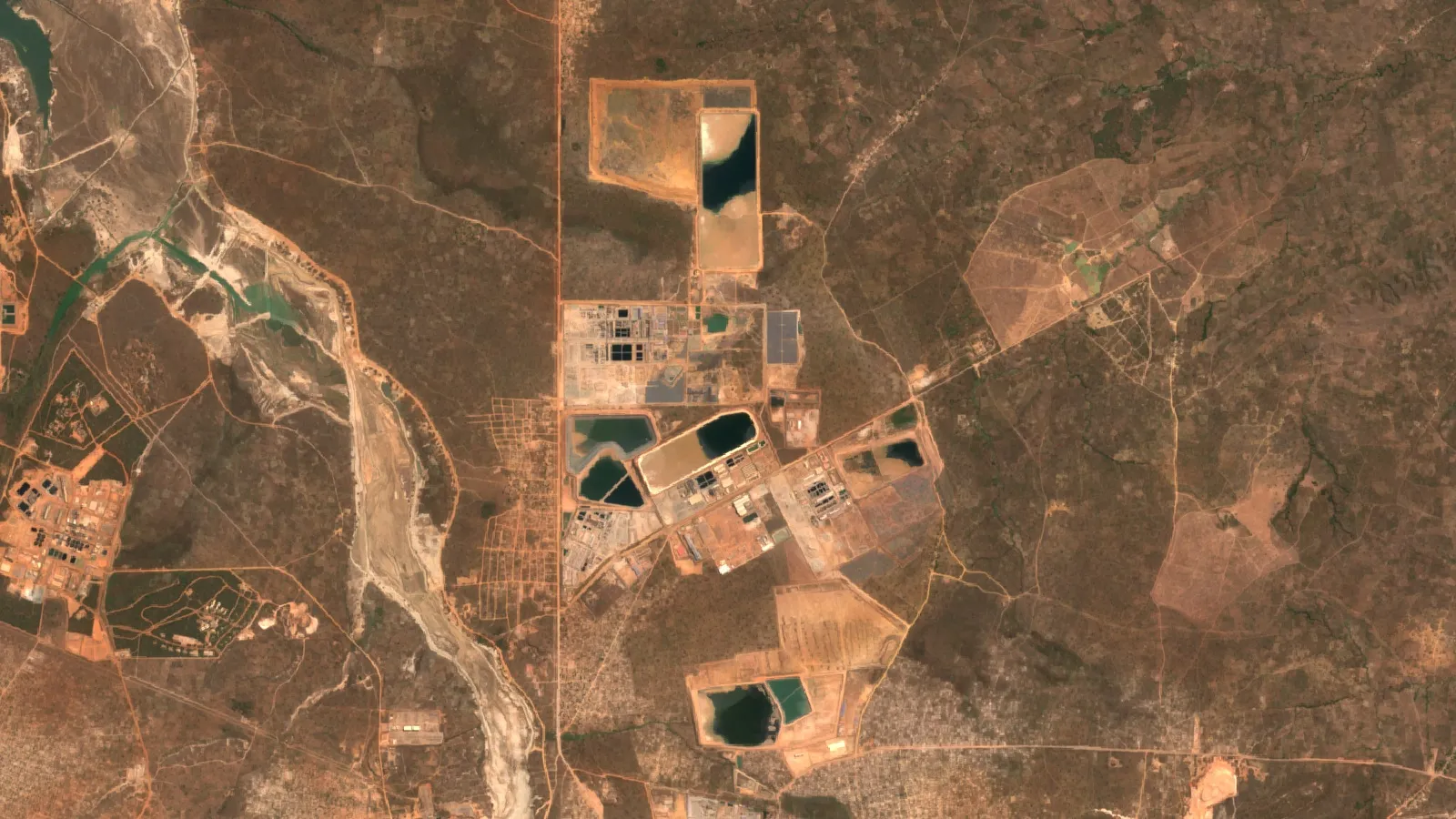
Pit growth, tailings dams, waste dumps and clearing can all be seen in Sentinel-2 satellite images, which is how the image at the top of this page was built. Operators use the same method to track expansion, and consultants use it to screen a licence area before fieldwork. Farmonaut’s satellite mineral detection covers cobalt among its base metals, and its results are exploration targets that sit ahead of a resource estimate. Fleet and equipment tracking is covered in our fleet management tool and our post on automated mining.
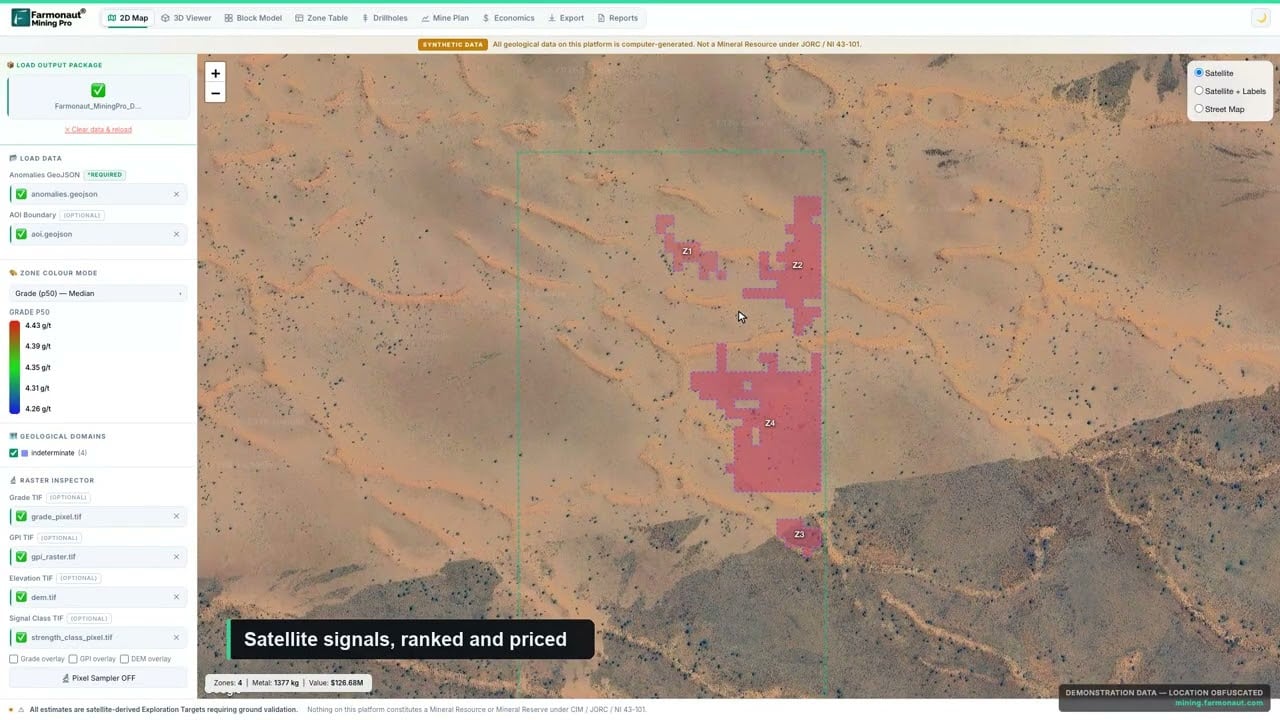
▶ A quick look at Farmonaut Mining Pro, which turns a licence boundary into a geological and economic picture. · 4:56
We cover a connected topic in Best Gold Mines: Top 10 Ranked by Ounces Produced.
For a closer look at a related question, see our guide: Gold Mining in DRC: Mines, Output and Exports.
Frequently asked questions
What does “kobolt mine” mean?
It is a common spelling of “cobalt mine”. Cobalt mines in the DRC are almost all copper-cobalt mines, where cobalt is recovered with copper.
What is the largest cobalt mine in the world?
Kisanfu in the DRC, with about 25% of world mined cobalt in 2025, according to the Cobalt Institute (May 2026). Tenke Fungurume is second at about 14%.
Which country produces the most cobalt?
The DRC, with an estimated 230,000 tonnes in 2025 out of 310,000 tonnes worldwide (USGS, 2026). Indonesia is second at 44,000 tonnes on the USGS estimate.
Who owns the biggest cobalt mines in the DRC?
CMOC owns 80% of Tenke Fungurume and 71.25% of Kisanfu (CMOC). Glencore operates Kamoto Copper Company and Mutanda. ERG operates Metalkol RTR. Gécamines, the state miner, holds minority stakes in several mines.
How much cobalt did the DRC export?
Very little reached the market from late February: exports were banned from 22 February 2025, and the quota system that replaced the ban had not shipped material by the end of the year (Cobalt Institute, 2026). Glencore’s KCC and Mutanda exported none in the fourth quarter (Glencore, 2026). Before the ban, the DRC exported about 41,000 tonnes of cobalt a year (Cobalt Institute, 2026).
What is the DRC cobalt export quota?
96,600 tonnes a year for 2026 and 2027, made up of 87,000 tonnes shared among miners and a 9,600-tonne strategic quota, set by ARECOMS (Cobalt Institute, 2026).
Is cobalt mined only as a by-product?
In the DRC, yes, it comes with copper. In Indonesia it comes with nickel. A few small mines elsewhere, such as Australia’s Murrin Murrin and Nova, also recover it as a by-product.
Is KoBold Metals a cobalt miner?
No. KoBold Metals is a US exploration company, and it is developing the Mingomba copper mine in Zambia, where it broke ground on shaft construction on 29 April 2026 (KoBold Metals). It is not one of the DRC cobalt producers listed here.
Are DRC cobalt mines safe and ethical to buy from?
It depends on the mine. Industrial mines publish audits and standards; independent reports describe evictions and compensation disputes near some of them (Amnesty International, 2023). Ask for the audit status of the specific mine and refinery.
Will the cobalt price recover?
Forecasts disagree with the spot price. A September 2026 survey cited by PricePedia expects LME cobalt of US$48,500 to US$59,500 per tonne for December 2027, against a spot price of US$38,445 in early October 2026.
This page is for information only. It is not investment or legal advice. Production, ownership and quota figures change; confirm them with the company and regulator before you rely on them.
Farmonaut mining
Map your mining site from space
Consultants can screen a licence area for cobalt and other base-metal targets before fieldwork, as an exploration target ahead of a resource estimate.

Mining Pro sample view, synthetic data
Keep reading
Sources
- Cobalt Institute, Cobalt Market Report 2025 (May 2026): cobaltinstitute.org
- USGS, Mineral Commodity Summaries 2026: Cobalt: pubs.usgs.gov
- Glencore, 2025 Full-Year Production Report (2026): glencore.com
- CMOC Group, The DRC: copper and cobalt (operations page, 2026): en.cmoc.com
- Lobito Corridor, Kisanfu Copper-Cobalt Mine profile: lobitocorridor.com
- Lobito Corridor, Metalkol RTR profile: lobitocorridor.com
- Jinchuan Group International Resources, 2025 annual results (HKEXnews, April 2026): hkexnews.hk
- Mining Technology, Musonoi ramp-up and Mutanda feed to drive DRC cobalt output (GlobalData analysis, 2026): mining-technology.com
- Ecofin Agency, CMOC in transition in DRC (2025): ecofinagency.com
- Investing News, DRC to reclaim unused export quotas from cobalt miners (30 June 2026): investingnews.com
- PricePedia, Cobalt: is the price decline set to continue? (6 October 2026): pricepedia.it
- Amnesty International Ireland, DRC industrial mining of cobalt and copper (12 September 2023): amnesty.ie
- KoBold Metals, Breaking ground at Mingomba (21 May 2026): koboldmetals.com
- EITI, Democratic Republic of the Congo country page: eiti.org
Discussion
Questions, corrections or field experience? Share them below. First-time comments are reviewed before they appear, and your email is never published.
No comments yet. Be the first to add a question or your experience.

 Geotech Mining Solutions plc
 Vulcan International Limited
 Kidepo Associates
 GKY Mining
 Alkimy SARL
 Double A Trading
 GemSprout Metals Limited
 Qader Group
 Ileys General Trading
 SG Gold Mining LLC
 VRV Global Pte Ltd
 Omsri International FZE
 G.I.T.T.
 Jaunita Erss Ltd
 Almosi SARL
 SRK Consulting
 Berks Gold Limited
 Mwerezi Minerals Company Limited
 Mining SARL
 SenGold Invest SAS

 Exploration consultancy · South Africa · Gold










