

Zambia copper · Company profile
Lumwana Mining Company: Owner, Output and Expansion Facts
Lumwana Mining Company Limited is a Zambian company wholly owned by Barrick Mining Corporation. The mine made 150,871 tonnes of copper in 2025, and a US$2 billion expansion targets first copper at the end of Q1 2028.
Key takeaways
- Lumwana Mining Company Limited is a wholly owned subsidiary of Barrick Mining Corporation (NYSE: B, TSX: ABX), which changed its name from Barrick Gold Corporation on 6 May 2025 (Barrick annual information form, 2025).
- The mine made 150,871 tonnes of copper in 2025, its highest year on record, and Barrick guides to 130 to 150 kt for 2026 (Barrick annual report 2025).
- The Super Pit Expansion costs about US$2 billion, lifts plant capacity from 27 Mt to 52 Mt of ore a year and targets first copper at the end of Q1 2028 (Barrick, Q2 2026 results, 10 August 2026).
- Reserves were 1,600 Mt at 0.52% Cu, holding 8.1 Mt of copper, at 31 December 2025; the life of mine would extend to 2057 (Barrick).
- On 2025 output Lumwana (151 kt) trailed First Quantum’s Sentinel (189 kt) and Kansanshi (181 kt) and was about 17% of Zambia’s 890,346 tonne total (company reports; mines ministry).
In this article
- Who owns Lumwana Mining Company Limited
- Lumwana at a glance
- How much copper does Lumwana produce
- What it costs to run Lumwana
- Copper revenue and margin calculator
- What the Super Pit Expansion changes
- How Lumwana compares with other large Zambian copper mines
- Lumwana's place in Zambia's copper output
- Safety, environment and community at Lumwana
- What the numbers mean for suppliers and contractors
- Checking a mine site from space
- Frequently asked questions
Lumwana Mining Company Limited (LMC) is the Zambian company that runs the Lumwana copper mine in North-Western Province. It is a wholly owned subsidiary of Barrick Mining Corporation, according to Barrick’s annual information form for 2025. The mine made 150,871 tonnes of copper in 2025, and Barrick is building a US$2 billion expansion that targets first copper at the end of the first quarter of 2028.
This page sets out who owns the operator, what the licences cover, how much copper the mine produces, what it costs to run, what the expansion changes and how Lumwana compares with other large Zambian mines. It also has a calculator for copper revenue and margin at a price you choose. A few terms first. A tonne is a metric tonne, and kt is a thousand tonnes. Mt is a million tonnes. Grade is the share of copper in the rock, written as % Cu. Reserves are the ore that a company can mine at a profit under stated assumptions. C1 cash cost is the direct operating cost of each pound of copper, and AISC (all-in sustaining cost) adds the capital needed to keep the mine running. Each company defines these two measures in its own way, so compare them with care. One tonne is 2,204.62 pounds (lb).
Who owns Lumwana Mining Company Limited
Barrick’s annual information form describes LMC as a Zambian-registered exploration and mining company that Barrick owns outright, and Barrick’s 2025 annual report reports Lumwana as a 100% asset. The parent company changed its name from Barrick Gold Corporation to Barrick Mining Corporation on 6 May 2025. Its shares trade as NYSE: B and TSX: ABX, and there is no separate listing for the Lumwana operation itself.
The mine has had several owners. Barrick’s filing says copper mineralisation was first found in the 1930s and that studies were done between the 1950s and 1990s by earlier owners, including Roan Selection Trust, Agip and Phelps Dodge. Equinox Copper Ventures brought Lumwana into production in 2008, and first commercial copper followed in 2009. Barrick bought Equinox in July 2011 for C$7.3 billion, a price reported by Mining Technology. Barrick’s September 2025 site presentation lists the later steps: a new Komatsu fleet in 2021, a change from contractor mining to owner mining in 2022, a feasibility study for the expansion in 2024, and a memorandum of understanding with the Zambian government on exploration in 2025.
LMC holds six large-scale mining licences covering 1,192 square kilometres. They allow mining of copper, cobalt, gold, silver, uranium and sulphur, and they run until 2029. Barrick states that it sees no significant risk that the licences will not be renewed. LMC also holds surface rights to 35,000 hectares under a 99-year lease that runs to 2108. In Zambia, mining rights and surface rights are separate legal rights, and the licences are described as granted under the Mineral Regulation Commission Act No. 14 of 2024, which replaced the 2015 Mines Act. For how licences, fees and the online cadastre work for a smaller operator, see our guide to the Zambia mining cadastre and licence process.
Note that Barrick, not LMC, publishes the results. If you search for the company’s own figures, look in Barrick’s quarterly releases, annual report and annual information form, where Lumwana is reported as its own segment.
Lumwana at a glance
The table gathers the main facts from Barrick’s filings. Figures are for the year to 31 December 2025 unless stated.
| Item | Fact | Where it comes from |
|---|---|---|
| Operator and owner | Lumwana Mining Company Limited, 100% Barrick | Barrick annual information form for 2025 |
| Location | About 90 km west of Solwezi and 600 km north-west of Lusaka | Barrick annual information form for 2025 |
| Mining method | Open pit, truck and shovel, at Chimiwungo (three pits) and Malundwe | Barrick annual information form for 2025 |
| Plant | Sulphide flotation plant, 27 Mt of ore a year today | Barrick annual information form for 2025 |
| Copper made | 150,871 tonnes | Barrick annual information form for 2025 |
| Reserves | 1,600 Mt at 0.52% Cu, holding 8.1 Mt of copper | Barrick annual report 2025 (31 December 2025) |
| People | About 3,260 employees and 6,400 contractors | Barrick annual information form for 2025 |
| Licences | Six large-scale licences, 1,192 km2, valid to 2029 | Barrick annual information form for 2025 |
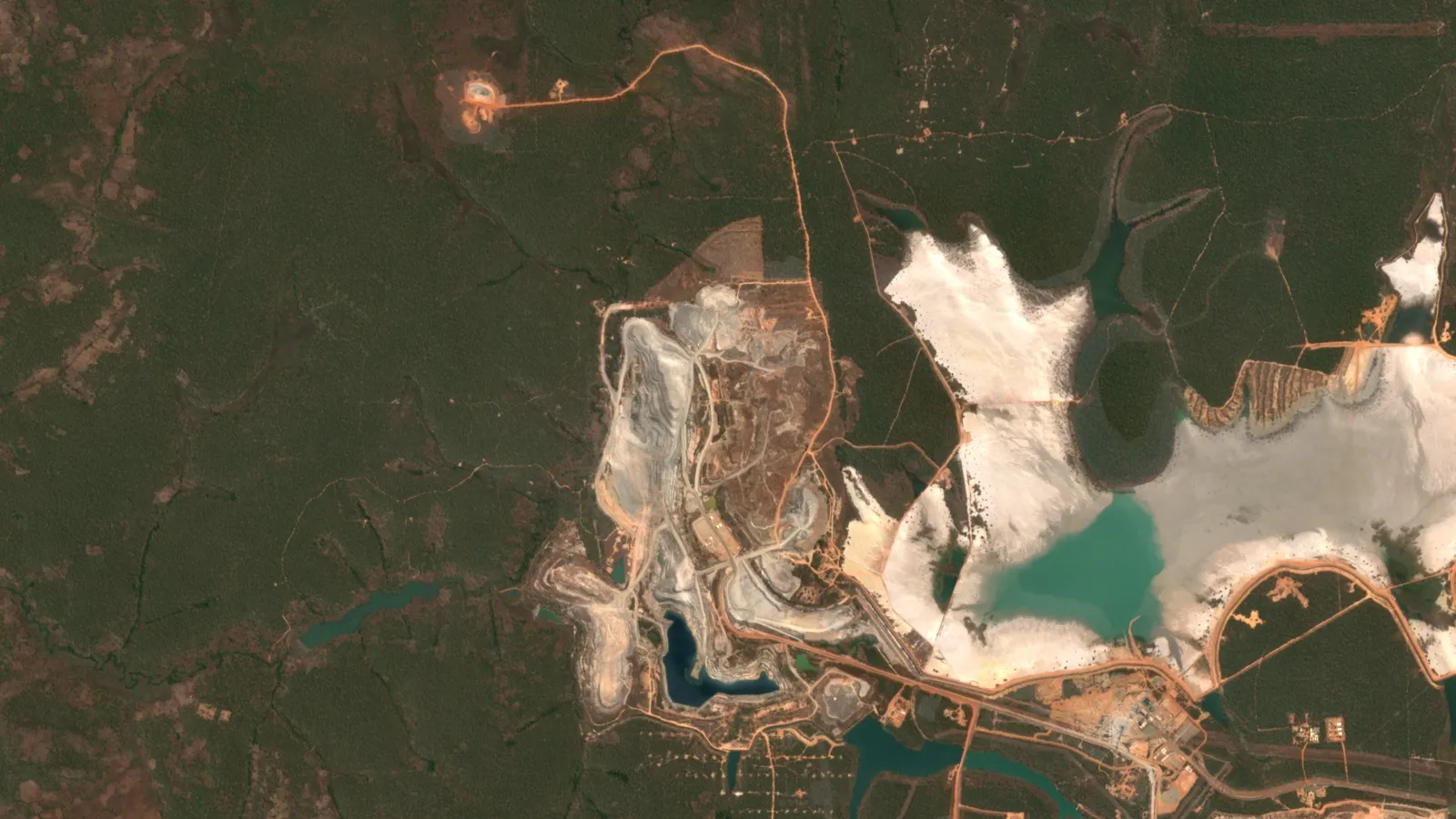
The copper sits in large, flat-lying bodies of disseminated sulphide minerals hosted in schist, on the Mwombezhi Dome, part of the Lufilian Arc that also holds the Central African Copperbelt. There are four main deposits. Chimiwungo is the principal one, with Malundwe 6 km to the north-west, Kababisa 10 km to the north-north-west and Kamisengo 14 km to the north-north-east. The deposits dip at 5 to 25 degrees and reach depths of 250 to 950 metres. Uranium is present in small amounts. Barrick says Malundwe ore has more uranium than the mine average and is blended with Chimiwungo ore so that it does not trigger smelter penalties.
How much copper does Lumwana produce
Lumwana made 150,871 tonnes of copper in 2025, which Barrick’s annual report calls the highest annual output in the mine’s history. That was 23% more than the 123 kt of 2024, and it finished near the top of Barrick’s 125 to 155 kt guidance range. Barrick credits higher grades processed and better recovery.
Chart
Lumwana copper output and the post-expansion plan
Thousand tonnes of copper a year; first three bars are actual, last bar is the planned life-of-mine average
The arithmetic is easy to check. In 2025 the plant processed 25.74 Mt of ore at an average grade of 0.64% Cu, and 92% of the copper was recovered. Multiplying those three numbers gives about 152 kt, which matches the reported figure. In 2024 the plant processed almost the same tonnage at 0.53% Cu and 90% recovery. The jump therefore came from richer ore, not from a bigger plant. The mine also moves a lot of waste: 109 Mt of waste against 33 Mt of ore in 2025, or about 3.4 tonnes of waste for each tonne of ore (our calculation from Barrick’s figures).
For 2026 Barrick guides to 130 to 150 kt, a range that sits below the 2025 result, and it expects the first quarter to be the weakest of the year for its copper mines as a group, mainly because of grade at Lumwana in the mine plan. Barrick’s three-year outlook for its copper mines as a group is 190 to 220 kt in 2026, 195 to 225 kt in 2027 and 255 to 285 kt in 2028, and it says the 2028 increase is driven by Lumwana. Its second quarter 2026 results, dated 10 August 2026, keep the 2026 group guidance unchanged.
What it costs to run Lumwana
Costs fell sharply in 2025 as grades rose. Cost of sales fell from US$2.94 to US$2.54 per lb of copper, C1 cash cost from US$2.23 to US$1.86 per lb, and AISC from US$3.85 to US$3.05 per lb. Barrick says the lower unit costs came from higher grades processed and more capitalised waste stripping, and that AISC also benefited from lower sustaining capital. On sales of 157 kt, Lumwana earned revenue of US$1,487 million, a segment income of US$596 million and EBITDA of US$882 million (a 59% margin) in 2025, against US$855 million of revenue in 2024. Capital spending was US$689 million, of which US$384 million went to the expansion project.
Chart
Lumwana unit costs fell between 2024 and 2025
US$ per lb of copper, Barrick’s definitions
Costs are guided higher for 2026: cost of sales of US$2.85 to US$3.15 per lb, C1 of US$2.05 to US$2.30 and AISC of US$3.40 to US$3.75. Barrick points to higher maintenance costs at Lumwana from a changed planned change-out schedule, and it says the guidance assumes a copper price of US$5.50 per lb. For scale, Barrick’s second quarter 2026 release reports an average market copper price of US$6.05 per lb for that quarter, up from US$4.32 a year earlier. Prices move daily, so use the calculator below with the price you want to test.
Copper revenue and margin calculator
Enter a tonnage, a price, a cost and a payable share to see revenue and the margin over your cost. The defaults are round examples, not Lumwana’s results.
Calculator
What is a year of copper worth at your price?
Enter your own tonnage, price, cost and payable share.
- Margin over AISC per lb: 1.75 US$/lb
- Margin over AISC a year: 579 US$ m
- Break-even copper price: 3.16 US$/lb
Example values only, not Lumwana’s results and not a forecast. Copper price is an input: example, use today’s price. One tonne is 2,204.62 lb. Payable share is the part of the copper price you actually receive after smelter and refining deductions. AISC (all-in sustaining cost) is an input you can set from any company’s reports; each company defines it differently. Revenue is gross sales before tax, royalties and financing costs.
What the Super Pit Expansion changes
The Super Pit Expansion is a brownfield project, which means it builds on the existing site instead of starting a new one. In 2024 Barrick completed a feasibility study for it, and its 2025 annual report lists the main design points: a second, parallel processing plant that lifts capacity from 27 Mt to 52 Mt of ore a year (peak design 54 Mt), average output of 240 kt of copper a year, and an initial investment of about US$2 billion before capitalised stripping. The annual information form says output should run between 200 kt and 300 kt a year for most of the mine’s life, with a life-of-mine average of 240 kt.
- Timing. Barrick’s second quarter 2026 results say the project is on schedule for first copper at the end of the first quarter of 2028. In that quarter the second lift of the mill walls and roller slab was completed and primary crusher civil works advanced. Most long-lead equipment, including the mill shells, primary crusher and tailings thickener, is now on site.
- Spending. The total spent on the expansion reached US$416 million by 31 December 2025, and Barrick expects US$750 to US$850 million in 2026.
- Mine life. Mining volume is planned to rise from 150 Mt a year to 350 Mt a year, and the life of mine moves from about 16 years to about 33 years, ending in 2057. The last two years would only process stockpiles. Two new satellite pits, Kababisa and Kamisengo, are planned for 2035 and 2036.
- Reserves. At 31 December 2025 proven and probable reserves stood at 1,600 Mt at 0.52% Cu (8.1 Mt of contained copper), against 8.3 Mt a year earlier. Barrick’s reserve estimate uses a copper price of US$3.25 per lb.
- Power. Lumwana’s demand is expected to rise from 60 to 177 megavolt-amperes (MVA). ZESCO, the state power company, has agreed to raise peak supply to 180 MVA, and the plan includes grid-stability equipment (STATCOM units) and a new 330 kV line from Kalumbila. The on-site diesel plant has been raised to 34.5 megawatts as back-up, and wheeling agreements with private suppliers cover grid shortfalls.
- Tailings and land. The existing tailings dam reached its original 360 Mt design capacity in mid-2025, a storm-water channel upgrade lifted the capacity of the current stage to 400 Mt, and a 2024 study covers a facility of about 2 billion tonnes. One new pit and a dam sit inside the Acres National Forest. Barrick says LMC will sign a 30-year lease with the Zambian government for about 5,800 hectares of that forest.
How Lumwana compares with other large Zambian copper mines
Zambia’s biggest copper mines are not all owned by one company. First Quantum Minerals runs Kansanshi and Sentinel (Trident), both in the Solwezi area. Lumwana lies about 90 km west of Solwezi. First Quantum’s January 2026 production release gives 2025 output of 181 kt at Kansanshi and 189 kt at Sentinel. Konkola Copper Mines made 80,215 tonnes, a fourfold rise on 2024, reported by African Mining Market from the mines ministry. On 2025 output, Lumwana was behind both First Quantum mines, and its 2026 guidance range is lower than theirs.
Chart
Copper output at four Zambian mines in 2025
Thousand tonnes of copper; selected mines, not a ranking of every producer
| Mine | Operator | 2025 copper (kt) | 2026 guidance (kt) |
|---|---|---|---|
| Sentinel (Trident) | First Quantum Minerals | 189 | 190 to 220 |
| Kansanshi | First Quantum Minerals | 181 | 175 to 205 |
| Lumwana | Barrick Mining Corporation | 151 | 130 to 150 |
The chart below adds Konkola. It is a selection of four mines, not a ranking of every Zambian producer, because other operators such as Mopani and Lubambe also report output. The expansion would change the comparison: a 240 kt average would exceed either First Quantum mine’s 2026 guidance range, although Kansanshi’s own guidance rises to 230 to 260 kt by 2028. In the second quarter of 2026 First Quantum reported 43,997 tonnes at Kansanshi and 50,335 tonnes at Sentinel.
Lumwana’s place in Zambia’s copper output
Zambia produced 890,346 tonnes of copper in 2025, up 8% from 825,513 tonnes in 2024 but short of a 1 million tonne target, according to the mines ministry figures published in January 2026. The Presidential Delivery Unit also reports output above 890,000 tonnes and a national aim of 3 million tonnes. The US Geological Survey estimates Zambian mine output at 940 kt for 2025, from 823 kt in 2024, against a world total of 23,000 kt, in its Mineral Commodity Summaries 2026. The USGS value is an estimate and differs from the ministry total.
By our arithmetic, Lumwana’s 150,871 tonnes was about 17% of the ministry’s 2025 national total. The International Energy Agency says in its Global Critical Minerals Outlook 2026 that the projected 2035 copper supply gap has narrowed from about 30% to 25% as new projects advance, particularly in the DRC and Zambia. A gap of that size is why a project that doubles one mine’s output draws attention.
What the mine pays and employs matters locally too. Barrick’s site presentation says Lumwana has contributed more than US$4.1 billion to the Zambian economy since 2019. That is the company’s own total, and it breaks down as US$0.3 billion in salaries to Zambian nationals, US$2.8 billion in payments to local contractors and suppliers, and about US$1 billion in royalties, taxes and permits. About 98% of the workforce are Zambian nationals, and Barrick plans more than 3,500 direct employees at the peak of the expansion. For other copper regions and deposit types, see our overview of copper deposits and where to explore.
▶ Explains why electric cars need more copper than petrol cars and how copper moves from pit to cathode. · 6:03
Safety, environment and community at Lumwana
Barrick’s annual report records two lost-time injuries at Lumwana in 2025, against three in 2024, and no Class 1 (high significance) environmental incidents in either year. Barrick defines a Class 1 incident as one with significant harm to people or the environment, or one that reaches public land with potential for significant harm. These are Barrick’s own figures.
Water and tailings are the main environmental issues at a large open pit. The mine has diverted about 20 km of the Lumwana East River through channels and two dams to reach the Malundwe deposit and build the tailings dam, and the 2024 upgrade of the storm-water channel was carried out in line with the Global Industry Standard on Tailings Management and Barrick’s own tailings standards, according to the annual information form. The expansion adds a larger tailings facility and a bigger water store, and it uses part of a national forest. Barrick’s annual information form says the detailed design of the larger tailings facility was due to be finished in the first quarter of 2026, and that LMC will enter into a lease with the government for the forest land.
On community, Barrick’s presentation reports a training centre with 240 places, 100 apprentices in training and 14% of employees who are Zambian women. It also lists a town development at Manyama among its local projects. The annual information form says airstrip construction began in 2025 and is due for completion in 2026, which would allow direct flights from Lusaka.

▶ A plain-language look at the seven main environmental impacts of mining, with satellite maps. · 2:31
What the numbers mean for suppliers and contractors
For a mining business owner, Lumwana is a large buyer. In the first half of 2025, 73% of total procurement went to Zambian suppliers and contractors, worth US$356 million, according to Barrick’s site presentation. The annual information form puts the workforce at about 3,260 employees and 6,400 contractors at the end of 2025, and Barrick plans to raise direct employment above 3,500 during the expansion. Several practical points follow from the filings.
- Long horizon. The mine plan runs to 2057. Barrick reports that all orders for the 2026 mining fleet expansion were completed in 2025 and that the structural steel packages for the wet and dry plant areas were awarded in the fourth quarter of 2025, so check what is still open before you tender.
- Power risk. Zambia’s grid has had shortages. Barrick cites diesel back-up, battery storage and wheeling agreements, so suppliers of power, fuel and electrical equipment are exposed to the same constraints as the mine.
- Fleet. Barrick’s site presentation describes the 2021 fleet renewal as Komatsu equipment, and the annual report mentions a PC7000 excavator at 90% assembly among the fleet deliveries.
- Local content. The 73% local-procurement figure is Barrick’s own number, so ask the buyer how it defines a Zambian supplier before you tender.
Checking a mine site from space
Open pits show up well in satellite images, and a time series of Sentinel-2 scenes can show pit growth, waste dump footprints and the progress of a new tailings facility. The image at the top of this page is a Sentinel-2 composite of the Lumwana area. Farmonaut, a US-based company, offers satellite screening of a licence area from a KML, KMZ or polygon boundary, with results that are exploration targets ahead of any resource estimate. It does not replace drilling or a competent person’s report. Other Farmonaut pages that mining teams ask about cover fleet management, carbon footprinting, product traceability and a satellite and weather API. For the geology of smaller gold and copper targets in the same country, see gold exploration in Zambia.
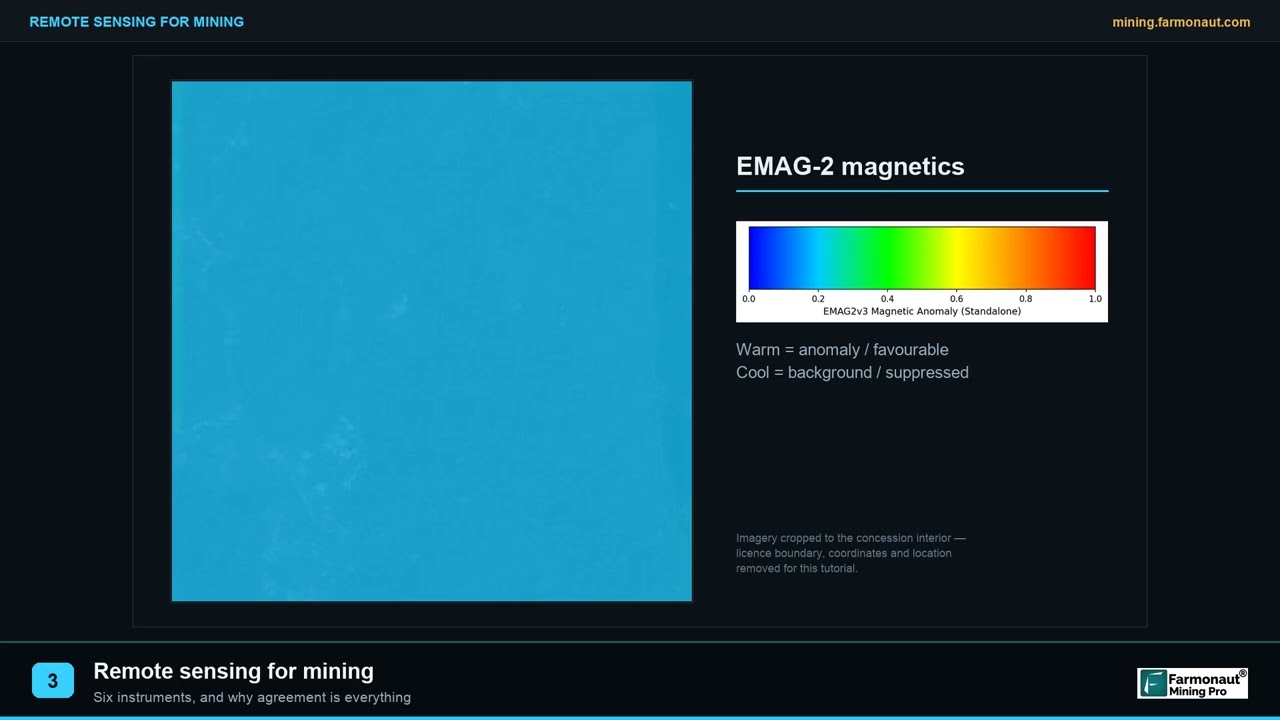
▶ Explains the six kinds of remote-sensing data used in mining and why agreement between them matters. · 2:01
If this topic matters to you, read Kinsenda Copper Company: Owner, Output and Status next.
Related reading on this site: Tenke Fungurume Mine DRC: Owner, Output, Water Data.
Frequently asked questions
Who owns Lumwana Mining Company Limited?
Barrick Mining Corporation owns it outright. Barrick’s annual information form for 2025 calls the operator a wholly owned subsidiary, and the annual report shows the mine at 100%. Barrick was called Barrick Gold Corporation until 6 May 2025.
Where is the Lumwana copper mine?
It is in North-Western Province, Zambia, about 90 km west of the provincial capital Solwezi and 600 km north-west of Lusaka. A 10 km road links the site to the paved T5 highway.
How much copper does Lumwana produce?
Lumwana produced 150,871 tonnes of copper in 2025, its highest year to date. Barrick guides to 130 to 150 kt for 2026 and to an average of 240 kt a year after the expansion.
When will the Lumwana expansion start producing?
Barrick’s second quarter 2026 results say the Super Pit Expansion is on schedule for first copper at the end of the first quarter of 2028. Barrick’s 2025 annual report says 2026 spending on the project should be US$750 to US$850 million.
How much does the Lumwana expansion cost?
The approved feasibility study sets total project capital at about US$2 billion, not counting capitalised stripping. By 31 December 2025, US$416 million had been spent.
How long will the Lumwana mine last?
On current reserves, Barrick plans for the life of mine to extend from about 16 years to about 33 years, ending in 2057. The last two years would only process stockpiles. Reserves can change with new drilling, prices and costs.
How many people work at Lumwana?
About 3,260 employees and 6,400 contractors worked there at 31 December 2025. Barrick’s September 2025 presentation says 98% of employees are Zambian nationals and plans more than 3,500 direct employees during the expansion.
Is Lumwana the biggest copper mine in Zambia?
Not on 2025 output among the mines compared above. First Quantum reports 189 kt at Sentinel and 181 kt at Kansanshi, against 151 kt at Lumwana. The expansion is designed to raise Lumwana’s average to 240 kt a year. Other Zambian producers also report output, so this is not a ranking of every mine.
Does Lumwana produce cobalt or uranium?
Its mining licences allow copper, cobalt, gold, silver, uranium and sulphur, but Barrick’s reports list copper as the only metal produced there. Uranium occurs in small amounts in the ore, and Barrick blends the higher-uranium Malundwe ore with Chimiwungo ore to avoid smelter penalties.
Can I invest in Lumwana directly?
Lumwana has no separate listing. Its parent Barrick Mining Corporation trades as NYSE: B and TSX: ABX. This page is not investment advice, so read Barrick’s filings and speak to a licensed adviser before you decide.
This page is for information only. It is not investment advice or legal advice. Company figures are the companies’ own reports and are not audited by Farmonaut. Mining and exploration need the right licences and permission from the land holder, and field work needs qualified people and safe practice.
Farmonaut mining
Get a quote for satellite screening of your licence
Send a licence boundary as KML, KMZ or a polygon and ask for satellite-derived exploration targets, ahead of any resource estimate.

Mining Pro sample view, synthetic data
Keep reading

Sources
- Barrick Mining Corporation, Annual Information Form for 2025 (Lumwana section), SEC exhibit 99.1: sec.gov
- Barrick Mining Corporation, Annual Report 2025: s25.q4cdn.com
- Barrick Mining Corporation, Second Quarter 2026 Results (10 August 2026): s25.q4cdn.com
- Barrick, Lumwana site visit presentation (September 2025): s25.q4cdn.com
- Mining Technology, Lumwana Copper Mine project profile: mining-technology.com
- First Quantum Minerals, 2025 preliminary production and 2026-2028 guidance (15 January 2026): first-quantum.com
- First Quantum Minerals, Second Quarter 2026 results: first-quantum.com
- African Mining Market, Zambia records a copper production increase of 8% in 2025 (27 January 2026): africanminingmarket.com
- Presidential Delivery Unit, Government of Zambia, Zambia’s mining sector charts its course to 2031 (18 February 2026): pdu.gov.zm
- USGS, Mineral Commodity Summaries 2026, Copper: pubs.usgs.gov
- International Energy Agency, Global Critical Minerals Outlook 2026, executive summary: iea.org
- Barrick Reports Full Year and Fourth Quarter 2025 Results (copy of the company release): finviz.com
Discussion
Questions, corrections or field experience? Share them below. First-time comments are reviewed before they appear, and your email is never published.
No comments yet. Be the first to add a question or your experience.

 Ramani Investments Ltd
 Congo Mining Solutions
 Mining SARL
 SenGold Invest SAS
 Sania Corporation
 Sean Mining Limited
 NTS Group (Pty) Ltd
 Mine4Africa
 Lithspo Minerals Limited
 Tintina Mining Group
 Dalgety Minerals Pty Ltd
 Vortex Minerals Pty Ltd
 Faith At Work (Pty) Ltd
 Geotech Mining Solutions plc
 Vulcan International Limited
 Kidepo Associates
 GKY Mining
 Alkimy SARL
 Double A Trading
 GemSprout Metals Limited











